No Universal Concept of Disability
Sin Concepto Universal de Discapacidad
| |
|
In this edition: No Universal Concept of Disability
En esta edición: Sin Concepto Universal de Discapacidad
| |
Nuestro boletín de noticias está disponible en Español, a continuación. Desplácese hacia abajo. | |
No Universal Concept of Disability | |
|
This is the second #TheDisabledBlackMagellan blog by Agent of Change, D’Arcee Neal who is a fellow in ECNV’s Ford Foundation Disability Justice Initiative. Over the next year, D’Arcee will share his thoughts and experiences about disability and intersectionality with BIPOC, LGBTQIA+ and other marginalized identities.
By D’Arcee Neal, Agent of Change
| |
|
November: Copenhagen, Denmark
As I sit under the flashing lights of my hotel fire alarm, caused by a small box of burning French fries— which burned coincidentally because the microwave rests behind my shoulder in a room too narrow to turn around in—I had to keep repeating this mantra:
A standardized concept of disability is not universal.
When the front desk manager demanded that I pay a fire fine for calling the department to the tune of $6,000kr (or what amounts to roughly almost $900 U.S. dollars) directly because of the inaccessible room I was put in, or while they threaten me with homelessness lest I come up with the money in a single evening, I had to keep repeating the mantra:
A standardized concept of disability is not universal.
| |
|
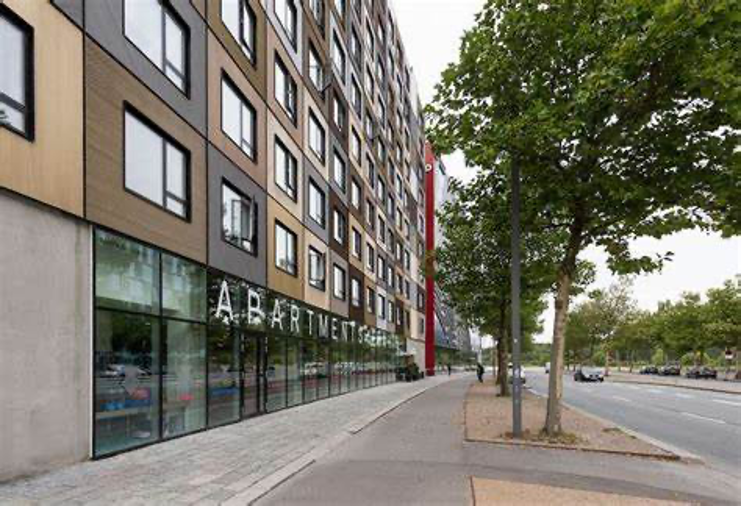
Despite the fact that this hotel was built relatively new back in 2019 and has hundreds of rooms, there is no accessible room here. In fact, I was told the only way a wheelchair user could actually get around comfortably was buy a larger room…at 3x the nightly rate. Impossible for someone traveling and living on a graduate stipend who still needs to pay bills, buy food, travel, and accommodations a month at a time. But does anyone here care?
Not at all. Why? Because a standardized concept of disability is not universal.
And because I understand this concept, I often have to take variations in expectation into consideration when traveling. As a person who’s been doing this since I was 19, at 36, the idea of still being shocked about the level of disability awareness continues to surprise me, mainly because often, I come not to expect it. The problem you have, is when a place purports to loudly declare how great they are at it, and then turns around and utterly fails through sheer incompetence.
Take Denmark for example.
As a progressive country that’s supposedly the envy of the world for its deft handling of the welfare state (taking care of most of its citizens in ways that ensure their health, safety, and wellbeing to some degree), I was privy to their election night a few weeks ago, as the far right political spectrum overtook the government stoked by fears of Ukrainian immigration woes, and calls to restrict aid. They claim to be some of the some enlightened people in the world. But I’ve since discovered that under the façade of competence, lies a sinister disregard for particular types of people they’d rather not care of at all.
| |
To quote the Danish Shakespearian play Hamlet, “Something is rotten in Denmark.”
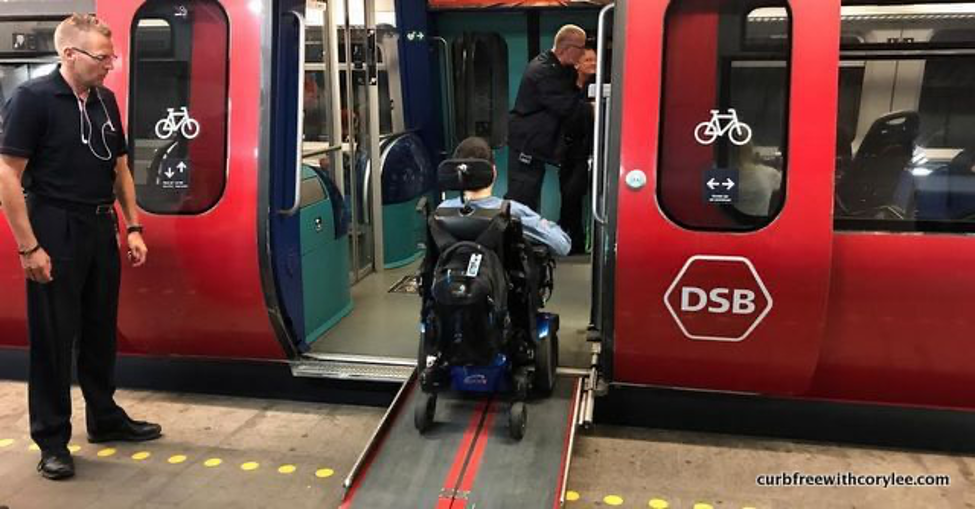
Chiefly, it remains to be their total apathy in relation to disability as the environment changes and/or adapts. To put this another way, I found myself taking the train to get my hair done a few weeks ago. Could I get to the train? Sure. Is there a system for chair users to take it? Yes. But signage? No. Assistance to board. Nope. Consideration of space and comfortable travel accommodation? Absolutely not. The wheelchair space is carved out of the bike section at the train’s front, and bikes are very obviously given priority. To have been told to move to make way as more and more bikes entered the train (despite the fact that I was there first, and IN the seat I paid for) is testament to this. So too, are the circumstances that surrounded how I ended up there in the first place. Without human guides at the majority of their metro stations, Copenhagen operates under a village mentality of ASTOUNDING ignorance, assuming everyone simply knows where they should go, or how to use their app to get around.
| |
|
While American metro stations most certainly have their problems, I never really understood the role of the attendant in the booth until now. What is the adage? Something something water…in a dry well? The idea that someone would merely occupy a space to assist in the event of, well anything doesn’t really occur in Copenhagen. You are simply expected to go about your way. Can’t find a map? Oh well. Need to figure out how to make a particular connection or find a shortcut? Better ask Google. Perhaps this relies on the Danish idea of “no diversity for diversity’s sake” as I was told on a date. It’s the Republican sentiment of the fabled bootstrap analogy applied to a societal hive mind, and for the life of me, I can’t understand or endorse it. Frankly, it sucks. I find myself musing about how the state of intellectual disability would function here at all. Before I came to Copenhagen, I had written and put together an excellent proposal for the Fulbright competition where I found that the Danish Human Rights Institute in their 2019 report, found that disabled Danes were worse off in 9 out of 10 areas of life here. But….
But….how Sway?
How is that possible? In a country that very loudly announces itself as the envy of the progressive world, that shouldn’t make sense. But I’m here to tell you that it absolutely does. Here, for example, they don’t have curb cuts for the architectural equity established through the American with Disabilities Act. It’s not about the idea of making barrier free movement accessible to the widest swatch of citizens and visitors. They install mounds of concrete to randomly affixed areas of the curb to create ramps for…wait for it…bikes. In the name of bike culture. That is the only reason ramps exist. And it is one tiny example in a litany of justifications they’d offer for why such things don’t exist.
I’ve been told here in the 5 weeks I’ve been here that disabled people aren’t a priority because they simply don’t really exist in this society. But in the Inaccessibility Cycle created by instagrammer PacingPixie, she points out the hypocrisy of such ideas as a never ending circle of excuses that manifest in public policy with devastating consequences.
| |
I’ve learned that while other places like the UK, Germany, or Australia will do whatever is necessary to help disabled people in certain capacities (because everyone everywhere has limits), there exist places like Denmark who in fact will say one thing, and do quite another. And such ideas destroy the idea of trying to make the world a better place, when they’ll tell you it already is. Lies like that, are the most insidious, and equally the most harmful, nestled as they are within supposedly good intentions because as I’ve said:
A standardized concept of disability is not universal.
| |
Don't forget to support ECNV by shopping at AmazonSmile!
AmazonSmile is a simple and automatic way for you to support your favorite charitable organization every time you shop, at no cost to you. When you shop at AmazonSmile, you’ll find the exact same low prices, vast selection and convenient shopping experience as Amazon.com, with the added bonus that Amazon will donate a portion of the purchase price to ECNV.
| |
Nuestro boletín de noticias está disponible en Español, a continuación. Desplácese hacia abajo. | |
Sin Concepto Universal de Discapacidad | |
|
Este es el segundo blog #TheDisabledBlackMagellan del Agente de Cambio, D'Arcee Neal, miembro de la Iniciativa de Justicia para Discapacitados de la Fundación Ford de ECNV. Durante el próximo año, D'Arcee compartirá sus pensamientos y experiencias sobre la discapacidad y la interseccionalidad con BIPOC, LGBTQIA+ y otras identidades marginadas.
Por D'Arcee Neal, Agente de Cambio
| |
Noviembre: Copenhague, Dinamarca
Mientras me siento bajo las luces intermitentes de la alarma contra incendios de mi hotel, provocada por una pequeña caja de papas fritas en llamas, que se quemó coincidentemente porque el microondas descansa detrás de mi hombro en una habitación demasiado estrecha para dar la vuelta, tenía que seguir repitiendo este mantra:
Un concepto estandarizado de discapacidad no es universal.
Cuando el gerente de la recepción me exigió que pagara una multa por incendio por llamar al departamento por una suma de $ 6,000kr (o lo que equivale a aproximadamente $ 900 dólares estadounidenses) directamente debido a la habitación inaccesible en la que me pusieron, o mientras me amenazan con personas sin hogar para no reunir el dinero en una sola noche, tenía que seguir repitiendo el mantra:
Un concepto estandarizado de discapacidad no es universal.
| |
|
A pesar de que este hotel fue construido relativamente nuevo en 2019 y tiene cientos de habitaciones, no hay habitaciones accesibles aquí. De hecho, me dijeron que la única forma en que un usuario de silla de ruedas podía moverse cómodamente era comprar una habitación más grande... al triple de la tarifa por noche. Imposible para alguien que viaja y vive con un estipendio de posgrado que aún necesita pagar facturas, comprar comida, viajar y hospedarse un mes a la vez. ¿Pero a alguien aquí le importa?
De nada. ¿Por qué? Porque un concepto estandarizado de discapacidad no es universal.
Y debido a que entiendo este concepto, a menudo tengo que tener en cuenta las variaciones en las expectativas cuando viajo. Como una persona que ha estado haciendo esto desde que tenía 19 años, a los 36, la idea de seguir sorprendiéndome por el nivel de conciencia sobre la discapacidad me sigue sorprendiendo, principalmente porque a menudo no me lo espero. El problema que tienes es cuando un lugar pretende declarar en voz alta lo buenos que son en él, y luego se da la vuelta y falla por completo por pura incompetencia.
Tome Dinamarca por ejemplo.
| Como un país progresista que supuestamente es la envidia del mundo por su hábil manejo del estado de bienestar (cuidando a la mayoría de sus ciudadanos de manera que garanticen su salud, seguridad y bienestar hasta cierto punto), yo estaba al tanto de su noche electoral. hace unas semanas, cuando el espectro político de extrema derecha superó al gobierno avivado por los temores de los problemas de inmigración ucranianos y los llamados a restringir la ayuda. Afirman ser algunas de las personas iluminadas del mundo. Pero desde entonces descubrí que bajo la fachada de competencia, se encuentra un desprecio siniestro por tipos particulares de personas de las que preferirían no preocuparse en absoluto. | |
|
Para citar la obra danesa de Shakespeare Hamlet, "Algo está podrido en Dinamarca".
Principalmente, sigue siendo su total apatía en relación con la discapacidad a medida que el entorno cambia y/o se adapta. Para decirlo de otra manera, me encontré tomando el tren para arreglarme el cabello hace unas semanas. ¿Puedo llegar al tren? Por supuesto. ¿Hay algún sistema para que los usuarios de sillas lo tomen? Sí. Pero la señalización? No. Asistencia al embarque. No. Consideración de espacio y cómodo alojamiento de viaje? Absolutamente no. El espacio para sillas de ruedas está tallado en la sección de bicicletas en la parte delantera del tren, y obviamente se les da prioridad a las bicicletas. Que me hayan dicho que me moviera para dejar paso a medida que más y más bicicletas ingresaban al tren (a pesar de que yo estaba allí primero y EN el asiento que pagué) es testimonio de esto. También lo son las circunstancias que rodearon cómo terminé allí en primer lugar. Sin guías humanos en la mayoría de sus estaciones de metro, Copenhague opera bajo una mentalidad de aldea de ASOMBROSA ignorancia, asumiendo que todos simplemente saben a dónde deben ir o cómo usar su aplicación para moverse.
| |
|
Si bien las estaciones de metro estadounidenses ciertamente tienen sus problemas, nunca entendí realmente el papel del asistente en la cabina hasta ahora. ¿Cuál es el adagio? ¿Algo algo agua… en un pozo seco? La idea de que alguien simplemente ocuparía un espacio para ayudar en caso de, bueno, cualquier cosa realmente no ocurre en Copenhague. Simplemente se espera que sigas tu camino. ¿No encuentras un mapa? Oh bien. ¿Necesita averiguar cómo hacer una conexión particular o encontrar un atajo? Mejor pregúntale a Google. Tal vez esto se base en la idea danesa de "no hay diversidad por el bien de la diversidad", como me dijeron en una cita. Es el sentimiento republicano de la legendaria analogía de arranque aplicada a una mente colmena social, y por mi vida, no puedo entenderlo ni respaldarlo. Francamente, apesta. Me encuentro reflexionando sobre cómo funcionaría aquí el estado de discapacidad intelectual. Antes de venir a Copenhague, había escrito y elaborado una excelente propuesta para la competencia Fulbright donde descubrí que el Instituto Danés de Derechos Humanos en su informe de 2019 encontró que los daneses discapacitados estaban peor en 9 de cada 10 áreas de la vida aquí. Pero….
| |
|
Como influenciar?
Como es eso posible? En un país que se anuncia a gritos como la envidia del mundo progresista, eso no debería tener sentido. Pero estoy aquí para decirte que lo hace absolutamente. Aquí, por ejemplo, no tienen cortes de acera para la equidad arquitectónica establecida a través de la Ley de Estadounidenses con Discapacidades. No se trata de la idea de hacer que el movimiento sin barreras sea accesible para la mayor cantidad de ciudadanos y visitantes. Instalan montículos de concreto en áreas fijadas al azar de la acera para crear rampas para... espera... bicicletas. En nombre de la cultura de la bicicleta. Esa es la única razón por la que existen las rampas. Y es un pequeño ejemplo en una letanía de justificaciones que ofrecerían por qué tales cosas no existen.
Me han dicho aquí en las 5 semanas que he estado aquí que las personas discapacitadas no son una prioridad porque simplemente no existen en esta sociedad. Pero en el Ciclo de Inaccesibilidad creado por instagrammer
Pero….¿cómo influenciar PacingPixie, señala la hipocresía de tales ideas como un círculo interminable de excusas que se manifiestan en políticas públicas con consecuencias devastadoras.
He aprendido que mientras otros lugares como el Reino Unido, Alemania o Australia harán lo que sea necesario para ayudar a las personas discapacitadas en ciertas capacidades (porque todos en todas partes tienen límites), existen lugares como Dinamarca que de hecho dirán una cosa, y hacer otra muy distinta. Y tales ideas destruyen la idea de tratar de hacer del mundo un lugar mejor, cuando te dirán que ya lo es. Mentiras así, son las más insidiosas, e igualmente las más dañinas, enclavadas dentro de supuestas buenas intenciones porque como he dicho:
Un concepto estandarizado de discapacidad no es universal.
| |
¡No olvide apoyar ECNV comprando en AmazonSmile!
AmazonSmile es una forma simple y automática de apoyar a su organización benéfica favorita cada vez que compra, sin costo para usted. Cuando compre en AmazonSmile, encontrará exactamente los mismos precios bajos, una amplia selección y una experiencia de compra conveniente que en Amazon.com, con la ventaja adicional de que Amazon donará una parte del precio de compra a ECNV.
| | |
|  |
Follow Us on Social Media | | | | |