|
Winter 2025-2026
Milwaukee ECO Newsletter
| | |
Message from the Director
Cities and local governments are once again at the forefront of positive environmental action. The Environmental Collaboration Office (ECO) understands that ecology and economy have the same root word, eco, derived from the Greek word for "home." Sustained, long-term economic prosperity requires understanding ecology and protecting our environment in our community and on planet Earth at large. I explore this insight with practical examples in this recent TEDx Talk. I also emphasized "natural intelligence" as tech companies increasingly inundate us with messages selling AI. The data center development associated with AI could have serious consequences for the environment and energy bills if done without proper planning and oversite.
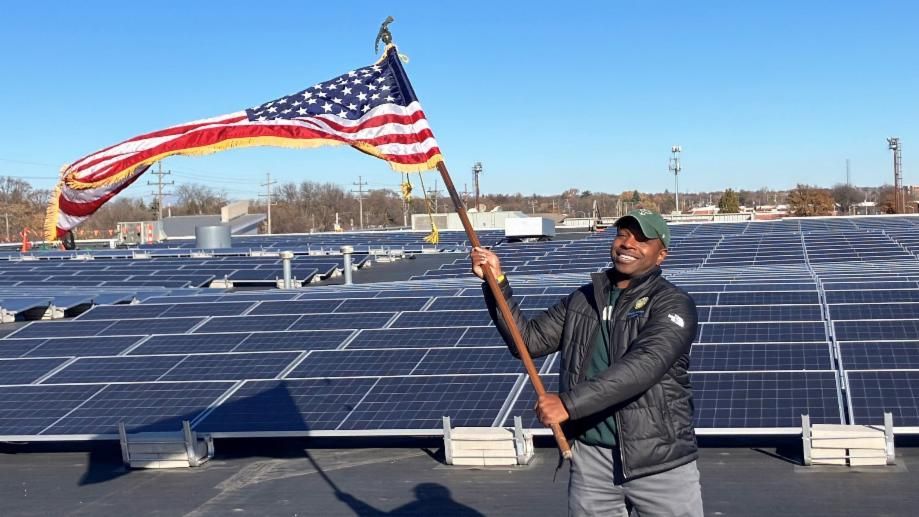
In 2025, we advanced all of the 10 Big Ideas in the City's Climate and Equity Plan. Most notably, we made major gains in using renewable energy to power municipal operations. In March of 2025, approximately 6 MW of new solar came online at a We Energies-owned project in Caledonia, WI, with the power dedicated to City of Milwaukee operations. In December, construction started on a 4 MW expansion of City-owned landfill at 1600 E College Ave near General Mitchell Airport. When completed next year, 80 municipal buildings will be powered with 100% renewable energy. We also advance rooftop solar, with major additions at MLK Library, DPW Field Headquarters (pictured above), and Milwaukee Police Department District 3. These projects are being built by local workers. We are applying for federal tax credits to help offset the cost. Check out our Renewable Operations page that features these projects and a data dashboard of our sustainability progress in municipal operations. In 2026, we are planning for more large-scale solar projects to support both municipal operations and the broader community.
We are grateful to the leadership of Mayor Cavalier Johnson, Common Council members Marina Dimitrijevic, JoCasta Zamarripa, Robert Bauman, Scott Spiker and the late Jonathan Brostoff for sponsoring the authorizing resolutions 231608 and 241332 and all members of the Common Council for their unanimous support. We are also grateful to Milwaukeeans who continue to show up to speak about the importance of real climate action and environmental sustainability.
In this newsletter, you will find great information and opportunities to do your part on environmental action, either directly in your home or business or through engaging in city planning processes. Together, we can make Milwaukee a world-class eco city!
With hope,
Erick Shambarger
Director of Environmental Sustainability
City of Milwaukee
| | |
Electric Vehicle Charging Expands in Milwaukee
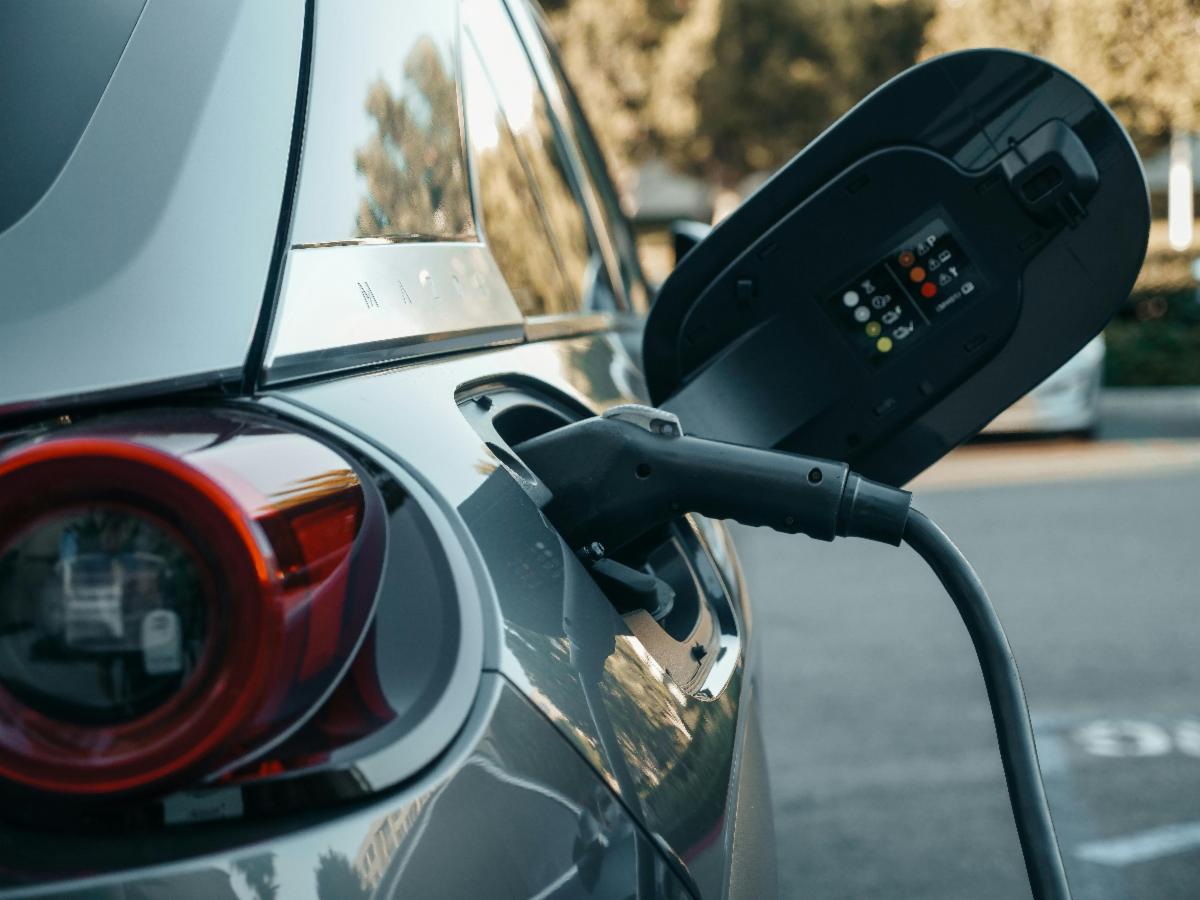
In 2025, ECO made significant progress advancing electric vehicle (EV) infrastructure and fleet electrification across Milwaukee. The number of EV chargers expanded from one to more than seven, with new installations at key public works and police department facilities, and with three or more additional charger installations planned for 2026. Milwaukee’s municipal EV fleet also grew by over seven vehicles, including all-electric Chevrolet Blazers for the police department and Ford F-150 Lightnings for public works crews. At the same time, ECO’s public charging initiative has entered its final planning and engineering phase, with 13 publicly accessible sites expected to be shovel-ready this construction season. We are cautiously optimistic that the federal government will release the contractually authorized funds. Attorneys General from fifteen states including Wisconsin filed a lawsuit towards the US Department of Transportation to ensure that this program is funded and executed as originally envisioned.
As EV registrations in Milwaukee County continue to exceed 100 new vehicles per month, Milwaukee's EV charging infrastructure project is more important than ever. You can provide input on our plans at a public meeting on April 8th at 6pm at the Washington Park Urban Ecology Center or by visiting our website in the link below.
| | |
Green Jobs Accelerator At Work
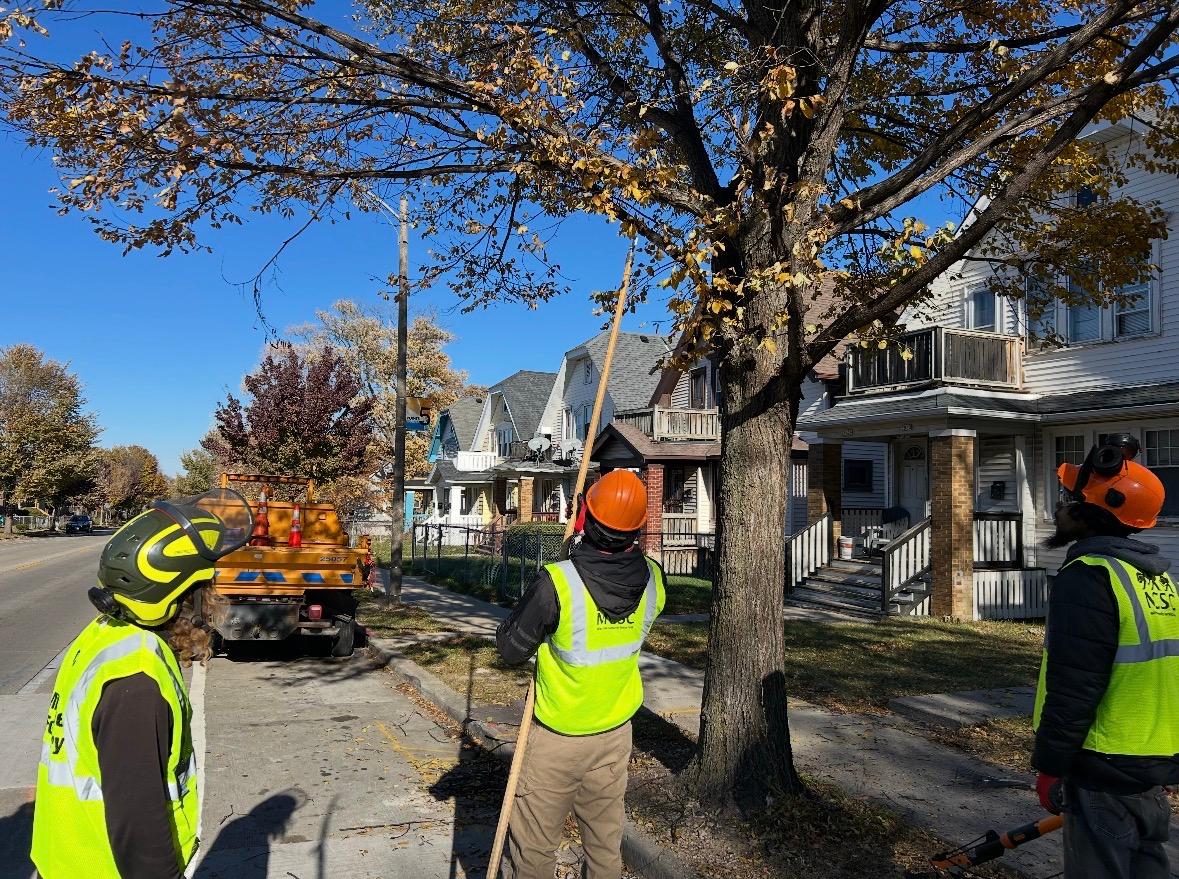
Through the Green Job Accelerator, ECO partners with community-based organizations to provide paid, entry-level work experiences that create pathways to long-term employment and training opportunities in construction, infrastructure, and clean energy. These hands-on roles help participants build foundational skills, gain industry exposure, and establish clear career trajectories within stable, in-demand sectors, leading to family-supporting wages and long-term stability. By implementing Community Benefit Agreements (CBAs) on ECO-backed projects, we are ensuring that at least 20% of total labor hours are completed by unemployed or underemployed Milwaukee residents, creating direct economic opportunity alongside environmental progress.
Most recently, this approach has been applied to major energy upgrade projects at Police District 3 and the DPW Field Headquarters, where contractors are meeting local hiring goals while completing large-scale LED lighting retrofits, high-efficiency HVAC upgrades, and municipal solar installations designed to reduce energy costs, improve building performance, and cut greenhouse gas emissions. On the Milwaukee Airport Solar Expansion Project, contractors are utilizing workers through the City’s Residents Preference Program, ensuring that the transition to clean energy also strengthens Milwaukee’s workforce and local economy.
Beyond individual projects, ECO is working closely with Milwaukee Public Schools (MPS), Employ Milwaukee, Milwaukee Area Technical College (MATC), workforce development agencies, and local employers to rebuild strong, modern pathways into the skilled trades for young people. These efforts focus on reintroducing hands-on training to high schools, connecting classroom learning to real job opportunities, and reducing barriers such as transportation, awareness, and access to certifications. Together, these partnerships are helping ensure that students and residents can move from training to stable, family-supporting careers.
| | |
Save Energy and Cut Costs with IRA Home Energy Rebates
Discover the benefits of IRA Home Energy Rebates and start saving on project costs while making your home more energy efficient. With two tailored programs—Home Efficiency Rebate Program (HOMES) and Home Electrification and Appliance Rebate Program (HEAR)—you can access financial support for energy-saving upgrades, from insulation to modern electric appliances. This work will help you save both on the cost of construction and purchasing AND on your utility bills long-term. Plus, you will be improving the health of your home, reducing potential medical costs in the future! Want to learn more? Register for our webinar on February 12th or read more below!
HOMES provides rebates for whole-home energy improvements for homeowners of all income levels living in single-family and multifamily residences. Eligible upgrades include ENERGY STAR® appliances, heating/cooling equipment, air-cooling, insulation, and more. The rebates you receive depend on your household income and the energy savings achieved.
HEAR supports low- and moderate-income households installing heat pumps and other energy-efficient electric equipment.
Maximize Your Savings Combine IRA Home Energy Rebates with FOCUS ON ENERGY® rebates, the Weatherization Assistance Program, utility rebates, and federal tax credits to maximize your savings. ECO's Milwaukee Energy Efficiency (Me2) program also offers affordable loans in partnership with Summit Credit Union to qualifying homeowners for energy-saving upgrades like insulation, ENERGY STAR windows, and heating systems.
How to Participate
It’s easy to get started:
1. Complete Income Qualification – Determine your eligibility based on household income. HOMES is open to all homeowners, while HEAR targets low- and moderate-income households.
2. Choose Your IRA Registered Contractor – Registered contractors manage everything, from forms to approvals, ensuring a seamless process.
3. Start Your Project – Begin upgrading your home to save energy and costs.
Learn More Visit focusonenergy.com/ira-homes and focusonenergy.com/ira-hear for full program details. Start your journey to a more energy-efficient home today!
| | |
Benchmarking Policy Helps Building Owners Manage their Energy Use
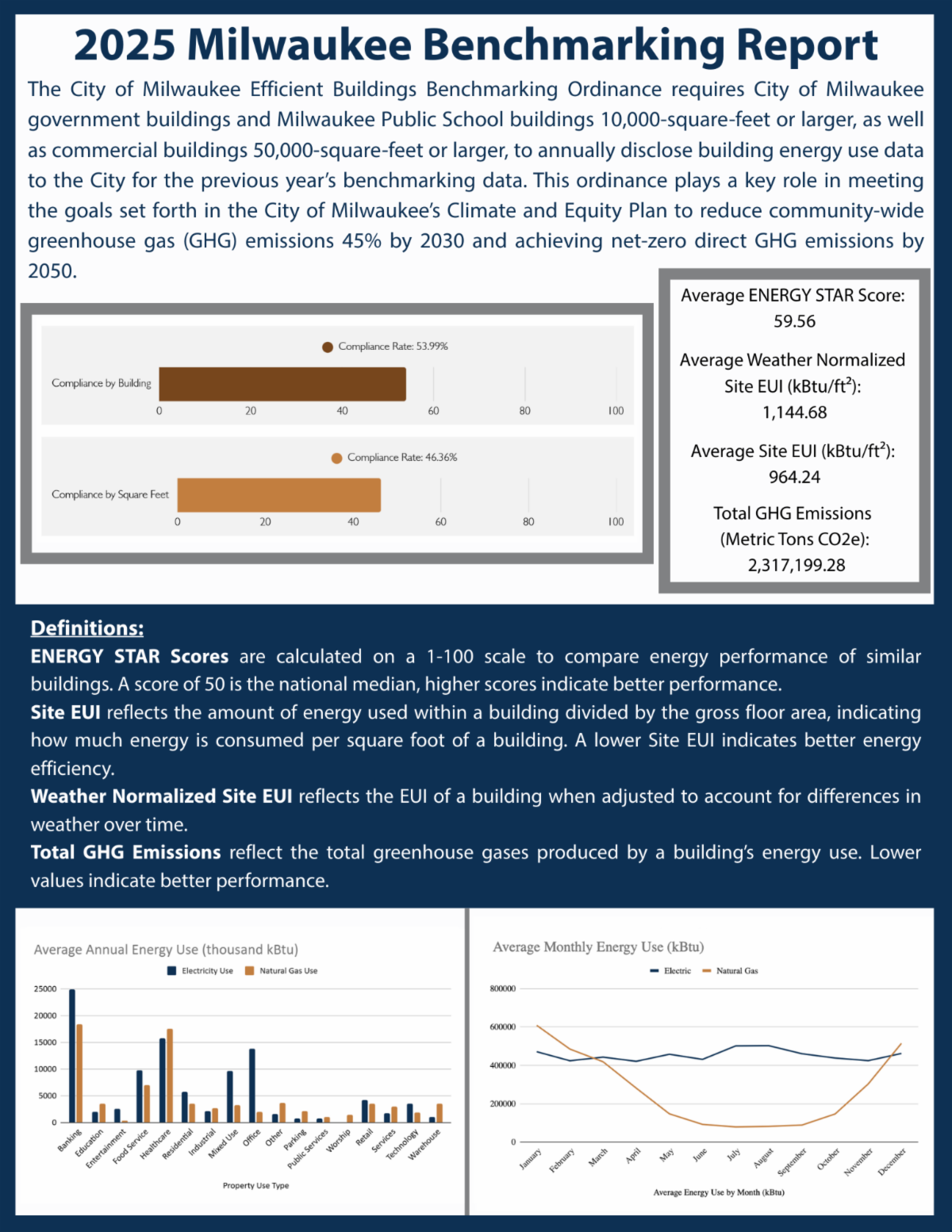
Under the City of Milwaukee Efficient Buildings Benchmarking ordinance, City of Milwaukee government buildings and Milwaukee Public School buildings 10,000-square-feet or larger, as well as commercial buildings 50,000-square-feet or larger, were required to report their 2024 energy data and share it with the City of Milwaukee by September 30, 2025. Those same buildings will be required to report 2025 data by September 30th, 2026. Milwaukee’s ordinance covers an estimated 530 commercial buildings and 280 City of Milwaukee and Milwaukee Public School buildings. These large buildings make up roughly 67% of all building square footage in the city. Many leading commercial buildings in Milwaukee have already discovered the benefits of energy management and voluntarily track their energy use. This year the City of Milwaukee received an average ENERGY STAR of 59.56 out of 100, beating the national median of 50. This number compares energy performance compared with similar buildings.
Program management is provided by a third-party platform called Building Energy Analysis Manager (BEAM). The BEAM Knowledgebase is a comprehensive resource library of everything you need to know to comply with this policy. You can also sign up for an optional Building Owner Portal Account and claim your building(s). Please submit a General Inquiry Form for any questions.
You can view recordings of webinars about the program to prepare for 2026 reporting. Commercial building owners and managers can register to learn more about the benchmarking process at our webinar on March 11th.
| | |
ARPA Pilot Program Makes Homes Safer and Healthier
Stephanie's Home Got an ARPA Upgrade!
The Milwaukee Environmental Collaboration Office works with the Milwaukee Health Department, the Wisconsin Department of Public Services, and Habitat for Humanity to provide free lead abatement, weatherization, and energy efficiency services to hundreds of qualifying households. This work is funded by the American Rescue Plan Act (ARPA)'s Lead Remediation and Energy Efficiency Integration Pilot Program.
Stephanie is one of dozens of Milwaukeeans who recently received more than $8000 worth of work to improve the health and safety of her and her kids. She was particularly concerned about lead in the house.
“The closet in [my kid’s] room was the worst and had holes, and I didn’t want them playing in there,” Stephanie recalled. "I was always very nervous with them in that closet. And there were cracks in their ceiling. I will have peace of mind not worrying about little kids getting into that stuff and having a safe house.”
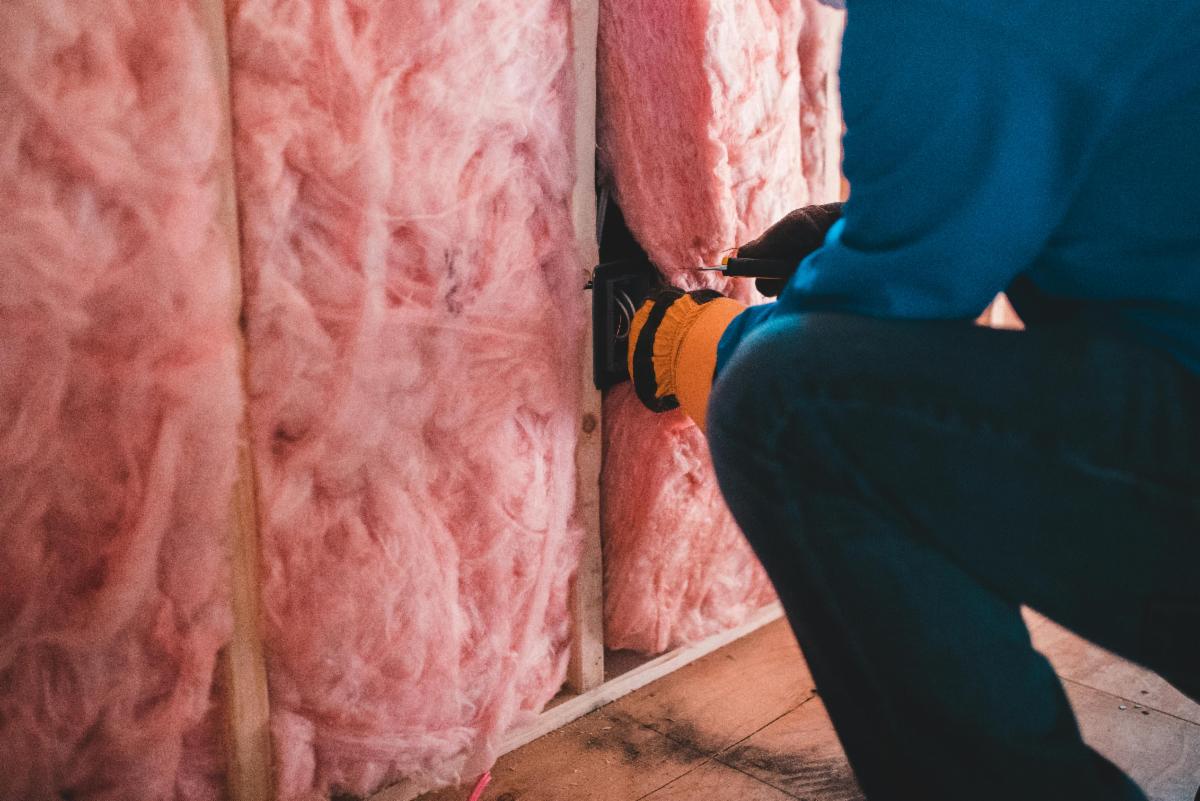
The ARPA-funded work included closing up those cracks and reducing lead exposure. Habitat for Humanity also installed new installation, air sealing, and vents in the attic and replaced light bulbs with LEDs. The home received six new windows, two new exterior doors, and fans in the bathrooms and above the kitchen stove. In addition to not having to pay for renovations, this work will save Stephanie about $220 in annual utility costs.
“I’m very grateful for everything,” Stephanie told Habitats. “I hope that more people take advantage, particularly in my neighborhood. There are a lot of homes and people that could really benefit from this.”
| |
FEED MKE Recovery Partnership Helped Feed Thousands During Government Shutdown
As the FEED MKE Pilot Project expands its work in food recovery and composting, surplus food is being transformed into community support — ensuring high-quality meals reach hungry people. The FEED MKE Coalition connects businesses, institutions, and individual community partners to bridge the gap between abundance and need, strengthening food access across Milwaukee.
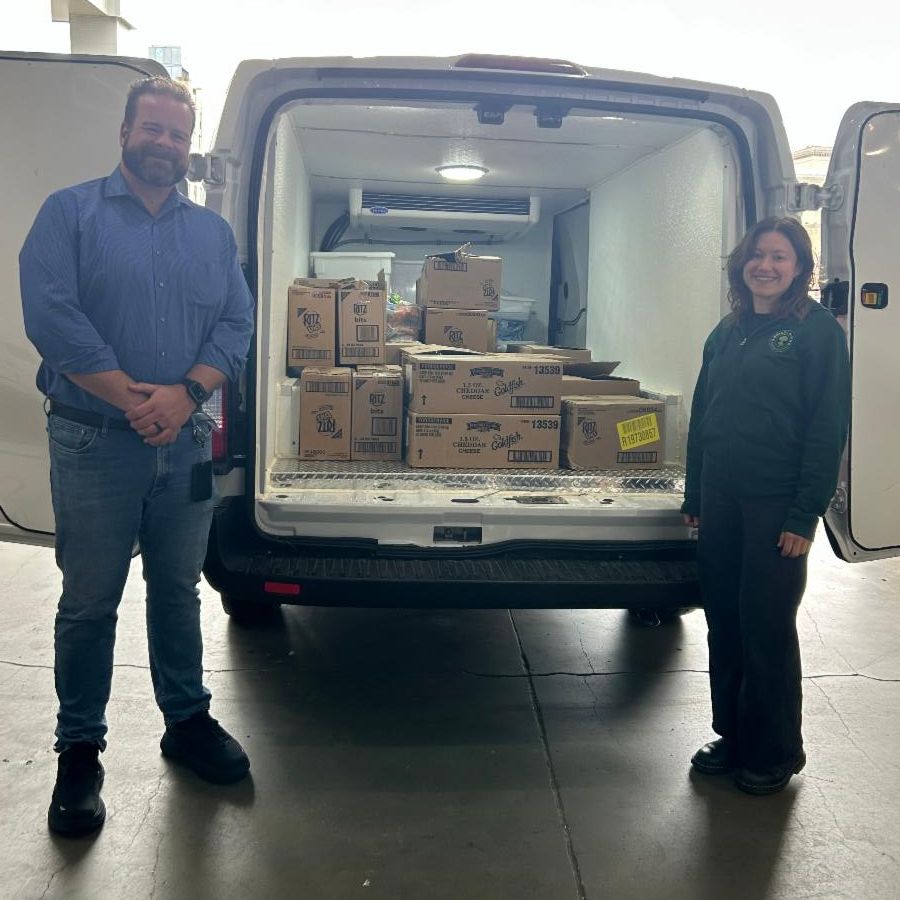
A recent example of this work is a new FEED MKE partnership with Levy Restaurants at the Baird Center. Under the leadership of Levy General Manager Steven Kriekard, a food recovery program was launched to capture surplus from on-site catered events. Through the FEED MKE network, these meals are redistributed by trusted community partners, including The Gathering of Southeast Wisconsin, Just One More Ministries, and Rooted & Rising –– Washington Park.
The impact has been immediate and meaningful. During October and November — when many households experienced a SNAP benefit freeze — Rooted & Rising alone served more than 1,000 households and 3,200 individuals using food recovered through this collaboration.
“A community member and mother in Washington Park recently talked about the struggle of packing enough snacks for her kids to bring to school. This donation certainly alleviated some of that stress for the families in our community,” shared Hannah Bessenecker from Rooted & Rising.
Community event hosts, caterers, and food recovery organizations interested in participating in the program are encouraged to connect with FEED MKE to learn more about getting involved.
| |
ECO Neighborhoods Increased Sustainability in Their Communities
2025 was a busy year for the ECO Neighborhoods Initiative! Our existing ECO Neighborhood Teams – Sherman Park, Century City Triangle Neighborhood, and Harambee – engaged their neighbors in robust sustainability actions. Sherman Park’s ECO Team continues to support local faith-based organizations in decarbonization and green infrastructure efforts including training youth to install rain gardens. Century City Triangle’s ECO Team worked with MKE FreshAir Collective and TRUE Skool to design and install Milwaukee’s first pollution reduction mural at Melvina Park. Harambee’s ECO Team partnered with MMSD to host 3 green infrastructure workshops and helped Friends of the Beerline Trail plant over 500 natives in the trail's pollinator garden.
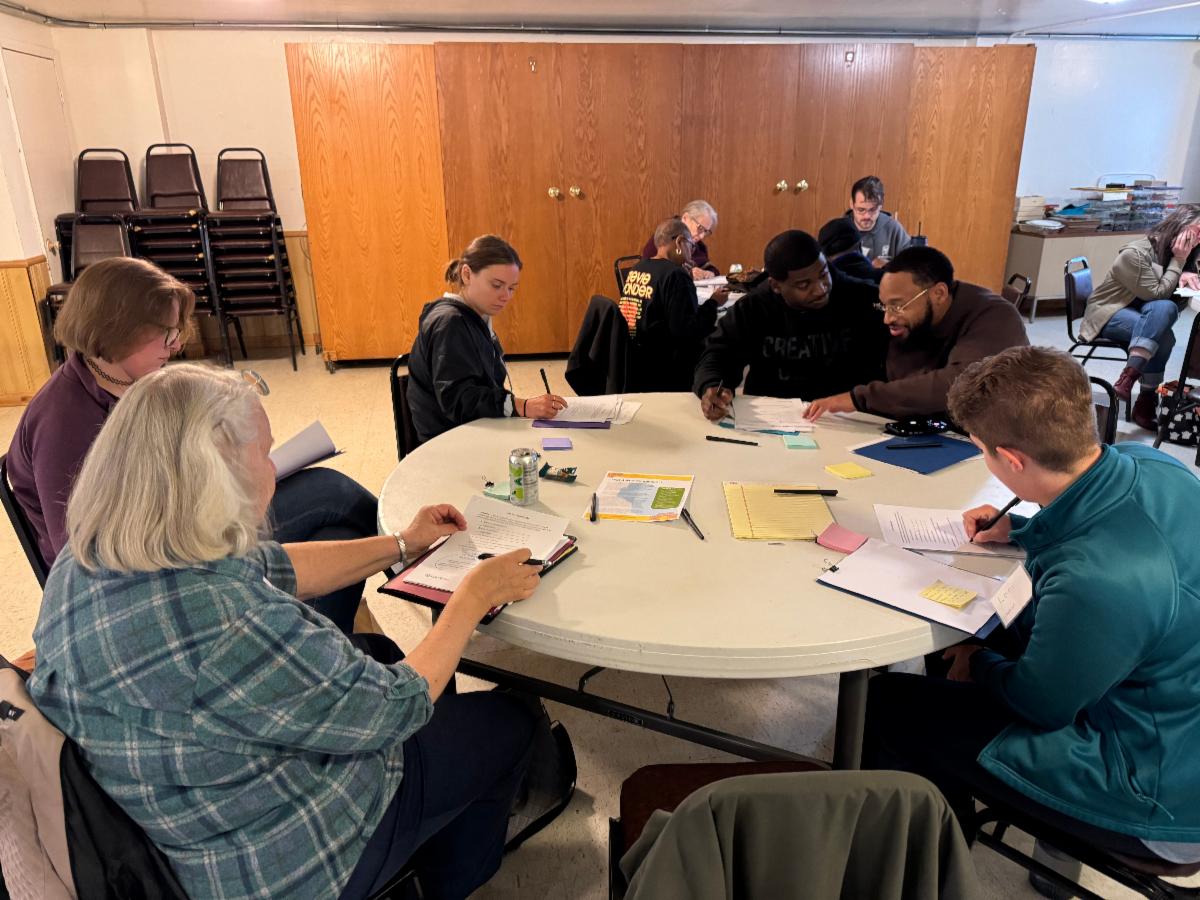
ECO Neighborhoods also piloted general programming this year! Community partners and organizers participated in a 7-part training series through our Healthy Homes & ECO Neighborhoods project in partnership with Sherman Park Community Association and Clean WI. Our participants learned about the elements of a healthy home, residential energy efficiency, and available housing improvement funding through programs like the Inflation Reduction Act Home Energy Rebates. We also held a 4-part Climate Storytelling Workshop Series that instructed residents on the power of storytelling for motivating our neighbors and leaders to take climate action.
| |
| |
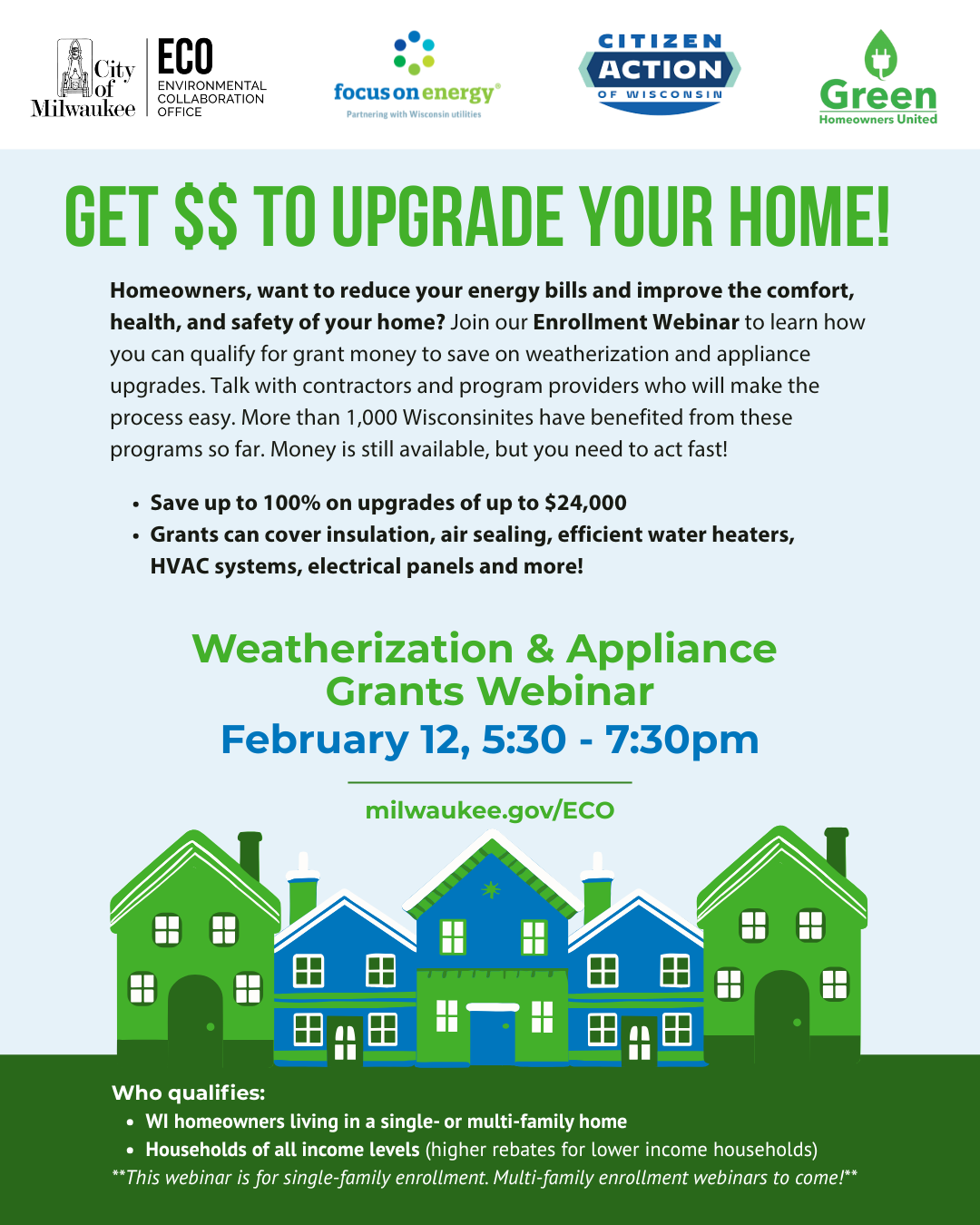
IRA Weatherization and Appliance Grant Enrollment Webinar
Zoom
Thursday, February 12
5:30 - 7:30pm
Homeowners, want to reduce your energy bills and improve the comfort, health, and safety of your home? Join our Enrollment Webinar to learn how you can qualify for grant money to save on weatherization and appliance upgrades. Talk with contractors and program providers that will make the process easy. More than 1,000 Wisconsinites have benefited from these programs so far. Money is still available, but you need to act fast!
**This webinar is for single-family enrollment. Multi-family enrollment webinars to come!***
| | | |
| |
Hope Community Capital's 10-Year Anniversary Workshop
Washington Park Urban Ecology Center
1859 N 40th Street, Milwaukee, WI
Thursday, February 19
7:30am - 4pm
Hope Community Capital is convening a cross-sector workshop focused on the full landscape of community development financing, including public tools, private capital, and the partnerships required to move projects from vision to execution. If you work at the intersection of community, capital, and vision, and want to strengthen how high impact projects get financed and delivered, we would love to have you in the room. ECO will present on PACE financing for your next development project.
| | | |
| |
Milwaukee Efficient Building Benchmarking Program Webinar
Zoom
Wednesday, March 11
12pm
Join us for an in-depth webinar that walks you through the compliance process for Milwaukee's benchmarking ordinance. Learn about the policy, exactly what you need to do to meet requirements, where to access the latest resources, and how to connect with staff support when you need assistance. Please bring your questions for our interactive Q&A session.
| | | |
| | |
EV Project Public Input Session
Washington Park Urban Ecology Center
1859 N 40th St, Milwaukee, WI
Wednesday, April 8
6-7:30pm
Help shape the future of electric vehicle infrastructure in Milwaukee!
| | | |
| | |
City Hall Annual Career & Resource Fair
Milwaukee City Hall
200 E Wells St, Milwaukee, WI
Saturday, April 18
9am - 2pm
Interested in working for your city? Learn about what opportunities the City of Milwaukee can offer at the largest city career fair of the year.
| | | |
|
New Water Centric City Coordinator: Narayani Sunil Pillai
Narayani coordinates the City’s Water Centric City initiative, including implementation of the City’s Green Infrastructure Plan, and other key principles such as fishable/swimmable water, sustainable healthy water supply, and water leadership programs in Milwaukee. She provides staff support to the mayor in his board role on the Great Lakes St. Lawrence Cities Initiative and also supports ECO’s efforts to reduce plastic waste in Milwaukee’s lakes and rivers.
Narayani holds a Master of Environmental Studies degree from the University of Pennsylvania and a Bachelor of Technology degree in Computer Science & Engineering from India. Prior to her current role, Narayani worked as a Water Sustainability Coordinator with the Water Center at Penn, contributing to and coordinating AI and water initiatives, water policy briefs, and leadership collaboratives for mid-career water sector professionals. In her spare time, you’ll find her out in nature or watching a good movie.
| |
|
ECO Staff Spotlight: Jeremy Belot
Jeremy Belot helps Milwaukee property owners save money and reduce their environmental impact through ECO’s residential clean energy program and the City’s solar program, Milwaukee Shines. Utilizing his experience in community and real estate development, he oversees ECO’s participation in the ARPA Lead Remediation and Energy Efficiency Integration Program and partnerships with the Milwaukee Health Department and the Milwaukee Habitats For Humanity. Together they help homeowners reduce their pollution exposure and improve their home’s energy efficiency.
Through Milwaukee Shines, Belot works to provide information regarding residential photovoltaic (PV) and hydronic solar systems. He helps ECO partner with the Midwest Renewable Energy Association (MREA) to bring the Grow Solar group buy program for the residents of Milwaukee to purchase discounted solar PV systems from reputable solar installers.
| | Follow us on Social Media | | ECO posts daily news, resources, and events on social media. Follow us on the below social media channels using the handle @ecocitymke: | | |
City of Milwaukee
Department of Administration
Environmental Collaboration Office
200 E. Wells St., Room #603
Milwaukee, WI 53202
| | |
sustainability@milwaukee.gov
milwaukee.gov/eco
| | | | |