|
Welcome to the spring 2026 edition of our department newsletter!
Student interest in economics at UMD continues to grow. Last week we passed 1,000 current majors, a 33% increase in the last two years. We also have 128 economics minors, making us the second-largest minor in BSOS, even though our minor is only two years old. This strong demand reflects how our students recognize that economics teaches analytical and quantitative skills that remain valuable in the rapidly changing job market, as well as the extraordinary commitment of our faculty and our three-member team of academic advisors who help students to find the courses that work best for them.
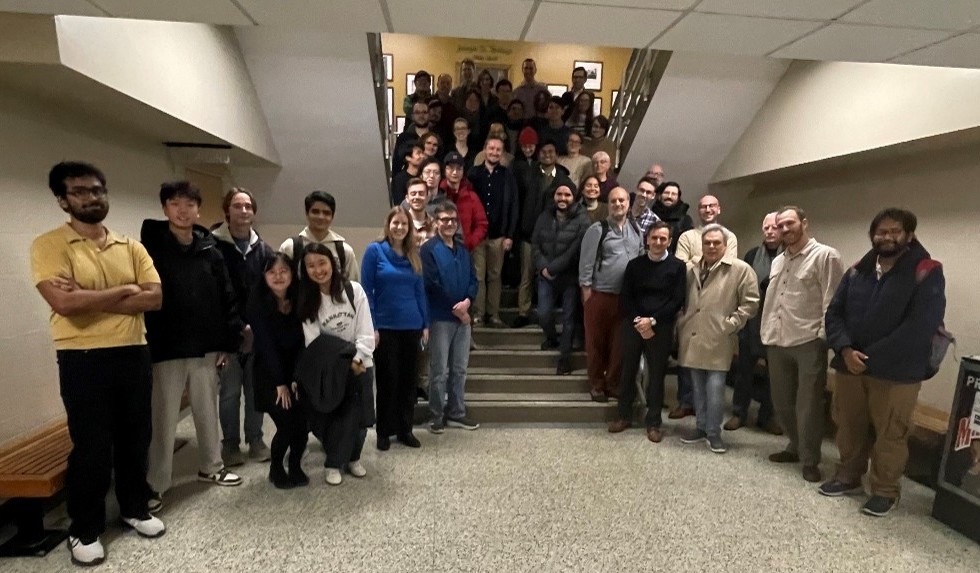
Last semester saw a great turnout of UMD alumni for a research conference in honor of Professor John Haltiwanger. John, together with UMD colleagues such as Katharine Abraham and many former graduate students, continues to lead pioneering research that aims to use microdata to paint the most accurate picture possible about the performance of the U.S. economy. I would like to thank everyone who came to the conference for making it a special occasion.
This semester’s main public event will see Professor Parag Pathak of MIT, speaking about student achievement and school matching. The lecture will be on March 5 at 3:30 p.m. in 0106 Francis Scott Key Hall. I hope to see some of you there.
The day before Parag’s talk is the University of Maryland's annual Giving Day. Please consider making a donation, large or small, to the Department of Economics Gift Fund or the Graduate Studies Program Fund. Donated resources support our educational and research missions, and they are critically important right now as we are being asked to teach more students with a smaller budget.
| | |
|
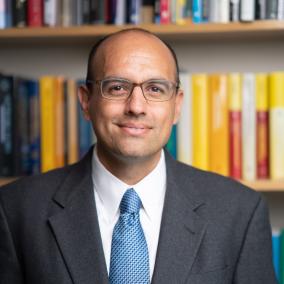
Andrew Sweeting
Chair and Professor
| |  | | | Save the Date: Giving Day is March 4! | |
Giving Day: March 4, 2026
As we prepare for challenging years ahead for public universities, please consider making a gift to our Department of Economics Gift Fund to help us raise unrestricted operational support funds in support of our department's initiatives and programming.
Set a reminder to donate here!
If you have any questions, please contact econoffice@umd.edu.
| |
Join Us for Our Sixth
Moskowitz Lecture
Professor Parag Pathak will deliver our sixth Moskowitz lecture to speak about approaches to improving New York City's high school system.
"Who Gets What in Education: Can School Matching Improve Student Achievement?"
Date: Thursday, March 5, 2026
Location: Francis Scott Key, 0106
Time: 3:30-5:00 p.m.
| | | | Faculty and Student Research Highlights | |
Faculty Research: Decentralized Bureaucracies in Addis Ababa, Ethiopia
A new study by Professor Agness and coauthors asks why decentralized bureaucracies fail to deliver services that match citizen priorities in and around Addis Ababa, Ethiopia. Local bureaucrats have substantial policy autonomy but face widespread public dissatisfaction. Professor Agness and coauthors assess whether dissatisfaction with bureaucratic performance is a result of poor information about voters’ needs or lack of incentives.
He first finds that bureaucrats are ill-informed about constituent preferences. He shows that information and monitoring fail to improve alignment between bureaucracies and their constituents. “Report cards” describing local conditions and what citizens want do not change bureaucrat beliefs, priorities, projects, or budgets, and they do not raise citizen satisfaction with public services a year later. Bureaucrats also do not value information about those they serve. Only 20% of officials will spend ten minutes to request a report card, while 4% are willing to spend time to opt out of receiving a report card. The results point to weak incentives and intrinsic motivation—not information or autonomy—as the binding constraints for responsive service delivery in peri-urban Ethiopia. The project was funded by the Stanford King Center on Urban Development and the J-PAL Urban Services Initiative.
|
Graduate Research:
The Economics of Education
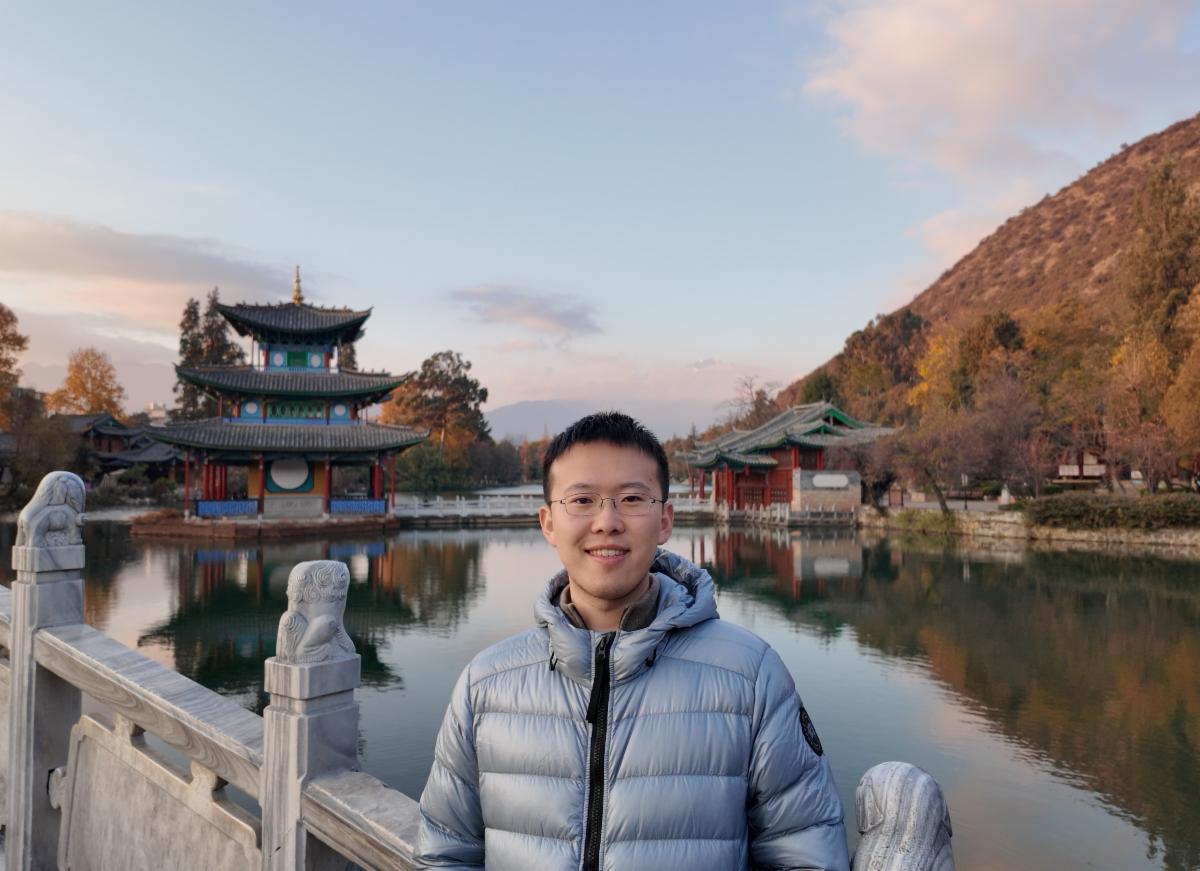
Marty Haoyuan Chen is a Ph.D. student in economics at the University of Maryland. He will graduate next year. Marty specializes on the economics of education. Marty has four completed papers and four others he is currently working on. One of Marty's papers, joint with Le Kang at Nanjing University, as well as Wei Ha and Yuhao Deng, both at Peking University, has a revision request at the Journal of Economic Behavior and Organization. Universities and students get matched to each other using a centralized matching system. Admission to universities is largely based upon three criteria: (1) the student's score on the national college entrance exam (the GaoKao), (2) the student's home province, and (3) the student's area of study. When students apply, they rank their colleges and programs within a college. Inner Mongolia has recently changed the system to a dynamic matching system where students can watch as seats in programs get filled in real time and update their university rankings. Surprisingly, the authors show that allowing dynamic updating does not improve match quality between universities and students. Nor does it reduce the frequency with which lower-performing students are placed ahead of higher-performing peers.
Marty's job market paper uses the opening and closure of tutoring centers in Texas to estimate the impact of access to private tutoring on high school student SAT scores. Results are forthcoming, as Marty recently purchased individual-level educational outcome data for this project, also with funding from a BSOS DRI grant.
| | |
Announcing Professor Allan Drazen's Retirement
At the end of this semester, Professor Allan Drazen will retire. He came to the Department of Economics in 1990 with tenure. He has published 71 articles, 14 in the top five journals in economics. He has also served as an editor for six journals, including the top journal of the American Economic Association, the American Economic Review, as well as the top journal for the European Economic Association, the Journal of the European Economic Association. He is primarily an applied economic theorist. His body of research spans many areas of economics, including macroeconomics, international economics, and political economy.
“Why Are Stabilizations Delayed?” in the American Economic Review provides a new explanation for delay in adopting socially beneficial policies. Another major contribution concerns economic cycles induced by attempts at electoral manipulation. He showed that such fiscal expansion right before elections are primarily found in new democracies.
In addition to his prominence as a researcher, Professor Drazen has had a significant impact on the profession by training graduate students. He has mentored 43 Ph.D. students at Maryland. His former students have taken positions at universities around the globe, including institutions such as the London School of Economics and Stanford University. The department will miss Professor Drazen and hopes he will continue to contribute as Professor Emeritus.
| | | |
Graduating Senior Spotlight: Julia Devine
Julia Devine is a graduating senior in economics. As a first-semester freshman, Julia joined the Economics Association of Maryland (EAM), the economics club for undergraduates. When Julia joined, the club was small and didn’t offer many activities. Julia became president of the club in her first year. Under her guidance, the club resumed participating in the College Fed Challenge, a national competition where undergraduates analyze economic data and provide recommendations to the interest-setting body: the Federal Open Market Committee (FOMC). This past year, over 20 students participated in the Fed Challenge practices. Julia was also a Guided Study Session (GSS) leader in statistics. As a GSS leader, she led weekly sessions where she answered questions for students taking Principles of Microeconomics.
Academically, Julia maintained a near-perfect GPA as a Bachelor of Science in Economics major, and as a Statistics and Data Science double minor. She has also been working on an honors thesis under the supervision of Professor Judith Hellerstein on employment responses to Covid.
We wish Julia our best after graduation in her job with the leading economics consulting firm, Cornerstone.
| | | Expanding Teaching Assistant Opportunities | | |
Our Undergraduate Teaching Assistant (TA) Program
The Economics Department continues innovating its undergraduate teaching assistant program. This initiative addresses a critical need in courses like ECON200, which lack structured review sessions.
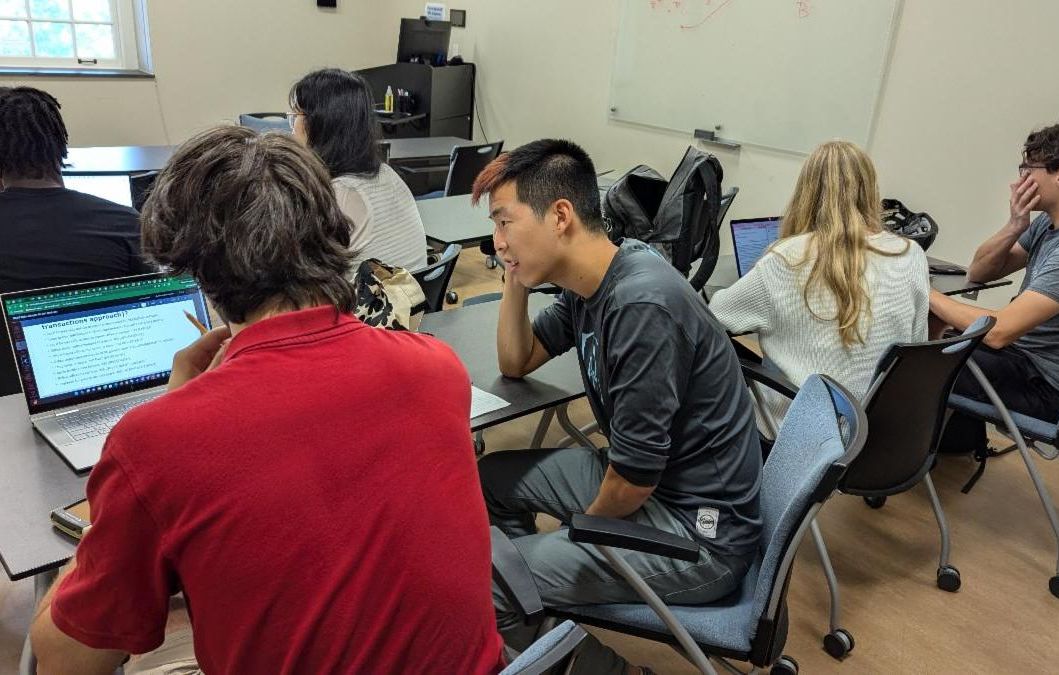
Through TLTC funding, Stefania Scandizzo has moved the program beyond holding office hours by adding peer-led review sessions before exams. Early implementation demonstrates that students love these sessions, while undergraduate TAs develop presentation and classroom management skills plus deeper conceptual understanding.
The program's foundation rests on Martina Copelman's training course (ECON399T), which equips undergraduate TAs with problem-solving strategies and teaching techniques. It tackles common challenges such as students' varying mathematical backgrounds and effective communication, while covering university policies.
The review sessions benefit TAs too. Aliza Ruttenberg, a current undergraduate TA, reflects: "Working as a TA has transformed how I understand economics. Explaining concepts to other students forced me to think more deeply about the material, and the presentation skills I've developed have already helped me in job interviews. It's rewarding to see students have those 'aha' moments during review sessions."
TAs also receive stipends and gain transferable skills for future careers.
You can help support our students and TA initiatives by donating to the Department of Economics Gift Fund during Giving Day.
| | | |
Master's Program Pilots Teaching Assistant Project
The Master’s program in Applied Economics has recently started giving opportunities for its students to be teaching assistants for core courses. The TA pilot program ran during the Fall 2025 semester, where student Trishna Mohan TAed Microeconomic Analysis and now graduates Danny Overcash (‘25) and Mihir Madhekar (‘25) TAed Empirical Analysis I and Empirical Analysis III: Econometric Modeling and Forecasting respectively.
Mihir worked with instructor Samuel Rowe, a Health Resources & Service Administration Economist by day. Danny worked with a Carly Trachtman, a Research Fellow at the International Food Policy Research Institute. Trachtman was in her first semester with the program, and Danny was a particular help in getting the new instructor settled. Trishna TAed for Program Director Filipe Lage for his online course.
This new initiative improved the learning experiences of the current students, who were able to learn from and strengthen their relationships with other, older students in their own program, and it inspired the current cohorts to study harder in the hopes of being able to TA in future semesters. The program directors were enthusiastic about the ability to offer this opportunity to three outstanding students, and were exceptionally pleased with the final outcome.
| | | | | |