EDI Newsletter - February 2026 | | |
Welcome to the 17th edition of the Ontario CLRI’s Equity, Diversity and Inclusion (EDI) newsletter! These quarterly newsletters feature updates, news and highlight educational resources to support your EDI journey. If you missed any of our previous editions, you can check them out here. | |
Join us online!
Follow and tag us using #EDIinLTC
| |
|
This year marks 30 years since February was officially recognized as Black History Month in Canada, following a motion passed by the House of Commons in December 1995.
The 2026 theme, “Honouring Black Brilliance Across Generations — From Nation Builders to Tomorrow’s Visionaries,” celebrates the lasting impact of Black Canadians across history, the present, and the future.
Black communities in Canada are diverse, with roots across Africa, the Caribbean, North America, and beyond. In long-term care, many Black older adults bring life experiences shaped by migration, leadership, resilience, and, for many, experiences of systemic discrimination. These realities can influence how care is accessed and experienced. At the same time, Black team members contribute essential skills, compassion, and cultural knowledge that strengthen long-term care environments every day.
Black History Month invites us not only to learn about the stories and contributions that have shaped Canada, but also reflect on how this history shapes the experiences of residents, care partners, and colleagues in long-term care today, even while many continue to face racism and discrimination in their day-to-day work.
It is also an opportunity to acknowledge ongoing health inequities. Dementia prevalence among Black Canadians is rising rapidly, with a projected 507% increase in cases by 2050 (from 4,800 in 2020 to over 29,100). Research also shows that Black communities experience higher rates of dementia compared to the general population, influenced by factors such as systemic racism, barriers to culturally safe care, and higher prevalence of risk factors, such as diabetes (Alzheimer Society of Ontario, Social Determinants of Health and Dementia in Black Communities).
As we recognize Black History Month, we recommit to advancing equitable, culturally safe, and inclusive care across our sector.
| | | | |
Articles:
Honoring Black History Month: Ideas for LTC organizations to celebrate and commemorate:
This article provides actionable strategies for LTC homes to provide meaningful engagement during Black History Month. It emphasizes honoring the "living history" of residents through storytelling, participating in scheduled events, and utilizing consultants and guest speakers. The article also highlights some pitfalls to avoid when organizing Black history month events and celebrations.
Videos:
Alzheimer Society: Dementia in the Black community (Video series):
This video series is a resource for health-care providers, care partners, people living with dementia, and anyone interested in understanding the unique experiences of the Black community with dementia. The videos were created in collaboration with health-care providers, people living with dementia, and care partners.
Black History Month: An eye towards research and innovation (Video series):
This video series features three Black professors from the University of Ottawa sharing their academic journeys and lived experiences as Black scholars. The videos highlight their unique research focuses including access to healthcare for racialized seniors and the importance of empowering the next generation of Black researchers.
Mois de l'histoire des Noirs - Black History Month (6 minutes):
This short video from Bruyère Health celebrates Mois de l’histoire des Noirs (Black History Month), offering reflections from Black team members on the importance of history, culture, resilience, pride, and allyship in the workplace and beyond. It highlights the value of honouring Black contributions and lived experiences as part of building inclusive, equitable spaces.
Recorded Webinars:
Healthcare Excellence Canada: Black Health and Addressing Anti-Black Racism (February 11, 2025 - 01:01:03 )
In this webinar, we’ll discuss the historical and ongoing presence of anti-Black racism in medicine and healthcare, including its impact on patient safety and equity for Black people and communities. Participants will explore actionable strategies that healthcare leaders, organizations, and the broader system can implement to create safer, more equitable healthcare environments. Topics explored in this session will include successful initiatives that have effectively addressed anti-Black racism and practical steps to apply these lessons within health and care settings. Join us in this important conversation to ensure that all patients receive care that is safe, respectful and equitable.
Learning Modules:
The Ontario Human Rights Commission: Call it out: Racism, racial discrimination and human rights
This 30-minute, free, interactive eCourse provides a foundation for learning about race, racial discrimination and human rights protections under Ontario's Human Rights Code. The course presents a historical overview of racism and racial discrimination in Canada, explains the concepts of "race," "racism" and "racial discrimination", and provides ways to prevent and address racial discrimination.
Toronto Academic Health Science Network: Introduction to Anti-Black Racism eLearning Module
The Introduction to Anti-Black Racism eLearning Module offers Anti-Black Racism education that provides an introduction to the historical roots and ongoing legacy of Anti-Black Racism in Canada, insight into the forms that Anti-Black Racism can take in people’s lives and opportunities for reflection and/or discussion on how to address Anti-Black Racism in work and personal life.
| |
| |
Lunar New Year
Lunar New Year, also known as the Spring Festival in some cultures, marks the beginning of the lunar calendar and is widely celebrated across East and Southeast Asia and within diaspora communities around the world. It is observed by many cultures, including Chinese, Korean, Vietnamese, Tibetan, and others, with traditions that vary by region and community.
In 2026, Lunar New Year begins on February 17, marking the start of the Year of the Horse.
A common greeting during this time is “Happy Lunar New Year.” Depending on the culture and language, you may also hear:
- “Gong Xi Fa Cai” (Mandarin)
- “Kung Hei Fat Choi” (Cantonese)
- “Seollal” (Korean Lunar New Year)
- “Tết” (Vietnamese Lunar New Year)
In long-term care settings, recognizing Lunar New Year can support residents and team members in feeling seen, respected, and connected. Consider the following approaches:
- Use inclusive language (Lunar New Year) and recognize that traditions vary across cultures (e.g., Chinese, Korean, Vietnamese) and families.
- Offer optional activities that support pride and connection (music, stories, crafts, cultural learning), with adaptations for residents with dementia.
- Where possible, include a celebratory snack or meal option while considering dietary needs, swallowing safety, allergies, and resident preferences.
- Encourage leaders to offer flexibility where possible and reinforce that racist jokes, stereotypes, or dismissive comments are not acceptable in the workplace.
| | |
Ramadan
Ramadan is the ninth month of the Islamic lunar calendar. It is a period of fasting, introspection, reflection, spirituality, and charity for Muslims around the world. During this holy month, it is estimated that more than 1.6 billion Muslims observe fasting from dawn to sunset as an act of worship, a way to grow closer to God, and an opportunity to practice compassion and generosity.
In 2026, the holy month of Ramadan is expected to begin around February 17 and conclude around March 19 (dates may vary based on moon sighting).
During Ramadan, a common greeting is “Ramadan Mubarak” (meaning “Blessed Ramadan”) or “Ramadan Kareem” (meaning “Generous Ramadan” or “Happy Ramadan”).
After the conclusion of Ramadan, Muslims celebrate Eid al-Fitr. At that time, it is appropriate to say “Eid Mubarak”, which means “Blessed Eid” or “Happy Eid.”
In long-term care, thoughtful planning can help residents and team members observe Ramadan in ways that feel respectful and supportive.
Supporting Residents:
- Consult with doctors and nurses to provide care plan adjustments by transitioning medications to a "twice-daily" schedule (at Suhoor/dawn and Iftar/sunset) when clinically safe.
- Provide meals rich in carbohydrates, protein, and fluids to sustain energy and hydration during the day.
- When fasting poses a medical risk, facilitate a gentle conversation with a trusted spiritual leader (Imam) for guidance and reassurance.
Supporting Team Members:
- Communicate and educate team members about the ramadan and share greetings.
- Provide flexible scheduling or earlier starts so fasting team members can be home for sunset meals.
- Ensure a quiet, clean, and private area is available for daily prayers.
- Establish a protocol where fasting team members are guaranteed a 15-minute break at sunset to break their fast.
(Source: University of Toronto, Ramadan Inclusive Employer Guide, 2026)
| | |
2026 “Choral Singing for Seniors” Chinese New Year Gala
The 2026 “Choral Singing for Seniors” Gala is a community event designed to celebrate the Year of the Horse through music, social interaction, and wellness. Hosted by Easy Media, the gathering aims to foster companionship and festive joy for seniors and create lasting memories through group singing and interactive activities.
Lunar New Year 2026 in Canada
The Lunar New Year is a festive period in Canada marked by street parades, traditional dancing, fireworks, and family gatherings. A core Chinese tradition involves gifting red envelopes (Hong Bao) containing money to children to symbolize luck and fortune.
Multi-faith Practices: Guidelines for Caregivers
This resource provides an overview of Islam and other major religions to assist team members in delivering inclusive, person-centered care. The guide includes a brief description of the religion and its major beliefs, Holy Days, holidays, and ritual observances, caring practices during late life or illness, rituals and other practices that are important near the end of life.
| | Creating a Culture of Belonging: Impact Snapshot | | |
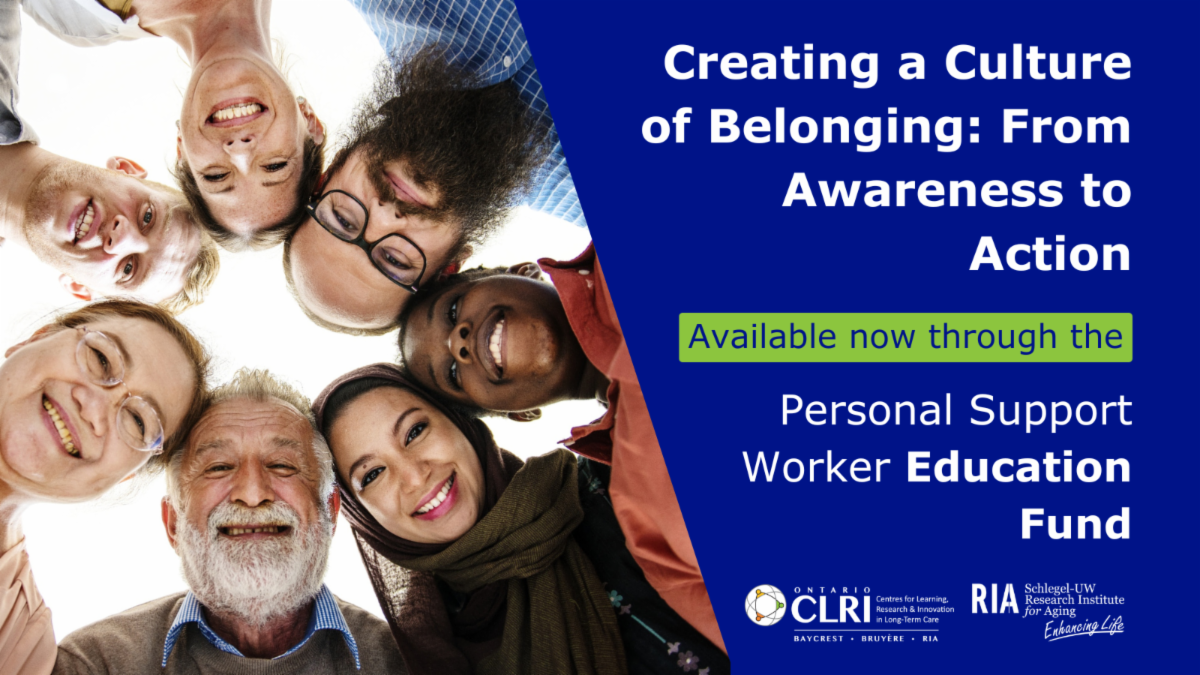
Creating a Culture of Belonging: From Awareness to Action is a 4-hour virtual workshop for long-term care team members and leaders. These sessions offer practical strategies to foster more inclusive and affirming environments for residents, care partners/caregivers, and fellow team members.
Since launching Creating a Culture of Belonging, long-term care teams across the province have been engaging in meaningful learning to strengthen equity, inclusion, and belonging in everyday practice.
Our Impact Snapshot highlights participation to date, what learners are saying, and how teams are applying the learning within their homes.
| | Thanks to the PSW Fund, backfill pay is available for any team member. Learn more about the fund and program training by visiting the website. | | Join Our Next EDI in LTC Community of Practice Session! | | |
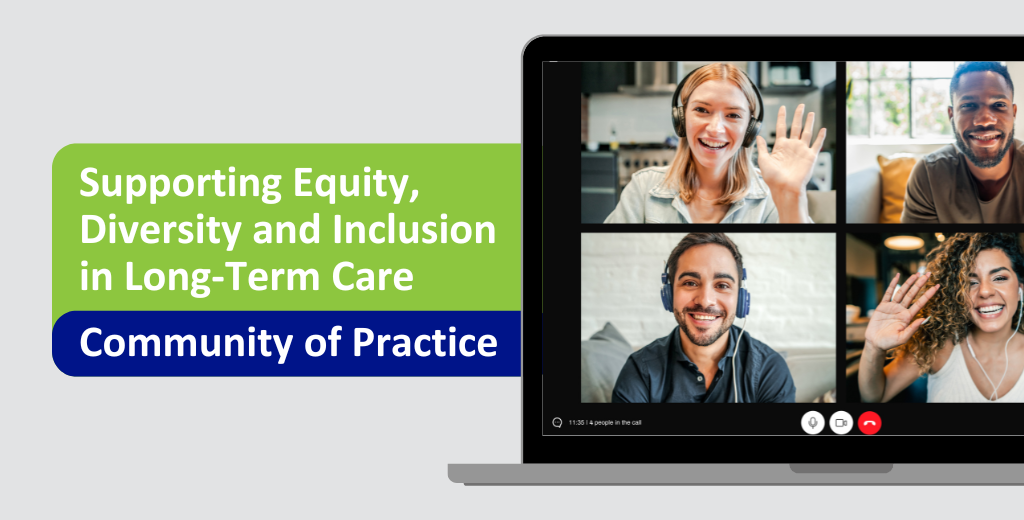
March 13, 2026: Ontario CLRI: EDI in LTC Community of Practice - Addressing Discrimination and Racism in LTC. 10:30 AM -12 PM.
Join us for the next EDI in LTC Community of Practice session on March 13th from 10:30 AM - 12 PM, focused on Addressing Discrimination and Racism in Long-Term Care. This conversation will create space to explore how discrimination and racism show up in long-term care settings, how they impact residents, families, and team members, and what meaningful action can look like beyond awareness. Together, we will reflect, share practices, and identify practical steps that support safer, more inclusive, and more respectful care environments for everyone.
| | Upcoming Learning Opportunities | |
-
February 18, 2026: University of Ottawa: Supporting Immigrant Physicians, Healthcare Professionals and Medical Learners: A Personal and Professional Journey - 12-1 PM EST Cost: Free
-
March 3, 2026: Healthcare Excellence Canada: Equity, Diversity, Inclusion Virtual Learning Exchange: Introducing the HEC Health Equity Framework: From framework to action: Launching the HEC Health Equity Framework - 12-1PM Cost: Free
-
March 5, 2026: CERAH Lakehead University: Equity in Care: Palliative Care for People Living with Intellectual Developmental Disabilities (IDD) - (available in-person and virtually) 9- 5 PM EST Cost: Free
-
March 10, 2026: CCDI: International Women’s Day panel: Inspiration. Insight. Impact. - 1 - 2 PM Cost: $39-49
-
March 23-25, 2026: Together We Care Conference - Cost: starting at $599-1400
-
March 25, 2026: Healthcare Excellence Canada: Equity, Diversity, Inclusion Virtual Learning Exchange: From framework to impact: Equity oriented care in practice - 12-1:30PM Cost: Free
-
April 7, 2026: CCDI: Mapping DEIA metrics in the workplace: Stories, data, and benchmarks that matter - 1 - 2 PM Cost: $39-49
| | Additional EDI Resources to Explore | | |
Recorded Webinars:
Canadian Virtual Hospice: Indigenous Voices: Supporting Healthy Ways of Living Through Grief and Loss Webinar Recording (January 21, 2026 - 01:20:08)
This webinar explores Indigenous perspectives on grief and loss, focusing on strength-based, culturally grounded approaches to supporting healthy ways of living while grieving.
Toolkits:
Egale: Building Bridges: 2SLGBTQI Anti-Racism Workbook
This workbook from Egale Canada offers guided activities and discussion prompts to help teams reflect on racism, intersectionality, and how to build more inclusive, anti-racist practices in everyday work. It provides space for meaningful conversation, self-reflection, and learning, while also supporting teams to identify concrete steps for change within their roles, environments, and organizational practices.
EDI in LTC News:
How an Ontario First Nation fought to keep its Elders at home
“If we don’t get the funding for a new building, you’re going to be removing our Elders a second time... You took our kids when they were children, and now they have to leave again when they’re Elders.” Driven by these powerful words, Tim Ominika, Chief of Wiikwemkoong Unceded Territory advocated for over a decade to finally secure $45 million in provincial funding for a new 96-bed long-term care home. This new project ensures that Elders, many of whom are residential school survivors, can remain on their land, close to their families, and avoid secondary displacement to urban centers.
Filipino community concerned as IRCC pauses caregiver programs
Immigration, Refugees and Citizenship Canada (IRCC) has paused its two caregiver pilot programs which provided a pathway to permanent residency for migrant workers. The decision, driven by a high volume of applications, has sparked significant concern within the Filipino community and left many workers in legal limbo. According to Statistics Canada, half of all Filipino immigrants have historically been admitted through these caregiver pathways, pausing them now threatens to worsen the critical shortage of home care providers for Canada's aging population.
This Toronto long-term care home is being redesigned after learning from the COVID-19 pandemic
The Rekai Centre’s new Cherry Place Home in Toronto is redesigning long-term care by exceeding provincial standards through smaller resident cohorts and private rooms. Through reducing "resident home areas" to just 14 or 18 beds, the design creates a home-like atmosphere with suites, terraces, and greenspaces for families to stay while visiting. Informed by the lessons of the pandemic, this "small care home" model aims to reduce viral spread while significantly enhancing residents' emotional well-being and social connection.
| | The Ontario CLRI is funded by the Government of Ontario and hosted at Baycrest Academy for Research and Education, Bruyère Health Research Institute, and the Schlegel-UW Research Institute for Aging. The collective expertise, resources, and partnerships of the host organizations help advance the Program’s provincially mandated goals. | | Received this email as a forward? Subscribe to the Ontario CLRI EDI newsletter to receive your own quarterly edition! | | | | |