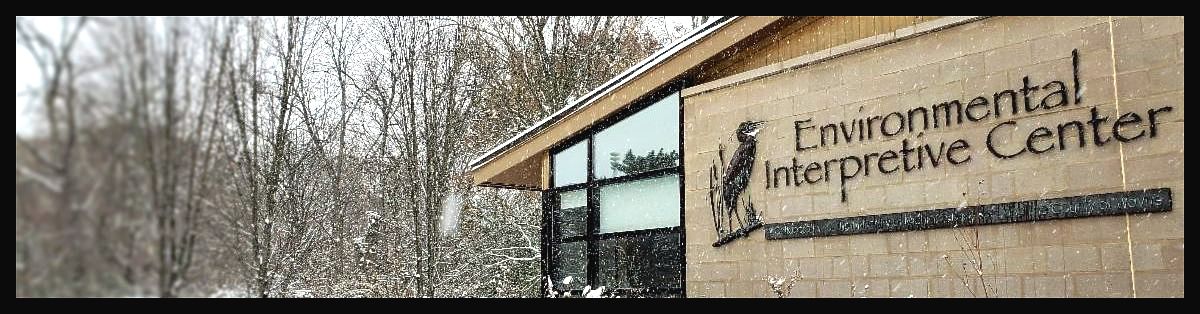
Environmental Interpretive Center eNewsletter Dec. 17, 2024 | |
|
Celebrate Our Victories-
Look Forward to New Projects
| |
|
In this issue:
- A Note from the Director
- Outstanding Students
- Upcoming Programs
- Tales From the Trails: "Sweater" Weather?
- Greenways: A Cup'o Cheer for the Birds
| |
A Note From the Director
Well, 2024 comes to an end, and what a year it has been! In my first full year as Director of the EIC, several things are obvious:
1.The EIC is full of winners: From students recognized as Difference Makers and Honor Scholars to regional and national award winning interpreters, the EIC staff and student staff are simply the best of the best!
| |
|
|
2.It takes a village: So many UM-D faculty, staff, and students are ensuring that the EIC reflects the diversity and charisma of UM-Dearborn!
3.Never a dull day: Surprises can happen any day and the staff are willing and capable to handle anything, usually with care and humor. Want a good story? Come by and ask…
4.Community powers us forward: The support we get from volunteers and donors is exceptional and ensures we maintain a positive imprint on neighboring communities.
| |
|
In 2024, the EIC added more art to our programming and building, welcomed 4 new student sustainability fellows, received multiple grants to enhance existing programs, developed collaborations with engineers, public health experts, and community organizations, and began a native seed library.
In 2025, we look forward to initiatives that bring Indigenous voices to campus, grow existing programs, improve the health of our study area, and increase our footprint in SE MI. Our growth is not possible without the donations and volunteer efforts of so many of our friends. As you celebrate the New Year, please consider supporting the EIC, and as always, stop by to see our progress and say “hello!”
Happy Holidays!
| |
The EIC has been fortunate to have the assistance of bright, innovative students over the years and it's time to shine a light of three graduating seniors. Congratulations and best wishes to each of them! | |
Zach Pousak
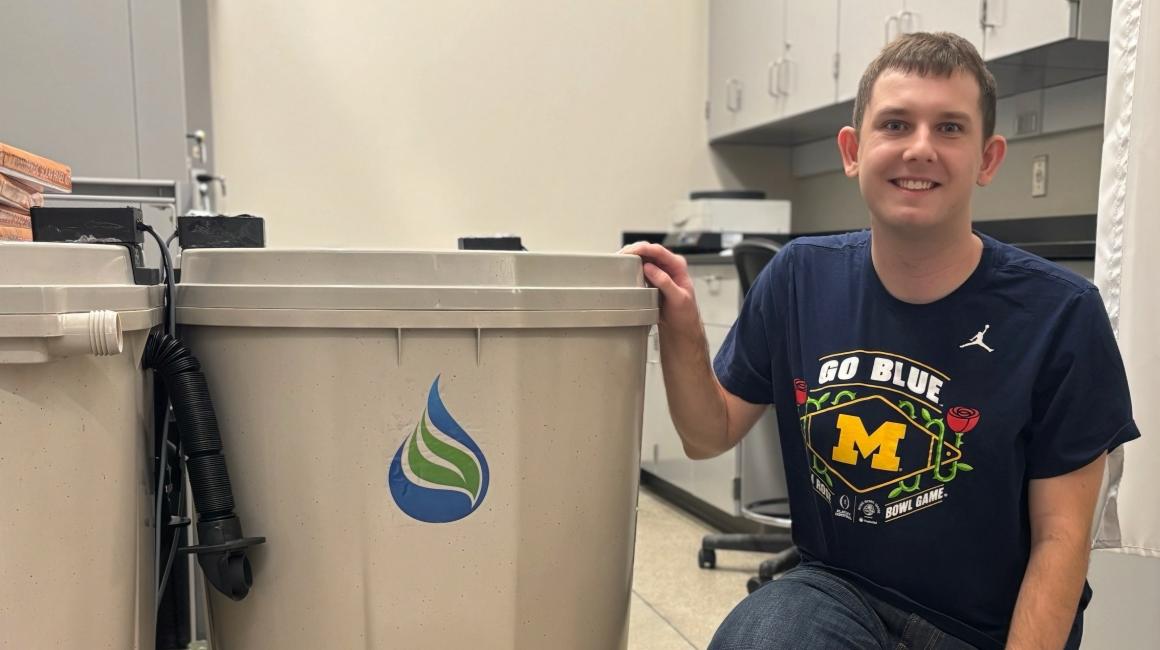
Zach Pousak helped us digitize decades of herbarium (plant) specimens over the summer of 2023. In addition to this project, Zach shared his talents across campus in several disciplines. (Zach, pictured with his "smart rain barrels.")
| |
|
He credits several professors for his accomplishments, including EIC director Jacob Napieralski. "Traveling outside of North America for the first time during a two-week Study Abroad with Geology Professor Jacob Napieralski, we visited Oslo and other towns like Stryn to monitor glacial melt at the end of the Innvikfjorden fjord and the Jostedalsbreen glacier." Read more about Zach's accomplishments near and far in Sarah Tuxbury's article. | |
Sasha Kindred
Sasha Kindred has contributed to our partner programs, such as the EIC's mental health walks and at the EIC's Community Organic Garden. Her most notable internship experience has been as a sustainable well-being intern for UM-Dearborn’s Planet Blue Ambassador program, a position she pursued due to her interest in exploring the connection between mental health and caring for the environment. Read more about this exceptional student and her future plans.
| |
Our Own Valerie Osowski!
This name must be familiar to our readers, since Valerie is part of our student staff and writes our Greenways column. She is the Cooper Family Sustainability Intern, co-coordinator of the Community Organic Garden, co-coordinator our the EIC Young Naturalist Programs, and former president of the Student Sustainability Coalition, associated with Planet Blue. Valerie is graduating with Distinction. These are just some of the reasons Valerie received the Environmental Science Honors Award! Here she is with her composting creation, "Greenie," who composts leftovers from school program lunches! (Photo by the Editor)
| |
|
|
Welcome the New Year on an Evening Walk!
Friday, January 3
6:00-7:30 p.m.
After all the holiday celebrating, how about a quiet moonlight walk on the trails with the EIC Naturalists? The moon phase for January 3 is a waxing crescent; this is the phase where the moon started to become visible again after the New Moon. A new year with a new moon! Wear sturdy shoes and bundle up for whatever the 2025 weather serves up. We'll warm up together afterward by the fire! Please register for this program.
Partner Event*
Saturday, January 25, 2025 10 a.m. – 3 p.m.
*Friends of the Rouge needs your eyes, hands, and boots on the ground! No prior experience is necessary, but PRE-REGISTRATION IS REQUIRED. Children eight and older are welcome when accompanied by a PARTICIPATING adult; groups limited to four people.
Meet at the Plymouth Cultural Center, 525 S. Farmer, Plymouth, MI 48170
Stay Tuned--Upcoming Michigan Naturalist Program!
The EIC is hosting the 2025 session of Michigan State Extension's Michigan Naturalist Program. Known as the Rouge River Region host site, the EIC's sessions will be held once a month on Saturday mornings from May through October. More information will be provided in next month's newsletter.
| |
Fuzzy Folklore at Our Feet
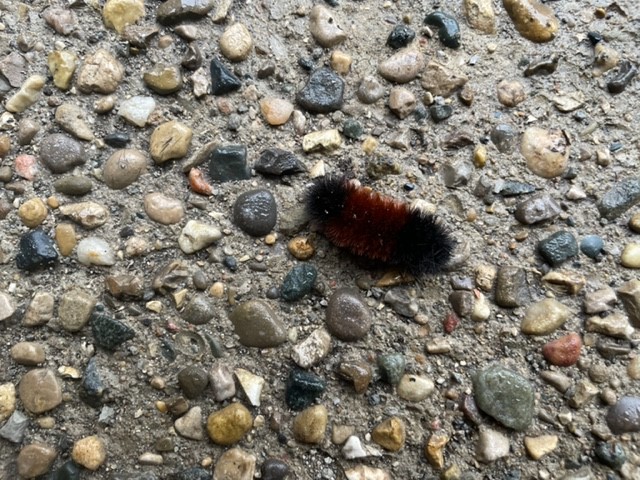
On a recent afternoon, I happened upon the unmistakable form of what might be the most familiar caterpillar within its range: a woolly bear. It really stood out as it rested on the pavement just outside the Environmental Interpretive Center, pictured right. It stirred a bit as I watched it, indicating that it was not in a dormant state. (Photo by the author)
| |
|
As a naturalist, my initial thoughts when encountering a moth larva would typically have to do with its life history, including the species, ecology, and other science-oriented speculation—but no.
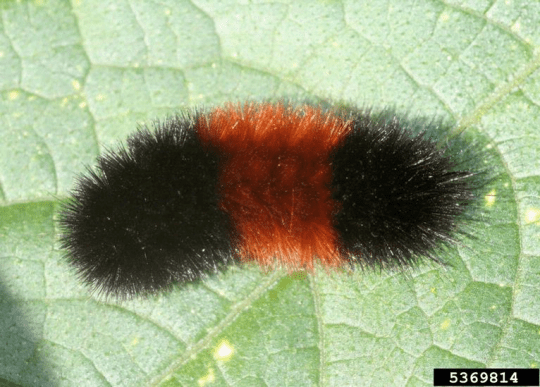
What did I ask myself right away? You guessed it: "Does the 'sweater' of rusty bristles on the woolly bear’s midsection, set off by jet black bristles front and back, forecast a long or short winter?" To me, the sweater seemed quite robust, indicating that, by woolly bear measure, we were in for a long winter. (Photo by Whitney Cranshaw; Colorado State University; Bugwood org)
There was a catch, of course. Clad in a light coat of my own, as I had been during most of these oddly warm late fall/early winter days, it occurred to me that if this winter is truly to be a long one, it had better get going.
| |
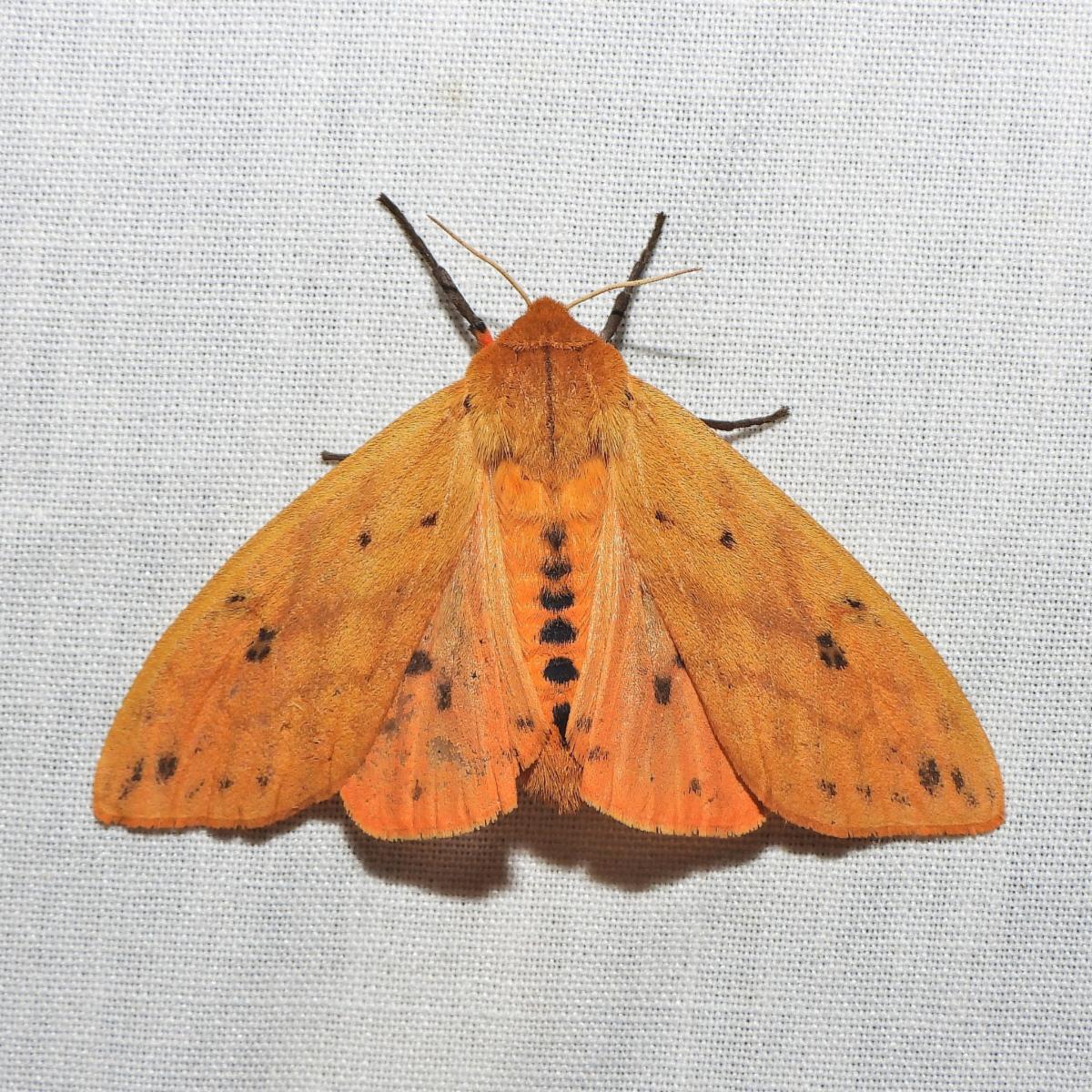
Switching from thoughts of folklore to science, I was pleased to know that I was looking at the larva of the Isabella Tiger Moth (Pyrrharctia isabella), pictured right. I was happy that this native moth species was finding a home in the adjacent rain garden habitat just outside the EIC. I also reminded myself that I was looking at one of the few caterpillars that, unlike most moth species, actually spends the winter in its larval form. (Photo by Emilio Concari) | |
|
|
As my sense of wonder kicked in, I thought about how my observation
of the woolly bear in early December might be connected to the trend
of warmer winters for our region. In response, I entered the date of my
observation in the “Signs of the Season” notebook at the EIC reception
desk. From this point on, I’ll be noting and comparing different late
sighting dates of active woolly bears on campus.
You can help with this bit of local community science. If you spot an active
woolly bear on campus in December or any other winter months, make
a note of it in the EIC!
-Rick Simek
| |
|
A Cup'o Cheer for the Birds!
Right now, many of us are shopping for holiday gifts and looking for ways to warm up during the colder months. For all the coffee drinkers, purchasing a bag (or a few) of bird-friendly coffee is a great way to stay warm and awake in a more sustainable way this season!
| |
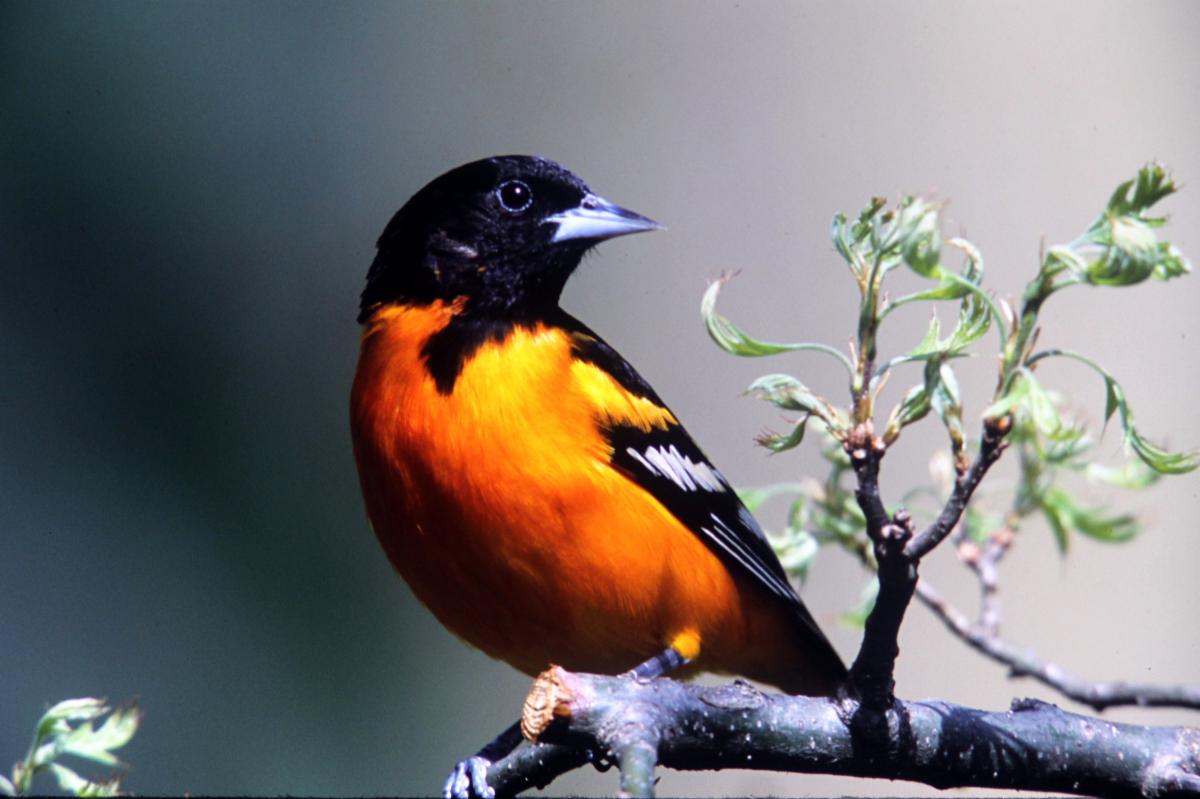
Many migratory bird species travel south for the winter to warmer countries that are often major producers of coffee. For example, the Baltimore Oriole (Icterus galbula) is an easily recognizable bird that comes to Michigan and much of eastern North America during the spring to breed, but will stay in warmer climates during the winter. (Photo by Jim Simek) | |
|
A few of the countries that the Baltimore Oriole will travel to, such as Colombia, Guatemala, and Puerto Rico, are considered some of the world’s largest producers of coffee. | |
Typically, coffee farms clear large swaths of land to make space to farm and provide plenty of sunlight for the coffee plants, which results in habitat loss for migratory birds. Most of these farms will also use chemical pesticides, which kill the insects that are an essential food source for birds.
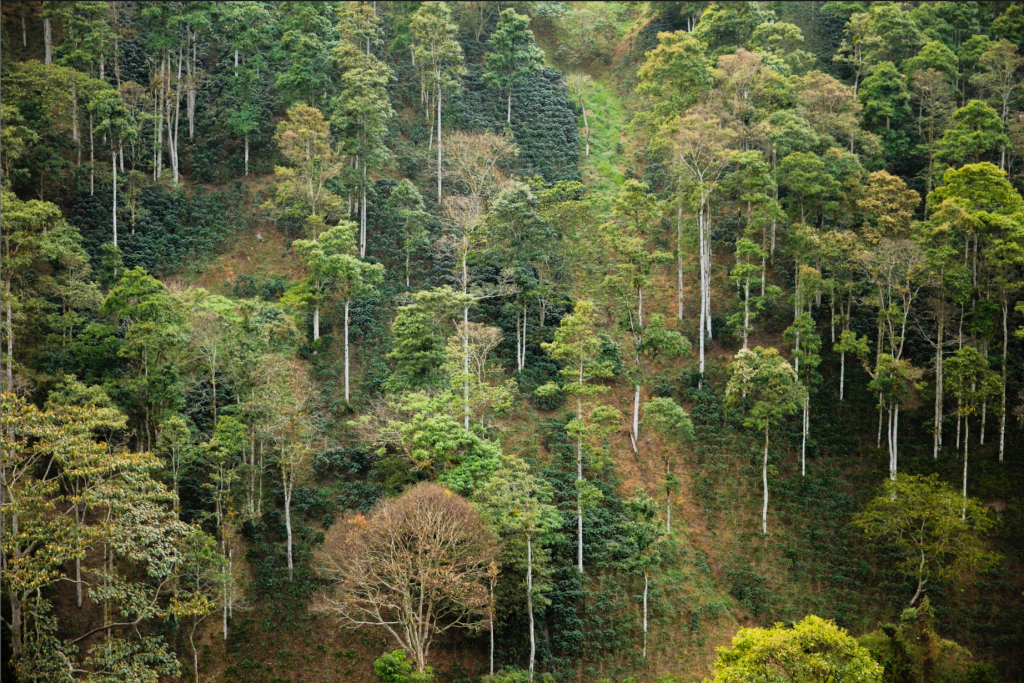
On this farm near Andes in Antioquia, Colombia, coffee trees grow beneath a layer of canopy trees in a shade-grown coffee plantation. (Photograph by Guillermo Santos)
For species like the Baltimore Oriole, habitat loss and lack of food are two of the most severe threats to their survival. Meanwhile, farms that produce bird-friendly coffee will grow coffee in the shade of native forests and do not use harmful pesticides, giving birds a much-needed healthy and diverse habitat to live in during the winter.
| |
|
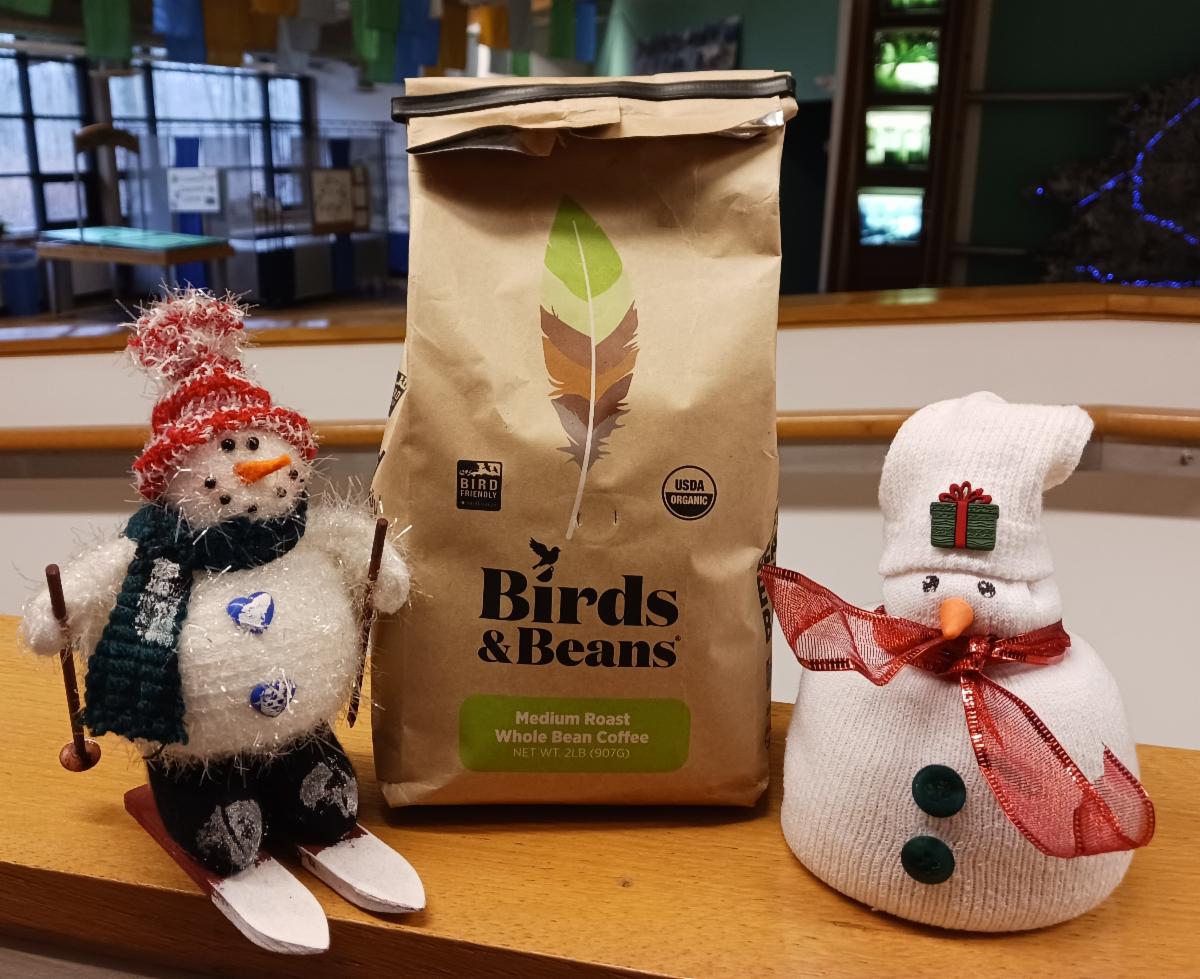
The staff at the Environmental Interpretive Center personally enjoy drinking bird-friendly coffee from Birds and Beans, which has a wide variety of roasts and flavors available on their website. However, you can check if other coffees are bird-friendly by looking for the Smithsonian Bird-Friendly certification on the company website or on the coffee’s packaging. Consider gifting yourself or a loved one some bird-friendly coffee this year. Cheers!
Valerie Osowski
Environmental Interpretive Center Cooper Family Intern
| |
Venturing outdoors and encountering nature is good for your health. Our trails are accessible, so please visit our Environmental Study Area. Stay engaged in learning activities and check out our Remote Learning Activities & Resources page for ideas to create a “Neighborhood Nature Journal” and “Family Nature Walk” activities!
We also hope to see you in person at our upcoming programs!
| | |
Please remember...
The EIC Environmental Study Area is open daily from sunrise to sunset. We would like to remind nature-goers that fishing on site is prohibited and to leave bikes and dogs at home because they cause disruption and stress to the EIC wildlife.
| |
| | | |