|
In this issue:
- A new look*
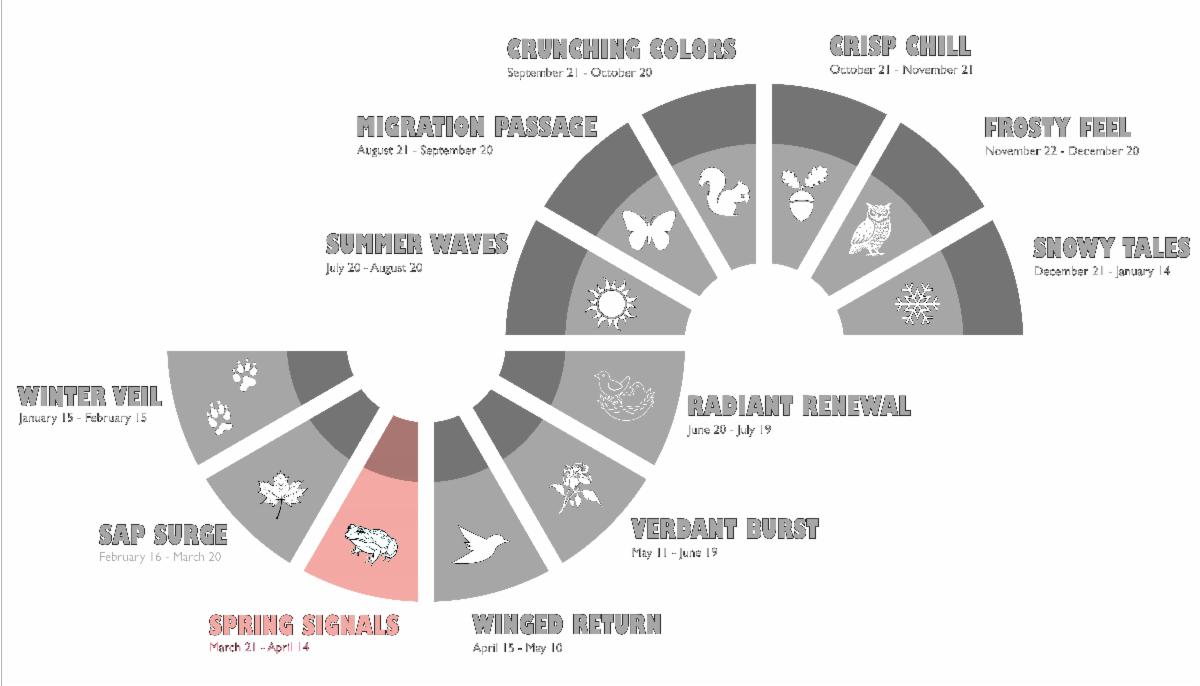
- Microseason: "Spring Signals"
- From Earth Day to Birthday--25th Birthday Events!
-
Upcoming EIC Programs, Children's Gardening Program, Summer Nature Exploration Camp, & Partner Events
- A New State Duck!
- The "Net Effect"
- Tales From the Trails: It Takes a Village!
-
Greenways: "Logscaping"-Upcycling Recovered Yard Waste
| | |
*Our EIC newsletter has a new look, as we endeavor to make our issues more easily accessible to a variety of readers. We hope more people will be able to enjoy what we publish and share the articles and activities with others.
-Dorothy McLeer, Editor
| |
Spring Signals:
A sense of anticipation permeates the season.
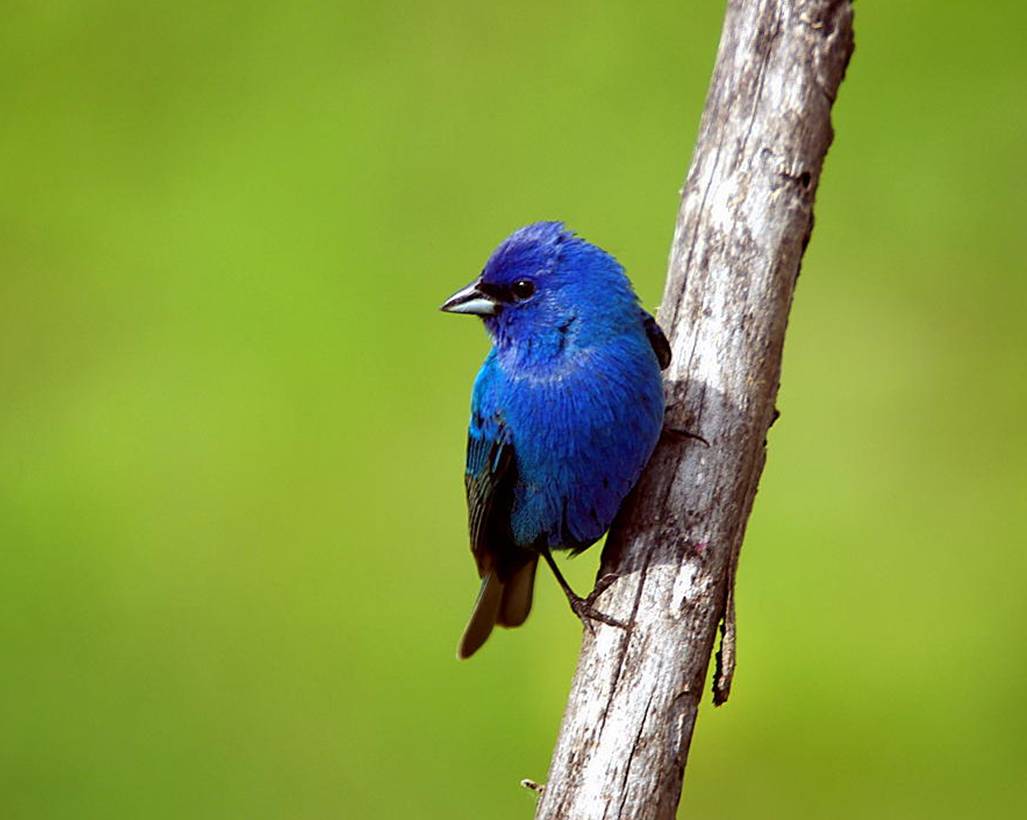
(Male Indigo Bunting by Norman Townsend, Birdshare)
| | |
From Earth Day to Birthday-
25 Years and Counting!
| | |
Mark your calendars for Saturday, May 16, when we will host a variety of activities to celebrate our "silver anniversary" throughout the day (and evening!). It's not a party without YOU!
A sampling of events include a morning bird walk with EIC staff naturalist Dale Browne will begin the celebration welcome the spring migrants back to the area. Indigenous artist Hadassah GreenSky, Little Traverse Bay Band Odawa, presents an immersive look into Anishinaabe culture. This performance brings together traditional drumming, dance, and stories to celebrate the love for the earth and the resilience of our community. Local music educator, composer, and trumpet player Andy Jarema (Photo by Soundcloud), will offer interactive sessions for families. EIC Natural Areas Manager Rick Simek is hosting a Stewardship Saturday session from 1-4. We will close the day with an evening walk and camp fire.
More information is forthcoming, so please plan on a fun day of celebrating with us for our 25th birthday! Please consider supporting the EIC with your donations at The EIC Annual Giving website.
| | Upcoming EIC Programs & Partner Events | |
Nature Walks for Mental Health
April 8 & 22
12:30-1:30 p.m.
Join EIC Staff Naturalist Isabel Stepaniak and the UM-Dearborn Counseling And Psychological Services (CAPS) staff for the last walks until fall. The Interpretive Trails will lift your spirits, and so will the celebration after the April 22 walk! Meet at the EIC to enjoy the tales on the trails!
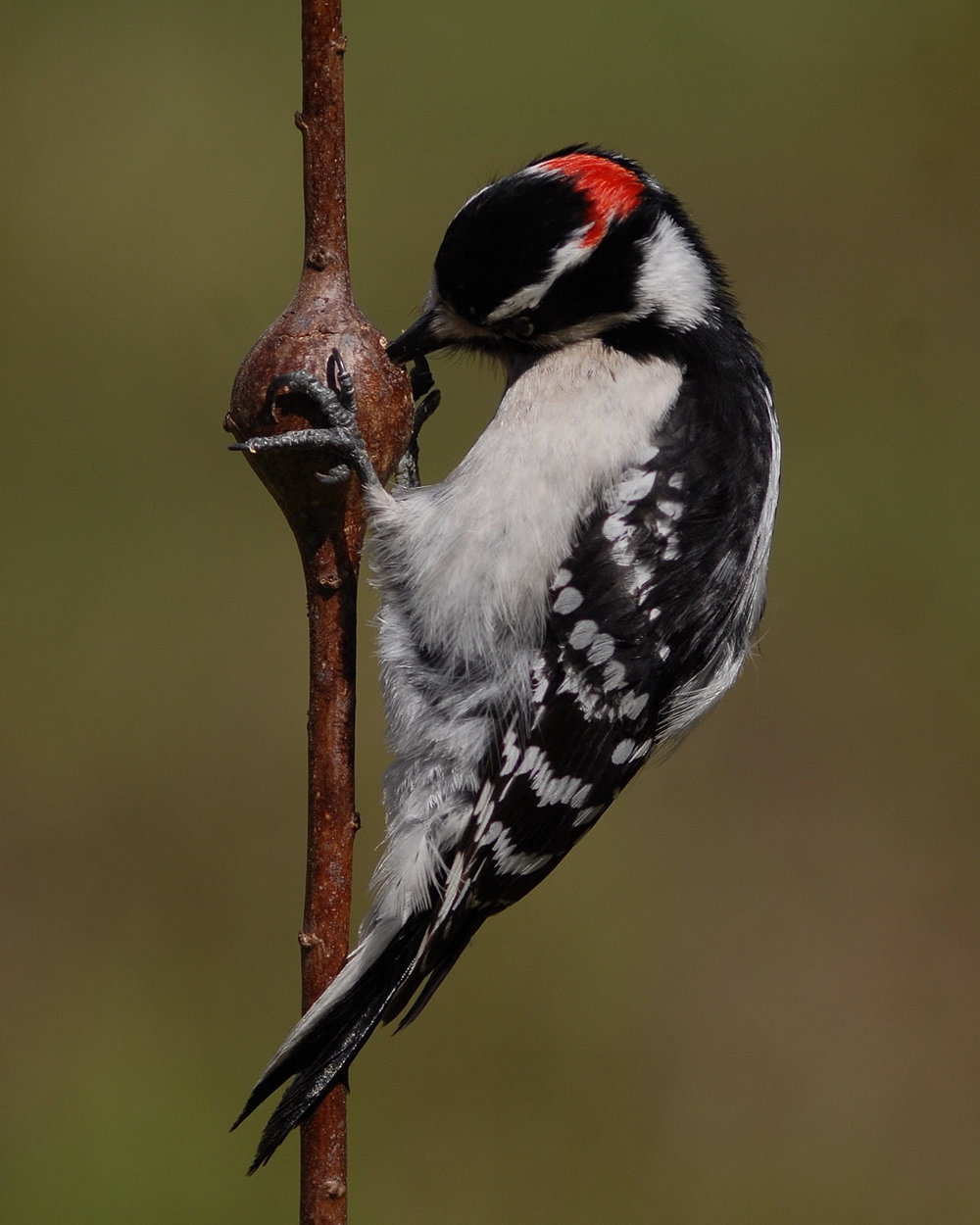
(Downy Woodpecker hammering a goldenrod gall by Warren Uxley)
| |
Photography in Nature Walk
Thursday, April 16
5:30-7:00 p.m.
Join EIC staff naturalist Mike Solomon for an evening stroll, capturing spring sightings in photos.
Meet at the EIC. Please complete the Google Form registration for this program.
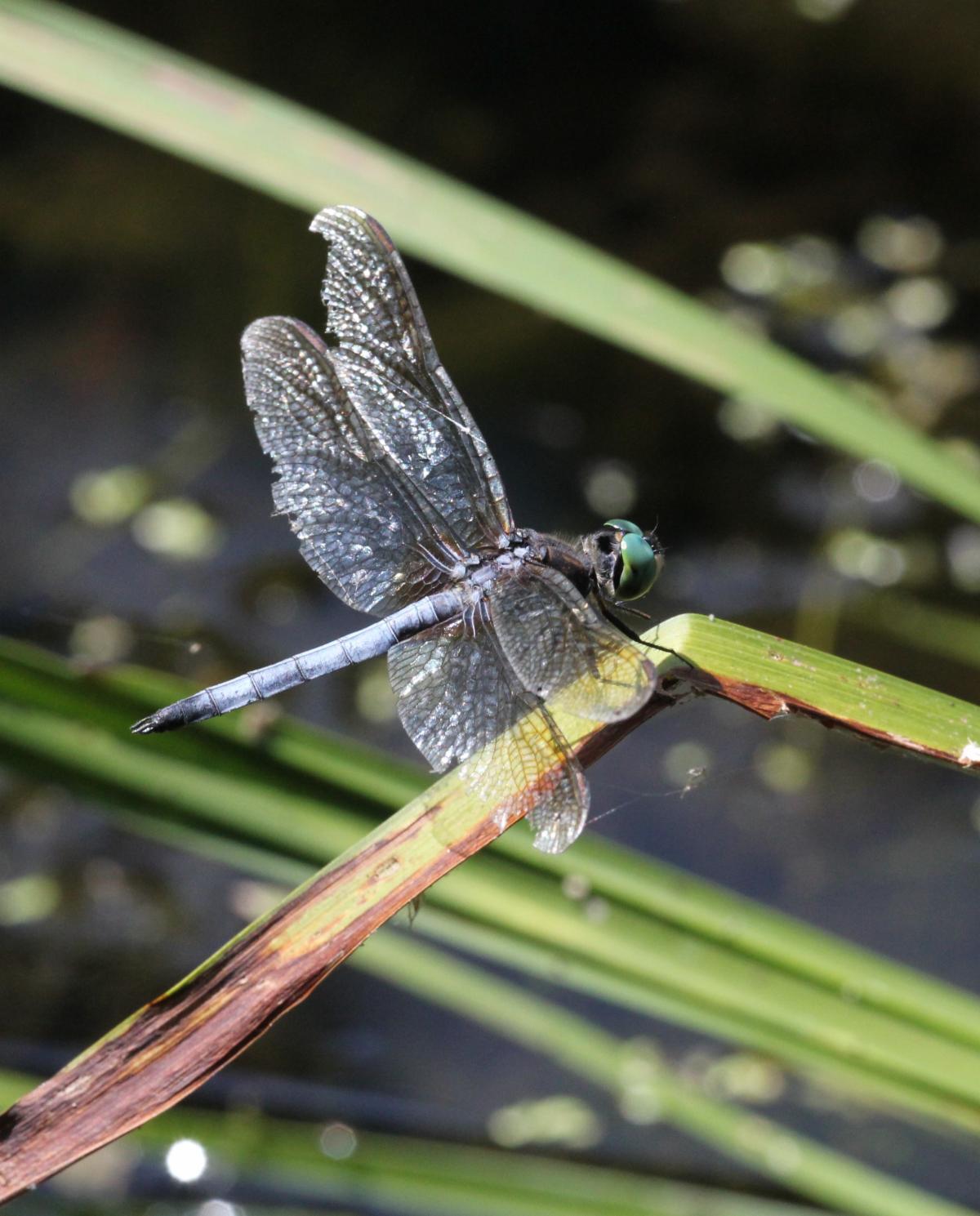
(Male Blue Dasher Dragonfly photo by "Dragon Hunter" Ken Nietering)
| |
Earth Week by an Evening Fire
Friday, April 24
7:30-9:00 PM
We'll be two days beyond Earth Day, but it's never too late to celebrate our home. Join the EIC staff for an evening spring walk, concluding by a fire with your EIC friends.
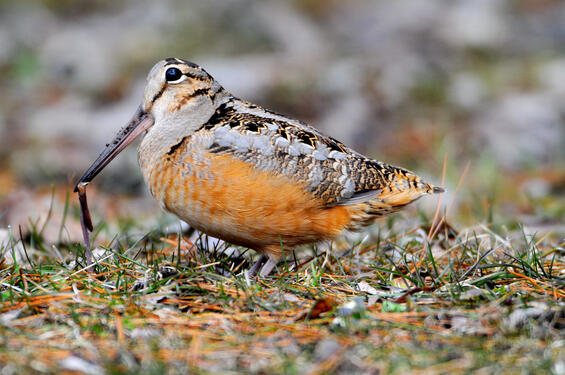
(Woodcock photo courtesy of Project Upland)
| | |
Children's Gardening Program
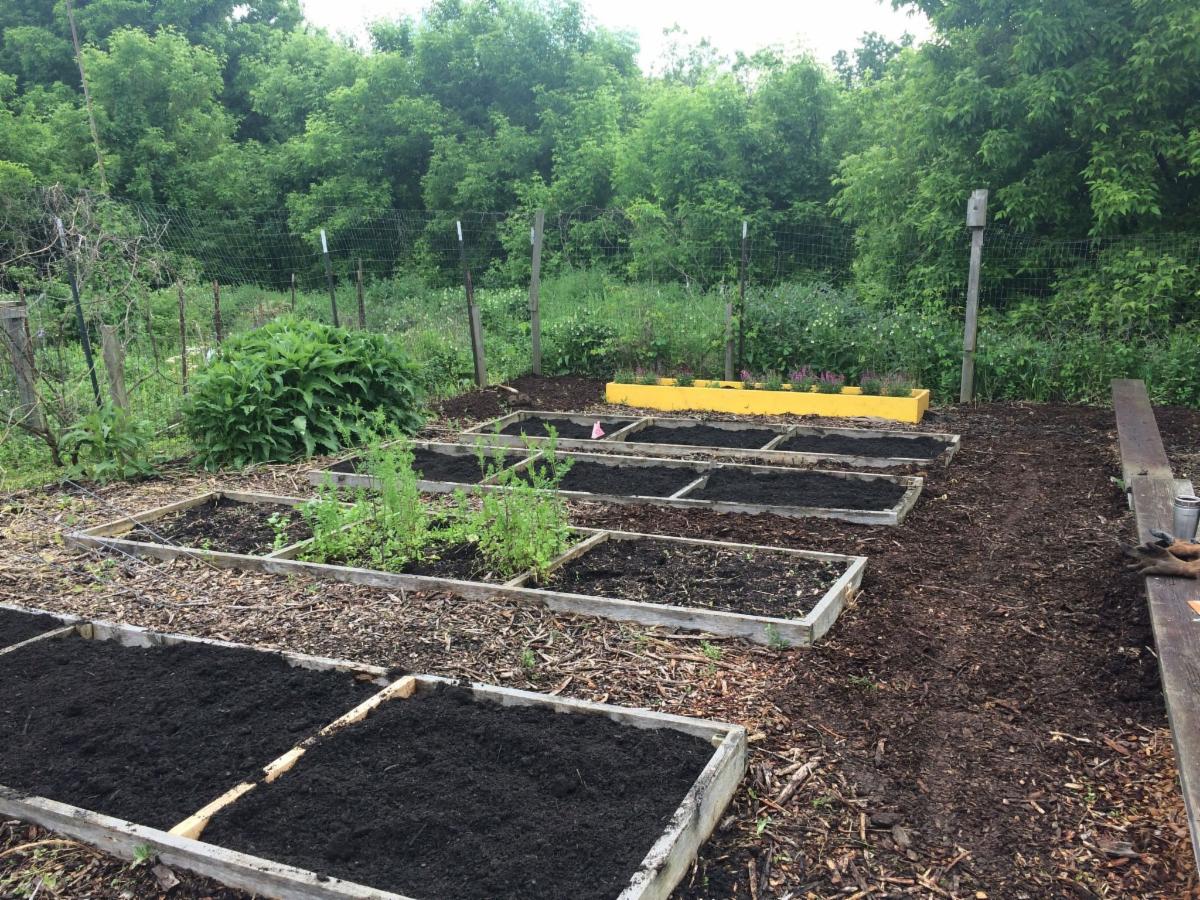
Children and an accompanying adult are invited to join other families in the enriching experience of growing food together. We’ll also have fun exploring soil, worms, composting, garden creatures, and pollination at the beautiful and interesting Community Organic Garden on the UM-Dearborn campus.
| | | Select Tuesdays at 6:00pm-7:30pm end of May through August. See the UM-Dearborn Children's Garden Program for specific dates and registration! | |
Summer Nature Exploration Camp
Program description
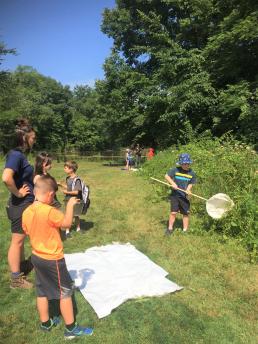
Get your child outdoors and learning about nature! Led by UM-Dearborn student interpreters, this science-oriented program provides direct, hands-on learning in a beautiful natural setting. Session topics will include: pond life, birds, insects and spiders, and frogs and turtles. Registration for Exploration Camp can be found at this Nature Explorers Program Registration..
| | |
Fair Lane: Home of Clara and Henry Ford
Restoration Showcase
Saturday, May 16, 10-4
Discover what it takes to research, restore, recreate, and preserve this unique historic landmark. The talented artisans and conservation team will share their secrets and future projects. Explore more about the Fair Lane Restoration Showcase event.
| | | Michigan's Official DUCK!!! | |
Michigan has our first official
"State Duck!!"
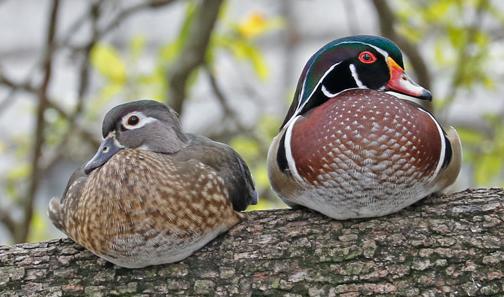
On March 25, House Bill 4044, sponsored by Representative Alabas Farhat from Dearborn(!), was signed into law by both the Michigan House and Senate, making the Wood Duck (Aix sponsa) Michigan's official state waterfowl. (Photo by Kris Petersen)
The Wood Duck faced extinction in the late 19th century due to loss of nesting sites and hunting. Wood Ducks, along with species like the Goose and Trumpeter Swan, were brought back due to the passing of the Migratory Bird Treaty Act in 1918, which Henry Ford publicly supported. Our Study Area is currently hosting several pairs who may choose this place as "home."
| | According to the U.S. Fish & Wildlife Service website, "Many of these successes are thanks to the Migratory Bird Treaty Act (MBTA), passed in 1918. This act makes it illegal to kill, capture, sell, trade or transport any migratory bird or any part, nest or egg of such a bird unless permitted. If you’ve ever been told not to pick up or collect feathers from native birds, this is likely the reason why! | | |
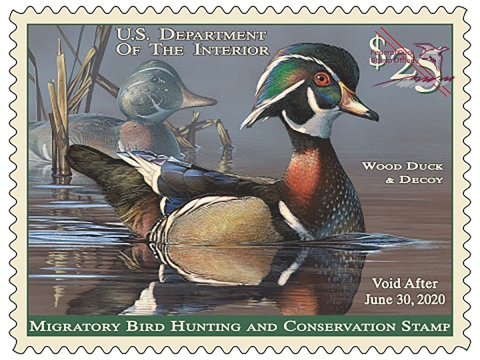
The MBTA works in combination with the “Duck Stamp Act”, passed in 1934, requiring hunters to purchase a duck stamp to legally hunt waterfowl. 98% of funds raised from duck stamp sales are used to buy and manage aquatic bird habitats. Together, these two acts help provide legal and financial support to bird conservation efforts and have saved millions of animals such as snowy egrets, sandhill cranes, wood ducks and plenty more from the brink of extinction."
| |
Thank You, DTE Foundation!
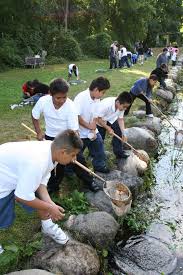
To "catch" a great program at the EIC, you'll need some equipment in good condition. Thanks, once again, to the DTE Energy Foundation, our explorers are able to catch the myriad National Park Service aquatic macroinvertebrates that live in the Rose Garden Pond.
(Photo by Tom Laundroche)
The Pond hosts thousands of school children each year, and the mesh nets take a pretty good beating, all in the name of education--and fun! We look forward to using these new nets in our inaugural spring pond programs very soon!
| | |
It Takes a Village!
I met a neighbor this evening in the city park behind my house. Any other night, he'd be just a guy walking home with a pizza and I, a strange lady in bare feet looking at the sunset. Any other night, we might smile awkwardly or exchange a guarded ‘hello’. But tonight I found out my neighbor's name is Eric and that he lives one street over, all because he noticed I'd been gazing up at the trees and asked me, “What are you looking at?” I responded with the naturalist’s standby: "Want to see something cool?”
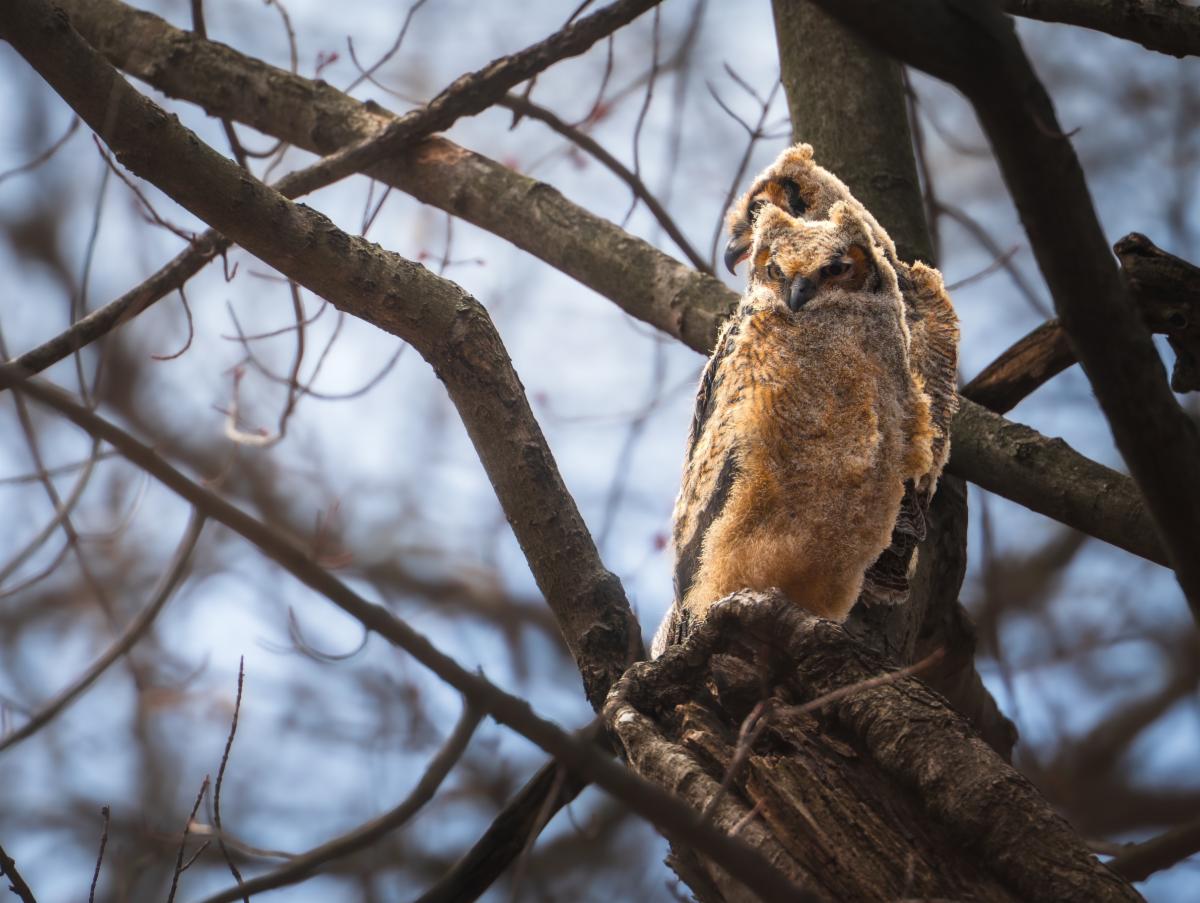
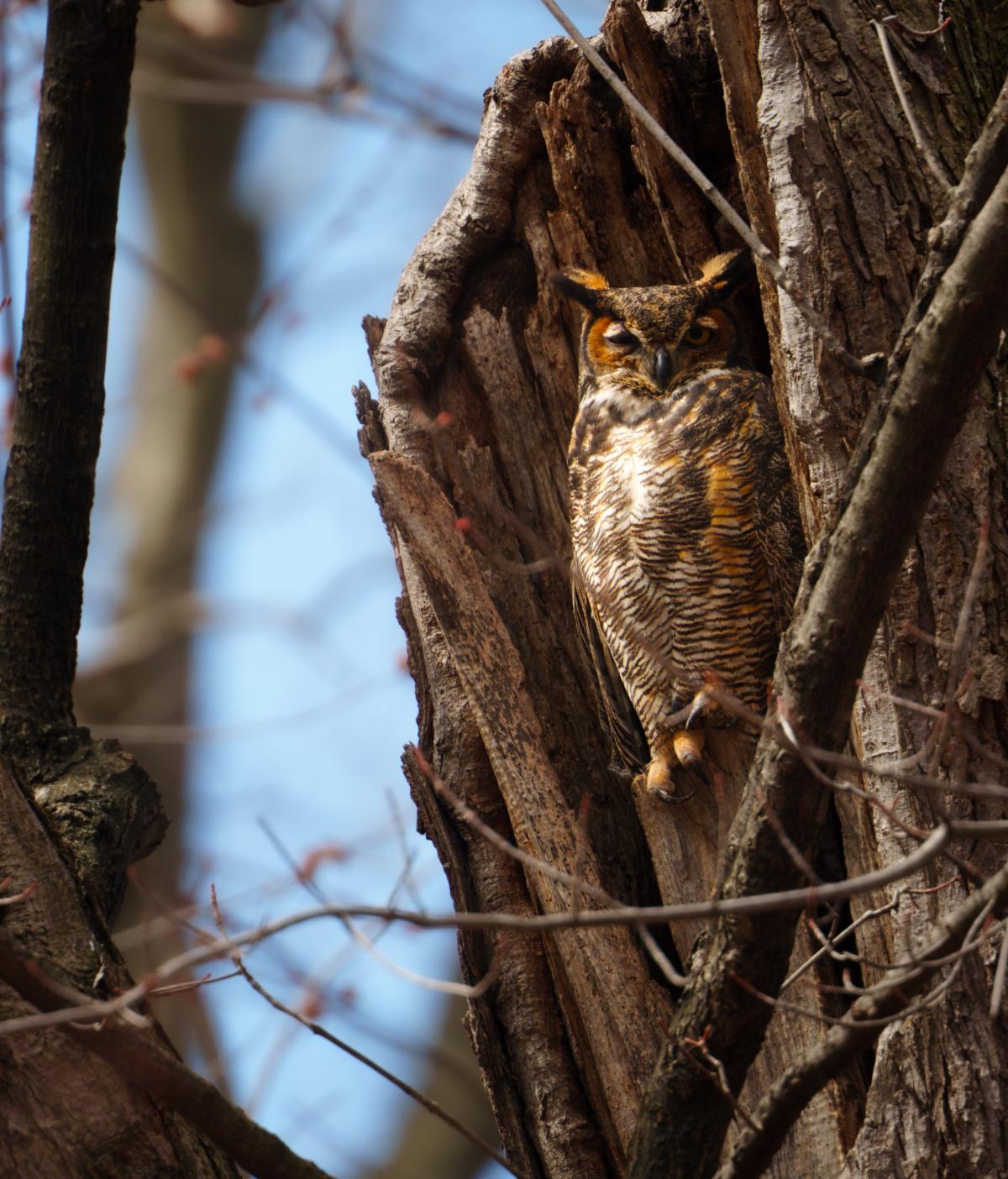
Allow me to back up a few months. Sometime in late November, I started hearing duets sung in the park. Hooted duets of two Great Horned Owls (Facebook of Harry Collins Photography) all through the night, making me crack the bedroom window open even in the coldest parts of winter. This continued until early March when the conversation changed. While one continued to hoot, the other responded with raspy squawks. I was thrilled that my hopes throughout winter might be confirmed: could there be a nest?! Food begging calls from the female likely meant she could not hunt on her own and was relying on her mate. I hoped this was because she was on eggs or with newly hatched young.
| | |
Going on my own hunt, I searched for a nest in the canopies of mature oaks and maples in the city park behind my house and neighboring suburban yards. Eventually I found a silver maple streaked with whitewash, a sign of regular owl activity. The uric acid of their waste was a beacon, indicating the tree they've been spending most of their time in.
(Photo by Isaac Polanski)
| | | Following bright white streaks up the dark gray trunk, I saw a large cavity and was surprised to find two sets of eyes peering down at me! Immediately I backed away to give them space and with my binoculars, snooped into the nest cavity where I could see mom flanked by not one, but two nestlings so fluffy with down that they looked twice her size (above). | | |
As a working naturalist, I get to meet a lot of wonderfully like-minded folks. Recently I met a Scouts leader who mentioned she and her husband had retired from my city government. She was able to connect me with the current Parks & Forestry Supervisor who assured me that the tree would not be pruned while the nestlings were present. Because Great Horned Owls may reuse the cavity in future seasons, he also promised they will make every effort to protect the tree from removal, despite the large cavity.
| | Several days later the supervisor reached out again, asking if a co-worker could give me a call. He knew his colleague, Isaac Polanski, was an avid birder and photographer who might be interested in coming out. I agreed, and 5 minutes later I ended up in a delightful half hour conversation with a perfect stranger. We spoke about the challenges and excitement of the growing cadre of young birders. We discovered a number of other shared interests and he offered to return the favor if I could point out the nest to him. He’s been watching a couple of local eastern screech owl nests and would be happy to take me to see them (at a responsible distance of course). In gratitude, he also sent me some gorgeous photos of the new owlets. (Follow Isaac Polanski on Instagram @stormbird_photography) | | |
One week later my nextdoor neighbor sent me a text. I hadn't seen him all winter, but we had messaged back and forth about the owl family. The spring-like weather had brought him and his son into the yard for some soccer drills when he noticed that right on the fence line an owl had been silently observing their play. My yard and its variety of deciduous and evergreen trees, shrubs, and last year’s perennial brush may have seemed like a safe place for the fledglings to make their first landing.
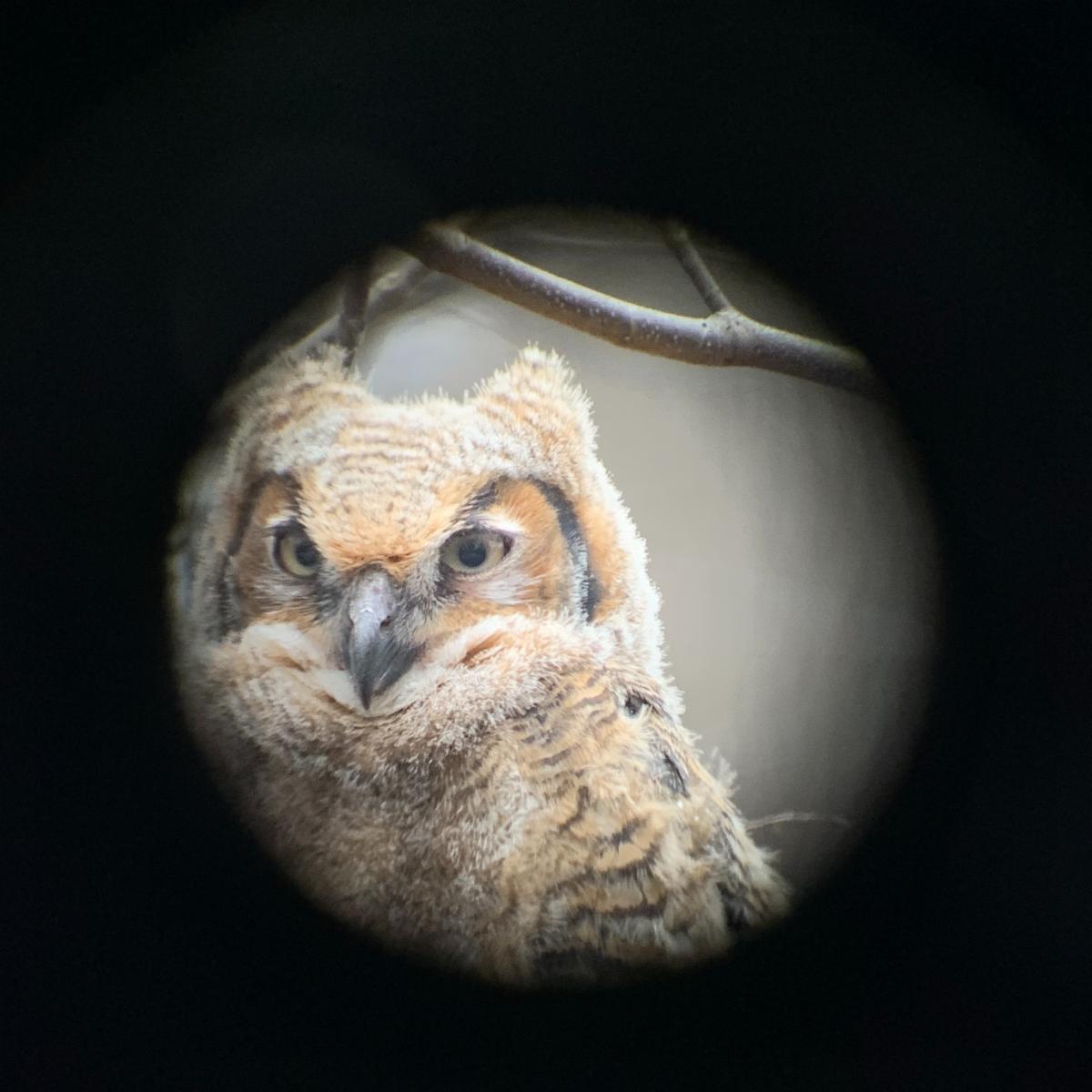
A place with cover from the pestering mobs of blue jays, with layers of plants that could be climbed to safety until they learned to use their wings effectively. I brought my scope next door and taught his seven year old son how to adjust the focus wheel. We looked for the owl’s parents who were likely nearby and then practiced giving space to his new wild friend.
(Photo by the author)
Now we're into April and the fledglings are clumsily hopping from tree to tree. Mom settles in a tree just out of reach and calls to the two siblings with a clear, sharp bark. Squawking all the way, they leapfrog through the canopy reuniting with excited bill-clacking and chatter until she flies off again encouraging them to follow and stretch their wings. This is the situation when Eric finds me underdressed for the sunset’s chill; grateful for neighbors and new friends, feathered or otherwise.
-Dale Browne, EIC Staff Naturalist
| | |
"Logscaping"-Upcycling Recovered Yard Waste
Here in southeast Michigan, spring has (finally) sprung! The robins and cardinals have begun to sing their songs, and bright green shoots are pushing up out of the soil. If you’re a gardener, you’re probably experiencing “the bug,” the intense urge to get outside and putter around.
Spring is a great time to clean up debris, and to make sure that your landscape looks its best. Native plants can look messy if they aren’t placed in well-defined areas with clear borders, or other "conventional" evidence of care.
| | |
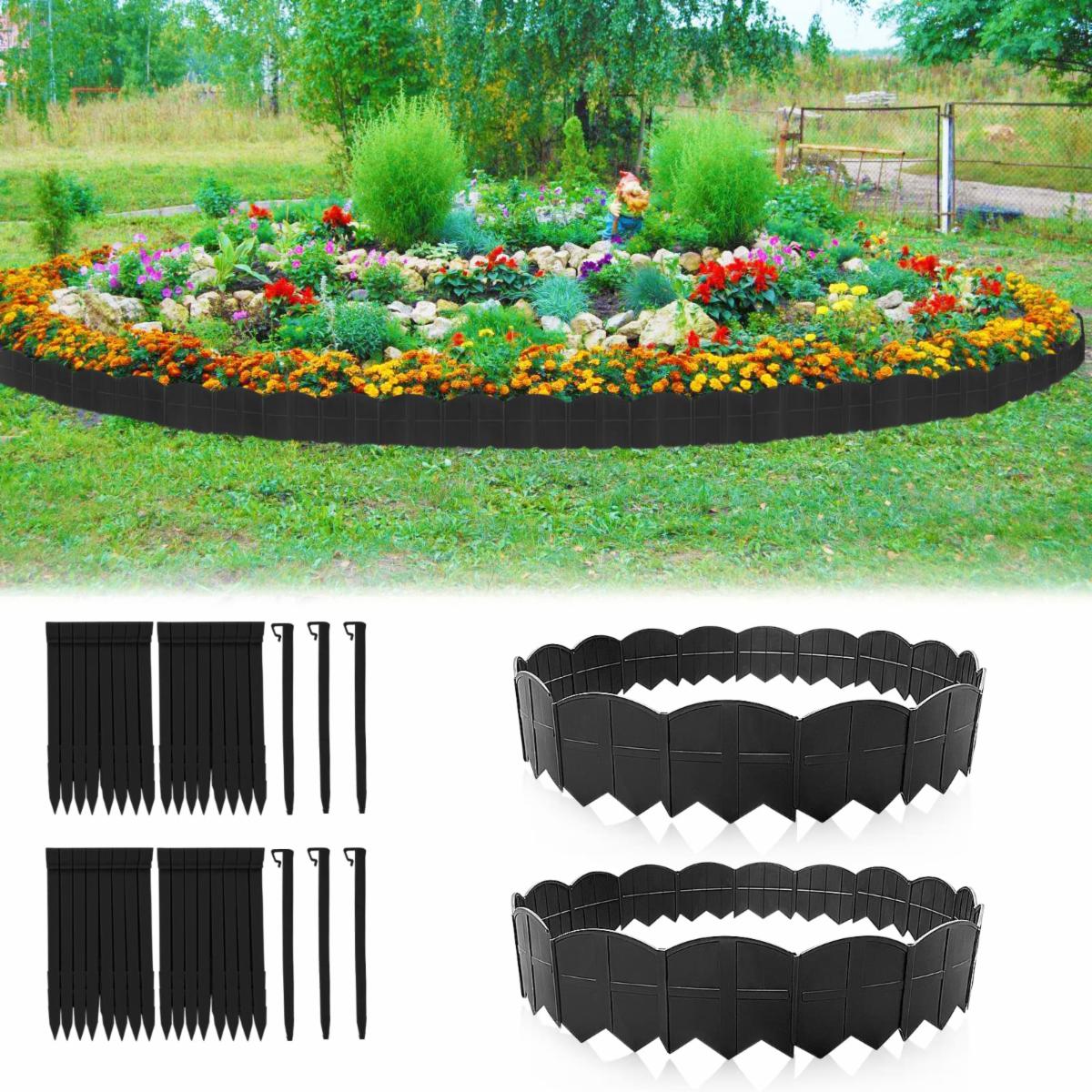
Often, landscapers or homeowners go with the easiest choice for garden borders; black plastic landscape edging. It’s inexpensive, quick to install, and lasts a long time. However, plastics take a long time to break down in the environment, and are made from non-renewable resources. At the end of its life, discarded plastic edging often ends up sealed in a landfill. (Photo from Amazon)
Fortunately, plastic isn’t the only option out there for garden borders. With some creativity, and a little elbow grease, natural border materials are available all around you!
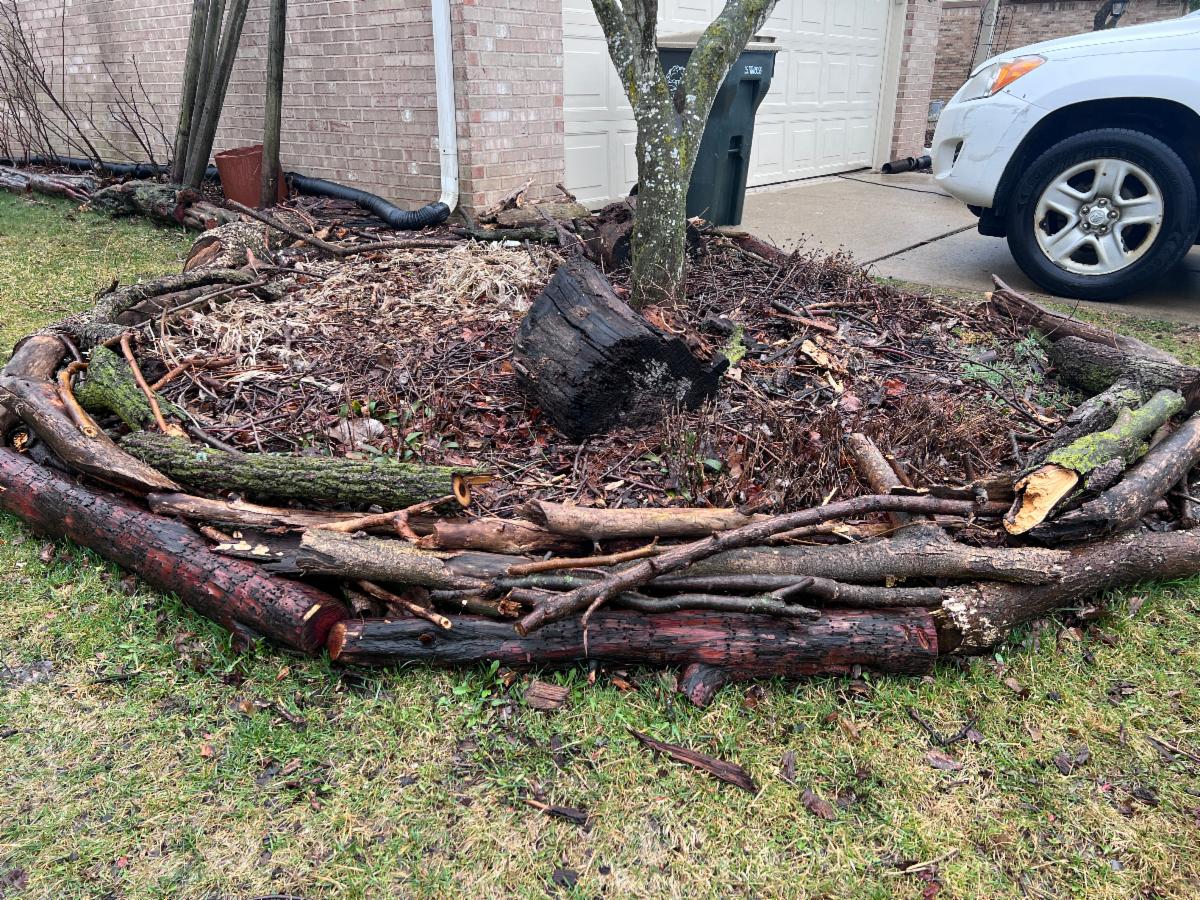
Fallen logs are a great natural choice for a border around garden beds. They’re completely biodegradable, and can often be sourced for free. In your garden, a decomposing log can provide cool, moist havens for toads on summer days, food caching places for squirrels and chipmunks, and feeding opportunities for birds like woodpeckers. Logs also soak up rainwater like sponges, releasing the water into the surrounding soil slowly. In a garden, this cuts down on watering needs, reduces runoff, and helps prevent erosion.
| | |
Fallen logs are a great natural choice for a border around garden beds. They’re completely biodegradable, and can often be sourced for free. In your garden, a decomposing log can provide cool, moist havens for toads on summer days, food caching places for squirrels and chipmunks, and feeding opportunities for birds like woodpeckers. (Photo by the author)
Logs also soak up rainwater like sponges, releasing the water into the surrounding soil slowly. In a garden, this cuts down on watering needs, reduces runoff, and helps prevent erosion. After recent storms, folks are putting all sorts of branches and other debris at the curb for pickup. It’s a goldmine! Just be sure you ask your neighbors’ permission before loading up.
In addition to asking permission, it is also important to consider the reason the debris is unwanted. If logs look rotted-through or are soft, they may not last as long as fresh debris from a recent storm. Logs taken from invasive tree species, such as Tree-of-Heaven (Ailanthus spp.) should be avoided while still “green.” These logs may need to dry out for a couple of weeks before use in the landscape, to prevent re-rooting.
If you aren’t comfortable doing the recovery yourself, options like ChipDrop woodchip delivery service allow you to order a load of waste woodchips and logs from local arborists for free. If you’re looking for more inspiring natural decorations for your garden, check out Insteading, Rustic Edging article. The author offers several examples of creative ways to use natural materials for nature-themed decorations and landscaping.
-Mike Solomon, EIC Staff Naturalist
| | |
Venturing outdoors and encountering nature is good for your health. Our trails are accessible, so please visit our Environmental Study Area. Stay engaged in learning activities and check out our Remote Learning Activities & Resources page for ideas to create a “Neighborhood Nature Journal” and “Family Nature Walk” activities!
| | | We also hope to see you in person at our upcoming programs! | |
Please remember...
The EIC Environmental Study Area is open daily from sunrise to sunset. We would like to remind nature-goers that fishing on site is prohibited and to leave bikes and dogs at home because they cause disruption and stress to the EIC wildlife.
| |
| | | |