Environmental Interpretive Center eNewsletter February 6, 2025 | |
|
In this issue:
- Upcoming Programs
- Michigan Naturalist Program
- Partner Activities
- Tales From the Trails
-
Greenways: Be Sweet and Sustainable!
| |
|
Evening Winter Walk!
Friday, February 7
6:00-7:30 p.m.
The moon phase on this date is a waxing gibbous. An interesting aspect of this phase, particularly in reference to new year resolutions, poses, "Under the Waxing Gibbous Moon, you can feel the urge to change the direction of your life or your project. It is important not to resist this feeling. Instead of fighting, embrace it and trust it because only good things will happen if you do so."
Wear sturdy shoes and bundle up for whatever the 2025 weather serves up. We'll warm up together afterward by the fire! Please register for this program. (Photo by Eckhard Slawick)
| |
The Sweetest Season
Mark Your Calendars!
Tree Tappers Needed
Saturday, February 15, 1:00-3:00
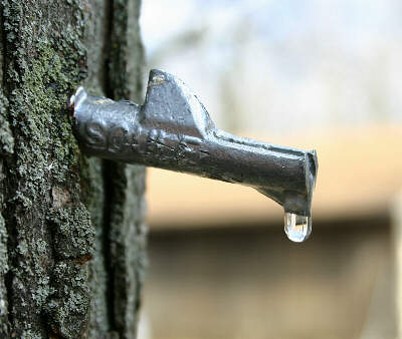
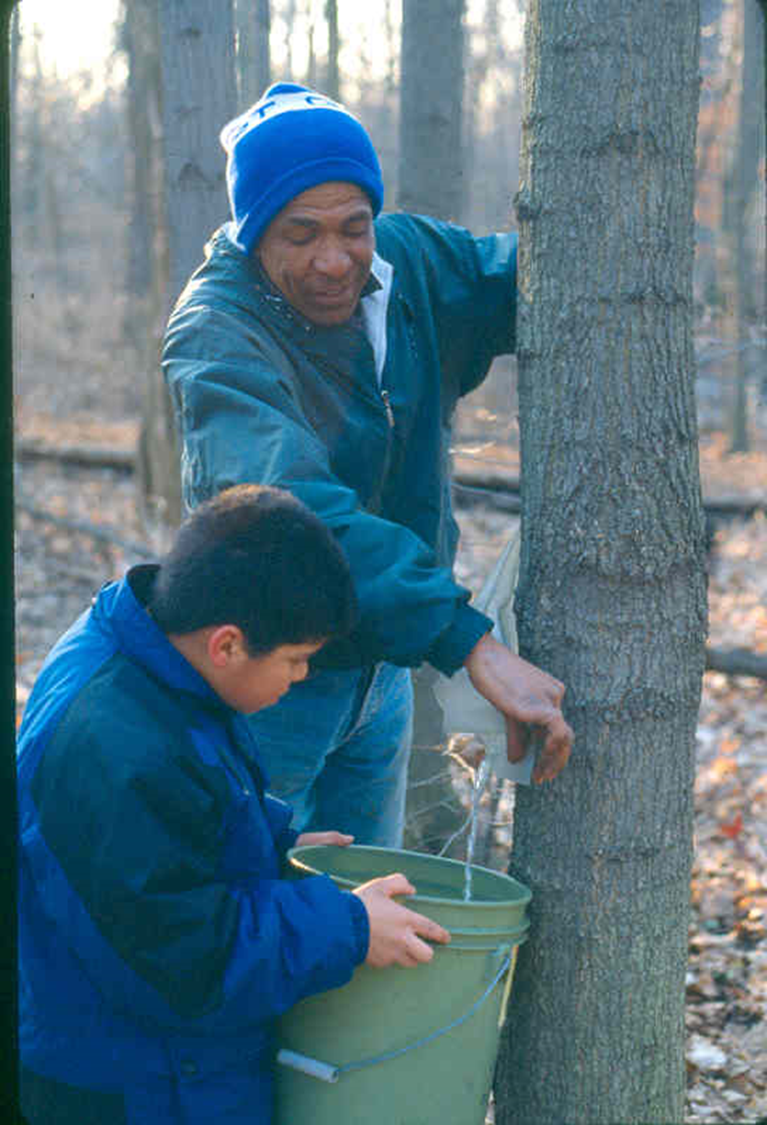
A great cure for cabin fever is to walk out to the sugar bush to get the maple sugaring season started. Tap into the fun and enjoy a forest walk with the EIC naturalists to hang sap buckets on the maple trees. We can't make syrup without the sap... (EIC Photo)
Please register for this program.
| |
Sap Collectors Needed!
4:00 p.m. Any day the sap is flowing
Once the maple trees are tapped and the sap starts flowing, we need volunteers to help collect this valuable liquid sunshine! Any day the sap is flowing, our team goes out to the "sugarbush" to empty the sap from the metal buckets. From there, the sap is poured into large 25 gallon containers and hauled back on a cart to the "outdoor kitchen!" It's a terrific cure for cabin fever and a great way to meet new people. Please let us know if you're interested by signing up on our contact list (EIC Photo)
| |
|
Maple Syrup Boil Down!
Saturday, March 8
Two walks: 1-2:30, 1:30-3:00
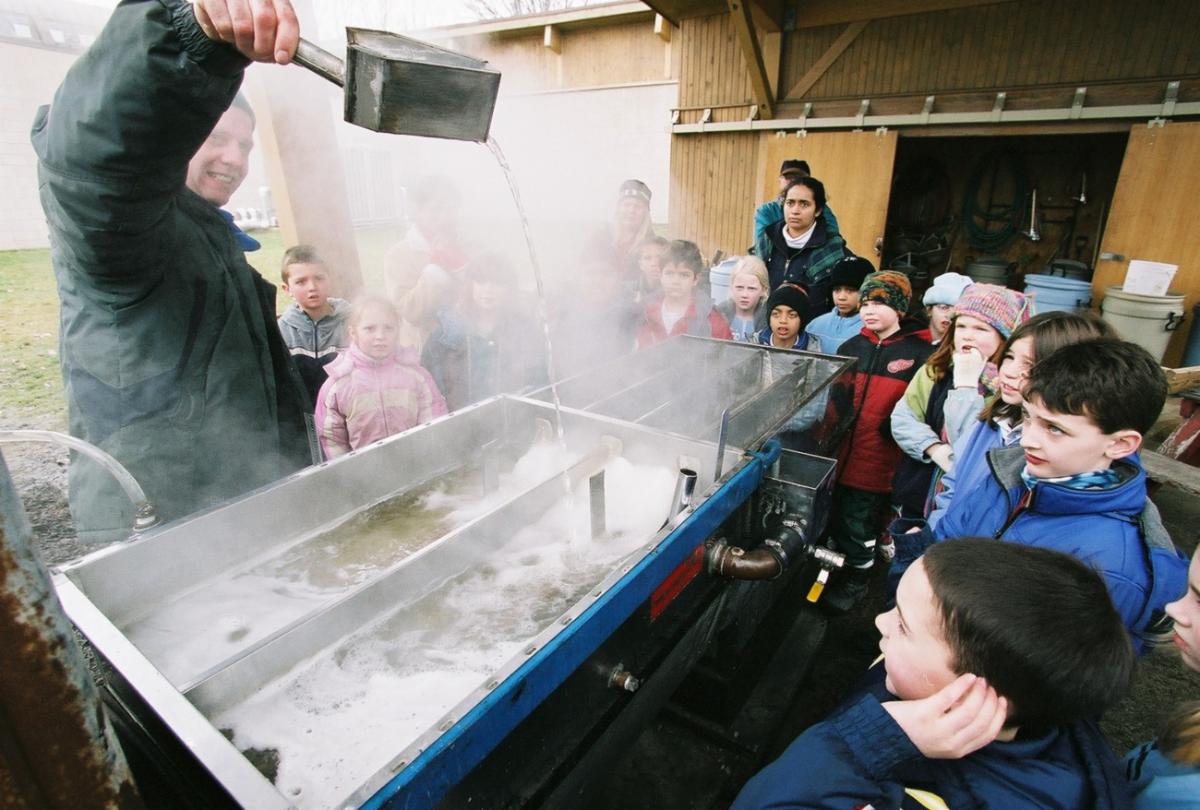
How do we choose the correct tree for making maple syrup? What do we do with the sap in the buckets? How is maple syrup made? Find out the answers to these questions and more on a walk to the sugar bush, then gather around the stove in the "outdoor kitchen" for a taste of last year's "liquid sunshine."
Please register for this program.
(Photos by EIC & Shutterstock)
| |
|
|
Nature Walks for Mental Health
This semester, our nature walks will be held on the 2nd and 4th Wednesday of every month from 2:00-2:45pm. Attendees of every walk will be entered into a prize raffle at the End of Semester Celebration on April 9th! Jan. 22, Feb. 12, Feb. 26, Mar. 12, Mar. 26, April 9. Please register for this program.
Photography in Nature Walks
These guided walks will take place on the 4th Thursday of the month, beginning on January 23, from 2:30-3:30. Additional dates are: February 27, March 27, April 24. Please register for this program.
| |
Upcoming Michigan Naturalist Program!
The EIC is hosting the 2025 session of Michigan State Extension's Michigan Naturalist Program. Known as the Rouge River Region host site, the EIC's sessions will be held once a month on Saturday mornings from May through October. Registration for this program will open soon, but if you're interested in receiving more information, please sign up on the Michigan Naturalist Interest registration form.
| |
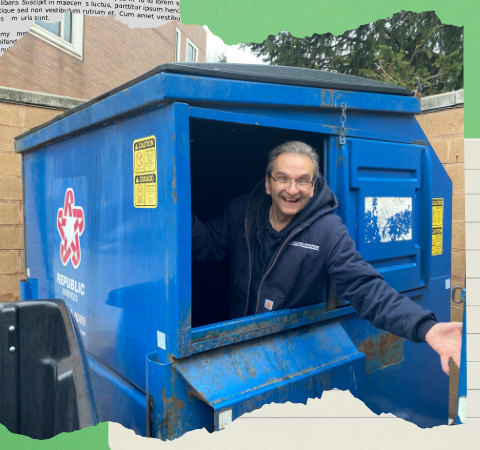
Down in the Dumps, John?
John Berger has been working as a custodian at the EIC on the University of Michigan-Dearborn campus for 14 years, and in that time, he’s gained a reputation for always going the extra mile when it comes to proper waste disposal— literally. In his own words, “I’ve been known to carry a banan a peel all the way from the other side of the campus to put it into compost.” Read more about how John routinely goes the extra mile.
| |
|
Partner Activities
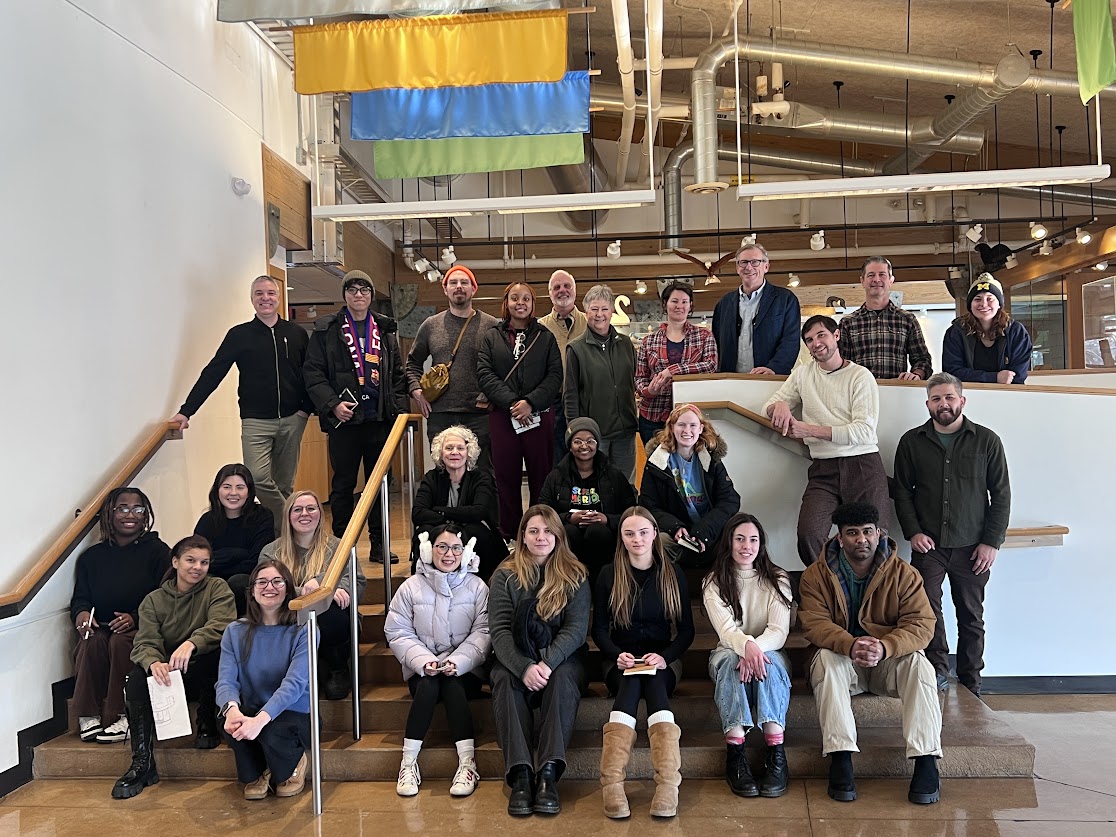
Teams of students and faculty from the College for Creative Studies are partnering with the EIC by applying their knowledge to add interest to our exhibit area. Their enthusiasm is contagious and they are interested in your comments! Please take a moment to answer 9 questions about your EIC experiences. (EIC Photo)
| |
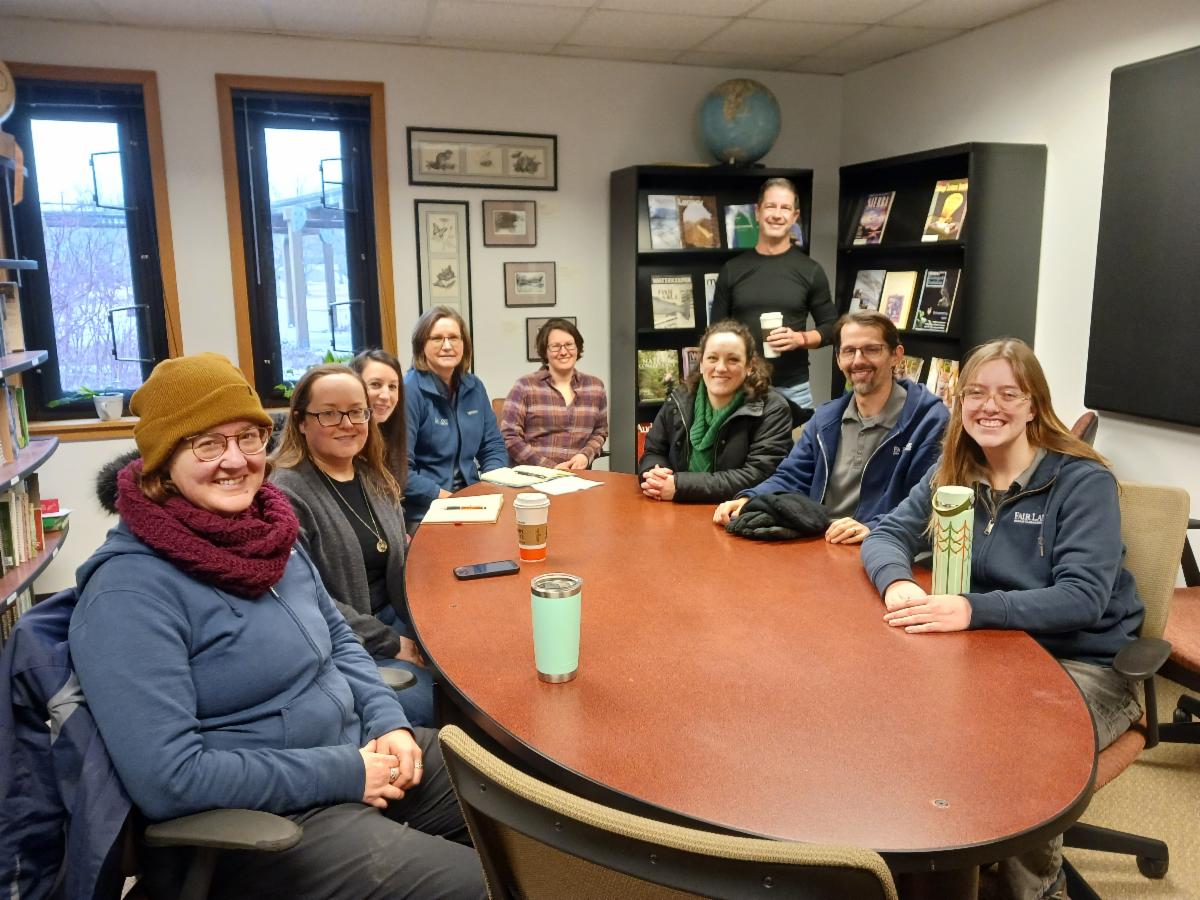
Our neighbors from down the street at Fair Lane: Home of Clara and Henry Ford, came by for a visit to discuss some partnerships in programming opportunities. Be on the lookout for some future collaborative programs combining Ford history and the natural history that can be found in what was formerly Clara and Henry Ford's backyard! | |
|
Alexis' Art in the Community!
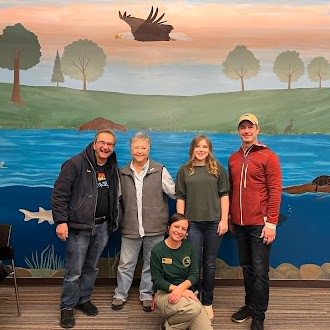
UM-Dearborn graduate and EIC staff alumna Alexis Kott was commissioned to paint another wildlife mural that now graces a classroom in the Michigan DNR's Outdoor Adventure Center (OAC) in downtown Detroit! Pictured are EIC alums and staffers: John Berger, Dorothy McLeer, Natalie Cypher, artist Alexis, and EIC Director Jacob Napieralski.
(Photo by Lise Napeiralski)
| |
|
Tracking on Ice!
For the first time in years, Fair Lane Lake in the Environmental Study
Area (ESA) has completely frozen over for a stretch of several weeks. At
first, the ice cover was nearly as smooth as glass; then came a thick
blanket of snow over the thickening ice. The lake’s surface soon became a smooth, snowy page of an open book with tracks and trails.
| |
|
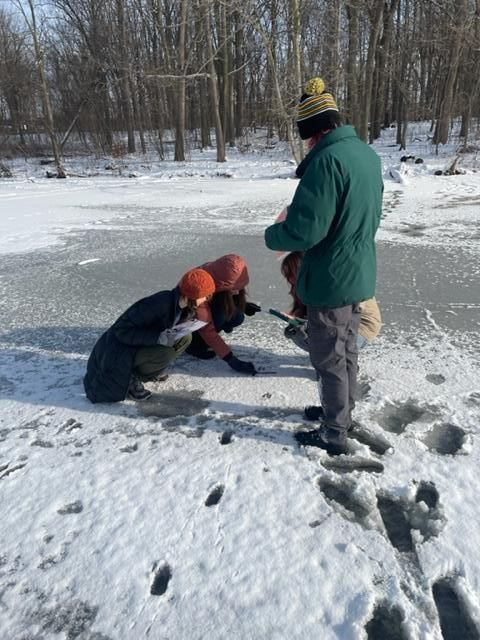
In response, an enthusiastic readership of EIC animal trackers recently set out on the frozen lake to read and interpret those stories. A group of students from the homeschool high school field biology program and I spent several hours scanning the entirety of the lake’s surface as we followed tracks and trails.
Our tracking adventure involved putting into practice elements of an effective and time-honored method known as “holistic tracking.” Instead of simply pointing to some tracks and naming what mammal species we thought made them, we spent our time walking alongside different track trails and piecing together clues that revealed a great deal more. (Highschool students take measurements and record their observations of a track series on the lake.) Photo by Rick Simek
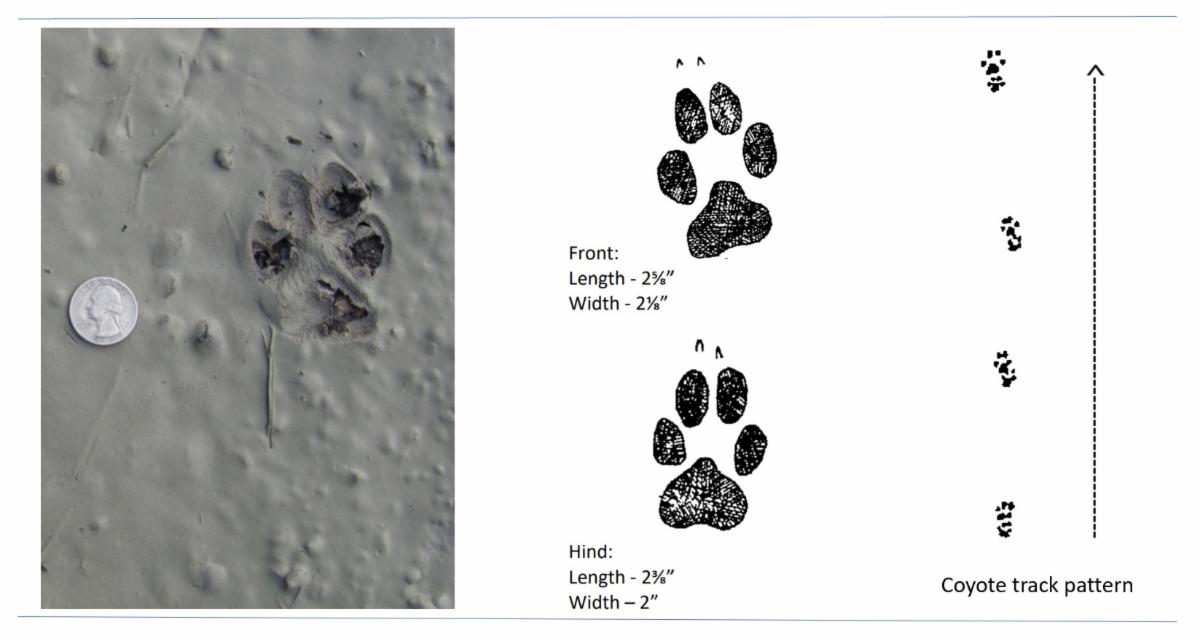
Once we found a track series we wished to investigate, we started by assessing how the animal moved, or its gait. We also measured the length and width of a well-defined footprint as well as the distance between two prints from the same foot (stride) and the width between the outer edges of tracks on the right and left side of the individual animal’s trail (straddle). (Image courtesy of Wildlife Illinois)
| |
|
We also followed the trails to discern aspects of the animals’ behaviors, such as how the increasing distance between the bounding tracks sets of a squirrel likely indicated how it felt vulnerable to predation by being out on the open ice. Another behavior we interpreted from a trail made by two coyotes, travelling in almost perfect tandem, was how it coincided with the timing of the coyote courtship season.
As we left our own tracks on the lake, another story emerged, one that told of a group of curious humans exploring and learning about the natural world, under long-awaited winter conditions, close to home!
-Rick Simek
| |
|
Be Sweet and Sustainable!
With Valentine’s Day just around the corner, this month is the perfect time to express your love and appreciation to family, friends, and significant others. This year, consider showing your love and appreciation to Mother Earth as well by releasing more love into the air than plastic and greenhouse gases!
| |
|
In the U.S., roughly 58 million pounds of chocolate are eaten during the week of Valentine’s Day alone. Almost every pound of that chocolate is wrapped in single-use plastic and then transported by plane or truck over hundreds of miles, releasing gases into the atmosphere that contribute to climate change. The process to bring one just pound of this chocolate from the farm to the grocery store requires over 1,000 gallons of water.
| |
|
Furthermore, the demand for chocolate across the globe is outpacing the ability of farms and slow-growing cacao trees to produce, resulting in deforestation, reducing habitat for tropical species and relying on child labor. To reduce the harmful effects of mass-produced chocolate, consider buying a sweet for your sweetie that is certified fair-trade to ensure that the chocolate was produced sustainably on small farms and by workers that are treated fairly.
In addition, rather than going to an expensive restaurant for dinner, you can choose between a variety of more sustainable activities to celebrate. Research has found that every meal eaten at a restaurant makes about half a pound of waste, and 15% of all food waste found in landfills is from restaurants.
| |
|
So, instead of eating at a restaurant, try cooking dinner at home–which is a fun group activity that, when performed correctly, vastly reduces the amount of food waste. If you aren’t as comfortable with your cooking skills, you can give the gift of an experience, such as a free walk in a park, a painting class, an online course, an arts and crafts kit, and more!
(Photo courtesy https://www.eventbrite.com/d/mi--detroit/couples-cooking-class/)
| |
|
Finally, if you still aren’t sure what to do this year, there are plenty of other options for you to read about that show to the planet and your loved ones how much they mean to you!
-Valerie Osowski, EIC Staff
Editor's Note: The Greenways Column is 2 years old this month!
| |
Venturing outdoors and encountering nature is good for your health. Our trails are accessible, so please visit our Environmental Study Area. Stay engaged in learning activities and check out our Remote Learning Activities & Resources page for ideas to create a “Neighborhood Nature Journal” and “Family Nature Walk” activities!
We also hope to see you in person at our upcoming programs!
| | |
Please remember...
The EIC Environmental Study Area is open daily from sunrise to sunset. We would like to remind nature-goers that fishing on site is prohibited and to leave bikes and dogs at home because they cause disruption and stress to the EIC wildlife.
| |
| | | |