Environmental Interpretive Center January 15, 2026 | | |
In this issue:
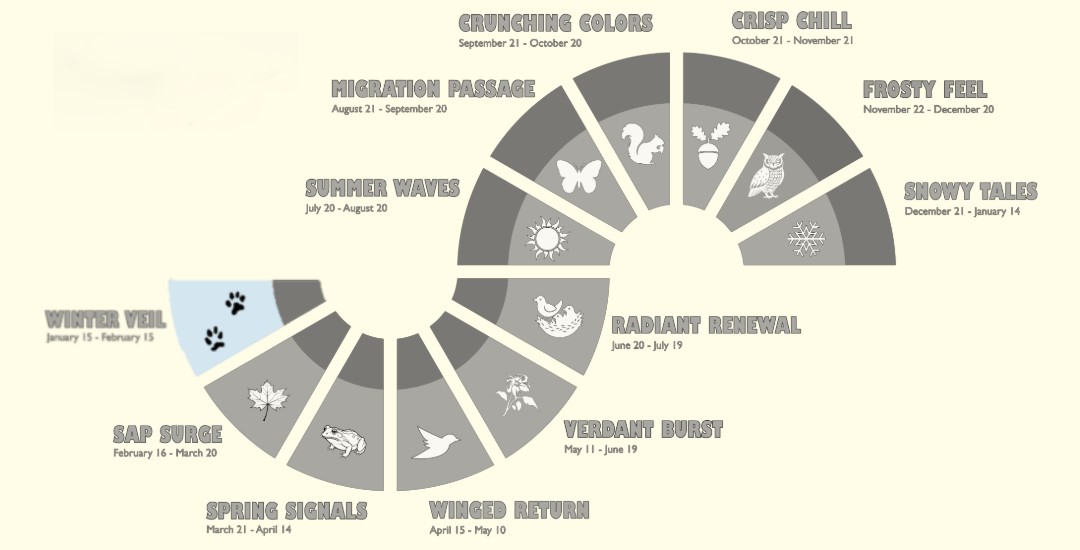
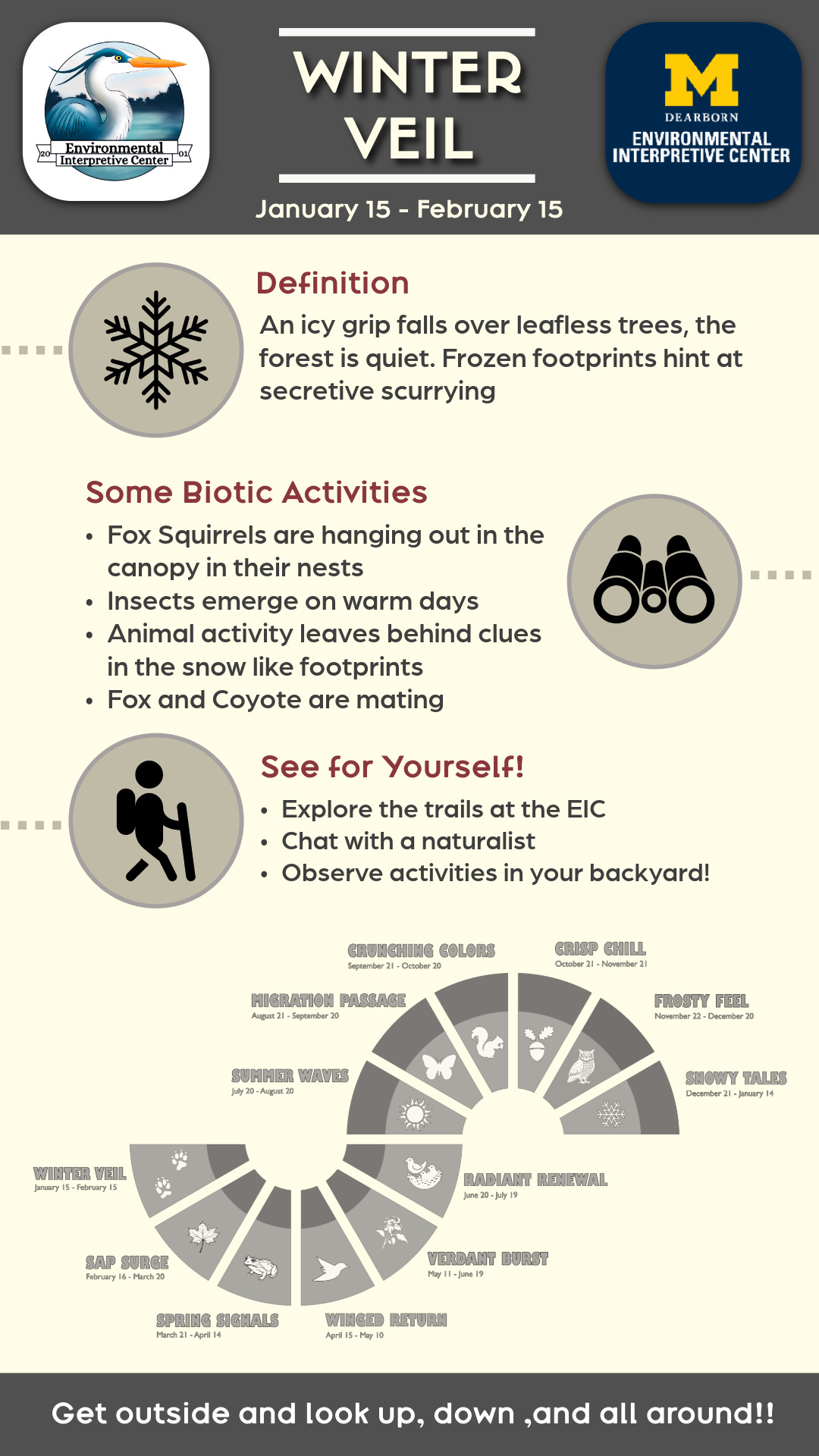
- Microseason: "Winter Veil"
- WOW!! A New Look for the EIC!
- Upcoming EIC Programs
- Tales From the Trails: Busy Winter Muskrats
- Eagle Scout Accomplishments
- Greenways: A Can O'Worms!
| | | | |
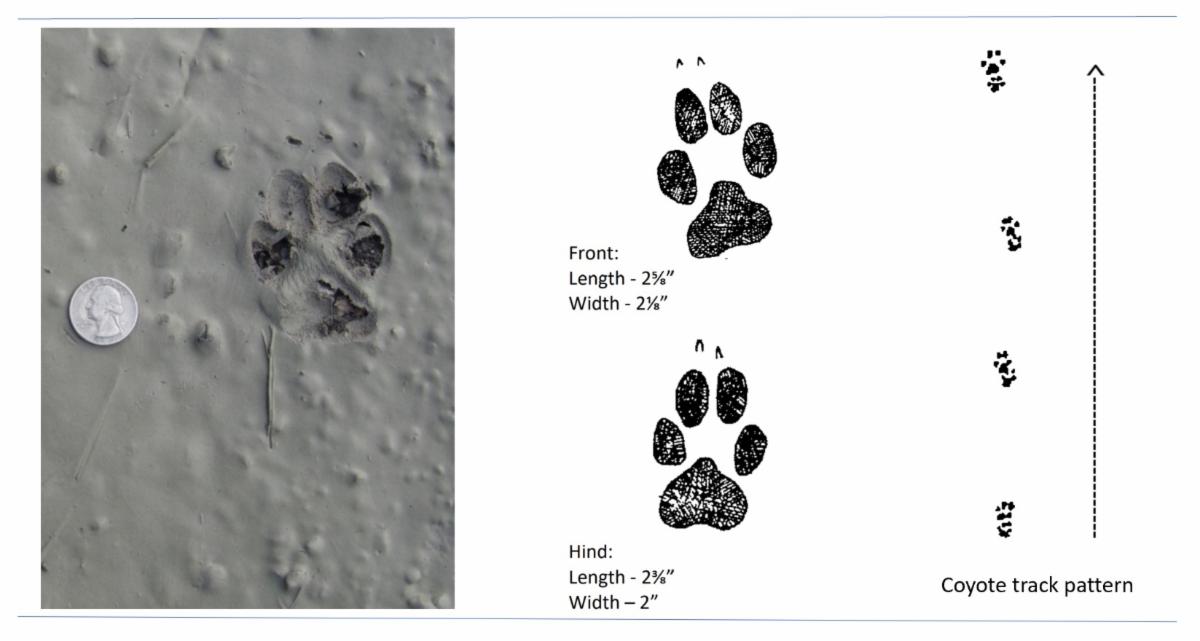
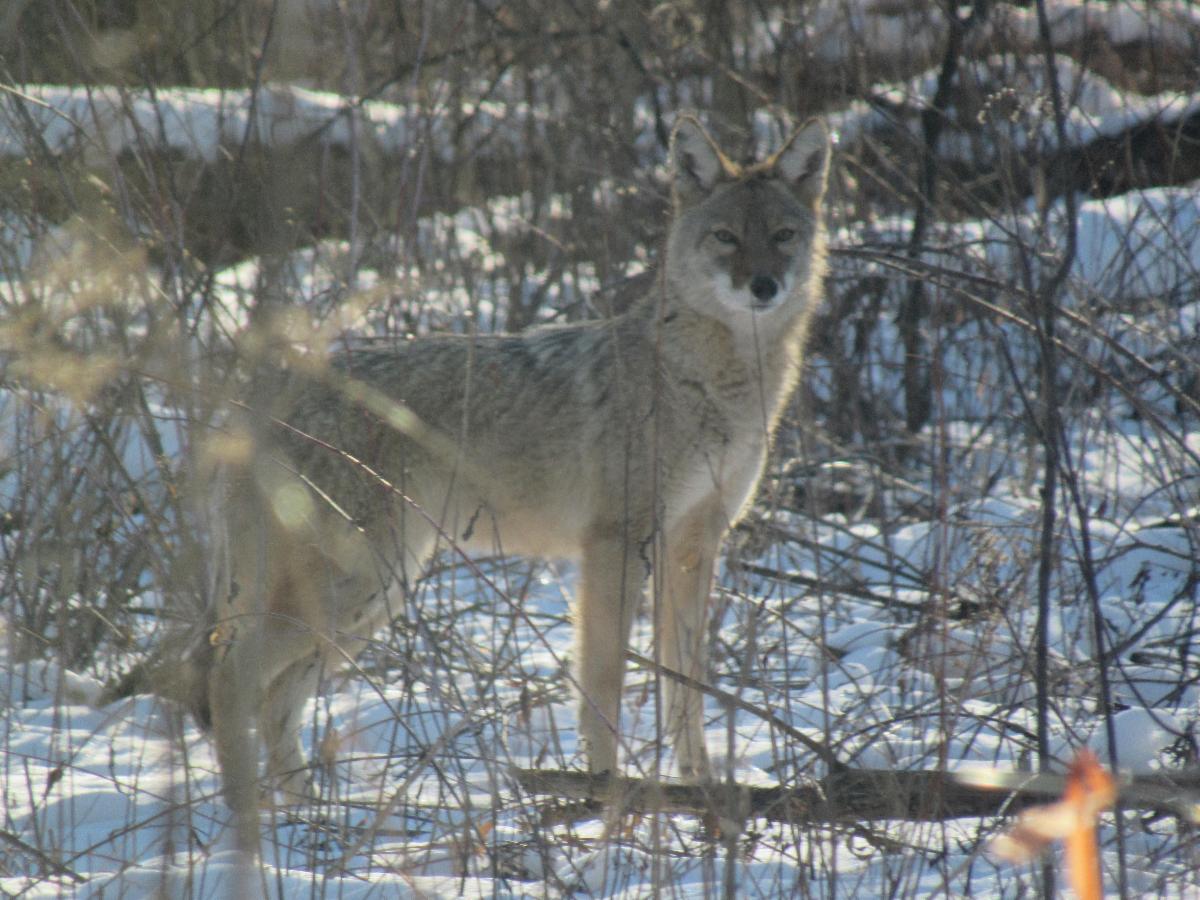
Coyote photo from the EIC window by Alexis Kott Larsen
| | New Artwork Graces the EIC Walls | | |
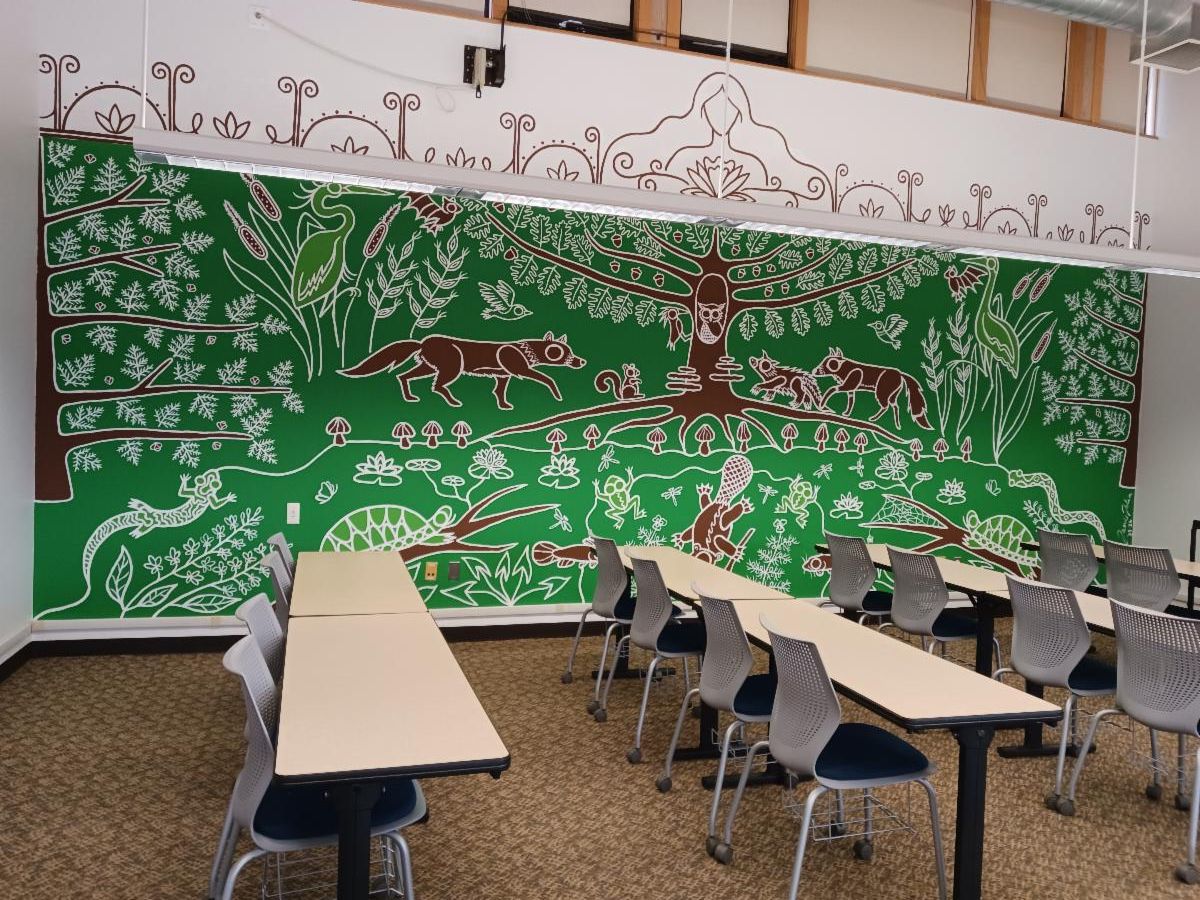
Step inside the EIC and experience "From Acorn to Oak", a stunning new mural that transforms the space into a living story of connection, place, and belonging. A time lapse video by Rick Morrone takes you on the journey of its creation.
Brought to life by Indigenous artist Jamie John, this mural spans an entire wall of the EIC’s primary classroom, facing the windows and visible both inside and out. The work reflects the deep interconnectedness of plant life, animals, water, earth, and people who share our campus landscape, told through an Indigenous lens grounded in Anishinaabe knowledge. Jamie has written an artist's statement interpreting their work.
You’ll find meaningful species woven throughout, including white cedar (one of the four sacred plants) and manoomin (wild rice), which carries the story of Anishinaabe migration to the Great Lakes, guided by the prophecy to settle where “the food grows upon the water.” Flowing spirit lines throughout the mural remind us that nothing exists alone; everything is connected.
Funded through the Inclusive History Project, “Restoring Native Voice at the University of Michigan-Dearborn” with Professors Marty Hershock and Jacob Napieralski [EIC Director], this work was created in close collaboration with EIC staff and honors the natural species found right here on campus.
Located in Room 119 of the EIC, this mural is more than art; it’s an invitation to pause, reflect, and reconnect with the land and stories that surround us.
-UM-Dearborn College of Arts, Sciences, and Letters; and Newsletter Editor
| | |
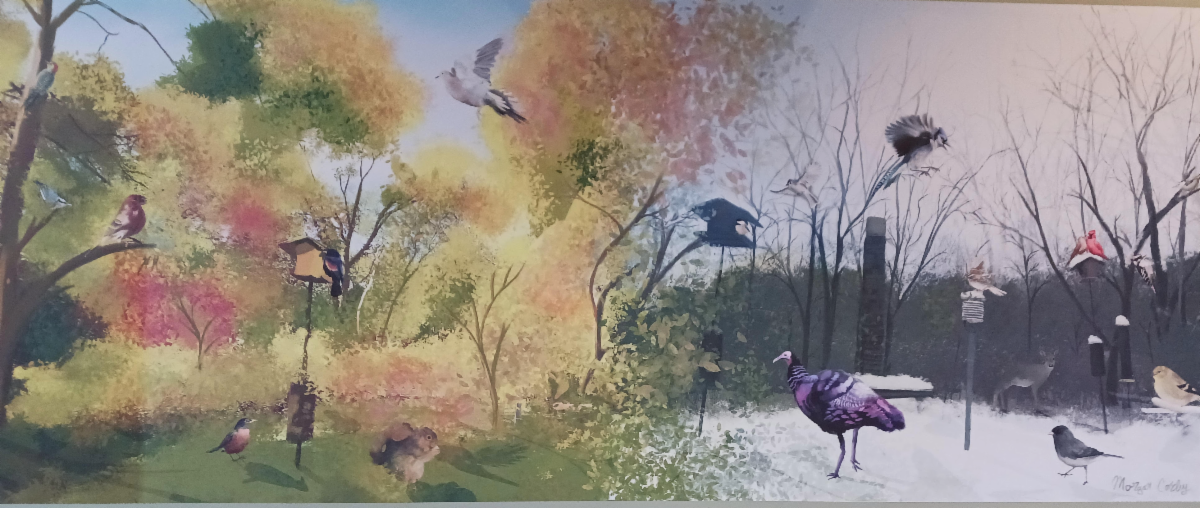
Another new mural (above) takes visitors through the seasons at the EIC bird feeders (although an assortment of animals can be found at the feeders!). Former UM-Dearborn student Morgan Corley (right) has featured some of the "usual suspects" in her mural that are often seen at the feeders and in the habitat provided by the Environmental Study Area along the interpretive trails. Morgan has captured the phenological changes of the seasons beautifully.
| |
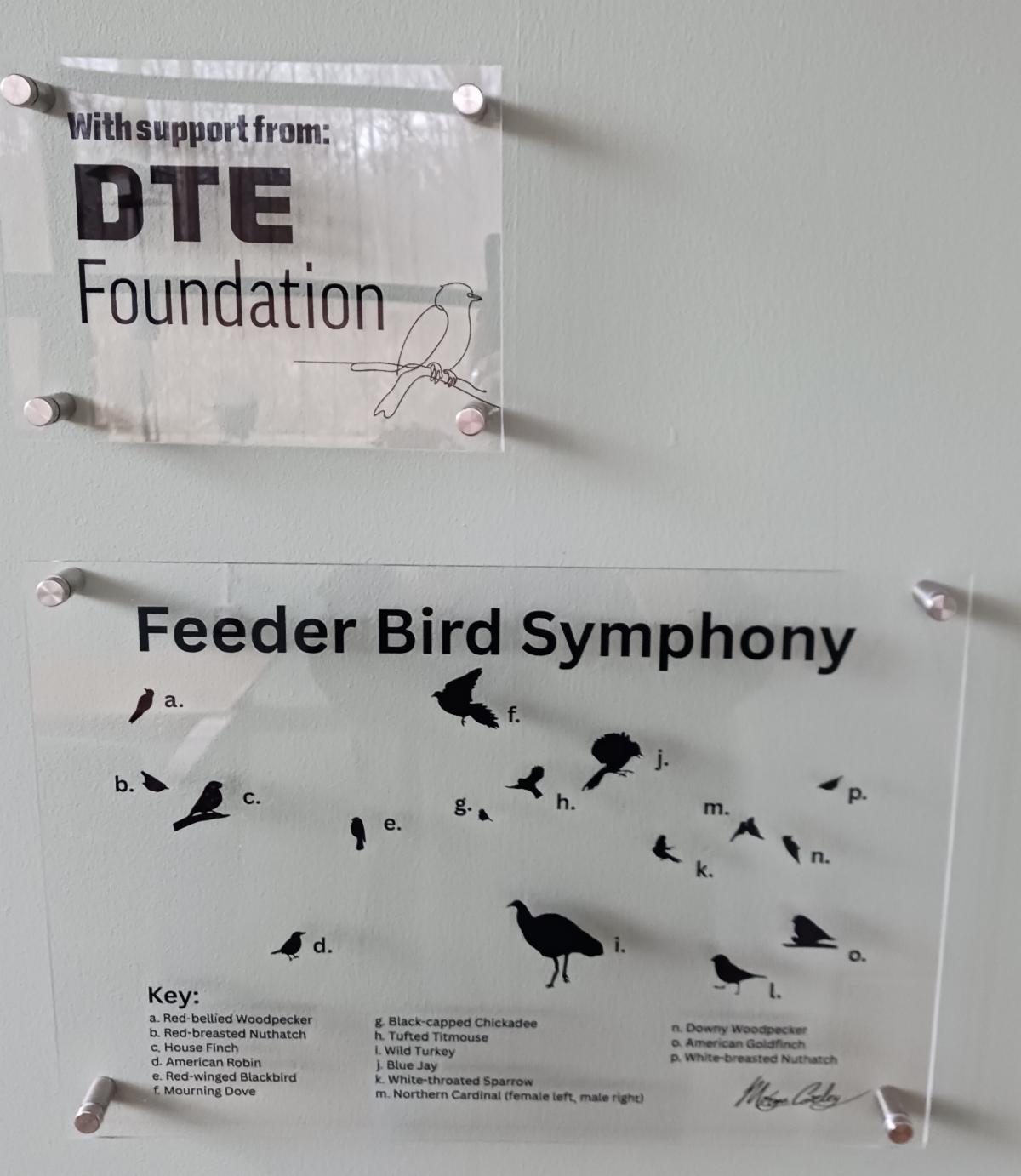
Funded by DTE Foundation, there is a helpful guide to allow easy identification of the animals depicted in Morgan's mural. Come take a look at the animals from the comfort of the Observation Room. Some of them seem to be making their own observations of us! We are grateful to DTE Foundation for funding a wide variety of EIC projects and supporting our students. Keep your eyes open for more projects and artistic endeavors in and around the EIC in the very near future.
-Dorothy McLeer, EIC Program Mgr./Editor
| |
Tap Into This Resource!
Saturday, February 14
1:00-3:00 p.m.
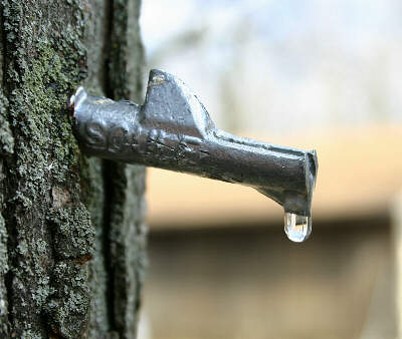
'Tis the tapping & sapping season and we need your help! Bring your Valentine for a real sweet time, tapping maple trees in the Environmental Study Area. It's the first step in making maple syrup... Meet at the EIC and dress for weather and trail conditions. Please register for this program. (EIC photo)
| | |
Valentine's by Moonlight
Saturday, February 14
6:00-7:30 p.m.
Celebrate Valentine's evening with your EIC friends! Join us for a "crepuscular" walk as the day turns into night. To close our time together, we'll gather around the fire and enjoy each other's company. Please register for this program.
(Photo from Discovery Place Science Museum)
| |
From the Trees to You!
Saturday, March 7
2 walks: 1:00-2:30 or 1:30-3:00 p.m.
Take a guided spring walk to visit the tapped maple trees. We'll take you from start to finish in the maple syrup process, with a sweet ending at our "outdoor kitchen." Meet at the EIC.
Dress for the weather and trail conditions. Please register for this program. (EIC Photo)
| | |
Busy Winter Muskrats
Recently, when a stretch of below freezing temperatures caused Fair Lane Lake to freeze over, a couple of small unfrozen pockets stood out along its eastern shore. Despite day after freezing day, these little pools remained open.
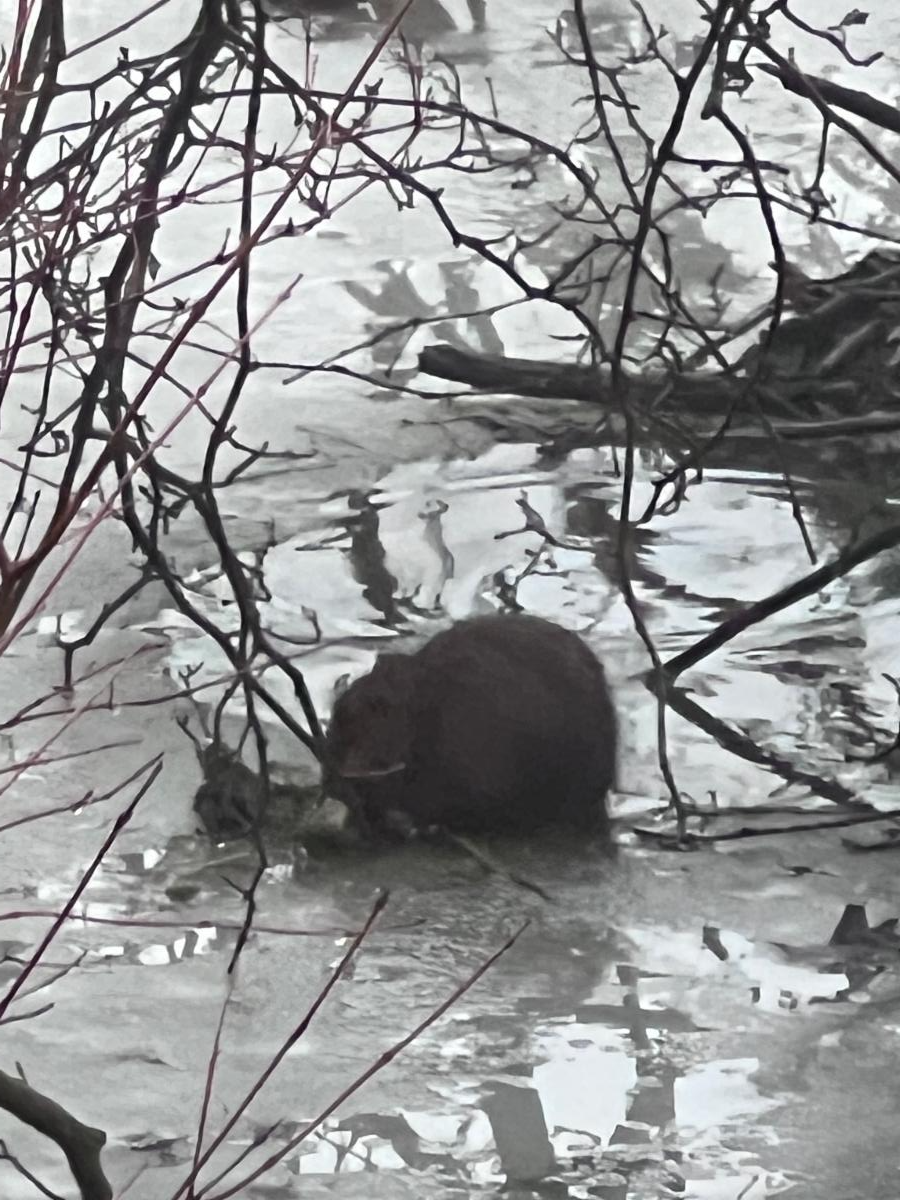
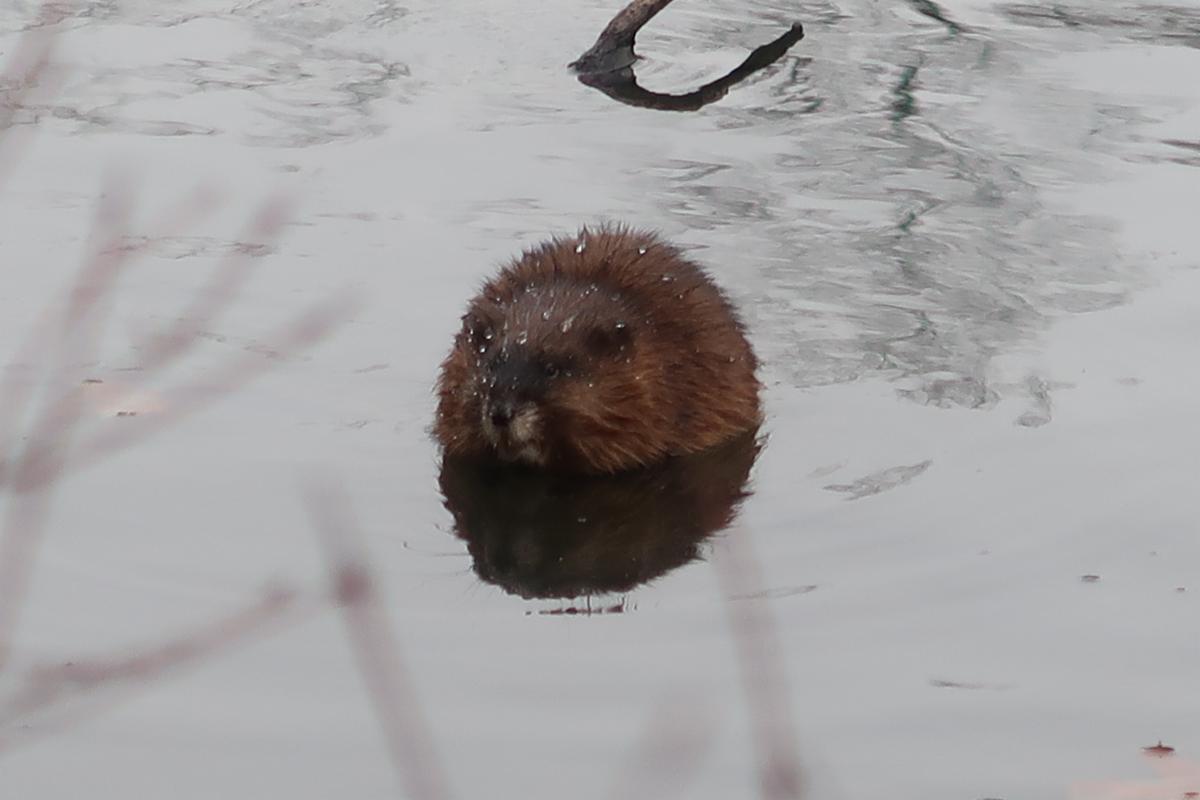
A bit of nature sleuthing by visitors to the Environmental Study Area (ESA) soon revealed what lay behind this lakeside mystery. Reports started coming in of close encounters with plump, dark brown furry creatures with long skinny tales popping out from under the ice, swimming through the pools, and disappearing at the water’s edge. A little group of muskrats (Ondatra zibethicus) had established their underground winter burrow.
| | |
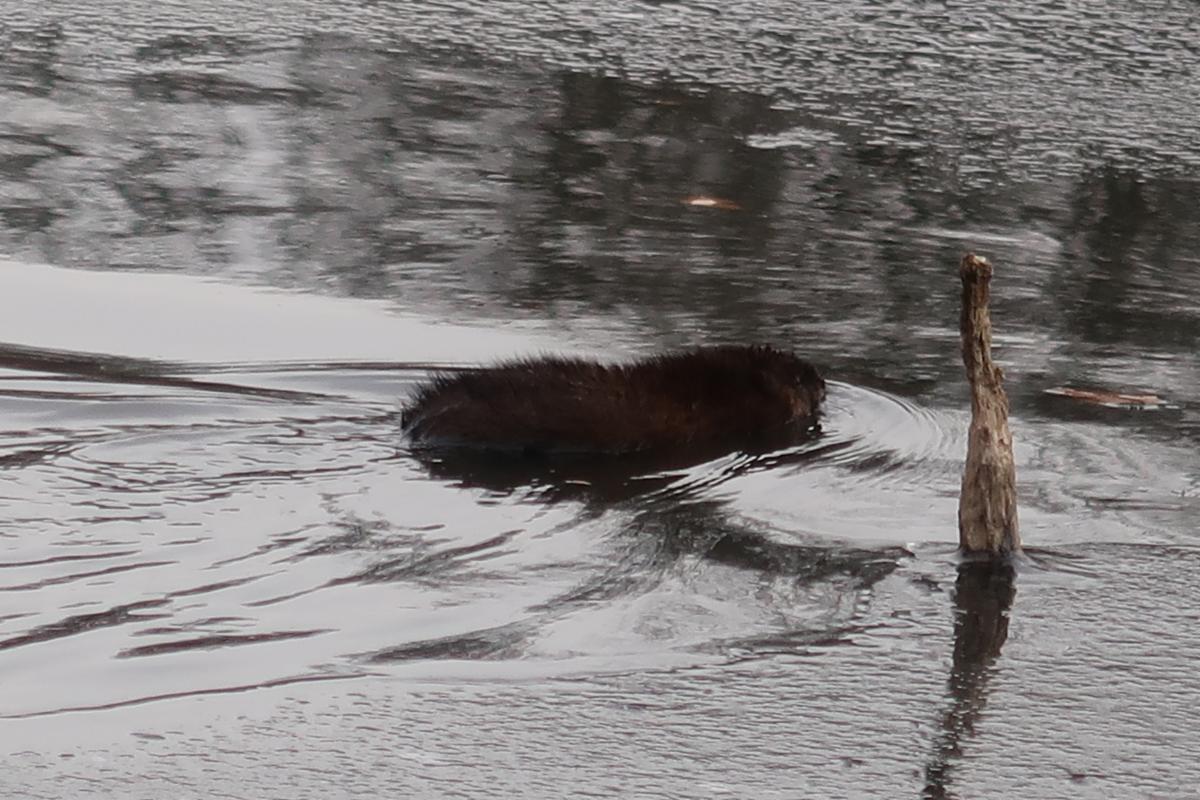
Their busy comings and goings at close range created a wonderful opportunity to observe muskrat winter behavior. On several occasions, I was able to see them carrying mouthfuls aquatic vegetation into the burrow. Although muskrats eat both plants and small aquatic animals, such as mussels, crayfish, frogs, snails, and small fish, I only saw them carrying plant material.
| | |
Muskrats don’t hibernate, so they need to find food throughout the winter. They do so by maintaining little ice-free pools which enable them to duck under nearby ice and swim in search of food. A successful winter foraging season will enable the muskrats to maintain their fat reserves, which are essential for maintaining energy and warmth.
If you’d like to do some winter muskrat watching in the ESA this winter, look for them near the south end of the Lakeside Trail. It’s best to observe quietly, as these aquatic members of the rodent family can be a bit wary.
Enjoy!
-Rick Simek, Natural Areas Manager (Photos by Mike Solomon)
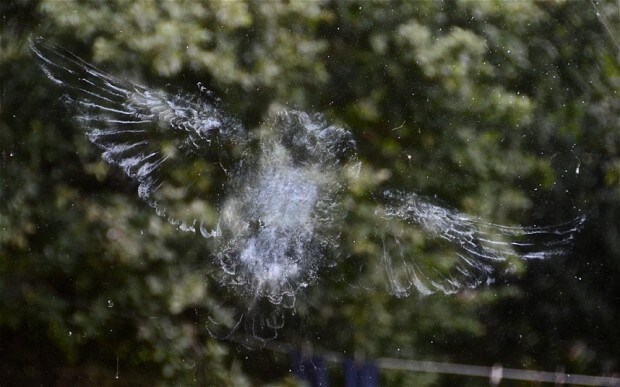
| | Eagle Scout Project Helps the Birds! | | A leading human-associated cause of bird mortality in North America is window collisions on buildings that have reflective glass. It is estimated that millions of birds die in this way each year. This ghostly image (right) of a screech owl is the feather dust left after such a collision. (Photo credit SWNS) | | | The EIC program, Project PAT, is an attempt to monitor this situation on our own campus, including our building's role in these occurences. At the EIC, large windowpanes on the south side of the building create a serious hazard for birds that frequent the habitats of the adjacent Environmental Study Area (ESA). Many of these are migratory species which stopover in the ESA during the spring and fall to rest and feed. | | |
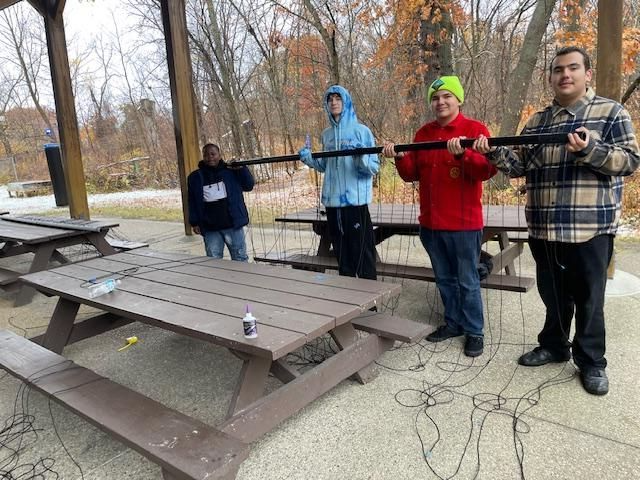
To address the problem, Carter Russelburg, a conservation-minded Boy Scout from Troop 1241 in Garden City, recently funded and headed up an Eagle Scout Service project involving the assembly and installation of a bird-window collision deterrent treatment, known as Acopian BirdSavers, on the east wing of the building.
(Carter, in light blue hoodie, and his Troop assistants prepare to install one of the paracord bird protections units, assembled onsite)
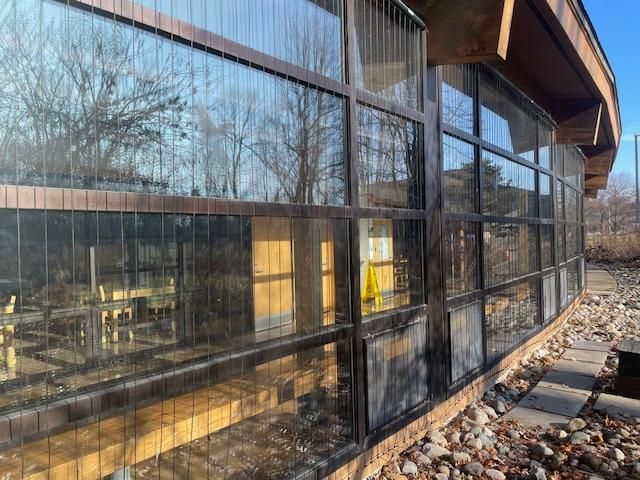
The setup consists of vertical strands of black paracord, set about 4 inches apart and a few inches out from the window surface. This serves to break up the window reflection while also creating narrow spaces the birds hesitate
to fly through.
| | |
Carter’s project is the second window Acopian BirdSaver collision prevention system installed at the EIC. The first, conducted in 2019 by local Boy Scout Andrew Bleau, covers the windowpanes on the west wing of the EIC and has reduced bird collisions there by almost 100 percent.
(The completed paracord installation on the east wing of the building)
| | | |
Carter’s project is also sure to significantly reduce bird-window kills at the EIC. Thanks, Carter, for your conscientious involvement in protecting local birdlife, and congratulations on a well-earned rank of Eagle!
-Rick Simek
| | |
A Can O'Worms!
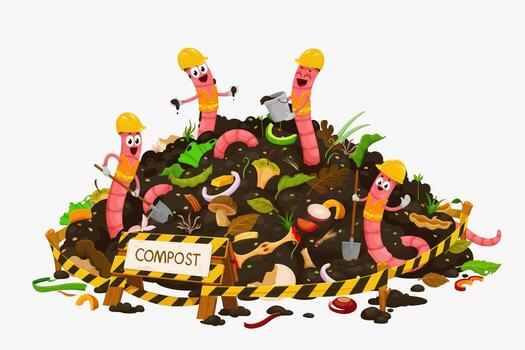
You’ve probably seen an earthworm before, maybe you’ve even touched one! Did you know that you can “put them to work?” (Illustration by Vecteezy)
Earthworms as a group aren’t native to Michigan, but they’re here to stay. In some ways, they have damaged the native landscape. In forests, worms devour the spongy duff layer. Acting as “landscape architects,” worms have changed Michigan’s forests drastically, devouring the spongy duff layer You can put this same habitat-altering power to work in your garden! Vermicomposting, or composting with worms, can boost the health of your soil, and help you dispose of food scraps guilt-free!
| | |
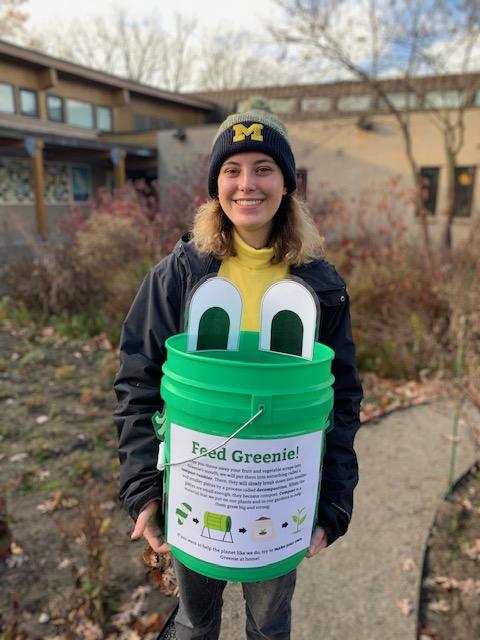
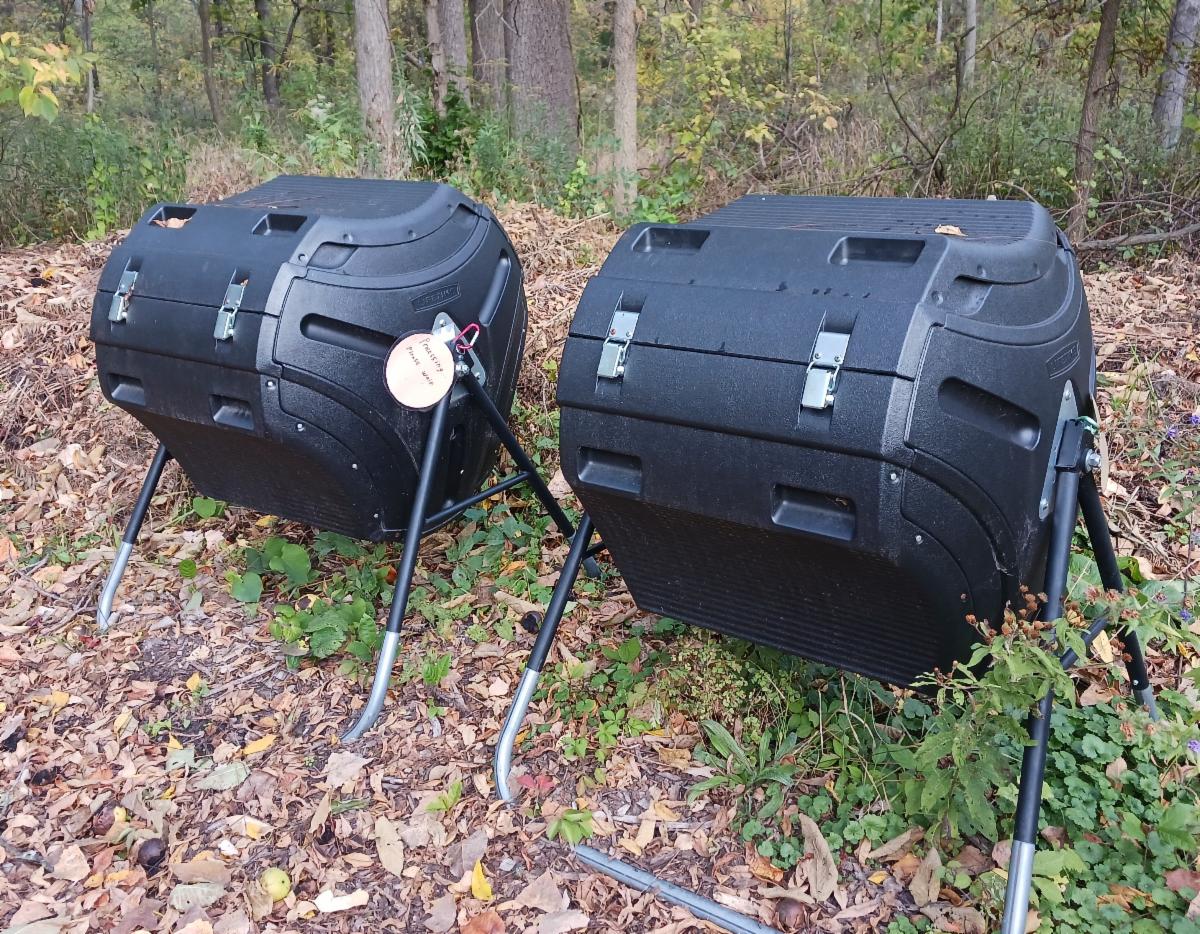
Valerie Osowski & "Greenie" and compost bins
(EIC Photos)
| | |
Here at the EIC, we compost our own food scraps and waste from school groups (you may remember “Greenie”) in compost tumblers. The tumblers mimic forest floor conditions, but that means they work slowly.
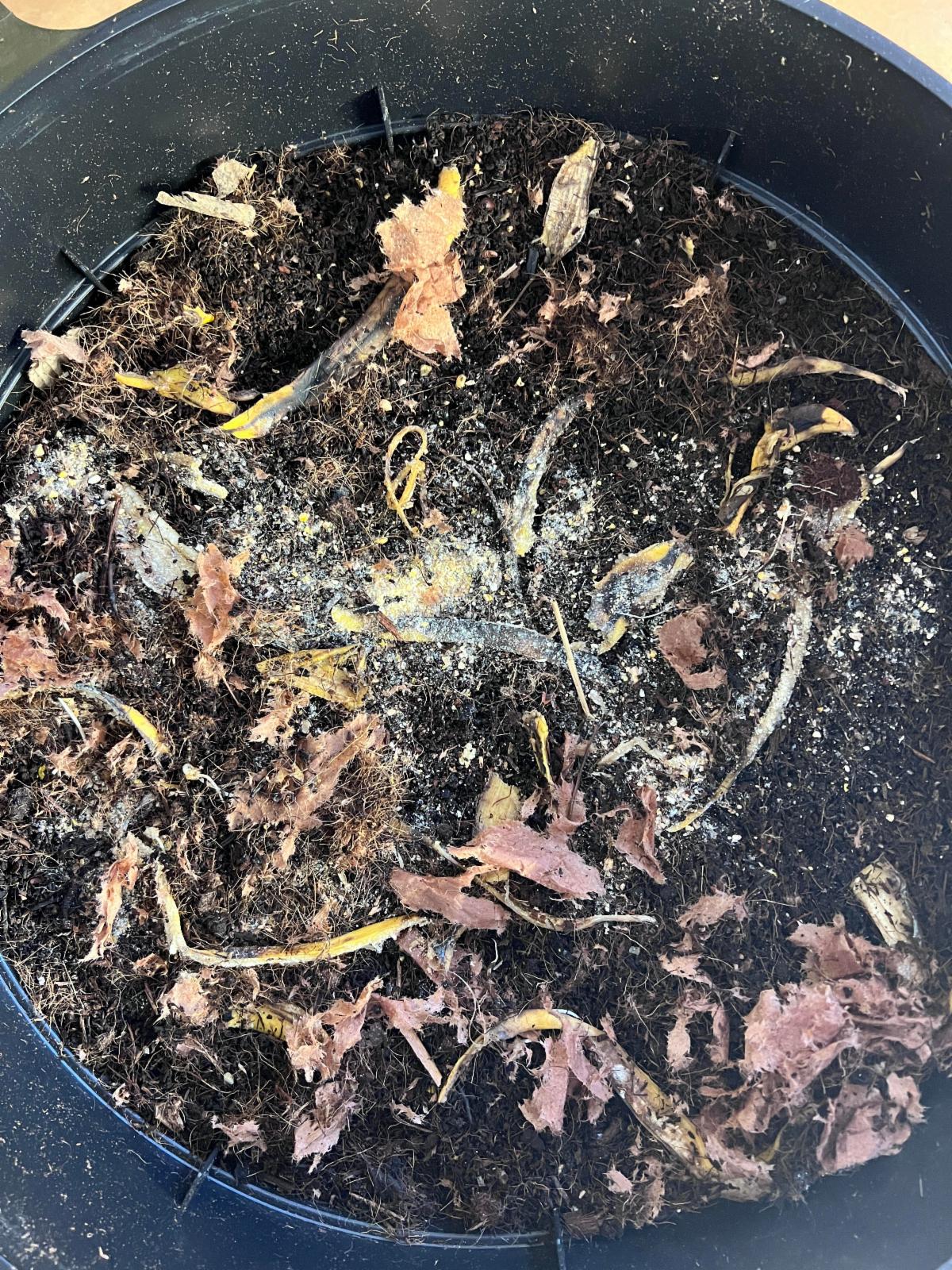
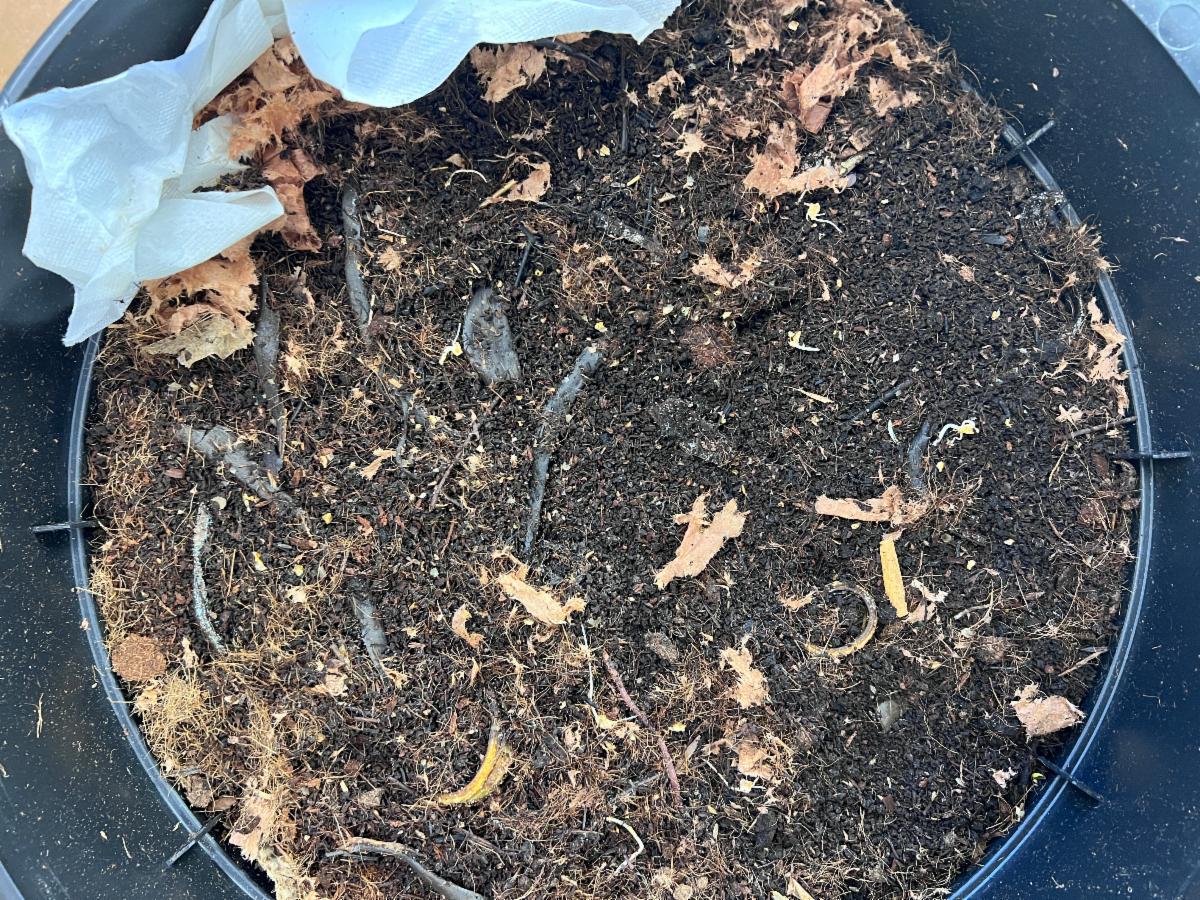
| | It can take 6-8 weeks for a batch of scraps to be broken down into nutrient-rich compost. Worms, on the other hand, can process half their weight in compost each day. Just take a look! | | |
Vermicomposting doesn’t just benefit your soil, it can help keep potent greenhouse gases out of the atmosphere. Worms make an impact against climate change breaking organic matter down aerobically, or with oxygen. The worms’ tunnels also help aerate soil. Both of these help to reduce the amount of methane released as matter breaks down. Methane has been shown to be one of the most potent greenhouse gases, trapping significantly more heat than carbon dioxide.
| | |
Thanks to support from the DTE Energy Foundation, we’re working vermicomposting into our programs, as well as our waste stream! 2 species of worm are popular for composting: Red Wigglers (Eosina foetida), and European Nightcrawlers (Dendrobaena hortensis). I am excited to show students what happens to the carrots and celery they never seem to eat, and to compare how quickly each species can process scraps. (Illustration Getty Images)
If you’re interested in putting some worms to work in your garden or yard, check out this video by The Nakid Gardeners. It shows an easy way to build your own outdoor vermicomposter in the ground, from a simple plastic bucket. Toss in some scraps, and the worms will find their way in from the soil!
-Mike Solomon, EIC Staff Naturalist
| | |
Venturing outdoors and encountering nature is good for your health. Our trails are accessible, so please visit our Environmental Study Area. Stay engaged in learning activities and check out our Remote Learning Activities & Resources page for ideas to create a “Neighborhood Nature Journal” and “Family Nature Walk” activities!
| | | We also hope to see you in person at our upcoming programs! | |
Please remember...
The EIC Environmental Study Area is open daily from sunrise to sunset. We would like to remind nature-goers that fishing on site is prohibited and to leave bikes and dogs at home because they cause disruption and stress to the EIC wildlife.
| |
| | | |