Environmental Interpretive Center July 2, 2025 | | Radiant Renewal Revealed... | | |
In this issue:
- Microseasons Illustrated
- Upcoming EIC Programs
- Cyanoprint Workshop!
-
Tales From the Parking Lot: Policing Pigeons
- Pollinator Photo Contest
- Tales From the Trails: Early Summer Nighthawks
- Greenways: A Norwegian Tradition
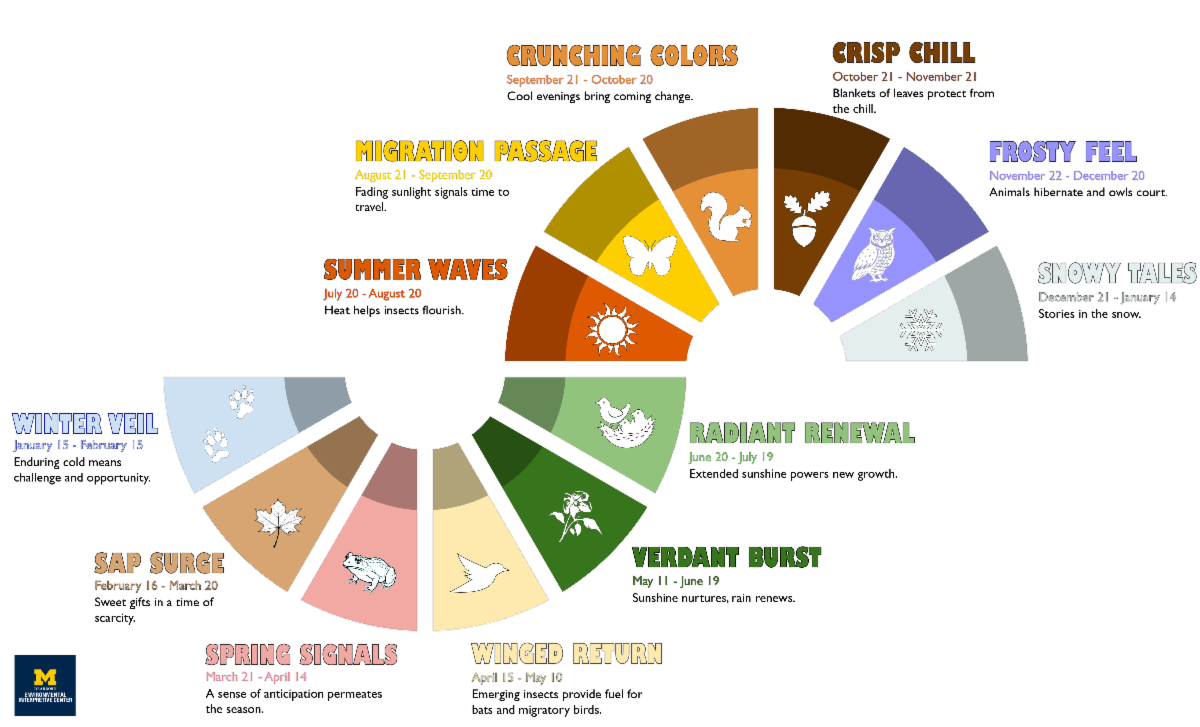
| | We have entered the "Microseason" of Radiant Renewal, according to our phenological (seasonal) calendar. For more on this unique calendar, check out this graphic! | |
For "Grown-up Kids!" *
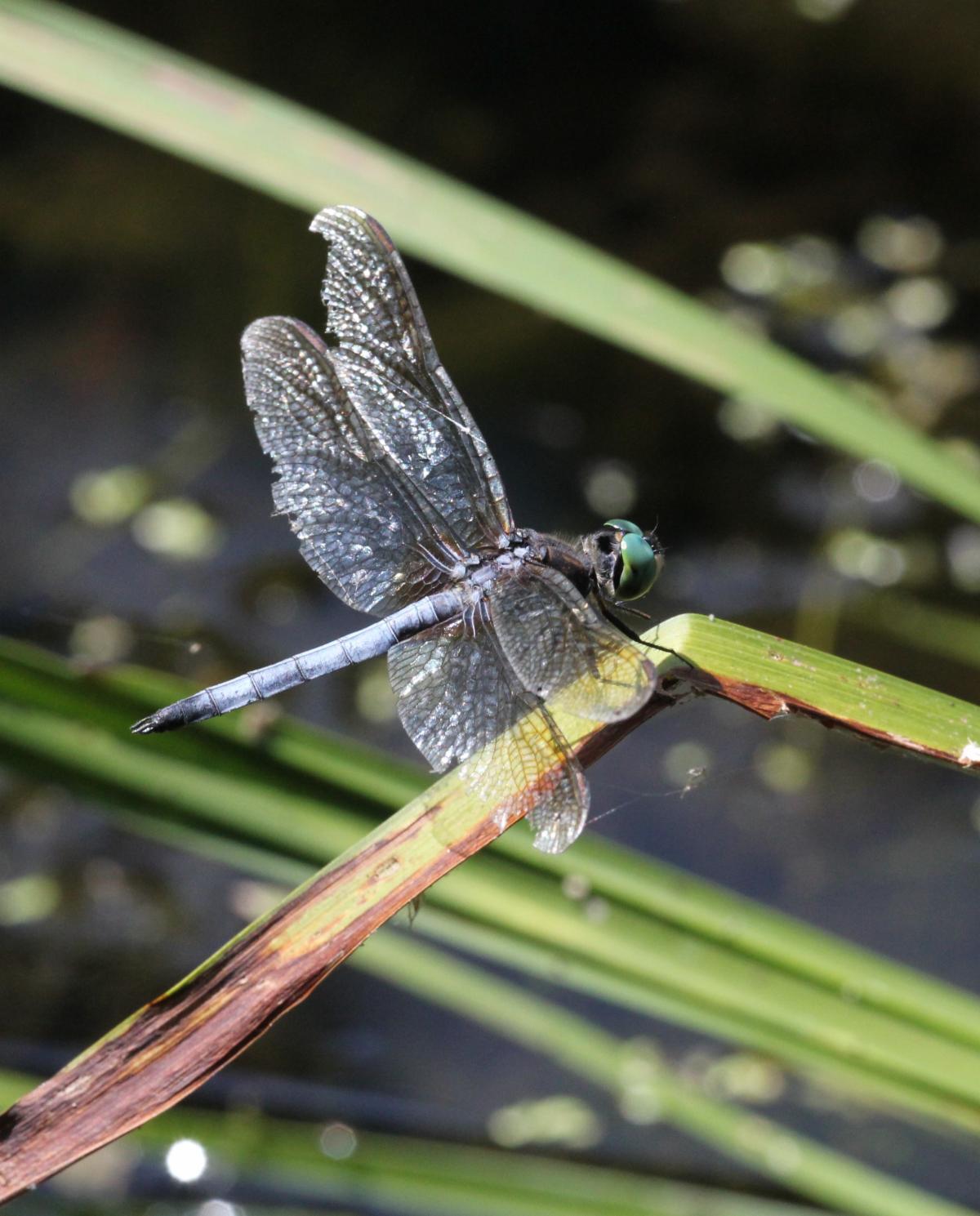
Workshop: Pond Life Exploration and Identification
Friday, July 25, 7:00-8:30pm.
(Meet at the EIC 6:45)
Water quality of aquatic habitats can be evaluated by the types of organisms that reside in them. Join us for a hands-on workshop to survey macroinvertebrate life in the Rose Garden Pond. You will learn how to identify these fascinating creatures, and what their presence reveals about habitat health. (Male Blue Dasher photo by "Dragon Hunter" Ken Nietering)
| | | *18 years and older only, please register for this program-- limited to 30 registrants. | | |
Photography in Nature Walk
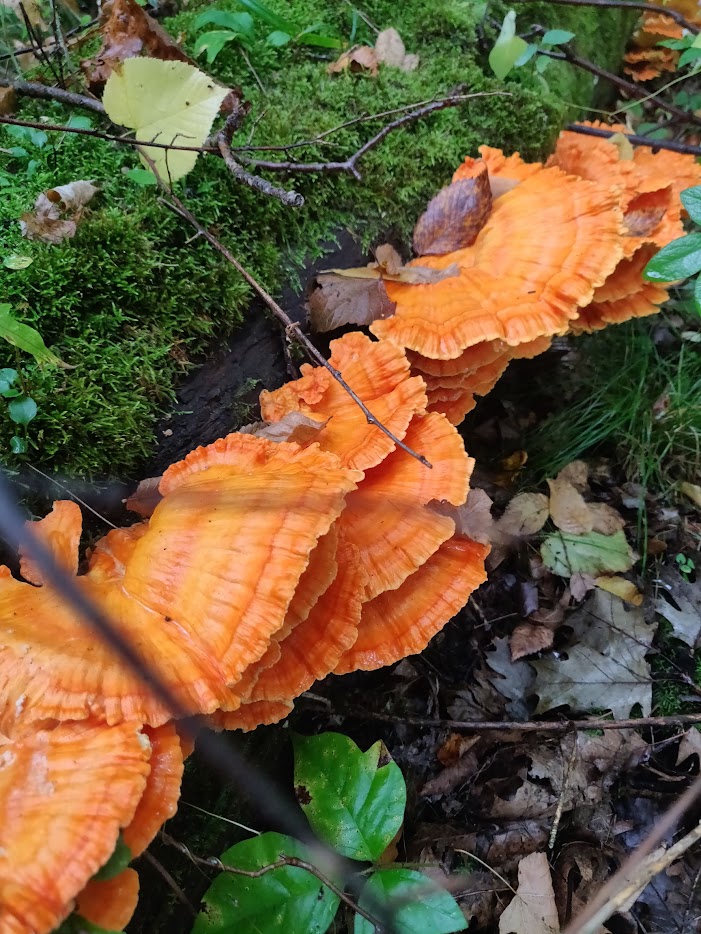
Join like-minded enthusiasts to capture nature in pictures like this gorgeous Chicken-of-the-Woods mushroom! Capture summer on the Environmental Study Area trails. Our next guided walk will take place on July 24, 2:30-3:30. Please register for this program.
(Photo by Mike Solomon, leader of these walks!)
| | |
Signup to attend this one-of-a-kind, hands-on workshop to create your own images using UV induced reactions. All proceeds for the event go to support the EIC. Create the original form of photography!
Here is the Link to purchase a Ticket
| |
Tales From the Parking Lot
| |
Policing Pigeons
You know it’s going to be an interesting day when two campus police officers walk through your door first thing in the morning. The officers reported that over a couple of days, two birds had been seen at Fair Lane Center North by the building entrance; one was dead, but the other had a visible band on its leg. The dead bird offered more data for Project PAT, and the other was a mystery we might be able to solve, thanks to the leg band. So, I squeezed into the back seat of their patrol car with a large canvas bug net, and off we went.
| |
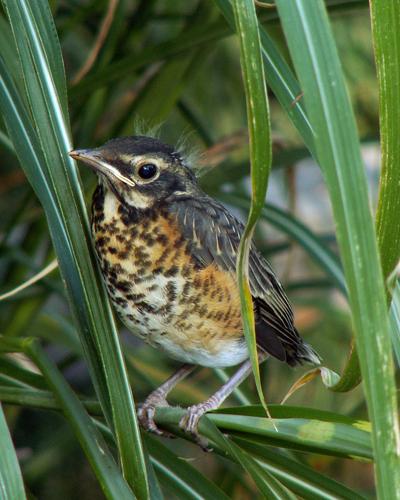
When we arrived, the two birds were visible by the door. The bird/ window casualty was a juvenile American Robin recently fledged from the nest, confirmed by the speckled breast. It’s not uncommon for the majority of fledgling songbirds to perish in their first year, and window collisions are a major cause of bird mortality. (Juvenile Robin, S. Verner, USFWS Digital Library)
| | The live bird was a pigeon, and the blue numbered band was the key to solving the “who, what, and where” of this bird’s story. The pigeon put up no fuss as I placed it inside the canvas bug net, sitting quietly in my lap as we returned to the EIC. | | | |
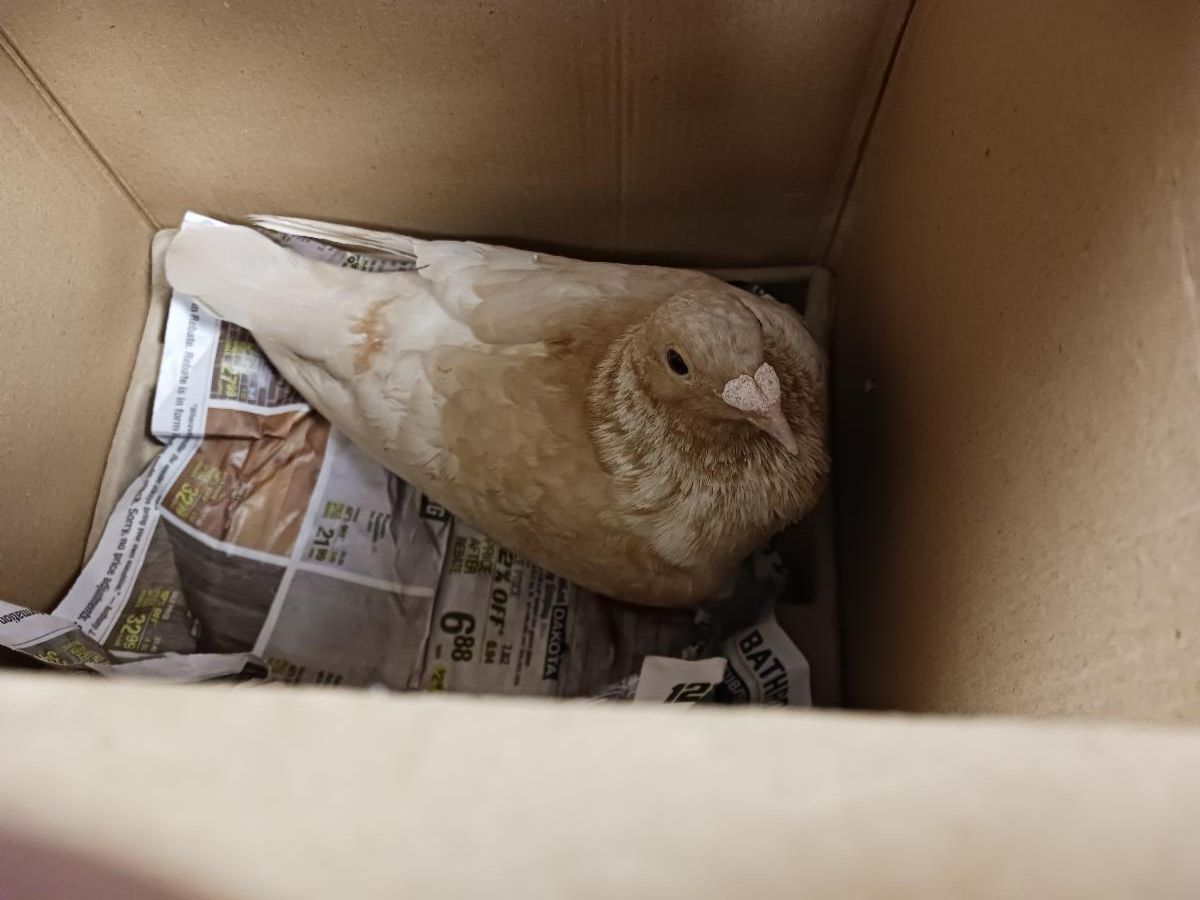
With help from our officers, we recorded the important number and letter codes from the leg band. Placing the bird in a cozy cardboard box (above) in a quiet place, I began the outreach process to reconnect the pigeon with a person. (Photo by Editor)
Looking online for the appropriate organizations, I clicked on the American Racing Pigeon Union “found bird” report form. Within an hour, I received a response from a representative thanking me for the report, along with the information associated with the band. Calling the number, I learned the person listed was an employee of Siegel Pigeon Supplies, which sold the band. When I asked what area code I had called, I learned that 337 is the code for Jeanerette, Louisiana! I sighed and thought, “I’ll never get this bird home….”
The person who bought the band from Siegel’s, however, had a 248 area code, so things were beginning to look up! Connecting with the local contact was fraught with missed calls throughout the afternoon, but our efforts paid off in a big way.
| | |
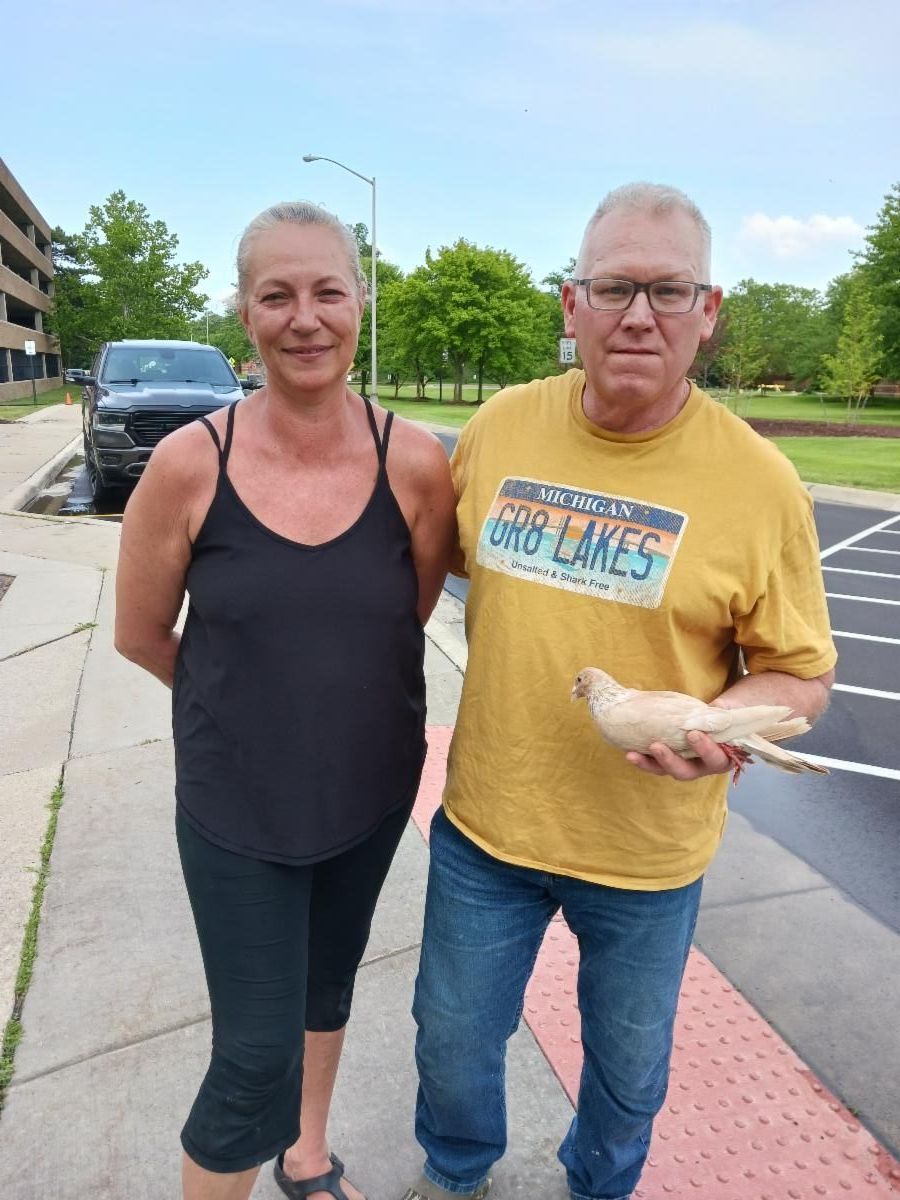
It turns out that this person has been involved with breeding and flying pigeons since childhood, taught by his father and other experts. Joel Kinkade and his wife, biology teacher Amy Klopman, breed and raise pigeons at their pigeon loft, Archaeopteryx Aviary. This couple is quite active with the National Pigeon Association, both locally and nationally. They drove to Dearborn from Oakland County to retrieve this bird who had “flown the coop” from another person’s pigeon loft.
| | We are thankful to all the people involved in getting this beautiful bird home. Without the leg band on this pretty girl, this story would have a very different ending. If you happen to find a banded pigeon, you could enjoy an adventure like this. The National Pigeon Association will help you make the connections. It really does take a village! | | |
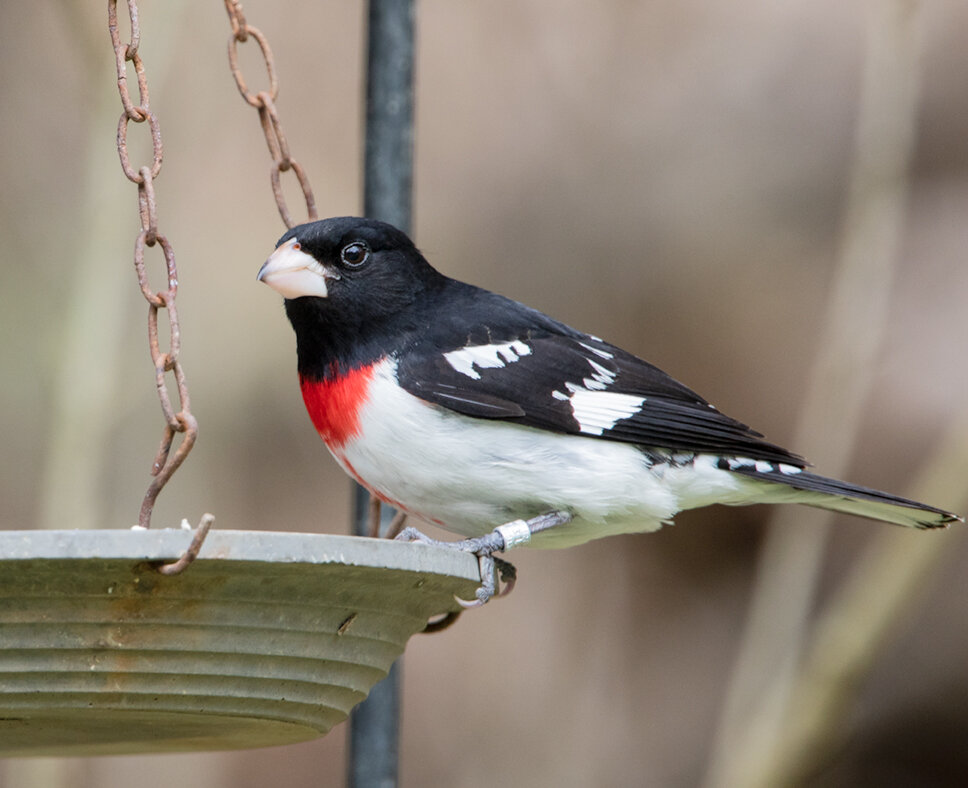
Wild birds captured for research are also banded, and you could participate in community science by reporting the band number, whether alive or dead. If you have found a banded bird, please report it at www.reportband.gov. You'll need the band number, or numbers, if the bird has more than one band.
(Banded male Rose-breasted Grosbeak by Michele Franz)
| | | |
The U.S. Geological Survey Bird Banding Lab (BBL) will send you a certificate of appreciation that includes information about the sex, age and species of the bird, and where and when it was banded. You’ll become part of a global wildlife research project to help understand some of the mysteries of bird migration!
-Dorothy McLeer, Editor
| |
It's Baaaack...
Pollinator Photo Contest!
| | |
The Pollinator Photo Contest is Back!
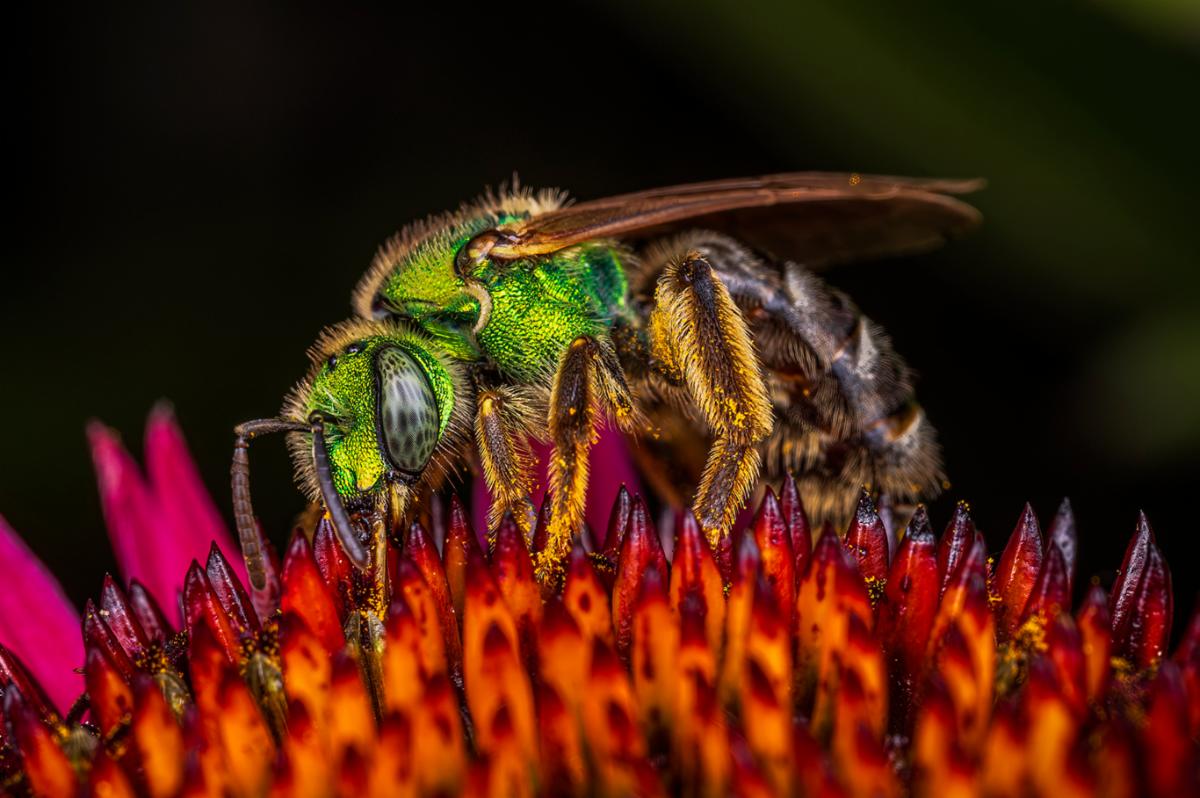
The EIC and UM-Dearborn’s Bee Campus USA Committee are pleased to announce that they are now accepting entries for the 6th annual Pollinator Photo Contest. The goal of the contest is to help highlight the amazing abundance, diversity, and beauty of pollinators and their floral counterparts. Photos may be submitted in either of two categories: pollinators up-close of pollinator-flower interactions. Entries will be accepted from June 1 to September 30, 2025, with winners announced by the end of October. Full contest details are available by visiting the Pollinator Photo Contest Website.
("Agapostemon and Coneflower," by 2024 winner Joseph Ferraro)
| | |
Early Summer Nighthawks
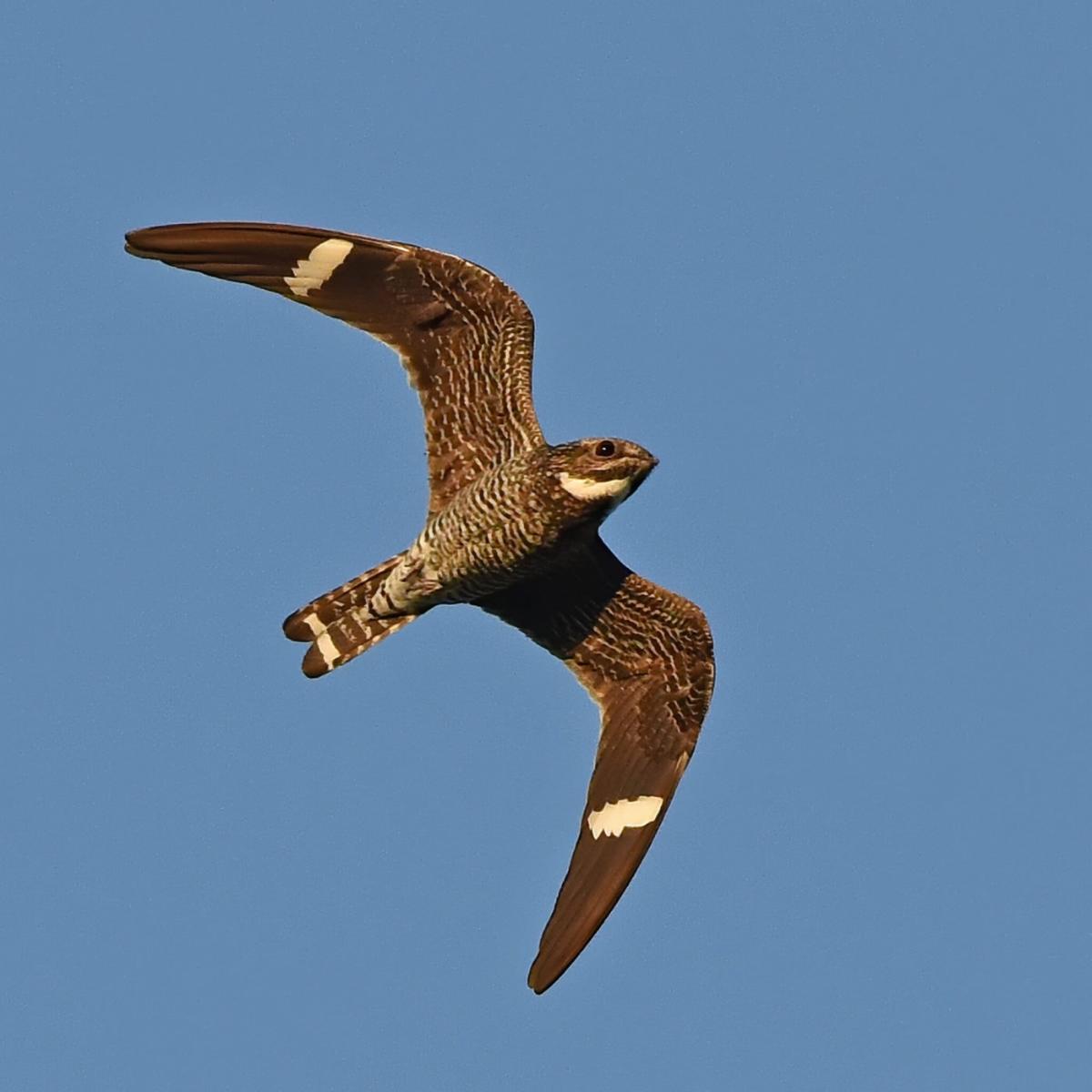
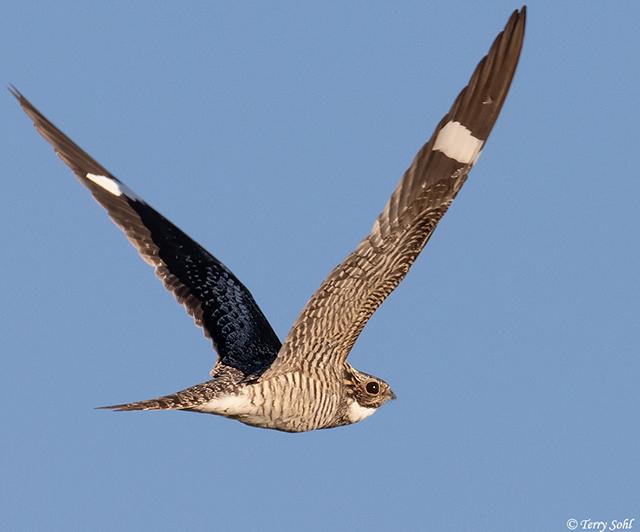
Over the last several weeks, starting almost every evening just before sunset, Common Nighthawks have been making their distinctive presence known around the UM-D campus. These birds of twilight, with their piercing calls, angular flight silhouettes, and aerobatic maneuvers lend a special quality to summer evenings. This photo, by Scott Stoner/Naturelogues, really illustrates key identification field marks.
| | | Not actual hawks, nighthawks are members of the peculiarly named goatsucker family of birds. This stems from a superstition going back to Aristotle, who was suspicious of these birds. He felt that their surprisingly large mouths gave them the ability to suckle goats, causing milk loss. It’s not hard to imagine Aristotle scowling as he watched nighthawks coursing around a goat barn at twilight. | | |
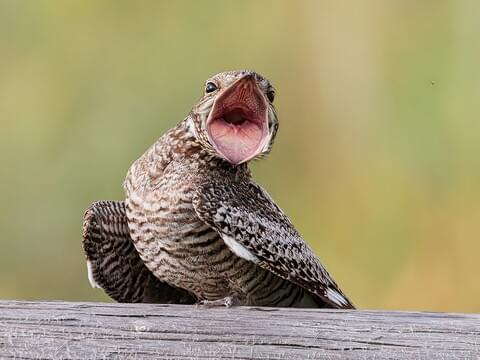
Superstition aside, nighthawks’ gaping-mouths are perfect for catching aerial insects. Their feeding technique evidently involves plowing right into an insect, open-mouthed, at a flight speed that causes the insect to go straight down the hatch.
(Photo by Bob Bowhay, Macaulay Library)
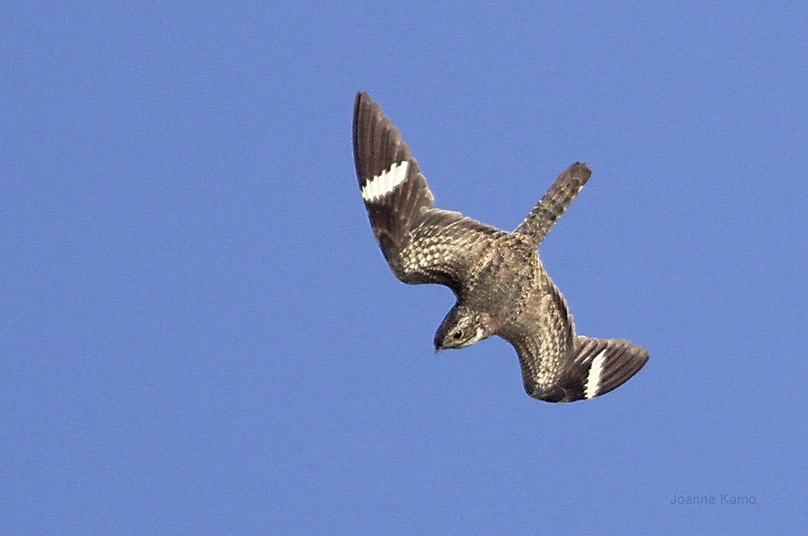
| | Watching nighthawks on an early summer evening provides an opportunity to observe the male nighthawks’ courtship “dive” displays. After ascending slowly with stiff wingbeats, they suddenly pause and plummet, sometimes precariously close to a hard surface like a rooftop, only to change course at the last second. | | | |
This is accompanied by a roaring “whoosh” of air rushing through their primary wing feathers. (Photo by Joanne Kamo, pbase.com)
To me, the presence of nighthawks on early summer evenings is something that evokes a keen sense of time and place. I vividly recall, growing up in Detroit, watching them every year from my front porch, flying over the flat-topped school kitty-corner from my house. Those moments sometimes included the calm voice of Detroit Tigers sportscaster Ernie Harwell coming from a nearby radio as he announced, "And the lights come on at Tiger Stadium." In my mind’s eye, this mix of nighthawks, baseball, and summers of long ago brings me back home.
| | |
To catch some early summer nighthawk activity at UM-Dearborn, try standing in front of the Environmental Interpretive Center, starting around a half hour before sunset. This behavior will likely last only a few more weeks. (Photo by Terry Sohl)
You might also have nighthawks in your neighborhood right now, which is more likely if there are flat-topped buildings nearby that have gravel rooftops. You might just find yourself enjoying one of summer’s special avian performances.
Enjoy!
-Rick Simek
| |
A Norwegian Tradition "At Work"
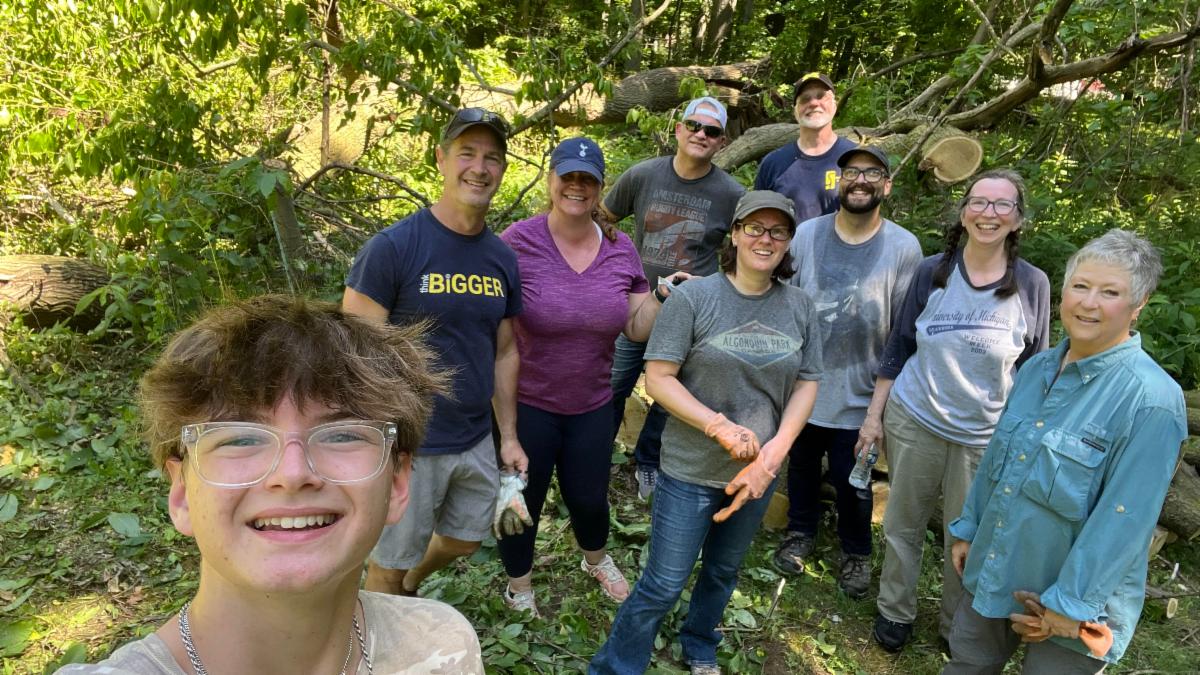
As the wife of EIC Director Jacob Napieralski (pictured right in "Bigger" T-shirt, and Lise in purple) a proud Norwegian, it warmed my heart to see the EIC introduce a new concept to celebrate the summer solstice, blending the Norwegian “Dugnad,” (pronounced DOOG-nahd) with the American “Potluck”, and setting in motion a semi-annual event as fun as it was effective.
Dugnad is integral to Norwegian culture and refers to "a collective, voluntary effort where people work together to achieve a common goal for the benefit of a community." Norwegians are introduced to the Dugnad from a young age. Growing up, I remember my 4th grade class planting trees; the entire kindergarten, including kids, parents and teachers, collectively cleaning up rooms, toys and playgrounds, and everyone in town coming together to decorate our main streets for national holidays, just to name a few.
The power of a Dugnad is making tasks that seem insurmountable to one easily achievable by many. It shows the potential of community and the value of being part of something greater than yourself.
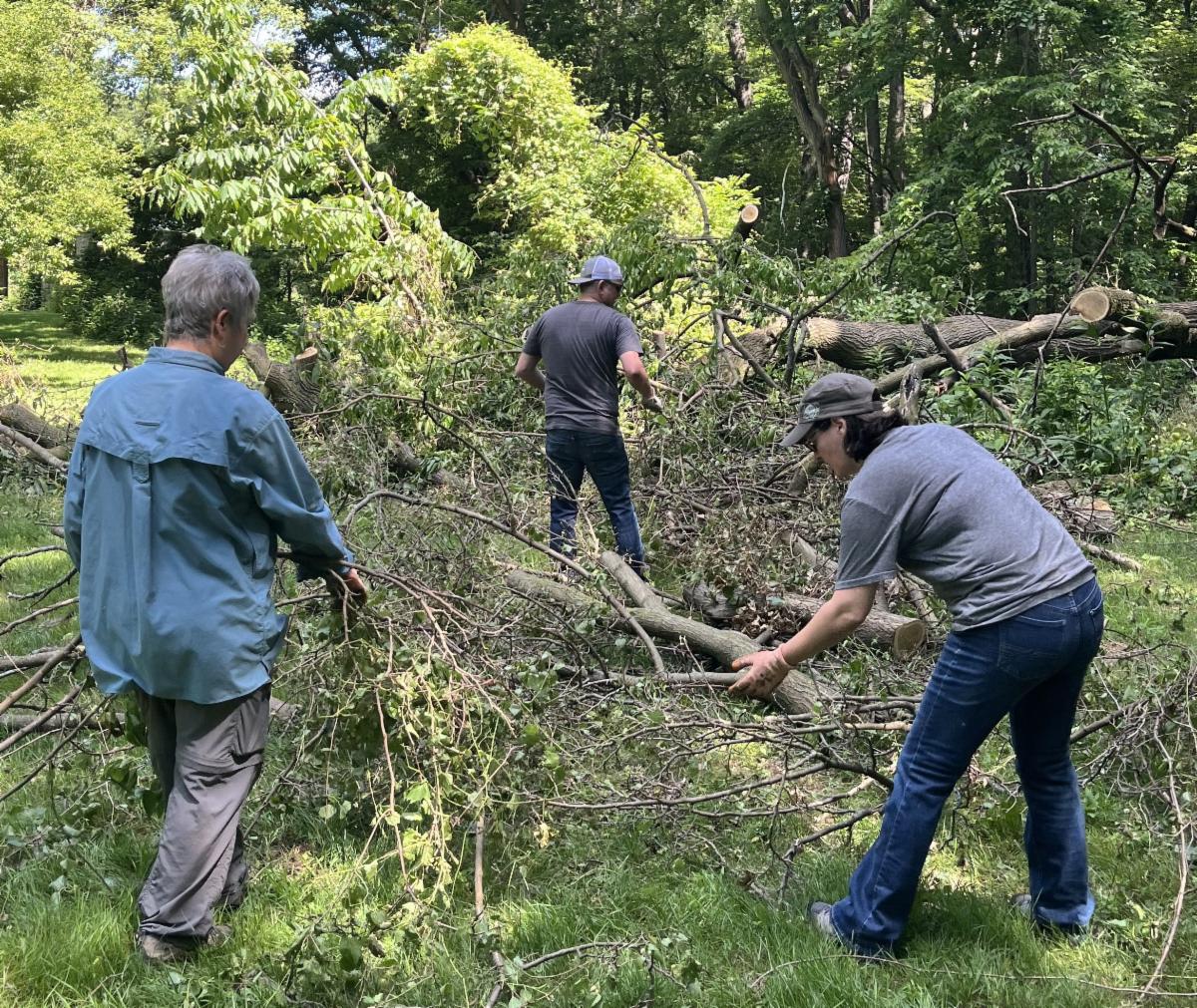
| | For the EIC, this meant getting staff, family, and volunteers together for a couple of hours on a hot Saturday in June. We cleared up walkways and paths, weeded rock borders around the building, and discovered how fast a massive fallen tree could be cut up, and removed, with many hands involved in the process. | | | |
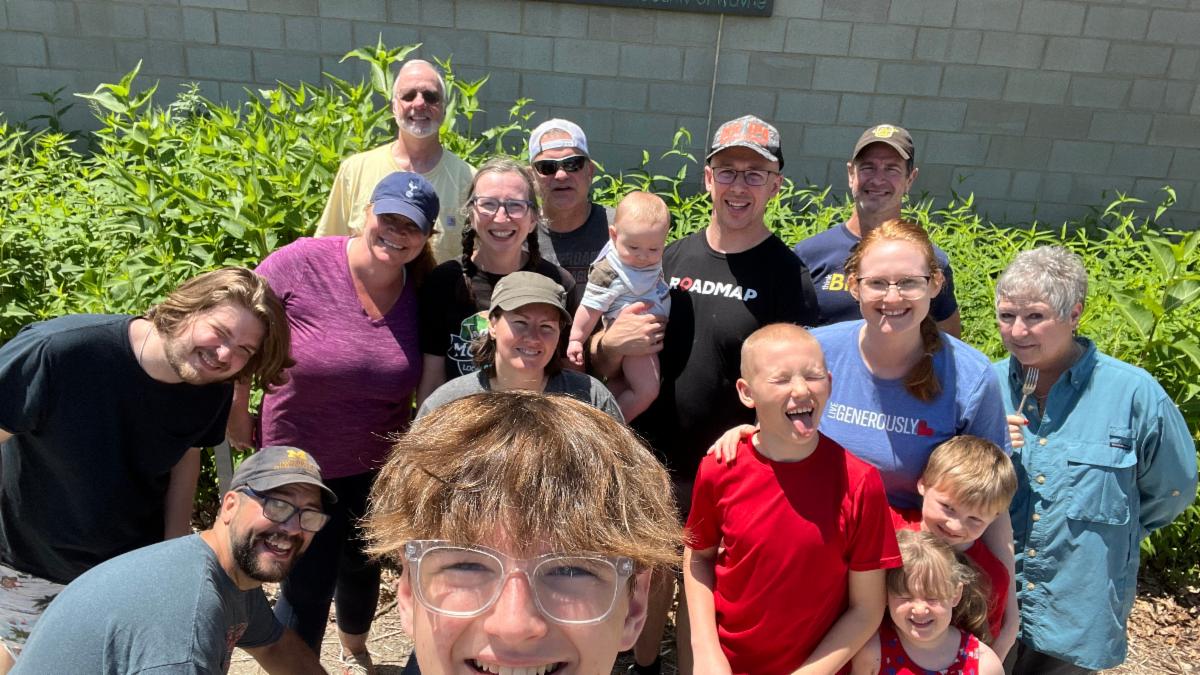
When work was done and everyone was sweaty, red faced and wearing the forest on our clothes, it was time to meet up inside the building for the potluck. We stuffed ourselves with delicious food, including traditional Norwegian waffles. The room was filled with conversations and laughter, and a sense of community accomplishment was present, making this first blending of volunteering cultures a sweet success. Come join us next time: work hard, laugh harder, and become an integral part of the EIC Community!
-Lise Napieralski*
*Editor's Note: In addition to being Jacob's wife, Lise and the Napieralski Family regularly volunteer at the EIC, as noted in previous newsletters. She is a positive force--and talented baker, which "energizes" our staff meetings! Thanks to all who joined the Dugnad! Below: Noah and Mike Solomon, Calvin Haydamacker, The Mallard Family, Lise and Jacob Napieralski, Karen Holland, Dale and Steve Browne, Rick Simek, and Dorothy McLeer (fork at the ready!)
| | |
Venturing outdoors and encountering nature is good for your health. Our trails are accessible, so please visit our Environmental Study Area. Stay engaged in learning activities and check out our Remote Learning Activities & Resources page for ideas to create a “Neighborhood Nature Journal” and “Family Nature Walk” activities!
| | | We also hope to see you in person at our upcoming programs! | |
Please remember...
The EIC Environmental Study Area is open daily from sunrise to sunset. We would like to remind nature-goers that fishing on site is prohibited and to leave bikes and dogs at home because they cause disruption and stress to the EIC wildlife.
| |
| | | |