Environmental Interpretive Center June 11, 2025 | | |
In this issue:
- Microseasons?
- Upcoming EIC Programs
- Partner Events: Sunsets & Muskrats!
- Pollinator Photo Contest
- Tales From the Trails: Naturalist Dale Browne is Pooped!
- Greenways: Project PAT Spring Results
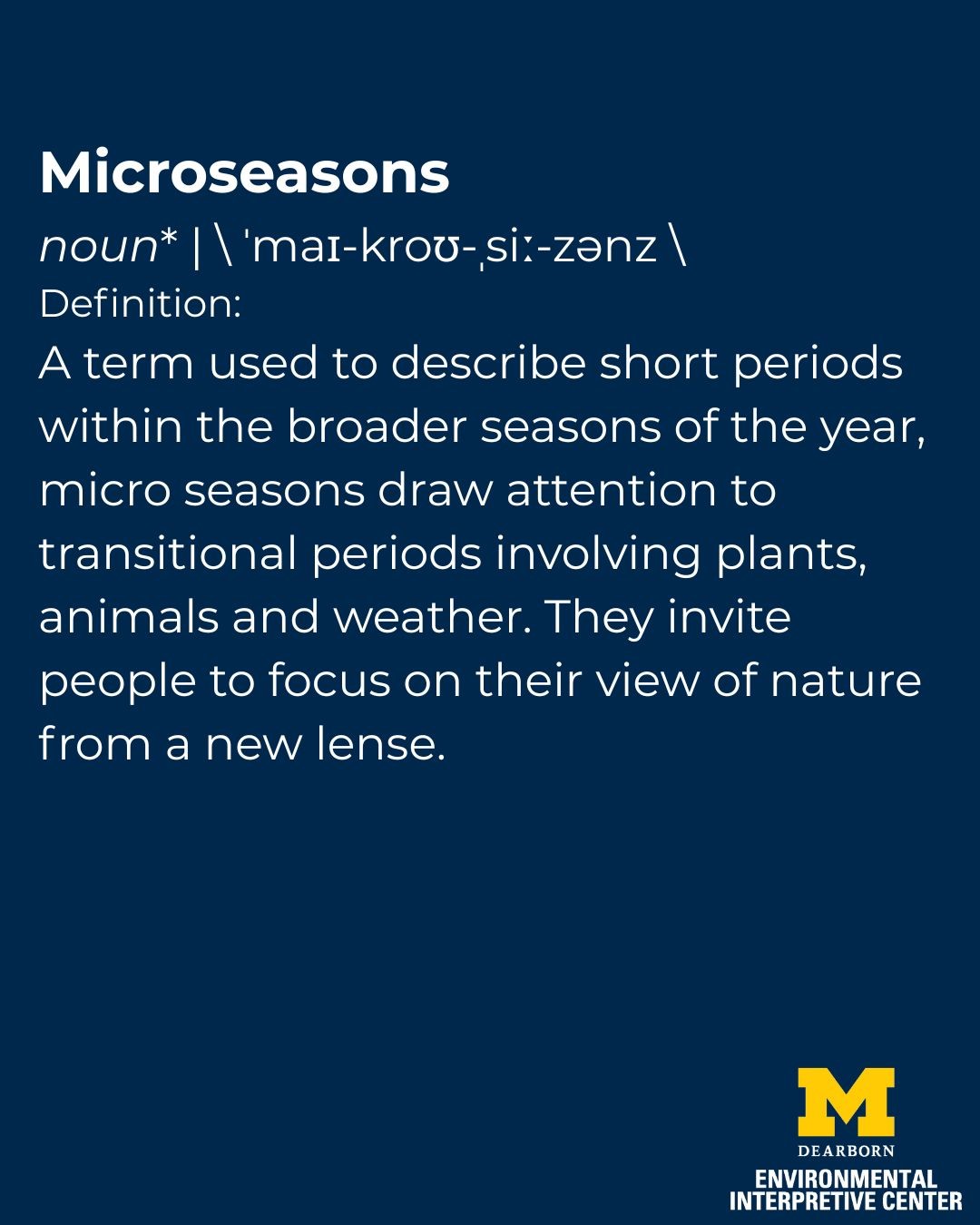
| | What the Heck Are Microseasons?? | | |
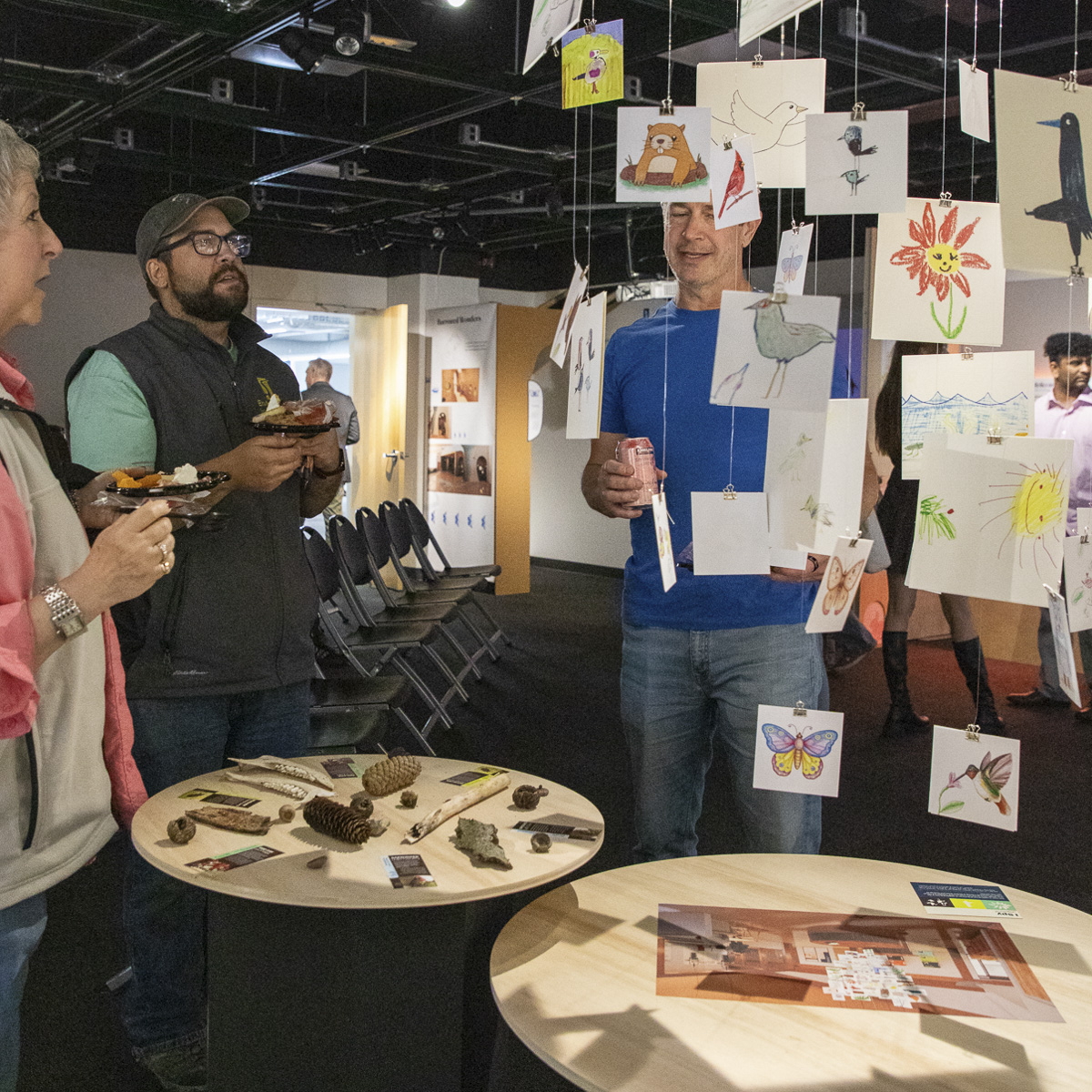
Naturalists spend a LOT of time focusing on phenology, the anticipated natural events throughout the calendar year. This was something that the students from the College for Creative Studies (CCS) caught onto when they "adopted" the EIC space in January for their semester-long project. We were recently invited to CCS for final student presentations of their work.
In their research and design projects, creating exhibits and visual "invitations" to attract more visitors to the EIC from a variety of audiences, one of the concepts that emerged was "microseasons"--and we LOVED it!
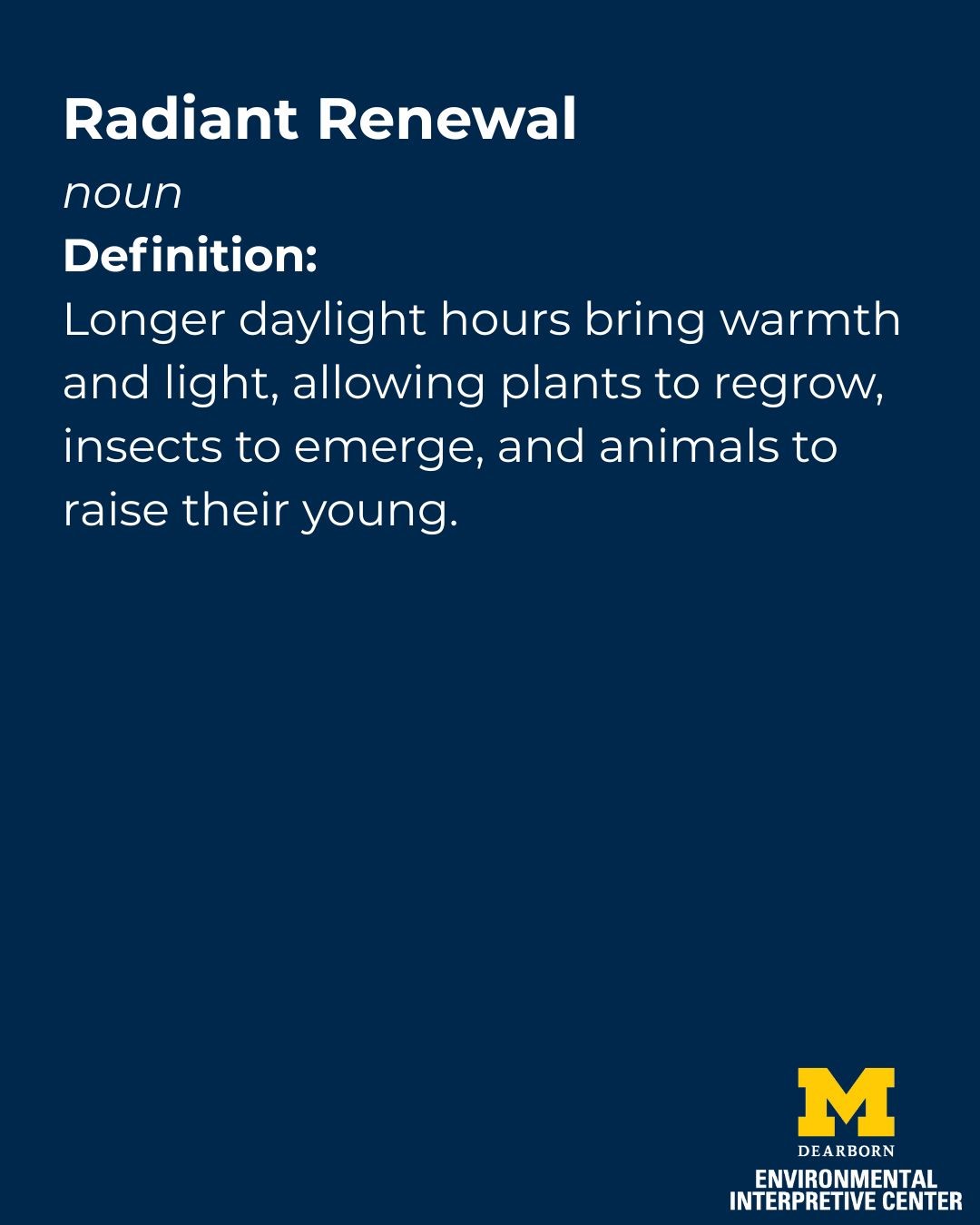
| | With twelve microseasons that don't strictly following the Gregorian calendar, these periods are guided by natural occurrences in a regional location. Depending on where you are, your microseasons will vary. | | For residents of southeast Michigan, the EIC staff have dubbed the current microseason "Verdant Burst," and we are quickly moving into the "Radiant Renewal" microseason. | | This project is a work in progress, with more to come in the near future. In the meantime, pay attention to the microseasonal changes in your own neighborhood. The EIC Staff is grateful to the four teams of students and their instructors for the opportunity to partner with this impressive and talented group. We really enjoyed the exchange of knowledge, ideas, and creative energies, and we appreciated the time, care, and attention the students devoted to this project. There are bright futures ahead for these creatives! | | |
Photography in Nature Walk
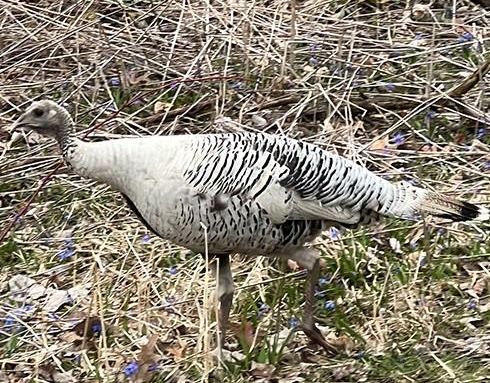
Join like-minded enthusiasts to capture nature in pictures like this leucistic feathered turkey. Our last guided walk in this series will take place on June 26, 2:30-3:30. A new schedule will be posted soon. Please register for this program.
(Photo by Mike Solomon, leader of these walks!)
| | |
Celebrate the Summer Solstice at Fair Lane
Friday, June 20
7:30-9:30 p.m.
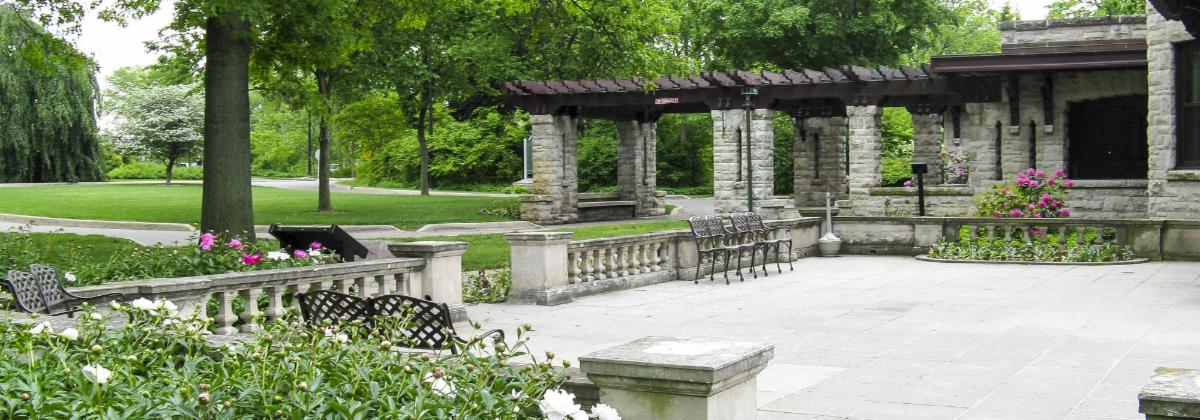
The EIC excited to partner* with Fair Lane: Home of Clara and Henry Ford for their 2025 Summer Solstice Member Event on Friday, June 20, from 7:30 - 9:30 pm. A feature of landscape artist Jens Jensen is, "The largest axial meadow, the "Path of the Setting Sun", [which] is aligned so that, on the summer solstice, the setting sun glows through a precise parting of the trees at the meadow's western end." This special evening includes optional gardens and grounds tours in collaboration with Environmental Interpretive Center naturalists.
*This is a members-only event, hosted by Fair Lane. If you are interested in attending, consider joining as a member to receive exclusive access to events like this and support the ongoing restoration of this National Historic Landmark. Learn more at https://henryfordfairlane.org/membership.
| |
Master Gardeners Association of Wayne County (MGAWC)
Thursday, June 12, EIC Room 119
7:30-9:00 p.m.
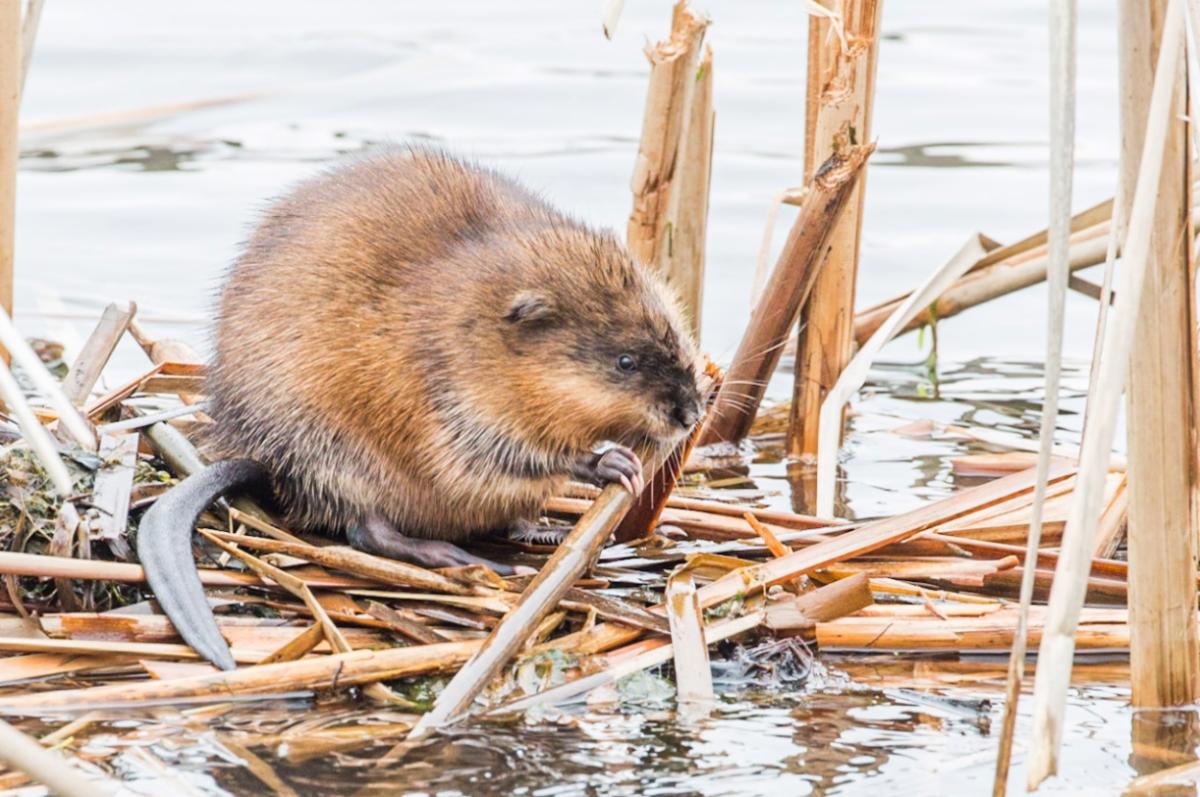
"Muskrats!"
Gerry Wykes returns to MGAWC with another lively entertaining and educational programs; this time the topic is muskrats. Gerry educates with humor and stories combining natural science with regional history and geography. Author, illustrator, historian, presenter, retired curator and supervising interpreter of the Huron-Clinton Metropark’s Lake Erie Marshlands Museum and Nature Center, Gerry is a contributor to Michigan History magazine.
(Photo by Stephen B. Hagar, Augustana College)
| |
It's Baaaack...
Pollinator Photo Contest!
| | |
The Pollinator Photo Contest is Back!
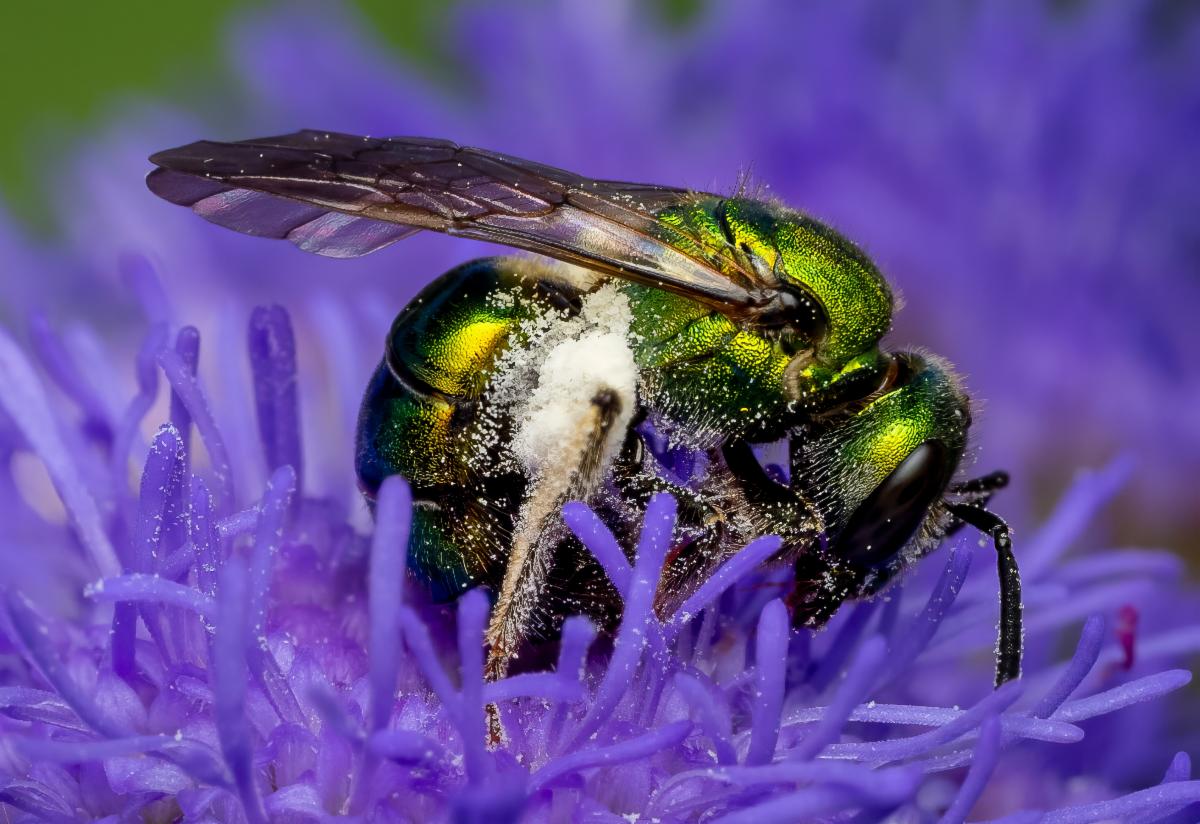
The EIC and UM-Dearborn’s Bee Campus USA Committee are pleased to announce that they are now accepting entries for the 6th annual Pollinator Photo Contest. The goal of the contest is to help highlight the amazing abundance, diversity, and beauty of pollinators and their floral counterparts. Photos may be submitted in either of two categories: pollinators up-close of pollinator-flower interactions. Entries will be accepted from June 1 to September 30, 2025, with winners announced by the end of October. Full contest details are available by visiting the Pollinator Photo Contest Website.
(Green Sweat Bee, by 2024 winner Evan Deutsch)
| | |
What’s the Scoop on Poop?
Call it “scat,” “feces,” “dung,” or “droppings” - most people call it unpleasant at best. After all, animal waste can harbor disease and is annoying to remove from the treads of our shoes. However, from a naturalist’s perspective, I often look to scat as an exciting sign of animal activity. Regardless of our human opinions on the stuff, the processes behind making it are critical to the cycling of matter and flow of energy in an ecosystem.
| | Solar energy is captured and stored by plants, which are consumed by animals who use some of that energy. Those animals will be consumed by others, and so on and so on as energy transfers from one organism to another, with a little energy is lost at each step. Meanwhile, the matter that is consumed may change form, but largely stays within the system. It would be easy to think that animal waste instantly becomes “fertilizer” for plants or turns back into soil, which may happen eventually, but many more interesting things will happen along the way! (Photo by Tom Baker) | | | Walking through the Environmental Study Area this spring, I came across two fascinating animal activities which show just how important scat is for certain species of insect. | | |
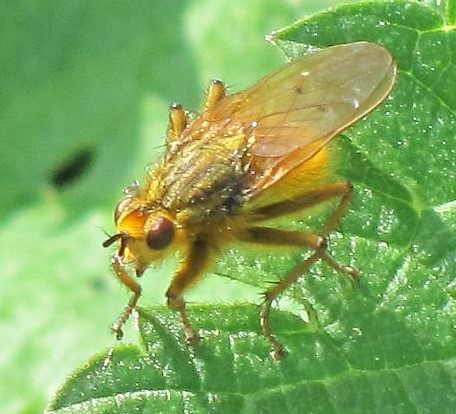
First, I found a pile of deer droppings covered in flies; not an unusual thing to expect from a fresh patty in the woods! But the beautiful, bright yellow flies crawling about demanded a closer look. With photos, I later identified the Golden Dung Fly (Scathophaga stercoraria), pictured left, associated around the world with the dung of large mammals like domestic cows. The adults feed mostly on nectar, and you might find them a lovely visitor to your garden flowers. Their eggs however, must be laid in dung, where they hatch and live out their larval stage feeding in the pile. Their feeding further processes the fibrous materials in the dung, breaking it down into pieces for smaller yet decomposers like bacteria. (Photo courtesy of Wikimedia Commons)
| | |
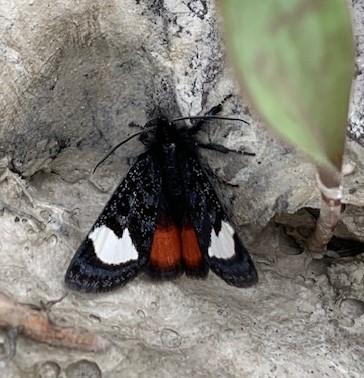
Next, I spied a gorgeous black, red and white butterfly - or so I thought! Feeding on a splat of bird droppings was actually a moth called the Grapevine Epimenis (Psychomorpha epimenis; from the ancient Greek for “butterfly-formed”). With abundant standing water around, why would it collect moisture from bird poop? Many butterflies and a few moth species engage in “puddling”, in which they drink from the wet ground but also from “fluids of vertebrate origin.”
(Photo by the author)
| | | |
It’s thought that animal waste provides minerals and sodium that these insects can’t get from their nectar diets - like a Lepidopteran salt-lick! Puddling insects tend to prefer carnivore dung which contains more sodium, and is usually done by the males where it is linked to greater reproductive success.
So you see, the next time you notice what something else has left behind, it might just be worth a second look. You never know what you might discover making use of this little-appreciated resource!
-Dale Browne, EIC Assistant Program Coordinator
| |
Spring Bird Migration Flew By!
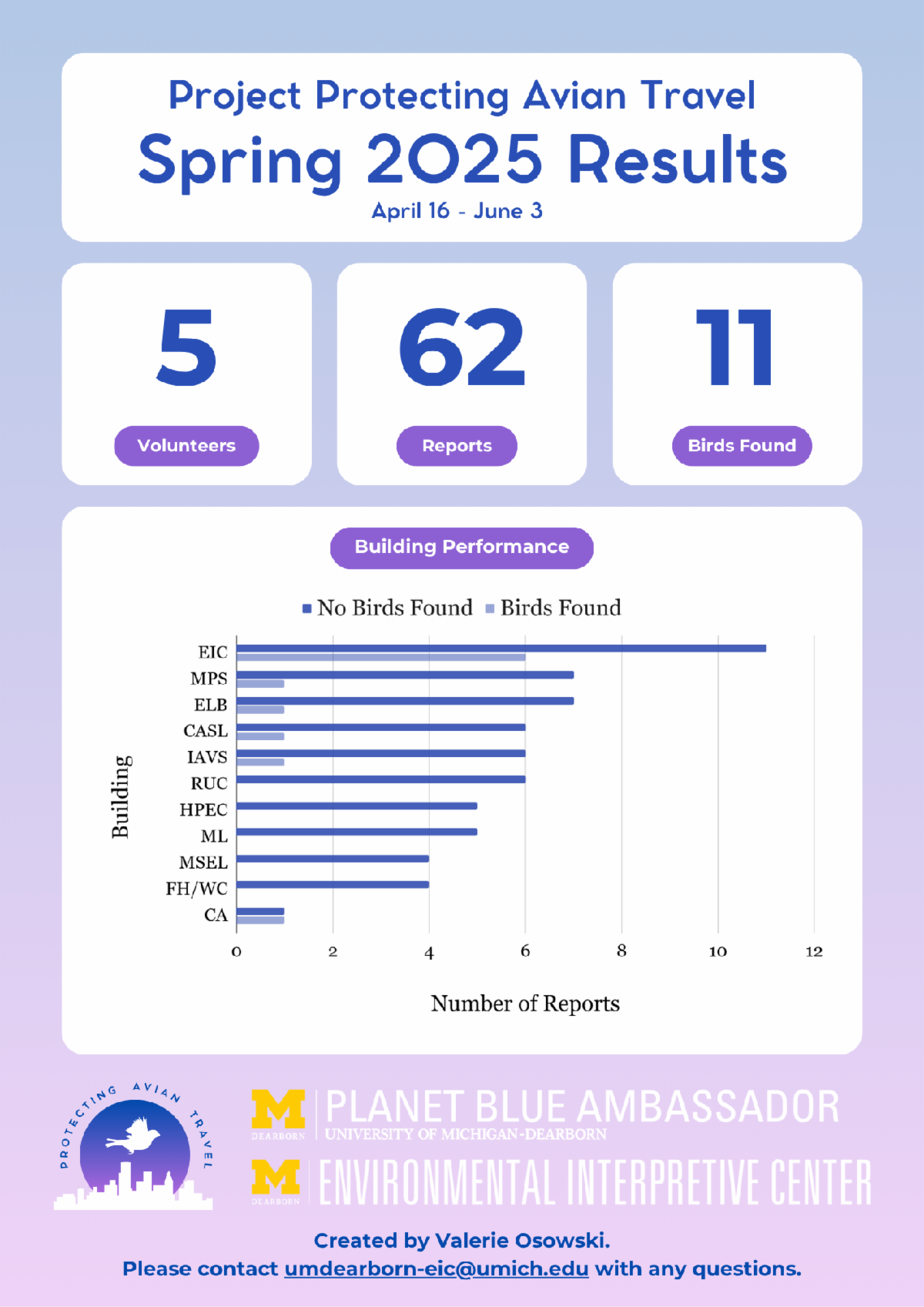
With the approaching summer solstice signaling the ending of spring and the beginning of summer, most birds have completed their migration and settled in for the nesting season. This also means that Project PAT has concluded the first round of migration surveys.
Since Earth Day on April 22nd, a total of five volunteers have performed surveys around the buildings on campus, looking for evidence of bird-window collisions and reporting their findings. All of the collected data gives us valuable information about the impact of bird-window collisions at our University, and none of it could be possible without help from our community. I would like to give a special thanks to dedicated EIC volunteer Joe Turek, who alone completed a total of 39 surveys for Project PAT this season!
| | |
Over the last six and a half weeks, volunteers found a total of 11 birds that had fatal collisions with windows. However, this only accounts for about 18% of the total number of reports that were made.
Buildings that were surveyed include the Environmental Interpretive Center (EIC), Engineering Lab Building (ELB), Montieth Parking Structure (MPS), The College of Arts, Sciences, and Letters (CASL), and the Institute for Advanced Vehicle Systems (IAVS).
| | | |
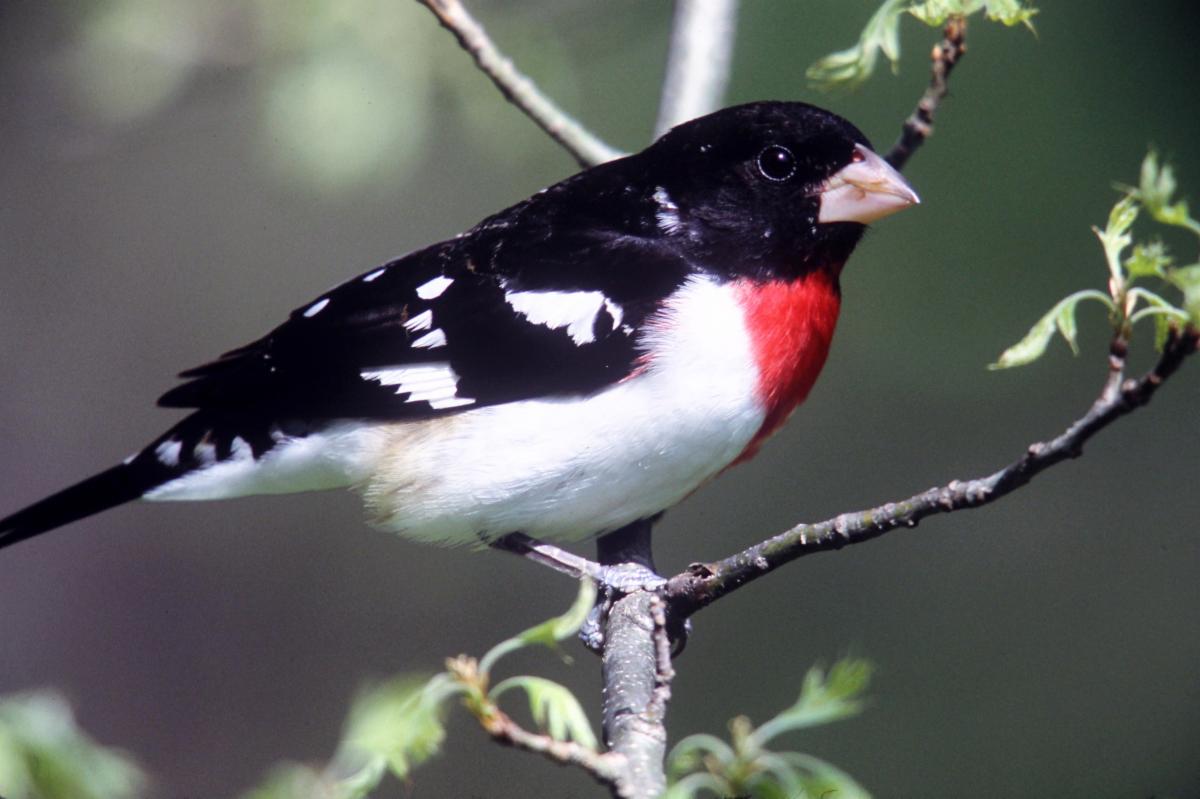
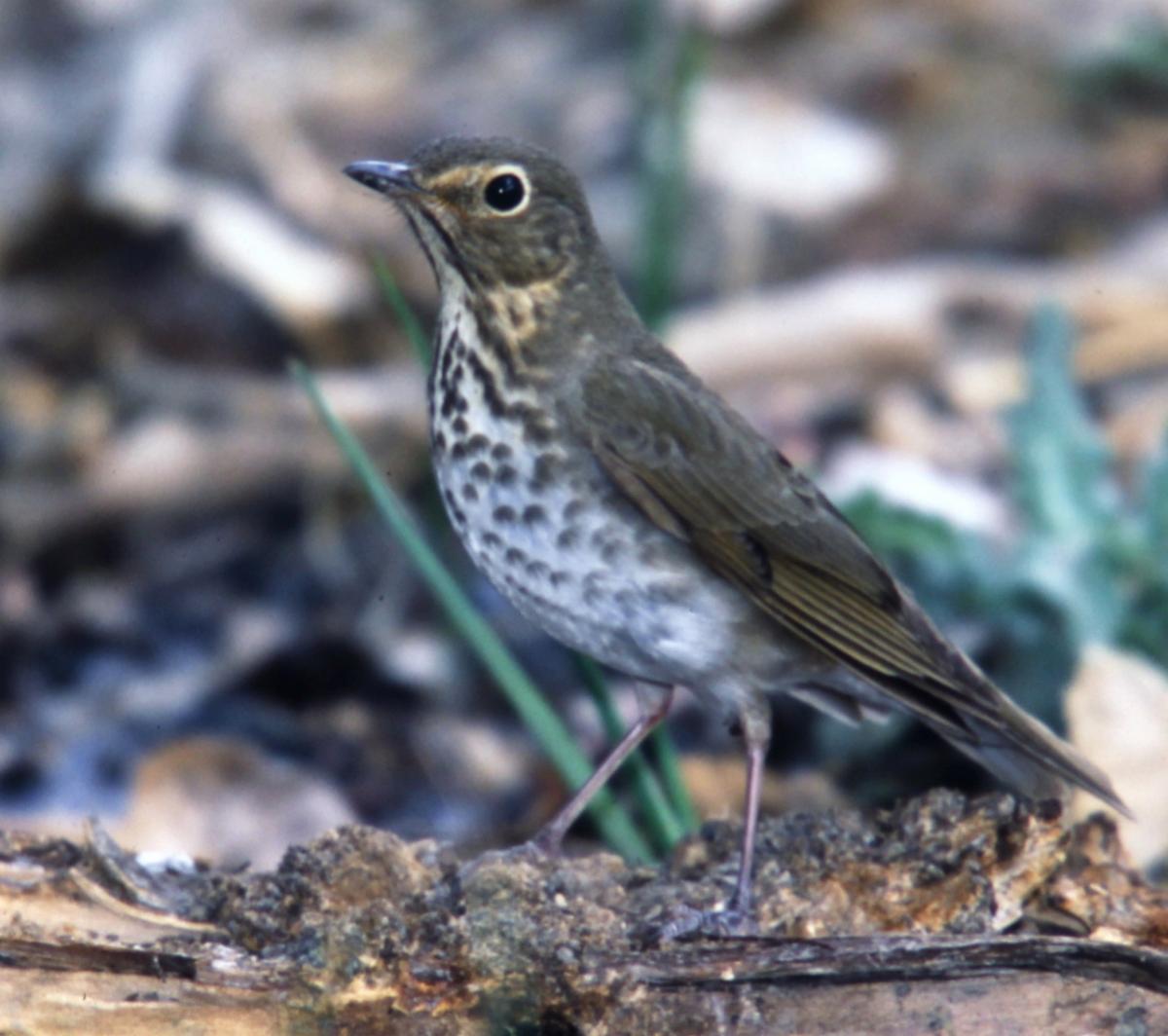
Here at the EIC, an unfortunate 7 birds were found, including a male Rose-breasted Grosbeak and a Swainson's Thrush, both of whom winter in Central and South America (Photos by Jim Simek). Almost every single one of the birds had collided with a floor-to-ceiling window that spans over the entire south side of the building. While the western portion of this window has a wall of paracord that prevents bird-window collisions, the uncovered eastern portion of the window has claimed a number of birds.
I suspect that this is due to the proximity to the Environmental Study Area (ESA), as more birds can be found in the natural area than any other location on campus. To help prevent further fatalities, the EIC is working with a motivated Eagle Scout to extend the paracord this summer. So, by fall migration, we will hopefully see a decline in the number of birds found around our building!
In summary, the work being done by volunteers in collaboration with Project PAT is revealing valuable data that will help us take action to provide a safer world for birds to migrate and live. I would like to give another thanks to the Project PAT volunteers, and welcome everyone to stay tuned for more news about the fall migration season!"
-Valerie Osowski, DTE Stewardship Fellow*
*Editor's Note: Valerie is shifting her responsibilities from our Program Staff to habitat management as the DTE Stewardship Fellow. Valerie will be assessing the impacts of invasive species removal in 2015 to present day in several areas within the 120-acre Environmental Study Area.
| | |
Venturing outdoors and encountering nature is good for your health. Our trails are accessible, so please visit our Environmental Study Area. Stay engaged in learning activities and check out our Remote Learning Activities & Resources page for ideas to create a “Neighborhood Nature Journal” and “Family Nature Walk” activities!
| | | We also hope to see you in person at our upcoming programs! | |
Please remember...
The EIC Environmental Study Area is open daily from sunrise to sunset. We would like to remind nature-goers that fishing on site is prohibited and to leave bikes and dogs at home because they cause disruption and stress to the EIC wildlife.
| |
| | | |