Environmental Interpretive Center March 10, 2025 | |
|
In this issue:
-
Giving Blue Day!
- Upcoming Programs
- Green Forum: "Environmental Health-Research to Action"
- Tales From the Trails: "First Grackle"
- Greenways: Protecting Avian Travel
- Science on Screen, Penn Theater
- Volunteer Spotlight: Keith Kushnir
-
Donna Posont: Making News-Literally!
| |
Support the EIC and Migratory Birds on Giving Blue Day!!!
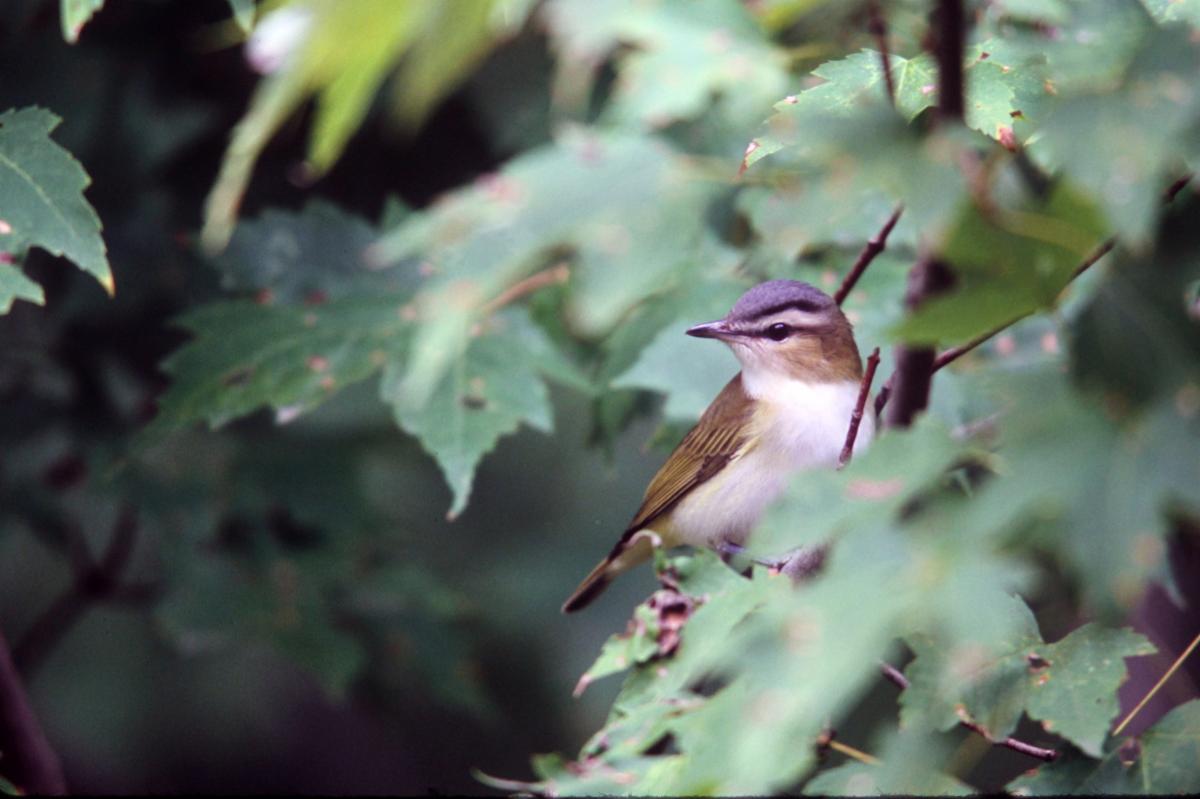
The Environmental Interpretive Center's (EIC) mission is to promote a healthy and sustainable environment for all. Situated amid a sea of concrete, the EIC's natural area is an island of green that is truly an oasis for birds and other animals. Over 200 bird species have been seen on our grounds and approximately 130 of those are migrant stopovers. As part of EIC research, we've learned that some of these migrants, such as this Red-eyed Vireo, travel as much 36,000 miles over multiple migration periods! Our green oasis plays a critical role in maintaining a stopover for local and migrating birds. (Photo by Jim Simek)
| |
|
Evening Spring Walk!
Friday, March 21
6:30-8:00 p.m.
Join us to celebrate the arrival of spring on an evening walk with your EIC friends. Wear sturdy shoes and dress for whatever the 2025 "spring" weather serves up. We'll warm up together afterward by the fire! Please register for this program. (Stock Photo by Anna_Om)
| |
|
Nature Walks for Mental Health
This semester, our nature walks will be held on the 2nd and 4th Wednesday of every month from 2:00-2:45pm. Attendees of every walk will be entered into a prize raffle at the End of Semester Celebration on April 9th!
Upcoming walks are Mar. 12, Mar. 26, April 9. Please register for this program.
Photography in Nature Walks
These guided walks will take place on the 4th Thursday of the month from 2:30-3:30, March 27 and April 24. Please register for this program.
Children's Gardening Program*
If your child loves to be outside and in the garden, the Children’s Gardening Program is the perfect summer activity! Children ages 6-8 are welcome to become one of this year’s “Sprouts” at the Community Organic Garden and learn the joys of gardening. They will grow, tend, and harvest their own plants, as well as explore all of the other life the garden has to offer!
Eight program sessions throughout the growing season will be scheduled at a later date. *Keep an eye out for registration information in upcoming newsletters and on the EIC website!
| |
EIC Fellows Green Forum
Our Fellows, representing the four UM-Dearborn academic colleges, have organized the Green Forum speaker series. Presentations take place in the EIC Auditorium, where light refreshments will be available.
March 11, 4-5 p.m.: Dr. Carmel Price
UM-Dearborn Associate Professor of Sociology
"Environmental Health-Research to Action" (EHRA)
Dr. Price and Dearborn High School student Yara Reda (and EHRA academy alumna) will talk about the EHRA academy and some of EHRA's research projects.
Science on Screen, with EIC Director Jacob Napieralski
March 25, 7:00 p.m.
Penn Theater, Plymouth, MI
"Lost Rivers-Uncovering the Mystery of Our Hidden Waterways"
In honor of World Water Day, Dr. Jacob Napieralski, Ph.D., Dr. Marie Garcia, Ph.D., and Landscape Architect Nancy Darga lead a discussion and Q&A session about the importance of preserving our waterways and bringing awareness to the “lost rivers” that exist in our community.
Screening with the short film Freshwater (2022) by Dream Hampton.
This free event is part of the 2025 National Evening of Science on Screen.
| |
|
First Grackle
Recently, even on days with the most unspringlike conditions in the
Environmental Study Area (ESA), there have been hints that spring is starting to arrive. Maple trees are yielding sap. Northern Cardinals are broadcasting their rich vocal tones from the top of tall trees. Flocks of migrating Red-winged Blackbirds are arriving and increasing in number. Each day brings news of spring in the form of these “firsts” of the year.
| |
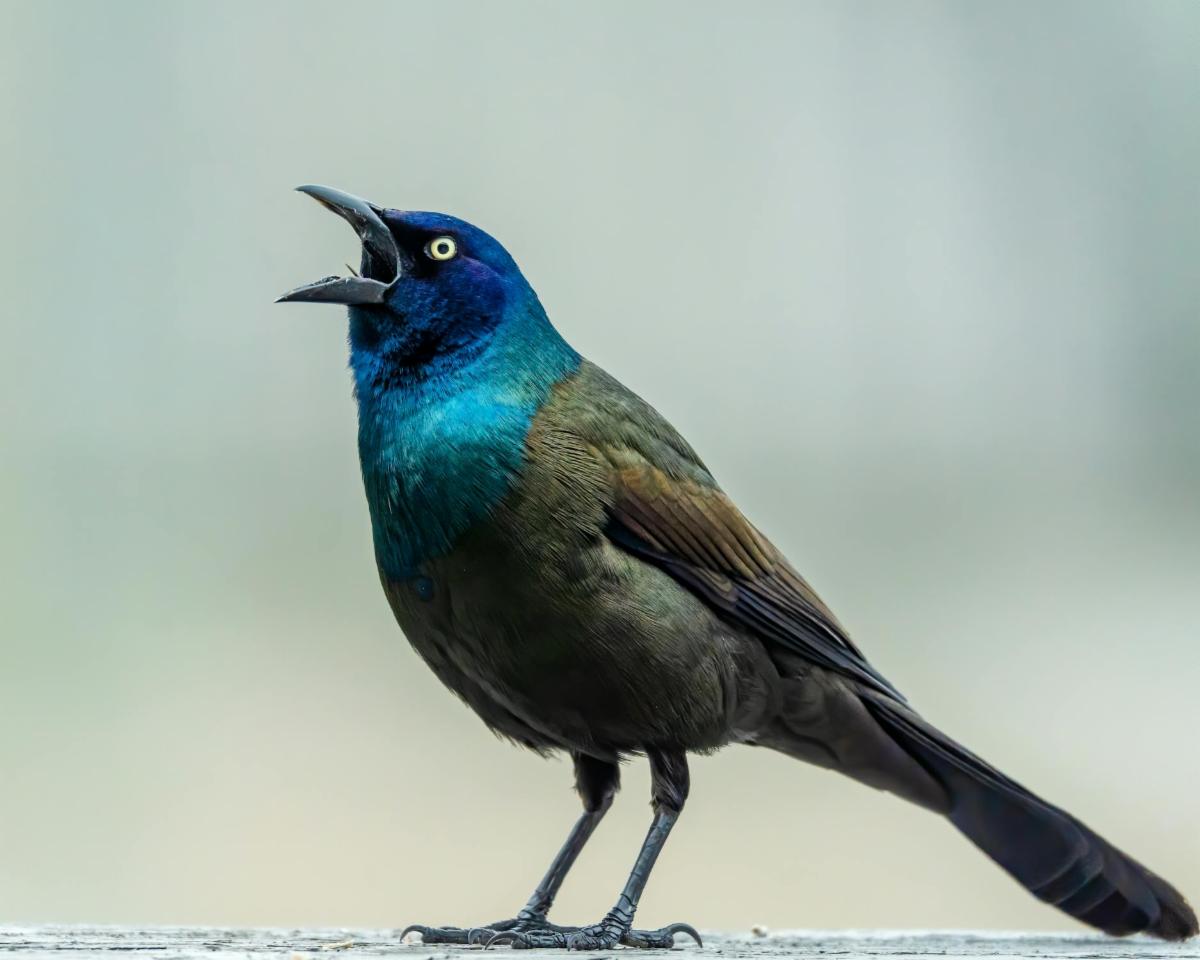
One of these, which I noted on February 28, was the presence of a single Common Grackle on one of the Environmental Interpretive Center’s bird feeders. I had not seen grackles in the ESA since last fall, when flocks of hundreds of them gathered to feed and fuel up as they prepared to head south for the winter. (Photo by Tina Nord) | |
|
|
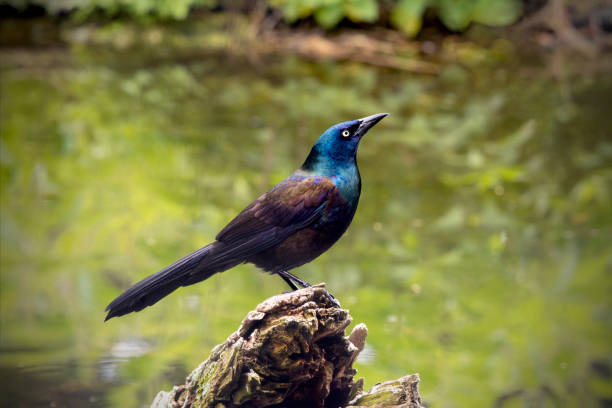
A seemingly simple thing, my grackle sighting reminded me of something much more complex: cyclical change in the natural world and the importance of continuity in my experience of that. If I did not see a first grackle of the spring this year, as I have all the previous years of my adult life, I would wonder why. (Photo by Christopher R. Mazza)
I like grackles, but that’s not the reason why I would feel something was a little off if they suddenly didn’t show up at this time of year. Their absence—or of any of the spring arrivals I look forward to noting each year—would be akin to listening in on spring’s pulse and noticing a missing beat.
I like to get little reminders that life on Earth where I happen to be is, at the very least, doing okay. This year, a single bird that had come north with news of spring was one of those.
In the coming weeks, perhaps take some time to visit the Environmental Study Area to look for reminders of a healthy transition into spring. There will likely be many “firsts” to take in and enjoy.
-Rick Simek
| |
|
Project PAT: Protecting Avian Travel
Every spring, billions of birds migrate north from the tropics, either passing through or stopping in Michigan during their extensive journeys finding the best spot to build a nest. With temperatures rising and the sun staying in the sky longer each day, you may begin to see some birds arriving in your neighborhood. Unfortunately, this means you may also see more injured or dead birds near buildings you visit.
| |
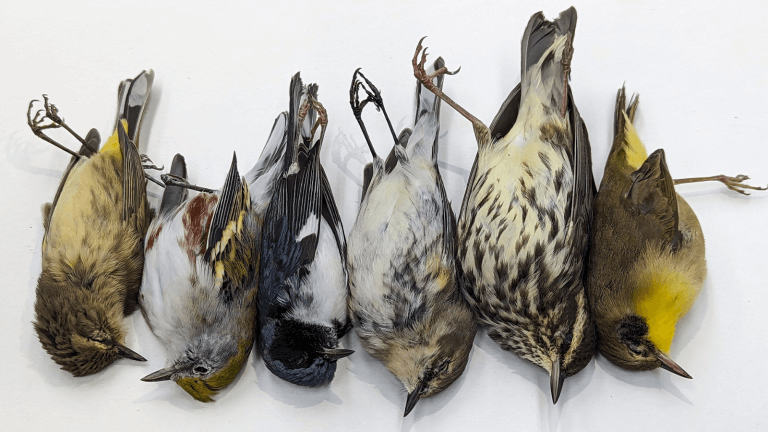
Throughout the migration season, both in the spring and fall, birds often collide with windows. During the daytime, migrating birds can confuse the reflection of trees and plants in windows for actual vegetation they can pass through. Meanwhile, at night, any lights that are visible through windows tend to attract migrating birds, which use lights to help navigate in the dark. | |
|
In both situations, birds will fly into the window, leading to severe injury or death. This is especially an issue in urban areas, such as Chicago, In both situations, birds will fly into the window, leading to severe injury or death. This is especially an issue in urban areas, such as Chicago, where over 1,000 birds died on one night in October 2023 due to the windows of a single building. in October 2023 due to the windows of a single building. (Photo by Daryl Coldren, American Bird Conservancy)
| |
|
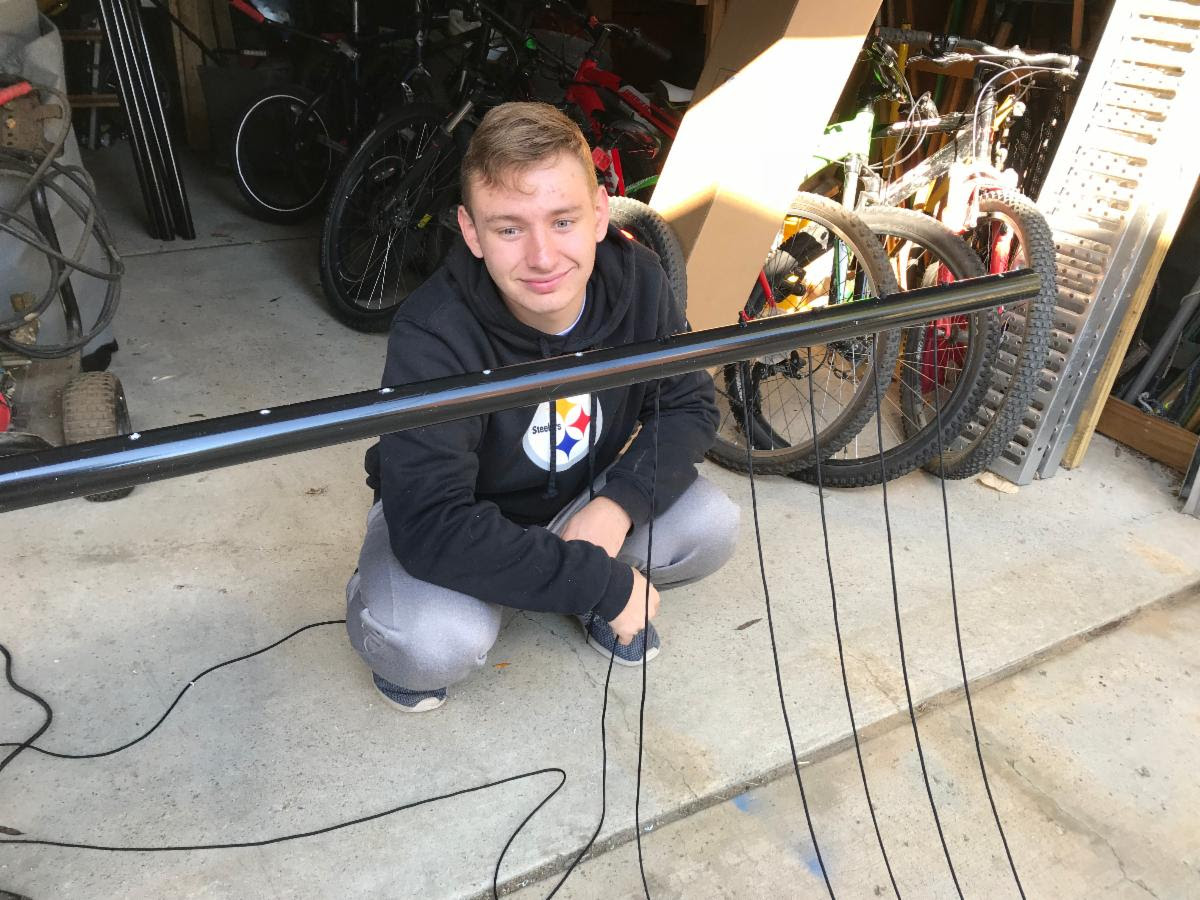
(Editors note-an entire archived EIC newsletter is devoted to bird window collisions.) Window collisions have been a consistent issue at the EIC, and became an Eagle Scout project for Andrew Bleu in 2021. To help reduce these at our EIC windows, Andrew designed, assembled, and installed a system in 2019 that uses an arrangement of vertically suspended paracord called Agopian Bird Savers. For more information on the Agopian Bird Savers, go to https://www.birdsavers.com.
This phenomenon has inspired my EIC colleagues and me to develop Project Protecting Avian Travel, or Project PAT, to determine where, when, and how often birds collide with windows on the University of Michigan-Dearborn campus.
Although staff and faculty have noted occurrences of bird-window collisions in the past, Project PAT will be the first initiative at UM-D to quantify the amount of birds affected, as well as determine where these collisions are most prevalent. In the future, this information will be used to advocate for methods of bird-window collision prevention to be implemented on campus.
This project will rely on help from volunteers to help survey buildings during peak spring and fall migration times. So, if you would like to help the birds this spring and learn more about Project PAT, please fill out this volunteer interest form!
-Valerie Osowski, EIC Staff
| |
Donna Posont-Making the NBC Nightly News!
| |
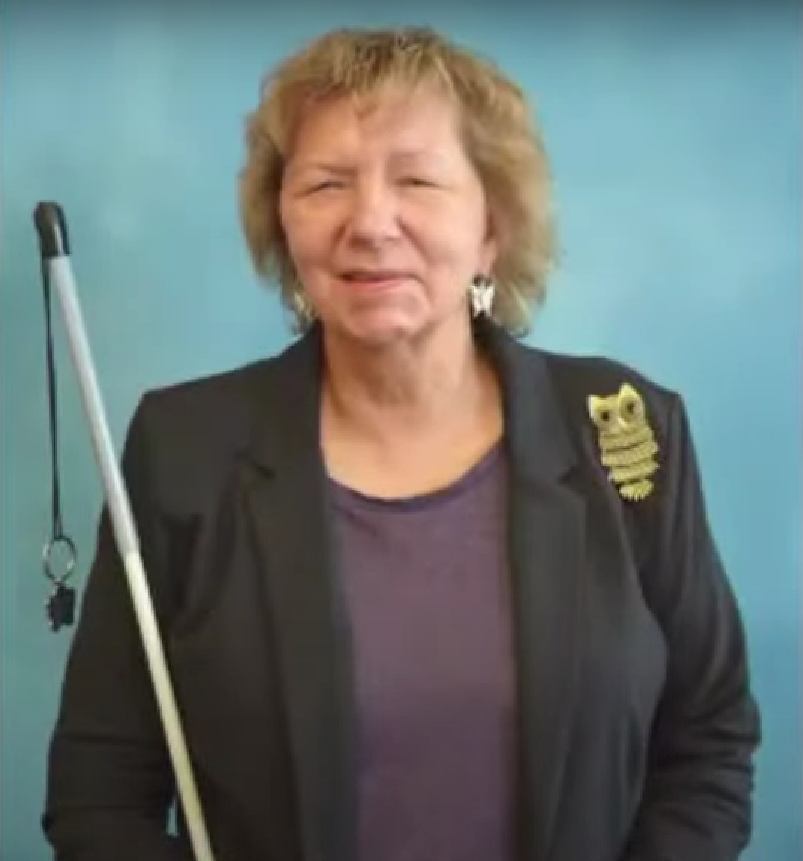
EIC staff member Donna Posont and her "Michigan Birdbrains" were featured on the NBC Nightly News this week. As community scientists participating in the Cornell Laboratory of Ornithology's Great Backyard Bird Count (GBBC), Donna and her birding crew spent a snowy weekend at the Michigan Department of Natural Resources Proud Lake Recreation Area Hawk Lodge to record the bird species present. Donna and her program, Birding by Ear and Beyond, have received awards at the local, regional, and national levels. (Photo courtesy of the Natl. Federation for the Blind) | |
|
Volunteer Spotlight
“What a rush, Man!”
EIC Volunteer Spotlight- Keith Kushnir
The nights are cold, but not bitter. The days are warming, but not quite “warm”. Maple sugaring
season is in full swing here at the Environmental Interpretive Center! As has been the case for
decades, a dedicated cadre of volunteers has been eagerly collecting and hauling back sweet
barrels of last year’s sunshine! (Photo by Mike Solomon)
No maple syruping season would be complete without the appearance of one of our most dedicated volunteer sap haulers: Keith Kushnir. Keith is a legend! He and his son, Ian, have helped with the maple syrup harvest at the EIC since its early days, before there was even an official Center! Nowadays, Keith continues this "mission," sometimes with grandchildren joining the crew!
Keith anchors our crew, bringing newcomers into the fold and ensuring they feel welcome, showing them the ropes. When we’re collecting, not everyone elects to carry 2 5-gallon buckets at a time, but you will never see Keith with just one! While we work, time flies as we reminisce about the winters of yesteryear, maple seasons past, and what sorts of adventures kids in Dearborn had in the years before the Interpretive Center.
Collecting and hauling sap is hard work, but you wouldn’t know it if you heard us out there! Laughter, stories, and camaraderie fill the woods, as we enjoy the gorgeous sunshine, or even as we lament the snow, sleet, and rain. Spirits are always high. So thanks, Keith, for being one
of the highlights of our Maple Sugaring Season!
-Mike Solomon, EIC Staff EIC
| |
Venturing outdoors and encountering nature is good for your health. Our trails are accessible, so please visit our Environmental Study Area. Stay engaged in learning activities and check out our Remote Learning Activities & Resources page for ideas to create a “Neighborhood Nature Journal” and “Family Nature Walk” activities!
We also hope to see you in person at our upcoming programs!
| | |
Please remember...
The EIC Environmental Study Area is open daily from sunrise to sunset. We would like to remind nature-goers that fishing on site is prohibited and to leave bikes and dogs at home because they cause disruption and stress to the EIC wildlife.
| |
| | | |