|
In this issue :
- Microseason: "Spring Signals!"
- Stay Tuned for 25th Birthday Events!
- Upcoming EIC Programs & Partner Events
- More Community Art
- Congratulations, Talia!
- Thank you, Friends
- Tales From the Trails: Good-Bye, Hello?
- Greenways: Barking Up a New Tree
| |
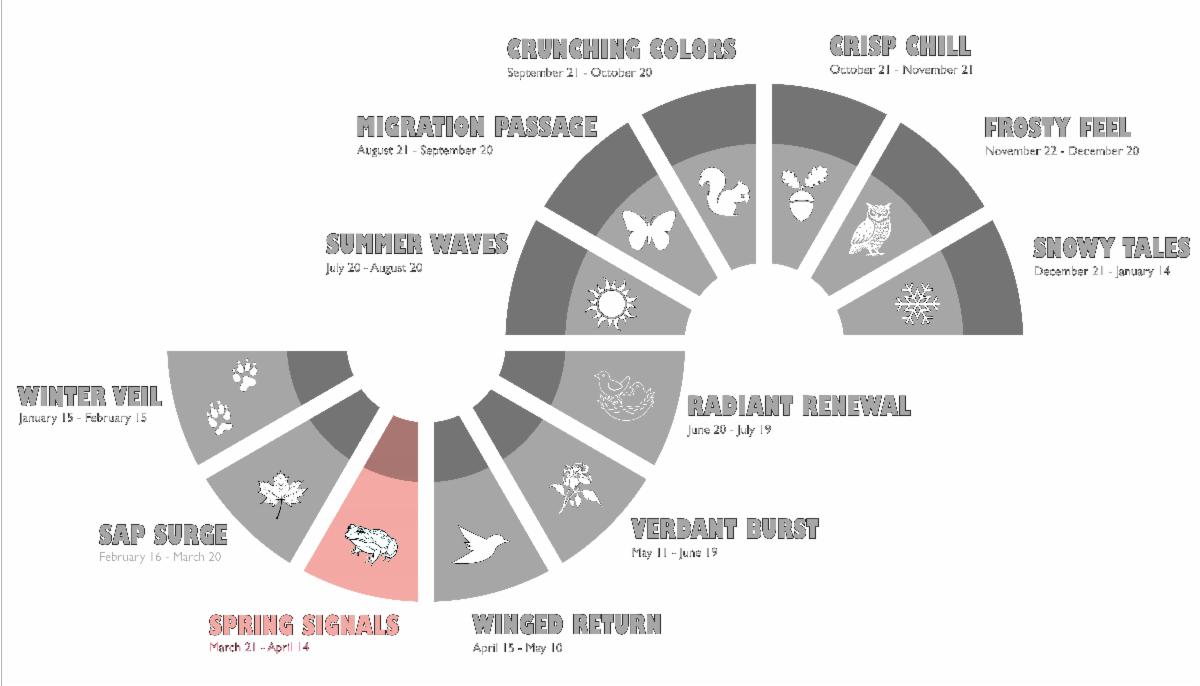
Spring Signals:
A sense of anticipation* permeates the season
(Spring Moon photo by Anna Om)
| | | *A sense of anticipation related to the EIC's 25 birthday is in the air, too! Mark your calendars for Saturday, May 16, when we will host a variety of activities to celebrate our "silver anniversary" throughout the day (and evening!). It's not a party without YOU! | |
Nature Walks for Mental Health
March 25, April 8 & 22
12:30-1:30 p.m.
Join EIC Staff Naturalist Isabel Stepaniak and the CAPS staff for a mid-day walk on the Interpretive Trails to lift your spirits and welcome spring! Meet at the EIC to enjoy the tales on the trails!
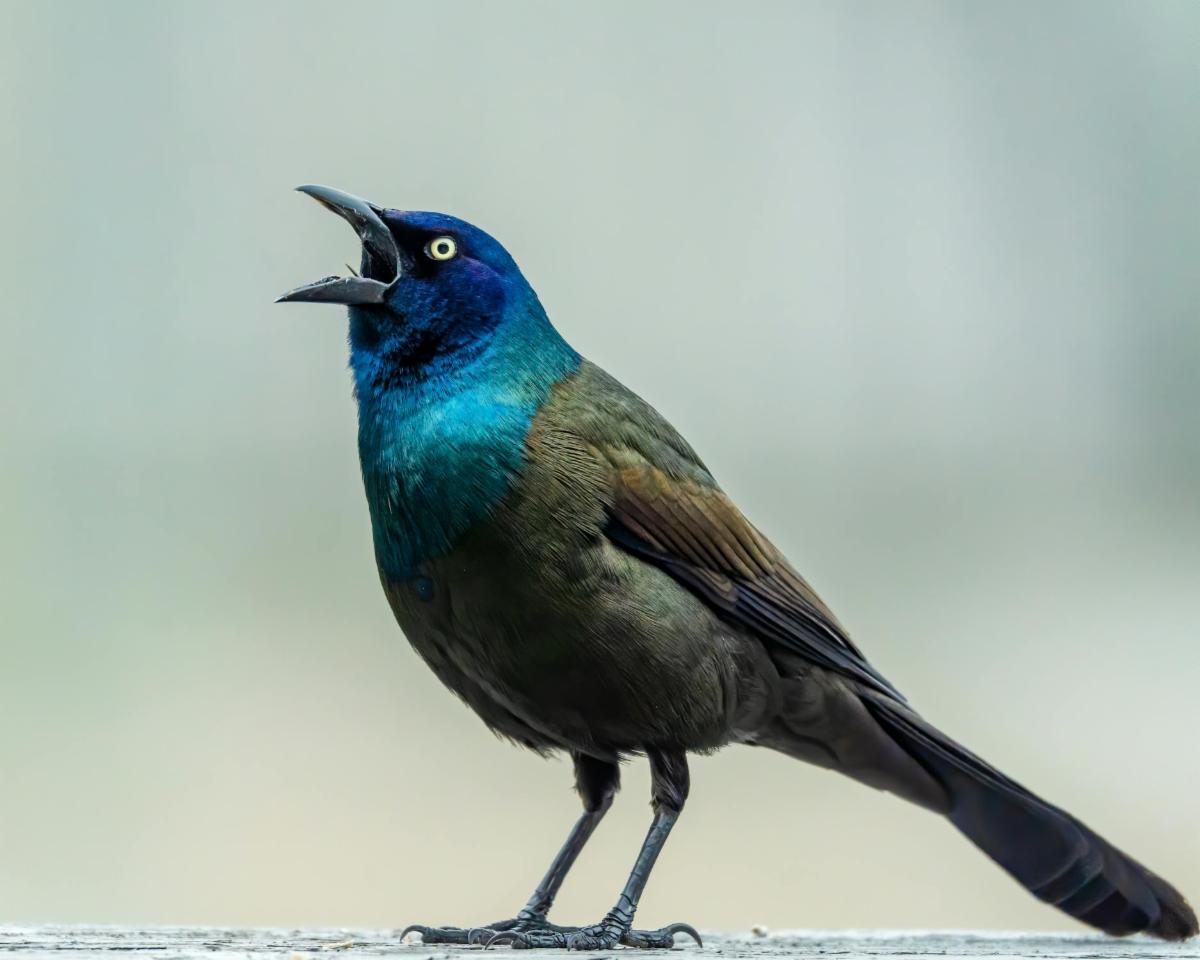
(Common Grackle Photo by Tina Nord)
| |
Earth Week by an Evening Fire
Friday, April 24
7:30-9:00 PM
We'll be two days beyond Earth Day, but it's never too late to celebrate our home. Join the EIC staff for an evening spring walk, concluding by a fire with your EIC friends.
| | | |
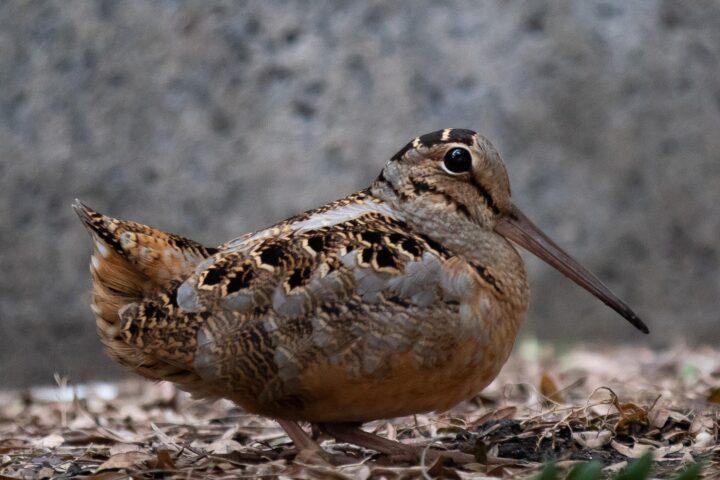
We may be treated to the charming "peent" of the Timber Doodle, commonly known as the American Woodcock. Woodcocks and the "sky dance" have been the subject of fascination and reverence for many nature writers. Aldo Leopold wrote lovingly about the sky dance in A Sand County Almanac.
No promises, but lots of high hopes...
(Photo courtesy of New Hampshire Audubon)
| |
Michigan Botanical Society, Public Welcome!
Sunday, March 22, 2026,
EIC Room 119, 2:00 pm
Speaker: Dr. Henry Van T. Cotter
"New Fungal Finds at Michigan’s Nature Sanctuaries and the Michigan Certification Program for Commercially Foraging/Selling Wild Mushrooms"
MBS Southeastern Chapter welcomes you. Van’s passionate interest in fungi began when he was assistant manager on a fruit tree farm in Traverse City, Michigan, watching beautiful cherries succumb to fungal brown rot. After a career in crop protection research, he has been active as a mycological volunteer including helping catalog the wealth of valuable fungal type collections.
(Photo courtesy of Duke University)
| |
Dale & Dorothy's Bird Adventure!
Saturday, April 11
8:30-10:30 a.m.
Join your EIC friends, Dale Browne and Dorothy McLeer, in partnership with Detroit Bird Alliance, for a morning in the cemetery! No, really--Historic Elmwood Cemetery is a wonderful birding spot, a certified arboretum, and home to so many Detroit stories. In fact, a representative from the Historic Elmwood Foundation will join us for the walk to share these stories!
Please register for this event through Detroit Bird Alliance.
| | |
Our Gallery Grows!
To accompany Jamie John's full length mural in Room 119, we are welcoming contributions from our visitors. This will also be a rotating gallery of community submissions to beautify the EIC. Thank you to all who have contributed to this community art project!
| | |
Heading "Over SEAS"
News from our Student Staff Member, Environmental Science Major Talia List: "I’m excited to share that I have been admitted to the Master of Environment and Sustainability (MS) program at the University of Michigan School for Environment and Sustainability (SEAS), with a concentration in Geospatial Data Science. I was also honored to receive an Academic Merit Fellowship, which will cover 100% of my Fall 2026 semester tuition. I’m incredibly grateful for this opportunity and look forward to deepening my skills in spatial data science and GIS while applying them to research on the Great Lakes and other aquatic systems!"
Best wishes, Talia!
| |
Thank You, "Chef Joe!"
We are so fortunate to have dedicated, willing volunteers who step up for a variety of "jobs." Joe Turek is one such friend who has said "yes" to so many things, and we couldn't have made it through our sugaring season without him, especially this year! With the advent of Rick Simek's phased retirement, the EIC lost a major "sap chef" for our programming. Joe stepped into the gap to boil the syrup, while the EIC staff narrated the process for hundreds of visitors. Thank you so much for your time and "culinary skills," Joe!!
| | |
Thank You, Donelson Family!
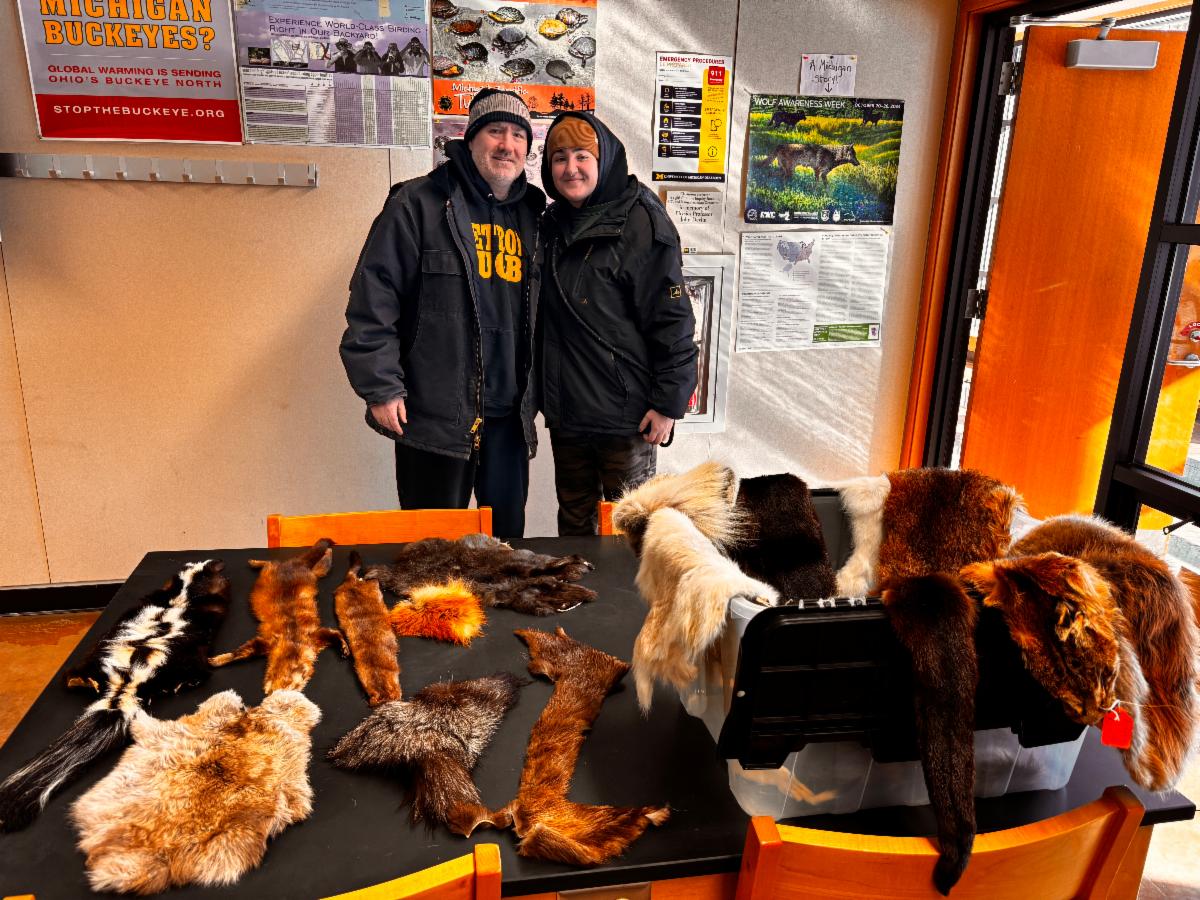
Three generations of the Donelson Family recently enhanced our educational "library" with a donation of mammal pelts. Retired Dearborn teacher Dale Donelson, and his daughter Connaire, brought in the treasure trove of Michigan animals, collected by Dale's father over many years. With ties to Northern Michigan University (Dale alumni, Connaire current student) the EIC and UM-Dearborn are fortunate to be the recipient of these hands-on teaching tools. Thank you, Donelson Family, for all your contributions to experiential learning!
| |
Thank You, Don Skidmore
The EIC recently lost a good friend, Don Skidmore. Don had many "titles" during his association with the EIC and UM-Dearborn, among them Deputy Don, Farmer Don, and Donor Don.
In his early college years, Don attended Michigan Tech, but the good times of college were often spent doing less "academic" activities. However, after 26 years as a Wayne County Sherriff, and taking classes at UM-Dearborn throughout those years, Don finished his Environmental Studies degree in 2017, which was cause for celebration in many corners!
(Photo courtesy of Czopek Funeral Directors)
As part of his degree, Don fulfilled an internship requirement tending the educational gardens for the Early Childhood Education Center (ECEC). He fell in love working with the teachers and students there. In his support of educational opportunities for schoolchildren at UM-Dearborn, Don added his support to the EIC programs as well. The first microphones that brought birdsongs into the Observation Room are thanks to Don and his wife, Sherry, in support of the Birding By Ear and Beyond program, run by UM-Dearborn alumna Donna Posont and based at the EIC. Don and Sherry were also generous donors (and organizers) for our 2023 EIC benefit dinner.
Don's community connections were wide ranging, and the EIC is not the only entity what will miss Don's positivity and "can-do" attitude. As you can see from his big smile and the twinkle in his eyes, Don Skidmore left an indelible, joyful mark with his presence that continues in spite of his absence.
Thank you, Dear Friend Don.
| | |
Good-Bye, Hello?
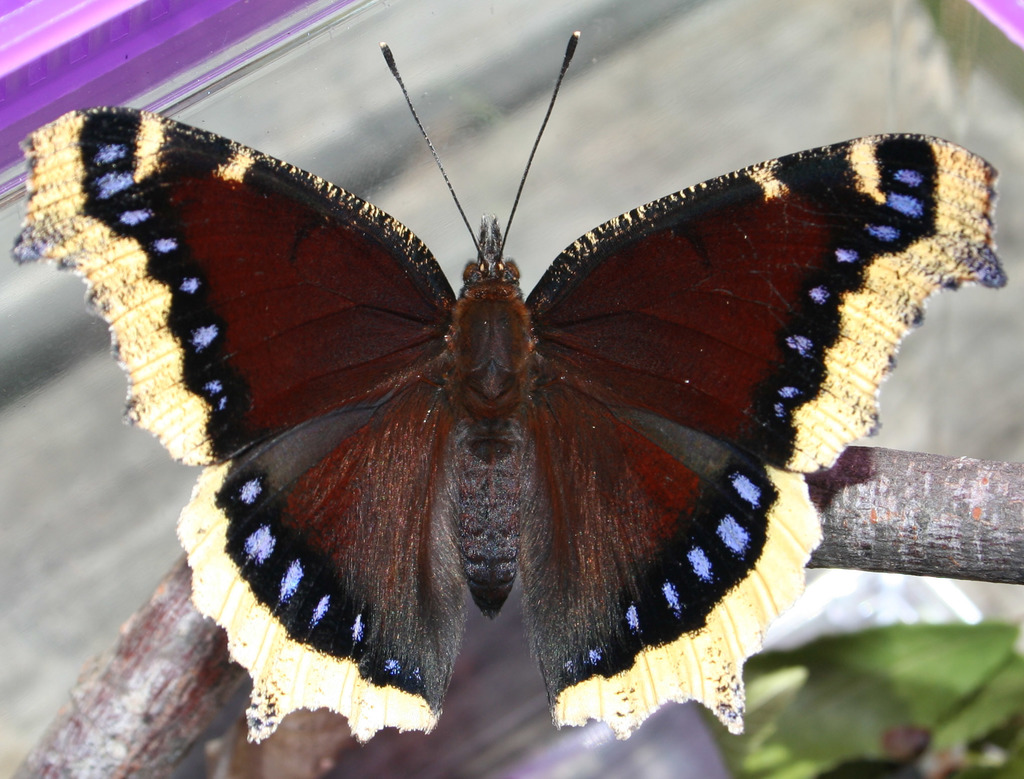
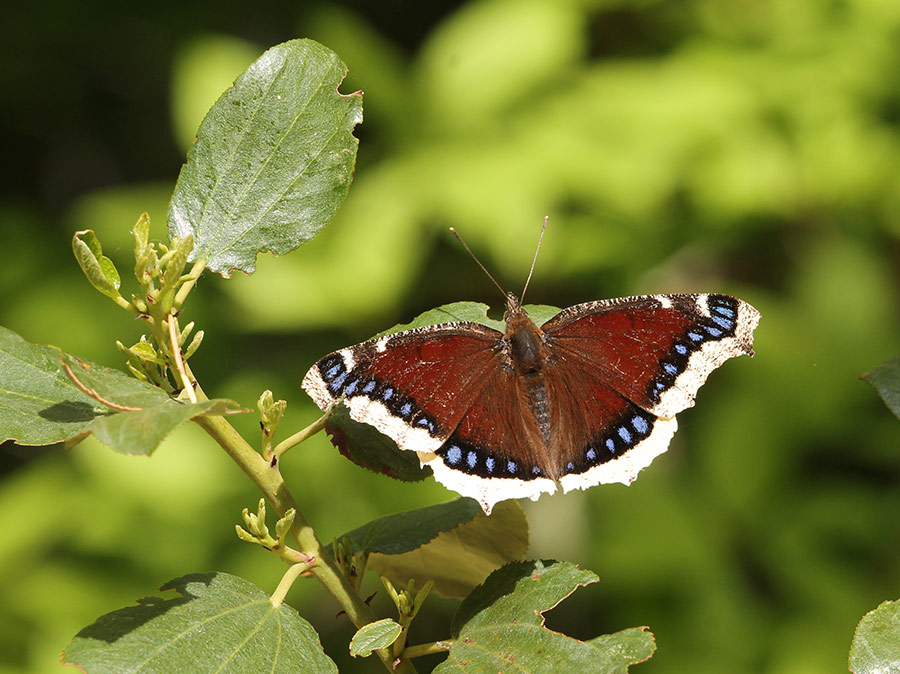
About the time we say "good-bye" to our maple sugaring season, we say "hello" to some of our first signs of spring, among them a butterfly called the Mourning Cloak (Nymphalis antiopa). In fact, on a recent maple sugaring field trip, students from Walker-Winter Elementary School glimpsed the first sighting this year in our Study Area! (Photo by Aleta Rodriguez) The first Mourning Cloak of the season is a welcome harbinger of spring in North America, the UK, Europe, and parts of Asia. They range as far north as the Arctic Circle, and they’re found sporadically in northern South America.
With a wingspan of 2 7/8 to 3 3/8 inches, this member of the “brush-footed” group of butterflies easy to see when in flight. Flashing its shroud of velvety deep maroon to brown dorsal side, the origin of its name, and bordered by violet-blue dots and yellow margins, this butterfly cuts quite a swath.
| | |
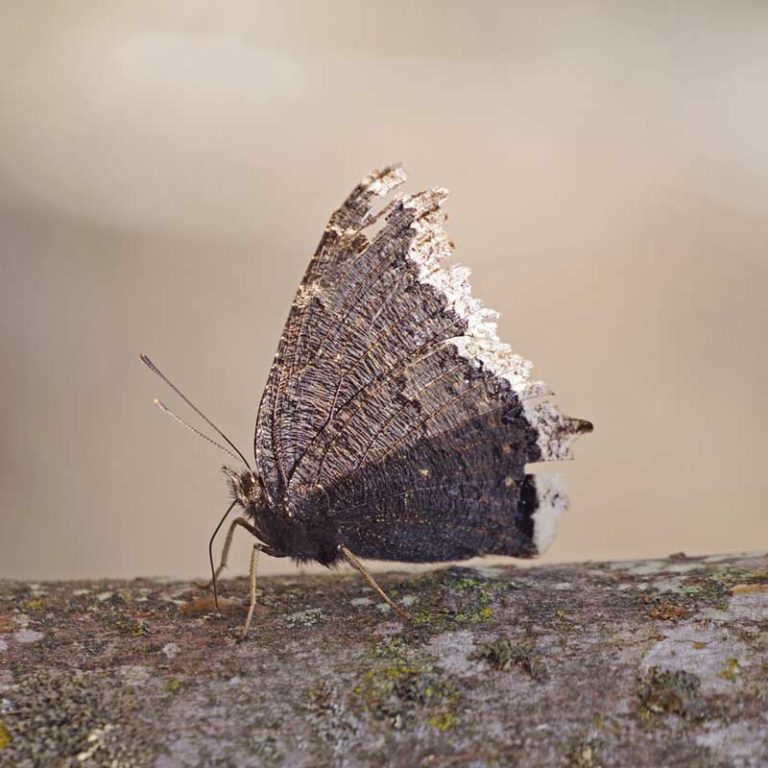
However, once perched with wings folded this butterfly cloaks itself in secrecy, magically camouflaging itself against the deep gray tree bark in its forest habitat. (Photo by Kate Redmond, UW-Milwaukee)
If the wing edges of this harbinger of spring sometimes appear ragged and worn, it’s because adult Mourning Cloaks are one of the few butterflies that live through the winter, unlike most butterflies that die in fall or fly south toward warmer climes. Emerging as adults in mid-summer means that Mourning Cloaks have a lifespan of 10-11 months, the longest of any North American butterfly! But—how do they do it?
| | As temperatures drop in fall, Mourning Cloaks gradually produce their own internal antifreeze to prevent their delicate body tissues from freezing as they seek shelter in an unused woodpecker hole, under loose bark, or within a pile of leaves to sleep the cold months away. Their alarm clock is set for the increased daylight hours and the warmer temperatures of spring. | | |
Another unique characteristic of this butterfly is the territorial behavior in males. When disturbed, males will fly off only to return to the same perch moments later. Perches tend to be sunny, well elevated, and solitary to maximize his “stage presence” to the ladies.
As we humans bask in the warmth of sunny spring days, so do Mourning Cloaks. Being cold-blooded, basking allows them to heat their flight muscles using external heat sources such as the Sun. Warm sunny days also triggers spring sap flow in trees. As the sap rises from the roots of trees, it occasionally seeps out of cracks or wounds in the bark, making a sort of water fountain of food for a variety of forest animals, including early spring butterflies. Indeed, the Latin nymphalis means “of, or pertaining to a fountain.”
Now that some of the Mourning Cloak’s secrets have been revealed to you, see if the butterfly reveals itself to you in a sunny, moist part of the woods. But hurry! It’s no secret to you or the Mourning Cloak that spring in Michigan is short and sweet, and the spring days as well as the spring butterflies fly by all too quickly…
-Dorothy McLeer, Editor
| | |
Barking Up a New Tree
Here at the EIC, we’ve been making maple syrup from the trees in our Environmental Study Area for decades. It's a fun way to celebrate the arrival of spring, but it's only available for a short time. Thanks to a parent in one of our homeschool programs, we were recently introduced to a new tree syrufallenp that can be enjoyed at any time of year! Shagbark Hickory syrup isn’t made from early-flowing sap, but from the tree’s constantly-shedding bark. That means there’s a way to enjoy some of that signature forest flavor at any time of year. In the process, you’ll learn to identify one of Michigan’s iconic forest trees!
(Editor's note: please do not pull off the bark from the tree---use only the fallen bark that the tree has released.)
| | |
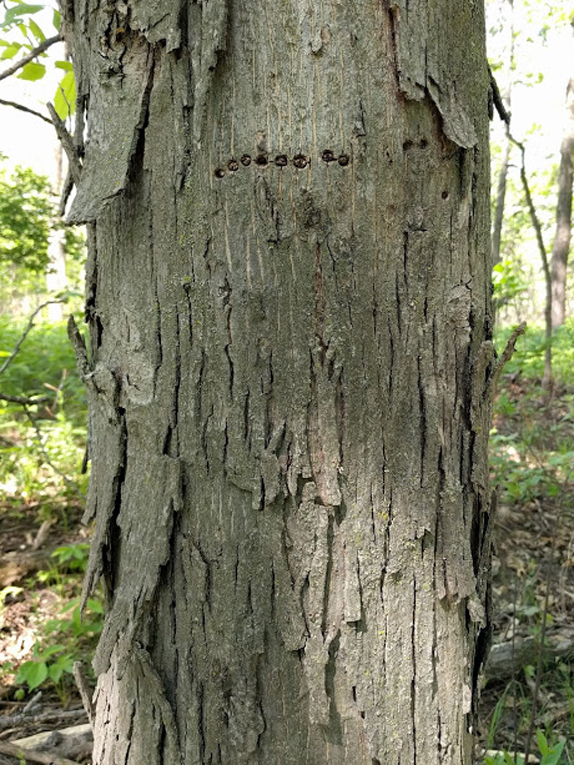
Shagbark hickory trees (Carya ovata) are common trees in southeast Michigan, and you’ll be spotting them everywhere when you know what to look for. The tree gets its name from its unique bark. As a shagbark matures, its bark gets a “shaggy” appearance. Long, thin strips of bark peel back, curl up, and fall off, blanketing the surrounding forest floor.
This fallen bark can be used to make syrup, as long as it isn’t obviously moldy, fungi-encrusted, or otherwise unappetizing! If you want to try your hand at making some, try this recipe from Forager Chef. A staff member followed this recipe a couple of weeks ago, and it works. The smell of hickory bark roasting in the oven is also an experience to savor on a cold winter afternoon. (Photo University of Nebraska-Lincoln School of Forestry; note the Yellow-bellied Sapsucker holes!)
| | |
It was recommended that we enjoy it with a splash of sparkling water. This was definitely the tastiest “bark juice” any of us had ever experienced; refreshing, light, with a complex flavor. It is satisfying to collect something that appears to be cast off, and then to put it to good use. Cheers!
-Mike Solomon, EIC Staff Naturalist
| | |
Venturing outdoors and encountering nature is good for your health. Our trails are accessible, so please visit our Environmental Study Area. Stay engaged in learning activities and check out our Remote Learning Activities & Resources page for ideas to create a “Neighborhood Nature Journal” and “Family Nature Walk” activities!
| | | We also hope to see you in person at our upcoming programs! | |
Please remember...
The EIC Environmental Study Area is open daily from sunrise to sunset. We would like to remind nature-goers that fishing on site is prohibited and to leave bikes and dogs at home because they cause disruption and stress to the EIC wildlife.
| |
| | | |