|
Slavery was known in the Moriches at the time. In 1827 Henry and at least 2 other East Moriches residents freed their slaves.
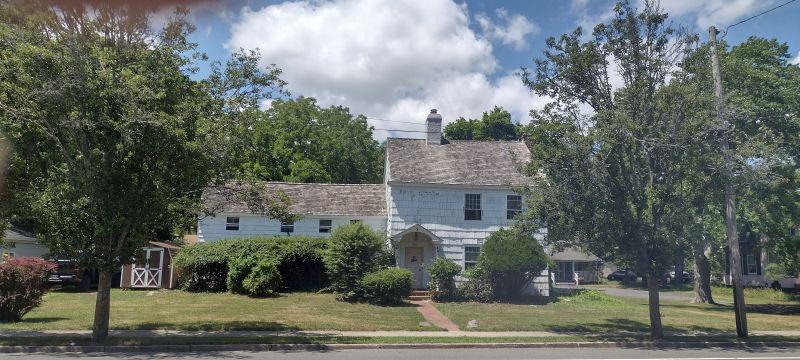
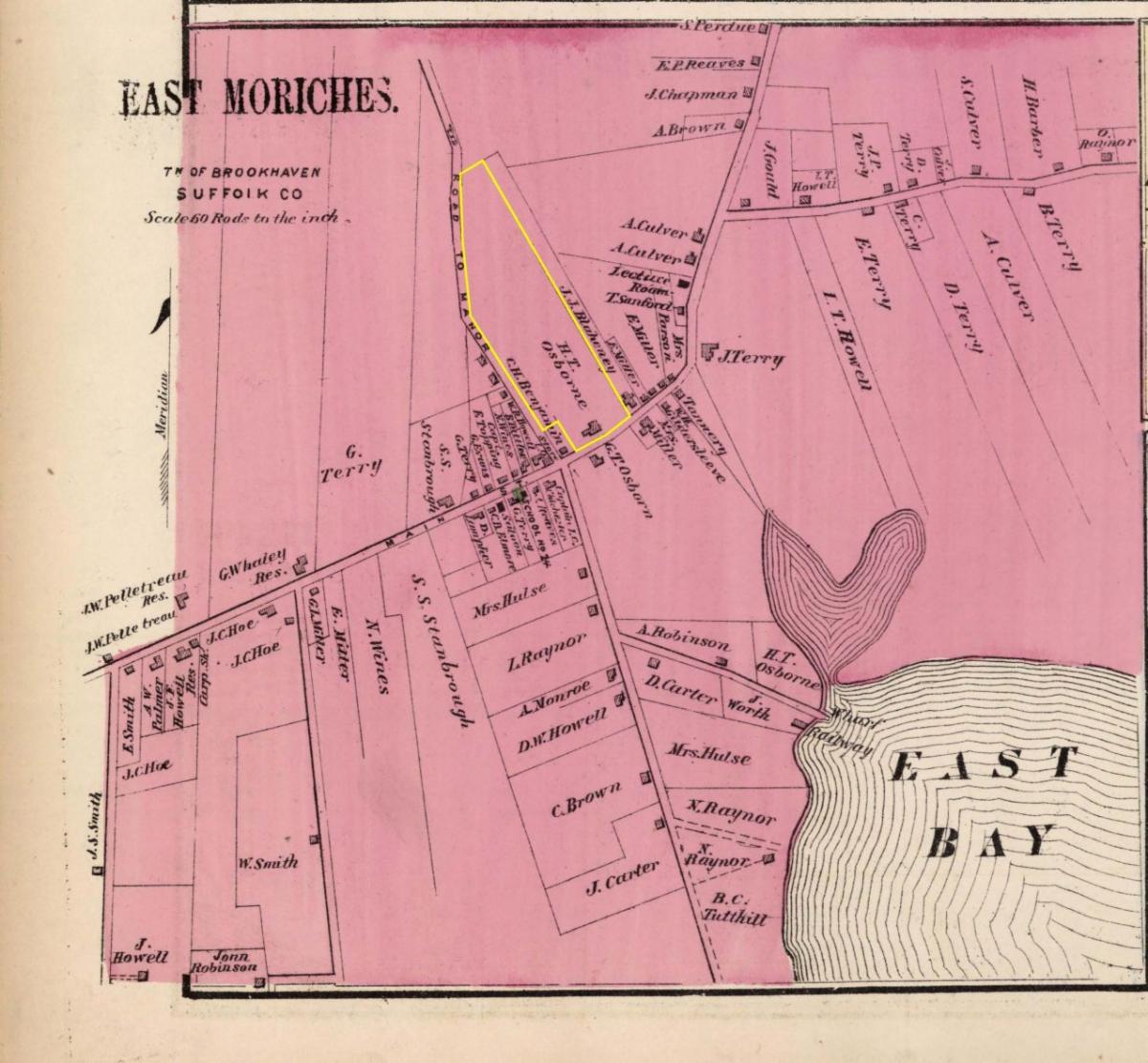
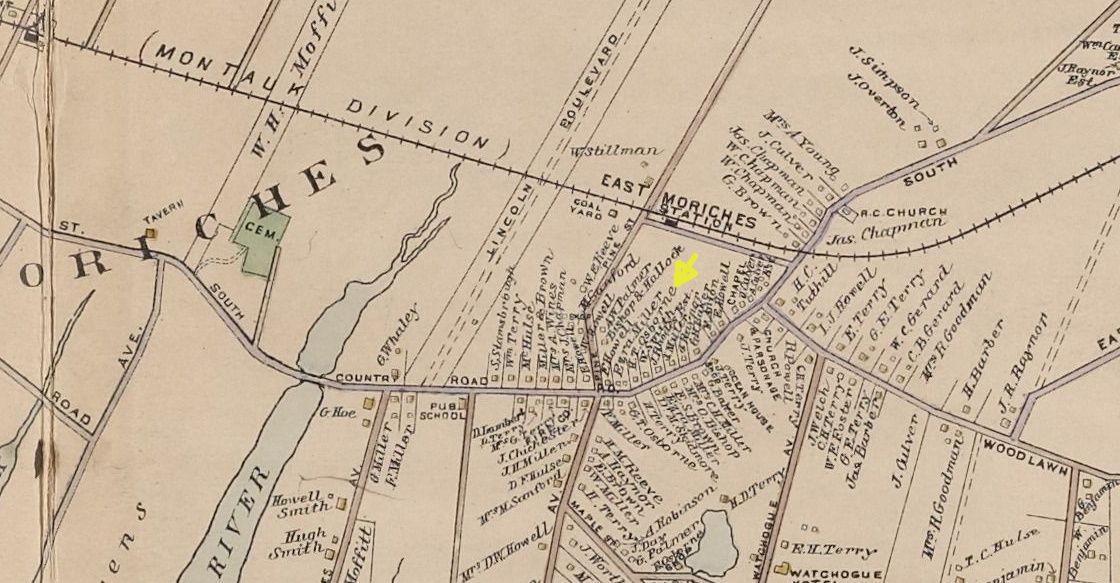
Henry bought the house in 1815. As reported later, the lot on which the house stood was huge: from Head of the Neck Road to the bay east of Pine Street. He was a farmer and is also reported to have had a store. At that time, it has been said, there were only 6 houses in what we now call East Moriches.
Henry Parsons Osborn and family
Henry P and his wife Susan raised their 6 children in the house. According to the 1840 census, besides his wife and children, 3 other adults and 2 “free colored persons” lived in the house. Six were engaged in agriculture, 1 in commerce and 1 in a learned profession or engineering.
By 1850, according to the census, 5 of Henry’s children remained at home and 5 other adults and one black 10-year old lived there. Henry owned 800 acres valued at $20,000. The same land today would be worth millions, even up to $220 million.
He became a prominent citizen of Moriches as was described in Portrait & Biographical Record, p. 668 (1896):
“Henry P. Osborn was in no sense of the word a politician, although he creditably acted in the capacity of Justice of the Peace for a period of twenty years. During that time he tried many important cases and his decisions were invariably sustained whenever carried to a higher court of justice. He was also the incumbent of other positions of responsibility and trust, and in whatever office placed, he always tried to carry out the wishes of the people whom he represented. He lived a long and useful life, dying in 1859 when ripe in years.”
There are other documented examples of his being recognized as responsible and trustworthy.
-
In 1826, at a celebration by the “Republican Citizens” of the Moriches vicinity of the 50th anniversary of independence, Henry's toast was reported in the newspaper.
-
In 1828 he was chosen as secretary of the County convention friendly to the John Quincy Adams administration to choose delegates for a state convention in Utica.
-
The following year he was appointed chairman of a meeting in Riverhead to nominate New York legislature candidates.
-
In 1829 and 1833, he was named as an administrator for two different estates.
-
In 1831 he was named by the owner as the representative to receive offers on a house in Moriches.
Henry P died of "consumption" at the age of 70 in in 1859.
Henry Toppings Osborn and family
Henry P’s son, Henry T, followed in the father’s footsteps. Portrait & Biographical Record, p. 668 (1896) described him as follows.
“HENRY T. OSBORN, who for many years was a tiller of the soil, is now [1896] retired from the active duties of life, and is in the enjoyment of a competency which his own excellent business qualities and good judgment have won him. He is still residing in East Moriches, in the same house in which he was born January 9, 1826. . ..
“As soon as his services could be made use of to advantage, he aided in the work on the home farm. He remained under the parental roof until twenty-five years of age, when he engaged in agricultural pursuits on his own account, and it was not long before he became one of the leading men of this class in the county. His ventures were successful, and he is now [1896] enabled to retire, surrounded by every comfort and convenience which money can purchase.
“. . . . Our subject is a popular man in his neighborhood, and this was illustrated when he was elected to the office of Highway Commissioner on the Republican ticket. He has also been Trustee of the Town, serving with satisfaction to all concerned. He is interested at all times in enterprises of a worthy nature, and no laudable movement is allowed to fail for want of support on his part.”
By 1860, according to the census, Henry owned 223 acres valued then at $20,000. He raised horses and milk cows, and grew wheat, corn and oats. By 1870, he had 20 “improved” acres and 300 acres of woodland and was growing the same crops. In 1880 he added vegetables according to the census.
Henry T "dropped dead in the East Moriches post office" at age 82 in 1909.
Later History
A 1940 article in the Patchogue Advance adds detail and later history.
“Another very interesting old homestead of the Moriches section now coming up for mention in the Tribune's series of articles relating to places that have remained in continual occupancy of one family for a century or more is the Osborn property on Main street, East Moriches.
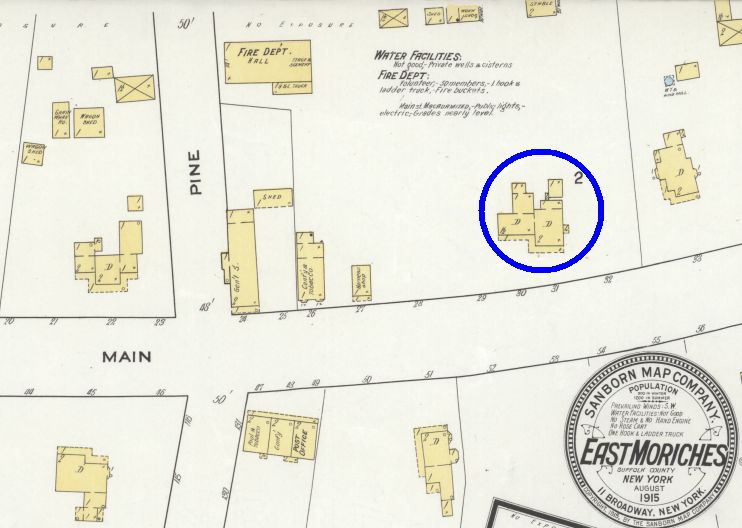
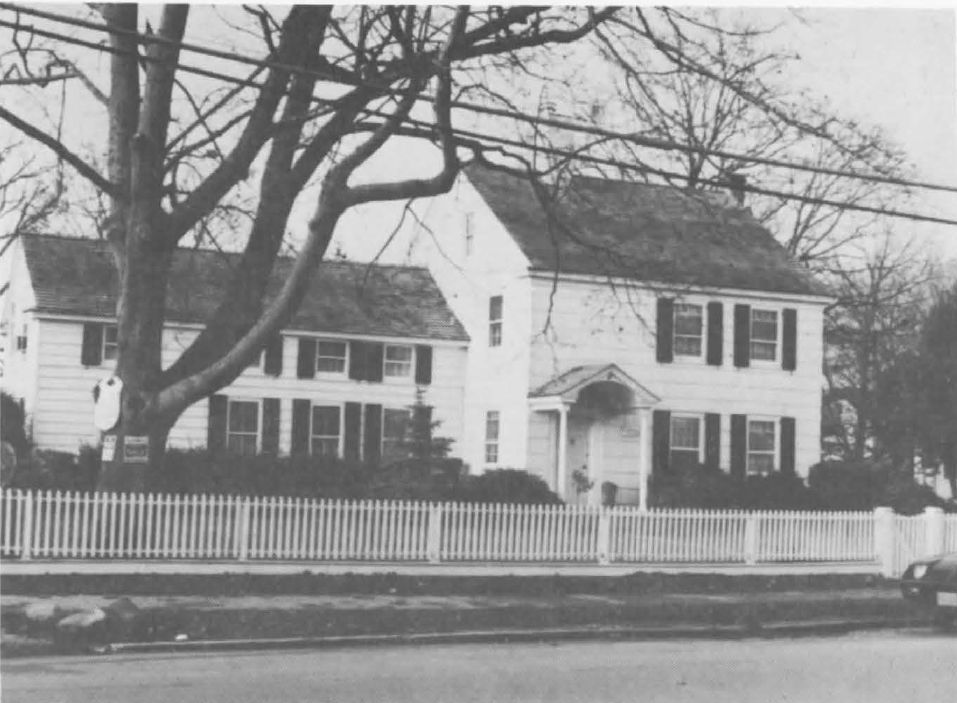
“The house, a frame structure standing on the north side of the street a short distance east of Pine street, and occupied by Mark Osborn [grandson of Henry T], is a fine example of old Long Island architecture.
“In 1815, according to the Tribune 's informant, "Esquire Henry P. Osborn" came from East Hampton to what is now East Moriches, then called by the general name of Moriches, and bought from Theophilus Smith a large tract of land extending from the bay to Head of the Neck road.
“Later the property was divided between his two sons, Henry T. and George Osborn, the former getting the land north of Main street and east of Pine street and the latter the portion south of Main street and east of Atlantic avenue. The northern tract has remained, partly, in the family, while the southern portion has long ago been broken up and sold to various parties.
“Originally the house was a tavern. Its cellar is constructed of stones which were brought from Rock Hill by oxen. One of these stones is so large that it took two teams of oxen to draw it down to the site of construction. The fireplace in the public tap room was the largest of any in this section. It was large enough to burn cordwood in and ' still have room for the slaves to walk in the ends and cook over the fire, The original west wing, which contained the public room, has been removed and a modern one built in its place. [The last sentence needs confirmation.]
“Henry T. Osborn was the husband of the late Louisa Jane Osborn, who died several years ago [in 1931] at the age of 100. The house was then, occupied by their son, Edward Osborn, and since his death, by Marc Osborn, her grandson. This makes four generations which have lived in the house.” 2/9/1940 Patchogue Advance, p 9 (“street” and “avenue” are lower case in the original).
After Marc's death in 1964 the house was sold outside the family.
|