Closing tonight: Prehospital assessment reaches nearly 7K+ EMS & fire-rescue agencies

Thank you to the almost 7,000 EMS and fire-rescue agency participants in our national initiative to measure and improve prehospital care for children! A special thanks to State Partnership program managers and the EMSC Data Center (EDC) for their dedication in engaging agencies in the assessment and to the EDC for facilitating the assessment. After the assessment closes tonight at midnight, the EDC will spend several months cleaning and analyzing the data. Results will be shared in the coming months. For data questions, contact the EDC. For general questions on the project, contact the PPRP co-leads. Agencies are encouraged to use their gap reports to explore the Prehospital Pediatric Readiness Project Toolkit. If your agency can’t find a copy of its gap report, contact your state manager.

New study highlights Pediatric Readiness mortality impact over time


A study published this month in JAMA Network Open emphasizes the mortality impact of Pediatric Readiness in trauma centers over time. The study explored the impact in terms of changes in trauma center’s Pediatric Readiness scores between the 2013 and 2021 National Pediatric Readiness Project Assessments, which measures ED Pediatric Readiness on a scale of 0-100. Findings showed trauma centers with high readiness (persistent or increased to) saved an additional 643 lives over the eight year period. Trauma centers with low readiness (persistent or decreased to) had 729 preventable deaths. The results also suggested that a threshold of 90 points or higher may optimize the number of lives saved. Read the full study.

Children’s hospitals: Disaster Response Collaborative kicks off this September


Are the children's hospitals in your area ready for emergencies, disasters, and pandemics? Improve response capabilities by encouraging children’s hospitals in your community or state to register for the Pediatric Pandemic Network’s Disaster Response Collaborative (DRC). We invite you to get involved - collaborative sessions are open to the public and begin in September 2024. Add dates/times to your calendar now. For details, see the DRC website or email the team.

PECARN releases guide on collecting sociodemographic data


An article published in Pediatrics offers guidance on collecting race, ethnicity, and language; sexual orientation and gender identity; and socioeconomic and geographic data in pediatric emergency care research. The guidance was developed through the Pediatric Emergency Care Applied Research Network’s (PECARN) Health Disparities Working Group. The group’s aims were to summarize existing barriers to sociodemographic data collection, offer strategies for the consistent and reproducible collection of these data, and to provide rationale for suggested approaches. Read the article.

Pediatric Mental Health Care Access team convenes in Cleveland


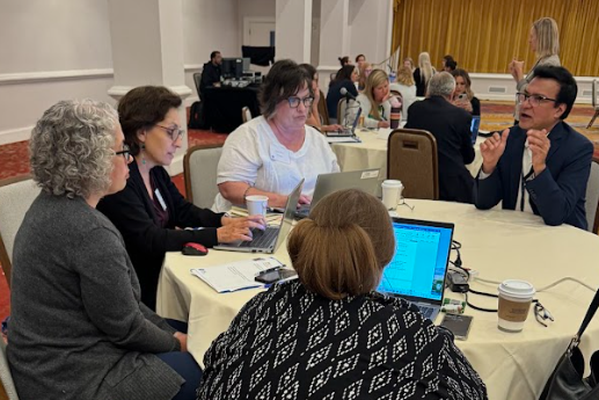
Ten Pediatric Mental Health Care Access (PMHCA) teams, consisting of 36 attendees, staff, and presenters, gathered in Cleveland for their second annual meeting July 23 and 24. Sessions included a panel of medical experts across the emergency care continuum who shared how primary care providers can make connections to EDs and surrounding entities (e.g. schools and EMS). The teams also learned about the impact of meaningful measurement and applied the information through guided quality improvement activities and group discussion. Teams in attendance included the Chickasaw Nation (in Oklahoma), Delaware, Michigan, Mississippi, Nebraska, North Carolina, Tennessee, Oklahoma, Ohio, and Vermont. Learn more about PMHCA's work with EMSC.

FAN work in the field: Webpage update


Learn more about how you can get involved and make a difference with FAN!


Family Advisory Network (FAN) members are actively involved in many EMSC activities, such as serving on advisory committees, spearheading community outreach projects, and contributing to resource development. If you're working on a project and need assistance or are interested in joining FAN, we invite you to explore our recently updated FAN webpage

Resources Round-up:


Featured resource:

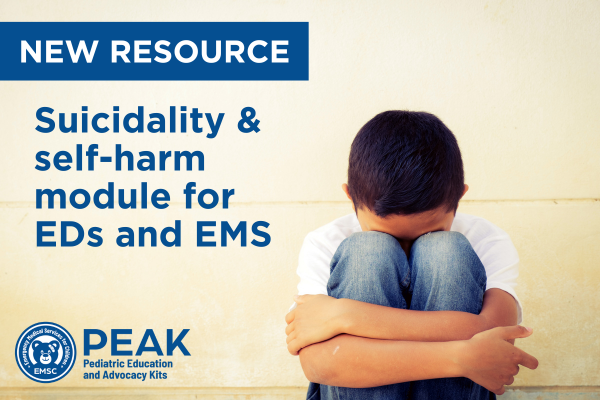
Research shows that preteen suicide rates have been increasing 8% annually since 2008. EMSC offers resources to support ED and EMS providers in this critical area. One such resource is the PEAK: Suicidality learning module. For more information, visit the module.


Other Resources:

Opportunities:


  • HRSA released a new Notice of Funding Opportunity to improve access to quality health services. The Children's Hospitals Graduate Medical Education Payment Program provides funding to freestanding children's hospitals to train pediatric and other residents in graduate medical education programs. Apply by Aug. 8.
  • Engaged in PPN/EIIC/EMSC work? Want to learn more about how to do quality improvement? Join Rainbow Babies and Children's virtual quality curriculum being offered this Sept.-Dec. This curriculum is geared toward participants who may or may not have background quality improvement knowledge, but who have limited experience in applying these concepts to an improvement effort. Register by Aug. 15.
  • Nebraska EMSC is looking for a new program specialist. Learn more here
  • The Safe Streets and Roads for All FY 2024 grant application period is open. This program, administered by the U.S. Department of Transportation, offers grants to support regional, local, and Tribal initiatives aimed at preventing deaths and serious injuries on the nation's roadways. Apply by Aug. 29.
  • Texas Pediatric Readiness Improvement Project Virtual Education Series is an ongoing event series to improve pediatric outcomes and support rural trauma centers. Learn more here.
Upcoming Events
Headline Highlights
Recent Research

Are you a State Partnership Program Grantee

looking for more information and updates?

Please see our State Partnership Dashboard!

Have news, resources, or events to share? Want to make sure a research paper or award recipient is mentioned? Email us!

Facebook  LinkedIn  X  YouTube
Visit our Website

The EMSC Innovation and Improvement Center is supported by the Health Resources and Services Administration (HRSA) of the U.S. Department of Health and Human Services (HHS) as part of an award (U07MC37471) totaling $2.5M with 0 percent financed with nongovernmental sources. The contents are those of the author(s) and do not necessarily represent the official views of, nor an endorsement, by HRSA, HHS or the U.S. Government. For more information, visit hrsa.gov.