NHTSA and EMSC launch national pediatric EMS performance dashboard
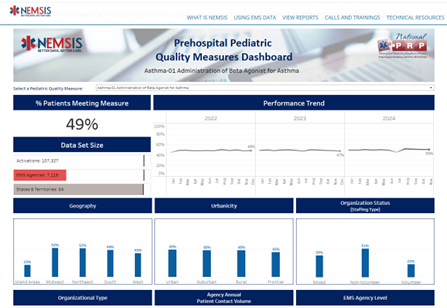
The National Highway Traffic Safety Administration’s (NHTSA) Office of EMS and the EMSC Program have launched the first pediatric dashboard focused on clinical care using data from the National Emergency Medical Services Information System (NEMSIS). NEMSIS is the national system used to collect, store, and share EMS data from 54 U.S. states and territories. The new dashboard can be used to support quality and performance improvement at the national, state, and agency levels, and complements the work of the National Prehospital Pediatric Readiness Project. The dashboard includes measures related to asthma, hypoglycemia, anaphylaxis, shock, pain control, and traumatic injury, with more measures coming soon. Measures were selected to align with National EMS Quality Alliance performance measures, with additional measures selected by an EMSC Program expert panel.
Explore the public version of the dashboard here. State EMSC Managers: Upon request and with written permission from your state EMS director, NEMSIS will issue you a password to access state- and agency-specific data.
| |
From PECC networks to data dashboards: A look at recent TI grants
As EMSC sunsets Targeted Issues (TI) Grants, we had a chance to learn about the work that is being completed at a recent EMSC Town Hall. In the most recent TI grant cycle (2019-2024), EMSC invested in five projects that sought to demonstrate the link between ED and EMS system readiness enhancements and improved pediatric clinical care and health outcomes. Two projects focused on improving ED Pediatric Readiness and assessing how adoption of the Pediatric Readiness national guidelines is associated with changes in pediatric care and health outcomes. Three projects worked to assess the impact of the presence of a pediatric emergency care coordinator (PECC) within EMS agencies. Learn more about key takeaways from the projects.
| |
State Spotlight: How Missouri EMSC leverages partnerships for a statewide simulation program
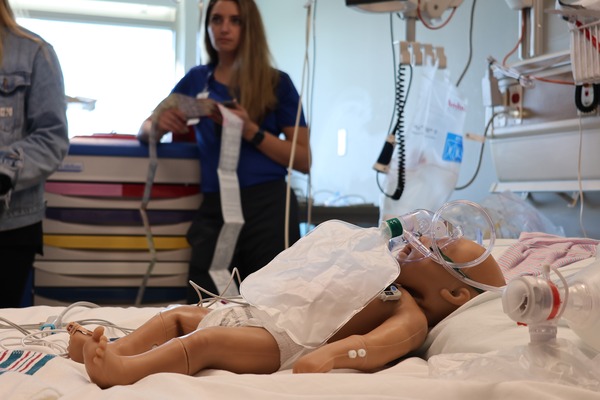
For the past four years, Missouri’s EMSC Program has been led by manager Dani Zoellner, EMT-P, who is making significant strides in pediatric education. One of Zoellner’s most notable projects is the Pediatric Simulation Training program, now in its third year, which is creating positive change throughout the state, in part through strong partnerships with local children’s hospitals. Read more about the program.
| |
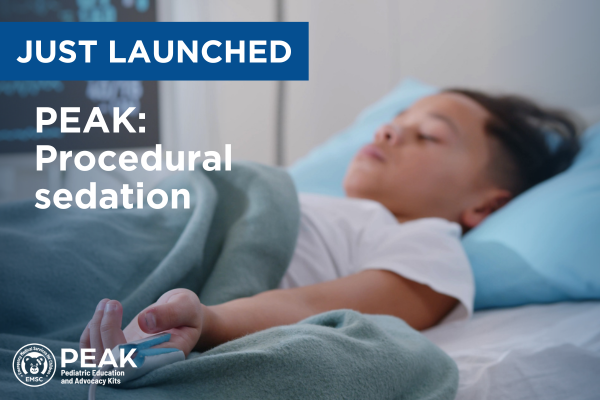
PEAK: Procedural Sedation has launched!
Delivering safe and effective procedural sedation for pediatric patients is critical to providing high-quality emergency care. Children undergoing sedation have unique physiological and psychological needs that require specialized attention to minimize risks and ensure their comfort. To support EDs in meeting these needs, EMSC has developed a Pediatric Education and Advocacy Kit (PEAK) on procedural sedation.
This comprehensive toolkit offers expert-developed, evidence-based recommendations, podcasts, infographics, and more—all free and open-access. View the resources here.
| |
EMSC out and about: Advancing pediatric trauma care at ACS TQIP
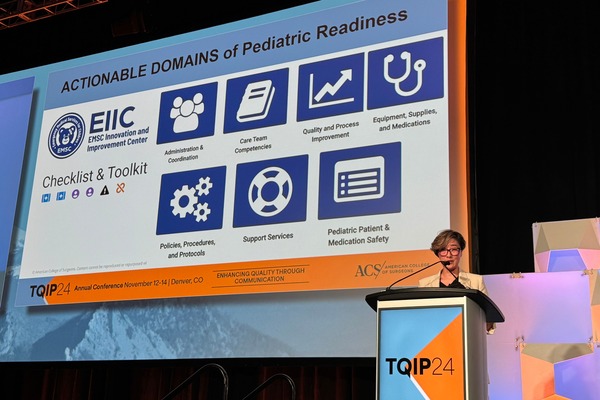
The EMSC Program was a key participant at the 2024 American College of Surgeons (ACS) Trauma Quality Improvement Program (TQIP) Annual Conference Nov. 12-14, showcasing the importance of Pediatric Readiness in trauma care through two sessions and an exhibit booth. The two sessions were joined by more than 1,000 attendees and emphasized new research around the impact of Pediatric Readiness on outcomes and the value of standardized improvement resources. Read more.
| | |
FANs in the field: Utah
Learn more about how Family Advisory Network (FAN) representatives make a difference for children.
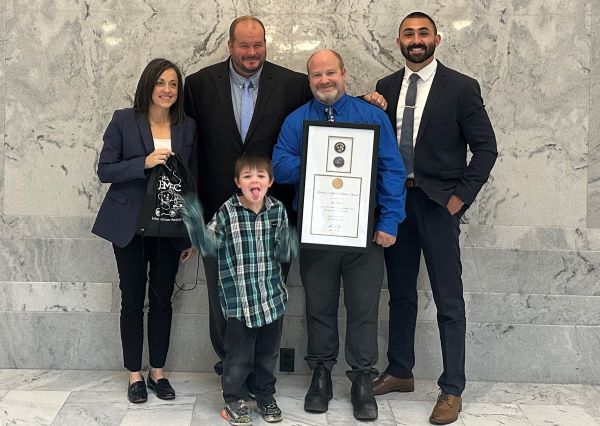
Congratulations to our Utah FAN Jeff Wilson and his son, John, on receiving the Spirit of Service Award from Utah Gov. Spencer Cox. Wilson has worked on autism awareness, training, and providing sensory kits across his state. Learn more about Wilson’s work here.
|
|
Featured resource:
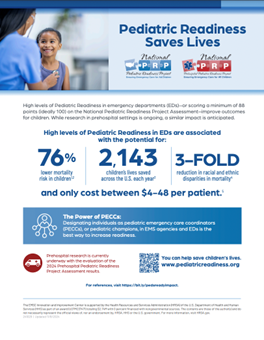
A new study published last month found high levels of Pediatric Readiness in all EDs could save 2,143 children's lives each year and would cost between $0 and $12 per child resident, depending on their state. The landmark research also included state-by-state totals of potential lives saved. Help spread the word in your community by sharing the research, New York Times coverage, or an updated infographic about the impact of Pediatric Readiness (pictured at right).
| |
Events & opportunities:
-
Children and Disasters Public Meeting: The National Advisory Committee on Children and Disasters will conduct a virtual public meeting on Dec. 4. Learn more or register.
-
Young Adult and Parent Research Opportunity: The Pediatric Emergency Care Applied Research Network (PECARN) Mental Health Workgroup is seeking input from young adults, parents, and clinicians on research questions related to emergency care for children with mental and behavioral health conditions. Participants are asked to take three 20-minute, web-based surveys and will receive a $40 gift card for each survey. Complete the first survey here. To participate, you must be either:
- a young adult 18-24 years old who received emergency care for a mental or behavioral health condition from 12-17 years old;
- a parent/guardian of a child/adolescent who received emergency care for a mental or behavioral health condition within the past 10 years; or,
-
an EMS/ED clinician or mental health care professional who has provided care to a patient under 18 for a mental or behavioral health condition in the ED within the past 6 months.
-
AAP ECHOs Now Recruiting: There are three ECHO opportunities currently recruiting. See the links below for more information.
- Anxiety and Depression Quality Improvement ECHO
- Prescribing Opioids in Outpatient Settings ECHO
- School-Based Health Care Suicide Prevention Clinical ECHO
-
Nursing Call for Content: The Emergency Nurses Association seeks education proposals for its annual conference Sept. 17-20 in New Orleans. Submissions are due Jan. 15.
-
EMS Grant Opportunity: The National Highway Traffic Safety Administration Office of EMS encourages EMS and 911 agencies to learn more about the 2025 Road to Zero Community Traffic Safety Grants, which support projects and research to improve roadway safety, address disparities in mobility safety and access, and work toward achieving zero traffic fatalities. Applications are due Jan. 17.
-
Pediatrics Grand Rounds Opportunity: Family-Led Academic Grand "FLAG" Rounds will host five virtual sessions focused on ableism, or discrimination towards children and adults with disabilities, in pediatrics. Sessions start in January 2025 and CE is available. Learn more.
-
ED Award Nominations: The Emergency Nurses Association’s Lantern Award recognizes EDs that demonstrate exceptional and innovative performance in leadership, practice, education, advocacy and research. Apply by Feb. 27.
-
Learning Opportunity for Pediatric Disaster Researchers: PPN is offering a year-long training program for fellows, postdocs, and faculty interested in pediatric disaster science research. Starting January 2025, it covers research methods, program evaluation, grant writing, and networking. Apply by Jan. 30.
-
EMSC and PPN Grantee Save the Date: Please save the date for the EMSC and PPN Grantee Meeting Aug. 11-15, 2025, in Cleveland, Ohio. Details and invitations to come.
-
EMSC Scholars and Fellows: The EMSC Scholars and Fellows Program is not recruiting a 2025 cohort. The application period for the 2026 cohort is anticipated to open in fall 2025. Email us for questions.
| |
The EMSC Innovation and Improvement Center is supported by the Health Resources and Services Administration (HRSA) of the U.S. Department of Health and Human Services (HHS) as part of an award (U07MC37471) totaling $2.74M with 0 percent financed with nongovernmental sources. The contents are those of the author(s) and do not necessarily represent the official views of, nor an endorsement, by HRSA, HHS or the U.S. Government. For more information, visit hrsa.gov. | | | | |