Thank you, EMS clinicians!
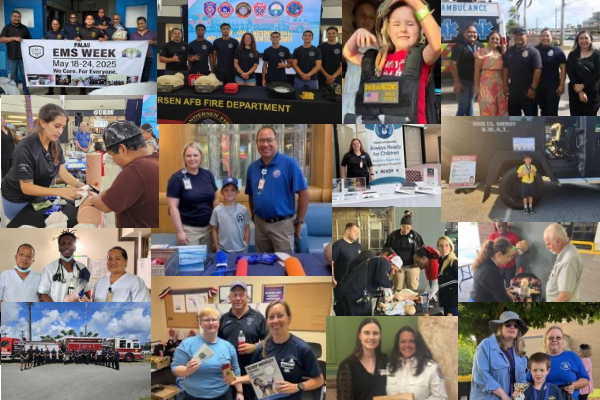
On EMS for Children (EMSC) Day, part of National EMS Week, EMSC Program grantees and national partners came together to spotlight the vital role of prehospital clinicians in caring for acutely ill and injured children. This year’s EMS Week theme, “We care. For everyone”, underscored the compassionate mission of EMS professionals. To mark the day, EMSC hosted a webinar, “Pediatric Prehospital Seizures: Evidence-Based Practice and Future Directions,” with free CE available for live attendees in partnership with Prodigy EMS. The session was attended by nearly 700 participants. Across the country, EMSC State Partnership Programs also celebrated with community events, ranging from awards and capitol recognitions to open houses and educational activities. See a gallery of EMSC Day photos from states and territories here.
| |
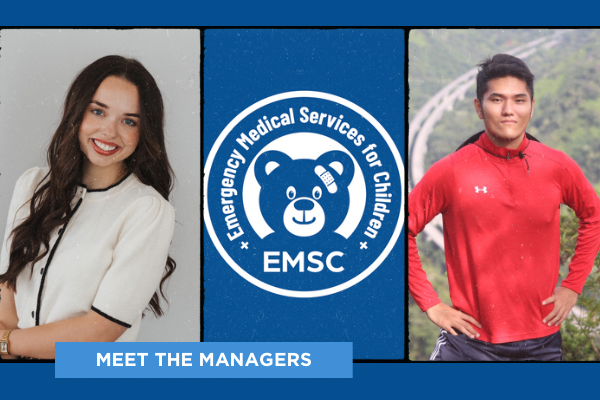
Meet the managers: Welcome the Newest State Partnership program managers!
The EMSC Program is thrilled to introduce two new State Partnership Program managers for Hawaii and Nebraska.
State Partnership Program managers are vital to the EMSC Program because they work to expand and improve emergency care for children in real-time and at the community and state level. They do this in part by working on performance measures as outlined by the Health Resources and Services Administration (HRSA). Learn more.
| |
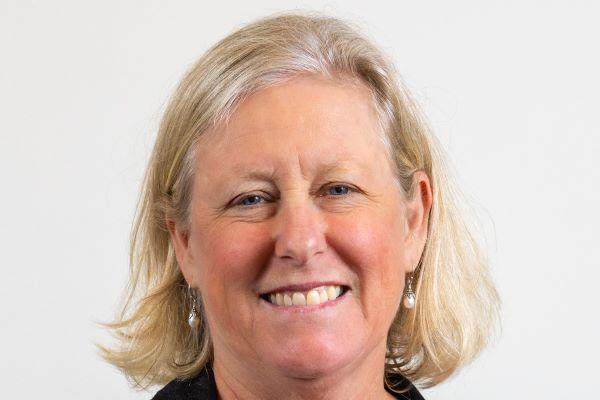
The power of an idea: A conversation with Dr. Marianne Gausche-Hill
Over 40 years ago, the EMSC Program began as a bold vision to improve emergency care for kids. One of the first to carry that vision forward was Marianne Gausche-Hill, MD, FACEP, FAAP, FAEMS, now co-director of the National Pediatric Readiness Project. Mentored by program founder James Seidel, MD, PhD, Gausche-Hill helped lead some of EMSC’s earliest research and quality improvement efforts—work that continues to shape pediatric emergency care nationwide.
Thanks to leaders like her, EMSC has become a national force for readiness, with data-driven tools, performance measures, and the promotion of pediatric emergency care coordinators in EDs and EMS agencies. And the results are clear: Pediatric Readiness saves lives. In honor of EMS for Children Day and EMSC’s 40th anniversary, we sat down for a conversation with Gausche-Hill. Read more.
| |
EMS study highlights need for improved use of spinal motion restriction in children
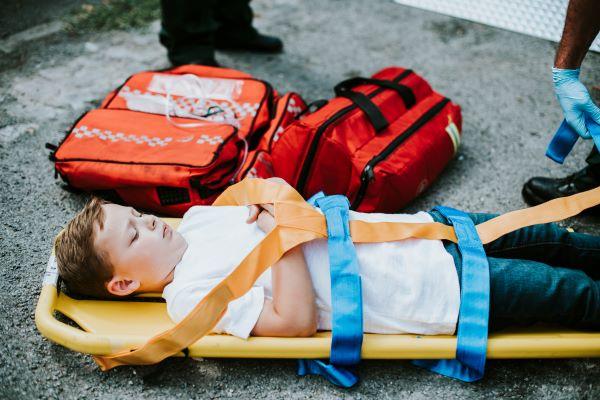
A new study from the PECARN looked at how often EMS apply spinal motion restriction to children after blunt trauma. Of more than 7,700 children studied, 41.5% were placed in spinal motion restriction—even though only 1.6% had an actual cervical spine injury.
The study found that older children, certain injury types (like car crashes and falls), and specific symptoms (like neck pain or numbness) were more likely to have spinal motion restriction. However, many of these factors are not part of the newly developed PECARN clinical decision rule for identifying serious spine injuries.
The findings highlight the need for clearer EMS guidelines to ensure spinal motion restriction is used when truly needed—helping to avoid unnecessary discomfort and potential harm to children. Learn more.
| |
EMSC out and about
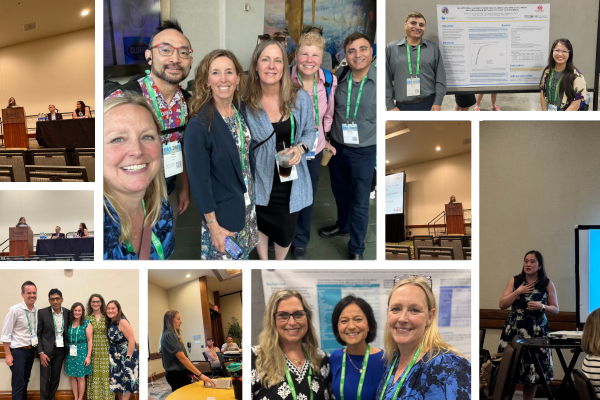
The EMSC team continues to elevate Pediatric Readiness through national collaboration and knowledge-sharing. At the Pediatric Academic Societies (PAS) 2025 Meeting in Hawaii, EMSC experts joined pediatric leaders from across the country to highlight progress and innovations in emergency care.
Mohsen Saidinejad, MD, MS, MBA, and Marianne Gausche-Hill, MD, presented on the "Use of Machine Learning to Predict Hospital Admission and Critical Care Need for EMS-Treated Infants After a Suspected BRUE". Joyce Li, MD, MPH, led a workshop on "Practice Makes Prepared: Pediatric Mass Casualty Drill Workshop" and moderated an oral abstract session on "Emergency Medicine: Systems of Care". Michelle Moegling, BSN, RN, presented findings from "Pediatric Readiness and Experience Caring for Children During Disaster and Surge Scenarios: A Mixed-methods Study of Rural and Critical Access Hospital Staff". Kathleen Adelgais, MD, MPH, presented "Pediatric Prehospital Readiness Project: First Comprehensive Assessment of Pediatric Readiness of National Emergency Medical Services Agencies".
The American Academy of Pediatrics Section on Emergency Medicine (SOEM) EMS/Pediatric Readiness Subcommittee also hosted its 4th Annual PAS Project Showcase, spotlighting innovation in pediatric emergency care. This year’s winners included:
- Best Project Idea: "Moving the Needle on State Verified Pediatric Ready Hospitals", presented by Amanda Price
- Completed Project: "Partnerships with Pediatric Academic Medical Centers: A Qualitative Needs Assessment for Pediatric Care in Northern California Community Emergency Departments", presented by Rajesh Daferty
The EMSC network showed up strong—sharing innovations, connecting with partners, and spreading the word about the importance of Pediatric Readiness.
| |
Featured resource:
Pediatric Pandemic Network (PPN) Learn now offers free, on-demand training for health care professionals focused on pediatric disaster preparedness. Courses include topics like pediatric surge planning, behavioral health in emergencies, and care for children with special health care needs. Explore the full course catalog.
| |
Opportunities:
-
AAP: Don’t miss the AAP National Conference & Exhibition, Sept. 26–30! The SOEM will offer sessions on Pediatric Readiness, POCUS, and an interactive workshop for general pediatricians. Learn more. In addition, Babble Royale II - Think you’ve got the skills to take the mic? Nominate yourself or a PEM colleague (within 10 years of training). Learn more.
-
American College of Surgeons: The call for abstracts for Trauma Quality Improvement Program 2025 is now open! Abstracts are due by June 15.
-
The Department of Transportation: The notice of funding opportunity is open for applications for Safe Street and Roads for All (SS4A). Competitive funding is available to support projects that improve roadway safety and prevent serious injuries and deaths for all users—pedestrians, cyclists, transit riders, motorists, and more. The deadline for applications is June 26. EMS agencies and 911 centers are encouraged to apply for funding independently or through collaboration with local, regional, health, planning or transportation partners. Learn more.
-
PPN: Continuing education is available for the “Ready. Prep. Go!” podcast. To receive continuing education credit, learners must register and complete an evaluation on the PPN Continuing Education portal after listening to the podcast. Learn more.
-
PPN: Join the PPN legal webinar "Revealing the Complexities of Pediatric Crisis Standards of Care", June 11 at 1 pm CT to explore the ethical, legal, and operational aspects of pediatric crisis standards of care planning for hospitals, health care systems, and public health leaders. Register here.
| | |
Awards:
Congratulations to the 2025 Senator Daniel Inouye & Dr. Calvin C.J. Sia SOEM Advocacy Award Winners, Carly Muller, MD and Nyeomi McGaskey!
The SOEM Advocacy Scholarships were renamed in 2014 to honor the lasting contributions of Senator Daniel Inouye and Dr. Calvin C.J. Sia to EMSC. In 1983, their collaborative efforts led to the authorship of landmark legislation that established the federal EMSC program in 1984. Funded by SOEM since 2004, these awards aim to foster advocacy for Pediatric Emergency Medicine and improve care for children nationwide.
The Emergency Nursing Association (ENA) announced their 2025 achievement award winners! Join us in celebrating two EMSC professionals who have been recognized. The 2025 ENA award recipients and other honorees will be recognized during Emergency Nursing 2025 in New Orleans Sept. 17-20.
-
Lifetime achievement award: Sally Snow BSN, RN, CPEN, FAEN - Snow has been a long-time friend, partner, and advocate for EMSC.
-
Pediatric Readiness improvement award: Sara Daykin DNP, RN, CPEN, TCRN, FAEN—Daykin works with the New Mexico EMSC Program and is a former EMSC Fellow.
| | The EMSC Innovation and Improvement Center is supported by the Health Resources and Services Administration (HRSA) of the U.S. Department of Health and Human Services (HHS) as part of an award (U07MC37471) totaling $2.74M with 0 percent financed with nongovernmental sources. The contents are those of the author(s) and do not necessarily represent the official views of, nor an endorsement, by HRSA, HHS or the U.S. Government. For more information, visit hrsa.gov. | | | | |