Empowering EMS to Protect Children: Insights from TEN-4 Day
Child maltreatment is a leading cause of morbidity and mortality in children, yet early signs can be subtle and easily missed. EMS clinicians play a critical role in recognizing these injuries and supporting children and families.
Each year on Oct. 4, "TEN-4 Day" highlights the TEN-4-FACESp rule, a clinical tool to help identify signs of potential child abuse. As part of TEN-4 Day this year, Kathleen Adelgais, MD, MPH, and Gunjan Tiyyagura, MD, MHS, presented real-world cases and evidence-based strategies to strengthen EMS impact in patient care and child protection during a Prodigy EMS webinar. Topics included the TEN-4 rule, trauma-informed care approaches, and ways to connect families with community resources. Watch the webinar (log-in required; enter code "EIIC" to watch for free) or view PEAK: Child Abuse.
| | |
Top 10 Reasons to Join the 2026 EMSC NPRQI Collaborative
The 2026 EMSC National Pediatric Readiness Quality Initiative (NPRQI) Collaborative (formerly the Pediatric Readiness Quality Collaborative) launches in January. It will bring EDs of all sizes and pediatric volumes together to improve pediatric care and prepare for the next National Pediatric Readiness Project Nationwide Assessment, launching in March 2026.
Top 10 reasons to join:
- Boost your Pediatric Readiness levels just in time for the assessment.
- Gain free, secure access to NPRQI’s data dashboard and quality measures that are actionable for all EDs, regardless of pediatric volume.
- Receive direct support from national pediatric experts and QI coaches.
- Collaborate and share insights with peers across the country.
- Access new, evidence-based intervention bundles.
- Choose from up to four focus areas to target improvements to what matters most to your ED.
- Strengthen long-term quality improvement capacity in your ED.
- Earn CNE/MOC Part 4 credits for your participation.
- Improve outcomes for children in your community.
- Join a national network committed to improving pediatric emergency care for every child!
Sign up by Dec. 2025 or join an upcoming webinar, cohosted with the National Rural Health Association, on Dec. 4!
| | |
Get Ready for the 2026 National Pediatric Readiness Project Assessment
The next National Pediatric Readiness Project (NPRP) Nationwide Assessment launches in March 2026 at pedsready.org. This assessment gives EDs the opportunity to benchmark against updated national standards, track progress since 2021, identify gaps, and contribute to national research and policy efforts that save children’s lives. The updated 2026 assessment is based on soon-to-be-published updated joint standards developed by leading professional organizations representing emergency physicians, nurses, pediatricians, and trauma surgeons.
Why it matters: High Pediatric Readiness saves lives. EDs with strong readiness scores achieve better outcomes for children in emergencies.
How to prepare: Designate Pediatric Emergency Care Coordinators (PECCs), explore the NPRP Toolkit and Checklist, review the guidelines once published, or join the 2026 NPRQI Collaborative launching in January.
Learn more or download a handout to help spread the word.
| |
Celebrating State Prehospital Pediatric Readiness Recognition Programs
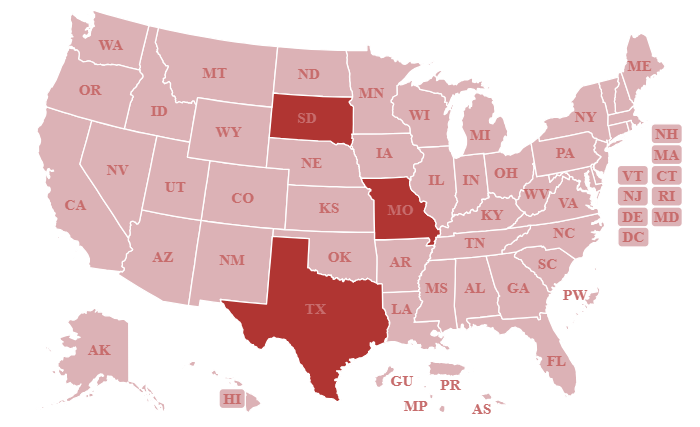
Congratulations to South Dakota, Missouri, and Texas for achieving HRSA approval of their Prehospital Pediatric Readiness Recognition Programs! State recognition programs help verify and publicly celebrate EMS agencies’ achievements in Pediatric Readiness.
These new programs join a growing network of states advancing Pediatric Readiness across the continuum of care. In addition to states with verified programs, numerous states have programs in progress. Contact your EMSC state manager to learn about active EMS and ED recognition programs in your state.
| |
Disaster Response Collaborative Strengthens Pediatric Preparedness
The Pediatric Pandemic Network’s Disaster Response Collaborative (DRC) is enhancing pediatric disaster preparedness by helping children’s hospitals refine plans, share best practices, and strengthen coordination across local, state, and regional systems. Building on the Disaster Networking Collaborative, the DRC now includes 100+ hospitals in 40 states and one territory, focusing on key areas from the EMSC’s Checklist of Essential Pediatric Considerations: evacuation, pediatric patient tracking and reunification, surge capacity, and triage/infection control.
A “fireside chat” series complements these efforts with expert-led discussions on topics like disaster preparedness and care for children and youth with special healthcare needs (CYSHCN) and children with medical complexity (CMC). All are welcome to attend. Recent and upcoming sessions include:
-
Oct. 15: Prioritizing CYSHCN and CMC in Disasters
-
Nov. 18: Managing Pediatric PTSD in Disaster Response
-
Nov. 19: Disaster Planning for CYSHCN and CMC
View recordings and register for upcoming sessions.
| | |
PECARN Research Sheds Light on Fever Management in Young Infants
A recent Pediatric Emergency Care Applied Research Network (PECARN) study sheds light on managing fevers in infants ages 61–90 days, a group with little prior guidance. Researchers analyzed nearly 5,000 cases from 17 U.S. children’s hospitals from 2012 to 2024, finding that 1–2% had invasive bacterial infections, rare but potentially life-threatening. The team developed two “low-risk” rules to help physicians identify infants who may need fewer tests, potentially reducing unnecessary tests and hospital stays while maintaining safety. Read the study.
| | |
2025 Pediatric Advanced Life Support Guidelines Released
The American Heart Association and American Academy of Pediatrics have released the 2025 Pediatric Advanced Life Support (PALS) Guidelines in Circulation. The update provides comprehensive, evidence-based recommendations for resuscitation and emergency cardiovascular care of infants and children up to 18 years of age.
The guidelines address the full continuum of care, from prearrest recognition to intra-arrest management and post-cardiac arrest recovery, across community, prehospital, and hospital settings. Key topics include advanced airway and ventilation strategies, drug and defibrillation dosing, extracorporeal CPR, post-arrest neuroprognostication, and family presence during resuscitation. Read the full guidelines.
| |
Mary Fallat, MD, FACS, Urges National Action on Pediatric Trauma Readiness
Are U.S. hospitals truly ready to care for injured children? This critical question took center stage last month as Mary E. Fallat, MD, FACS, delivered the Scudder Oration on Trauma, “Optimizing Strategies to Improve Trauma and Burn Care for U.S. Children,” as part of the American College of Surgeons (ACS) Clinical Congress. Drawing on decades as a pediatric surgeon and trauma leader, Fallat spotlighted how America’s fragmented trauma and burn systems leave children vulnerable, particularly in rural and underserved areas, and outlined actionable solutions to close those gaps.
At the heart of her message is Pediatric Readiness: ensuring every trauma center, ED, and EMS team is equipped, trained, and connected to provide lifesaving care to children, wherever they are. Read more about the presentation from ACS.
| | The EMSC Innovation and Improvement Center is supported by the Health Resources and Services Administration (HRSA) of the U.S. Department of Health and Human Services (HHS) as part of an award (U07MC37471) totaling $2.5M with 0 percent financed with nongovernmental sources. The contents are those of the author(s) and do not necessarily represent the official views of, nor an endorsement, by HRSA, HHS or the U.S. Government. For more information, visit hrsa.gov. | | | | |