|
Council of Producers & Distributors of Agrotechnology
Terry Kippley, CPDA
| |
|
In this Issue:
- New CPDA Members
- News from EPA's Registration Division
- PRIA Quarterly Stakeholder Meeting
- Weed Science Society of America Annual Meeting
- Chlorpyrifos Update
- Neonicotinoid Update
- CPDA Washington DC Fly-In March 4–6
- Save the Date: Adjuvants, Inerts & Crop Protection Conference April 28–May 1
| |
|
Welcome New CPDA Members!
Please help us welcome our newest members...SPM and Belchim USA! Membership dues fund our advocacy efforts which include working with the EPA on the possibility of giving growers credit for the use of Drift Reduction Adjuvants as an ESA mitigation tool alternative to No-Spray buffers.
| |
|
SPM
SPM is an emerging China agrochemical sourcing consulting company with an integrated database of China agrochemical industry.
Based on a predictive analysis of China key active ingredients market, SPM is focusing on the efficient establishment and optimizing management of China agrochemical supply chain for global crop protection companies.
| |  |
|
Belchim USA
Belchim Crop Protection USA is an agrochemical/biological company focused on crop protection and pest mitigation, which leverages the strong innovation and R&D culture of its European parent. Headquartered in the Wilmington, Delaware area, Belchim USA is deeply driven toward continuous innovation and commercialization around new products for the Agriculture and Turf industry in the United States.
| |
|
Digging Deeper—News from EPA's Registration Division
For the past two years the CPDA EPA Task Force has been having regular meetings with EPA’s Registration Division (RD) focusing on reducing the backlog of non-PRIA actions.
I’m pleased to report that those efforts are paying off. The most recent development is the announcement that RD has developed a streamlined process for addressing label amendments. Specifically, for some label amendments, RD will review only the portion of the label that has been changed. Those labels will be identified with a new stamp that identifies that only the indicated changes were reviewed and the letter the registrants receive will indicate this new process was used for the approval of their action. Following acceptance, the letter and label will be posted to EPA’s Pesticide Product and Label System (PPLS).
This new, shortened review process applies to any label amendment newly submitted or in-house amendment submitted from this point forward. This type of review will not be done for all label amendments. Instead, it will be used at the discretion of the Branch Chief, Product Manager or Reviewer. To promote consistency on this effort, an internal list of criteria to consider has been developed that all of RD will be following. If a registrant believes that their label is a good candidate for shortened review, RD suggests accurately marking all of the changes and state that you have done so in the cover letter. While RD will still have the final say in determining whether the label is a good candidate, providing this information up front should help with consistency and shorten the process.
Other key points:
-
Will registrants still receive label comments? Maybe, but if the partial review process is being used, those comments will only be on the changes you have made to the label, not the entire label. This should shorten the review process.
-
What happens if mistakes are made when marking the changes or if a registrant accidentally misses some changes when marking a label? If you mistakenly leave a change unmarked and you realize it before the review, please inform RD staff. If it’s an inadvertent mistake and the label is a good candidate for partial review, the PM is still able to accept an updated label. However, if unmarked changes are on the stamped label this could lead to an enforcement action. Please carefully consider the marked changes before stating to EPA that all changes are marked.
-
What if a registrant wants an entire label to be reviewed? RD will have the discretion to use this process or not for any given action. Because this is a part of RD’s strategy to reduce the backlog, they do intend to employ this partial review process as often as is feasible. However, since most labels are submitted with updates from time to time, RD intends to review the entire label periodically.
-
How is this different from a label notification as outlined in PRN 98-10? The submission for this type of action is still a label amendment and does not qualify as a notification under PRN 98-10. RD’s acceptance of a label by the process discussed above is a full label acceptance. It is no different from the current label amendment approval. However, RD will not review previously reviewed portions of the label. If there are changes beyond those indicated that need to be made, RD will conduct a full review.
-
What does this mean for our company? It’s RD’s intent to review label amendments and pending submissions in a shorter timeframe.
| |
|
PRIA Quarterly Stakeholder Meeting
On January 18, EPA’s Office of Pesticide Programs (OPP) held its PRIA Quarterly Stakeholder meeting. During the online meeting, agency staff provided updates on the following topics:
- OPP Organizational Chart, Staffing Levels and Hiring;
- Front End Processing;
- Milestones webpage;
- PRIA 5 Implementation Activities;
- Bilingual Labeling;
- IT Updates;
- Gold Seal Letters;
- FY’23 Fees Collected;
- FY’23 PRIA Metrics;
- FY’23 Non-PRIA Metrics; and
- Registration Review.
Highlights from the meeting:
- EPA will also complete its PRIA 2024 annual report which is due to Congress at the end of January. This report will provide additional data related to registration processing for both PRIA actions and submissions not covered by a PRIA code (non-PRIA actions).
- EPA is in the process of developing a portal where registrants can track the status of their registration actions. To pressure test the portal, EPA has scheduled an initial outreach session on January 31 with the PRIA Coalition and their registrant members.
- Parts of the new IT system are now operational. While the new system “provides a real-time tracking system for all regulatory submissions to OPP …” it has been paired with an antiquated front-end system that has resulted in additional delays over the past year.
- OPP staffing and recruiting levels have increased, but the gains have been offset by back-door losses of key positions.
- OPP funding contributes to the staffing shortfall. OPP staff appreciates the PRIA Coalition’s efforts to influence the appropriations process.
- OPP staff have implemented practical steps and approaches to improve performance and reduce timelines for registration decisions. Many of these process improvements come at the suggestion and initiative of CPDA members.
| |
|
Weed Science Society of America Annual Meeting
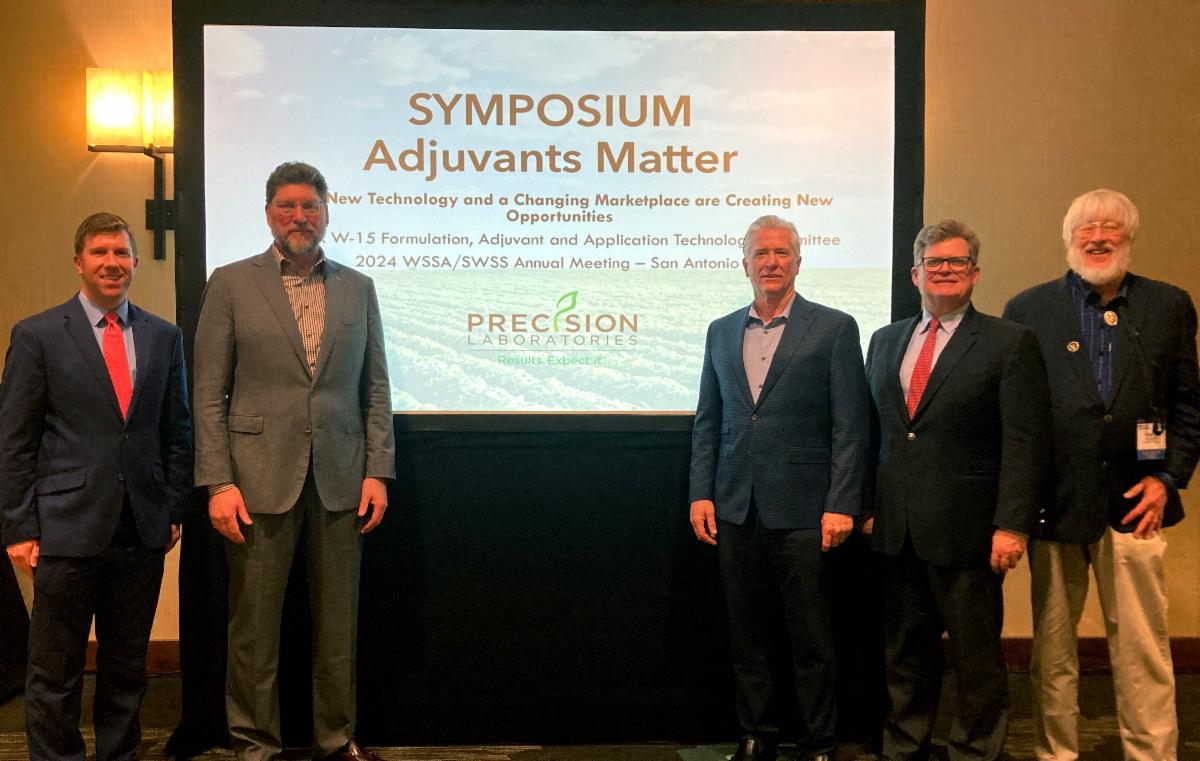
Last week I attended and spoke at the Weed Science Society of America’s annual meeting in San Antonio where I was able to reconnect with old friends while making many new ones.
The Wednesday afternoon program allowed CPDA and our members to make the case for adjuvants. To that end, I was joined by a host of CPDA member company experts who included:
- Matt Faletti spoke on the behalf of Dr. Jeff Bunting of Growmark highlighting the importance of adjuvants to agricultural retailers.
- Dr. Connor Ferguson of Simplot discussed the role of adjuvants in providing good coverage.
- I outlined CPDA’s Washington DC efforts to bring credibility and relevance to adjuvants.
- Susan Sun of Croda discussed using adjuvants to optimize droplet size.
- Jim Reiss batted clean-up to provide an overview of CPDA’s Application Enhancement Certification Program.
| |
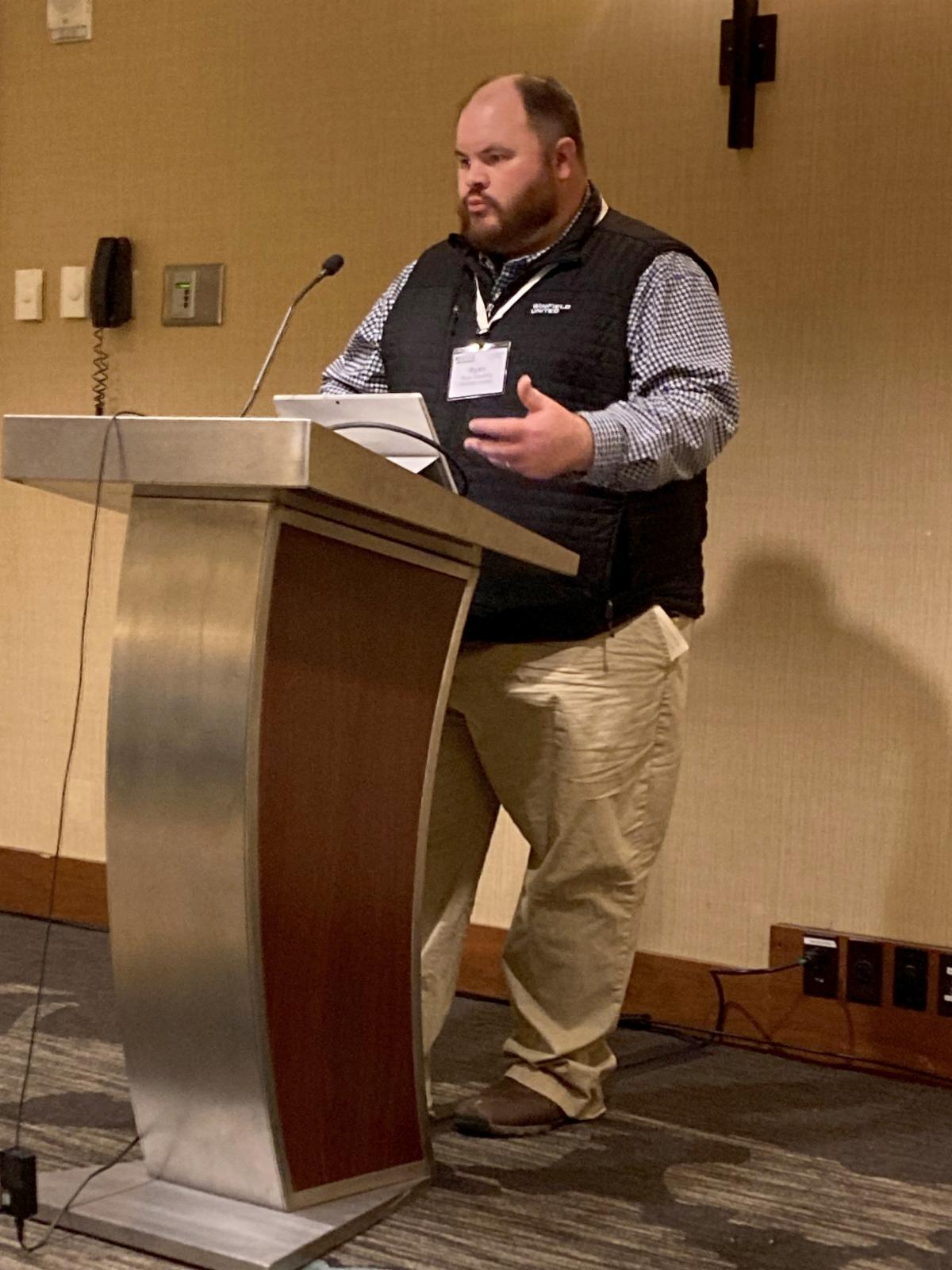
Ryan Edwards, Winfield United; Topic: Why Adjuvants, Why Now | |
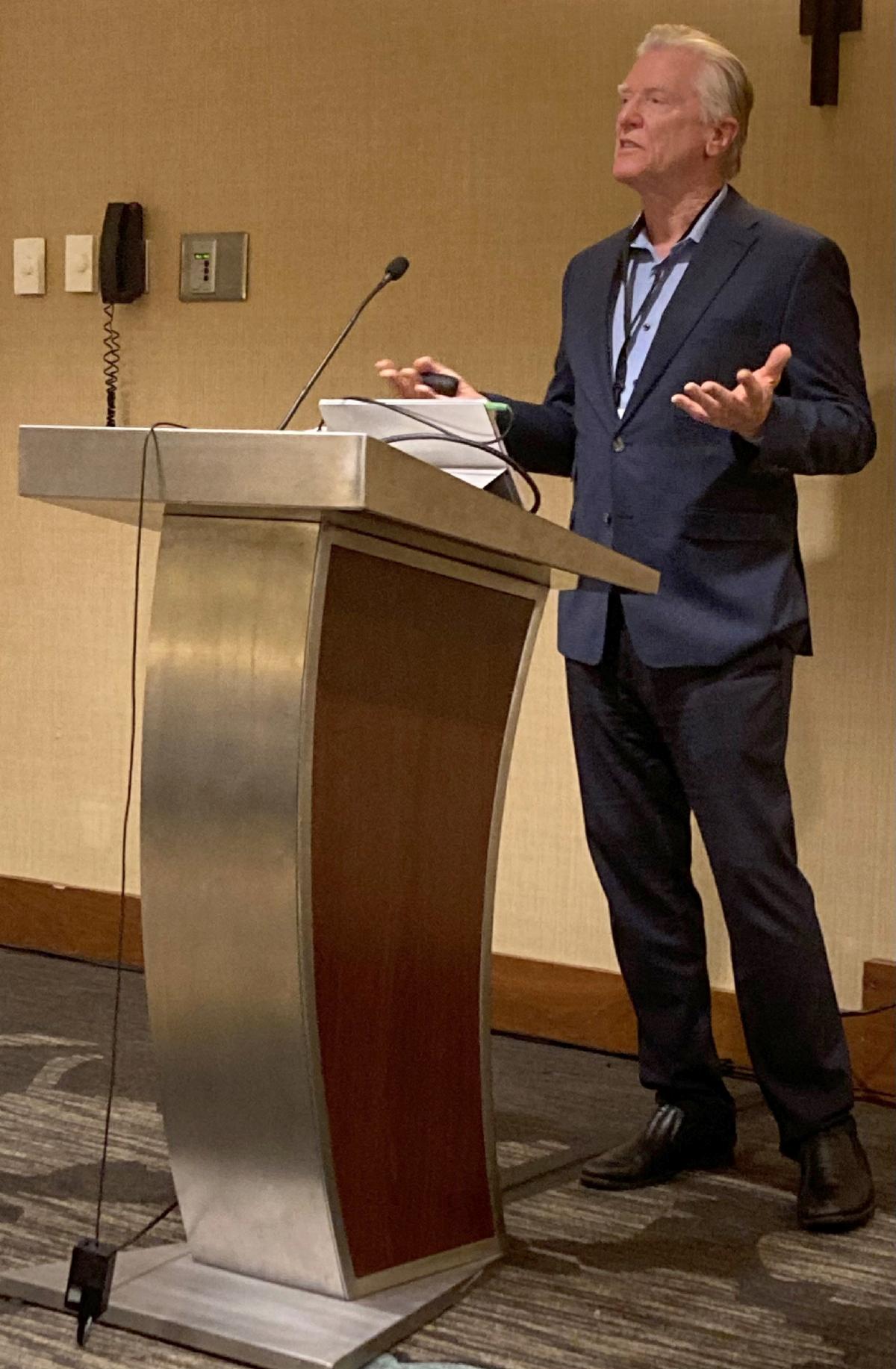
Jim Reiss, Precision Laboratories; Topic: Improvements in CPDA’s Application Enhancement Certification Program, A Novel Tool for Improving Selection of Nozzles and Adjuvants. | |
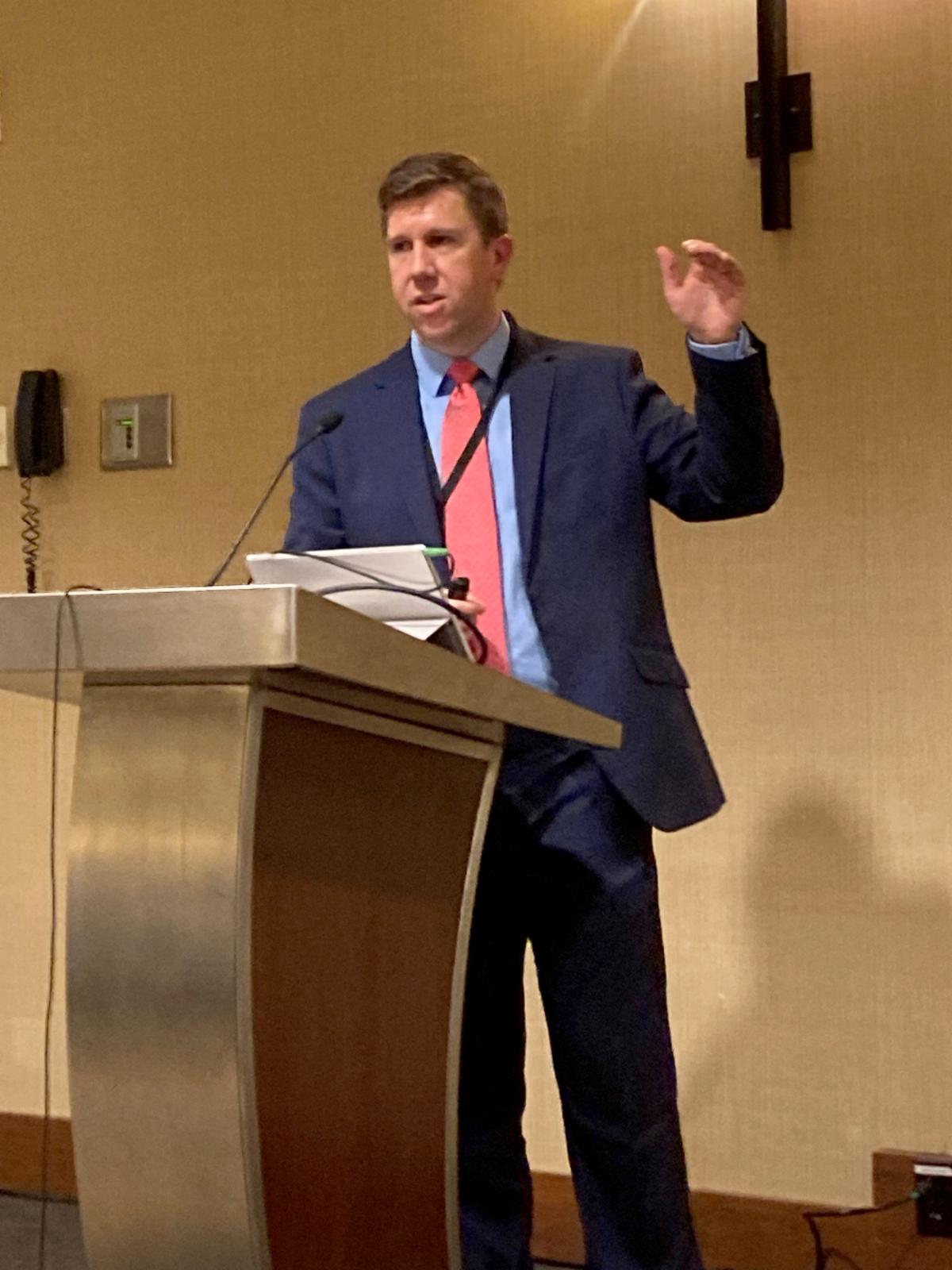
Dr. Connor Ferguson, Simplot discussed the role of adjuvants in providing good coverage. | | |
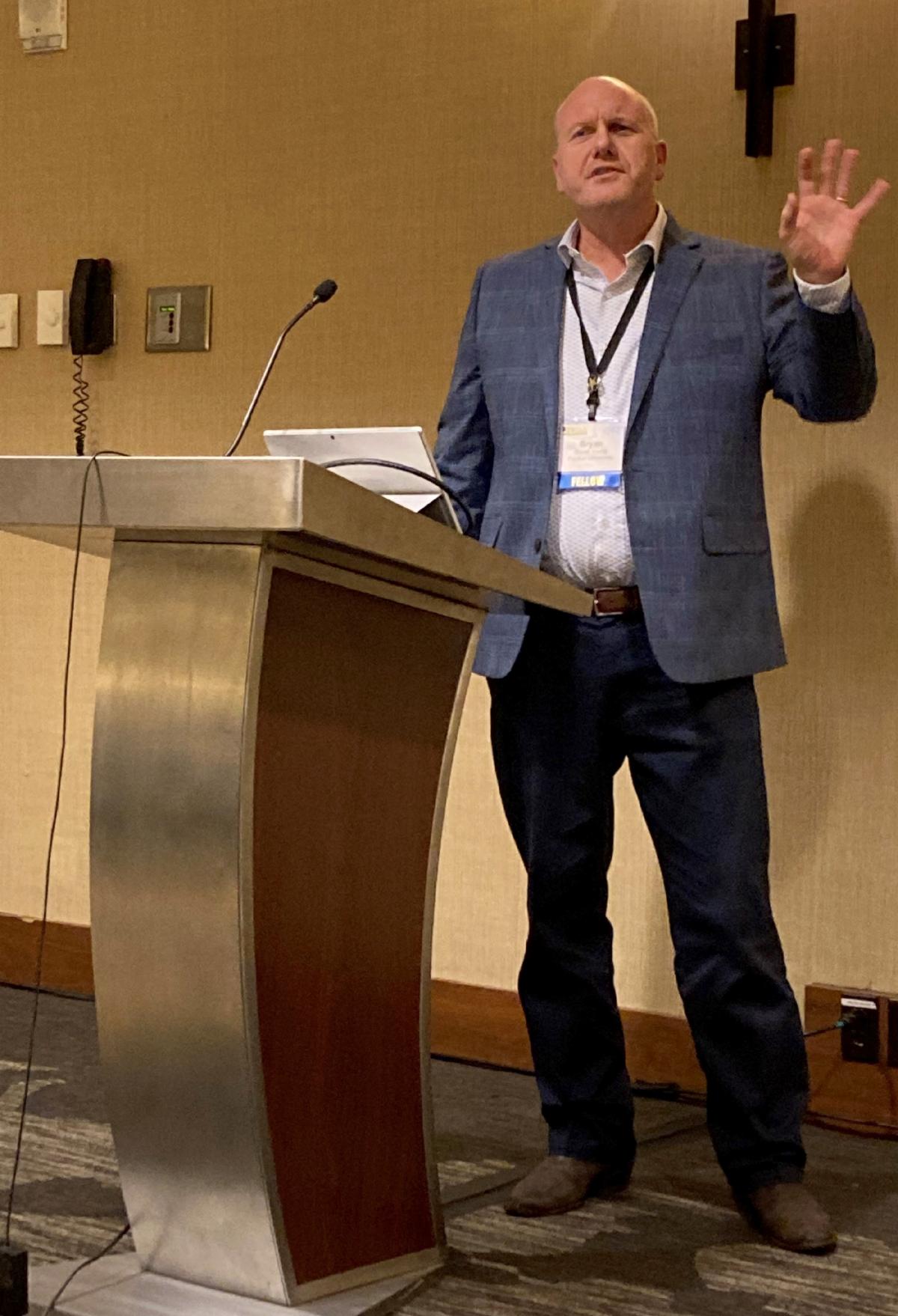
Dr. Bryan Young, Purdue University; Topic: Adjuvant Training and the Land Grant University | | |
|
Chlorpyrifos Update
EPA will restore use of the pesticide chlorpyrifos on eleven food crops after a ruling from the Eighth Circuit Court of Appeals. The ruling vacates EPA’s revocation of all food tolerances for chlorpyrifos. Specifically, EPA plans to allow use of chlorpyrifos on alfalfa, apple, asparagus, tart cherries, citrus, cotton, peaches, soybeans, strawberries, sugar beets, and wheat. All other food uses for chlorpyrifos will remain unavailable as EPA plans to revoke the food tolerances for these crops.
| |
|
Neonicotinoid Update
New York Governor Kathy Hochul signed the "Birds and Bees Protection Act," prohibiting the use of neonicotinoid-treated corn, soybean and wheat seeds, and use of neonicotinoid pesticides for outdoor ornamental plants and turfs. The ban is set to go into effect in 2027. While Governor Hochul signed the legislation in late December, it passed the New York legislature in early June. New York is the first state to pass a ban on neonicotinoid-treated seeds.
| |
|
Make Plans to Attend the CPDA Washington DC Fly-In: March 4–6
Register now to attend CPDA’s Washington DC 2024 Fly-In March 4–6, 2024. This Fly-In is the focal point of CPDA’s federal advocacy efforts in 2024 where we will meet with Congressional leaders, members of the Biden Administration and agricultural allies. This is an important meeting for all CPDA member companies as we kick-off our 2024 federal advocacy efforts.
| |
Edward Messina, EPA-OPP Director | |
Congressman Dan Newhouse (WA) | |
|
You are invited to bring a co-worker and network, share ideas and help advocate for our industry. We hope you can join us. Please register today.
- Hear from Ed Messina, EPA-OPP Director, on the latest EPA initiatives
- Dinner and presentation from Congressman Dan Newhouse (WA) on important agricultural issues
- Get insights from high-level advisors on pertinent information
- Help influence 2023 Farm Bill
| | | | |