Newsletter of the Alliance's EPIC Learning Health System | Issue 30 | August/September 2024 | |
Unlearning Weight Stigma
in Health Care
| |
Research Opportunity:
Institute for Pandemics
| |
Research Update:
Chiropractic Care
| |
Advancing Access to Care
for Newborns in Kingston
| |
Learning Events
& Programs | |
Get Involved: Research & Sharing | |
|
Unlearning weight stigma and anti-fat bias:
Two community dietitians on why it's important
Phoebe Lee, MHSc RD and Christina Lee, MHSc (c)
| |
Weight stigma and anti-fat bias refer to the prejudiced attitudes, stereotyping, or negative treatment of a person based on their size. These contribute to the oppression of marginalized groups, typically 2SLGTBQ2+ and racialized people. As dietitians, it breaks our hearts when patients tell us stories about negative experiences with their providers. It is all too common to hear that a patient's health concerns have been completely ignored or dismissed, and that they have been told time and again that they simply "need to lose weight" for their problems to disappear. | |
|
Health Impacts of Weight Stigma
Weight stigma intersects with racism, classism, sexism, ableism, homophobia, transphobia, and more. These intersections lead to inequitable treatment in many settings, including at home, in educational institutions, in the workplace, in media, and when accessing health care. We know that people who face one or multiple systems of oppression have an increased likelihood of experiencing poor mental and physical health outcomes, fewer job opportunities, lower wages, and negative portrayal in media.
In health care settings, weight stigma and anti-fat bias lead to inadequate and unethical treatment from providers. Compared to their thinner counterparts, patients in larger bodies receive less time and medical attention. Their health experiences are frequently attributed solely to their weight, and they may be restricted from certain diagnostic procedures or medical treatments or given unsafe medical advice. In 2018, Ellen Maude Bennett, a 64-year-old Victoria woman, died from inoperable cancer after being diagnosed with only days to live. In her obituary, her family shared how she had felt unwell for years, but in her search for medical intervention, “no one offered any support or suggestions beyond weight loss.”
| |
|
The BMI's Unhealthy History
Much of the blame for weight stigma can be attributed to inappropriate reliance on the Body Mass Index (BMI) as a proxy for health. The BMI is rooted in racist notions about body size, and it was never intended for use as a measure of individual health status or disease risk. It was born out of a statistical, population-wide curiosity about the “average man” hundreds of years ago, using a sample of only white European men. Since its creation, the BMI has been used by scientists, doctors, and insurance companies to discriminate against bodies that don’t fit this white standard.
Using the BMI as a diagnostic tool ultimately perpetuates anti-fat bias, omits the reality of body diversity, and leads providers to make harmful assumptions about an individual’s health. It has contributed to the pathologization of “obesity” and tendency for providers to recommend weight loss as a treatment. There is robust evidence that this causes harm: Intentional weight loss is unsustainable, and it leads to serious psychological, physical, and social consequences, such as low self-esteem, depression, anxiety, increased suicidality, eating disorders, and avoidance of health care services.
| |
|
The Unlearning Journey
Many providers see their large-bodied patients as lazy, unmotivated, or lacking in basic knowledge. If only they knew the unhealthy and disordered methods these people have gone through their entire lives in attempting to achieve and maintain a "normal" body weight! It is crucial that we dismantle weight stigma and anti-fat bias and focus on the complex social, cultural, and environmental factors that affect health and healthcare for all. Here are five things you can start doing now to improve care and outcomes for your patients in larger bodies:
-
Notice and critique the presence of weight stigma and anti-fat bias in your professional and personal life.
-
Educate yourself and others on the value of a weight-inclusive approach to healthcare.
-
Engage with multiple perspectives, especially ones that contradict your own, and seek the work of individuals with lived experience. Find support for yourself throughout this process.
-
Allow your patients to define their own health goals and meet them where they are at.
-
Discover what initiatives are already at work in the community and need funding or publicity.
-
Advocate for policies that address weight stigma and anti-fat bias
Want to know more about weight stigma and weight-inclusive health practices? These resources can help you get started:
Let’s advance this conversation together! Join us on Friday, October 25, for a Lunch ‘n’ Learn webinar hosted by the Alliance for Healthier Communities. We’ll explore anti-fat bias and weight stigma, and we’ll apply our learnings to small group discussions and exercises based on real-world scenarios. Learn more here, and register here.
| |
|
Phoebe Lee, MHSc RD (she/her), is a Community Dietitian at Black Creek Community Health Centre.
Christina Lee (she/her) is an MHSc candidate studying at Toronto Metropolitan University, in training to become a dietitian. She is currently completing a student placement at Black Creek Community Health Centre.
| | | |
Research Partnership Opportunity:
The Institute for Pandemics
Prof. Nelson Lee, MD, Director
| |
COVID-19 has led to millions of hospitalizations and deaths worldwide, and it continues to have immense impacts on population health, society, and human lives and livelihoods. Such events are growing in rate and impact, thanks to increasing global interdependence, transportation, trade, climate hazards, and changing social and cultural patterns. In less than 100 years, we have seen a dozen global public health emergencies caused by emerging diseases. These include Mpox and several dangerous strains of influenza, in addition to COVID. | |
|
To address these recurrent, complex health challenges, we established the Institute for Pandemics (IfP), an Institutional Strategic Initiative of the University of Toronto, in 2023. Our goals are to power transdisciplinary research and training, which in turn will strengthen Canada’s public health response, policies, and health systems in pandemics and epidemics. The collective efforts of more than 200 experts from a diverse range of disciplines are pushing the boundaries of pandemic sciences in four key themes: Readiness, Resilience, Recovery, and Equity. Among other things, the Institute is leading work that will advance our knowledge of:
- How to effectively prevent infection transmission in the community.
- Scalable and adaptable community preparedness efforts.
- Improving resilience of our health systems during public health crises.
- Minimizing the impacts of epidemics and pandemics on equity-deserving communities.
- Improving public trust and countering misinformation.
| |
We at the IfP are inviting members of the Alliance for Healthier Communities to join our efforts in battling against pandemic threats. The COVID-19 pandemic highlighted the critical importance of primary healthcare and partnership with communities in effective public health response. It is central in preparedness for future public health emergencies. We look forward to connecting with you and collaborating in research. | |
“Working in partnership with key stakeholders across the health and social care systems, we will draw lessons from past public health emergencies to strengthen our resilience to new threats,” says Sara Allin, lead of the Resilience theme. “We’ve seen, for example, that centering community leaders in the design and implementation of emergency response and mass vaccination campaigns has worked enormously well both locally and globally. Continued collaboration amongst researchers, health care agencies, community organizations, governments, and private sector partners will enhance our capacity to keep learning and then apply these lessons. Ultimately, this will strengthen our ability to respond to, and minimize disruptions from, shocks.” | |
Professor Nelson Lee, MD (he/him), is Director of the Institute for Pandemics at the Dalla Lana School of Public Health and a Fellow of the Infectious Diseases Society of America. | | | |
Research Update:
Chiropractic care in interprofessional teams
| |
|
A research project shared in EPIC News in July 2023 has been updated with additional opportunities for Alliance member organizations to participate.
Dr. Peter Emary, a chiropractor and clinician-researcher based at Langs CHC and McMaster University, is leading this two-stage randomized controlled trial (RCT) to measure and demonstrate the effectiveness of chiropractic care for managing chronic spinal pain in an interprofessional primary care setting. If sufficient benefit is demonstrated, this evidence can be used to advocate for making chiropractic care accessible to more people who live with spinal pain.
The first stage is a pilot study involving four to six CHCs and a total of 25 clients. It is intended to address feasibility questions related to study design: Will patients be interested in chiropractic care, able to follow the care plan, and available for follow-up? Is the data-collection plan sufficient? Learnings from the pilot will help refine the protocol for the second stage, a definitive RCT involving many clients at a large number of CHCs.
There’s Room for You
The pilot will begin in January, and onboarding is underway. So far, three CHCs have committed to participating: Langs CHC in Cambridge, Community Healthcaring Kitchener-Waterloo, and Guelph CHC. One to three spots remain available for CHCs with similar characteristics.
Funding from the Canadian Institutes of Health Research and others has been obtained to ensure that this trial does not place a financial burden on participating organizations. These funds will cover all research-related costs, including participant recruitment, chiropractic services, and equipment, plus a minimum payment of $3000 for each participating CHC. Centres are asked to provide part-time access to a small examination room; however, if this would be a barrier for your organization, the study team could provide access to chiropractic services at a community-based clinic. Centres will also need to designate a lead physician/NP team to oversee trial activities related to client care during the study.
| |
If you are interested in getting involved, now is the time. Dr. Emary will be happy to answer your questions about this study and whether your organization is a good fit for the pilot phase. Email him to learn more. | |
Kingston Well Baby Care Clinic:
Partnering across sectors to advance access to care
| |
In 2022, staff at the Kingston Community Health Centres (KCHC) noticed an alarming trend: more and more babies were being born in the community without primary care attachment. Without access to primary care, a newborn is at risk of missing essential immunizations and screenings, and their parents miss opportunities to receive parenting guidance and care for their post-partum health. By working together to address this need, KCHC and several of their OHT partners built a Well Baby Clinic that has provided crucial perinatal support to hundreds of newborns and their parents. It is now a key element in the maternal health and child strategy of the Frontenac, Lennox, and Addington Ontario Health Team (FLAOHT). | |
Teaming up to address a growing need
After a session of brainstorming and problem-solving led by Meghan O’Leary, Director of Clinical Services at KCHC, and two of the centre’s family physicians, Dr. Rupa Patel and Dr. Mary Rowland, they designed and launched a well-baby program for unattached newborns at KCHC’s Weller April of 2022. “This is an example of CHCs having their finger on the pulse of a community’s needs,” says O’Leary, who notes that KCHC had already been working closely with the Kingston Community Midwives and the pediatrics and obstetrics department at Kingston Health Sciences Centre (KHSC), who were referring unattached newborns to them.
Demand for Well Baby visits at the Weller Clinic quickly outstripped KCHC’s capacity. “We can identify the need and the solution,” says O’Leary, “but we can’t do the work alone.” In March of 2023, they reached out to two more of their OHT partners: The Kingston, Lennox, Frontenac, and Addington Public Health Unit (KFLAPH), and the School of Nursing at Queen’s University (Queen’s Nursing). Both were eager to step in.
By sharing capacity and contributing their unique assets, these diverse organizations were able to create something greater than any of them could create on their own. KFLAPH provided space and public health nurses to administer immunizations. Queen’s Nursing managed and hired Nurse Practitioners who could precept nursing students, and KHSC contributed seed funding, Thus, the Partnership for Well Baby Care Clinic was born. It offers wellness care, immunizations, and referrals (as needed) for the babies they see, and it is staffed by five nurse practitioners as well as public health nurses.
“It is important to KCHC to work with our community partners to ensure the health of everyone in our communities. This clinic is vital to the health and well-being of babies so they get a healthy start in their growth and development,” says Dr. Patel.
| |
Sharing lessons from success
The success of this project is evident: In the clinic's first 10 months - from the clinic’s launch in May 2023, through March 2024 - 114 unattached newborns were seen across a total of 194 Well Baby visits. 19 of these infants were eventually rostered due to their need for ongoing primary care and follow-up. In 2024, with funding from the FLAOHT and KCHC's primary care budget, the clinic has been able to increase their capacity with more staff and extended hours. In just three months (April 1 to June 30), they saw 108 babies across a total of 147 visits.
In tandem with the clinic, Dr. Patel has also developed an innovative tool she calls an “OB Wheel” – a matchmaking tool that connects unattached, pregnant people with family doctors in the FLA Primary Care Network, thus ensuring that people who are pregnant receive pre-natal care and babies are born into a primary care “home.” Since its inception in November 2022, 586 pregnant people have been connected to on-going primary care via the OB Wheel; 57 of those connections were made in the first quarter of this fiscal year.
Beyond care and referrals for parents and newborns, the clinic also provides interprofessional educational experiences for undergraduate nursing, nurse practitioner and medical students, as well as post-graduate medical trainees in family medicine and pediatrics.
To facilitate quality improvement and inform strategic growth, the partnering organizations developed a Year 1 Evaluation Report, informed by practice data as well as feedback from patients and placement students. In addition to demonstrating the positive impact of the clinic, that feedback shone light on opportunities for growth and improvement, such as the need for extended hours, more parent education, more community outreach, and better connection to primary care.
Some of these actions have already been undertaken: for example, multilingual services are now available through Access Alliance Language Services, a social enterprise of Access Alliance Multicultural Health and Community Services, a Toronto CHC. An additional barrier, noticed early on, was the inclusion of the sociodemographic questionnaire in the online intake form. To remove this barrier while continuing to collect vital health equity data, they changed their process, allowing patients to complete the questionnaire after intake, either online or during a visit.
As Ontario’s health system strives to increase attachment to primary care, with a special focus on pediatric primary care, O’Leary is confident that the Well Baby Care Clinic and the OB wheel can serve as examples for other communities.
| |
|
To support knowledge-sharing and the spread of this model, the partner organizations are sharing the evaluation report on their websites, along with a YouTube video about the clinic.
Anyone who wishes to learn more about the Well Baby Care Clinic or the OB Wheel is also invited to reach out to the team.
| |
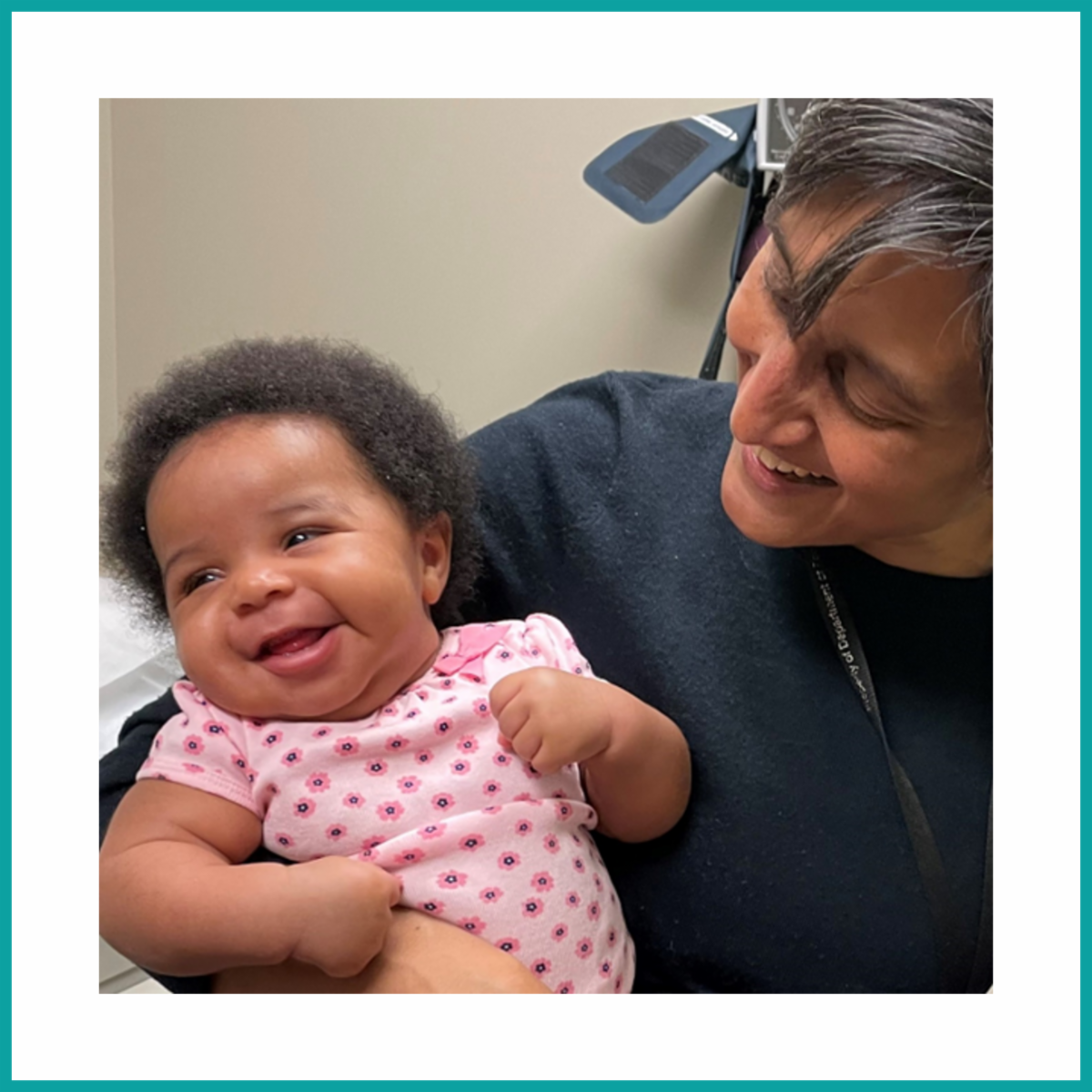
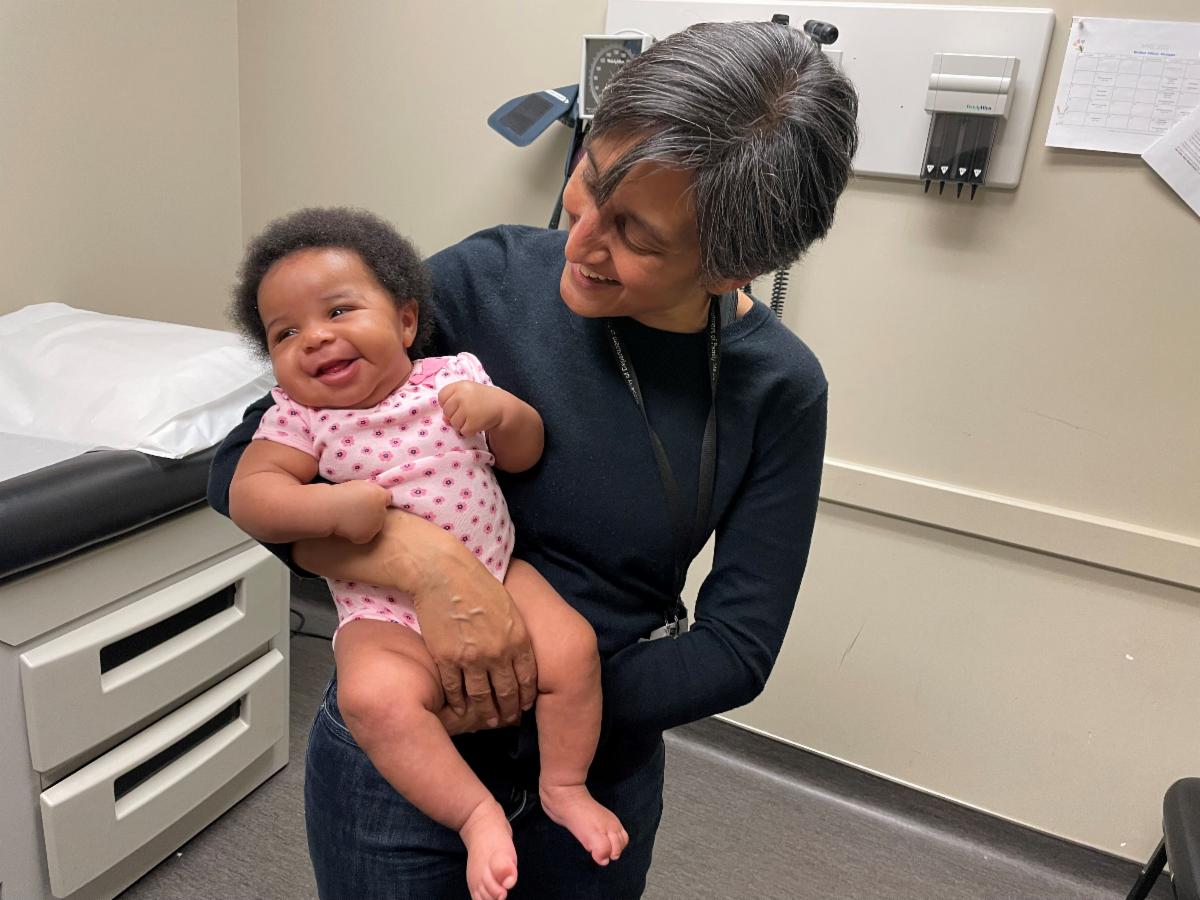
Dr. Patel and a patient share smiles in the clinic. | | |
Learning Events & Programs
| |
October
Driving Forward: How (and why) to continually advance sociodemographic data collection in your organization
Wednesday, October 2, 12:00-1:00 pm | Online | Free
Over the past few years, we've all learned a lot about collecting sociodemographic data in primary health care. What Alliance teams and coaches have learned can help you accelerate your quality improvement and keep going. Wherever you're at and however far you've come, this is for you. Let's get together to reflect on our progress, learn from each other, and set ourselves up for success on the next leg of the journey. More information here. Register here.
Developing Your Collaboration Impact Story
Monday, October 7, 1:00-3:30 pm | Online | From $219
This virtual workshop from the Tamarack Institute will guide you and fellow changemakers in crafting your collaboration’s own impact story. Participants will learn about the seven steps to craft compelling stories, which highlight their collaborative’s successes and progress. Attendees will also be guided on how to craft their collaboration’s impact story in a way that will help attract and retain funders and partners. Learn more and register here.
| |
|
AMHO Conference | Stronger Together: Promoting Sustainability in Mental Health and Addictions
October 21 & 22 | In Person (Toronto) | $399-$779
AMHO is returning to an in-person conference this year. Gain insights into the changing landscape of mental health and addictions, as well as a deeper understanding of the social, cultural, and systemic factors influencing it. What you learn will empower you to advocate for policy changes, community resources, and support services that address the needs of individuals in your community. Learn more and register here.
5th Annual London FASD Virtual Conference
October 22-23 | In Person (London} | Cost TBD
This year's theme is Neurodiversity Throughout Development: From Misperceptions to Understanding. Save the date - registration opening soon! Learn more here.
| |
November
Planning for Implementation Practice
Wednesday, November 13, 10:00am - 4:00pm | In-Person (Toronto) | $700
this full day of in-person learning will give participants a foundational understanding of implementation science and practical knowledge about how to develop an implementation plan using The Implementation Roadmap©. Presented by the Sick Kids Knowledge Translation Program. Learn more here. Register here.
Learn about the Farmer Wellness Initiative
Tuesday, November 26, 12:00 - 1:00 pm
This webinar is designed specifically for healthcare professionals who serve rural and farming people. Farmer Wellness Initiative is a program managed by the Canadian Mental Health Association, Ontario to support mental health and wellbeing in Ontario’s farming community. It provides free, unlimited mental health counselling, in English, French, and Spanish, tailored to the unique challenges that can be experienced in the agricultural community. These sessions will provide valuable insights into the initiative and how it can be a crucial resource for your clients. Learn more here. Register here.
Alliance Research Update: PROMS Pilot Evaluation and Next Steps
Friday, November 29, 12:00-1:00 pm | Online | Free
In the fall of 2022, the Alliance launched a research project to pilot the use of a patient-reported outcomes (PROMS) tool known as EQ-5D at 6 Community Health Centres, in order to determine its suitability of EQ5D for adoption across our sector. In this webinar, we’ll present the final report of the EQ5D PROMs Pilot along with next steps for rollout of the tool. Learn more here. Register here.
| |
December
IHI Forum 2024
December 8-11 | In-Person (Orlando, FL) | $1295+ USD
Registration is now open for the Institute for Healthcare Improvement (IHI) 2024 forum in Orlando, Florida. This year’s keynote speaker is Dr. Anthony Fauci; full agenda coming soon. Check out the event website for conference themes, information on group discounts and scholarships, and ways to participate.
| |
Ongoing Training and Collaborative Learning
ECHO at UHN
Echo at UHN is an interactive, interprofessional, collaborative learning program funded by the Ontario Ministry of Health. It's free and open to all health care providers, and CPD credits are available. Participants get access to weekly didactic lectures and anonymized, peer-led case discussions. Registration is open now to join ongoing cohorts on liver, concussion, rheumatology, and chronic pain & opioid stewardship, or to sign up for the fall concussion series. Learn more and register here. If you're curious and just want a "sample," consider registering for one of their open sessions. Details here.
Rapid Action & Learning Intensive on Sociodemographic Data Collection
Our Rapid Action & Learning Intensive on Sociodemographic Data Collection (RALI-SDD) launched in June. Developed as a way to help organizations apply what we learned in our second learning collaborative, RALI will empower your improvement by teaching you a simple yet effective seven-step process for collecting SDD. Sign up any time for access to four online modules, a workbook to help track your progress, and expert coaching support if and when you need it. It's free to enroll and available to Alliance members only. If interested, please email QI@AllianceON.org.
SPIDER Learning Collaborative: De-prescribing dangerous medications
Can data-driven QI activities help de-prescribe potentially harmful medications, for medically complex senior clients? Help answer this question and improve health outcomes for your clients by participating in a 12-month learning collaborative. EMR queries will be provided to help participating Alliance members identify clients who would benefit. Contact Jennifer Rayner for more information.
| |
Find more events on the Alliance website! | |
Research & Sharing Opportunities
| |
Research Partners Wanted
Your experience in community-oriented primary health care can help ensure that Canada is prepared for the next pandemic health emergency. See the story above for more information about this exciting project with the Institute for Pandemics at the University of Toronto. Alliance members interested in joining can email ifp.dlsph@utoronto.ca to express interest.
| |
Calls for Abstracts
DEADLINE EXTENDED! Abstracts for the 5th Annual London & Region FASD Virtual Conference are being accepted until Friday, September 6.
The London & Region FASD conference committee is now inviting oral and ePoster presentation submissions for this year’s virtual conference (October 22 & 23). Abstract topics may be basic, translational, or clinical research. Presentations should be accessible and relevant across disciplines. See details here or reach out to Palmer Taylor or Dr. Clare Mitchell for more information.
| |
Focus Groups and Interviews
Provider Experience Study: Primary Care for Individuals with Serious Mental Illness (PriSMI)
Take part in a single 60-minute interview about your experiences
PriSMI is a CIHR-funded research program about the role of primary care in managing chronic illness among people living with serious mental illness (SMI). People with SMI often experience barriers to care, and understanding how primary care services are provided to them may help reduce avoidable hospitalizations and deaths. For the provider interview study, the PriSMI team is looking for family physicians and primary care nurse practitioners to describe their experiences caring for people living with SMI. Participants will receive a $120 honorarium for a 60-minute interview. Interested? Please check your eligibility here. For more information, contact erandall@uottawa.ca.
Needs and goals of racialized stroke survivors and family members/caregivers
Individual and group interviews - phone, Zoom, or in person
Researchers at the University of Toronto are looking for racialized people with stroke and their family members or caregivers to share their experiences. Participation involves three individual 1-hour meetings and one 2-hour group meeting with the research team, by phone, Zoom, or in person. Participants will receive a $20 honorarium after each meeting. For more information, see this flyer or email Miranda Wu.
Provider experiences using point-of-care ultrasound and/or continuous electronic fetal monitoring
One 60-90 minute interview (remote or in person)
Researchers at Western University are inviting family physicians and obstetricians to share their experiences using point-of-care ultrasound (PoCUS) and/or continuous electronic fetal monitoring (cEFM) in their care of pregnancy and childbirth. Participants will receive a $15 gift card as a token of appreciation, and minor travel costs, such as parking, will be covered for in-person participants. See details here or reach out to Grecia Alaniz for more information.
| |
Surveys
One-Second Survey: How has your organization assisted newcomer children with mental health services? Your response to this one multiple-choice question can help the National Newcomer Navigation Network plan and prepare for the needs of organizations that care for newcomers in Canada.
Thoughts and attitudes surrounding Female Genital Mutilation/Cutting (FGM/C)
Healthcare providers/workers in Canada are needed for a 10-15 minute online survey on FGM/C in Canada. This study is being conducted by Islamic Relief Canada, with funding from Canada’s Department of Women and Gender Equality. Learnings from this research will contribute to more effective, culturally competent, and evidence-based prevention policies, programs, and services, and to improving the care of women and girls in Canada who have undergone FGM/C. More information here. Link to survey here.
Ontario Residents: Help shape virtual care in Ontario
Researchers at INSPIRE-PHC are inviting Ontario residents to share their experiences and suggestions on how to improve virtual health care in primary group settings by taking a 15- to 20-minute survey. Participants will also have the opportunity to participate in a focus group. Responses will inform patient-centred recommendations about virtual care to the Ontario government. Honorarium gift cards and entry into a prize draw will be provided as compensation. Additionally, the study team is offering primary care clinics the opportunity to receive a personalized survey link to their clients and provide a custom report on their clients' virtual care experiences. This study from the University of Toronto and Ontario Tech University is led by Dr. Rachelle Ashcroft and Dr. David Rudoler.
Public consultation: Person-centred care in the context of integrated care
The International Foundation for Integrated Care’s 2022 survey found that the feature of integrated care consistently ranked highest was “people-centred.” Their 2024 survey aims to understand how person-centred care is practiced and experienced in different countries and settings, and to what extent people think it is being delivered today in health and care systems. They are hoping to hear from people representing as many groups and countries as possible. Follow this link to learn more and complete the survey, and please share it widely with your colleagues, clients, and communities.
Survey of Primary Care Practitioners: Infant and Early Mental Health
This survey by researchers at the Infant and Early Mental Health Promotion program at Sick Kids Hospital is seeking to better understand the needs of primary care practitioners when they work with children aged 0-3. It should only take 5 minutes to complete, and your response will help inform the development of early years mental health resources for primary care practitioners. For more information, reach out to the study team by email.
For your older adult clients
A graduate student at the University of Toronto is surveying older adults about how they use the Internet for health information, and how they would like to learn new information for their health maintenance and improvement. Anyone aged 55+ is welcome to participate, especially those who are Indigenous, racialized, 2SLGBTQ+; have disabilities; or live in rural/remote areas. Consent form and survey here. For further information, please reach out to Mary Hynes by email or at (416) 597-3422 ext. 7775.
| |
Funding Available
Canadian Harkness Fellowship
Apply by November 1, 2024
Harkness Fellowships are awarded annually by the Commonwealth Fund to promising mid-career professionals. Successful applicants are funded to to spend a year in the U.S., researching healthcare delivery system reform and critical healthcare policy issues, with the support of a mentor. Fellowship awards cover roundtrip airfare, living allowance, project-related travel and research, health insurance, and taxes. Supplemental funding for accompanying family is also included. Learn more and apply here by November 1, 2024.
| |
Tools for Improvement and Highest-Quality Care
New Update! Ontario Health’s Major Depression Quality Standard
Ontario Health has released an updated quality standard on major depression. Major depression is one of the most common mental illnesses, imposing a substantial human and economic burden on people and society. Originally released in 2016, the Major Depression quality standard includes 12 quality statements aligned with the most recent clinical evidence and current practice in Ontario. Please review and share the updated quality standard, placemat, and patient guide with your networks. For more information, please contact QualityStandards@OntarioHealth.ca.
Tools to Support the Rollout of a New, Race-Free Kidney Disease Diagnostic
The new diagnostic equation, known as the Chronic Kidney Disease Epidemiology Collaboration (CKD-EPI) 2021, helps identify people at risk of chronic kidney disease based on data from screening tests. It is being rolled out across Ontario to make kidney screening more equitable. The previous equation, CKD-EPI 2009, included a race adjustment for Black people, and this adjustment may have resulted in delayed or missed diagnoses. Because of this change, health care providers will see a lower estimated glomerular filtration rate (eGFR) for some of their clients in newer lab reports. To help you and your clients understand this change and why it was made, OH has developed a resource for health care providers and their clients (also in French). If you have any questions, please contact Esti Heale, Director, Renal Clinical Programs, Ontario Renal Network & Trillium Gift of Life Network, Ontario Health at esti.heale@ontariohealth.ca.
|
New in our Library
The impact of leadership style in team-based primary care – staff satisfaction and motivation
This article, just published in BJGP Open, describes a research study that looked at leadership styles at 16 CHCs across Ontario and assessed how different ways of leading affect employee satisfaction, motivation, and delivery of care.
Towards a Weight-Inclusive Approach in Public Health: 2024 Position Statement
Ontario Dietitians in Public Health have released an update to their 2018 Health and Wellbeing Philosophy and Approach to Weight position statement. Its purpose is to raise public health professionals’ awareness of the systemic injustices and harms that result from weight bias, stigma, and discrimination, and to offer recommendations to mitigate harm through a weigh-inclusive approach. Find it in our library here.
Issue Brief: Food Systems
The National Collaborating Centre for Determinants of Health (NCCDH) have released an issue brief that explores the connections between food systems and human health and wellbeing in Canda, as part of their Determining Health Series. Find it in our library in English and French.
There's lots more in our library - check it out here!
|
Looking for more?
Consider subscribing to these newsletters to receive regular updates from Alliance system partners:
| |
Got a moment?
Tell us what you think of EPIC News
| |
| Do you consider the content relevant? | | | |
| Do you consider the presentation (writing, layout, visual elements) to be engaging? | | | |
|
Thank you!
Your responses will help us make EPIC better.
Please send comments, suggestions, or story ideas to LHS@AllianceON.org.
| | | | |