Thursday, October 13, 2022 |
|
EPIC Newsletter
Emergency Preparedness Infection Control for Arizona's SNFs
|
|
EPIC Grant Offers FREE Onsite IPC Support for SNFs in Arizona
The Emergency Preparedness and Infection Control (EPIC) grant administered by AHCA is offering onsite technical assistance in infection prevention and control. Dr. Buffy Lloyd-Krejci and her team at IPCWell are contracted to provide this support to skilled nursing facilities statewide in our 2022/23 grant.
They may assist with strengthening best practices, auditing IP protocols, reviewing policies, reporting, and addressing IP issues identified in the survey process.
They will provide a one-time onsite visit, FREE of charge, funded by the EPIC grant. If you would like to be on the list to receive this technical assistance, please contact Dr. Buffy at buffy@ipcwell.com.
|
|
Infection Preventionist Call this Month
The EPIC Infection Preventionist call will occur on Thursday, October 27 at 1:00 pm.
Please email Kay Huff with any questions or to receive the zoom link.
|
|
CMS and CDC Updated Testing and Visitation Guidance
The new guidance no longer routinely recommends quarantine (for residents) or work restriction (for HCP) for asymptomatic individuals following COVID-19 exposures. However, if symptoms develop or the individual tests positive for COVID-19 then prompt isolation is required.
|
CMS Rescinds Enforcement Discretion for POC Antigen Tests Not FDA Approved
CMS released an update to QSO Memo QSO-22-25-CLIA which rescinds enforcement discretion for the use of SARS-CoV-2 tests not FDA-approved for use among asymptomatic individuals outside of the test’s instructions for use.
At the start of the pandemic, some but not all of the SARS-CoV-2 Point-of-Care (POC) Antigen (Ag) tests were limited to use on individuals who are symptomatic. Thus, in December 2020, CMS released a memo saying it would use enforcement discretion to allow providers with CLIA Certificate of Waiver to use these tests outside of the FDA-approved manufacturer’s use.
CMS has now rescinded this memo as many POC Ag tests are now approved for both symptomatic patients AND serial screening of asymptomatic patients making the waiver no longer necessary.
|
|
Enhanced Barrier Precautions Updated
On July 12, 2022, the Centers for Disease Control and Prevention (CDC) made updates to the Enhanced Barrier Precautions (EBP), to help reduce the transmission of Multidrug-resistant organisms (MDROs). The updates expanded residents for whom EBP applies including any resident with an indwelling medical device or wound regardless of MDRO colonization or infection status when contact precautions do not apply. The guidance also expanded MDROs for which EBP applies. For a list of MDROs that are included see Targeted Multidrug-resistant Organisms (MDROs).
EBPs require the use of a gown and gloves while providing high-contact resident care activities which include, but are not limited to dressing, changing briefs, or assisting with toileting, bathing/showering, transferring, changing linens, and device care or use (central line, urinary catheter, feeding tube, tracheostomy/ventilator), and wound care (any skin opening requiring a dressing). EBPs allow residents to participate in group activities. Because EBPs do not impose the same activity and room placement restrictions as Contact Precautions, they are intended to be in place for the duration of a resident’s stay in the facility or until resolution of the wound or discontinuation of the indwelling medical device that placed them at higher risk.
|
CMS Clarifies SNF Quality Reporting on Staff Flu Vaccinations
CMS late last week tried to clear up the confusion about the types of skilled nursing facilities now required to report annual healthcare personnel influenza vaccinations. During an Open Door Forum last Thursday, CMS clarified that the new addition to the SNF Quality Reporting Program is intended for freestanding SNFs, SNFs affiliated with acute care facilities, and all non-critical access hospital swing beds in rural hospitals. This confusion seemed to stem from a Sept. 27 webinar hosted by the National Healthcare Safety Network. In it, health officials reviewed updates to the annual healthcare personnel influenza vaccination data.
Also, vaccination-related, the October Care Compare provider data refresh that the CDC adopted for SNF QRP COVID-19 vaccination coverage among healthcare personnel will be publicly reported for the first time as the SNF QRP measure. That release will be data submitted for the fourth quarter of 2021, CMS said. (The data is already available in more up-to-date form on the public facing CMS data site.)
|
|
ADHS Tuberculosis Screening Regulation Summary
ADHS has added a TB Screening Regulatory Summary to assist facilities in understanding the requirement, Arizona Administrative Code (A.A.C.) R9-10-113. In the summary, the term “individuals” includes each individual who is employed by the health care institution, provides volunteer services for the health care institution, or is admitted to the health care institution. It also identifies what documentation facilities will need for individuals for their initial/baseline screening and annual screening in a format that is clear and easy to understand. The summary also includes useful links to resources such as a TB risk assessment, TB signs/symptom screening form and TB training/education for staff.
|
SQL Offers Free PCR Testing
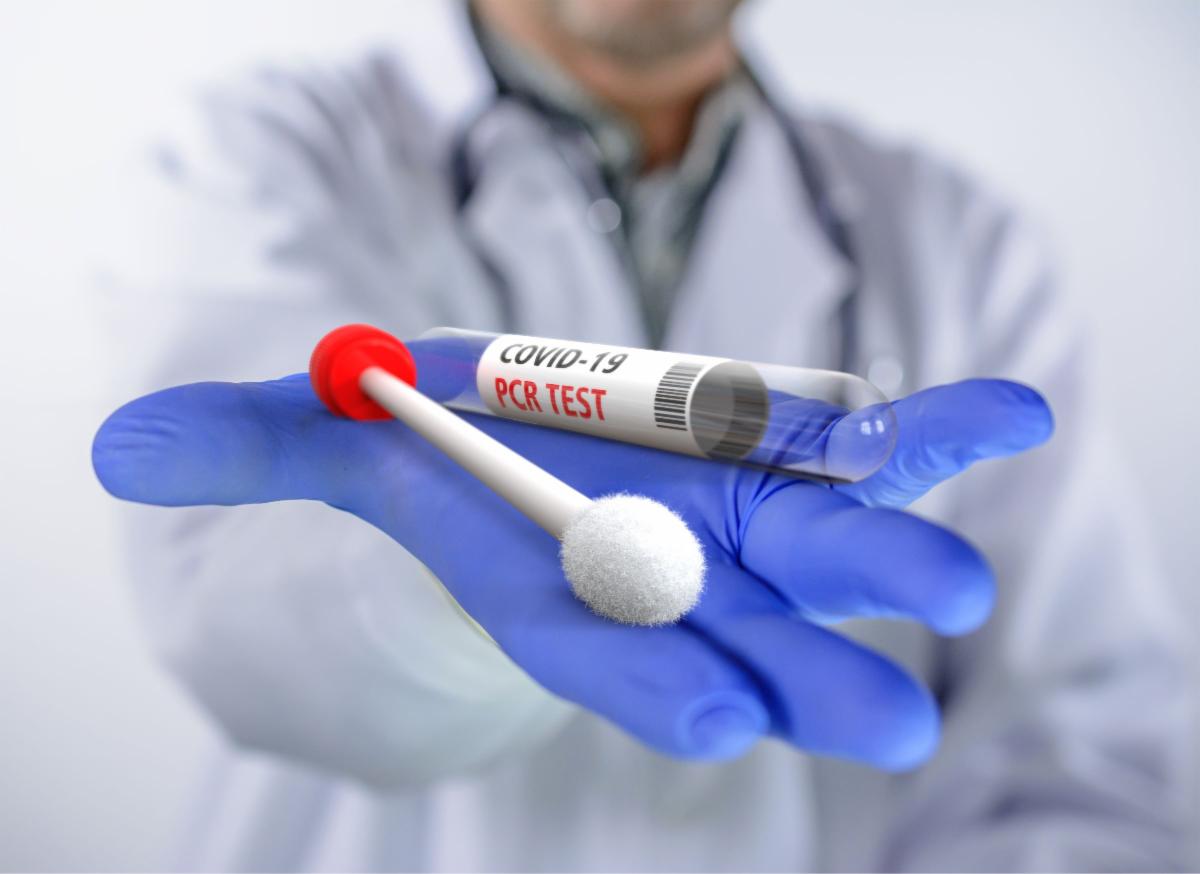
Sonora Quest Laboratories is offering free COVID-19 PCR testing to people without health insurance as part of the CDC’s ICATT (Increasing Community Access to Testing) program:
- Free PCR testing
- No insurance needed
- 50+ convenient locations
Uninsured patients can check to see if they qualify for free COVID PCR testing by completing a brief online screening questionnaire. If qualified, patients will have the option to schedule a COVID-19 PCR test sample collection at more than 50 Patient Service Centers throughout Arizona, including select car-side locations.
Patients with symptoms must wear a mask for their appointment. To check eligibility and schedule an appointment visit sonoraquest.com/covid-testing.
|
|
ADHS Offers Mobile Booster Clinics
COVID-19 Boosters in Long Term Care Facilities ensure your residents and staff are up to date with their COVID-19 vaccinations. Everyone 18 years of age and older is eligible for a single booster dose of the Pfizer or Moderna COVID19 Bivalent booster if it has been at least two months since they have completed primary vaccination or have received the most recent booster dose. These updated bivalent boosters provide better protection against COVID-19 caused by the omicron variant.
Interested in your RNs providing vaccinations? Contact your pharmacy partner for proper training and approval.
|
|
Emergency Backup Systems are Important
Have you ever experienced a cellphone outage due to too many people on the system at one time? It can happen, especially during an emergency! It is important to be aware of the limits of cellphone availability when a large number of people congregate in a comparatively small area. The reliability of cellphone service is usually not questioned (regardless of carrier) during small or localized emergencies. The loss of cell service during larger disasters is likely to occur. The location of a facility compared to the epicenter of a disaster can be a factor, depending on the nature of the emergency, natural (weather related) vs. individual caused (active shooter, fire, etc.) rural and urban areas could both be affected. Having an adequate/validated backup method of communicating is critical. This may include landlines, satellite phones, HAM Radios and intra-facility handheld radios.
Each facility must evaluate and secure a backup system that works for the facility. Coordinating with other facilities is also a valuable strategy.
|
|
Water Management Resources Available
An outbreak of Legionella in a long term care facility is a threat that every provider must acknowledge. The good news is that these types of infectious disease incidents are nearly 100% preventable. It is not rocket science. A good water management program will significantly reduce if not eliminate this potential in your facility. The EPIC Team has developed a library of resources that will give your maintenance and environmental teams the resources needed to help ensure a safe and healthy water delivery system in your building.
|
|
Sleep Tight- Don't Let the Bed Bugs Bite
BED BUGS! A phrase that providers never want to utter but knowing how to address this type of problem is a critical element of maintaining a safe environment of care in every long term care community. No matter how well your facility is maintained, outside sources including new admits into a skilled nursing facility can be the pathway to contamination. The good news is that there are ways the thread of bed bugs can be managed. The EPIC Team has developed a library of resources that will give your environmental team the resources needed to help to help protect your facility from bed bug infestation.
|
|
Check out our DR EPIC Helpline!
To submit questions, email the DR EPIC online helpline at EPIC@azhca.org. You can also call the DR EPIC phone Helpline at 602-241-4644 and we will assist you. or valuable infection prevention resources! Go to: EPIC.DisasterReadyaz.org to explore these tools.
|
|
Questions? Contact EPIC@azhca.org |This program is funded by ADHS
The Disaster Ready Emergency Preparedness Infection Control (DR EPIC) program provides education and technical assistance for skilled nursing providers throughout the state. Individual providers will need to exercise their independent discretion in how to apply this information and technical assistance to the unique operation of each facility. For that reason, a facility’s of its professional judgment and due diligence in utilizing the program for infection control and risk management practices is solely within the facility’s control for which it is entirely responsible.
Copyright 2022.
|
|
|
|
|
|
|