SW-Header.png
 

March/April 2023


Happy Spring! Days are getting longer, and the weather will eventually get warmer. The spring season offers hope and new beginnings. This newsletter highlights opportunities to plant, grow, and bloom with resources and strategies to support students. You will also find articles and stories highlighting Autism Awareness, Diversity, Equity and Inclusion and Family Engagement. 


The Student Wellness Department


Autism Acceptance Month

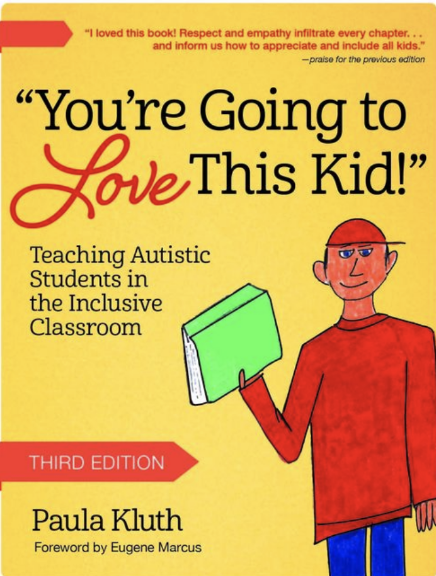
Book

In case you missed it, Autism Awareness month is more recently known as Autism Acceptance month. During the month of April, we can increase our efforts to raise and spread awareness, use language appropriate for autistic learners, focus on strengths, and spread kindness through inclusion support.


One resource that may be helpful in educating autistic learners is the strengths and strategies profile created by Dr. Paula Kluth. If we take the time to incorporate a tool such as this one, we are able to begin to understand how to better motivate and connect with autistic learners. Perhaps this new strategy can be added to your educator toolbox.


As we think about accepting autistic learners (learn about identity first language here), especially during this April focus month, we should also think about how we teach acceptance and extend learning to strengthen educational environments to be more inclusive. Can “being inclusive” be incorporated into our PBIS building-wide expectations? What observable behaviors might reflect this expectation in action? What opportunities are we providing to ensure that our students are learning about acceptance and making explicit progress in social inclusion?


So, where do we begin? I turn to Dr. Paula Kluth, consultant, author, advocate, and independent scholar, for what she calls "inclusion rules."


#1 Everyone is welcome

#2 See rule #1


To learn more about autism acceptance, check out the newest edition of this resource which “gives educators sensitive new ways to see autistic students and instantly useful strategies for teaching and welcoming them in general education classrooms.” 


In other news, a recent article, published January 2023 by Healthnews, shares some recent work by scientists who have developed the Autism Symptom Dimensions Questionnaire (ASDQ) — a new freely available autism screening and symptom monitoring questionnaire to assist in the diagnostic process.


Finally, on March 24, 2021, Ohio's 133rd General Assembly enacted House Bill 123, the "Safety and Violence Education Students (SAVE Students) Act". The SAVE Students Act was passed with the knowledge that student success is dependent on whether students feel safe and supported in school. As related to acceptance and fostering welcoming environments for all students, Ohio law now requires districts to include in health education for grades 6-12 at least one hour on social inclusion. Examples of approved, evidence-based programs are listed below.


APPROVED SOCIAL INCLUSION PROGRAMS


Start With Hello

Schools can register themselves on the program's web page to access program materials at no cost.


Botvin LifeSkills Training 

There are costs associated with this training.


7 Mindsets

There are costs associated with this training.

 
SW-Awareness-Campaigns.png
 

CLICK HERE for resources on:

  • Gender Equality Month
  • National School Social Work Week
  • Self-Harm Awareness Month
  • Say Something Week
  • National Drug and Alcohol Facts Week

CLICK HERE for resources on:

  • Autism Awareness Day
  • Autism Awareness Month
  • National Child Abuse Prevention Month
  • Month of the Military Child
  • National Youth Violence Prevention Week
 
 
SW-PBIS.png

Family Engagement Within PBIS


Parents and caregivers are the ultimate experts on our students, and while it is not always a simple endeavor, engaging families as true partners within our schools can have a profound impact on student success.


The Ohio Statewide Family Engagement Center and The Ohio State University College of Education have created planning tools for PBIS teams to consult when they are ready to partner with families. The Family Engagement Rubrics identify key areas pertaining to family involvement and include a progression of engagement, from Level 1 (emerging practices) to Level 4 (optimal practices). The areas to consider when evaluating your family engagement practices at Tier I are:


Communication

  • Are families informed about school activities in a number of ways?
  • Are feedback and ideas from parents and caregivers integrated into team planning?

Decision Making

  • Are family members a part of the PBIS team?
  • Is data gathered via surveys to obtain feedback from families?

Volunteering

  • Are families of all students invited to be active participants in PBIS activities?
  • Are leadership roles provided to family members?

Parenting and Learning at Home

  • Are families provided with tools for supporting positive behavior at home?
  • Do staff receive professional development on building trusting relationships with families?

Collaboration with the Community

  • Does the school build partnerships with community organizations that work with families?
  • Are educational offerings provided within the community?


While the list can be daunting, the resulting partnerships will have lasting impact. Some schools have found it helpful to form a family engagement team as a subcommittee of the PBIS team. The work of this group might include reviewing family survey responses, creating action plans, implementing strategies to create a welcoming school environment, and organizing family informational sessions. 


There are many helpful resources to guide PBIS teams in enhancing involvement of families at all levels. Here are just a few:


OSU Family Engagement Center 

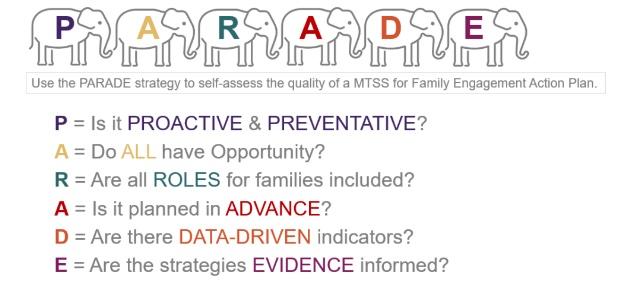
The visual below can be found on their website. Consider asking these questions when assessing your family engagement activities. 


Framework of Six Types of Involvement

School, Family, and Community Partnerships

PBIS - Family Engagement


Districts that put effort into engaging families see increased attendance, enhanced partnerships, and improved behavior, all of which lead to greater student learning and success. If you would like assistance with engaging your families, reach out to Carrie Sullivan, Family and Community Partnership Liaison at carrie.sullivan@escneo.org.


1 Boone, B., Pizzuti, A., Peachock, M., Wellman, M., Offredo, M., Jordan, E., & Adams, K (2018). PBIS: Tier I Family Engagement Rubric Guide. The Ohio State University, Columbus, Ohio.


SW-District-Spotlight.png
 

Garfield Heights City School District Celebrates Diversity

The Garfield Heights City School District is committed to creating and maintaining an environment which supports Diversity, Equity and Inclusion.  In addition to acknowledging and celebrating diversity throughout the district during their annual Diversity, Equity, and Inclusion Week each spring, district administration has recognized the importance of supporting their teachers and staff through professional development activities.  


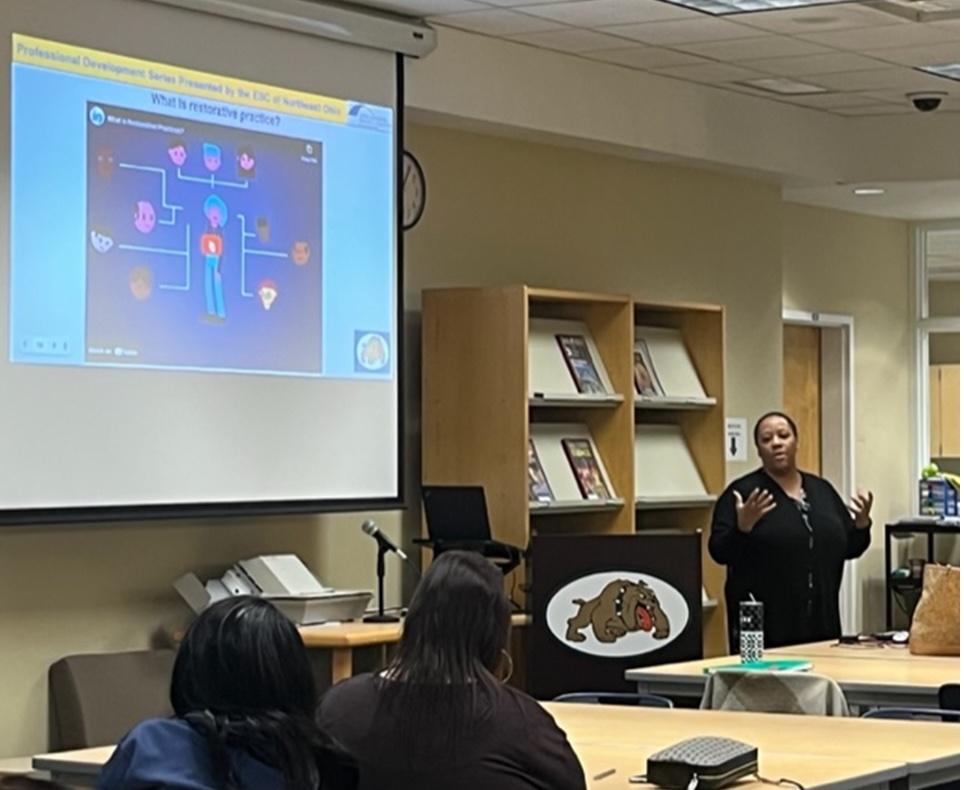
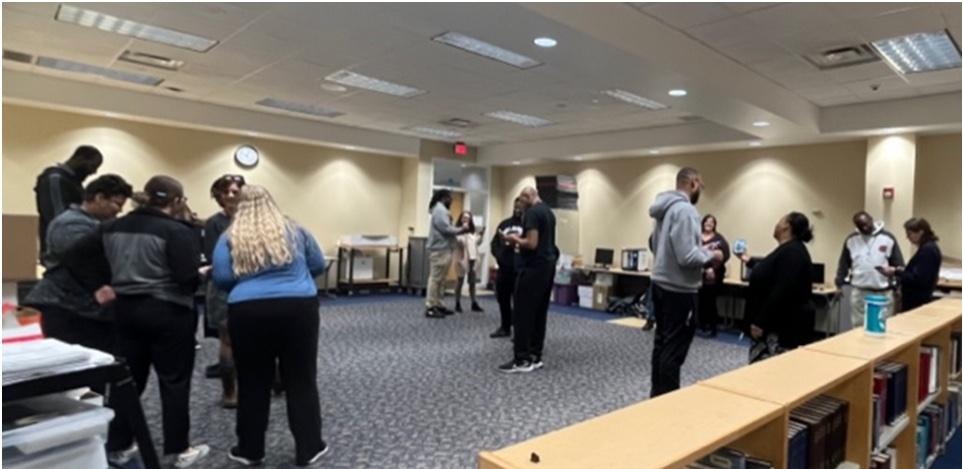
Consultants from the Student Wellness Department have been presenting a series of professional development sessions for Garfield entitled “De-Escalation and Conflict Resolution through the Lens of Diversity, Equity, and Inclusion.”  Session attendees have been provided with information and strategies to build their understanding in the following areas:  what unconscious bias is and how it impacts the way we interact with others, how different communication strategies and approaches positively and/or negatively impact an individual’s behavior, and how to implement effective strategies to assist with resolving conflicts.  The Student Wellness Department is appreciative of the opportunity to partner with the Garfield City School District in their efforts to build a culture which values and recognizes the differences of all members of their school community.  


Garfield Heights Staff Members are collaborating and making connections during the PD Session on February 13, 2023.  


SW-Upcoming-Trainings-V3.png

ESC of Northeast Ohio Events


Ohio School Threat Assessment Training

Offered Fall 2022 through the end of the school year


PBIS Tier 1 Overview: Supporting the Needs of the Whole Child in Early Childhood (OCCRRA approved course)

April 21

8:30 a.m. - 11:30 a.m.


PBIS Overview for Mental Health Professionals

April 21

Noon - 3 p.m.


PBIS Tier II

March 21

9 a.m. - 3:30 p.m.


Student Wellness On-Demand Webinars


School Counselor & Social Worker Network:

Ethical Conundrums

March 16

Noon -3 p.m.

Ethics Training

CEUs provided

Outside Events


National SAVE Promise Youth Club Summit

Sponsored by Sandy Hook Promise, this is a Summit planned by youth for youth

April 22, 2023

9:00 a.m. - 3:00 p.m.

North Ridgeville Academic center

 
SW-Additional-Resources.png
 

Crisis Text Line


Throughout Ohio, you can text

the keyword "4hope" to 741 741

to be connected to a trained

Crisis Counselor.


Data usage while texting the Crisis Text Line is free and the number will not appear on a phone bill with the mobile service carrier. People of all ages can use the Crisis Text Line.


More info can be found at:

crisistextline.org.

988 Suicide & Crisis Lifeline


988 has been designated as the new three-digit dialing code that will route callers to the National Suicide Prevention Lifeline (now known as the 988 Suicide & Crisis Lifeline), and is now active across the United States.


The previous Lifeline phone number (1-800-273-8255) will always remain available to people in emotional distress or suicidal crisis.


More info can be found at:

988lifeline.org


Alcohol, Drug Addiction & Mental Health Services (ADAMHS Board)

(216) 241-3400


Cleveland Rape Crisis Center

Call/Text: (216) 619-6192 or (440) 423-2020


FrontLine Service

(216) 623-6888


Journey Center for Safety & Healing

(216) 391-4357


National Alliance on Mental Illness (NAMI)

(800) 950-6264


National Alliance on Mental Illness (NAMI) -

Greater Cleveland

(216) 875-7776


National Domestic Violence Hotline

(800) 799-7233


Ohio Suicide Prevention Foundation (OSPF)

(800) 273-8255 


Substance Abuse and Mental Health Services Administration (SAMHSA)

(877) 726-4727


Facebook  Twitter