View as Webpage

NASA Applied Sciences | Space for U.S.

Message from the Director

For over two decades, NASA’s Applied Sciences Program has led the way in exploring and helping people use Earth observations to improve life on Earth. 


I’ve worked with NASA Earth Science and enabling applications of Earth science information since 2002. And it’s easy to say that it’s been the honor of my lifetime to work with everyone connected with Applied Sciences – as a Program Manager and especially as the Program Director. Together we’ve generated beneficial applications, developed capacity worldwide, influenced satellite missions, and developed smart practices about how to even do Earth science applications. Most importantly, we helped organizations apply insights from Earth science to achieve real impacts in people’s lives.


I’ve been most proud of the expansion we’ve enabled across a range of fields and organizations that now use Earth science information routinely. Along the way, people often asked me “What is my favorite application?” and I always replied “The next one.” Truly, hearing all the examples and learning about all the creative uses that we didn’t know all those years ago have been the real highlights. 


I am moving on to a new position with NASA’s Earth Science Division, working at the division level to lead strategic engagement efforts. My colleague and friend Tom Wagner is coming on as the new ESD Associate Director for Earth Action, encompassing the Applied Sciences work and more. He and Deputy Emily Sylak-Glassman will lead the direct efforts to advance Earth science applications. They bring a lot to their roles, and I’m pleased to pass the proverbial baton to them. 

As the outgoing Applied Sciences Program Director, I want to share how proud and appreciative I am of everything this team has done and excited for everything you all will do. Thanks for your service, dedication, and friendship!


Lawrence Friedl

Director, NASA Applied Sciences Program

Close-up of Lawrence Friedl’s face looking at the camera with a friendly expression and green trees and a blue sky in the background.
Program Update
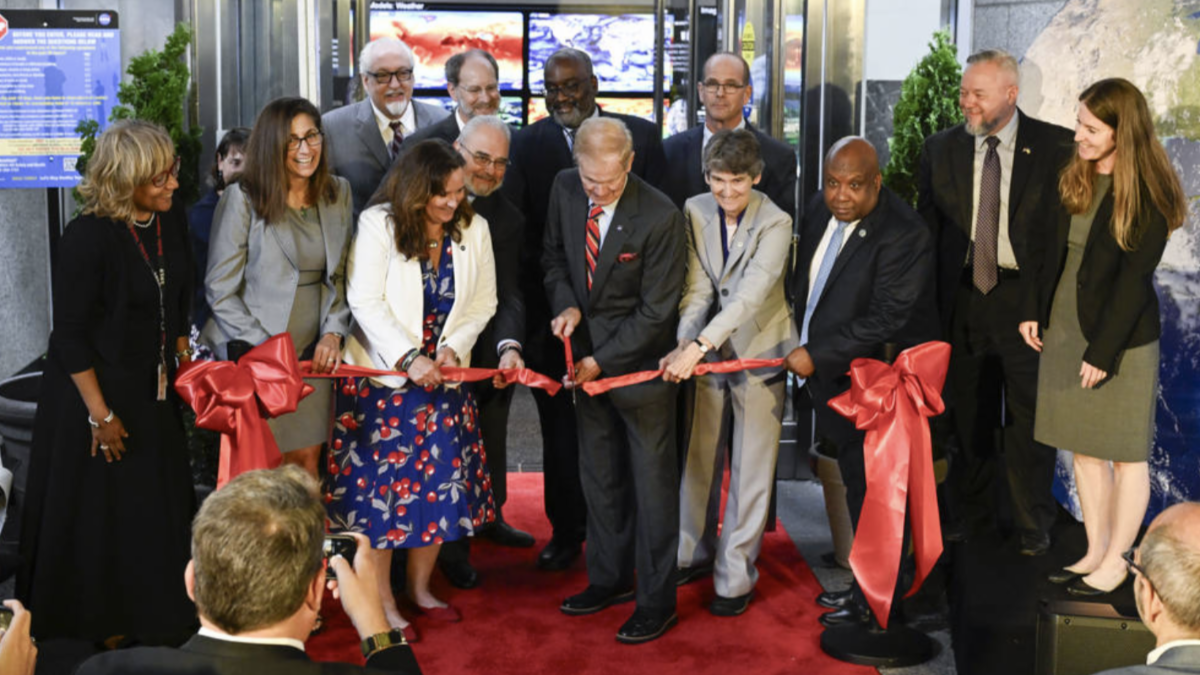
Surrounded by 12 colleagues, Bill Nelson, NASA Administrator, stands in the center of the red carpet, using a large pair of scissors to cut the ribbon at the Earth Information Center's ribbon-cutting ceremony.
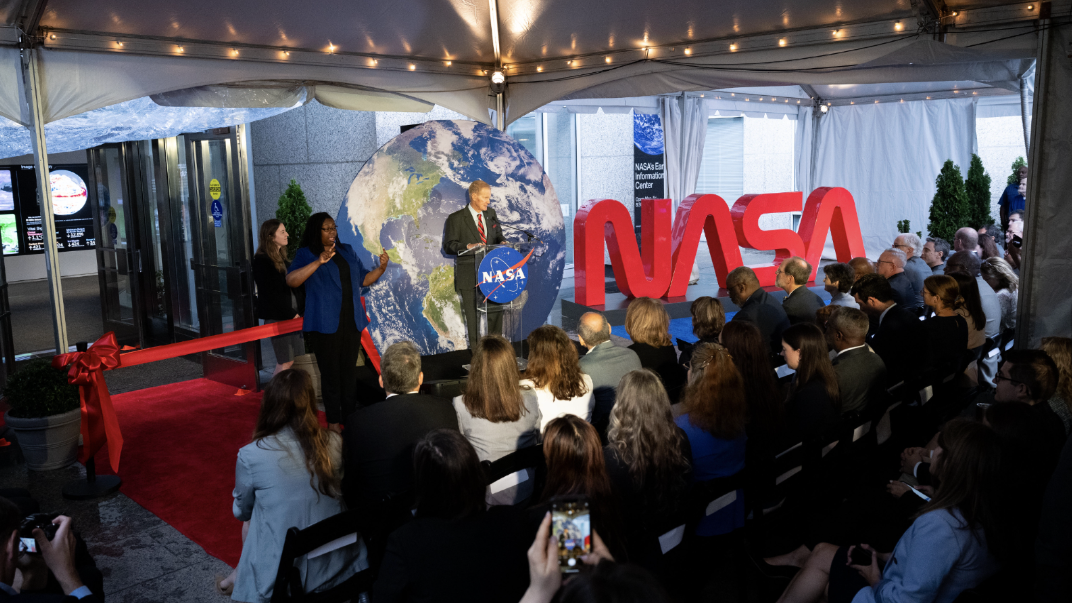
Beneath a white tent in front of the NASA lobby doors and the Earth Information Center, NASA Administrator Bill Nelson stands behind a NASA podium, with a round Earth behind and a NASA worm logo beside him. There is a sign language interpreter signing nearby and a seated audience.

We’re excited to announce the grand opening of NASA’s Earth Information Center at NASA headquarters in Washington, D.C. 


The Earth Information Center brings the impact of NASA’s Earth science to life, showcasing how NASA sees our home planet and aids decision making for Earth’s environment and climate. Created with founding partners FEMA, EPA, NOAA, USAID, USDA, and USGS, the Earth Information Center is an immersive experience that includes live data and research conducted by NASA’s centers and government and industry partners. 


NASA Administrator Bill Nelson cut the ribbon during the opening event. Speakers included Karen St. Germain, director of NASA’s Earth Sciences Division, and Dwane Roth, a farmer from Kansas who works with NASA to track water use. Brad Doorn and Susan Anenberg from the NASA Applied Sciences Program attended.   

[ EXPLORE THE EARTH INFORMATION CENTER ]

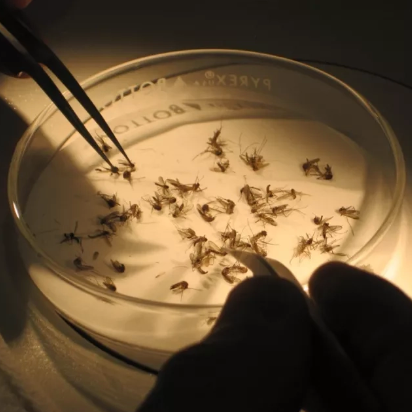
Using tweezers, mosquitos in a petri dish are examined under a bright light.
 Icon of a heart with a line through it inside a purple circle.

How NASA Helps Fight Mosquitos from Space 


Mosquitoes are sometimes hard to spot, even with the human eye. But NASA can help track these disease-spreading insects with satellite data. 

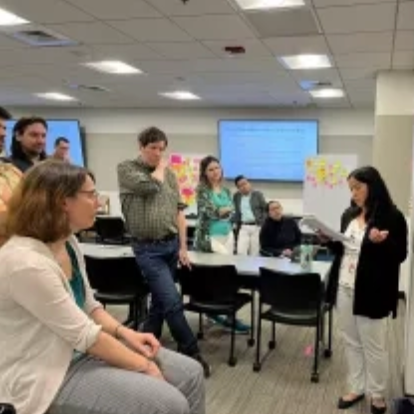
Nine participants meet in May 2023 to discuss potential program elements at the first CONVEI workshop. Around the room are large pieces of white paper filled with colored sticky notes and brainstorming ideas.

New Consortium to Create Innovative Methods to Value Earth Observations 


From a farmer deciding when to water their crops, to emergency response agencies sending resources after a natural disaster, NASA Earth observations help decision makers protect the planet and public health. Creating new ways to value and communicate these benefits is the goal of the new Collaborative Network for Valuing Earth Information (CONVEI). 


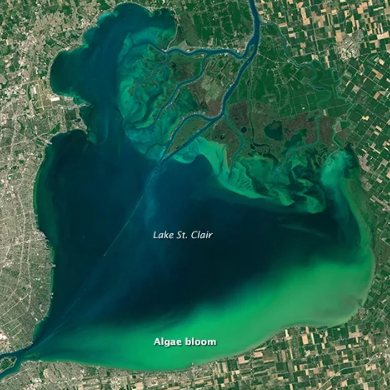
Arial view of Lake St. Clair near Detroit, Michigan. Most of the lake is dark blue, with some green swirls and a thick green band labeled algae bloom along the south edge.

Tick Tick Bloom Challenge Winners 


Teams as far-flung as China, North Carolina, and Kenya have won a challenge to help NASA develop new ways to find and track harmful algae blooms. 

NASA Solicits Proposals for the GLOBE Program Implementation Office


NASA is seeking proposals for the GLOBE Program Implementation Office (GIO), which supports the Global Learning and Observations to Benefit the Environment (GLOBE) Program – an international initiative promoting environmental science and education.  


The selected organization or team will collaborate with NASA, and funding of approximately $3.9-4.4 million per year for five years is expected to be awarded. Eligible U.S.-based organizations, including educational institutes, STEM centers, foundations, and professional societies, can submit proposals.  


For more information, visit NASA NSPIRES or contact Amy Chen at amy.p.chen@nasa.gov

[ LEARN MORE ABOUT RUNNING THE GIO ]

[ VIEW ALL APPLIED SCIENCES EVENTS ]

Want to get Applied Sciences Program updates straight to your inbox? Sign up now!

For more information, visit https://appliedsciences.nasa.gov/