This edition of the Earth Matters newsletter is brought to you by the Pierce County Environmental Education Program. Learn more about us at PierceCountyWa.gov/EnviroEd. | A Sustainable Back To School Season | |
Back to school time can be a refreshing restart for many of us. It’s also the perfect time to adopt new habits that can make our schools and communities better places to live and learn.
Low-waste lunch
Packing a lunch, with the student’s involvement, is a simple way families can reduce their environmental impact. By making a few small changes like buying in bulk and using reusable containers, parents can help their kids build lifelong habits that are better for the planet – and often healthier too. Additional tips and resources can be found on the EPA website for students. Don't miss these Ten Tips for Packing Waste-Free Lunches!
| |
Sustainable school supplies
Back to school shopping often includes a long list of new supplies, many of which are plastic, disposable, or poorly made. To reduce waste and support sustainability, families can start by taking inventory of what they already have at home. Often, supplies from last year can be reused. When new items are needed, look for durable, refillable, or recycled options, such as refillable binders, recycled paper, refillable pens and markers, or cloth pencil cases.
| |
Fast fashion
A new school year often comes with pressure to buy new clothes, but this rush can lead to purchasing fast fashion – cheaply made items that quickly wear out and contribute to pollution and textile waste.
Instead of buying trendy outfits that may only last a season, families can focus on sustainable alternatives like shopping secondhand, organizing clothing swaps with friends or classmates, or choosing high-quality basics that can be mixed and matched.
Teaching kids to value durability, personal style, and environmental impact over trends helps reduce waste and promotes more thoughtful consumption. Plus, it can save money and make back-to-school shopping more meaningful. For more ways to avoid fast fashion, check out local organization The Chayah Movement.
| | Local Youth Take Environmental Action | | |
Our Environmental Education team worked with 425 7th grade science students and their teachers this spring who were motivated to take action to make their community, and their environment, better for everyone.
Through the Community Action Projects for the Environment (CAPE) process, youth from the University Place School District learned about local environmental issues, selected one to explore further, and proposed solutions to local government or community organizations.
“The CAPE program structures the lessons for students to create a powerful pitch to help our local environment," said science teacher Mabruka Roberts. "Teachers were able to easily facilitate discussions and guide each student in this process. When students take ownership, they are empowered to be better stewards for sustainability and our community.”
Students explored topics like pollutants in stormwater runoff, cars idling in pick up/drop off lines at school, and excess nitrogen from fertilizers increasing algae blooms that can harm humans, wildlife, and pets.
Proposed solutions included community outreach and awareness campaigns, restrictions on idling or substances that make contact with Puget Sound, as well as reaching out to city council. All projects were chosen by students, research-based, and used student voice.
If you are interested in learning more about how to incorporate the CAPE process into your classroom learning, please contact our Environmental Education team.
| | |
Where It's Hot and Why It Matters:
Mapping Urban Heat in Pierce County
| | |
It’s hot and getting hotter – we can all feel it. In the United States, extreme heat kills more people annually than any other weather hazard. By the 2050s, Central Pierce County may see up to 40 additional extreme heat days (temperatures of 90 degree or higher) each year.
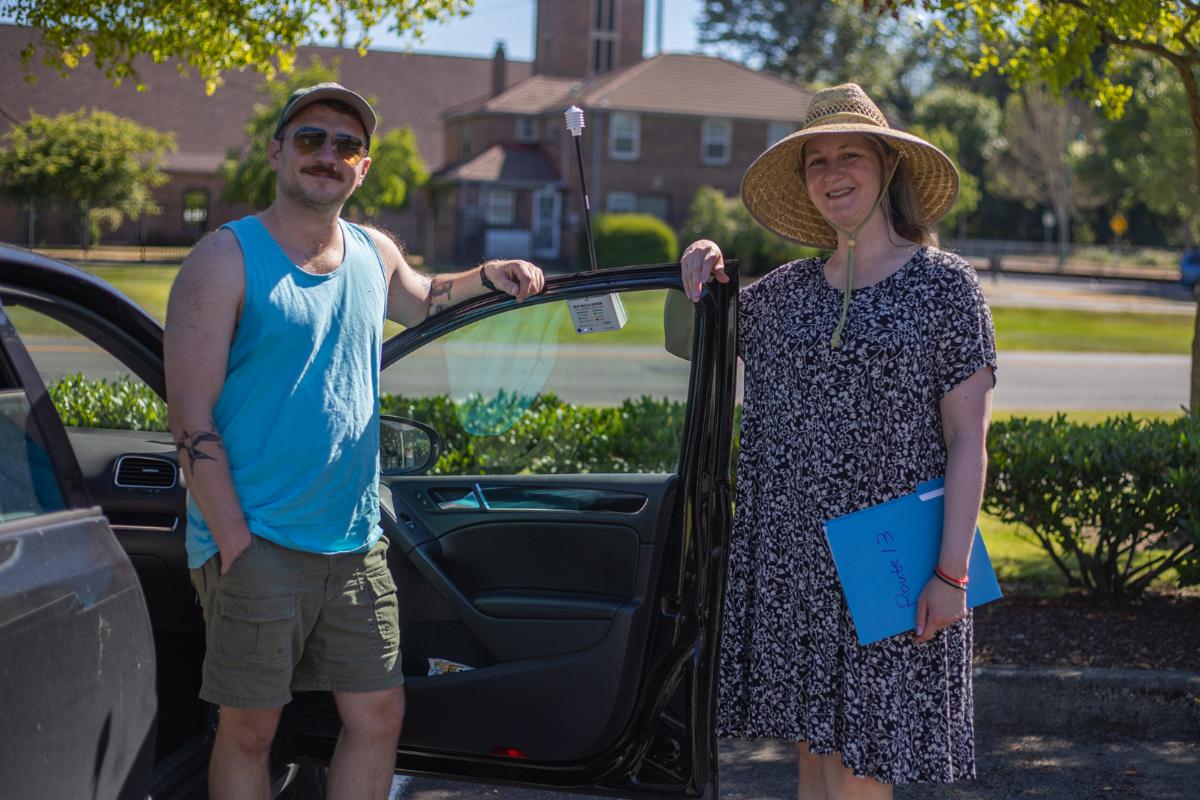
To track heat patterns, a collective of County agencies, cities, educational institutions, and nonprofits teamed up with the National Integrated Heat Health Information System (NIHHIS). On Aug. 4, 2024, a high-heat day, volunteers recorded real-time temperatures across the County, focusing on schools, parks, and community centers.
What we found:️
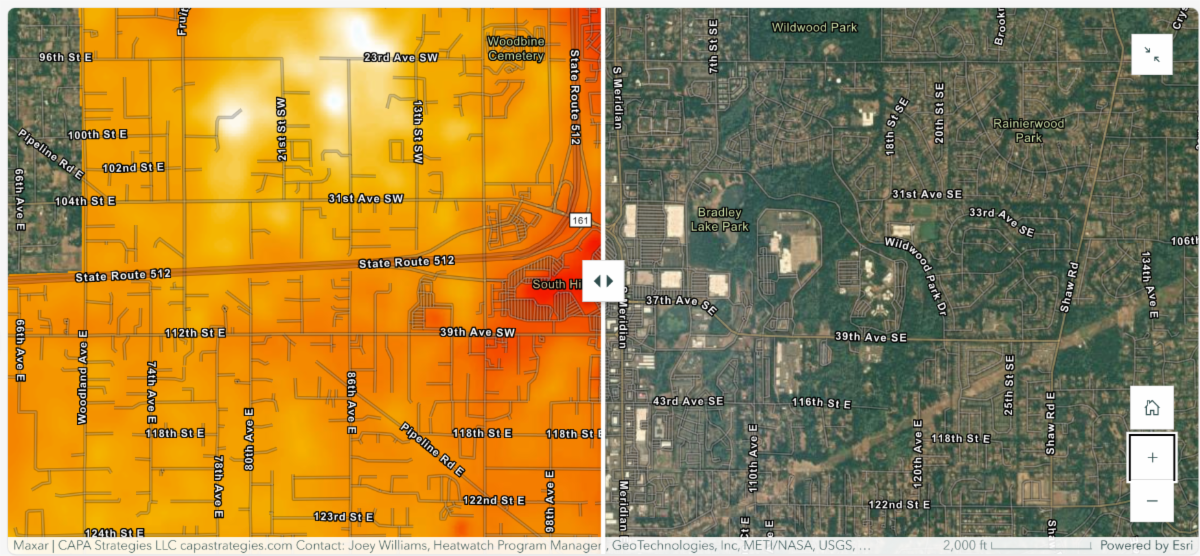
- Afternoon temperatures can vary up to 10°F depending on nearness to shoreline, human activity, building density, and tree canopy.
- Urban areas get and stay hotter, sometimes not even cooling down overnight.
- Areas with more trees and plants cool off more quickly. Thank you, nature!
| | See for yourself: With this data, we built an interactive hub where you can see heat patterns in your neighborhood and find resources for staying safe during heatwaves (like cooling center locations and home weatherization programs), plus ways to get involved in climate action locally and beyond. | |
Top photo: Volunteers getting ready to collect temperature data on Aug. 4, 2024. Photo by Julia Wolf.
Bottom photo: Evening temperature (7-8 p.m.) in South Hill, Wash.
| | |
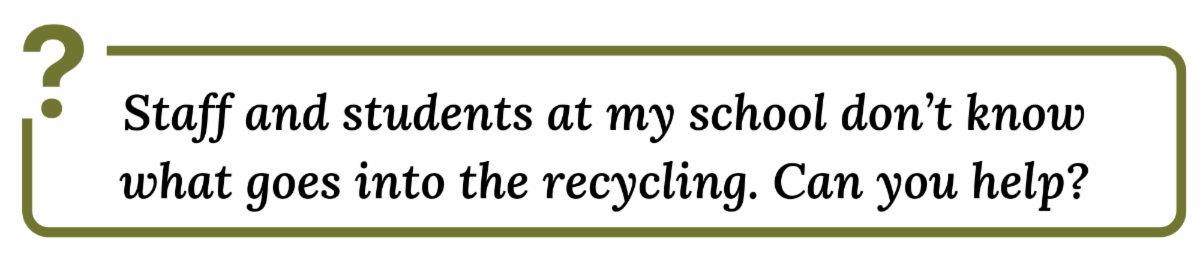
Absolutely! Contact us and we will visit your school to understand how your school’s recycling program works.
We can provide tools like posters for every classroom showing what goes in the recycling and what belongs in the trash and up to 10 internal recycling bins to improve your internal collection system. We’ll even come to a staff meeting to explain what goes in the recycling bin and what goes into the garbage in Pierce County! Learn more about our school technical support program here.
Do you have a recycling question? Send it to us at PCRECYCLE@PierceCountyWa.gov. We’ll send you a direct response and your question may appear in a future newsletter!
| | Spend Your "Autumn in the Wild" | |
Explore nature through art, science, and service with our "Autumn in the Wild" series!
Learn to identify local trees, create nature-inspired artwork, and give back to the land through a community restoration project. Discover how outdoor experiences can be both fun and meaningful this fall!
Visit PierceCountyWa.gov/EarthMattersSeries to register.
| | | |
The Art of Noticing
5:30-7 p.m. Sept. 18
Meridian Habitat Park in South Hill
| | | |
A Habitat Walk Through Flett Creek
5-6:30 p.m. Sept. 25
Flett Creek in Lakewood
| | | |
Forest to Yard: Planting and Protecting Trees
10 a.m. to noon Oct. 4
Orangegate Park in Tacoma (Summit-Waller)
| | | |
Forest to Yard: Planting and Protecting Trees
10 a.m. to noon Oct. 11
Sprinker Recreation Center in Parkland
| | |
Read with us:
Watch with us:
Listen with us:
Do with us:
-
Aug. 9, 10:30 a.m. to noon, Wapato Park: Caminata de Atención Plena y Día de Bienestar | Bilingual Mindfulness Walk and Wellness Morning.
-
Aug. 13, 6-7:30 p.m., South Tacoma: Join Downtown: On the Go for a walk through South Tacoma during their "South Tacoma in Focus: Voices from the Neighborhood" walk.
-
Aug. 16, 9:30 a.m. to 4 p.m., Tacoma Narrows Airport: Explore the airport from the inside during Tacoma Narrows Airport Day.
-
Aug. 21 and Aug. 28: We are partnering with the Graham Pierce County Library branch to offer these classes:
-
Canning Basics, 5:30-7 p.m. on Aug. 21.
-
Freezing. Dehydrating, Fermenting, and More! 5:30-7 p.m. on Aug. 28.
-
Aug. 24, 3-5 p.m., Puyallup Tribal Housing Gymnasium: Community Resilience Open House Resource Fair.
-
Aug. 24, 4-7 p.m., Steilacoom: Attend the free, family-friendly 12th Annual Steilacoom Drive Electric Festival.
Throughout August:
- If you live, work, or play in Parkland, we want to know how you travel around. Please take our survey: Ride Together Parkland.
-
Classes from the WSU Master Gardeners: August’s schedule includes veggie gardening, scarecrows, and compost essentials.
-
Fix-it Nights at the Tacoma Tool Library are held from 5:30-7:30 p.m. every Thursday.
- Explore the outdoors with the free Agents of Discovery app during the Puget Sound Explorers Campaign, happening through Aug. 31. Kids can complete fun, location-based challenges on Pierce County trails (or other local, participating trails) – no data or WiFi needed. Finish at least three missions this summer to earn a prize from Sprinker Recreation Center!
|
| | | |