|
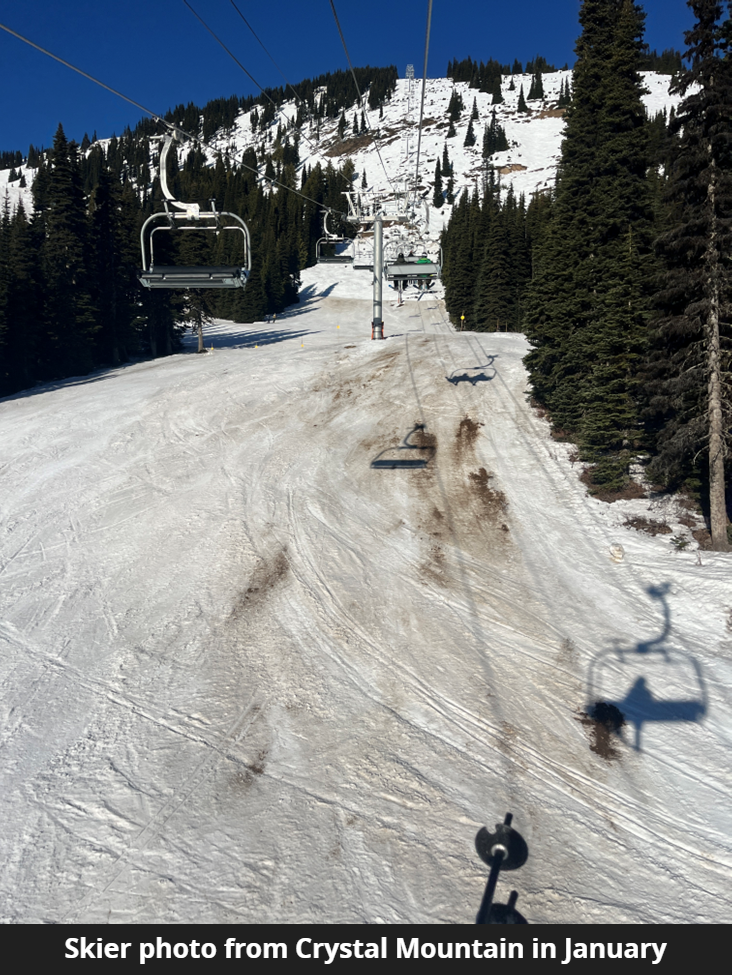
A record warm winter is having severe impacts on this year’s snowpack and winter recreation.
It will come as no surprise to Pierce County residents who enjoy snow sports that Washington’s 2026 mountain snowpack is significantly below average. At the end of January, statewide snow water equivalent (SWE), which is the amount of water stored in snowpack, was at just 59% of the median—marking the fourth‐lowest level on record—primarily driven by record warmth so far this winter.
As a result, most Cascade basins report just 30–40% of typical snowpack this time of year. For skiers and snowboarders, these conditions have translated into a disappointing season so far. Many resorts have struggled to open, with some relying on isolated storm events or snowmaking. There is still hope for the winter season. Washington’s snow season typically reaches its peak from February into March. However, if warmer-than-average temperatures continue, it may be challenging for this year’s snowpack to fully recover.
Locally, when ski resorts cannot operate at full capacity, it can impact not only resort employees but also local small businesses, restaurants, lodging providers, and service workers who depend on winter tourism. The lack of a ski season hurts our winter economy by reducing overall spending in the area. This in turn lowers the amount of sales tax collected in Pierce County, impacting funding for essential services.
Snowpack in the Cascade Mountains has decreased by about 25% between the middle of the 20th century and 2006, and these declines are projected to accelerate due to climate change. Models project about a 40-60% decrease in spring snowpack, on average, by the 2080s. Declines in snowpack will decrease water supply in the summer and will continue to impact winter outdoor recreation opportunities – having adverse effects on our communities, ecosystems, and agriculture.
Want to read more? Check out these resources:
|