|
Here’s What I Did:
I informed the château's chef well in advance about my food sensitivities. They prepared separate meals for me, usually excluding the sauces. Although I knew that even gluten-free options might not be entirely safe due to the corn base, which can be difficult to digest, I decided to try them.
I had heard that some people with wheat sensitivities in the U.S. do better in Europe because of different farming practices and the ban on GMOs. So, I sampled a bit of wheat but quickly realized it didn’t agree with me. Rather than jeopardize our vacation, I chose to avoid it altogether.
As a result, I ate very little during our stay in France, which meant I was one of the few who came home lighter than when I left!
Mindset and Support:
I worked diligently on my mindset, focusing on accepting that I couldn’t eat what everyone else was enjoying. I’m fortunate to have a supportive husband who goes above and beyond to make me feel comfortable and relaxed. My mindfulness and HeartMath tools were invaluable in helping me shift into a calmer state, balancing my brain waves and nervous system.
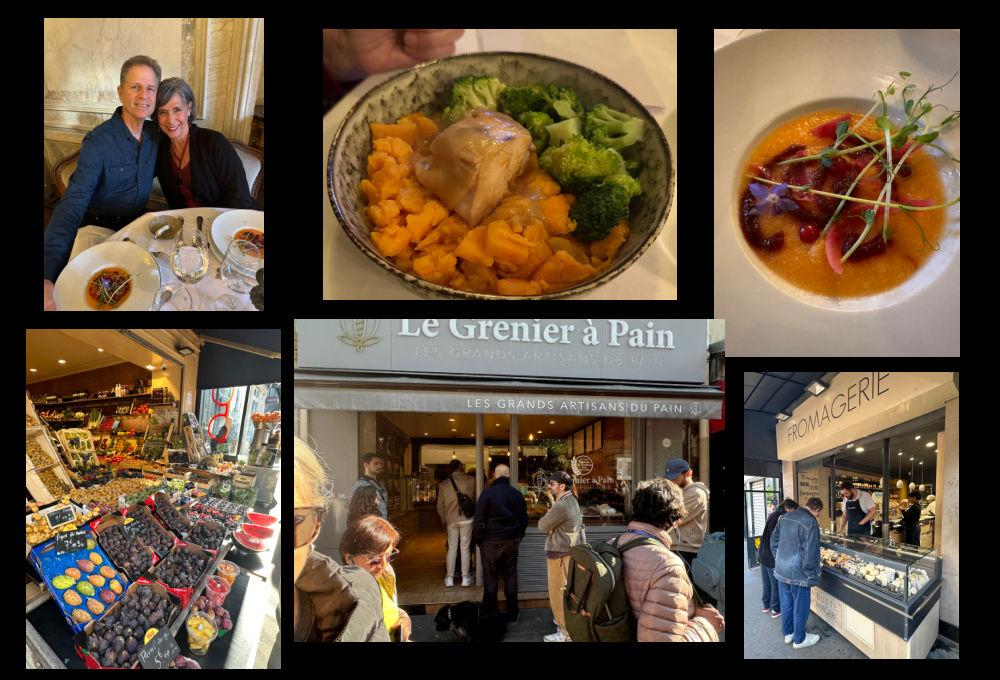
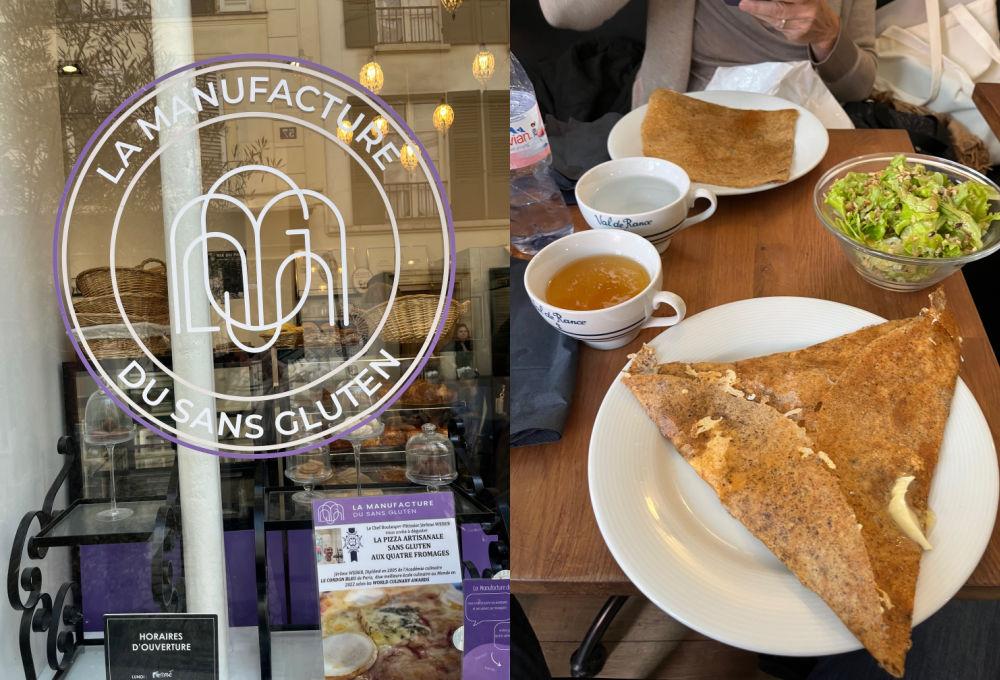
While in Paris, Mark and I made it a priority to search for places offering gluten-, dairy-, and sugar-free options. It became quite amusing when we took Ubers to locations that either no longer existed or were closed. Fortunately, we did find an incredible, fully gluten-free bakery and a crêperie that served buckwheat crêpes. (see above picture)
Buckwheat in France:
Buckwheat has been grown in Brittany, France, for hundreds of years and is used to make "galette." Despite its name, buckwheat is not related to wheat and isn’t even a true grain—it’s a pseudo-grain. It’s an excellent source of fiber, protein, magnesium, copper, and manganese, as well as a good source of phosphorus, niacin, and riboflavin.
Lessons Learned:
One of my biggest mistakes was not reading labels carefully. At one point, I craved chocolate, so we bought what we thought were gluten- and dairy-free chocolate bars from a neighborhood market. Later, we realized they were labeled as "may contain gluten and dairy." This is when we discovered that Google Translate could be used to take a picture of labels and signs, translating them on the spot—an incredibly useful tool!
My Overall Experience:
I’d give myself a B- on how I managed my gut during our trip to Europe. What would I do differently? I’d research food differences more thoroughly before traveling, and perhaps do a complete fast before and after the journey. While I did a semi-fast, I believe a full fast might have been more helpful. Returning home with COVID meant I was fasting anyway, as all I could manage was soup for a week.
I’m not ready to give up on overseas travel entirely, but I’ve adjusted my expectations. I understand that there will be challenges with my gut, both during the trip and after I return. I hope this has been helpful.
My deep knowledge, training and experience translate into a great coaching experience for you if you need help navigating challenging gut issues. I have recently joinined up with a Dr. Hiba Georges to offer my services as part of her overall virtual medical practice. You can check her out here.
|