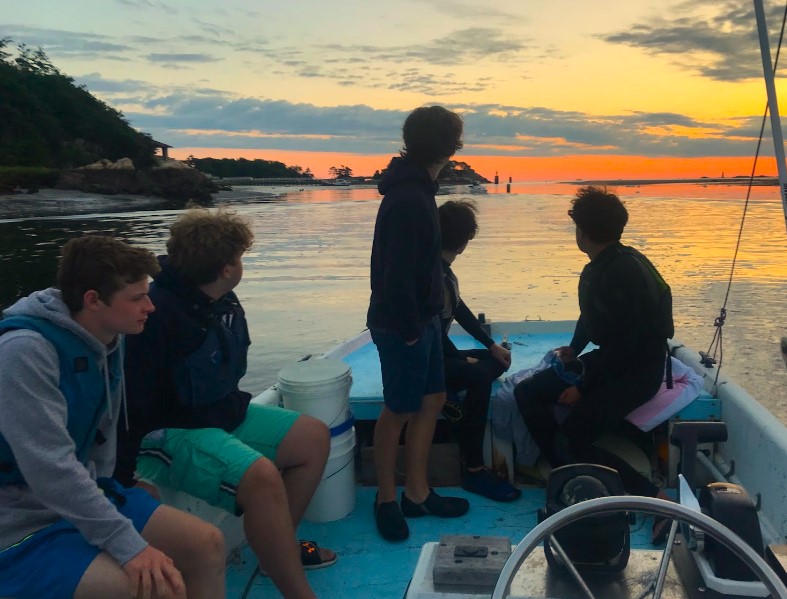
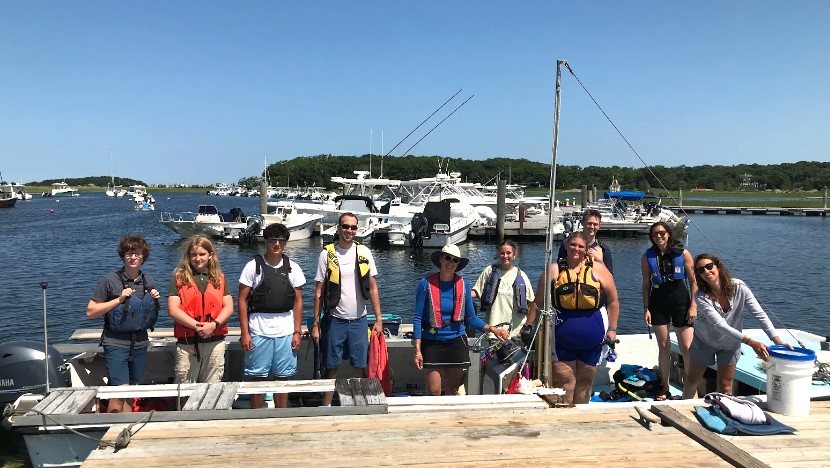
CSCR students Thomas Guinan and Noah Shepard of Scituate High School, Theo Gurtz of Cohasset Middle School, Charlie Whinnery of Nuvu School, and Finn Yemini of Cohasset High School look toward the distant eelgrass site, setting off at dawn to collect eelgrass samples for their experiment on a low tide dive. Photo by Susan Bryant, CSCR. | |
|
CSCR Eelgrass Research Team
Recognized at the State Science Fair!
| |
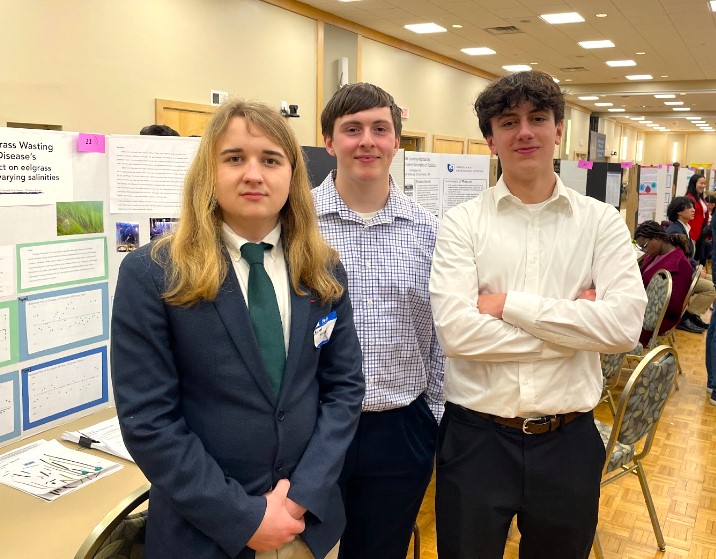
Cohasset High School’s Maxwell Fernald, Christian Bunge, Finn Yemini at MSEF Region V, Photo by Jack Buckley | |
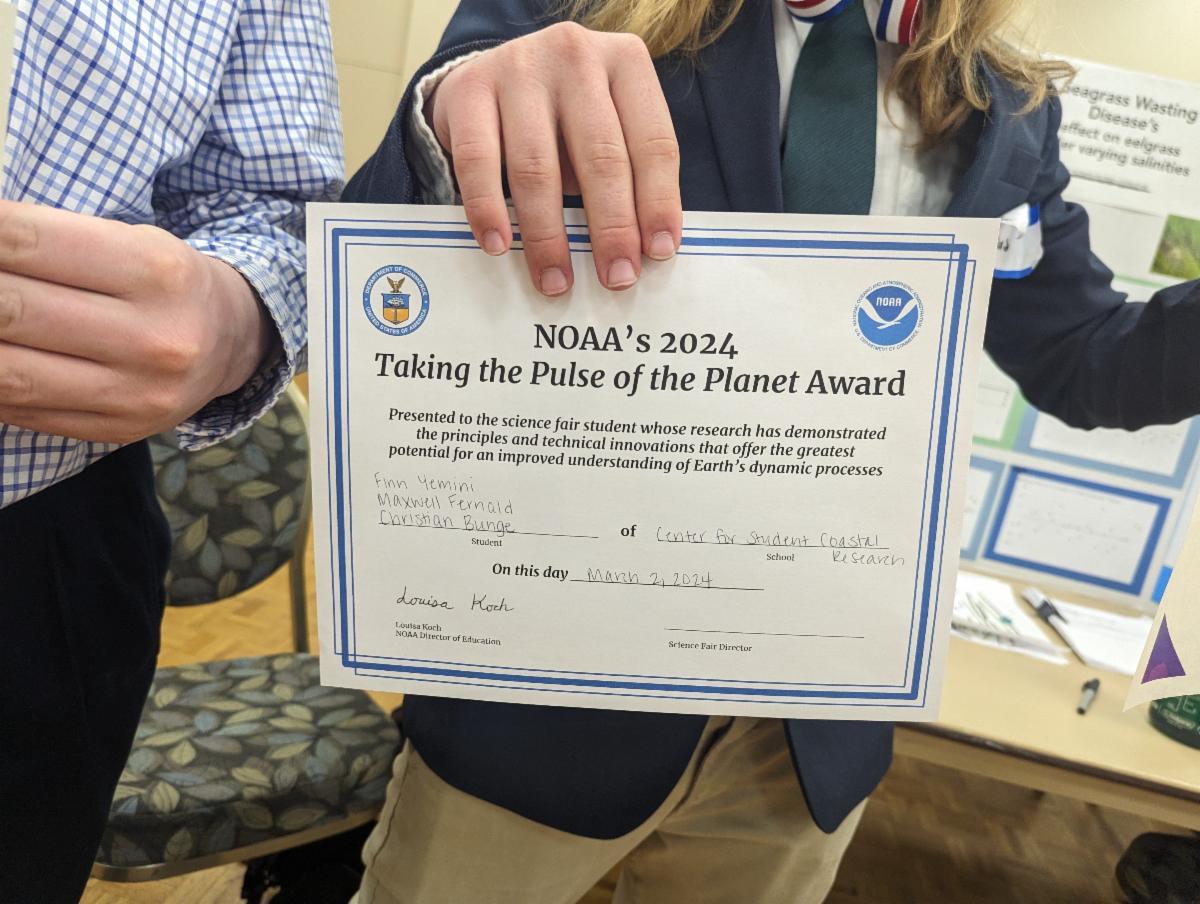
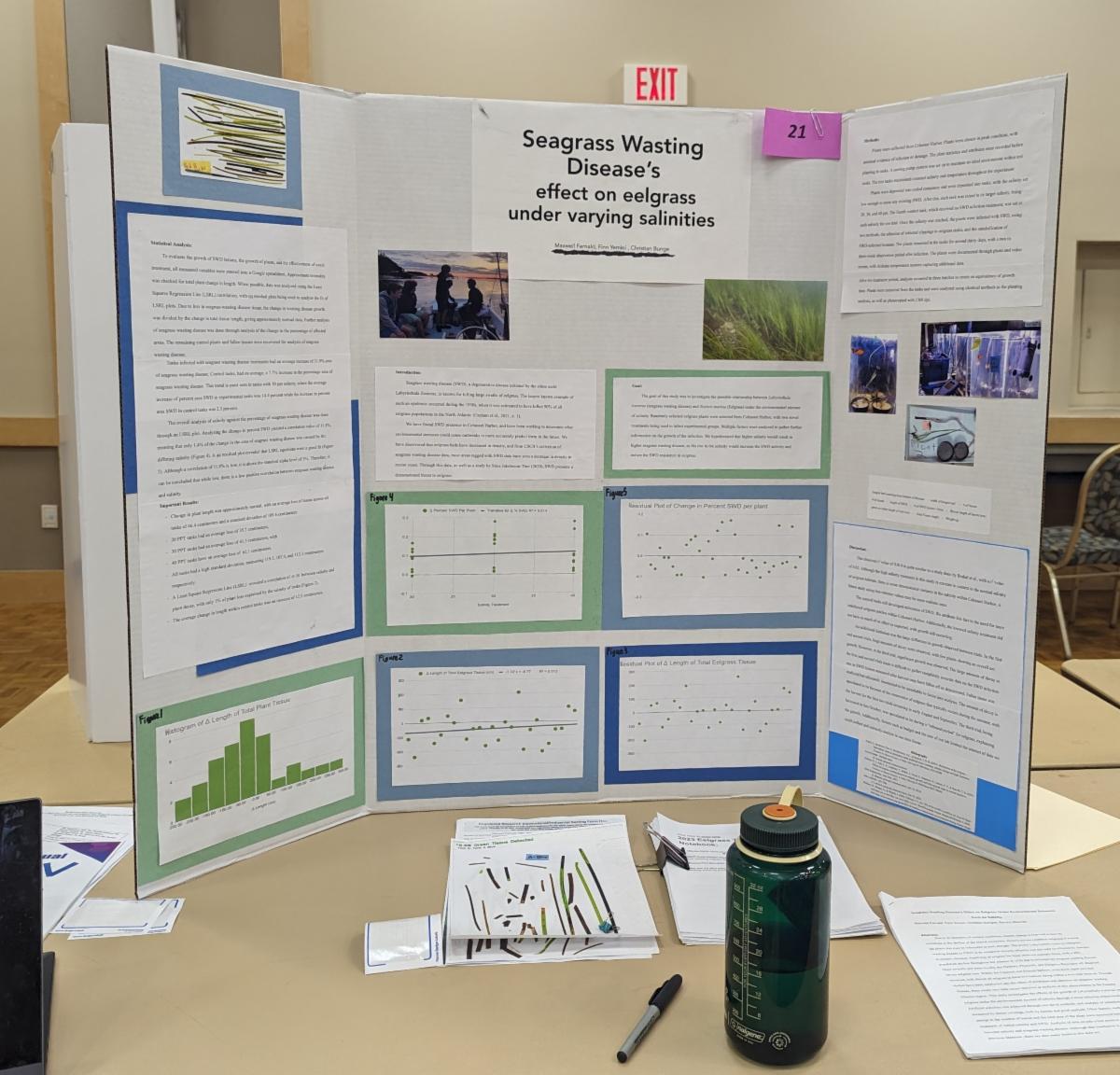
Maxwell Fernald, Finn Yemini, and Christian Bunge presented their research on Eelgrass and Seagrass Wasting Disease (SWD) at the Region V Massachusetts Science and Engineering Fair (MSEF) held Saturday, March 2, at Bridgewater State University. The students’ experiment explored the impact of varying ranges of salinity on the growth of SWD, a devastating infection responsible for wiping out eelgrass beds throughout Massachusetts and the Gulf of Maine. The team’s research paper, poster, presentation, and conversations with MSEF judges earned 3rd place honors as well as special recognition from NOAA (National Oceanic & Atmospheric Administration). This qualifies the team to advance to Gillette Stadium for MSEF’s statewide round of competition on April 5th, 2024. | |
Congratulations to the team! | |
|
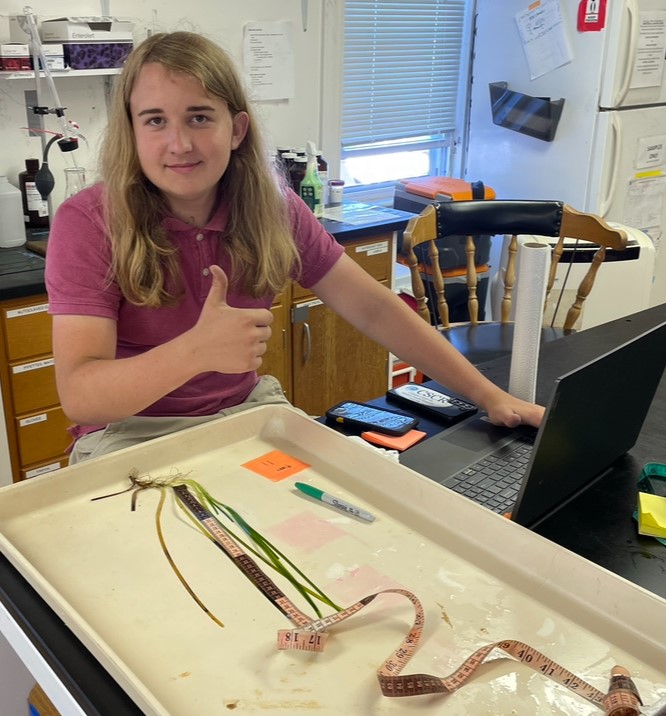
For over a decade, teams of CSCR students have been snorkeling in the eelgrass beds, taking video footage with GoPro cameras, examining sediment samples, logging data about the density and health (length of shoots, presence of SWD, etc) and visualizing the location and extent of eelgrass with Geographic Information Systems (ArcGIS) tools. Eelgrass has been a focus of study because of its unique role in our estuaries: eelgrass meadows provide habitat for a variety of organisms, sequester carbon, and mitigate wave action, among other ecosystem services. Concern about the health of the eelgrass beds in Cohasset and Scituate waters was growing, however, as students noticed the extent of healthy meadows was diminishing.
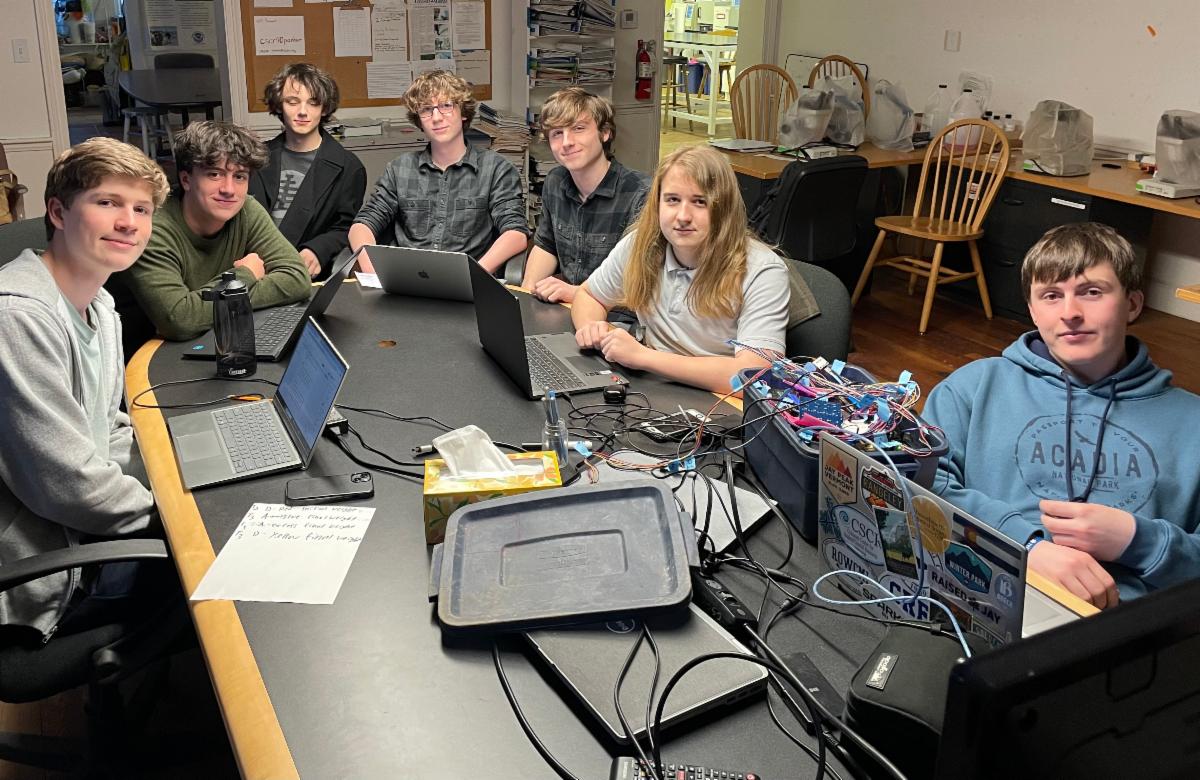
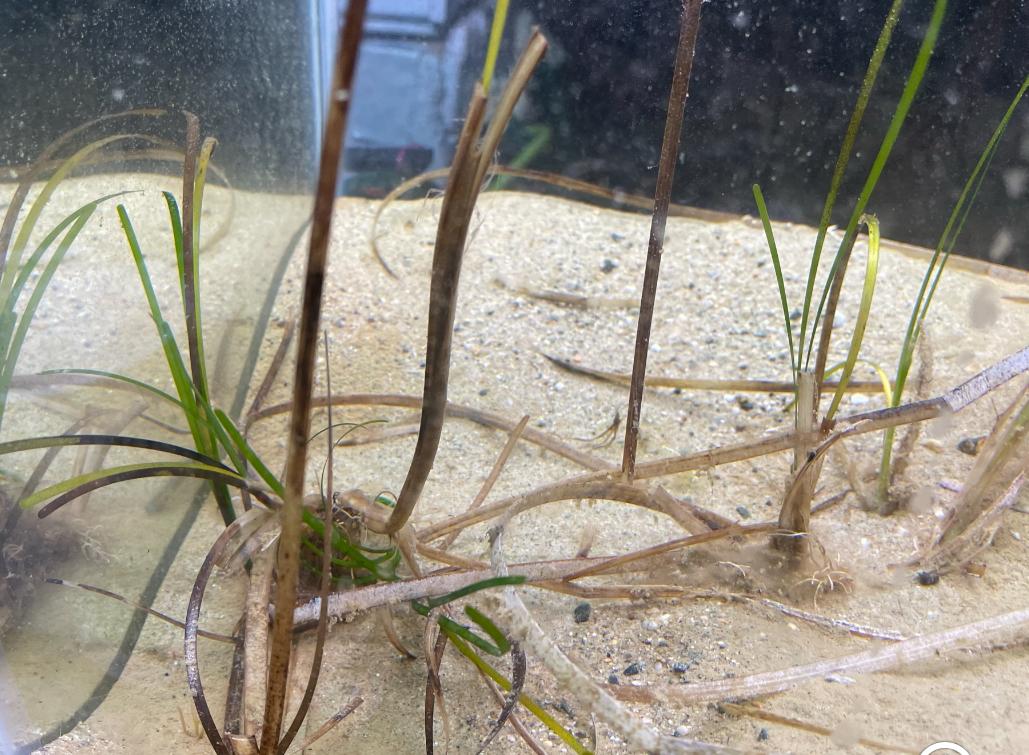
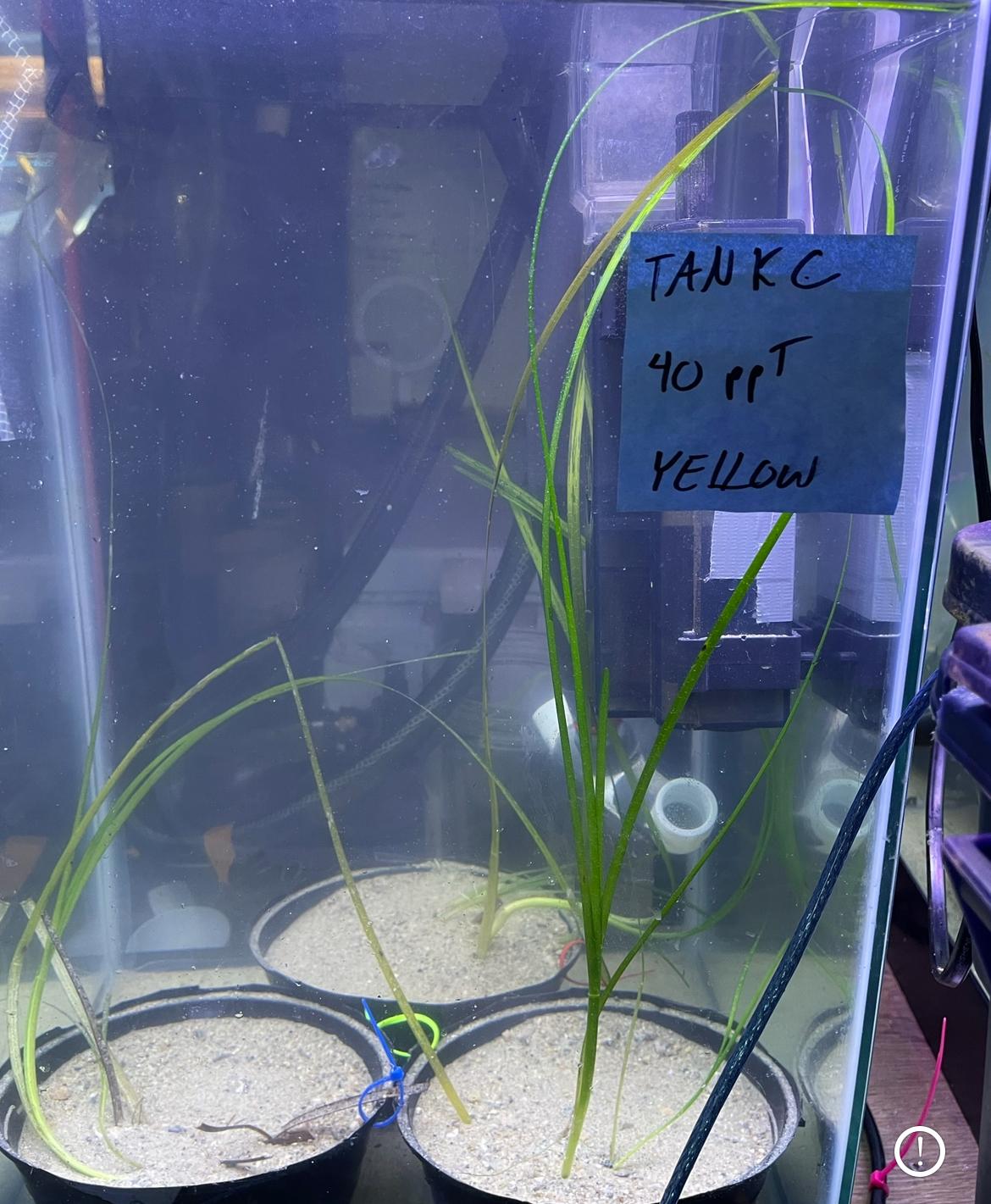
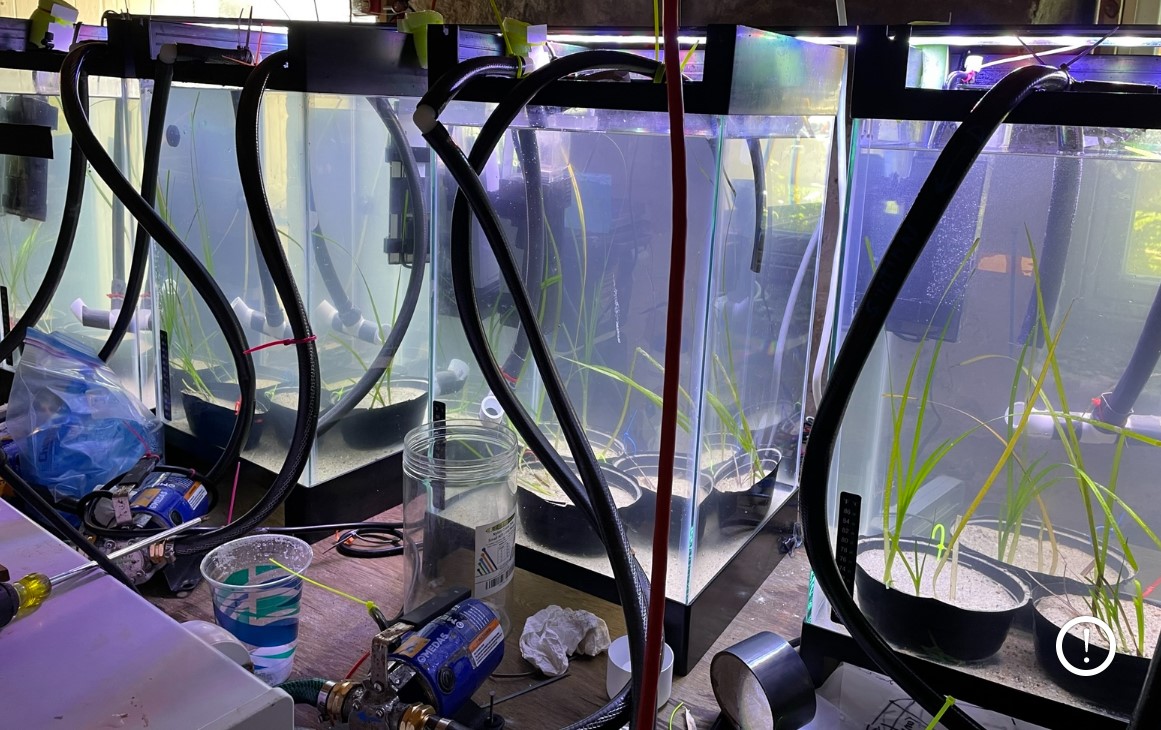
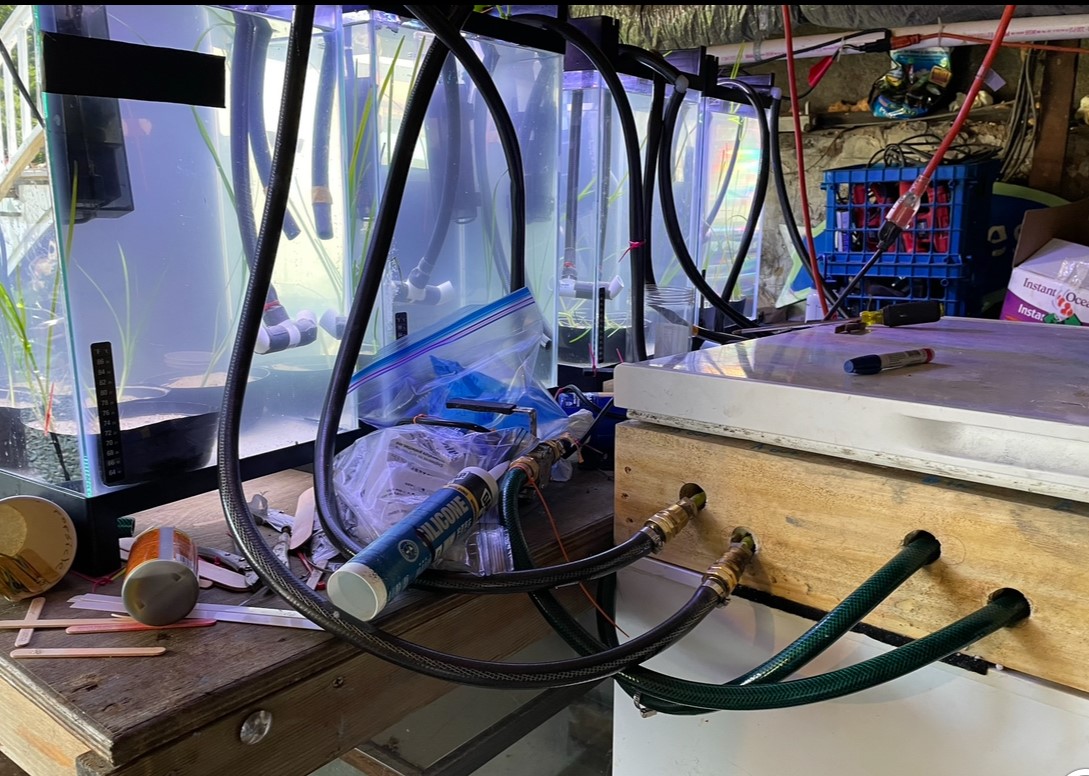
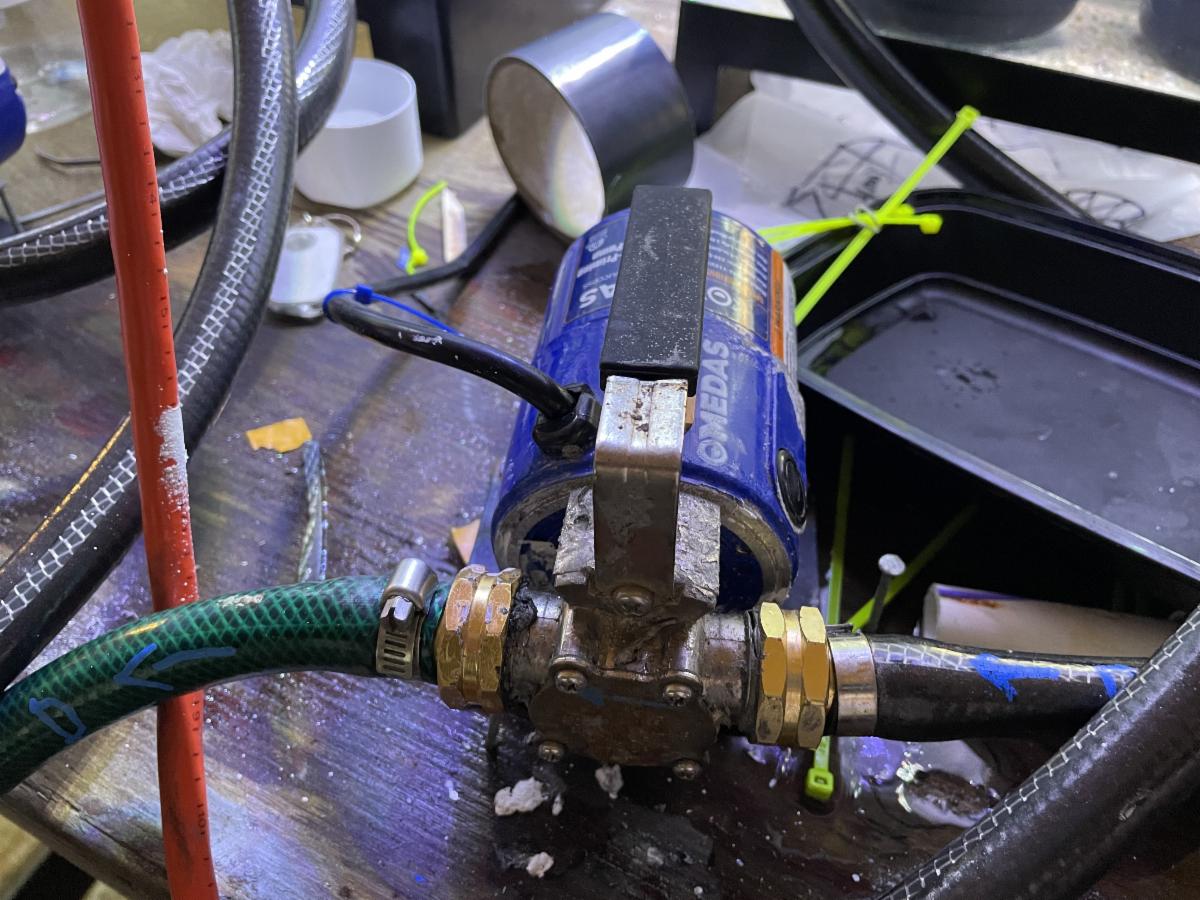
In 2022, Max Fernald and the team wondered if a correlation between SWD and salinity might provide some answers. Max conducted research, worked with his peers to develop a hypothesis, and submitted a research proposal to the Marjot Foundation, a champion of hypothesis-driven science experiments conceived by high school students. With funding from the Marjot Foundation, but without any experience growing eelgrass, the student team embarked on a 2 year journey transforming tanks, artificial sea water, automated pumps, protein skimmers, and a cooling process into a robust and intricate 4 tank experimental system successfully suited to sustain the growth of eelgrass in a laboratory setting. Powered by an idea and a drive that couldn't be stopped, the team worked under the supervision of CSCR Ecologist Susan Bryant and leveraged expertise from CSCR Staff Members Fran Collins and Ralph Perrotto as well as from Michael Fernald of the New England Aquarium to protoype, test, and tweak a sophisticated system in the basement of CSCR. With assurances from their trials that their cooling system could survive summer’s heat waves, they were ready for harvesting and growing trials. However, a major hurdle occurred when the team discovered that the eelgrass meadows fairly abundant in the summer of 2022 were missing in the summer of 2023; they seemed to have vanished. To everyone’s surprise and dismay, a tremendous ecosystem loss was documented; harvesting and transplanting eelgrass in the tanks was delayed.
After a long and frequently frustrating search for healthy eelgrass beds, the team finally located a meadow farther offshore and determined that it could be sustainably sampled for their experiment. They snorkeled from the CSCR research vessel in early mornings, late afternoons, and were even stared down by some concerned harbor seals as they planned and executed a series of single plant harvests. A major victory for the project was marked when a total of 36 plants were successfully transferred into the tanks. Amazingly, the plants survived in their new home; Max and the team successfully infected three of the tanks with SWD under conditions of varying salinities. Data was recorded over a three trial period. Throughout the process, they reached out to researchers from the Department of Marine Fisheries, MIT Sea Grant, Northeastern’s Nahant Marine Lab, University of Maryland, Mass Bays Estuaries, and Cohasset High School’s biology and statistics department to complete their project.
| |
“What impresses me the most is that Max has been able to absorb high-level information, apply it to the project, and get his teammates on board with the plan,” said Susan, Ecology Coach and Eelgrass Project Mentor at CSCR. “He and Finn built a team that enabled a host of other students such as Christian and Isiah Murray to code and engineer key components. They integrated their experiment with Owen Gurtz who documented the project while showcasing his talents as a filmmaker. Eamon Maxwell, 8th grader Theo Gurtz, Tommy Guinan, Bridget Nussbaum, Riley Seaborn, Noah Shepard, Charlie Whinnery, Fionnbharr Brisbane, and Owen Connell all contributed as snorkelers, data managers, lab assistants, and recordkeepers, among others. They have been relentless in pursuing their goals even when faced with various challenges. The team has evolved in amazing ways, and I'm so excited for their success.” | |
The CSCR research vessel with eelgrass students Theo Gurtz, Maxwell Fernald, Finn Yemini, Dr. Jon Lefcheck of University of Maryland Center for Environmental Science, CSCR’s Ecology Coach Susan Bryant and intern Elsie Hession, Mass Bays Estuaries’ Dr. Sara Grady, intern Isaac and Eelgrass Scientist Jill Carr (Mass Bays), and Holly Plaisted of National Park Service after assessing the sustainability of collecting samples from the proposed site. Photo by Jack Buckley | |
|
Meet the Eelgrass Research team, learn more about their project, and engage with many other students, teams, and research initiatives at CSCR’s State of the Harbor Event on March 28, 2024 at Willcutt Commons, Sohier Street, Cohasset, MA. Info at www.ccscr.org.
For questions about the eelgrass research project, contact Susan Bryant, Ecology Coach, 857-231-1768, sbryant@ccscr.org.
For information about the Science Fair or the Marjot Foundation:
Science Fair Information:
Massachusetts Science and Engineering Fair, Region V
Liz Klein maregvoutreach@gmail.com
Marjot Foundation Information
Ann Craig clancraig1@gmail.com
The Center for Student Coastal Research focuses on providing project-based learning opportunities, primarily to middle and high school students, and is proud to be able to introduce students to professionals in academia, research and government to enrich their studies. For additional information about CSCR, contact Jack Buckley, Founder and Executive Director, 781-385-1438, jbuckley@ccscr.org
| | |
|
Cohasset Center
for Student Coastal Research
40 Parker Ave
Cohasset, Massachusetts 02025
(781) 383-0129
| |
| | | |