March 2025

El Dorado Water NEWStream

March Edition

A Word from Our General Manager, Rebecca Guo

It has been a busy start to the year as California’s water has been thrown into the national spotlight. We were honored for the recent opportunity to travel to Washington D.C. to discuss the work we are doing to ensure El Dorado County has reliable water resources now and into the future and advocate for federal support on these initiatives. EDWA Board Chair and El Dorado County Supervisor Lori Parlin and I discussed key issues with federal policymakers and agencies, such as the need to invest in wildfire mitigation and recovery efforts on federal lands. Nearly half (48%) of the land in El Dorado County is federally owned and federal agencies play an imperative role in maintaining the health and sustainability of the watershed. 


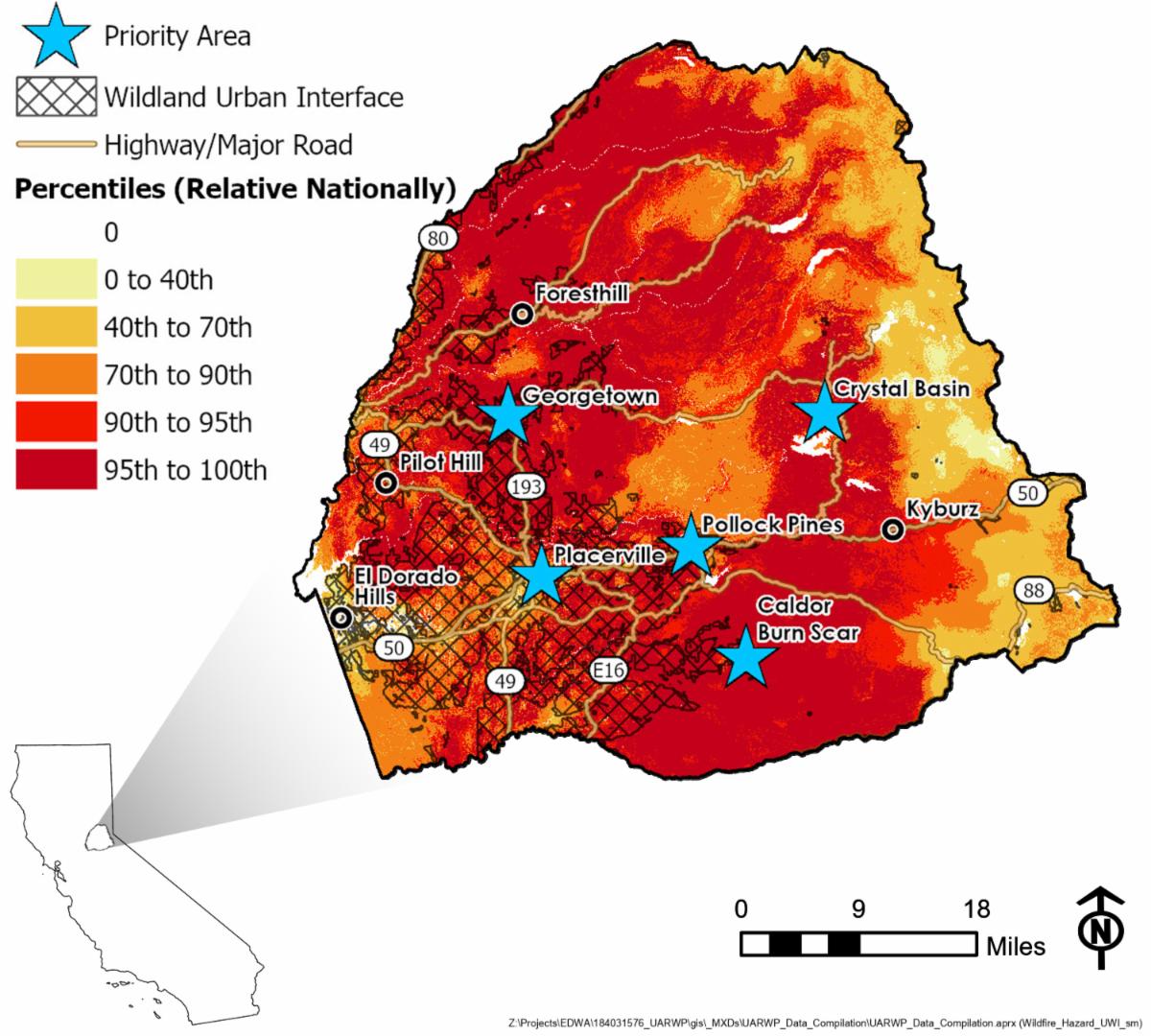
In December, the Upper American River Watershed Group which is facilitated by our agency, identified five priority watershed project areas: Georgetown, Placerville, Pollock Pines, Crystal Basin, and the Caldor Burn Scar. We advocated for federal policymakers to direct funds in these areas to enable activities such as tree thinning, clearing dead fuels and replanting, meadow restoration, and prescribed fires. Not only does this help protect our local residents and economy by promoting fire-adapted communities, but it protects and enhances the health of our forests which are the source of our water.


These discussions are very timely as important decisions are being made about water and wildfire policies in California. We are committed to continuing to advocate for increased investment in protecting and restoring the upper American River watershed as it is an incredibly valuable resource that supplies water to our county and statewide residents, businesses and farms, captures runoff to reduce downstream flooding, and provides a host of other benefits like food, timber, energy, and outdoor recreation.

Watershed Priority Areas Identified by Upper American River Watershed Group

Join Us in Welcoming Brian Veerkamp to the EDWA Board of Directors

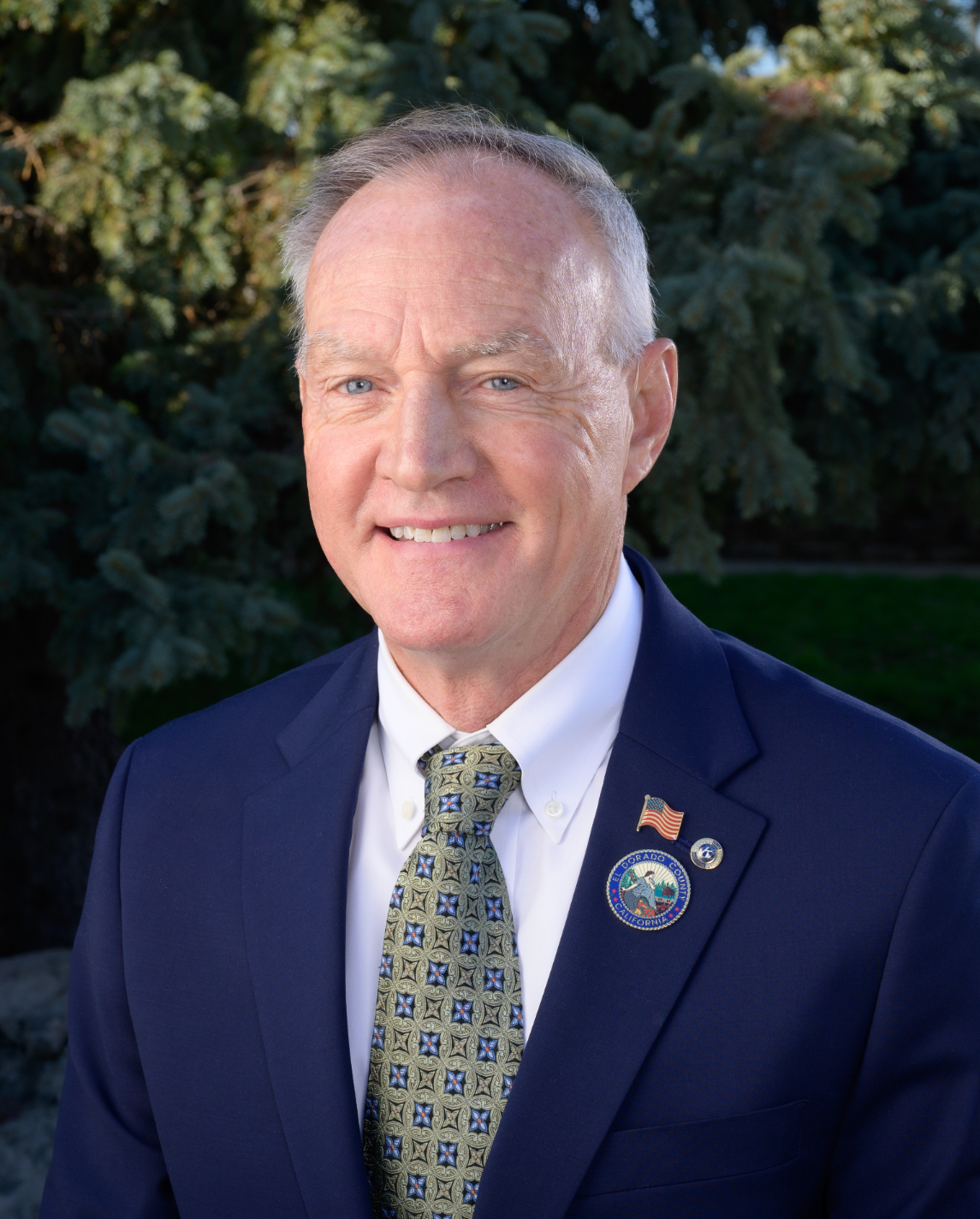
We are delighted to welcome back Supervisor Brian Veerkamp to our Board of Directors. In 2011, he retired from Fire Service after 30 plus years in public emergency services that began with a position as a volunteer/paid call firefighter and culminated in his last position as fire chief of the El Dorado Hills Fire Department. In 2012, Brian was elected to the El Dorado County Board of Supervisors and served two four-year terms for District 3 during which he also sat on our EDWA Board. The end of Brian’s two terms as the District 3 County Supervisor did not mean a time of rest, he completed two years as Executive Director for El Dorado County Emergency Services JPA, served on LAFCO (Local Area Agency Formation Commission), and was elected to El Dorado Irrigation District's Board of Directors where he served as Board President in 2023.

He was re-elected to the El Dorado County Board of Supervisors in November 2024. Supervisor Veerkamp’s extensive experience working in emergency services to prevent catastrophic wildfires and bolter emergency preparedness coupled with his knowledge of water resources will be a huge asset to our Board. 


Supervisor Veerkamp replaces previous County Supervisor Wendy Thomas who served on our Board from January 2021 to December 2024. Her dedication and collaborative leadership style was instrumental in providing guidance to EDWA as we updated our 2024 Water Resources Development and Management Plan, convened the Upper American River Watershed Group to develop the Programmatic Watershed Plan, and so much more. We appreciate her service and look forward to working with Supervisor Veerkamp.

Quantifying Natural Capital Damages from the Caldor and Mosquito Fires

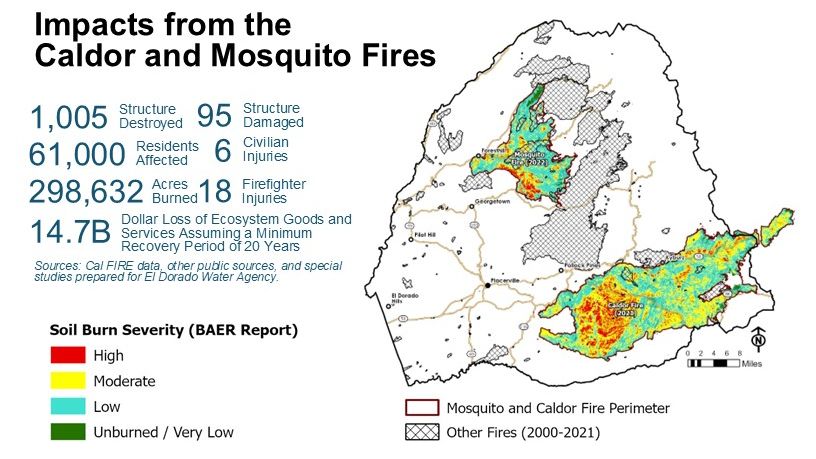
The recent Caldor and Mosquito wildfires created $14.7 billion in damages to the ecosystem goods and services (EGS) - like water, food, recreation, flood protection, habitat - provided by the upper American River watershed. This includes over $12.1 billion in long-term EGS losses and nearly $2.6 billion in damages related to carbon dioxide emissions from the wildfires. Not only that, but this estimate is very conservative because it does not account for public health damages from wildfire smoke, damage to homes and businesses, reduced property values, the potential risk of invasive species introduction, nor the social, economic, and emotional cost of evacuations.


The Caldor and Mosquito fires drastically changed the land cover in the watershed, which is still recovering from damage caused by the 2014 King Fire. What was once predominately forests has become grasslands, significantly reducing the natural capital which society relies on. Based on our 2024 report, before the Caldor and Mosquito fires, we found that the upper American River watershed had a natural capital asset value between $731 billion and $1.6 trillion assuming 100-years of productivity. Natural capital damages occurred due to the loss and degradation of ecosystems from the wildfires and the economic impacts from the associated increase in carbon emissions. These devastating consequences reach far beyond the watershed because it is a critical headwater for statewide water supply that fuels the fifth largest economy in the world.


This research is especially timely, as Gov. Gavin Newsom recently declared a state of emergency to fast-track critical wildfire prevention projects statewide. We know that much work is needed to both protect our watershed and mitigate damage caused by these catastrophic wildfires. We look forward to continuing our watershed efforts including facilitating the Upper American River Watershed Group, which consists of 17 local land use authorities, water purveyors, resource conservation districts, non-governmental organizations, Tribal governments, and state and federal agencies, and is working together to implement the 2023 Programmatic Watershed Plan. 


Want to learn more about the wildfire damages? Check out our report here.

County Drought and Water Shortage Resilience Plan for Small Water Systems and Domestic Wells

In California, many small water suppliers and rural communities were severely impacted by the five-year drought that ended in 2016 and the subsequent 2020 to 2022 drought. In the worst cases, some of these communities saw their wells go dry.  At the time, small water systems were not required to maintain any water shortage contingency plans, unlike their larger counterparts. The lack of contingency planning left small and rural water systems and their stakeholders unaware of opportunities for assistance during the drought.


In 2021, Senate Bill (SB) 552 was signed into law which outlined responsibilities and requirements at both the state and local levels to help small water suppliers and rural communities reduce their risk of inadequate water supply during a drought or water shortage event. Under the directive of the Board of Supervisors, the County of El Dorado requested assistance from us to meet SB 552 requirements. This builds on our past proactive work in sponsoring regional drought plans to provide overall broad coverage.


As such, we established the El Dorado County Drought and Water Shortage Task Force, which includes representatives such as state and local government entities, public water agencies, a groundwater sustainability agency, small water suppliers, and schools. We are currently developing the County Drought and Water Shortage Resilience Plan (CDRP) through a collaborative process to ensure small water systems and domestic well owners are better prepared for droughts and water shortages. 


This CDRP goes above and beyond the requirements of SB 552 (which is limited to state small water systems) by extending it to all 136 active small water systems in the county. The plan, which will be finalized later this year, also provides a custom risk and vulnerability assessment that incorporates the specific needs of the county, including an additional analysis for the over 3,300 domestic wells currently on record within the county. 


Some of the key vulnerabilities faced by both our county’s small water system and domestic well include, among others:

  • High dependency on fractured rock aquifers where groundwater flows rapidly through fractures making those systems less predictable and reliable and thus more reliant on sufficient year-to-year rain and snowfall to recharge the groundwater.
  • High wildfire risk resulting in a higher likelihood that their water infrastructure may get damaged or destroyed, or their water quality may be diminished should a fire occur.
  • Widespread lack of water supply redundancy where many are solely dependent on their one well or spring, and if those run dry they have no other source of water.


Based on these risks to small water systems and domestic wells within the county, we are working with the task force to develop short-term response actions to be enacted during water shortage conditions and long-term mitigation actions that address the needs of affected residents. Being prepared helps reduce hardships and improves our community’s water supply resiliency.

 
Facebook  X  LinkedIn