Elementum 3D headquarters relocation is complete

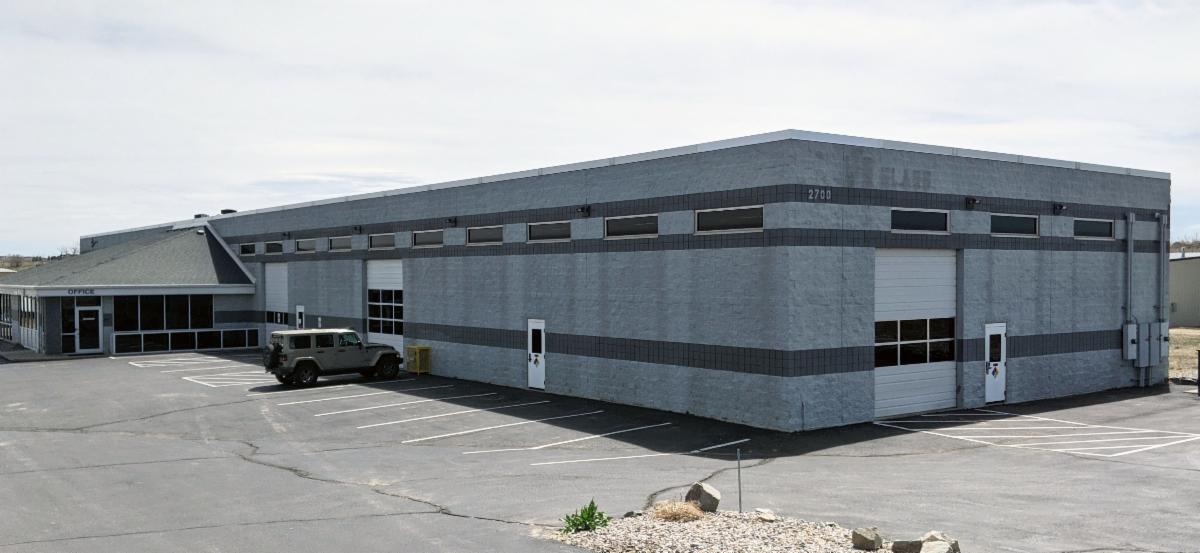
On April 25, Elementum 3D officially consolidated its headquarters to a single location at 2700 S. Main St., Erie, Colorado. The nearly 11,000-square-foot facility had previously been used as a secondary site for manufacturing, post-processing, and development of new commercial products and services.

“Elementum 3D has had a presence in Erie since 2014, and we are very excited to consolidate our operations into one location,” said Dr. Jacob Nuechterlein, President and Founder of Elementum 3D, Inc. “We are actively involving our colleagues in the transition process to develop a space that streamlines workflow, strengthens relationships, and provides the room we need to grow.”

Bringing together two Erie-based locations under one roof will expand opportunities for cross-team collaboration while fostering a culture of innovation and improving operational efficiency. The new corporate headquarters features a 30% increase in manufacturing workspace, providing the infrastructure needed to sustain current momentum and support continued growth across both U.S. and international markets.


“We believe it’s in the best strategic interest of the company to make this move, which supports our strategy to provide customers with the highest-performance materials in an efficient and repeatable manner,” Dr. Nuechterlein added.


This relocation reflects the evolving needs of Elementum 3D’s dynamic business and operations. It represents a key step in the company’s growth strategy—positioning it to better accommodate future expansion while advancing the adoption of additive manufacturing technologies.

Astrobotic hot-fire tests find success with co-developed PermiAM technology

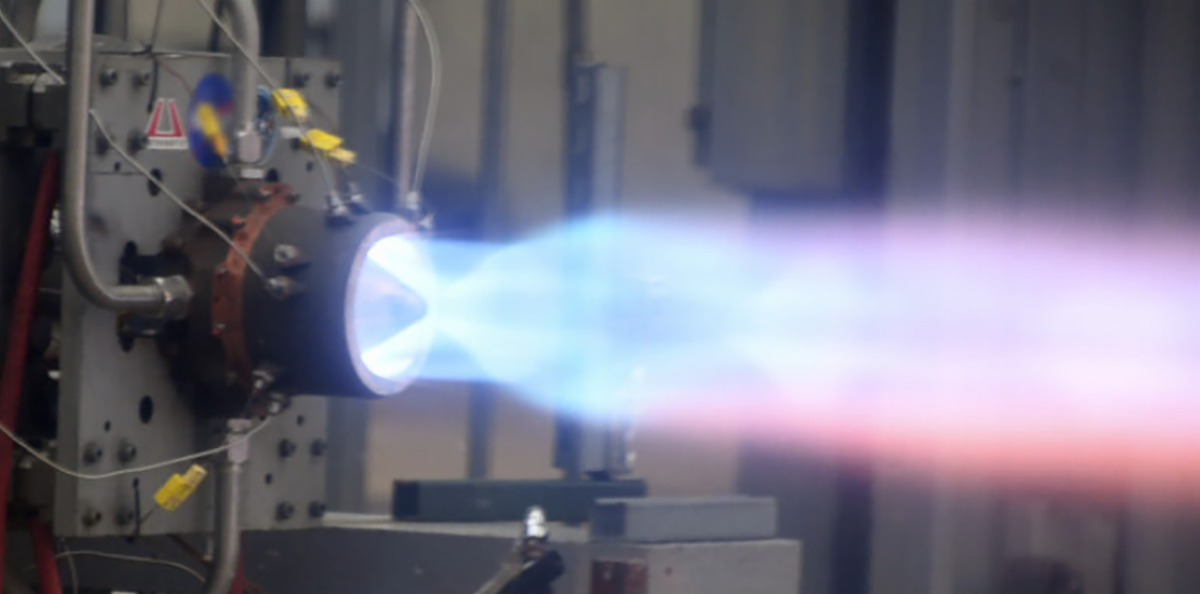
Congratulations to Astrobotic on completing eight rocket engine hot-fire tests that ran a total of 470 “record breaking” seconds. The success of their two Chakram rotating detonation rocket engine (RDRE) prototypes demonstrate how materials innovation like PermiAM and Astrobotic’s cutting-edge engine designs reinforce each other to optimize space travel performance and payload capacity.

PermiAM is a patented process co-developed by Elementum 3D and Astrobotic. The PermiAM process allows adjustments in density or porosity in preset areas during printing. That means the process allows manufacturers the ease of engineering porous sections for cooling and fluid flow in specific areas of a printed part. Controlling porosity also helps handle heat, improve stability, and boost efficiency, which are three of the biggest challenges in applications like propulsion and thermal management.


The development and testing of the PermiAM injector design and applications integrated into the Chakram rotating detonation engine prototypes were supported by two NASA SBIR contracts and a Space Act Agreement with NASA Marshall.


Astrobotic press release


To learn more about PermiAM technology, visit https://www.elementum3d.com/purposeful-porosity-a-peek-into-permiam-technology/ or contact us at sales@elementum3d.com.

Pushing the Limits: Elementum3D’s Advanced Manufacturing of Refractory Alloys for High Performance Applications

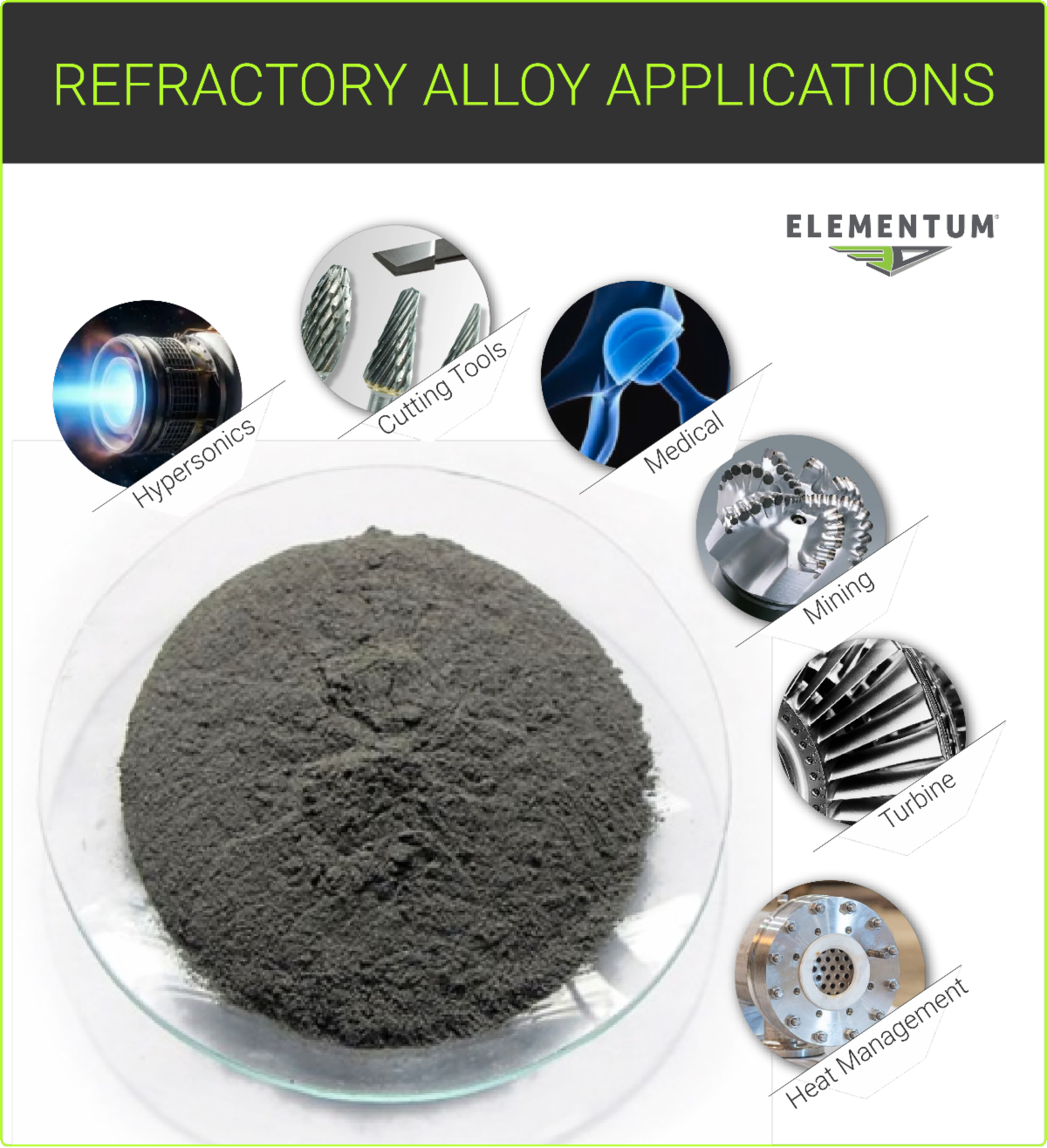
The demand for complex, high-temperature parts made with refractory alloys is rapidly increasing across industrial sectors. Refractory metals such as rhenium (Re), tungsten (W), tantalum (Ta), niobium (Nb), molybdenum (Mo), and alloys thereof are widely used across biomedical, aerospace, space, electronics, and nuclear industries. These materials are valued for extreme high temperature capability, and selected refractories can also provide excellent corrosion resistance, electrical and thermal conductivity, high density, and radiation shielding and tolerance.


Leveraging Elementum 3D (E3D)’s 10+ years of additive manufacturing (AM) refractory expertise, we strive to inform and empower customers to innovate when developing mission-critical applications requiring refractory alloys, including rocket and advanced propulsion systems, industrial tooling, X-ray shielding, medical implants, energy production, and chemical processing equipment.


Advancement of E3D’s refractories include the execution of a Defense Advanced Research Project (DARPA) Small Business Innovation Research (SBIR) to develop the additive manufacturing (AM) feedstock and process capability to print rhenium using laser powder bed fusion (PBF-LB). This work included property collection at high temperatures and application performance testing. The project also demonstrated greatly reduced lead times for rhenium component production compared to legacy manufacturing methods.


Beyond rhenium, E3D is developing refractory alloys with improved performance, crack-free printability, and reduced costs. Alloys of tantalum (e.g. Ta-W) and tungsten (e.g W-Re) are seeing increasing interest as high performance metals are needed for space and nuclear energy applications demanding extreme temperatures and radiation resistance. The team is also developing in-situ deoxidization and inoculation strategies to mitigate microcracking in susceptible refractory alloys. Elementum 3D is also working on next generation niobium alloys that can outperform C-103 while reducing costs by eliminating the need for expensive hafnium. Increasing market prices for refractory metals further reinforces the need for lean additive manufacturing capability to maximize usage efficiency of these high-performance materials.


To learn more about our printable refractory alloys, contact at sales@elementum3d.com or visit www.elementum3d.com.

Colorado School of Mines wins team lead of CATACS Project worth $1.3M; Elementum 3D on the project team

Congratulations Colorado School of Mines (CSM) for winning the project call awarded through the Office of the Under Secretary of Defense, Manufacturing Technology Office (OSD ManTech). America Makes awarded them to lead one of the two Corrosion of AM Components for Thermal Management projects.


The project call, Corrosion of Additive – Tested At Component Scale (CATACS) initiative is to establish and validate a framework for evaluating AM metal part corrosion testing needs, focusing on representative testing at the component scale in two critical areas: high-temperature

environments and thermal management systems.


As part of the project team, Elementum 3D honored to work with CSM to establish and validate a framework for evaluating AM metal part corrosion testing needs for the OSD ManTech office.


Full story


Elementum 3D

Erie, Colorado

720-545-9016

www.elementum3d.com

Facebook  Twitter  LinkedIn  YouTube