Pushing the Limits: Elementum3D’s Advanced Manufacturing of Refractory Alloys for High Performance Applications

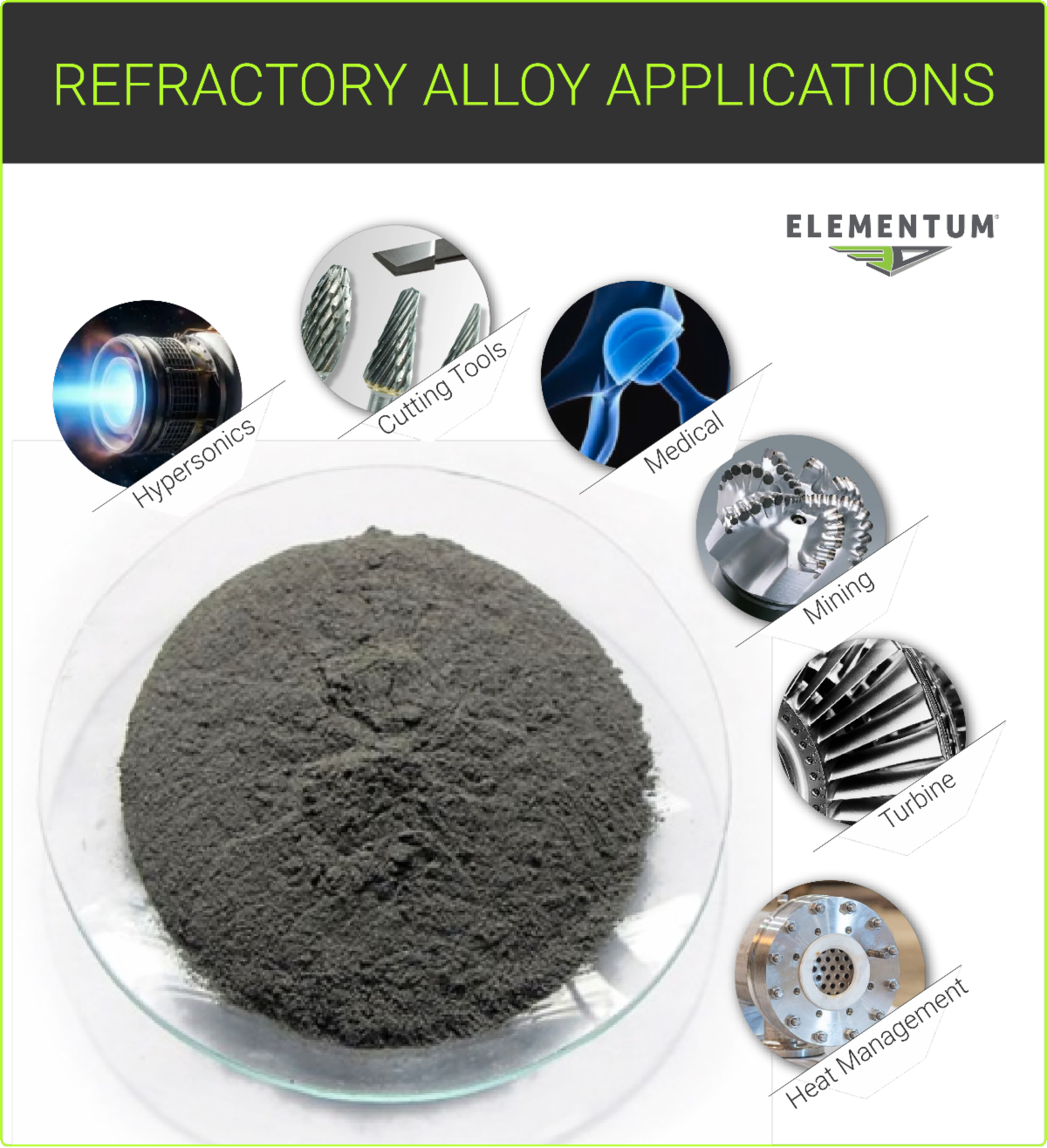
The demand for complex, high-temperature parts made with refractory alloys is rapidly increasing across industrial sectors. Refractory metals such as rhenium (Re), tungsten (W), tantalum (Ta), niobium (Nb), molybdenum (Mo), and alloys thereof are widely used across biomedical, aerospace, space, electronics, and nuclear industries. These materials are valued for extreme high temperature capability, and selected refractories can also provide excellent corrosion resistance, electrical and thermal conductivity, high density, and radiation shielding and tolerance.


Leveraging Elementum 3D (E3D)’s 10+ years of additive manufacturing (AM) refractory expertise, we strive to inform and empower customers to innovate when developing mission-critical applications requiring refractory alloys, including rocket and advanced propulsion systems, industrial tooling, X-ray shielding, medical implants, energy production, and chemical processing equipment.


Advancement of E3D’s refractories include the execution of a Defense Advanced Research Project (DARPA) Small Business Innovation Research (SBIR) to develop the additive manufacturing (AM) feedstock and process capability to print rhenium using laser powder bed fusion (PBF-LB). This work included property collection at high temperatures and application performance testing. The project also demonstrated greatly reduced lead times for rhenium component production compared to legacy manufacturing methods.


Beyond rhenium, E3D is developing refractory alloys with improved performance, crack-free printability, and reduced costs. Alloys of tantalum (e.g. Ta-W) and tungsten (e.g W-Re) are seeing increasing interest as high performance metals are needed for space and nuclear energy applications demanding extreme temperatures and radiation resistance. The team is also developing in-situ deoxidization and inoculation strategies to mitigate microcracking in susceptible refractory alloys. Elementum 3D is also working on next generation niobium alloys that can outperform C-103 while reducing costs by eliminating the need for expensive hafnium. Increasing market prices for refractory metals further reinforces the need for lean additive manufacturing capability to maximize usage efficiency of these high-performance materials.


To learn more about our printable refractory alloys, contact at sales@elementum3d.com or visit www.elementum3d.com.

Colorado School of Mines wins team lead of CATACS Project worth $1.3M; Elementum 3D on the project team

Congratulations Colorado School of Mines (CSM) for winning the project call awarded through the Office of the Under Secretary of Defense, Manufacturing Technology Office (OSD ManTech). America Makes awarded them to lead one of the two Corrosion of AM Components for Thermal Management projects.


The project call, Corrosion of Additive – Tested At Component Scale (CATACS) initiative is to establish and validate a framework for evaluating AM metal part corrosion testing needs, focusing on representative testing at the component scale in two critical areas: high-temperature

environments and thermal management systems.


As part of the project team, Elementum 3D honored to work with CSM to establish and validate a framework for evaluating AM metal part corrosion testing needs for the OSD ManTech office.


Full story


EVENTS ATTENDING

DEFENSE MANUFACTURING CONFERENCE: March 30-April 2 | Orlando, FL | Dr. Jason Ting

MENTOR PROTEGE SUMMIT: April 6-9 | Arlington, VA | Staff: Dr. Jeremy Iten

RAPID TCTApril 13-16 | Boston | Staff: Dr. Jacob Nuechterlein, Charlie Beecher, and Noah Mostow


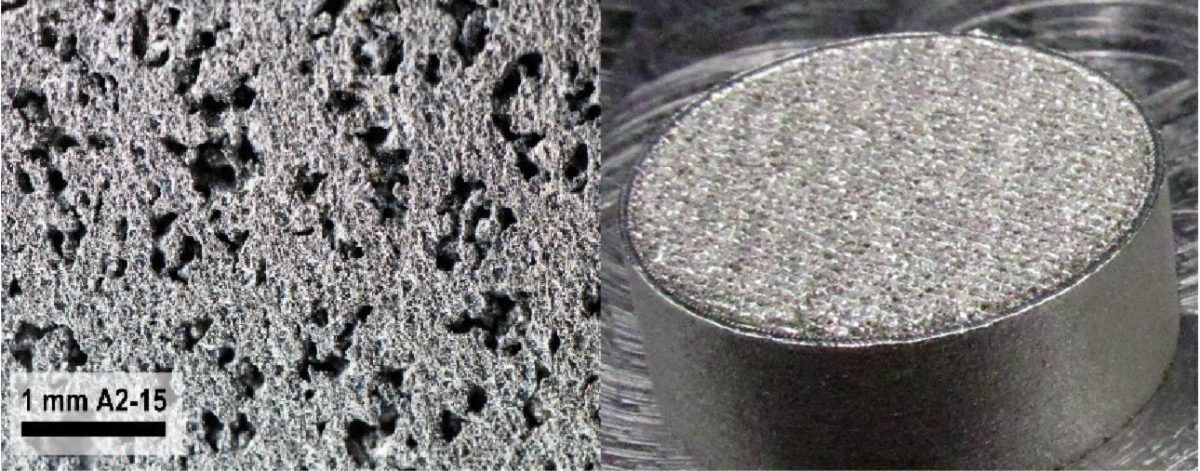
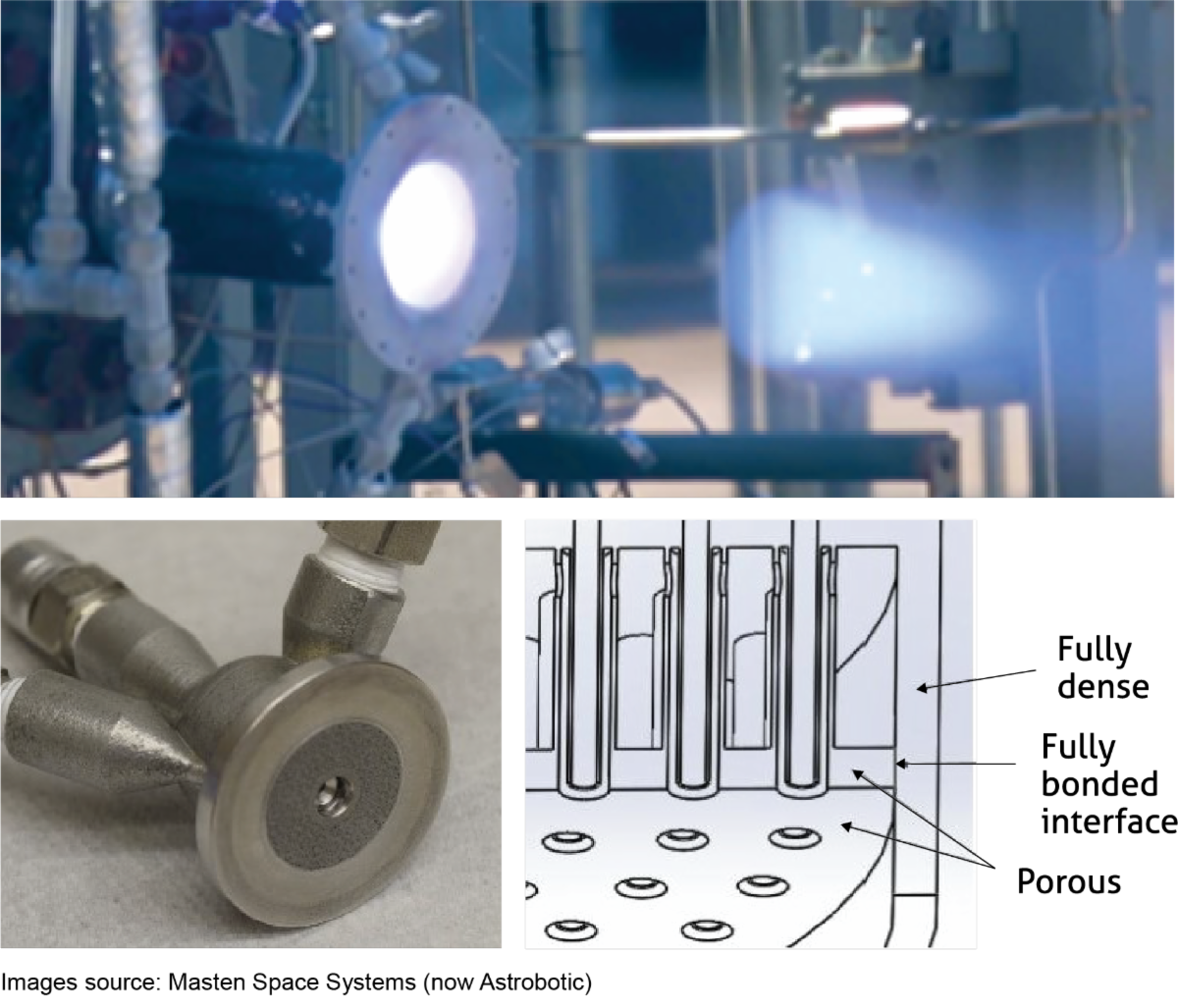
PermiAM is a patented technology for laser powder bed fusion (LPBF) additive manufacturing (AM) which enables printing of porous material with controllable permeability together with fully dense material.


The process allows for easy integration of precise permeability for control of pressure and flow for applications such as fuel injection, rocket and combustion engines, wicking heat pipes, transpiration cooling, filtration, catalysis, and more. The methods allow for process-based generation of the permeable regions from a simple CAD model without the need for complex CAD modeled microporous structures.


The technology was initially matured by Elementum 3D and Masten Space Systems (now Astrobotic) with support from a NASA SBIR program. The ability to integrate regions with controlled permeability with solid material in printed parts can improve performance and reliability while simplifying manufacturing for reducing cost and time.


The innovative process introduces the capability to engineer materials with open porosity of a smaller scale than is traditionally possible in CAD-based AM methods. The technology is applicable for printable metal alloys including aluminums, superalloys, coppers, steels, and refractories. Porosity can be graded across the geometry enabling precisely tuned permeability across a region.

PermiAM for rocketry and propulsion has been described as ‘game changing’ by industry experts. During a 65 second hot fire test and a combustion temperature of 6100°F, the temperature of the PermiAM injector face remained at only 380°F after 125 seconds of operation time with zero face erosion or damage. More than 800 seconds of successful hot fire testing across multiple material sets were accumulated during the NASA SBIR project. In addition to the performance and capability gains, PermiAM enabled a 60% manufacturing cost savings for the fuel injectors as well as 92% faster lead time. 


If repeatably controlled porosity is important for your application, contact us at sales@elementum3d.com or www.elementum3d.com

Elementum 3D

Erie, Colorado

720-545-9016

www.elementum3d.com

Facebook  Twitter  LinkedIn  YouTube