Issue 587 - March 22, 2024

Proposal Seeks to Eliminate Ballot Bias in Delaware Elections

State Rep. Mike Ramone (R-Pike Creek South) has taken a significant step toward electoral reform in Delaware. This week, he introduced legislation to address a practice that could potentially bias every general election in the state.


Numerous analyses have concluded that the order in which candidates’ names appear on the ballot may impact election outcomes.


In one revealing study, researchers examined the 1998 Democratic primary election in New York City, where the order in which candidates were listed on the ballot rotated by district. In almost 90% of precincts, candidates received a larger share of the vote when listed first on the ballot relative to being listed in any other position. In almost 10% of cases where candidates listed first received a voting bump, that increase was larger than the winner’s margin of victory.


California appears to have been the first state to take action to deal with ballot position bias following the 1975 unanimous ruling by the California Supreme Court in Gould v. Grubb. The High Court held that “a significant advantage accrues to a candidate by virtue of a top ballot position.” The justices further concluded that without incumbents running, approximately 5% of a candidate’s vote share could be attributed to their position on the ballot.


Soon afterward, California enacted a law to randomize the listing of candidates on its ballots. The Golden State uses a system where a randomized drawing of letters of the alphabet is conducted, with the resulting order of letters constituting a "randomized alphabet" for determining the order of candidates' names.


Delaware law currently mandates that one political party always appear in the first column on the machine ballots or the first line of absentee ballots. House Bill 344 proposes eradicating ballot position inequity by adopting a randomized system modeled after the one successfully employed in California for nearly five decades.


The bill currently has 13 sponsors and co-sponsors, all Republican legislators. “It’s my hope this measure will gain bipartisan support as it moves through the system,” Rep. Ramone said. “There really is no excuse for any legislator to vote against a bill that will cost nothing to implement and will explicitly make our election system more fair.”


State Sen. Eric Buckson (R-Dover South), the prime Senate sponsor of the bill, agreed. “There are 15 other states that have enacted this reform and successfully run it for many years. This bill needs to be considered and passed by both legislative chambers this year so Delaware can become the 16th state.”

Efforts to Improve Motorcycle Safety in Delaware Gain Traction


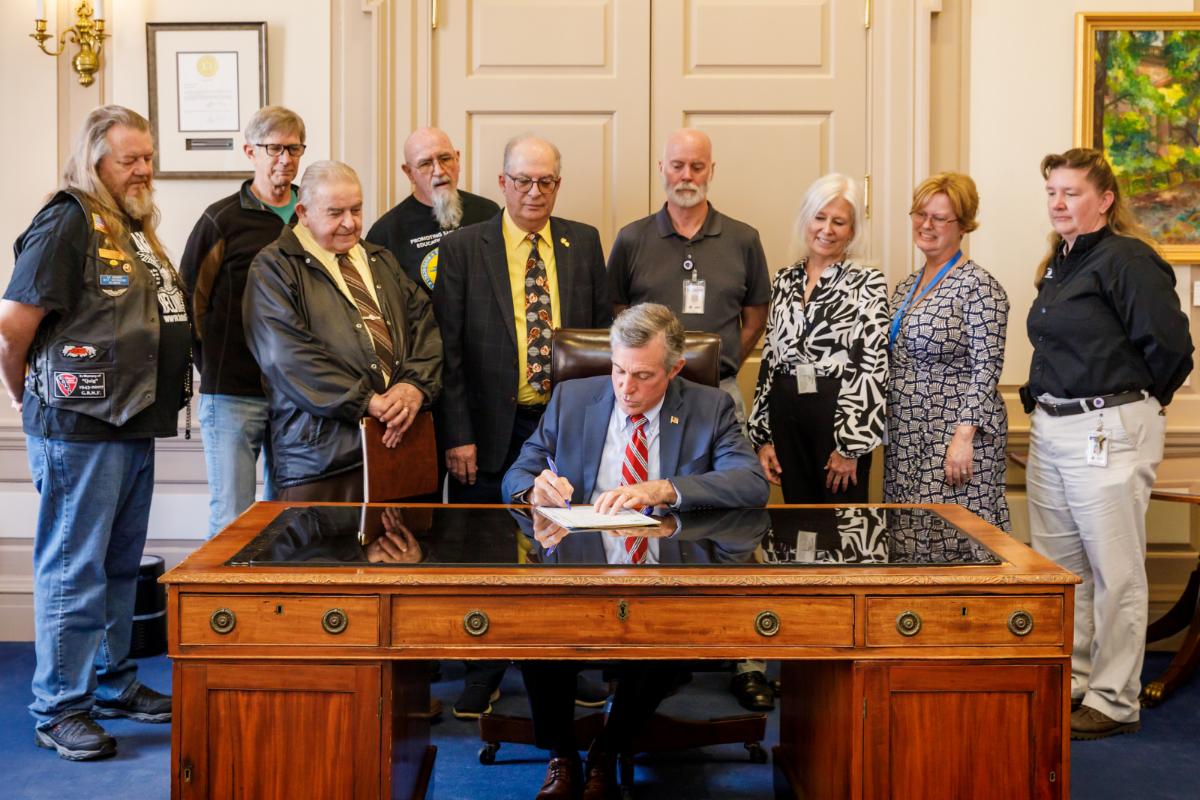
Bipartisan legislation that strives to make motorcycling safer in Delaware was signed into law this week by Gov. John Carney during a brief ceremony at Legislative Hall.


Sponsored by State Rep. Danny Short (R-Seaford)House Bill 106, which passed both the House of Representatives and Senate unanimously, permanently establishes the Motorcycle Rider Education Advisory Committee. This group has existed for more than 25 years but has always been ephemeral, with each General Assembly needing to reauthorize its work.


In addition to granting it permanence, the new law charges the committee with monitoring the Motorcycle Rider Education Program, reviewing pending motorcycle-related bills, examining statistical motorcycle accident data, and making recommendations to reduce traffic accidents.


The 14-member group consists primarily of private citizens but includes two lawmakers and staffers from the Department of Transportation and the Office of Highway Safety.


An avid motorcycle enthusiast, Rep. Short has served on the committee for many years. "Motorcyclists are more at risk from deaths and injuries, and I believe the work the group has done over the years has avoided countless mishaps," he said. "Making the committee permanent will allow it to continue its work and offer solutions to evolving challenges."


In a related development, the House this week passed a bill that promises to reduce motorcycle collisions.


During the previous General Assembly, lawmakers approved a measure establishing a brief pilot program during which motorcyclists could install modulating headlights on their rides. The devices produce a strobing effect that increases visibility. Rep. Short was a prime sponsor of the law. He says one of the leading causes of motorcycle accidents is the failure of other drivers to see the bikes. He was confident that modulating headlights could curtail such mishaps and became one of the first riders in Delaware to add the safety device to his bike.


Unfortunately, Rep. Short said the number of other riders embracing the new technology has been underwhelming, and the law authorizing their installation is set to expire on New Year's Day.


House Bill 328, which passed the House on Thursday without a dissenting vote, seeks to extend the pilot program through June 30, 2030. Rep. Short said the additional time will allow riders to become more familiar with and adopt the devices.


The bipartisan legislation now moves to the Senate Environment, Energy & Transportation Comittee for consideration.

Legislature Approves Bill to Allow New Means of Disposing of Human Remains

A bill heading to the governor's desk would allow human remains to be composted through a technique known as "natural organic reduction."


The process accelerates decomposition by using large vessels to hold the remains together with straw, wood chips, or other natural materials. Mixed with warm air and periodically turned, the process eventually reduces a body into soil material in eight to twelve weeks. 


According to Recompose, a company that reportedly pioneered human composting, the process creates approximately one cubic yard of soil per body. Once complete, the decedent's family can use the soil at home or donate it to conservation efforts.


Under House Substitute 1 for House Bill 162, the processing would need to be done in a licensed facility meeting certain requirements. Some bodies would be prohibited from being disposed of via composting if they were radioactive, contained certain implants, or were suspected of having infections or other conditions potentially posing a threat to public health. The soil would also be required to be tested to ensure it did not contain unsafe levels of bacteria or heavy metals.


Human composting was first legalized domestically in Washington state in 2019. It is now legal in at least six other U.S. jurisdictions: Colorado, Oregon, Vermont, California, New York, and Nevada. While still a fringe method of dealing with a decedent's final disposition, advocates claim it is more environmentally friendly, requiring significantly less energy than cremation and lacking the footprint and waste of traditional burial methods. 

NEWS:

House Passes Bill to Bar the Use of Genetic Information for Life Insurance Discrimination


Under a bipartisan bill unanimously approved by the House of Representatives this week, life insurance companies would be barred from using information obtained from direct-to-consumer genetic testing companies like 23andMe and AncestryDNA to discriminate when issuing policies.


Sponsored by State Rep. Jeff Spiegelman (R-Clayton), the bill is also known as The Ericka Byler Act, in tribute to a former Kent County native who died suddenly at the age of 25 from an undetected congenital heart defect.


“Ericka’s issue would probably not have been detected by casual genetic testing, but plenty of people have been alerted to potential health issues by these types of tests," Rep. Spiegelman said. "Allowing life insurance companies to set rates, deny coverage, or terminate policies based on this private data could have a chilling effect on the appeal of submitting your DNA for analysis. I don’t want people kept in the dark about potentially serious health issues because they are worried about the financial implications of the results. This is a deterrent to wellness that we should eliminate.”


Under House Substitute 1 for House Bill 286, life insurance companies could not require an individual to take a direct-to-consumer genetic test or share information from such a test. The measure would further prohibit using this type of information for canceling a policy, setting premiums, or paying claims without additional actuarial justification.


The bill is pending consideration in the Senate Banking, Business, Insurance & Technology Committee.