Emergency Broadband Benefit
Apply beginning May 12th for discounted broadband access and computer equipment
|
|
NEW ORLEANS (5/11/2021) - The Federal Communications Commission has launched a temporary program to help families and households struggling to afford Internet service during the COVID-19 pandemic. The Emergency Broadband Benefit provides a discount of up to $50 per month toward broadband service for eligible households and up to $75 per month for households on qualifying Tribal lands. Eligible households can also receive a one-time discount of up to $100 to purchase a laptop, desktop computer, or tablet from participating providers.
You can learn more about the benefit, including eligibility and enrollment information, by visiting www.fcc.gov/broadbandbenefit, or by calling 833-511-0311 |
|
HousingNOLA Releases Semi-Annual Report on the State of Affordable Housing |
|
NEW ORLEANS (Wednesday, May 5, 2021) – The HousingNOLA Semi-Annual Report, which tracks how many affordable housing opportunities are being created in New Orleans, shows city and state leaders are not delivering on their commitments to provide affordable housing. The report confirms city and state housing agencies are failing to abide by the HousingNOLA 10-Year Plan, which calls for 33,600 additional affordable units in the city by the year 2025.
The Semi-Annual Report is put together from data gathered from city and state housing agencies and is released mid-way through the HousingNOLA reporting cycle. This year, the Office of Community Development refused to comply with HousingNOLA’s public records request for “the number of housing opportunities created by the City of New Orleans.”
“We weren’t asking for anything new,” states Andreanecia Morris, HousingNOLA Executive Director. “We requested information we have been given in the past. However, this time, we were told that the City isn’t required to create a report in response to a public records request – which can only mean they are not tracking this information. Why isn’t this information readily available? How can the City not know how many new housing opportunities they’ve created? This tells us they’re not only not tracking it, they’re not trying, either.”
A few key takeaways from the Semi-Annual Report include:
- New Orleans is not stabilizing people through housing, despite the fact that we have enough housing inventory to do so.
- The number of affordable housing units has barely changed, while the need in New Orleans has grown. However, there have been no meaningful gains made in the number affordable housing units being created.
- COVID-19 rental assistance is not getting into the hands of renters fast enough and homeowners impacted by COVID-19 are still waiting on any kind of assistance.
|
|
ABOUT HOUSING NOLA:
HousingNOLA is a 10-year partnership between the community, leaders, and dozens of public, private, and nonprofit organizations working to solve New Orleans’ affordable housing crisis by implementing the 10-Year Strategy and Implementation Plan. Rather than just being a written document, HousingNOLA is an ongoing initiative to collectively remind New Orleans and its elected officials of the issues we face and our pledge to maintain a plan of action. Data indicates the need for 33,600 additional affordable units in the city by 2025 and the data clearly shows that wages have not come close to mirroring the dramatic rise in housing costs. It’s our job to hold our leaders accountable to the recommendations we make in HousingNOLA.
|
|
The New NOLA Normal,
Personal Vaccination Responsibility
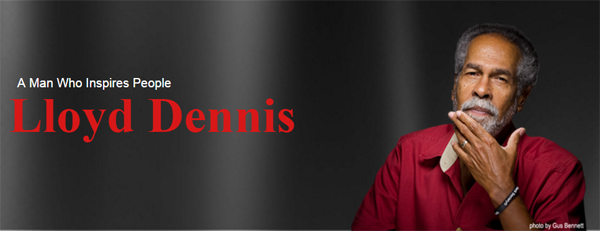
A Commentary by Lloyd Dennis
|
|
APRIL 19, 2021 - We are so relieved! Got our shots! Free at last!
I'm sure I'm going to get some flack for what I'm about to state and predict.
First:
Boo and I have our shots, and while we will continue to cooperate with the public place mask mandates... we ain't scared of you... masked or not... and that is a life changer.
We have empathy, so if we have to interact with people who would feel more comfortable, we will "mask up". We remember the stress of being completely vulnerable to this deadly pandemic. We don't have that stress anymore, even around the yahoos who've been risking themselves, and everyone around them by refusing to mask up for political reasons or due to the frivolity of youth.
I've since adjusted my social greetings because it's just not a good idea to be hugging and kissing on people who might have a cold, flu, stomach virus... All you'll get from me a knuckle bump or a blown kiss from across the room.
Second:
I predict that once NOLA gets to 60 - 70% vaccinated, we will open up and that's when it gets complicated. We would be right at herd immunity, meaning that if we only interacted with New Orleans people, the virus would have difficulty spreading because two out of three people can't catch it or pass it on.
However, this is NOLA, America's favorite place to visit, so our extremely low infection rate and high vaccination rate will make us one of the safest places to visit, and fall festivals and our unique culture will feed a huge pent-up national desire to travel. And while there may not be a full fledged Essence Festival this year, I guarantee that the Fourth of July weekend will still look a lot like it does during the festival.
With people from all over the country coming here, those in the city who are not vaccinated will be exposed to people who come from places with much higher infection rates and lower vaccination rates. Those who choose not to be vaccinated who come into the proximity of tourists will not benefit from the herd immunity and low infection rate that Mayor Cantrell and other leaders have accomplished in New Orleans.
The city will open for business, I believe by July, Whenever the city opens the un-vaccinated, be they locals or tourists will be on their own. No lock-down to protect them.
Thanks to our year of lock-down and now the vaccines, I'm not dead or scared. We're going to enjoy the party... but if you don't vaccinate, you might want to stay away from travelers, because they will come... some with and some without. (Yahoos come here, too.)
Laizzez les bon temps rouler... if you've had your shots.
|
|
Lloyd Dennis is a Media Personality and owner Lloyd Dennis Photography & Multimedia, and co-founder and former Executive Director of THE Silverback Society. Lloyd may be reached via email at ld@lloyddennis.com or on the web at www.lloyddennis.com.
|
|
Meet The Black Women Behind New Orleans' The Business Bar
|
|
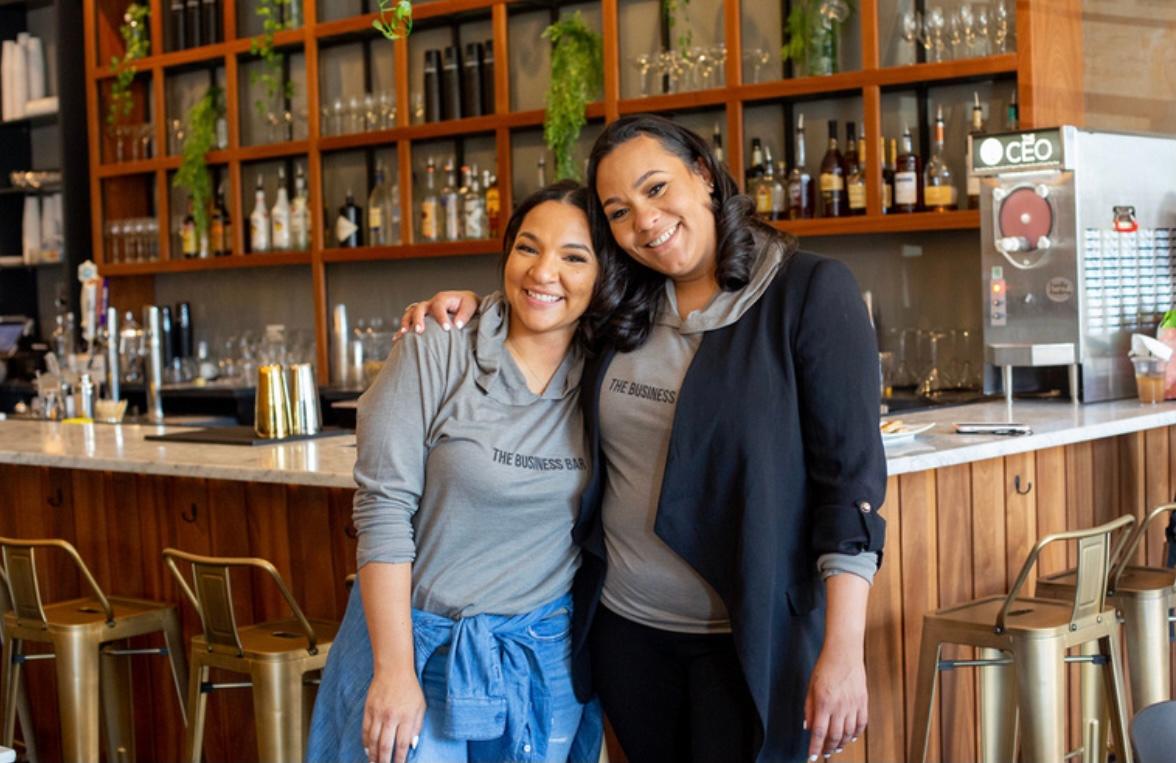
NEW ORLEANS (3/12/2021) - As we continue to celebrate Women’s History Month, we were honored to chat with the entrepreneur duo behind New Orleans’ The Business Bar. It’s a traditional cocktail bar, restaurant, and workstation.
Founders Jade Newman and Jessica Robinson told Travel Noire, “It means so much because we are women who stand for women. Women’s history month signifies power, strength, and serves as a reminder that we can change the world one woman at a time.”
We sat down with Newman and Robinson to learn how this business idea came about and what’s next for the duo.
Travel Noire: What’s the mission of The Business Bar?
Newman and Robinson: To offer the perfect space for professionals to conduct business, enjoy great food and amazing cocktails in an atmosphere worthy of staying after 5’o clock.
Our goal is to expand. We’re already planning two more locations. We plan to add a little more with each location as well as offer The Business Bar as a franchise opportunity for others.
|
|
Travel Noire: How has opening during the pandemic helped your brand?
Newman and Robinson: We believe launching during the pandemic, which was probably one of the most uncertain seasons for everyone around the world, truly set the tone for what we stand on— faith and perseverance.
We also believe it helped our business tremendously by naturally allowing people to want to support us because of our strength. Our brand gives everyone a sense of hope, which has been a blessing.
Travel Noire: Jade, how has your career in property management assisted in launching The Business Bar?
Newman: I’ve been in property management for a number of years, and I’ve created a number of ways— through trial and error— to make things possible for my clients. My knowledge prepared me to create a successful restaurant concept that will thrive for years to come. Understanding how to make money, where to find answers, and what to do before making money mistakes helped the business to thrive.
It’s not about how long someone has been doing something. It’s about doing things the right way and pretty much all businesses can function with the right plan in place.
|
|
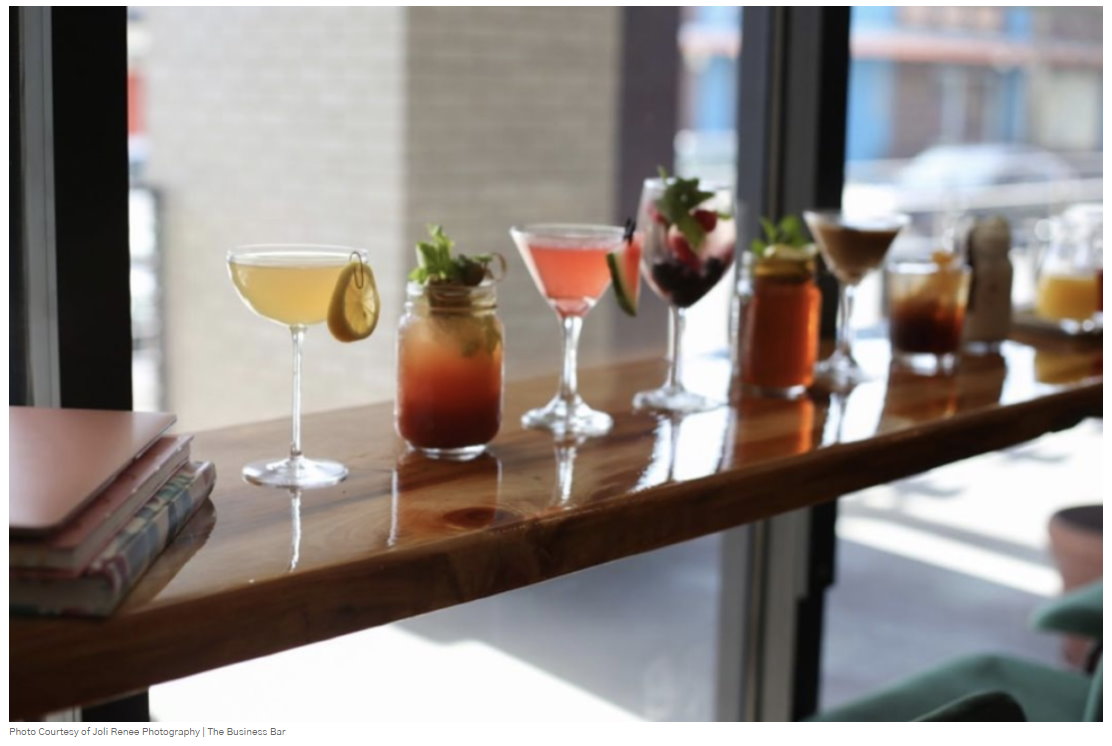
Photo Courtesy of Joli Renee Photography | The Business Bar |
|
Travel Noire: Jessica, how did you use your background in mixology to curate the menu?
Robinson: I used some of my popular cocktail recipes to create the cocktail menu for The Business Bar. Having my own business prior to this, allowed me to build strong relationships with my clients who were waiting for me to open a bar. Their support alone has been a huge factor in our success and growth.
|
|
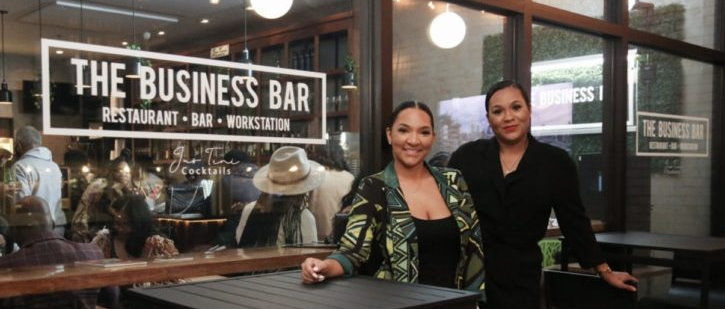
Jade Newman and Jessica Robinson
(Photo Courtesy of Joli Renee Photography | The Business Bar)
|
|
Travel Noire: What’s next for The Business Bar?
Newman and Robinson: We plan to start the process of opening at least two additional locations by the end of the year, if God says the same.
|
|
4525 Freret Street • Suite 107
New Orleans, LA 70115
Mon - Fri: 8am - 8pm
Sat - Sun: 10am - 4pm
|
|
ESSENCE Appoints Executive Team to Lead Company's Strategic Realignment, Innovation Focus & Community Impact
Investment in Continuing to Serve Black Women Deeply, Bridge Black Culture Globally via Appointment of New Leadership Roles
|
|
February 9, 2021 (New York, NY) – ESSENCE, the leading and only 100% Black-owned media, technology and commerce company at scale dedicated to Black women and communities, today announced updates to its executive leadership team. These appointments are part of the final phases of the restructuring process aimed at positioning the company for continued growth and maximum impact following its acquisition from Time Inc. To date, this transformation has included, among other focus areas, building critical operational infrastructure across finance, human resources and technology; making significant investments across ESSENCE Magazine, digital, e-commerce and experiential platforms – resulting in the brand almost doubling its reach over three years; expanding platforms for other culturally-rooted entrepreneurs and businesses that create economic opportunities for Black communities; introducing heightened capabilities, technology, products and touch points that super-serve the interests of Black women locally and globally – including the launch of ESSENCE Studios streaming platform; refining organizational culture and accountability; and developing a new strategic framework and targeted partner engagement approach – with more to come. To continue the critical work that they have been leading, Essence Communications, Inc. (ESSENCE) has appointed the following to its C-suite and senior leadership team, effective immediately: |
|
Caroline Wanga, Chief Executive Officer, ESSENCE (& Chief Growth Officer, Essence Ventures) – Wanga, who has served as Interim CEO of ESSENCE for seven months, has been officially appointed as Chief Executive Officer. She joined Essence Ventures, parent company of ESSENCE, as Chief Growth Officer in 2020 from Target Corporation, where she served as Chief Culture, Diversity and Inclusion Officer. Wanga began her Target career in supply chain, serving in a variety of transformational leadership roles, including modernizing Supply Chain, Business Intelligence, Digital and Strategy capabilities. Prior to that, she held several non-profit roles. Among other accolades, Wanga has been named Top Executive in Corporate Diversity by Black Enterprise and recognized at Savoy Most Powerful Women in Corporate America, as well as is a member of the Executive Leadership Council (ELC), the Talladega College Board of Trustees and the American Airlines Community Council. She previously served on the Intersectionality, Culture, and Diversity Advisory Board for Twitter and as co-chair of the Retail Industry Leaders Association (RILA) Diversity & Inclusion Initiative. Wanga, who was born in Kenya, is an innovative and inspirational thought leader and public speaker and earned her bachelor’s degree from HBCU Texas College. |
|
Latraviette D. Smith-Wilson, Chief Strategy & Engagement Officer – Smith-Wilson, who also serves as Chief Strategy Officer for Essence Ventures (parent company of ESSENCE), has joined ESSENCE as Chief Strategy & Engagement Officer. In this newly-created role, the following teams will report to her: Business Development/Sales, Marketing, Content, Creative, Experiential, Video, and Stakeholder Engagement (PR, talent, and strategic partnerships). With 20-plus years of global experience building brands through a lens of purpose, social impact and inclusion and a career spanning journalism, marketing & communications, DEI and business strategy, Smith-Wilson has worked and held senior leadership roles across newsrooms, agencies, Fortune 100 companies, and entrepreneurial ecosystems, including Sundial Brands/Unilever, American Express, Edelman, Deloitte and National Urban League. She has been recognized by Black Enterprise – Next Generation Women of Power, Café Mocha – Powerhouse Award/Outstanding Business Leadership, Ebony – Women Up, and Forbes – Black Women Leaders to Follow, among others. Smith-Wilson is a board member and the immediate past Chair of the Board of Harlem United and has previously served on the board of the PRSA Foundation and as the Diversity & Inclusion columnist for PRWeek. She is a member of Alpha Kappa Alpha Sorority, Inc. and received her double-major bachelor's degree from Wake Forest University and her Master's Degree from New York University. |
|
Avani Patel, Chief Operating Officer – Patel, who previously served as Chief of Staff & Vice President in the Office of the CEO, has been promoted to Chief Operating Officer. In this role, she will lead the Technology, Finance, and Human Resources functions. A veteran of the technology industry, her career spans product launch, management/operations and consulting across Fortune 500 companies and start-ups. Patel previously led technology at Sundial Brands/Unilever, as well as professional services at Verizon / Totality Corp. She has PMP and Six Sigma Black Belt certifications and received her bachelor’s degree from Rutgers University. |
|
Cori Murray, Deputy Editor – Murray, who joined ESSENCE in 1999 and has held various editor roles across the organization, has been promoted to Deputy Editor. In this role, she will lead the brand’s editorial content team across print and digital, as well as magazine operations. Murray led the team behind the Jan/Feb 2021 Rihanna + Lorna Simpson cover, and most recently served as Entertainment and Talent Director, curating and editing the celebrity and culture content for ESSENCE’s editorial and digital platforms. She also cohosts the brand’s leading podcast – Yes, Girl! – which is a two-time Webby Award-nominated podcast and has received 5+ million downloads. Murray has served as a cultural critic for numerous outlets, including CNN, MSNBC, and Access Hollywood, had articles published in outlets including the Associated Press and Vibe, and been featured on Stoop Talks (Luminary) and Going Through It with Tracy Clayton (Mailchimp) podcasts. She was also featured in the OWN documentary, Light Girls, and contributed to the anthology, He Never Came Home: Interviews, Stories, and Essays from Daughters on Life Without Their Fathers (Agate Bolden). Murray received her bachelor’s degree from HBCU Hampton University. |
|
Stephanie Hodges-Dunivan – Vice President, Experiential, Branded Content & Video – Hodges-Dunivan (aka NöNe), who most recently served as Executive Producer, has been promoted to Vice President, Experiential, Branded Content & Video. With nearly 20 years’ experience in television and digital production, she joined ESSENCE in 2017 to lead video production for ESSENCE Festival and events and took over ESSENCE Video in 2018, leading the team to develop programming that has since catapulted video performance to record-breaking levels in the company’s 50-year history, including a 145% increase in video views in 2020. Hodges-Dunivan also led the production charge for the first-ever virtual Essence Festival of Culture in 2020, which garnered 70 million views of Festival-related content, with more than 45 million full streams across all platforms. She has previously worked at Inside Edition and BET, where she was Senior Producer at 106 & Park and produced Red Carpet Specials for the BET Awards and Soul Train Awards. While there, she also produced the first-ever live game show in a mobile app. Hodges-Dunivan received her bachelor’s degree from Hunter College – The City University of New York.
Wanga said, “Since the beginning of time, Black women have been changing lives, changing communities, and changing the world – and most often have not been recognized for it. While we may still be fighting for the C-Suite in Corporate America, we have held practically every seat in the C-Suite of our lives – Chief Executive Officer, Chief Financial Officer, Chief Operating Officer, Chief Marketing Officer, Chief Communications Officer, Chief Wellness Officer, Chief Strategy Officer and the list goes on. It is what we do, and for the past 50 years, the evolution of Black women's history -- and thus, the evolution of the Black woman – has been captured and curated in one place and one place only – ESSENCE. I could not be more excited for the opportunity to serve this cornerstone of Black culture into its next phase of growth, innovation and impact alongside this incredible team of accomplished women. ESSENCE has at our disposal some of the most recognized, trusted and treasured assets through which to engage Black women and our communities in service to not just surviving, but thriving, and we are grateful for our broader teams across the organization who demonstrate commitment every day to ensuring that we are building our capabilities in service to that purpose. Moving forward, we will be bringing this to life through a three-pillar focus – Culture, Equity and Celebration—and are driving each of those through a prioritized set of goals that include engaging the global Black diaspora, leveraging an inclusive and multigenerational approach, optimizing our 360-integrated capability including virtual and live agility, capitalizing on our first-party data and research to uncover key insights and more.”
Smith-Wilson added, “When ESSENCE was founded 50 years ago, it had a very clear mandate – to show, empower and celebrate the many facets of Black women and to do so understanding the power of media images and the importance of controlling our own narrative. Today, in a season where almost everyone professes to care about the needs of Black women and particularly in this time of national and global reckoning on the systemic injustices that we face as Black women and as a Black community, this mandate is ever-more clear and critical as we put an even deeper stake in the ground that our culture is not a trend or a marketing opportunity. Today, more than 31 million Black women globally call ESSENCE home. Home is the place where we lay our heads, our hearts, our insecurities, our fears, our aspirations, and our dreams. It is where we return to be renewed and restored. That is ESSENCE – equipping her with what she needs to lead in all areas of her life. Black women are speaking. Black women are leading. Black women are continuing to change the world as we know it. We always have, and we always will.”
|
|
ABOUT ESSENCE COMMUNICATIONS, INC.
Essence Communications is the number one—and only 100% Black-owned—media, technology and commerce company at scale dedicated to Black women and communities. With a community of more than 31 million Black women, ESSENCE inspires a global audience through diverse storytelling and immersive original content rooted in Culture, Equity and Celebration. The brand's multi-platform presence in publishing, experiential and online encompasses its namesake magazine; digital, video and social platforms; television specials; books; and signature live events, including Black Women in Music, Black Women in Hollywood, Street Style and the ESSENCE Festival of Culture.
|
|
The Sausage-Making to Revive a Black-owned Sausage Factory in New Orleans |
|
Vance and Julie Vaucresson in front of the building Vance's father, Sonny, bought and used as a sausage factory in the 1980s. Thanks to the Crescent City Community Land Trust and some creative financing, the building will once again produce Vaucresson's famous sausage. (Photo courtesy Cameron Knowles) |
|
NEXT CITY (January 14, 2021) - If you’ve been one of 300,000 annual attendees at the New Orleans Jazz and Heritage Festival over the past decade or so, chances are you’ve heard Vance Vaucresson “barking,” — hawking his wares, in his case the famous Vaucresson Sausage. You may have been lucky enough to catch Vaucresson, also a jazz vocalist, performing the jingle he wrote about it.
And when folks take a sample, Vaucresson knows the product seals the deal just about every time. “For that little piece of sausage that might cost me ten cents, I’m making an $8 sale,” he says.
The founders of the New Orleans Jazz and Heritage Festival knew from the very beginning that food vendors had to be a part of the experience. The first vendor they invited was Vance’s father, Robert “Sonny” Vaucresson, the co-owner of Vaucresson’s Creole Cafe, the first Black-owned business on the city’s famous Bourbon Street. They were meeting at Vaucresson’s to brainstorm about the first festival, which took place in 1970.
Sonny Vaucresson sold the restaurant after nearly a decade. But, a bit of a gambler, he bought a corner building at 1800 St. Bernard Avenue, in New Orleans’ 7th Ward, and in 1983 he converted it into a sausage factory even before he had any clients. He did have a name to build from because his father, Robert Levinsky Vaucresson, had been a butcher serving the 7th Ward since 1899, getting his start as a vendor at what was then the St. Bernard Public Market.
Vaucresson Sausage would eventually come to be sold widely in local grocery stores, procured by local restaurateurs, and even served in the local public school system. The day before the business made its first direct delivery to public schools, in 1998, Sonny Vaucresson passed away, leaving the business in his son’s hands.
After Katrina wiped out the Vaucresson Sausage factory, the younger Vaucresson lost his primary source of income. When the festival resumed in 2007, he brokered a partnership with a local competitor to use their facility to produce his family’s famous sausage. Vaucresson has since expanded to other festivals, keeping the product name and reputation alive.
Meanwhile, Vaucresson has also been trying to revive the former sausage factory site. But over the past decade, Vaucresson has had one potential development partner unexpectedly die, and another broke a handshake promise to work with him on his site after working with him to advance a major affordable housing project across the street.
It took another child of the 7th Ward to finally make it happen. In December 2020, Vaucresson broke ground on the revitalization of the former Vaucresson Sausage Factory, with a plan to convert it into a sausage market and sit-down restaurant with a bar on the first floor and two permanently affordable apartments above. It won’t be a full factory because the building is too small to qualify under today’s USDA guidelines, but the current plan is to build the restaurant space around a central butcher station where Vaucresson can make sausage while he sings and talks about the history of the neighborhood. The co-developer on the project is Crescent City Community Land Trust, led by executive director Julius Kimbrough.
“I’ve been walking through this neighborhood my whole life, he’s been walking through this neighborhood his whole life. My father used to operate a pharmacy six blocks from where Vance’s father operated his meat production facility,” says Kimbrough. “They knew one another and crossed paths, but we as children never met. I knew his family name and he knew my family.”
Community Land Trusts are mostly known as a solution to produce permanently affordable housing. Most affordable housing produced across the country comes with an expiration date — after a certain point, the private developers who got a public subsidy to build units reserved for low-to-moderate income families can raise rents to market rate or sell the building, which can lead to a wave of evictions. It’s particularly feared in New Orleans because so much affordable housing was built around the same time, as the city recovered from Hurricane Katrina. Those expiration dates are already starting to come up, and it’s leading to tenants’ worst fears.
As a solution, a community land trust buys land while selling or renting the homes above to residents. Separating the land ownership from the structure on top reduces the amount of financing needed to buy a home, while also pulling the land itself out of the market, where it can fuel dangerous speculation — like what happened in the run-up to the financial crisis of 2007-2009.
There are an estimated 225 community land trusts active around the U.S., representing some 20,000 rental units and 15,000 homeownership units, according to Fannie Mae, the mortgage giant, which does finance mortgages for homeowners on community land trusts.
In addition to their real estate mechanics, community land trusts are also seen as vehicles for community power in real estate and development. It’s a standard practice for community land trust board members to include representatives of residents on the land trust, residents of the surrounding community, and trusted professionals with relevant backgrounds real estate lawyers, accountants, local developers or contractors. Some believe this governance structure can make community land trusts too slow to be successful in real estate, or challenging to work with as business partners.
There is commercial space among some other community land trusts, but it’s mostly been accidental or peripheral to the focus on housing.
Cooper Square Community Land Trust was until recently the only operating land trust in New York City. The land trust’s roots and focus have always been in residential tenant organizing and resistance to bulldozing the neighborhood in favor of Robert Moses-led Urban Renewal plans. It has 21 buildings with 328 residential units scattered across a few blocks of Manhattan’s East Village. But Manhattan is covered in mixed-use buildings, so Cooper Square Community Land Trust also happens to include 24 storefronts, whose rents generate more than a quarter of the land trust’s income.
Oakland Community Land Trust started out focusing on acquiring distressed or foreclosed homes in the wake of the financial crisis and preserving them as affordable, preferably for low- or moderate-income families who were already living in them. But over the past two years, Oakland Community Land Trust has acquired not one but two primarily commercial properties in partnership with commercial tenants at risk of being displaced by higher rents.
In Minneapolis and Pittsburgh, commercial community land trusts are emerging as part of broader efforts to revitalize historically Black commercial corridors.
Crescent City Community Land Trust has some typical residential properties in its portfolio, in the city’s Lower 9th Ward, but its pipeline of nine projects also includes The Pythian, a historic building in downtown New Orleans with 69 apartments (25 of which are permanently affordable) above a ground-floor food hall and more commercial space.
“When we talk about the CLT model to African Americans we have to be cognizant of the history of African Americans in this country,” says Kimbrough. “They’re thinking about redlining, they’re thinking about situations where African Americans have historically been deprived of the opportunity to gather capital, save capital, invest in real estate or own real estate. And that’s a very reasonable question. So we have come up with answers to those questions about why the model is applicable to African Americans and valuable to African Americans, why it’s important to create commercial spaces serving low- and moderate-income people for perpetuity in these gentrifying neighborhoods beyond affordable homeownership.”
For Crescent City Community Land Trust, protecting and advancing Black entrepreneurs and Black-owned businesses is a key component of preserving culture in New Orleans, a city that depends heavily on Black and indigenous culture to drive its main industry, tourism. The former sausage factory is just steps from the French Quarter, and despite the painful history of ramming highways through Black neighborhoods, including in this neighborhood, today there’s an offramp from the highway convenient to this location.
“We have this vision in our head of like a Coldstone Creamery for sausage where you get the story behind the food and a little show, with a little butcher station in the center of the restaurant area,” says Kimbrough. “He will be able to tout our culture while he’s talking about the product, and produce sausage the way it was historically produced at a very small scale.”
With its Black leadership and its focus beyond housing, Crescent City actually reflects the roots of the community land trust movement. The first community land trust in the country was New Communities Inc., organized by Black farmers to acquire and cultivate land near Albany, Georgia. It was about permanent economic self-determination, in addition to permanent ownership of the land.
“The community land trust model is again showing up the same way it showed up in Albany to provide Black people the opportunity to become self-sufficient, and to retain ownership of land,” says Nathaniel Smith, founder and chief equity officer of the Partnership for Southern Equity, based in Atlanta. Smith also serves on the board of Grounded Solutions, a national network of community land trusts and inclusionary housing advocates.
“We’re valuable regardless of what we own, but it is true that America was built on the idea of ownership, on land ownership,” Smith says. “You have a nation built on stolen land, cultivated by stolen labor, so to change that relationship for those same people who worked on that land to share ownership in that land in a way that is affordable, and also protected and maintained regardless of what happens to the market, is just a wonderful thing.”
Even for those relatively rare cases where Black families like Vaucresson’s have managed to hold onto land and buildings, the relative lack of liquid wealth among Black communities — meaning cash, or stocks and other investments that can be sold off easily — means that they have less “friends and family” wealth to call upon, leaving them more dependent than others on external debt to fund new businesses or major projects like revamping a 3,000-square foot former sausage factory into a restaurant with two permanently affordable apartments above.
It was the land trust that finally took the time to partner with Vaucresson and put in the resources to help put a plan together that made sense to larger funders. Vaucresson had previously come up with two possible scenarios for the former sausage factory and pitched them to the New Orleans Redevelopment Authority and the Louisiana Office of Community Development. Although both were open to funding something for the site, neither bit.
“[The redevelopment authority] was sold on it from the beginning, they were just like you gotta get your numbers right,” Vaucresson says. “The state said it fit their mission at the time, just gotta get your numbers right.”
The land trust has invested $150,000 so far to buy a share of ownership in the property, and those funds have ended up paying for architectural and other preliminary work to come up with a proposal that would pass muster — sausage-making to protect a former sausage factory. It took two years, but according to Kimbrough, the project finally got a collection of long-term, low-interest loans from NORA, the City of New Orleans and the state’s Office of Community Development, which the project is combining with Historic Preservation Tax Credits for a total of $2.1 million in development costs.
“Julius [Kimbrough] was the conduit,” says Vaucresson. “he is the true crafter, the ‘Merlin the magician’ in making this all happen.”
There was one more piece of funding needed. The NORA, city, and state loans don’t give the money up front. Borrowers have to spend the money and submit invoices, receipts and other documentation to verify the money was spent on work that actually happened. It’s meant to prevent fraud and waste. So some banks and other construction lenders have come to specialize in financing the up-front costs for projects like these.
Against the advice of many others around them, Vaucresson and Crescent City Community Land Trust insisted on getting their upfront financing from Liberty Bank and Trust, the only Black-owned bank in New Orleans. Kimbrough worked there for eleven years, eight of them post-Katrina. Liberty used to have a branch a few blocks from the site.
“My dad had done business with them since 1974, he was one of the earliest business depositors,” says Vaucresson. “Been working with them ever since. Done mortgages for us on other properties. Everybody was like don’t do it with them, don’t do it. I was like why? Because that’s just the perception of doing business with a Black bank. But I said if I’m going to have a Black business how hypocritical would I be to not give that opportunity to a Black bank.”
That said, all banks, even community banks and even Black-owned banks have a tendency to be conservative by default — there’s always a lingering fear, warranted or not, that bank regulators will view certain investments as riskier than they really might be, leading to negative consequences for the bank down the line.
“But I knew what I needed to do with them having done business with them for so long,” Vaucresson continues. “I said let’s go get some other term sheets from other people. So we got two other term sheets, from a bank and a [community development financial institution], and I presented it to them. I said look this is what’s on the table. I’m not begging you for shit. Can you match it? If you want the business you can match it or I’ma go elsewhere. And they were like no, we want to do it.”
EDITOR’S NOTE:
This article is part of The Bottom Line, a series exploring scalable solutions for problems related to affordability, inclusive economic growth and access to capital. Click here to subscribe to our Bottom Line newsletter. The Bottom Line is made possible with support from Citi.
|
|
Apply for an account online
At Liberty Bank, we're passionate about helping more people achieve more freedom.
There's real freedom here-the freedom you have as an individual to attain your goals, as a business to achieve your idea of success or even as a community that is gathering strength to reach its full potential.
By investing in the development of personal goals, business objectives and communities, we're making a difference by making the word "bank" a verb rather than a noun, using our resources to get things done.
We work hard. Play hard. Invest where our heart lives. And pursue freedom for all.
Trust Liberty Bank. There's freedom here.
|
|
The National Urban League
The mission of the National Urban League movement is to enable African Americans to secure economic self-reliance, parity, power and civil rights.
|
|
Marc H. Morial, President & CEO
|
|
EXCELLENCE INNOVATION RESPONSIVENESS
Metro Service Group, located in New Orleans, Louisiana is a multi-faceted corporation with specific expertise and certifications in the areas of Environmental Services, Construction/Demolition and Disaster Response and Recovery. Metro Service Group is a licensed Contractor, certified in Building Construction; Heavy Construction; Highway, Street and Bridge Construction; Municipal and Public Works Construction and Solid Waste Management.
|
|
Stephanie Jordan
"Lady Jazz!"
"Every so often a new voice stands up and proclaims itself, but few do so
with such supreme depth and understated soul."
- Ted Panken, Jazz at Lincoln Center Playbill
|
|
Jazz Vocalist Stephanie Jordan is a proud user of Audix Microphones!
Available for Bookings:
Vincent Sylvain
504-232-3499
Vincent@SylvainSolutions.com
|
|
Pick It Up New Orleans!
An Anti-Litter Campaign by
The New Orleans Agenda and Metro Service Group
|
|
Your Alternative Newsletter - News, Arts, Culture & Entertainment |
|
Newswire Service
The New Orleans Agenda newsletter is the leading local alternative for information on New Orleans and the Gulf Coast Region. A provider of turnkey Web-Based Internet Marketing Services, we specialize in servicing community and faith-based entities, corporate and professional organizations, and arts & cultural interest events.
The New Orleans Agenda newsletter has received more than 12 Million Page Views!
Let us introduce you to our audience.
#TheNewOrleansAgenda
|
|
Public Relations
The Internet has fundamentally changed the way we do business with our customers. As such, 21st Century promotion requires a balance of e-technology with the art of persuasion. Using years of Web experience; the latest best-practice approaches; a responsive support system; and a proven database; market share is optimized.
We implement creative customized communication campaigns designed to impact our clients' specific goals. We have a history which is unmatched and unparalleled; while diverse in our experience we specialize in the following areas:
- Internet Marketing / Web Development
- Media Relations
- Political Campaign
- Public Policy
- Entertainment Promotion & Special Events
- Earned/Free Media Placement.
Vincent T. Sylvain, President
The New Orleans Agenda
Expert Solutions for Your Communication Needs!
|
|
Opinions expressed on this mailing are not necessarily the views of The New Orleans Agenda, POLICAMP, Inc., or Vincent Sylvain unless explicitly stated.
Copyright © 2015. All Rights Reserved.
|
|
The New Orleans Agenda | 5627 Paris Avenue, New Orleans, LA 70122 |
Email: Vincent@SylvainSolutions.com
|
|
|
|
|
|
|