|
Hello
Welcome to the September edition of Emergency Management Solutions.
This has been a busy month for emergency managers all over the globe. There are winter storms across the United States, Europe is experiencing record wildfires, recovery is taking place in Nepal, infectious outbreaks are continuing in Africa - and that barely scratches the surface. Even here in Ireland we are just emerging from an unprecedented drought. Stay safe, my friends. We are needed now more than ever.
In this month's featured article, Tim Riecker discusses how combining exercise types can improve the effectiveness of your exercises. Daniel Scot from the Emergency Management Network writes about the importance of continuing professional development and suggests why you should consider attending the IAEM conference. My own contribution considers how DHS has diminished the credibility of emergency managers and why a code of ethics is so important.
Be well!
| | | |
Canton on Emergency Management
By Lucien G. Canton, CEM
| | |
How DHS Creates Ethical Dilemmas for Emergency Managers
The most critical ethics issue facing emergency managers today is the misuse of emergency management resources by the Department of Homeland Security, particularly ICE, to support the administration’s anti-immigration policy. By involving emergency managers in roles that violate our ethical standards, DHS has diminished public trust for the emergency management community.
The most egregious misuse of emergency management resources was the creation and operation of the detention center commonly called Alligator Alcatraz by the Florida Department of Emergency Management (FDEM). FDEM managed the construction, daily operations, and vendor contracting for the facility.
The use of emergency management resources to support immigration is not without precedent. In April 1980 economic and social conditions resulted in a vast migration of Cubans to the United States. Cuba allowed anyone who wished to leave to do so, and the United States granted temporary status to the refugees. Local governments were quickly overwhelmed, and President Jimmy Carter declared a state of emergency under the Disaster Relief Act of 1974. The Federal Emergency Management Agency (FEMA) was the lead agency responsible for coordinating the on-scene federal humanitarian and operational response. FEMA opened and operated major refugee resettlements and housing camps across the country to handle the massive influx of over 125,000 migrants. These included facilities at Eglin Air Force Base (Florida), Fort Chaffee (Arkansas), Fort McCoy (Wisconsin), and Fort Indiantown Gap (Pennsylvania).
| | |
© 2026 - Lucien G. Canton
Lucien Canton is a management consultant specializing in helping managers lead better in a crisis. He is the former Director of Emergency Services for San Francisco and the author of the best-selling Emergency Management: Concepts and Strategies for Effective Programs used as a textbook in many higher education courses.
| | |
The Contrarian Emergency Manager
By Timothy "Tim" Riecker, CEDP
| |
Mixing Exercise Types
As with many things, we are taught exercises in a rather siloed fashion. First by category: discussion-based and operations-based. Then by type. That kind of compartmentalization is generally a necessity in adult education methodology. Individually, each exercise type has its own pros and cons. Rarely, however, do we ever seen or heard of combining exercise types within one initiative.
The first time I did this was several years ago. My company was designing a series of functional exercises to be used for locations around the country. While the exercises were focused on response, one goal of our client was to include some aspects of recovery in the exercise. At about six hours, the exercises weren’t long. Time jumps can be awkward, and for the small amount of time dedicated to recovery in the exercise, the impact of the disruption from the time jump within the exercise may not net a positive result. Add to that the time it would take to provide a quantity of new information that would be needed to make a recovery-oriented functional exercise component viable.
Instead of trying to shoe-horn this in, we opted to stop the functional component of the exercise at an established time and introduce a discussion on disaster recovery. With the proper introduction and just a bit of information to provide context in addition to what they had already been working on, the discussion went smoothly and accomplished everything with which we were charged. The participants were also able to draw on information and actions from the response-focused functional component of the exercise.
| | |
© 2024 - Timothy Riecker, CEDP
Used with Permission
Tim Riecker is a founding member, partner and principal consultant with Emergency Preparedness Solutions, LLC, a private consulting firm serving government, businesses, and not for profit organizations in various aspects of emergency and disaster preparedness.
| |
| |
Guest Contributor
Daniel Scott
| | | |
IAEM 2026 - The Importance of Attending the Annual Conference in Long Beach, California
The Importance of Professional Development in Emergency Management
Emergency management is no longer a behind-the-scenes profession. It is a leadership discipline that sits at the center of public safety, national resilience, and community trust. As risks grow more complex and consequences more severe, emergency managers cannot rely on experience alone. Continuous learning is no longer optional. It is essential.
One of the most effective ways to stay current, capable, and connected is by participating in high-quality professional development. The International Association of Emergency Managers (IAEM) Annual Conference remains the premier gathering for emergency management professionals worldwide. In 2026, IAEM brings that opportunity to Long Beach, California, offering a timely and strategic setting for learning, collaboration, and leadership growth.
| | |
© 2026 Daniel Scott
Used with permission
Daniel Scott is a Leadership Professional and Coach. Driven by a purpose and a genuine desire to make a difference, Daniel Scott continues to push boundaries, challenge the status quo, and empower individuals and organizations to thrive in the digital age..
| | |
Important Updates
FEMA Updates the Resilience Analysis and Planning Tool (RAPT) to Improve User Experience
FEMA has updated its Resilience Analysis and Planning Tool (RAPT) to include the latest data, add new preset maps, and modernize its functionality.
RAPT is a free, publicly available, web-based mapping application. Anyone can access RAPT online without a login and without downloading software. It is designed to be easy-to-use even for people without a background in data analytics. Through RAPT, users can combine different data layers to see how various factors impact their specific community.
This year’s RAPT update includes adding the most current county, census tract and tribal data as well as new imported data from the National Weather Service. FEMA has also updated the tool’s functionality to make it more modern and user-friendly. The update also added three new ready-made dashboards: Disaster Declaration Dashboard, USA Storm Reports Dashboard and Infrastructure Explorer Dashboard.
RAPT is accessible at www.FEMA.gov/rapt. Users may take a tour to explore the new look and added functionality.
| | The National Preparedness Course Catalog is an online searchable catalog featuring a compilation of courses managed by the three primary FEMA training organizations: the Center for Domestic Preparedness (CDP), the National Disaster & Emergency Management University (NDEMU), and the National Training and Education Division (NTED). The National Preparedness Course Catalog features a wide range of course topics in multiple delivery modes to meet the increasing training needs of Federal, state, local, territorial, and tribal audiences. | |
|
Conferences and Webinars
74th Annual IAEM Conference and EMEX
November 6-12, 2026
Long Beach, California
Sponsored by the International Association of Emergency Managers, this conference provides a forum for current trends and topics, information about the latest tools and technology in emergency management and homeland security, and advance IAEM committee work.
| |
Recommended Papers
Higher Education in Emergency Management
The Journal of Emergency Management has just published its latest issue Higher Education in Emergency Management at https://wmpllc.org/ojs/index.php/jem.
This special issue explores one of the most important questions facing emergency management today: How will the profession evolve to meet the challenges of an increasingly complex, technology-driven, and uncertain future?
Inside this issue, leading scholars and practitioners examine workforce development, professionalization, leadership, accreditation, vulnerability management, practitioner-researcher collaboration, and the growing influence of artificial intelligence on the field.
Whether you work in government, healthcare, public safety, higher education, the private sector, or nonprofit organizations, the decisions being discussed today will help shape how emergency management is taught, practiced, and led for years to come.
Recent Special Issues:
Leave Nobody Behind: Emergency Management in a More Inclusive Way.
The lessons presented in this special issue remain highly relevant as underserved communities around the world continue to face increasingly complex disasters and recovery challenges. This special issue is located here: Vol. 23 No. 2 (2025): March/April | Journal of Emergency Management.
| | |
Call for Papers/Proposals/Speakers
Call for Proposals
Preparing the Next Generation of Oil Spill Researchers
The Natural Hazards Center, with support from the National Academies of Sciences, Engineering, and Medicine's Gulf Research Program, is launching Next Generation Oil Spill Researchers—a community of practice that will help prepare researchers to carry out the ethical, interdisciplinary investigations that will be needed if a future spill of national significance occurs in the U.S. Southern Gulf.
The Health and Extreme Weather Research Award Program
The Natural Hazards Center—with funding from the National Institutes of Health and the National Science Foundation—has launched the Health and Extreme Weather Research Award Program, which is designed to address gaps in knowledge about the health risks and consequences associated with wildfires, hurricanes, droughts, floods, extreme heat, and other extreme weather events. Findings from research supported by this program will help communities across the United States understand health risks and reduce harms associated with extreme weather.
The Natural Hazards Center is issuing a new call for proposals focused on Health and Extreme Weather. Funds will support awards in the amount of $10,000 to $50,000 each. Proposals will be accepted on a rolling basis until funds are expended.
All applicants are encouraged to watch the recorded Proposal Information Q&A Session to learn more about this funding opportunity.
Call for Papers
Journal of Emergency Management® Announces Three-Volume Series on Artificial Intelligence in Emergency Management
WESTON, Mass., September 9, 2026 — The Journal of Emergency Management® (JEM) today announced the development of a major three-volume scholarly and professional reference series, Artificial Intelligence in Emergency Management and the Disaster Sciences, and is inviting recognized scholars, practitioners, researchers, educators, and subject-matter experts to participate.
Artificial intelligence is rapidly changing government, healthcare, public safety, emergency services, critical infrastructure, communications, and disaster operations. Yet the professional knowledge needed to understand, evaluate, govern, and responsibly apply these technologies has not developed at the same pace.
The new JEM initiative is designed to help close that gap.
Built around the progression UNDERSTAND • APPLY • ADVANCE, the series will examine artificial intelligence from foundational knowledge through operational application and future research.
- UNDERSTAND — Foundations will establish the common language and knowledge emergency management professionals need, including AI concepts, human-AI collaboration, ethics, bias, transparency, privacy, cybersecurity, governance, organizational readiness, and workforce competencies.
- APPLY — Applications will examine how AI can improve emergency management missions across mitigation, preparedness, response, and recovery, including EOCs, situational awareness, forecasting, logistics, public warning, healthcare, public health, EMS, fire services, critical infrastructure, damage assessment, training, and community resilience.
- ADVANCE — Research, Innovation & Advancement will focus on evidence, validation, professional standards, emerging technologies, research priorities, and the unanswered questions that will shape the future of the field.
The initiative is being led by Richard A. DeVito, Jr., Managing Editor and Publisher of JEM, with Justin Snair, MPA, Senior Technical Editor. Editors include Attila J. Hertelendy, PhD; Sonny S. Patel, PhD, MPH, MPhil; Megan Snair, MPH; Emma Erwin, MPH, MSc; and Brenda DeVito, PTA.
JEM is now seeking prospective contributors with demonstrated expertise relevant to artificial intelligence, emergency management, and the disaster sciences. Contributors may participate as chapter authors, reviewers, research collaborators, or in related project initiatives.
The goal is larger than three books: to help establish a durable body of knowledge that can support research, education, professional competencies, and responsible AI-enabled emergency management practice.
Learn more, review the author materials, and express interest in participating:
https://wmpllc.org/ojs/index.php/jem/ai-in-em-dr-ds
The Future of Emergency Management
The Journal of Emergency Management Editorial Review Board invites the submission of papers supporting a special issue titled: The Future of Emergency Management
The goal is to bring together a broad discussion by thought leaders across the field about the future of emergency management, its form, function, funding, leadership, and responsibilities. Based on the recent political realities, JEM is in a unique position to effectively reimagine the field for the next 25 years.
JEM is seeking 3500-4500-word papers. Papers will go through a modified review process in an effort to share many papers on this timely topic. As they complete peer review, they will be published on the JEM website under the special issue.
Deadline and details are located at this link: Call for Papers - The Future of Emergency Management | Journal of Emergency Management
| |
HAWAII HIT by HURRICANE NOLO – 25 Inches of Rain & 16-Foot Waves
Hurricane Nolo strengthened to Category 2 strength while passing south of Hawaii’s Big Island on Saturday, September 26, 2026, bringing heavy rain, dangerous surf, strong winds and flooding despite its center remaining offshore.
The biggest threat for the Big Island was rainfall, with 10 to 20 inches forecast across eastern and southern areas and locally higher totals possible. Flooding forced closures on sections of major highways, while steep terrain remained vulnerable to mudslides. Waves of up to 16 feet were also expected along parts of the southeast coast.
Nolo’s outer bands continued affecting Hawaii as high surf and high wind warnings expanded across several islands. On Maui, a brush fire near Olowalu prompted an evacuation order as stronger winds remained possible, while National Guard members and utility crews were deployed for storm response.
In this video, we examine Nolo’s impact on the Big Island, the heavy rain and surf threats, the Maui brush fire, and why the hurricane was expected to strengthen farther from Hawaii.
| |
Disasterology
This monthly newsletter is a list of disaster-related news articles, research, books, podcasts, and other things curated by Dr. Samantha Montano, author of Disasterology: Dispatches From The Frontlines of The Climate Crisis.
Disaster Researchers for Justice
Currently, there is no group of disaster scholars organized for the purpose of actively engaging with practitioners and policymakers. Nor is there an established channel for disaster scholars to voice their concerns over imminent hazards and failed disaster responses and recoveries. There is no centralized effort for scholars who wish to partner in solidarity with activist groups and networks, or to speak out with a united voice against all disaster-related injustices. Disaster Researchers for Justice (DRJ) is formed to address these needs. To achieve this DRJ seeks to serve as a space for global affinity groups aligned towards disaster justice.
Disaster Recovery Journal
The Disaster Recovery Journal is the industry’s largest resource for business continuity, disaster recovery, crisis communication, and risk management, reaching a global network of more than 138,000 professionals. Offering weekly webinars, the latest industry news, blogs, rules and regulations, podcasts, official mentoring program, a quarterly magazine, and two annual live conferences, DRJ is leading the way to keep professionals up-to-date and connected in an ever-changing world.
Emergency Management Network
The Emergency Management Network is an independent media organization dedicated to unlocking the knowledge of experts for the public good. We publish trustworthy and informative content in multiple media formats by emergency management experts for the profession and the general public.
Exclusive for members of the International Association of Emergency Managers:
IAEM has partnered with EMN Media to offer you an exclusive 75% discount on a one-year subscription to the Emergency Management Network. With this member savings, your subscription is just $25.
Claim your discount and start exploring today (Be sure you are logged in to access the discount).
Journal of Emergency Management
The Journal of Emergency Management (JEM) is edited, written, and peer-reviewed by an internationally recognized team of the foremost, hands-on EM experts. They include top professionals from the public and private sectors who offer real-world experience and practical solutions and leading academics who provide perspective and analysis on the latest research and studies. Together, they bring you the most thorough, relevant, and useful source of information on emergency management.
Journal of Homeland Security and Emergency Management
The Journal of Homeland Security and Emergency Management (JHSEM) is an online journal that publishes original, innovative, and timely articles describing and assessing research and practice in the fields of domestic security and emergency management. JHSEM offers offers an Editor’s Choice free access article.
Recovery Diva
The webmaster is Claire B. Rubin who has more than 45 years of experience in the fields of emergency management and homeland security. Her blog is intended to provide informal educational resources for both researchers and practitioners. The postings contain information about current disaster events, news (such as newly-released reports from government agencies), comments, opinions, and an occasional burst of outrage.
The Resiliency Initiative
The Resiliency Initiative, Inc. (TRI) was established in 2019 out of a passion for serving small businesses and local communities with accessible and inclusive emergency planning and preparedness. After being invited to join the planning committee for the 2022 United Nations Global Platform for Disaster Risk Reduction in Bali, Indonesia, TRI grew in size and scope.
The TRI executive team leverages its experience leading crisis management and business continuity programs for Fortune 500 companies (Disney, Walmart), FEMA, city and county government (San Francisco), higher education institutions (UCLA), and the nonprofit sector to deliver high-quality projects that meet each client’s unique needs.
University of Colorado, Boulder Natural Hazards Center
The Natural Hazards Center is committed to creating a center of gravity for the hazards and disaster community. We care deeply about facilitating scientific and practice-oriented connections because we recognize that we are all living at risk, we are all interconnected, and we all have a role to play in effectively responding to 21st century social and environmental challenges. Everything we do at the Center is informed by a justice and equity approach, and our core values are focused on our commitment to human dignity, collective well-being, scientific understanding, and sustainable hazards mitigation.
University of Delaware Disaster Research Center
The Disaster Research Center (DRC) is committed to advancing the state of the art in disaster research and its scientifically guided practice; educating the next generation of disaster science scholars and informed practitioners in the fields of disaster mitigation, preparedness, response, and recovery; and creating, gathering, and disseminating disaster knowledge in a dynamic and responsive way.
| | |
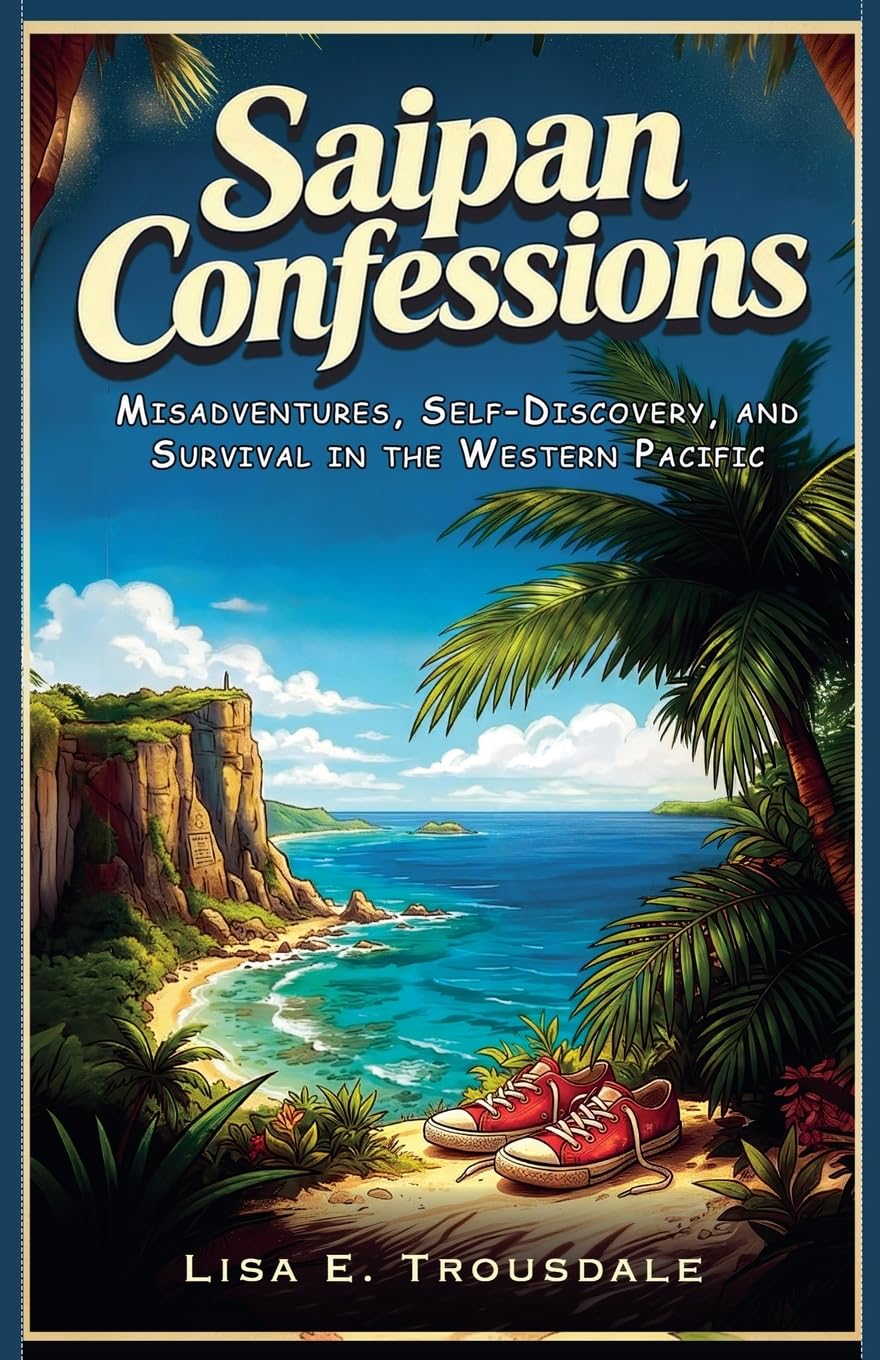
Saipan Confessions: Misadventures, Self-Discovery, and Survival in the Western Pacific
by Lisa E. Trousdale
"How did I end up here-naked, in a dead man's house, in the tropics-covered in termites?"
That unforgettable question launches a wildly entertaining true story of adventure, culture shock, heartbreak, reinvention, and survival in one of the world's most remote island chains.
In her twenties, Lisa E. Trousdale leaves the familiar comforts of the U.S. mainland for Saipan, a remote tropical island in the Western Pacific where typhoons rage, jungle trails disappear into darkness, and almost nothing goes according to plan. What begins as a bold leap into paradise quickly spirals into cultural misunderstandings, questionable decisions, unexpected danger, and a series of increasingly unbelievable misadventures.
Set in the early 1990s-before smartphones, social media, and instant connection-Saipan Confessions captures the raw unpredictability of living abroad in a time when getting lost was part of the adventure. Armed with determination and curiosity, Trousdale navigates unforgettable characters, island chaos, friendship, loneliness, resilience, and the complicated process of finding her place in a world far from home.
But this is more than a travel story.
What she doesn't realize is that the journey will challenge not only her survival skills, but also her confidence, identity, and understanding of home. Through humor, honesty, and sharply observant storytelling, Trousdale invites readers to laugh, reflect, and perhaps even reconsider the possibilities waiting beyond their own comfort zones.
Perfect for readers drawn to the courage of Wild, the self-discovery of Eat, Pray, Love, and the adventurous spirit of Tales of a Female Nomad, Saipan Confessions is an inspiring reminder that sometimes the best way to find yourself is to get completely lost.
About the Author
For more than 25 years, Lisa Trousdale has partnered with executive leadership teams to design and lead enterprise resilience strategies that protect people, safeguard operations, and preserve brand trust during disruption. From crisis response and emergency management to long-term business continuity and recovery planning, her work helps organizations be prepared — not just reactive — when it matters most.
Saipan Confessions is based her assignment as a FEMA liaison assisting the government of Saipan in developing their emergency management programs.
| | |
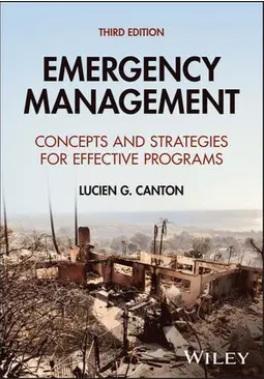
Emergency Management: Concepts and Strategies for Effective Programs
Third Edition
by Lucien G. Canton
Emergency Management provides an overview of the larger context within which emergency management response occurs and stresses the development of programs to address a wide range of issues. Not limited to traditional emergency response to natural disasters, it addresses a conceptual model capable of integrating multiple disciplines and dealing with unexpected emergencies.
This book details the three pillars on which successful emergency management is based: an understanding of history, knowledge of social science research, and technical expertise in emergency management operations. It also provides insights on future potential crises like climate change and pandemics.
Newly revised to reflect recent events such as the COVID pandemic and subsequent resilience efforts, this Third Edition features expanded coverage of strategic planning, recovery, and crisis communication tools as well as updated real-world examples and references.
Coming Soon!
Pre-order Available
| | |
| | Looking for a speaker for your conference? I offer keynotes, seminars, workshops, and webinars, either in person or virtually. You can find more details and sample videos on my website. | | | |
|
©Lucien G. Canton 2026. All rights reserved.
You may reprint and excerpt this newsletter provided that you include my copyright, the source,
the author, and "reprinted with permission."
ISSN: 2334-590X
| | | | |