Celebrating A Wonderful Way To Be A Catholic | | |
Emmaus ECC Newsletter
November 28, 2025
| | |
First Sunday of Advent
Wake Us Up to Hope
| | |
Preparing for Mass over Zoom: If attending by Zoom create a sacred space for yourself and your family. It is helpful to light a candle and put down a small cloth where you will place your bit of bread and wine. Download and print the worship aids. We gather at 10:00 am and mass begins at 10:30 am. Request Zoom link HERE.
Come to Church: All are welcome! When you ask people how they found us, the answer is often that they heard about us from a friend. Be that friend. Invite them to come with you to mass in our Sacred Space. We encourage you to come in person if you can. Advent is the best time to bring newcomers to church. We can all begin the new year together!
Advent begins on Sunday: November 30th! We begin a new church year next Sunday with the beginning of the Advent season. This is a perfect time for someone to start coming to church, or return to church, especially as we begin to read from cycle A of our lectionary -- the beginning of the three-year cycle of readings. We will be reading from the gospel according to Matthew. This Sunday we will bless our Advent wreath and count down the days to Christmas.
Modern Mystics Book Group. Our next discussion is this Sunday, November 30th, at 1:45 pm by Zoom. We have changed our schedule to the first and third Sundays of the month, but we are going to take advantage of an extra Sunday this month. We will be discussing chapter five of the book, Tears of Things by Richard Rohr. Contact Deacon Connie or Bishop Kedda if you want to join the group.
Christmas Eve Mass: We will be celebrating Christmas on December 24th at 6:00 pm. This mass will be shared by Zoom. Please plan to join us.
Food Bank: Our support is crucial! Please bring canned goods and other non-perishables to church with you on Sunday and put them in our food bank bag. To donate to the Thurston County Food Bank, go HERE. Your generosity means families in our community will have the resources they need, even as our food bank lines continue to grow.
Synaxis: During this difficult time in our country Bishop Kedda recommends prayer time based on the readings of the day. One opportunity is Synaxis that takes place every day at 3:00 pm Pacific time and is sponsored by the Franciscans of Reconciliation. Use link HERE. Come join us for prayer.
-------------------
Websites to visit often: Bookmark our community website HERE and also our diocesan website HERE.
Follow Interfaith Works on Facebook HERE.
Facebook Page: Stay in touch! Visit our Emmaus ECC Facebook page for news during the week HERE. Visit the PNW Diocesan page HERE.
Bishop Kedda's blog: You can check it out HERE. Right now, she has started a series of reflections on her book All Creation Waits. Much has happened as the years have gone by -- how much of what she wrote is still relevant today.
If you have suggestions for how our community of Emmaus could be reaching out into our neighborhood to make a difference, contact Deacon Connie and share your ideas.
| | |
Come,
Father, of all,
wake us up for the
coming of his kingdom.
Let us find him now, in the crimson-colored dusk,
in his crescent moon and flying geese,
see him in laughing children,
and in brothers and sisters
wherever we find
them.
Always awake, watching for him.
with our hearts open wide,
so we each and all
can
“greet him
the days I meet him,
and bless when I
understand.”
The Sunday Website at St. Louis University
___________________________________________________________
| | |
First Sunday of Advent
The Coming of a new Kind of Kingdom
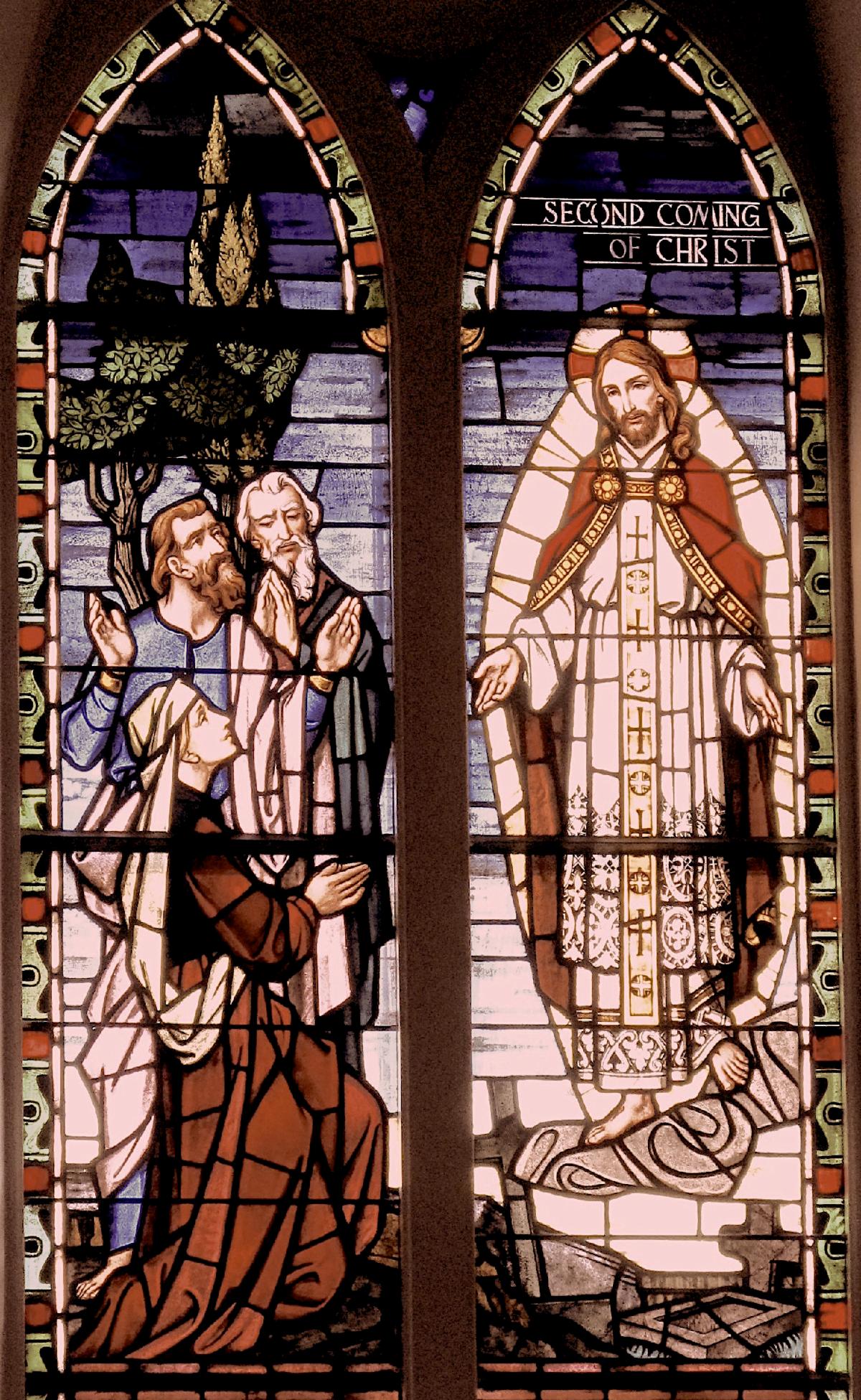
This Sunday’s readings begin on a note of optimism. God promises that one day all will be well. And so, we are to be the people whom, no matter how dark it gets, light a candle of hope, because we believe that God is faithful and is both with us and for us. We have also entered the season of Hallmark movies. If you watch one of these movies that stream one after another during the days leading up to Christmas, you can experience the deep-seated hope that human beings have for happy endings. The plots are similar – two people find each other amid some kind of trouble, they almost lose each other due to misunderstandings or a crisis, but at last, the trouble is resolved, and the happy couple reunite in love. They live happily ever after.
As corny as it sounds, we might think of ourselves as living in one of these movies, but we are stuck in the middle where the trouble and misunderstandings are, and everything seems to be falling apart. It doesn’t look like there will be a happy ending. But God has shown us the end. The day will arrive when there will be universal peace and God’s reign will come on earth as it is in heaven. However, our scripture is using eschatological language, meaning, this universal peace will happen at the end of history. We don’t get to imagine that a time will come within our own history when there will be no wars. We are not living in a Hallmark movie. The end of all wars will happen when God’s purpose for Creation is fulfilled at the end of history. We find ourselves living in the in-between times. We are a people standing in the dark, looking toward the dawn glimmering on the horizon.
Our scriptures hint that we are already living in the end times. The Messiah, Christ Jesus, arrived on planet earth to bring about God’s promised correction to the way things are in our world. He came to bring universal peace, justice, and love. People are quick to notice that this anointed Messiah left before the task was complete. There are still wars, injustices, and hatreds. Children are crying as their parents are hauled away to be detained and even deported. Our country has forgotten what due process looks like. Humanity seems bent on destroying planet earth. Almost daily God’s creatures are going extinct, our waters are being poisoned, and our air is being polluted. Greedy people use their power to overturn regulations that sought to protect us and our planet for the sake of making profits. Our world is desperate for the coming of a Messiah to save us from ourselves.
Some people look for signs that the end of days is coming. What they fail to understand is that they have already arrived. There is no need to predict the end of the world. We are living in the tension between the present age of human empires and kingdoms, and the age that is coming; the new age when God reigns over all the earth bringing peace, justice, and love.
Those who fail to understand this coming of God’s reign are looking for a dramatic end of the world scenario. They are on fire with an apocalyptic passion and yearn for God to come and end everything at once. Sadly, desperate people can want the world to end, which means they will do nothing to prevent it. They hate this world and its suffering, and they hate their life, and yearn for a better world. They look for the end of the world as a rescue from this life. But know this, this understanding is the opposite of what we followers of Christ believe.
As in the days of Noah the arrival of God’s reign interrupts our everyday activities. Mary and Joseph’s lives were disrupted by an unexpected pregnancy. Their lives were never the same as they welcomed, protected, and nurtured the child Jesus. The lives of ordinary working people were disrupted when Jesus called them to follow him as disciples. Saul’s life was dramatically changed when the risen Christ appeared to him on his way. When Christ shows up, we can expect to have our lives disrupted, too. We are to be awake and watching for Christ to show up at any moment. As in the days of Noah, there are those who are ready for God’s reign and those who are not.
God calls us in Christ to pick up where Jesus left off. We are called to go to the “not yet” places in our world. Where justice has not yet come to people, where people are not yet included in the good things of life, where people are not yet free of violence, where starving and thirsty people do not yet have food and water, where people do not yet have homes to shelter them, where children have not yet been returned to their parents, where refugees have not yet found refuge. Where anyone who is different is not yet welcomed. We are called to go where compassion is needed and we are to do something to make things better.
We can all do some small thing to make things better and we can do some small thing every day, if we are paying attention. Let us be those who are ready for whatever God calls us to do today.
Mother Kedda
_______________________________________________________
| | | |
Too many have been doing nothing for far too long, and what could be more “anti-Christ” than to take the position that poverty, hunger, injustice, and abuse of the planet and its inhabitants are none of our business, or that we’re just too busy to do anything about it? Apathy is a luxury we can’t afford any longer, nor do we want to.
~Sylvia Browne~
_____________________________________________________
| | |
This reflection was on the Facebook page for the Reformowany Kościół Katolicki w Polsce, our sister Church in Poland with Bishop Tomasz. It is a good follow-up to our series on the liturgy of the mass.
The beating heart of the Church or a few reflections on the Eucharist.
Have you ever wondered why the Eucharist is so important in the Old Catholic tradition, including the Reformed Catholic Church in Poland? Why do we say that the Church is born out of it - and is fully revealed in it what it is?
In the Old Catholic understanding, the Eucharist is not just "one of the sacraments" or "a beautiful symbol of togetherness". This is the birthplace of the Church Here - in a specific community, around specific people, at one table - the local church is fully the Church of Christ.
1. The Eucharist reveals the Church
When we gather around the altar, something far greater than a gathering of the faithful happens. The Eucharist is the Church's fullest incarnation—the moment when its unity, diversity, Catholicism and apostolicity are manifested.
This is where we experience koinonia, this deep communion with God and with each other. In one Bread and one Cup, we recognize that we are one Body—not by our feelings or declarations, but by the grace that unites us in Christ.
2. Real presence and real transformation
Old Catholics believe that Christ is really present in the Eucharist - not metaphorically, not symbolically, but personally, bodily and spiritually. The bread and wine become His Body and Blood not because we know the exact "mechanism" of this mystery, but because we ourselves find ourselves with God who works in the power of the Holy Spirit.
At the center is not a theory, but a mystery: Christ is given to us as a sacrifice of love, as the Word, which has become bread for the life of the world.
3. The Holy Spirit incarnates Christ here and now
Old Catholic theology strongly emphasizes the epiclesis - the prayer for the descent of the Holy Spirit. Just as the Spirit conceived the Son in the womb of Mary, so today he incarnates Christ in the signs of bread and wine, so that the Church can be fed with the life of God. The Holy Spirit makes the Eucharist not only a remembrance, but a presence of Christ's saving work. The conviction of the importance of the epiclesis will be emphasized during the conduct of the Liturgy of the Eucharist according to the Old Catholic masses in signs such as incense or singing the epiclesislesis prayer. Every Eucharist Liturgy is a Pentecost, in which the Holy Spirit descends upon the community of the Church.
4. The Eucharist forms the local Church
The Church in the old Catholic understanding does not exist "abstractly". It exists in a place where the local community celebrates the Eucharist led by a bishop or his delegated deputy (presbyter or presbyter).
A bishop is not an administrator but an icon of Christ - a sign of His presence, a guarantor of the unity and authenticity of the Liturgy performed. This is why the Eucharist is not a priest's "private worship". Church happens when it's celebrated by God's people.
5. The source of mission and hospitality
Everything the Church does – its prayers, witness, service, evangelism, and care for the needy – grows from the Eucharist as a source of life and mission. The old Catholic practice of eucharistic hospitality emerges from the same place. In the Ecumenical Catholic Community, we believe that baptism and a sincere desire for God are enough to sit at the Eucharistic table of Jesus and receive His Body and Blood. We don’t require “faith tests” or “moral qualifications” because we are convinced that it is Christ Himself inviting and the Church must not stand in the way of His grace. And the person who abides with Jesus, at His word, in His presence and in His community - over time grows in his faith and gradually learns to live as Christ desires.
The Eucharist - genetic code of the Church
One could say that the Eucharist is the spiritual DNA of the Church.
It contains everything that the Church is and what it is called to:
unity, holiness, catholic, apostolic, mission, togetherness, love.
When we perform the Eucharist, the Church is fully the Church.
As we feed on Christ, we become His body.
When we sit down at the same table, we see that we really are God's family.
That is why the Eucharist is neither an "addon" nor a "tradition". He is the heartbeat of the church Where the church beats, there is the church.
Bishop Thomas Jordan Puchalski
| | |
On Being a Different Kind of Catholic Church
I received this message from Bishop Tomasz Jordan Puchalski of the Reformed Catholic Church in Poland. I ask you to take time to read it. We all need to know our faith tradition. As you are aware, we are in full communion with the Reformed Catholic Church in Poland, and we too are rooted in the Old Catholic faith tradition:
My dearest sister,
I wrote a reflection on today’s sad commemoration. Maybe you can share your thoughts about this:
On July 18, 1870, during the First Vatican Council, two dogmas were proclaimed: the dogma of papal infallibility and the dogma of the pope’s universal jurisdiction. This decision, expressed in the constitution Pastor aeternus, declared the Bishop of Rome infallible ex sese, non autem ex consensu Ecclesiae – by his own authority, not by the consent of the whole Church. For many, this marked a turning point, dividing the path of the ancient, undivided Catholic Church from the newly emerging vision of the Catholic Church under the leadership of the “new papacy.” For this reason, this date is also particularly significant for our Old Catholic community of the Reformed Catholic Church in Poland.
Although our Church is not formally a member of the Union of Utrecht, it fully embraces the Declaration of Utrecht from September 24, 1889, which states:
“We hold fast to the faith of the ancient Church, as expressed by St. Vincent of Lérins: We hold that which has been believed everywhere, always, and by all; for that is truly and properly Catholic.” This principle forms the foundation of our position regarding the papacy.
Read the whole message HERE.
____________________________________________________________
| | |
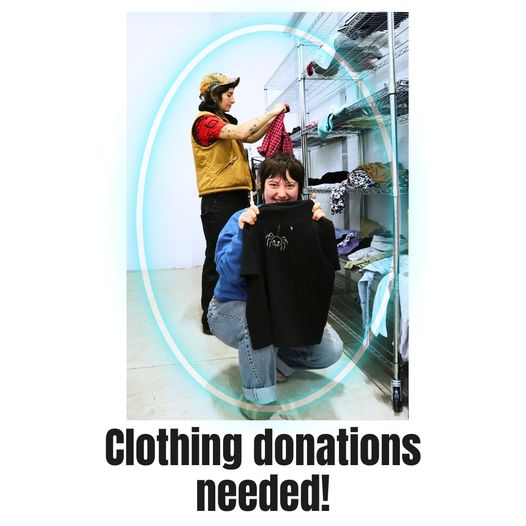
Interfaith Works Homeless Services: Donation drop offs can be taken to our admin office 110 11th Ave SE 10am-4pm, Mon-Thurs
Thanks so much!
________________________________________________________________
| |
The Emmaus ECC Statement Against Racism
Our faith calls us to racial justice. We recognize that our faith demands that we transform our beliefs, values, systems, and commitment to racial equity. Scripture has given us the way for such healing to occur, and the responsibility to pursue it.
Our faith calls us to lives of charity, advocacy, and action on behalf of marginalized people. In the Pacific Northwest, we are especially committed to justice for Indigenous, Latina and Latino, African American, and Asian communities, whose oppressive histories and realities are well-documented.
We value the voices of people of color in this calling and in these efforts. We believe all people are loved equally by God our creator. We commit to partnering with ecumenical, interfaith, and civic initiatives to pursue racial justice in our local communities. We will seek solidarity with broader initiatives but will not wait on them in order to act. “The time is always right to do what is right” (Rev. Dr. Martin Luther King).
| | |
ECC Statement on Race:
Our nation is in desperate need of racial healing and transformation. The healing process cannot begin until the truth of our country's past and present sins are confronted. As people of Christian faith, we acknowledge and renounce both past and present dehumanizing, oppressive, abusive, enslaving, violent and lethal actions and inactions against African American communities. We proclaim that it is time for metanoia – turning away from evil and turning toward God's liberating love.
As members of the ECC, we believe in the power of communication to heal and that the search for truth can lead to justice. As such, we pray that our country will begin a process of truth-seeking that will lead to long-term reconciliation. We in the ECC pledge to begin a deliberate and transparent truth-telling process within our own faith communities.
Jesus, the heart of our faith, lived and died for love. He showed no partiality. God's community is diverse and totally integrated. We pray for God's guidance and mercy as we work to attain racial justice and build the beloved community, walking together the path paved with truth, love, equity, and justice. In the prophetic tradition, we boldly proclaim, "Let justice roll down like waters and righteousness like a mighty stream." (Amos 5:24)
____________________________________________________________
| | |
Good
Shepherd
Ministry
Contact Fr. David Gerardot HERE.
Phone: 360-789-5149
For a description of Good Shepherd Ministry go HERE.
For the news and information on Good Shepherd Ministry go HERE.
| | |
Joe's Environmental Tip
Stop needless consumption; consider what you really need, not what you want. Ask where it comes from. Can you buy it used? Can you borrow or rent items of infrequent use?
| | |
Elevator speech: An Ecumenical Catholic is someone who wants to engage deeply with the example of the early Church, when congregations were small, inclusive, participatory, and centered on Christ’s message of love, collaboration, and service. Ecumenical Catholics believe that God is present in all things, and that to know and care for all the people, the earth, and all the living things around us is how God wants us to serve Them. (Submitted by Beverly Marshall-Saling).
ECC YouTube Channel: Go HERE for videos of the 2022 ECC Synod. You can also catch the "Parade of Parishes" which shows off what various ECC communities are doing to be churches in action. It is awesome to see other ECC communities around the country.
ECC Ecclesiology: HERE.
____________________________________________________________
| | |
ECC Diocese of the Pacific Northwest
Vision Statement
Ecumenical Catholics of the Pacific Northwest
Restoring relationships of justice, peace, and love
with God, with one another, and with all of Creation
by living out our baptismal ministry as the Body of Christ.
Mission Statement
We are the Ecumenical Catholic Church of the Pacific Northwest embracing a network of sacramental communities in Washington, Oregon, and Idaho. As authentic Catholics we celebrate our continuity with the undivided Church of the first millennium and believe that salvation is offered to all. Our unity is built on scripture and the Nicene Creed, and Eucharist is the visible sign of that unity. We are in communion with the association of Churches known as the Ecumenical Catholic Communion and function within the generous parameters of the ECC Constitution.
We Believe
We are the People of God, baptized in Christ – bishop, priests, deacons, and laity – who believe that all people are unique and sacred. We believe that all people possess valuable gifts and talents to be shared. Participation of all the baptized in the work of the Church is essential to our call as the Body of Christ serving in this region. Therefore, we are a synodal Church.
We Offer
The ECC Diocese of the Pacific Northwest offers a joyful way of being Catholic focused on love, not guilt. We welcome all people and offer unity with diversity. We commit ourselves to dialogue and cooperation with others. We believe we have a responsibility to be open to ecumenical dialogue with all the baptized, and we support interfaith cooperation and understanding.
We do
We join together as Church to follow the messianic call of the Holy Spirit to form sacramental communities, to preach the good news of salvation and liberation to all, to offer a refuge in Christ for those who suffer prejudice, and to conform our lives to the example and teachings of Christ Jesus. The setting in which we live fosters an awe of God’s majestic creation, and respect for the land, water, and mountains, as well as the diverse animal life, and all the people who lived on this sacred ground before us.
Distinctions
We are the people of God who seek to dive deeper into the Catholic faith handed down to us by our ancestors from the teachings of the early Church. We believe that anyone who is gifted and called by God, qualified for ordination, and is called by a community, may present themselves for ordination. We believe that marriage is a partnership for the whole of life, and if two adults intend to commit themselves to such a union, they may celebrate a sacramental marriage. We believe that persons have the right to follow their sincere and informed consciences in moral decision making. We recognize that only the Holy Spirit possesses infallibility. No human or institution can claim this.
The Diocesan Constitution may be read HERE. See Website HERE.
| | |
Contemplative Prayer/Scripture study: noon on Thursdays at St. John Episcopal Church. Contact Fr. David for more information.
Sundays we gather at 10:00 and mass begins at 10:30. All are welcome to join us! You are also able to join us by Zoom. Email Bishop Kedda for a link.
Thursday study group: 6:30 pm by Zoom with Oregon Episcopalians.
Synaxis: Every day at 3:00 pm. Sponsored by Franciscans of Reconciliation. Use link HERE. Come join us for prayer.
Advent begins: November 30th.
Modern Mystics Book Group: November 30th at 1:45 pm by Zoom.
Christmas Eve Mass: December 24th at 6:00 pm by Zoom only.
Get to Know a Muslim: First Fridays of every month. Open invitation to join them 1:00 to 3:00 pm. For more information read their flyer HERE.
Enter into Friday Stillness: Fridays. Contact Rev. Kathleen Bellefleuille-Rice for more information.
| | Emmaus ECC | Member of the Ecumenical Catholic Communion | www.emmaus-ecc.org | |
NOTICE
The Sacraments of Marriage, Reconciliation and Anointing, are available upon request. Contact us about Funerals and grave side services. Preparation is required for Baptisms -- for parents when children to be baptized are below age seven; for those over age seven, our community supports the Rite of Christian Initiation of Adults. Our priests are also happy to meet with you individually, and confidentially, to discuss any spiritual or pastoral concerns you may have.
Bishop of the ECC Pacific Northwest Diocese
We Support Marriage Equality
| | | | |