EARLY AUTUMN NEWS FROM THE "CACTUS PATCH"
September 30, 2026
| |
Thanks for Another Wild Season!
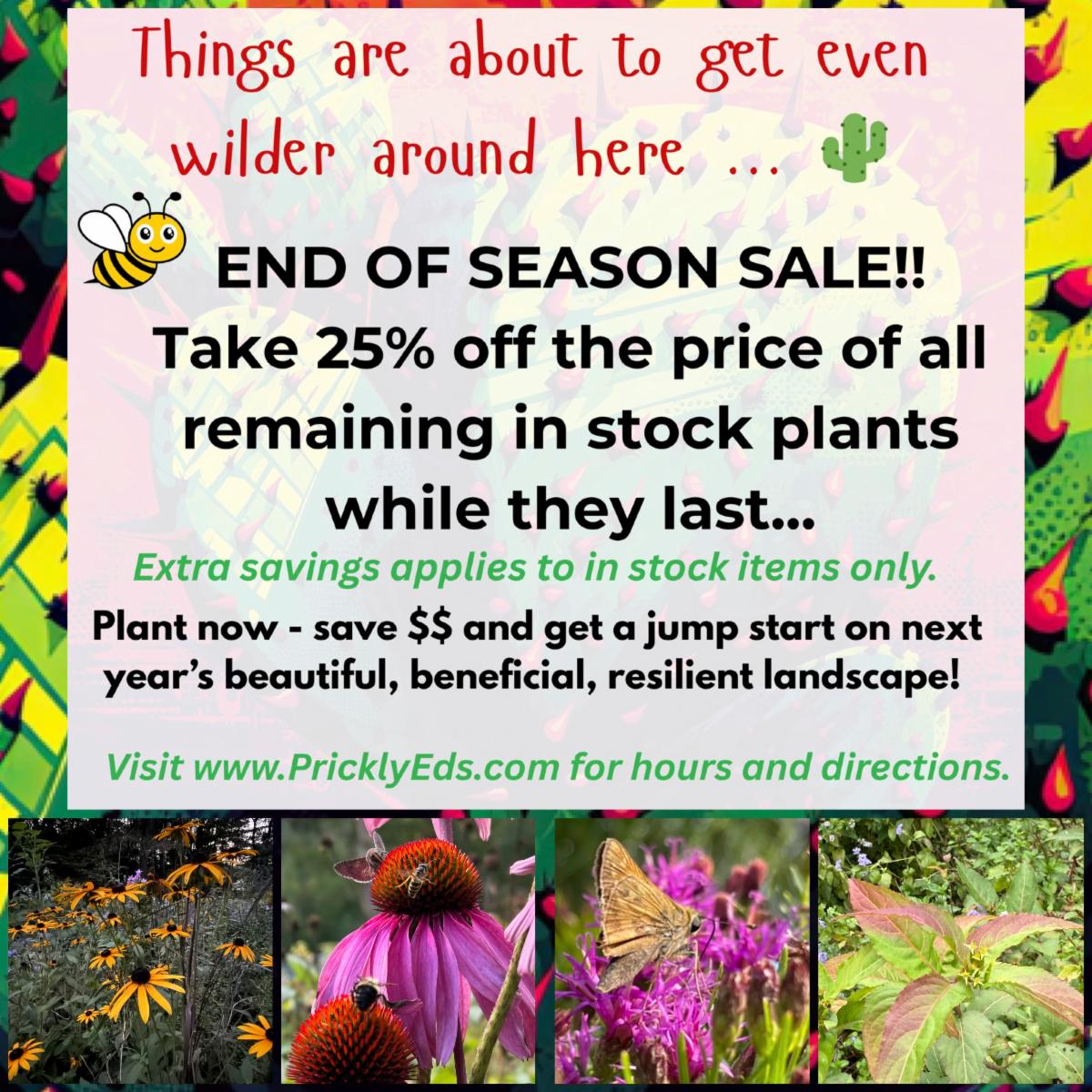
Starting this weekend - Shop and Save.
| | |
It has been an absolutely amazing, whirlwind, season here at the Patch! This region will be buzzing for a long time to come with all of the wildly wonderful native plant roots that have gone into the ground. Thank you so much to everyone for your support and extra thanks to all who are working hard to restore the Native Plant Communities that make Southern New England unique. You inspire us and make our communities healthier and more resilient with your efforts.
We will continue to be open for drop in shopping every Friday, Saturday, and Sunday 11-5 until mid-late October (or whenever the plants run out for the final time). But shortening days and cooling temps are a sign that it is time for our remaining plant inventory to get their roots into the ground. So, starting this Friday - October 2, 2026, every remaining in-stock plant including perennials, grasses, ferns, shrubs and trees are all 25% off. We still have some amazing plants in stock - but things will go quickly now so get them while you can! We have updated our in-stock inventory list and you can access it on the page linked below.
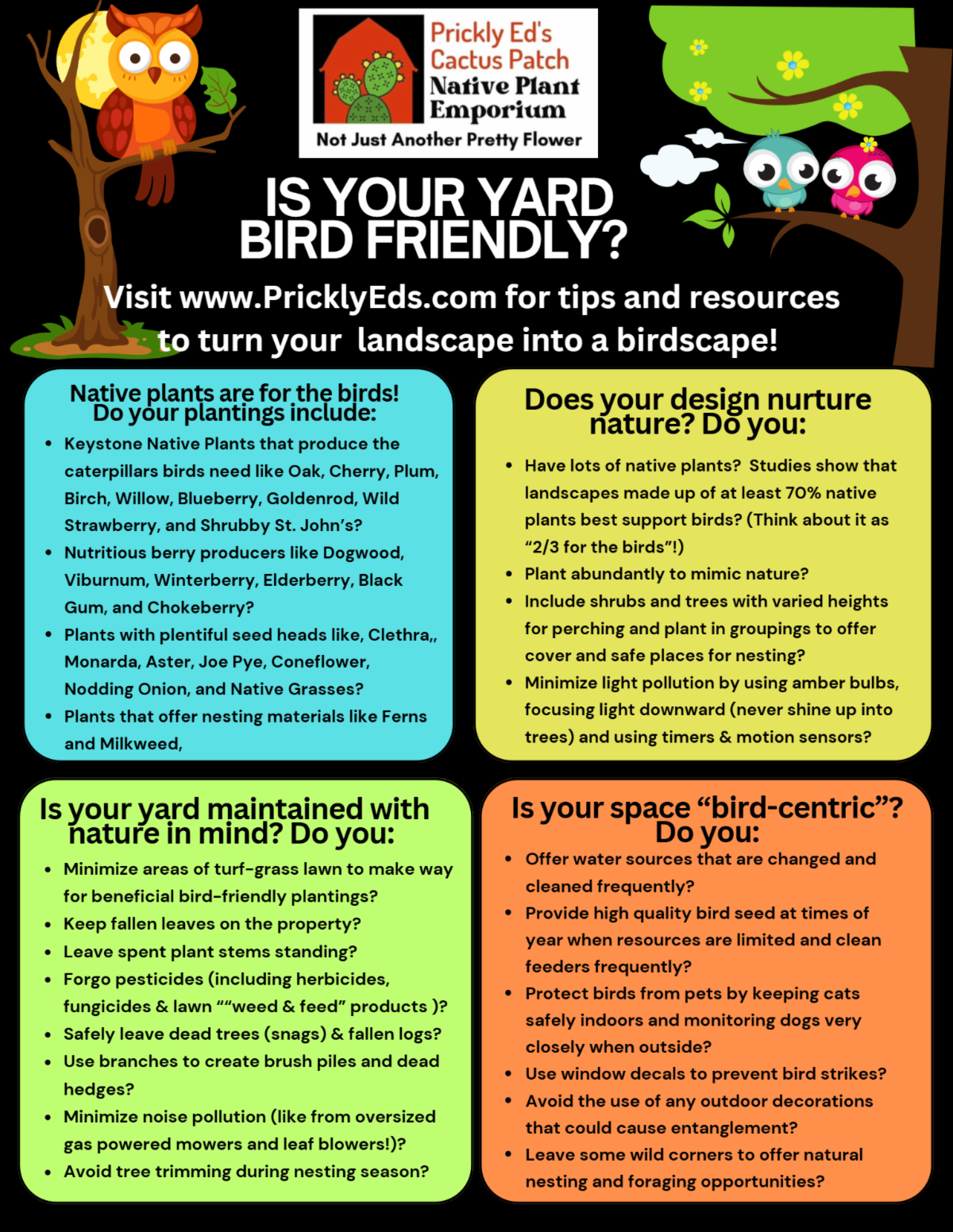
| | How Bird Friendly Is Your Yard? | | |
Fall migration is hitting peak strides right now...
Each autumn bird watching enthusiasts flock to Rhode Island and Southeastern, MA, main stops on the Atlantic Flyway. Glimpses of rare birds and awe-inspiring views of flocks of beloved common sea and songbirds are all possible, especially in the southern corners of the region. But with each passing season, there are less birds to see; our birds are in trouble.
Scientists have suspected bird losses for some time, but only in the last few years have declines been quantified. In 2019 researchers from seven institutions released a State of the Birds report with alarming news - North America lost 2.9 billion or 30% of our birds since 1970. This includes common birds like juncos, blackbirds and finches. It was described as a staggering loss that suggests the very fabric of North America’s ecosystem is unraveling.
Work is underway to better understand the reasons for these declines, but scientists are confident that the top reason is loss and fragmentation of habitat. We cannot put back habitat that has been lost to development, but we can work together to reconnect vibrant patches of nature that do remain and in doing so can create corridors of habitat right across the East Bay and beyond.
Think for a moment of our national roadway system, four million miles knitted together with intricate connections. What would happen if suddenly the roadways did not connect, if they simply hit dead ends? Life as we know it would come to a halt. That is exactly what it is like for songbirds as well as vital pollinators and creatures up and down the food chain. Roadways, parking lots, closely cropped lawns, mulch gardens, ornamental plantings and pesticide-soaked spaces all represent dead ends on the highway of natural life.
But it doesn’t have to be that way. The space right outside our doors represents a land of opportunity to begin building back lost connections. Connections that can be a lifeline. To do this we first need to leave behind the notion that nature exists only somewhere “over there” and invite nature back home. When we create usable patches of habitat in our own yards and in various corners of communities, then those spaces connect with each other and into larger conservation lands and suddenly nature has a chance to rebound.
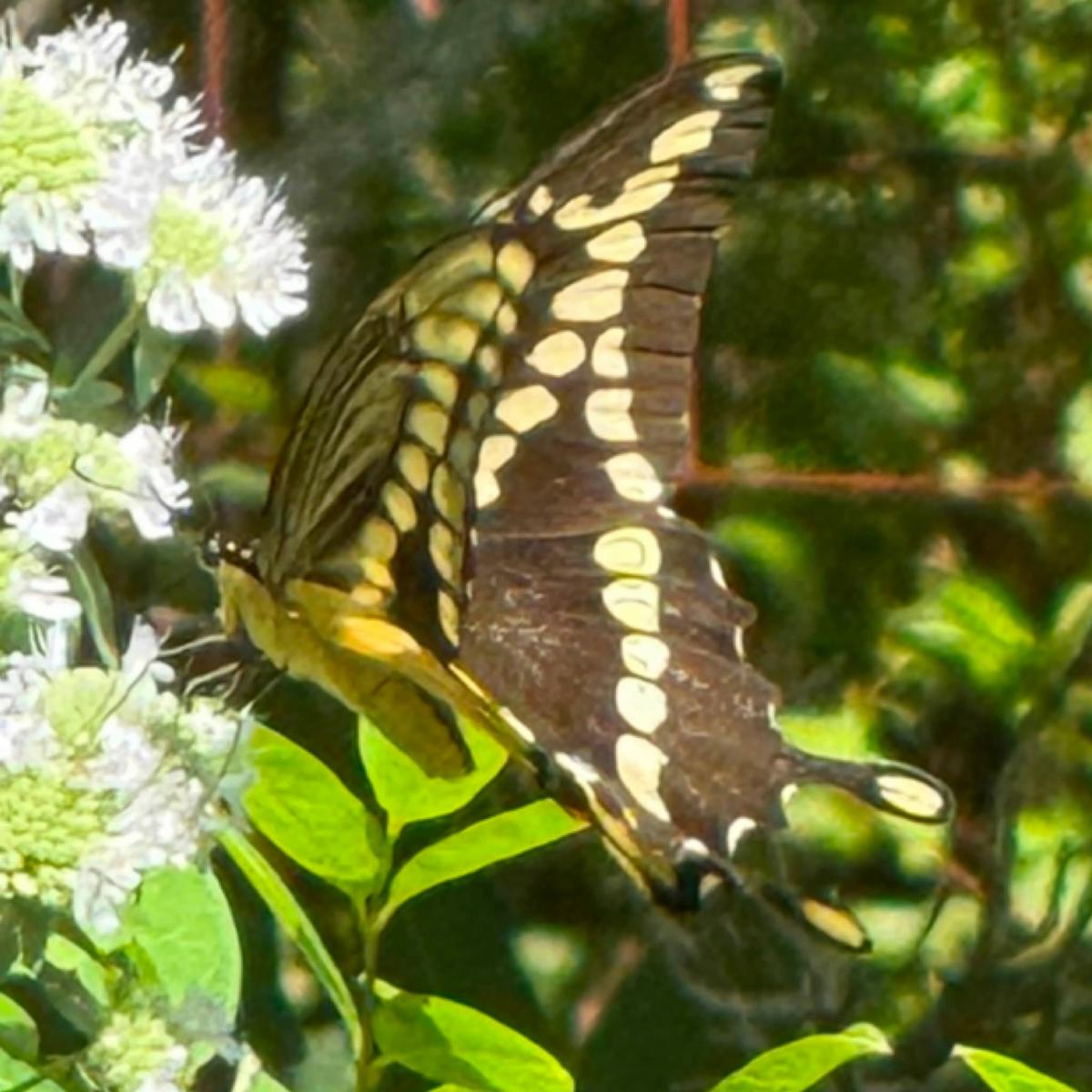
| | Shown above is a Giant Swallowtail Butterfly visiting our yard this summer. Just a few short years ago the Giant Swallowtail was considered a "historical species" for Rhode Island - they were present only in history books. But, in recent years sightings in pollinator friendly yards around our region have brought hopeful evidence that our actions do matter and nature can find remarkable ways to rebound. | |
The Power of the Patch
It is an easy trap to fall into: looking out at a modest patch of turf or a small suburban lot and thinking, What difference could this possibly make? In the face of global climate shifts, plummeting insect populations, and massive habitat loss, it feels like our individual choices are just a drop in an ocean of concrete.
But ecology tells a completely different story.
Your yard is not an isolated island; it is a critical piece of a giant geographic puzzle. In the United States alone, turf grass lawns cover over 40 million acres - an area larger than the state of Georgia. And here in Southern New England, individual property owners – like most of you – are literally the front lines of conservation. Our region features some of the most heavily privatized landscapes in the country. Rhode Island actually ranks number one in the nation for the highest percentage of private land ownership at 98.5%, closely followed by Massachusetts at 93.7%.
The Northeast simply does not have the vast expanses of federal and public lands seen out west. The future of nature in Southern New England doesn't rest in the hands of government park rangers, it rests entirely with us. One of the most dangerous narratives in modern environmentalism is that individual actions are too small to count. When you change your yard, you aren't just changing your soil; you are shifting the local culture.
One yard creates a sanctuary. Two yards create a corridor. A dozen yards create an ecosystem. By taking control of the plot of land you inhabit, you demonstrate a visible, beautiful model of climate resilience. You prove that we do not have to be passive bystanders in the decline of the natural world, we can be active participants in its recovery.
THE ABOVE TEXT IS AN EXCERPT FROM ONE OF OUR MOST RECENT BLOG POSTS - READ THE ARTICLE IN ITS ENTIRETY BY CLICKING HERE.
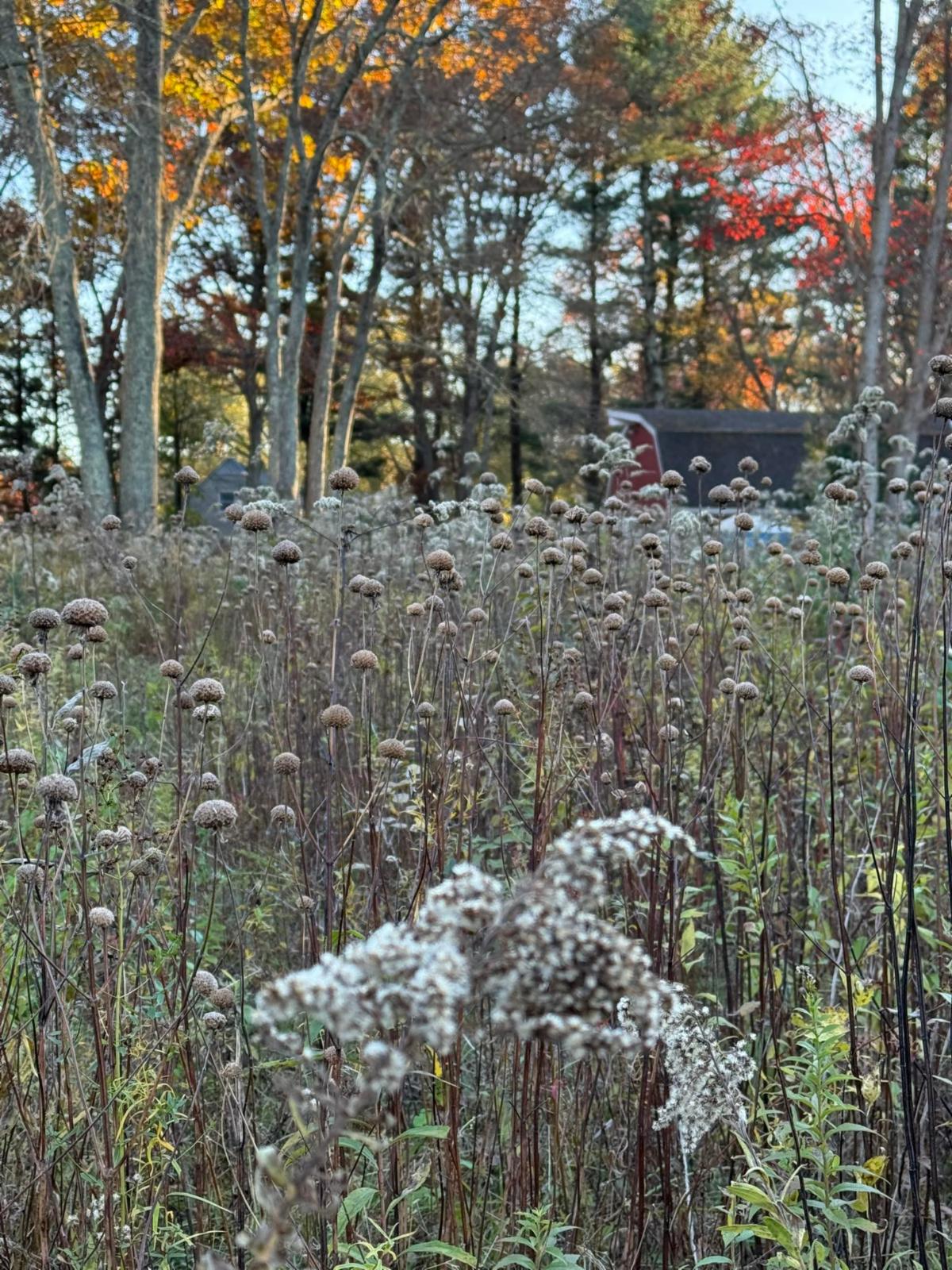
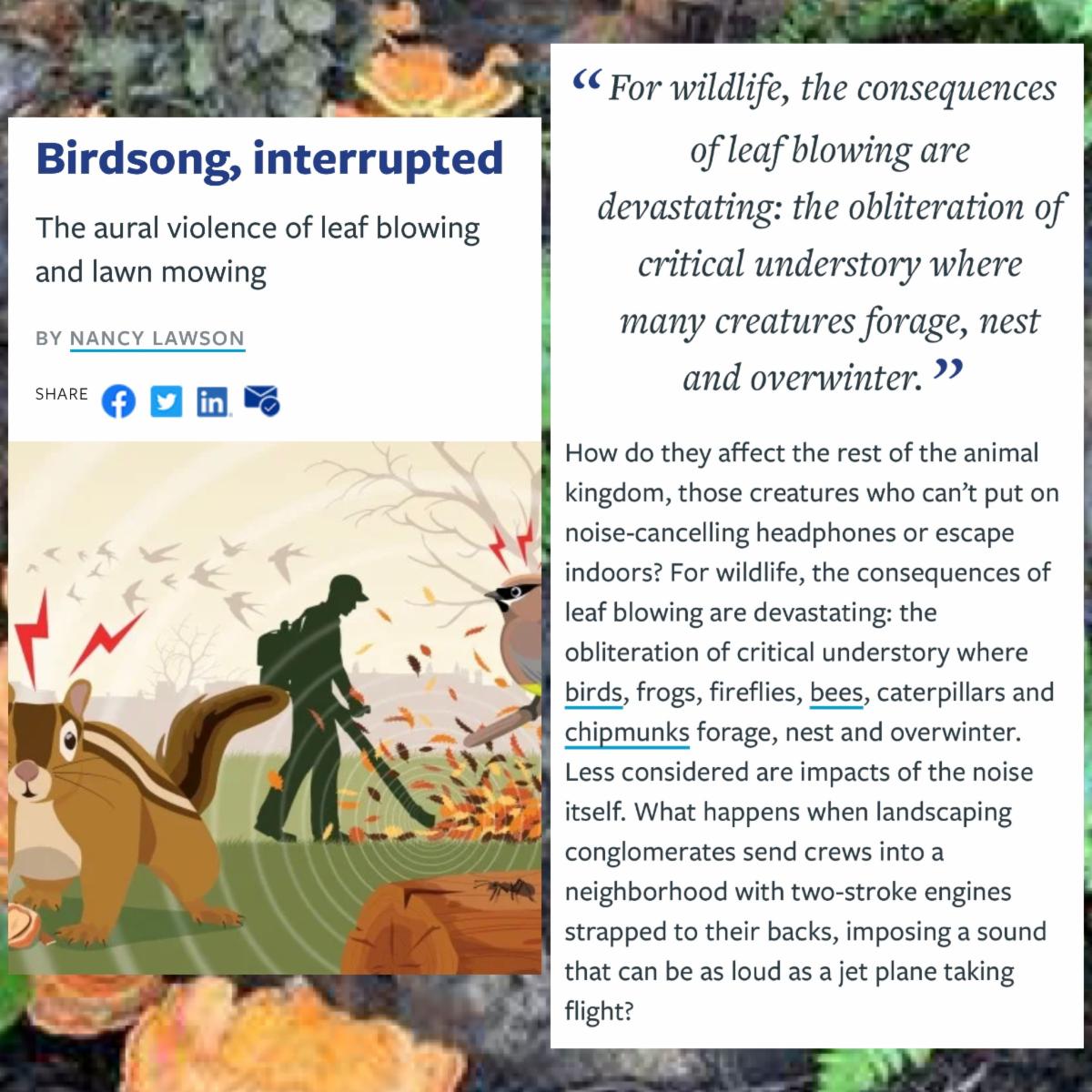
| | | | A Beautiful Mess - Embracing Fall's Bounty | | What if one of the most revolutionary acts of gardening you perform this autumn is doing almost nothing at all? As the nights grow cooler across the East Bay, traditional landscaping culture tells us to cut, blow, and bag every piece of yard debris—but science shows this rigid "clean-up" routine literally throws next year's ecosystem into the trash. According to the Xerces Society, overwintering habitat is one of the most important factors in determining whether pollinators survive the winter. In fact, recent data reveals that removing leaf litter slashes spring butterfly and moth emergence by a staggering 45% and destroys the insulation swallowtails, bumblebees, and fireflies rely on to survive freezing New England nights. Read on to discover how putting down the polluting leaf blower and adopting a lighter touch can easily balance neighborhood aesthetics with ecology—saving you grueling weekend chores while transforming your yard into a thriving winter sanctuary. | | This Autumn - and every season, consider how your choices impact neighbors of every kind. | | Much has been written about the effects of landscaping equipment on people and the environment. We know that gas-powered leaf blowers are not only deafeningly loud but inefficient, emitting far more pollutants than cars and trucks. We know they kick up clouds of mold, dust, pollen, feces and other contaminants in blasts of up to 200 miles per hour. And we know that this puts operators and others at risk of hearing loss, asthma, lung disease, cardiovascular disease and stress—all reasons that more than 200 municipalities across the U.S. and Canada have restricted or banned these antiquated machines. The thing we hear talked about far less often is the impact of these practices and machines on all of our wild friends. Click on the image below to explore this topic with the always insightful "Humane Gardener" - Nancy Lawson. | | We Tried the "Wildr Places" app and we think you should too! | | |
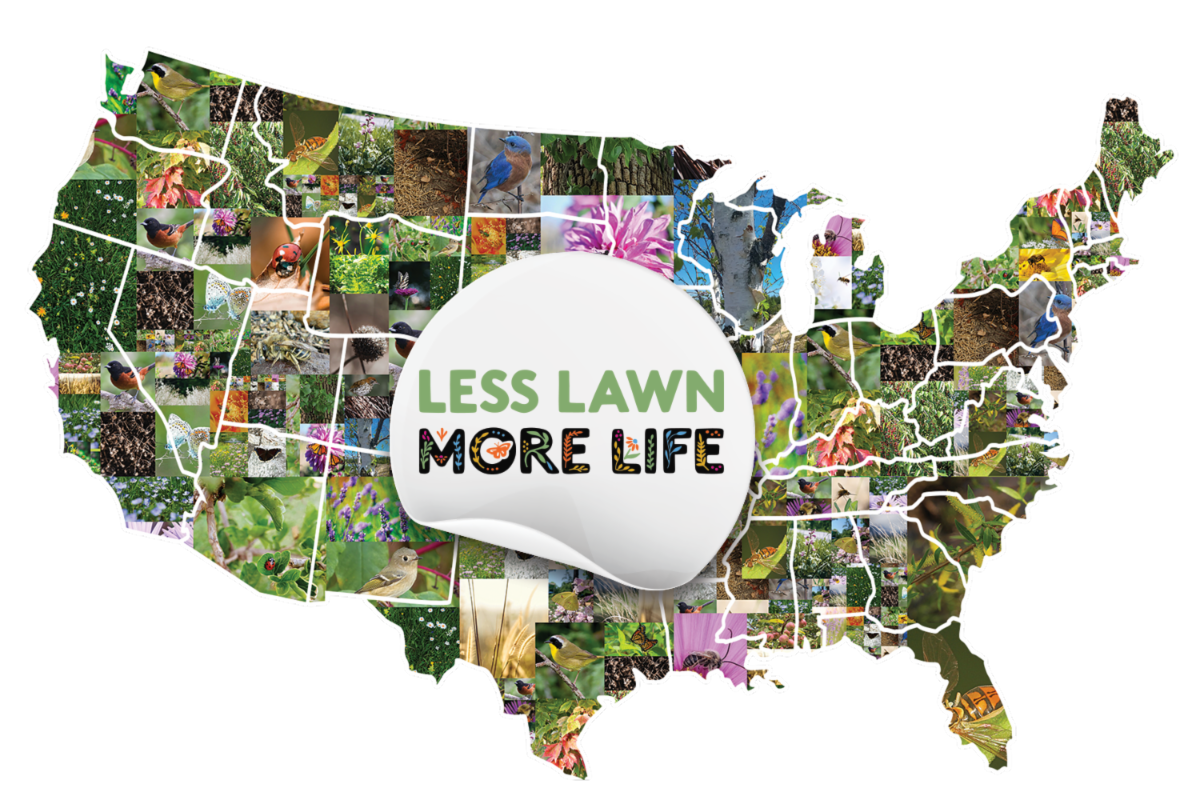
You've heard us talk about the national "Less Lawn More Life" Challenge. And now there is a companion App to support you as you work to create a more vibrant space right ouside your door. Downloading the Wildr Places app and obtaining your personalized Wildr Score provides the ultimate science-backed roadmap to transform any outdoor space into a high-functioning, biodiverse habitat. Developed by environmental stewards at Plan it Wild and built on rigorous field-tested research, the free quiz serves as an ecological snapshot of your property. By evaluating critical metrics such as native plant diversity, local wildlife support, yard management practices, and essential ecosystem services like stormwater absorption, it establishes a measurable baseline tailored explicitly to your local ecoregion. This translation layer for ecological science strips away the guesswork, demonstrating how small, everyday changes ike shrinking a traditional lawn or modifying pesticide use directly enhance local climate resilience and air quality.
Beyond an initial assessment, engaging with the Wildr Places App gives you access to specialized, hyper-local toolsets designed to guide your landscape transformation. The app features an interactive zone tracker and custom native plant lists powered by Doug Tallamy's keystone species data, highlighting the exact plants that provide the maximum benefit to regional pollinators, birds, and insects. Additionally, its geo-targeted Invasives Module integrates research-grade observations to flag high-pressure non-native species nearby before you accidentally purchase them at a local nursery. As you track your physical landscape improvements over time through photo logs, you are woven into an expansive network of eco-conscious neighbors. Through initiatives like the nationwide Less Lawn More Life Challenge and seamless syncing with the Homegrown National Park Biodiversity Map, individual backyard efforts scale up into a visible, community-wide conservation movement.
If you decide to try it out be sure to look for us there. Our 'handle' is "Wild Barneyville". We dove into the technology so we could give it an unbiased review for all of you. We like it - we like the science that drives it - and we like that it balances celebrating progress over perfection while also staying true to the realities of what spaces really need to be healthier for all inhabitants. Despite our thumbs up to this techie tool, we still believe that the real power of this work comes from the ground up and that it is built through strong personal connections. That is one of the many reasons we are so glad to be connected to all of you!
| |
YARDS ALIVE Spoiler Alert...
Launched in 2024, "Yards Alive' is our initiative designed to educate - inspire - connect - and empower local residents to create vibrant, healthy, life-filled outdoor spaces. And it is returning for another season! But this time we are going virtual - using YouTube and Zoom to reach a much wider audience - shake up the format - and engage more people in a variety of modern, creative ways. We will also be featuring some special guests, some interesting properties, and some super cool projects along the way. Buckle up - it is shaping up to be wild ride!
Stay tuned for all the details - get ready to laugh - learn - and have some fun.
| |
Be amongst the first to hear about the kickoff of this year's "Yards Alive" festivities and get the most up to date news and information - along with lots of ecological gardening inspiration - by following us on Facebook and Instagram!
And please take a minute to subscribe to our newly created YouTube channel - content launching very soon - don't miss out on any of the fun!
| |
| | Be sure to look for our "Life in the Garden" articles each month in "East Bay Life" - available in local newspapers. If you enjoy them, share them with family, neighbors, and friends. You can access an archive of all of the writings on the East Bay Media Group website at the link below. | | | |
| |
Don't forget - our website is there to serve as a resource for you!
Our website is regularly updated and is filled with resources to educate, support, motivate, and connect. Visit often, and share the link with friends!
Visit the website www.PricklyEds.com
| | | |
Our newsletter is one of the many ways we aim to help support ecological gardening enthusiasts in our region. If you are new to our mailing list - or want to look back at news that came before you can always scroll through past editions on our website. | | | | Follow the buzz to Prickly Ed's Cactus Patch Native Plant Emporium. We are the area's top source for native and ecologically beneficial plants - vital tools in building habitat for songbirds, pollinators and wildlife and creating healthier, more resilient and vibrant spaces for people and communities. Read more ABOUT US. | | Use the buttons below to share this newsletter with others who might enjoy it! | | |
Prickly Ed's Cactus Patch Native Plant Emporium
6 Barneyville Road - Barrington, RI 02806
pricklyedscactuspatch@gmail.com
401-264-8540
|
| | | |