May 2025 Newsletter

In This Issue

  • Get Engaged
  • Stow Named a Climate Leader
  • Support article 46 - Plastic Bag Reduction
  • Electric lawn equipment
  • We want to hear from you
  • Missed our last Climate Talk?

Get Engaged!

Achieving our sustainability goals is up to each of us. Consider participating through these local groups and activities.


If you have questions or comments, send them to GreenAdvisory@stow-ma.gov.

Stow Named a Climate Leader

The Town of Stow was designated as a Climate Leader Community by the state at a ceremony in Watertown on Friday, May 2. From left, Lt. Gov. Kimberly Driscoll, Stow Select Board Chair JT Toole, Arnie Epstein, Energy Manager and Chair of the Green Advisory Committee, and Department of Energy Resources Commissioner Elizabeth Mahony.


Stow was certified as a Climate Leader Community for its commitment to adopting green energy and reducing its carbon footprint. The Town was one of 19 communities honored at a ceremony on Friday, May 2.


Under the state’s new Climate Leaders program, Stow is eligible to apply for grants of up to $1,150,000 for projects that reduce municipal emissions and for technical support ahead of those projects.


“We are excited to welcome the first 19 Climate Leader Communities, and to further our partnerships with these cities and towns as they work to meet municipal energy goals,” said Energy and Environmental Affairs Secretary Rebecca Tepper. “The local projects these communities take on will build stronger, energy-smart communities and collectively help Massachusetts achieve energy independence.”*


The Town was designated as a Green Community in 2015. Through planning and aggressive pursuit of grant funding, the Town secured state support to retrofit the Town Building, police station, and Highway Department office with new heat pumps.


The Town also received a $500,000 Green Communities Building

Decarbonization grant in 2024 to support the renovation of Randall Library.


As one of the requirements for the Climate Leaders designation, a Municipal Decarbonization Roadmap was developed to include Center School and Hale Middle School. This means the Stow schools also qualify for grants under the Climate Leaders and Green Communities programs.


"This designation affirms more than 10 years of work by community members and Town staff to help meet our goals of building a sustainable future for Stow," Select Board Chair JT Toole said. "The state has been an excellent partner by providing the resources we need, and we look forward to creating new initiative to further shift the town away from fossil fuels."**


 For more information on Climate Leaders, click here.


*Mass Department of Energy Resources press release - May 2, 2025

**Town of Stow press release - May 2, 2025

Support Article 46 at Town Meeting

Plastic Bag Reduction 

The Stow Green Advisory Committee is sponsoring article 46, a bylaw that will regulate the retail use of single-use, plastic, take-out bags and promote the use of reusable bags or recyclable paper bags in Stow. Specifically, it will ban the use of thin-film (3.0 mils or less), single-use plastic checkout bags by most retail establishments. The intent is to have a positive impact on the environment:


• Minimizing litter

• Reducing the carbon footprint of the Town

• Avoiding the waste of finite natural resources and protecting the environment

• Preserving the unique natural beauty of Stow


Plastics have become a problem through-out our environment. It is in our oceans and on our roads. Each person uses over 200 pounds of plastic per year, and much of it is not recyclable. It can also break down into microplastics that get into our food and into our bodies.


Over 160 communities, representing 70% of state residents already have a similar plastic bag bylaw. If this measure passes at town meeting, most retail establishments which provide or sell checkout bags to customers, must use either a recyclable paper bag or a reusable bag (cloth or heavy-duty plastic.) The bylaw would take effect next January. There are exemptions for certain businesses, like our local orchards which use heavier plastic bags for pick-your-own operations.  


Most neighboring communities have successfully implemented plastic bag bylaws with benefits for the environment as well as residents and businesses. Let's join with other towns and vote on May 10 at our town meeting at Center School to ban single-use plastic bags!

Electric Lawn Equipment


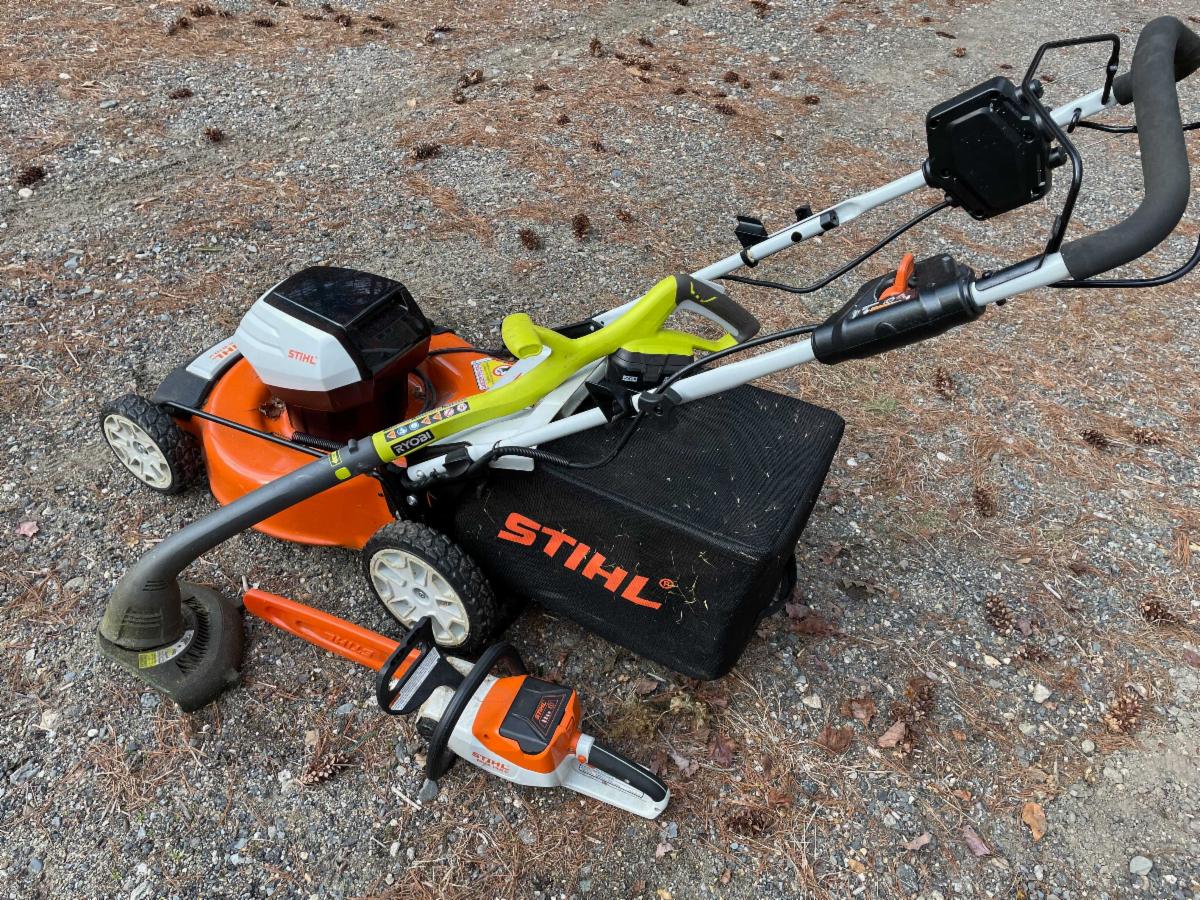
Gas-powered lawn mowers, string trimmers, and leaf blowers pollute the air - particularly the air being breathed in by the equipment operator. This equipment is also a major source of noise pollution. 


For example, gas leaf blowers are a major source of both chemical and particulate pollution which can result in health impacts including respiratory ailments, asthma attacks, and cancer. Gas powered leaf blowers emit as much pollution in an hour as driving 1,100 miles in a gas-powered car and are louder than the front row of a rock concert (source: California Air Resources Board).


By contrast, battery powered leaf blowers are easy to use and maintain, quieter…and don’t pollute.


As for cutting the lawn, battery powered lawn mowers are:


  • lighter, so easier to push
  • require less maintenance
  • some models can cut several acres of grass before needing to recharge


So, evaluate the condition of your current lawn equipment. Consider replacing the oldest piece of equipment. Recycle your old equipment responsibly. (The dealer where you buy your new electric equipment may take it.)


  1. When you replace your lawn equipment, purchase electric/battery powered equipment powered, equipment. It will reduce your greenhouse gas emissions as well as noise pollution.
  2. You might prioritize replacing the equipment you use the most and/or the ones with two stroke engines since they’re the worst polluters. (Two stroke engines are the ones where you have to mix oil with the gas.)
  3. Use hand powered tools when feasible -- for example, rake your leaves rather than blowing them. Or leave some of them in place to add nutrients back into your lawn. 


If you use a landscaping company, talk to them about using electric equipment. If they won’t, consider looking for one that does.  


Various states, towns, and cities have already passed regulations to phase out gas leaf blowers. These include California, Washington DC, and locally, Lexington, Arlington, Belmont, Concord, and Cambridge. Acton is currently trying to do the same.


For more, visit the page at Energize Stow on lawn equipment.


Please join us on May 21 at 7PM for the next in our series from Randall Library. Paul Kampas will discuss sustainable lawn care and benefits of switching from gas to electric lawn equipment. Paul is coauthor of a book on DEC along with articles in Harvard Business Review and MIT Sloan Management Review. In retirement, he is advocating for the replacement of gas with battery lawn equipment and for sustainable lawn and garden management approaches. To register click on the button below

We Want to Hear from You!

The Energize Stow newsletter strives to provide you with practical information you can use to make Stow a more sustainable community. We would love to hear from you about what you would be interested in reading or learning about. Please email us at GreenAdvisory@stow-ma.gov with your ideas. Thank you!

Missed Our Last Climate Talk?

Did you miss the recent talk where we explored the “whys” and “hows” of creating a series of pollinator gardens around Stow. You can see the recording of this Climate Talk here.