|
|
The California Civic Engagement Project (CCEP)
at the UC Davis Center for Regional Change
|
|
|
Engage!
CCEP Newsletter
September 22, 2016
|
|
|
Greetings and thank you for taking the time to peruse our newest newsletter. Fall semester has begun at UC Davis and we are excited to welcome back our student interns. We are also excited about the upcoming Presidential debates, which kick off tonight at 6 PM PST.
In this edition of the CCEP newsletter, we share current developments on electoral legislation in California, National Voter Registration Day events, efforts to engage more young Californians in voting, long and short guides to voting, an update on the state's often overlooked Senate race, results from a poll of provisional ballot voters, and much more.
Thank you for reading, and please note you are invited to share your civic engagement success stories with us via the email link at the bottom of this newsletter. We would love to hear what is happening in your community related to inclusive civic engagement!
Mindy Romero, Ph.D.
CCEP Director
The CCEP is now on Twitter. Follow us!

|
|
|
California Civic Engagement News
|
|
National Voter Registration Day Tuesday September 27th
Did you know that tomorrow is
National Voter Registration Day? The California Civic Engagement Project will be registering UC Davis students to vote on campus in collaboration with CalPIRG and the Yolo County Registrar's office. CCEP Director Mindy Romero will be appearing on
Capitol Public Radio's "Insight" program tomorrow at 9 AM with host Beth Ruyak to talk about National Voter Registration Day events around the region and the upcoming election.
|
|
Governor Brown Signs Student Voting Act Into Law
In our last newsletter, we shared the news that AB 2455, the Student Voting Act, had been approved by both houses of the State Legislature. Yesterday, Governor Brown signed the bill into law.
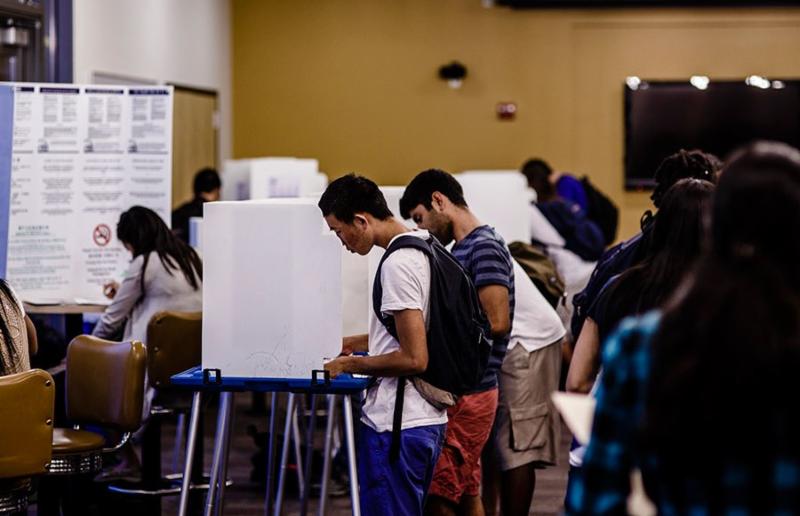
AB 2455 would require the California State University and California Community Colleges, as well as encourage the University of California, to implement a process and the infrastructure to prompt a student who enrolls online at an educational institution to also register to vote with the Secretary of State. The goal is to increase voter registration and civic engagement among the nearly three million students enrolled in California's public college and university systems. CCEP research showing that 18-24 year-old voters made up only 3.9% of California's electorate in the 2014 general election was cited by proponents of the bill.
The bill was the winner of Assemblymember Chiu's first "There Ought to Be a Law" program and was proposed by two UC Berkeley Law Students, one of whom lives in San Francisco's Mission District.
"The Student Voting Act will provide another way for students to update their personal information on file with the Secretary of State's Office, which in turn fosters a more efficient and secure electoral system," said contest winner Cindy Dinh, who graduated from UC Berkeley Law this spring.
"Encouraging young people to vote is good for our democracy. Students represent a significant segment of California's eligible voting population, yet their voices are not being heard in our elections," said Assemblymember Chiu "Creating a one stop shop so that students can register to vote when they enroll for classes is the first step in getting them to the polls."
|
|
|
|
 |
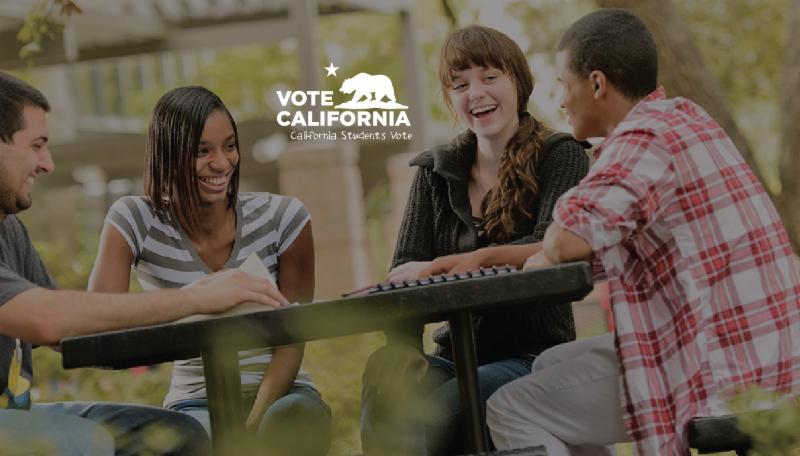
Secretary of State and University of California Announce Collaborative Effort to to Educate, Empower and Register Students to Vote
California Secretary of State Alex Padilla recently announced a historic commitment between the Secretary of State's office and the University of California (UC) system via a memorandum of understanding (MOU). The MOU sets forth mutual commitments and outlines best practices to educate, empower and register students to vote on UC campuses.
The signed MOU outlines best practices as proposed by The California Student Vote Project, which include: asking students during optimal time periods or via their student portals to register to vote, sending all-campus emails and notifications about the importance of voting before voter registration deadlines and elections, and implementing said practices for on-the-ground voter registration efforts. As part of the MOU, The University of California system committed to implementing a pilot for software that prepopulates online voter registration forms with as much campus
-
held student information as practical. As outlined in the MOU, The Secretary of State's office created a webpage which hosts resources for campuses, faculty and students for frequently asked questions related to voting, sample posters, sample social media posts for voter registration efforts, key deadlines and dates, and a guide to facilitate voter registration drives.
"Students are a highly disenfranchised population because we change addresses more frequently than elections. For years, most voter registration efforts on campus have been initiated by students acting to register and educate each other. A partnership between the State and UC is an investment in voter participation that is long overdue. Pre-populated voter registration is an important first step toward automatic student voter registration. If given access to voting, students can and will become a major political force in California," said Ralph Washington Jr., UC Student Association President.
|
|
Mega-Sized Voter Guide on its Way to California Voters
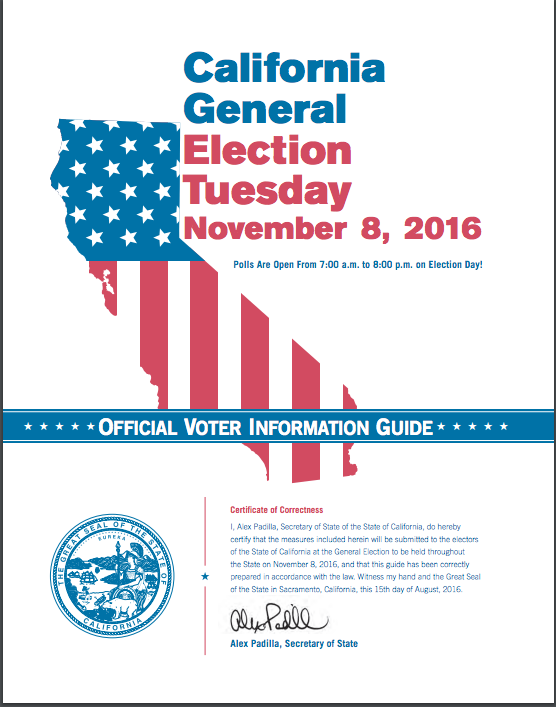
The 224 page, 10.3 ounce official California voter guide is now being delivered to registered voters across the state. It is the longest in history. A
recent article in the Sacramento Bee features expert analysis from CCEP Director Mindy Romero on how this information overload could impact voter turnout.
"There are a lot of concerns that with such a packed ballot, with all those ballot initiatives, that people could get reading fatigue or information overload," Romero said.
Much of the reason for the lengthy voter guide is the fact that 17 complex ballot measures are being put to the voters, the most in our state since 2000. For a more succinct guide to voting in California, check out the
Easy Voter Guide published by the League of Women Voters and the Voters, and the online
Voter's Edge resource
, a collaboration of MapLight and the League of Women Voters of California Education Fund.
|
|
Historic CA Senate Race Overshadowed by Presidential Campaign
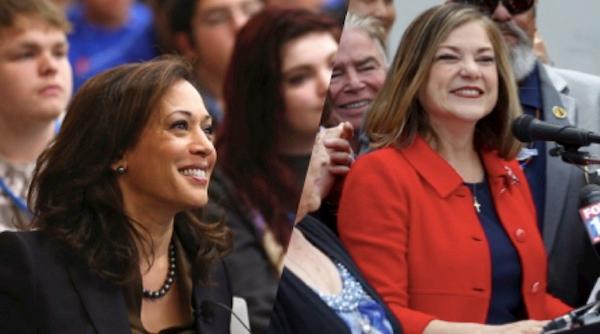
California voters will choose a new Senator this November, filling the state's first open Senate seat in two and a half decades. Both candidates,
state Attorney General Kamala Harris and Orange County Congresswoman Loretta Sanchez, are Democrats and women of color.
Harris, whose mother is of South Asian descent and whose father grew up in Jamaica, would be the second black woman elected to the Senate while Sanchez would be among the first Latinas elected senator nationally.
A new poll out this month shows that California voters are remain undecided or unaware of the Candidates in this historic Senate race; a quarter of registered voters polled have not made up their mind which candidate to vote for.
Unlike previous California Senate races, this year's contest is notable for its relative quiet. The candidates have rarely confronted each other on issues that generate wide interest and coverage. They will engage in only one debate, scheduled for October 5 in Los Angeles.
Also contributing to Californians lack of information about the Senate Race is a presidential campaign that has generated so much media coverage that many down ballot races have received little coverage by comparison, according to KPCC Public Radio.
To find more information on the candidates, including where they stand on issues, check out the Voter's Edge Guide.
|
|
Poll Shows Most California Provisional Ballot Voters Not Confident Their Vote Counted
A new poll released recently by Paul Mitchell of Political Data Inc. suggests that about two-thirds of California voters who cast provisional ballots in the June primary election either presumed their vote would not count, or were unsure if it would be counted. Mitchell's CA120 polled over 700 Californians who cast a provisional ballot in the last election.
The total number of provisional ballots cast in California's primary is not known, as counties are not required to report them in primary elections. However, it has been estimated that between 700,000 and 750,000 provisional ballots were cast, likely a record percentage of voters. Historically, about 85% of provisional ballots are eventually counted and added to vote totals.
More than 70% of the poll respondents agreed that "provisional ballots were a way to make sure all legitimate votes can be cast and counted..." while 40% of voters felt that "provisional voting is a sign of a broken system."
What will this mean looking to the future? Mitchell says that provisional voting is likely to be high again in November, especially
if more newly registered and infrequent voters are opting to vote by mail.
In the longer term, new same-day registration for Californians is in the works for 2018, and the ability to obtain ballots on demand with the passage of new voting legislation could eliminate much of the need for provisional ballots and lead to higher levels of public confidence in our election system.
|
|
Bi-Lingual Spanish Speaking Volunteers Needed for Voter Registration and Education Efforts
Mi Familia Vota is partnering with Univision in Sacramento to hold a phone bank from 5:30- 8 PM tomorrow, September 27th for National Voter Registration Day.
Volunteers must be bi-bilingual and willing to answer calls. Viewers will call in asking basic questions about this upcoming election, such as: Where do I register to vote? How do I register to vote? etc. If you are interested please contact Melissa Santos at Melissam@mifamiliavota.org (209) 576-5616.
Mi Familia Vota is a national non-profit organization that unites Latino, immigrant, and allied communities to promote social and economic justice through increased civic participation by promoting citizenship, voter registration, and voter participation. They are also seeking volunteers for other events in the Sacramento area and in Modesto, Fresno and Riverside.
|
|
Ballot Measure Discussion September 28, Sacramento Public Library
The Sacramento Public Library is hosting a "Let's Talk About Voting" event this Wednesday, September 28th starting at 6 PM at their Central Branch (828 I St. in Sacramento).
The event will feature a discussion of the 17 measures on the November general election ballot. Prior to the discussion, o
fficials from the California
Legislative Analyst's Office will explain each measure, while Kim Nalder, founder of the Sacramento State University Project for an Informed Electorate, will provide information on ballot endorsements. The League of Women Voters of Sacramento County will be on hand to help get you registered to vote. This event is free and open to the public. To learn more and RSVP, please click HERE.
|
|
Online Community Engagement for Planning Projects Webinar September 27, 10 AM PST
Metroquest is hosting a free, 45 minute webinar tomorrow which will present research and practical tips to
guide agencies towards the successful application of online community engagement for planning projects. Representatives of the Central Ohio Transit Authority will talk about their "NextGen" outreach effort; describing
the innovative ways they combined online and targeted face to face community engagement to involve an unprecedented number and diversity of community members to help define the transit needs for the region. They also share advice for agencies seeking to improve the breadth and effectiveness of their community engagement efforts and talk about the positive difference that broad community support is making as they move forward. LEARN MORE and REGISTER HERE
|
|
|
Voter Registration Efforts
|
|
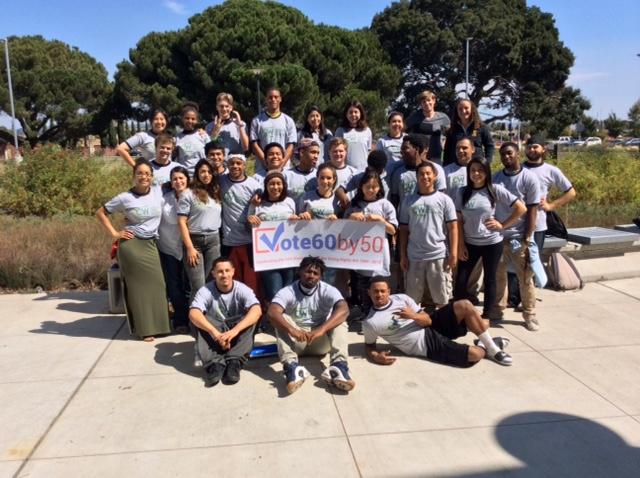
Vote60by50 Initiative Aims to Increase Youth Civic Participation
Vote60by50 is a nonpartisan civic engagement project of the Law and Democracy program at Chabot College in partnership with the League of Women Voters - Eden Area; the Fannie Lou Hamer Institute at Jackson State University; Campus Camp Wellstone; and other campus and community partners.
The primary goals of Vote60by50 are to:
* Increase the voting rate of California Community College students and other young voters to 60% in honor of the 50th anniversary of the Voting Rights Act; and
* Educate young voters about the evolution of voting rights in the United States, other forms of political participation, and voting as a tool for social change.
Although the initiative began with a focus on Chabot and other California Community Colleges, the scope has now expanded to include any college or organization that shares our concern about the importance of voting in a democracy. For more information, go to: www.vote60by50.org.
Vote60by50 is holding their annual Democracy Pre
Preparedness Drill - "Stop, Drop & Register" on National Voter Registration Day, September 27th.
During the day, the League of Women Voters, the Alameda County Register of Voters, and the ACLU Paul Robeson Chapter will be on campus registering voters and educating students and community members about voting rights. AC Transit will also be on campus with their Voter Bus.
|
|
Yolo County Elections Office Voter Engagement
The Yolo County
Assessor/Clerk-Recorder/Elections (A.C.E.) branch has been hard at work this week getting ready for the upcoming November 8th General Election. They conducted an outreach event at the Carlton Senior Living facility in Davis, scheduled poll worker training classes for the upcoming month, and spoke to students about the importance of actively participating in the voting process at the Yolo County Youth Rally on September 24th and 25th. A.C.E. also held a full-scale mock election at the youth rally, complete with ballots developed in collaboration with students.
A.C.E. is hosting a Presidential
Elections Bash on November 8th from 5-8 PM at their office, located at 624 Court St. in Woodland. This free event will feature music, food, and a chance for youth to go behind the scenes and learn about the voting process.
|
|
|
National Civic Engagement News
|
|
Real-Time Election Day Projections Cause Concern
News organizations have traditionally refrained from releasing early results on Election Day until most or all of the polls have closed, in order to avoid discouraging or influencing people who are yet to vote. But this November, a company called VoteCastr is teaming up with Slate magazine to report real-time projections of presidential and senate races in key battleground states.
The company will use a method known as predictive turnout modeling to provide projections of who is winning at any given time on Election Day in swing states. This could be especially troubling for political races in western states, where polls are open much later than in Eastern States due to the time difference. Learn more from
this recent article published in the New York Times.
|
|
|
CCEP Outreach: In the Media
|
|
Election Hacking Threat Scant in California
A recent article in Capitol Weekly quoted CCEP Director Mindy Romero and the last edition of this very newsletter, on the much talked about but overblown threat of our election results being altered by computer hackers.
Read the full article for this thoughtful and well-researched take on the integrity of our state's voting system.
|
|
|
Civic Engagement Employment Opportunities
|
|
Kearns & West Hiring in Southern California
Kearns & West is hiring a Project Coordinator for their San Diego office and a Senior Associate to work in the Southern California region. They are a
woman-owned collaboration and strategic communications firm founded in 1984. For more information, click HERE.
|
|
|
Share Your Civic Engagement Story with the CCEP
|
|
|
Are you working to promote inclusive civic engagement? Do you have a civic engagement success story to share? Share your story with CCEP and you could be featured in an upcoming issue of Engage! Please send your short write-up to Greg Keidan at gkedian@ucdavis.edu for consideration.
|
UC Davis California Civic Engagement Project
|
|
|
Kim Alexander
President and Founder
California Voter Foundation
|
Matt A. Barreto
Professor, Dept. of Political Science
Professor, Dept. of Chicana/o Studies
University of California, Los Angeles
|
Jonathan Fox
Professor,
School of International Service
American University
|
|
Luis R. Fraga
Arthur Foundation Endowed Professor of Transformative Latino Leadership
Professor of Political Science University of Notre Dame
|
Lisa Garcia Bedolla
Chancellor's Professor of Education and Political Science
University of California, Berkeley
|
Bruce Haynes
Associate Professor, Dept. of Sociology University of California, Davis
|
|
Jongho Lee
Professor
Dept. of Political Science
Western Illinois University
|
Peter Levine
Associate Dean for Research and Lincoln Filene Professor of Citizenship & Public Affairs,
Jonathan M. Tisch College of Civic Life, Tufts University
|
Matt Mahan
Cofounder and CEO
Brigade
|
|
James Muldavin
Executive Director
California Center for Civic Participation and Youth Development
|
Karthick Ramakrishnan
Professor of Public Policy
University of California, Riverside
|
Ricardo Ramirez
Associate Professor, Dept. of Political Science
University of Notre Dame
|
|
Director of Research
Kirwan Institute
|
Cruz Reynoso
Professor of Law Emeritus
University of California, Davis
|
Dan Schnur
Director
Jesse M. Unruh Institute of Politics
University of Southern California
|
|
|
California Civic Engagement Project
|
|
|
The California Civic Engagement Project (CCEP) is housed at the UC Davis Center for Regional Change and was established to inform the public dialogue on representative governance in California. The CCEP is engaging in pioneering research to identify disparities in civic participation across place and population. It is well positioned to inform and empower a wide range of policy and organizing efforts in California to reduce disparities in state and regional patterns of well-being and opportunity. Key audiences include public officials, advocacy groups, political researchers and communities themselves.
|
|
UC Davis Center for Regional Change
|
|
|
The UC Davis Center for Regional Change (CRC). The CRC is a catalyst for innovative, collaborative, and action-oriented research. It brings together faculty and students from different disciplines, and builds bridges between university, policy, advocacy, business, philanthropy and other sectors. The CRC's goal is to support the building of healthy, equitable, prosperous, and sustainable regions in California and beyond.
|
|
|
| |
|
|
|
|