Newsletter from Texas School Ready and CLI Engage!
Published throughout the school year, Engaging Educators is a newsletter to support early childhood educators in high-quality instruction and implemention of the free tools and resources available on CLI Engage.
Eclipse Excitement!
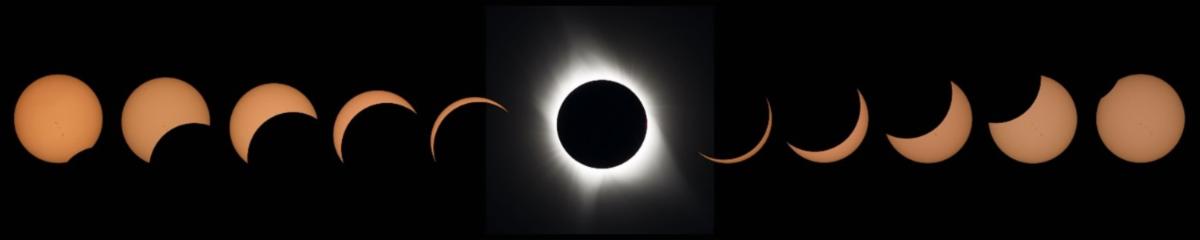
Young children do not understand abstract concepts about celestial objects and space, but we can still prepare them to know that something special with the sun will be occurring on April 8, 2024 - a total solar eclipse. The majority of Texas is in the eclipse path with an estimated 80-90% eclipse and a portion of Texas is in the line of full totality. Texas’s solar eclipse will occur on April 8, 2024, roughly between 1:32 p.m. and 1:41 p.m. The moon will pass in between the sun and the Earth, which will cast a large shadow that will completely block the sunlight for a couple of minutes in the afternoon.
This composite image of eleven pictures shows the progression of a total solar eclipse over Madras, Oregon, on Aug. 21, 2017.Credit: NASA/Aubrey Gemignani
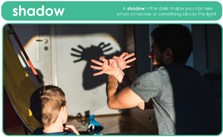
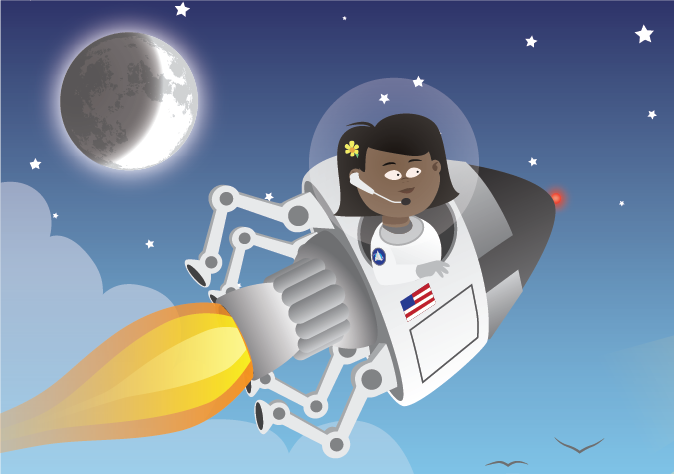
Engaging children in current events is a great learning opportunity and scientists say this will be the last total solar eclipse visible to the world until 2044. You can access the Vocabulary Collection in CLI Engage for resources to help early educators provide a rich language classroom environment that supports word learning. The Vocabulary Collection for Pre-K to 3rd-grade classrooms can be found in the “Activities and Materials” section on CLI Engage, and the following three vocabulary word cards can be used to help explain the steps that occur during a total solar eclipse to young children: sunshine,moon, and shadow.
Child friendly definition: A total solar eclipse is when the moon passes in between the sun and the Earth, which will cast a large shadow that will totally block the sunlight for a couple of minutes.
The vocabulary word cards can be accessed to show as a digital card or downloaded to print the page. Adults should show the word card with the picture, provide the vocabulary word, and ask the children to repeat the word. The next step in the vocabulary instruction is to read the text in the heading, which provides a child-friendly definition. Next, describe the picture and include the vocabulary word, then extend the lesson by asking a question about the word, challenging children to use the word in a sentence, and/or if appropriate, encouraging them to act out the word’s meaning.
Children’s books provide an opportunity to hear the targeted word and the webpage with the vocabulary word cards provides several book suggestions. For example, there are two book titles with authors provided when discussing the word “moon”:
Owl Moon by Jane Yolen
Bear Shadow by Frank Asch
Children should be exposed to new concepts multiple times and across a variety of contexts to solidify their understanding. An adult could illustrate the eclipse by shining a flashlight on the wall and then moving a tennis ball across the beam. In the CIRCLE Pre-K Curriculum topic of “The Night Sky,” there is an activity to represent the Earth by placing children in a group in the middle of the circle-time area. Then a child is chosen to be the moon and revolve around the Earth while everyone sings “The Moon is Moving” song to the tune of “Are You Sleeping?”. Children can take turns being the moon throughout the week.
The Moon is Moving lyrics:
The moon is moving, the moon is moving
Around the Earth, around the Earth
The moon moves slowly, the moon moves slowly
Around the Earth, around the Earth
There are additional lesson plan ideas in the CIRCLE Pre-K Curriculum on CLI Engage within “The Sky Above Me” Theme Guide.
This Theme Guide provides recommendations for adding thematic materials and activities to existing center materials. There are four topics in “The Sky Above Me” Theme Guide:
The Cloudy Sky
The Sunny Sky
The Night Sky
The Seasonal Sky
Educators can use the Theme Guides to supplement an existing curriculum or as a full curriculum with planning ideas for learning centers, small group and whole group lessons, and integrating learning objectives referenced from the Texas Pre-K Guidelines.
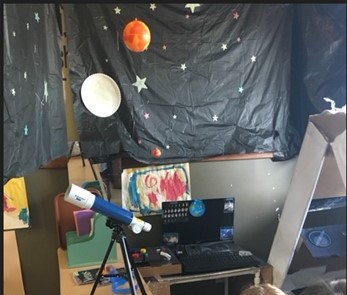
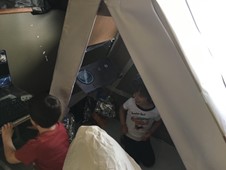
This Pretend and Learn Center in a TSR classroom was modified to be a space station with a cardboard “spaceship” as they discussed the moon.
Discussing the solar eclipse is an introduction to using the vocabulary words to discuss a new concept, and may empower them and help them feel excited instead of fearful with the brief transition from sunshine to darkness. The children might be indoors during the event, but if they are outdoors, it is not safe to look directly at the sun without specialized eye protection for solar viewing. Viewing the sun could create permanent eye damage. NASA has provided the following safety guidelines:
View the sun through eclipse glasses or a handheld solar viewer during the partial eclipse phases before and after totality.
Although not recommended to watch the eclipse without specialized eye protection, it's possible to view the eclipse directly without proper eye protection only when the moon completely obscures the sun’s bright face – during the brief and spectacular period known as totality. (You’ll know it’s safe when you can no longer see any part of the sun through eclipse glasses or a solar viewer.)
As soon as you see even a little bit of the bright sun reappear after totality, immediately put your eclipse glasses back on or use a handheld solar viewer to look at the sun.