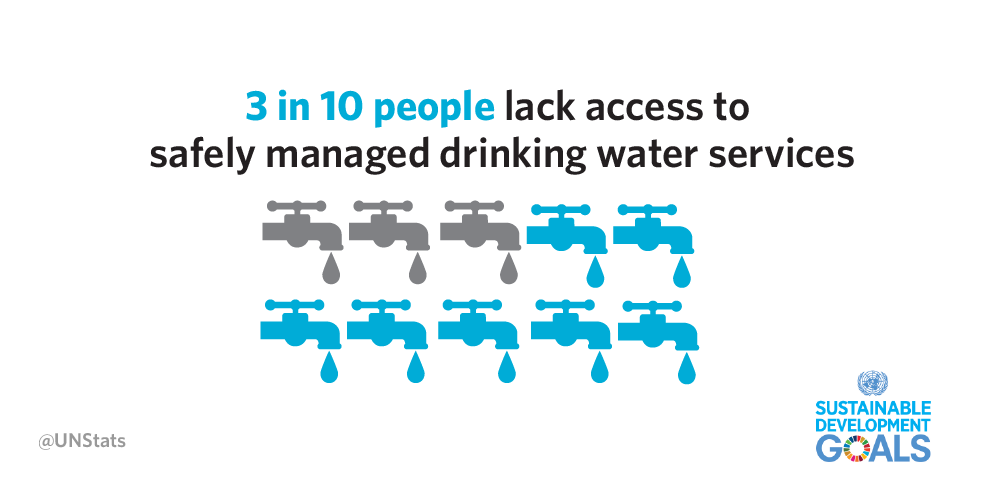
Reliable access to clean water is a fundamental human need. But 1.42 billion people – including 450 million children – live in areas of high or extremely high water vulnerability and insecurity. Over 70% of the Earth's surface is water-covered but less than 3 per cent of the world’s water resources is freshwater, and it is growing increasingly scarce. Global water demand is projected to increase by 20 to 30 per cent per year by 2050. Climate change, urbanization and increasing competition for water increase water insecurity with each passing year. Access to clean water is key to providing a better future for all. Encouraging your students to learn more about water issues and idebtify some solutions can go a long way in preparing to design a more equitable world. Make it a theme for your classroom this spring!
Make water issues part of your curriculum. In addition to filtration projects, think about transport and the impact of our lifestyles. We have some great engineering activities and projects focused on water and there are many terrific resources available online. Here are some that we (and the teachers we work with) think are most helpful.
-
OxFam has assembled some terrific resources to engage students (ages 7-14) who may still be learning remotely. Of course, they can also be used in class.
-
WaterAid has an extensive collection of resources for elementary students.
-
UNESCO has curated an amazing list of online resources for learning about water issues. There is material here for every age group.
-
National Geographic has put together a terrific collection of water education resources for grades 5-8.
-
The Water Footprint of products always fascinates students. Did you know that almost 90% of your personal water usage is in the goods and products that you use? And that your breakfast has a water footprint of around 500 liters? That would fill 6 bath tubs! (Your cup of coffee would mean an additional 140 liters of water.) We are big fans of the website WaterFootprint.org and all of its many resources. We like to include the Water Footprint in middle school game design projects and high school level sustainability and systems thinking projects. The Water Footprint Calculator website also has helpful educator resources. Engineer some awareness in your classrooms! We can't expect young people to solve the challenges of water scarcity if they do not know where it all goes.
ProjectEngin materials:
We have worked with teachers to develop a number of water-related activities and projects. Try one of these in your class.
-
Water Where You Need It introduces middle and high school students to the challenges of getting water to places where people live. It addresses the inequities that women and children face as they take on the task of walking miles each day to obtain water for their families. The module contains complete project plans but it is still in "beta". If you try it, any feedback would be welcome! Contact us with questions as well.
-
A shorter activity focuses better ways to transport water can be found here. This also works as a great "Quick Build" hands-on on introduction to the "Water Where You Need It" project.