|
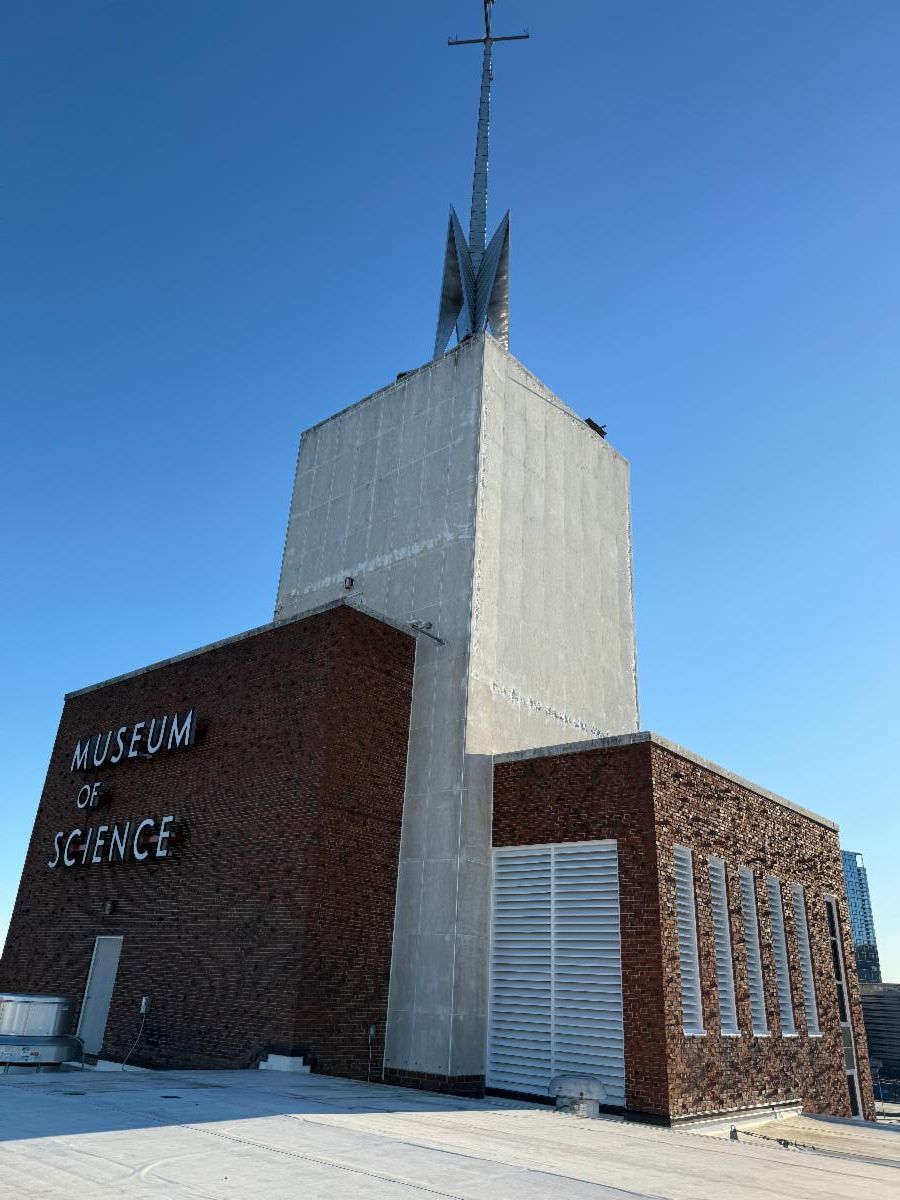
Abbot was recently contracted to undertake a complex masonry restoration and repair project at the Museum of Science in Boston. Abbot had completed several smaller projects for the Museum in the past, and had developed a strong relationship with their facilities team.
The Museum initially hired a firm to provide an overall assessment of the building and to develop a schedule of essential work based on safety standards. The firm developed a timeline that identified items requiring immediate attention, and subsequent work to be completed within two to five years.
Caulking Failure Between Marble Panels
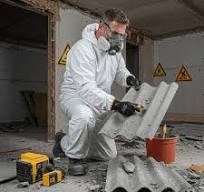
The first phase of the project focused on deterioration issues on the white marble tower situated over the main entrance to the building. Of immediate concern was the failure of the caulking within the joints between the marble panels. After initial inspection and considering the age of the existing caulking, Abbot suspected the presence of asbestos, had a sample tested, and confirmed its presence. This required hiring Alpine Environmental (Chelmsford, MA) to perform an abatement to remove the hazardous material.
Access to Work Area Most Challenging
Before the repairs could begin, access to the work area needed to be established. This presented a unique challenge as the only way to reach the area was by erecting pipe staging from the sixth-floor roof and several adjacent roofs surrounding the tower, which itself consisted of multiple levels. Typical scaffolding ties could not be used because they would require anchoring into the marble façade. To secure access, the staging contractor (Lanco Scaffolding, Inc., Boston, MA), built a fully wrapped scaffold system around all four sides of the tower and tied it together at the top along with the use of pressure-only ties against the marble without penetrating it. Transporting all of the staging materials to the roof added another layer of complexity, as all materials had to be moved through the building, up a freight elevator, and then up a stairwell.
Work Done After Scaffolding in Place and Abatement Complete
Once the scaffolding was in place and the abatement was complete, Abbot was able to fully recaulk all of the joints, scrape and paint several large louvers, and complete additional repairs around the windows from a third-floor roof. Overall, the project’s logistical challenges far exceeded the difficulty of the actual repairs.
--------
The Museum of Science (MoS) is a comprehensive nature and science complex spanning the borders of Boston and Cambridge, Massachusetts. The museum began as the Boston Society of Natural History in 1830, and has undergone numerous renovations, expansions, and modernizations over the years.
Its original neoclassical architectural design is a revival of classical Greek and Roman styles that emerged in the mid-18th century, characterized by grand scale, simplicity of geometric forms, symmetry, and dramatic use of columns and domes.
|