|
Dogwood Lane
The Quarterly Journal of the Mary May Binney Wakefield Arboretum ___________________________________
Volume Seven Issue 2 - Winter 2025
| |
Winter Observations at the Mary May Binney Wakefield Arboretum | |
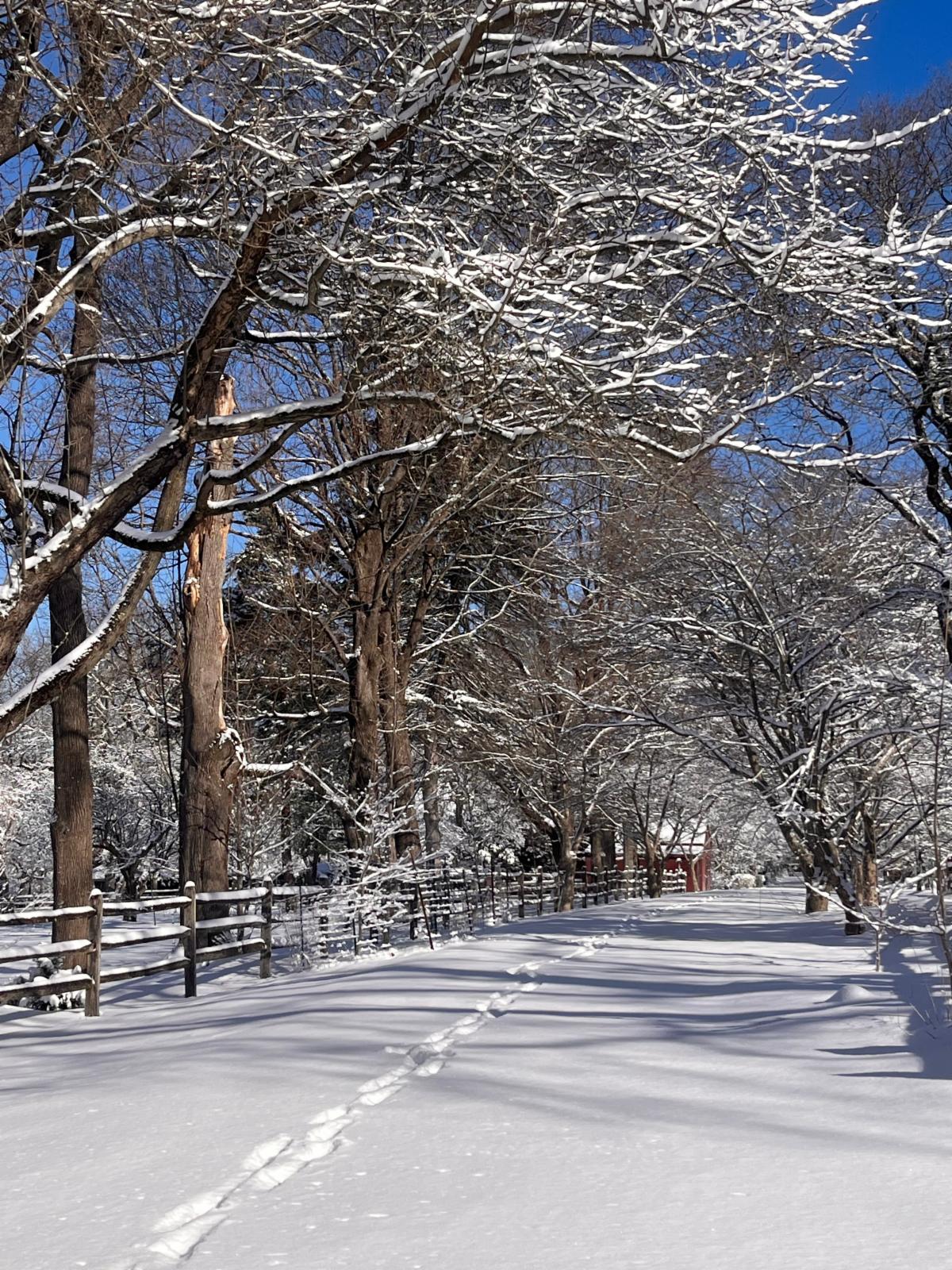
This edition of Dogwood Lane explores winter interest and field observations at the arboretum. No matter what season you visit the Mary May Binney Wakefield Arboretum, the landscape is always changing. Winter offers a unique time to take in the surroundings. Without leaves on the trees or shrubs there are other plant characteristics that can be observed by the viewer. Buds are starting to protrude along branches, the color of the bark in the cool light of an early January morning is changing, or one notices the leftover fruit from the year before, hanging on for the overwintering creatures to consume once their main food sources become scarce. This winter, frequent snowfall has exposed the commonly used paths by the animals on the property. Visitors include deer, rabbits, fox, coyotes, opossums, and many species of birds. All of these details come together to shape the winter routines and activity of those that call the arboretum home. Here are just a few examples. | |
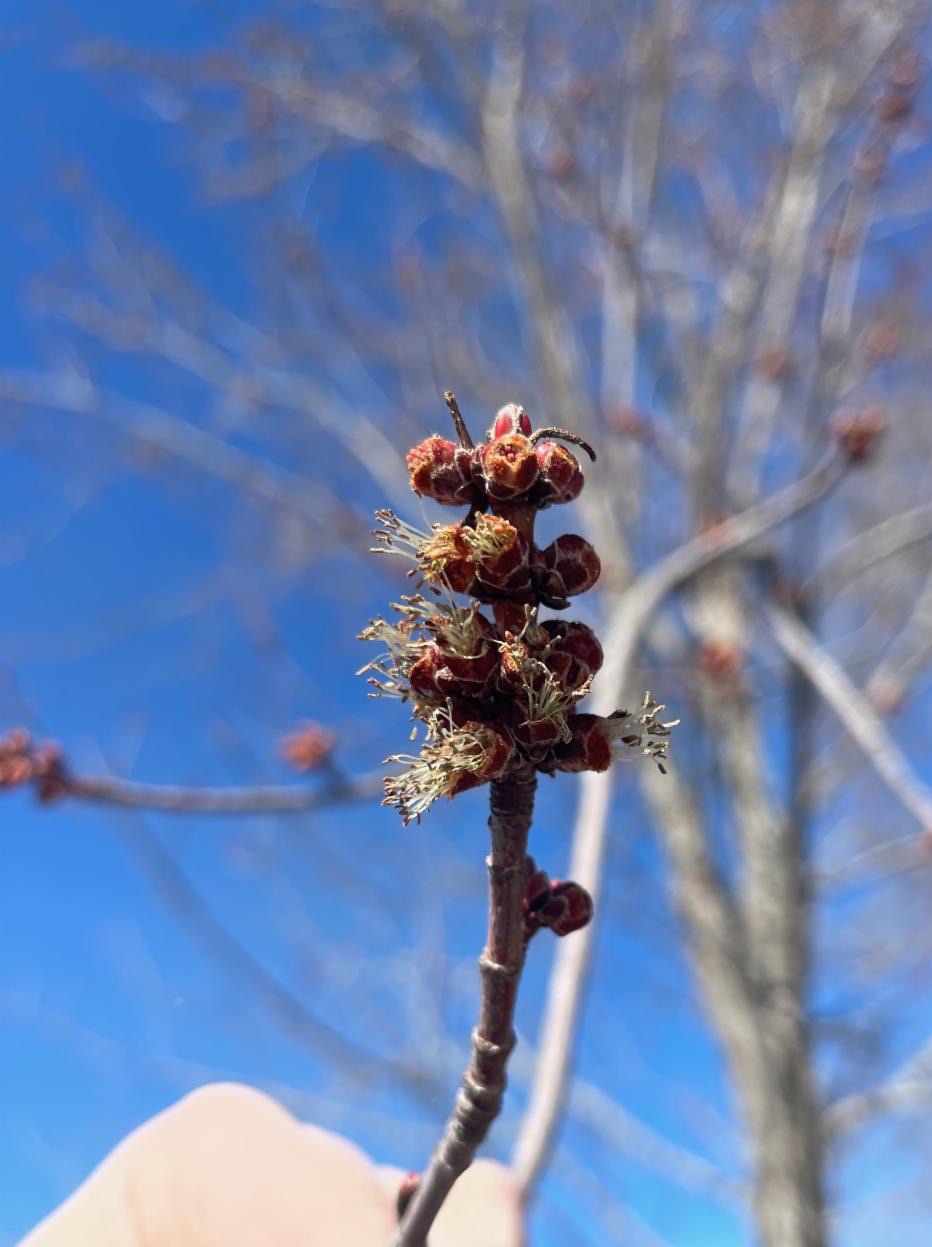
Silver Maple (Acer saccharinum) flowering in early March. | |
|
Silver Maples
In the late winter, on a sunny day visitors to the arboretum may notice large, red buds growing on the branches of the Silver Maple (Acer saccharinum). Silver maples are one of the first native species in Massachusetts to flower. The timing is dictated by temperature and daylight and typically the flowers open early to mid-March in Massachusetts however, in southern states they flower as early as February. Scientists speculate that the very early bud set and flowering is caused by natural evolution to the environment by the species. Silver maples also evolved to flower at the same time as their neighboring trees, this makes cross pollination more successful. Since they are wind-pollinated and do not rely on pollinators to reproduce, they do not rely on the warm weather to wake the pollinators. However, by flowering in early to mid-March they risk the freezing of their flower and seed, but the reward appears to outweigh the risk. Wind pollination is also facilitated by the lack of flower petals on the flowers.
| |
Jake Grossman, former Arnold Arboretum research fellow, recorded the phenology of the 37 maple species in their collection. Phenology is the study of how plants and animals change throughout the seasons specifically relating to the climate. He found that among the 37 maple species, the silver maple (Acer saccharinum) and red maple (Acer rubrum) flower the earliest. Grossman refers to them as “… ‘sister species’, meaning that they are more closely related to each other evolutionarily than to any other maple species." (1)
He did find another pair of “sister species", citing that the Kawakami maple (Acer caudatifoium) and the Manchurian striped maple (Acer tegmentosum) bloom together a week or two after the native maples. These two species hail from very different parts of Asia; the Kawakami maple is considered a subtropical maple being from Taiwan and the Manchurian striped maple is from some of the coldest parts of China. However, they still are more closely related evolutionarily than other maple species. Grossman also noted that non-native species of maples may be flowering earlier in their native regions. There is a beautiful silver maple at the Mary May Binney Wakefield Arboretum in front of the 1710 Farmhouse at the end of the lane. This spring pay close attention to the maples and note when you observe the flowers.
| |
Witch hazel
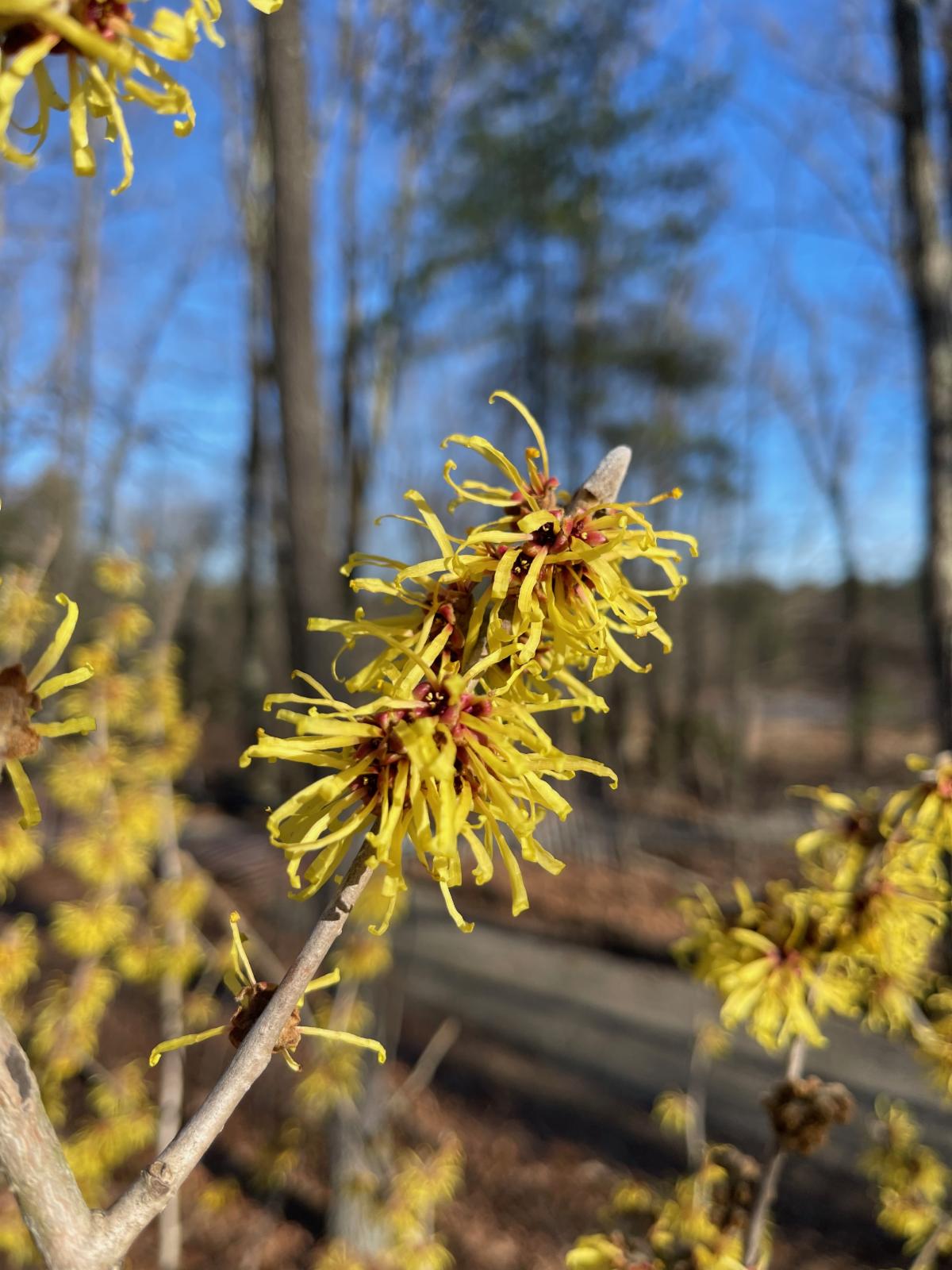
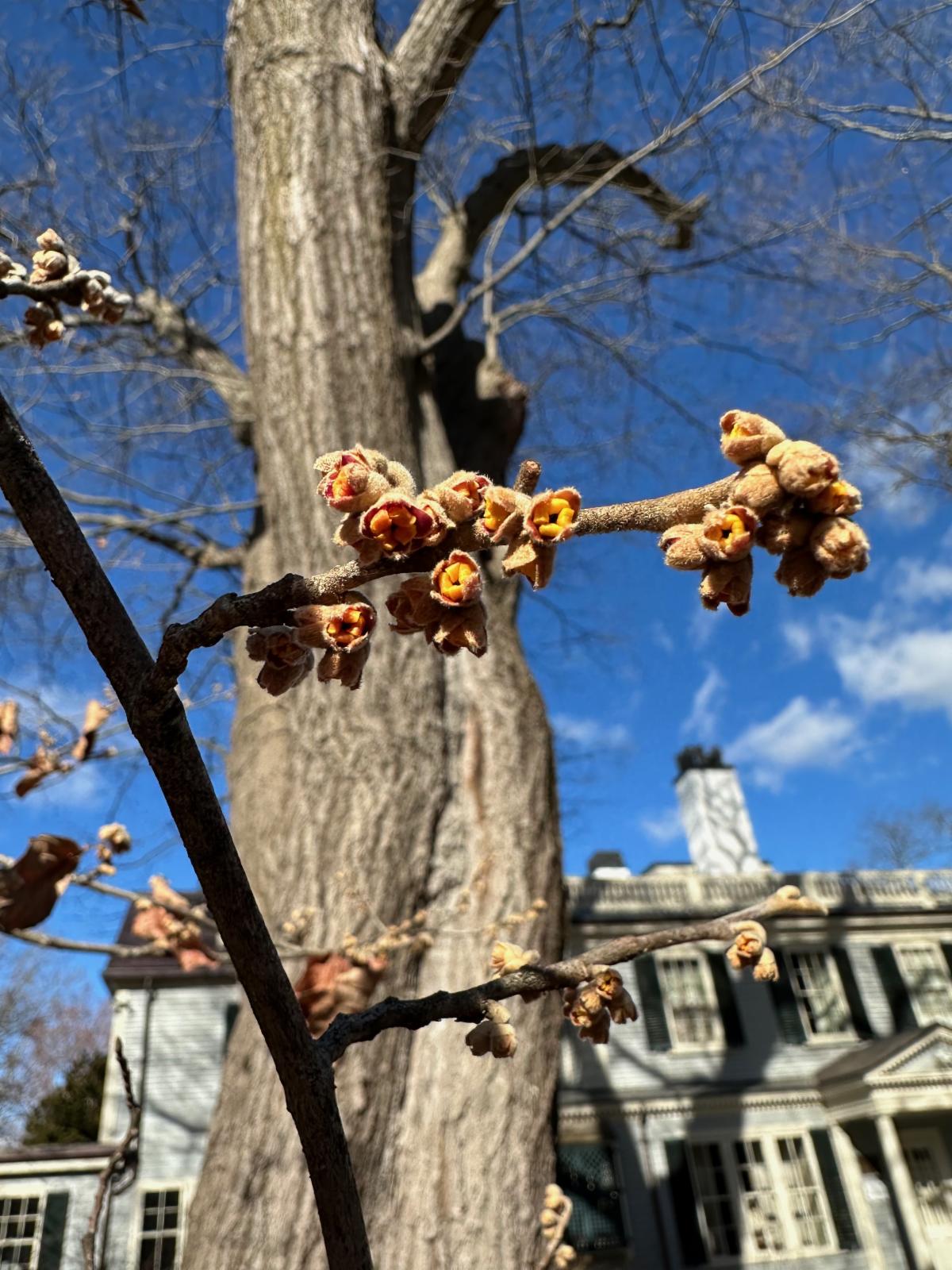
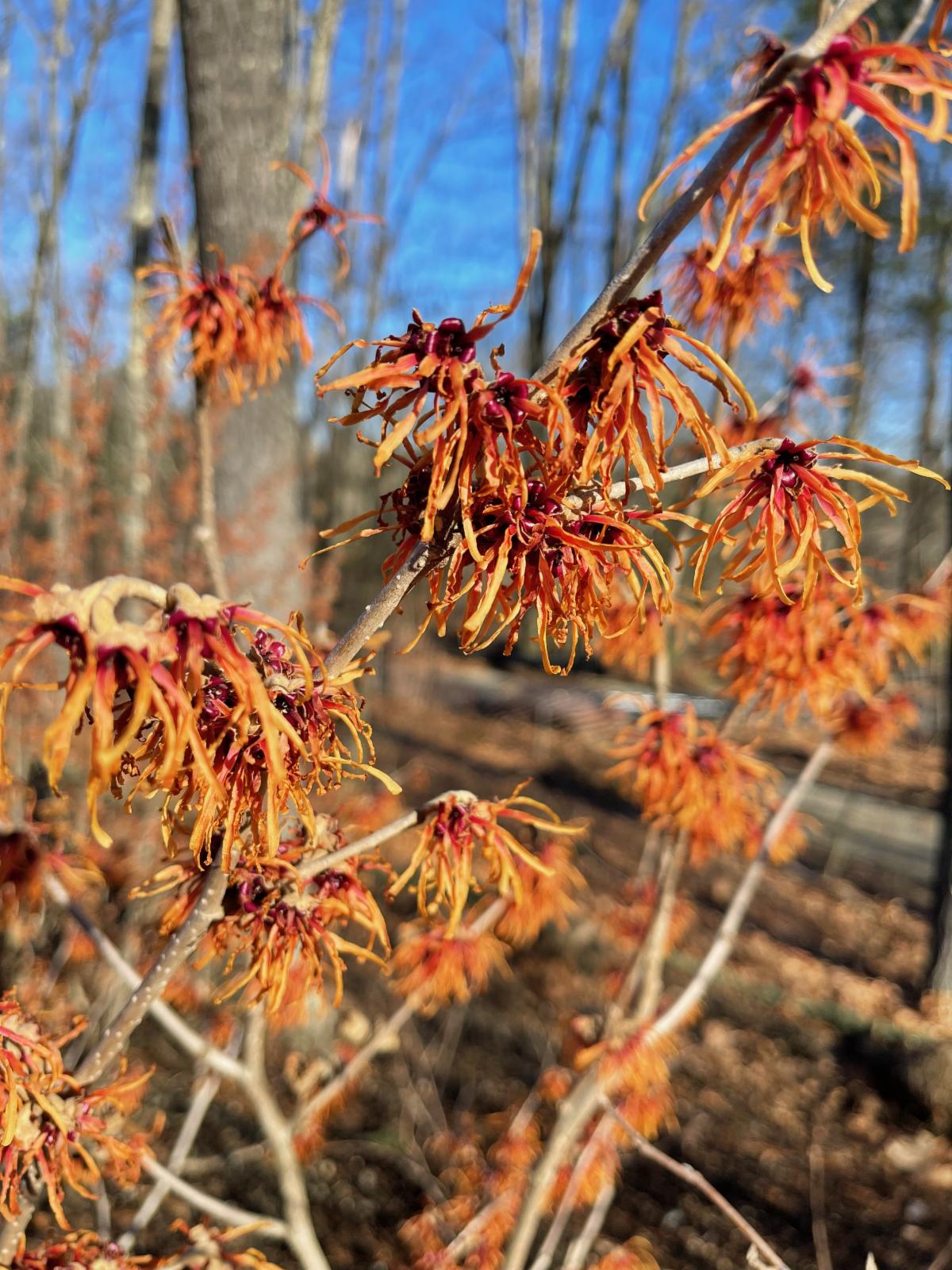
Witch hazel (Hamamelis vernalis) also known as Ozark witch hazel is another species of shrub that flowers from January to March, not only do they flower early in the season, their flowers can last up to 8 weeks. Lengthy flowering occurs due to the plants ability to curl up to protect the flowers when temps drop below freezing and curl out on warmer sunny days. This species of witch hazel is native to the highlands of Missouri, Arkansas and Oklahoma, but also thrives in Massachusetts. Hamamelis vernalis is related to the New England native witch hazel, Common witch hazel (Hamamelis virginiana). Hamamelis virginiana grows much larger than Hamamelis vernalis and flowers in the fall.
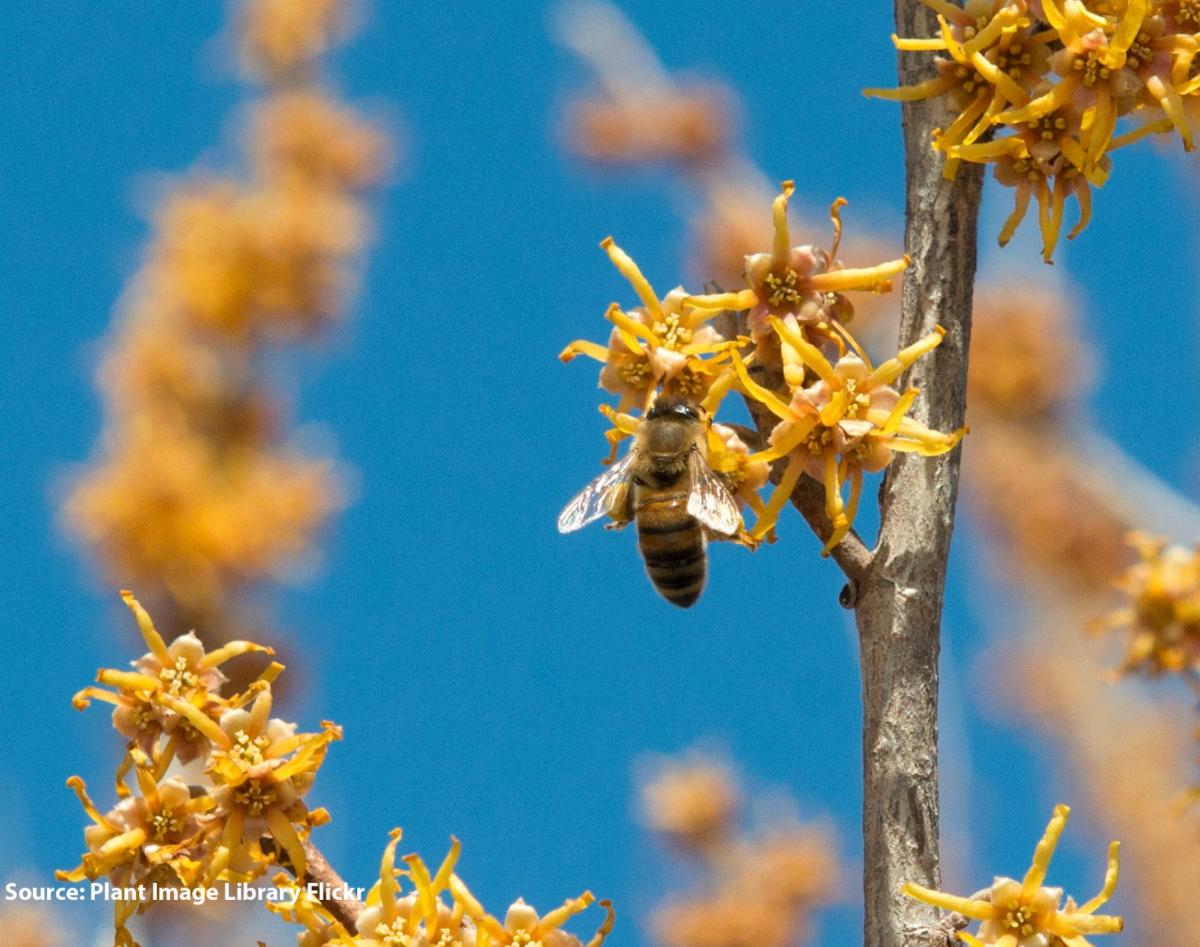
Unlike maples that are wind-pollinated, witch hazels are pollinated with the help of pollinators. Witch hazels are extremely important shrubs for pollinators in these months; some common visitors include hover flies, fungus gnats, wasps and the occasional honeybee. One common visitor is the owlet moth, a moth that is active during the winter keeping themselves warm by shivering. Witch hazel flowers offer an important food source for the occasional pollinator that wakes up on a warm winter day.
| Hamamelis vernalis with European honey bee in late February. (Photo taken at Arnold Arboretum) | Hamamelis vernalis buds just beginning to open in front of the mansion in early February. | |
Long before European colonization on the United States, North American indigenous people used witch hazel for many different medicinal purposes. The Atlantic Magazine featured an article on the history of the medicinal values of witch hazel, stating “The Osage used witch hazel bark to treat skin ulcers and sores; the Potawatomi steamed twigs over hot rocks in their sweat lodges to soothe sore muscles; the Iroquois brewed a tea to treat dysentery, colds and coughs.”(2) According to folklore the forked stems of the shrub can be used as divining rods that will dip down when held over an underground water source. Hamamelis comes from the Greek words, meaning “fruit” and “at the same time,” referring to the shrub’s unique feature of producing flowers as the previous year’s capsules continue to ripen. The common name “witch” may allude to the use of the flexible branches as dowsing or “witching” rods for water.(3)
Hamamelis vernalis was first introduced to the horticulture trade by Benjamin Franklin Bush, a plant collector for Charles Sprague Sargent, Arnold Arboretum’s first director. Starting in 1872, Arnold Arboretum sent plant collectors and botanists all over the world looking for new and unusual plants to add to the newly founded arboretum. Although, Bush may have not been the first botanist to collect samples from this species, the specific rooted cutting that was taken from Missouri in 1908 by Bush still resides at the Arnold Arboretum today and was first recorded flowering in January 1913. (4)
| Hamamelis vernalis cultivar blooming in March | |
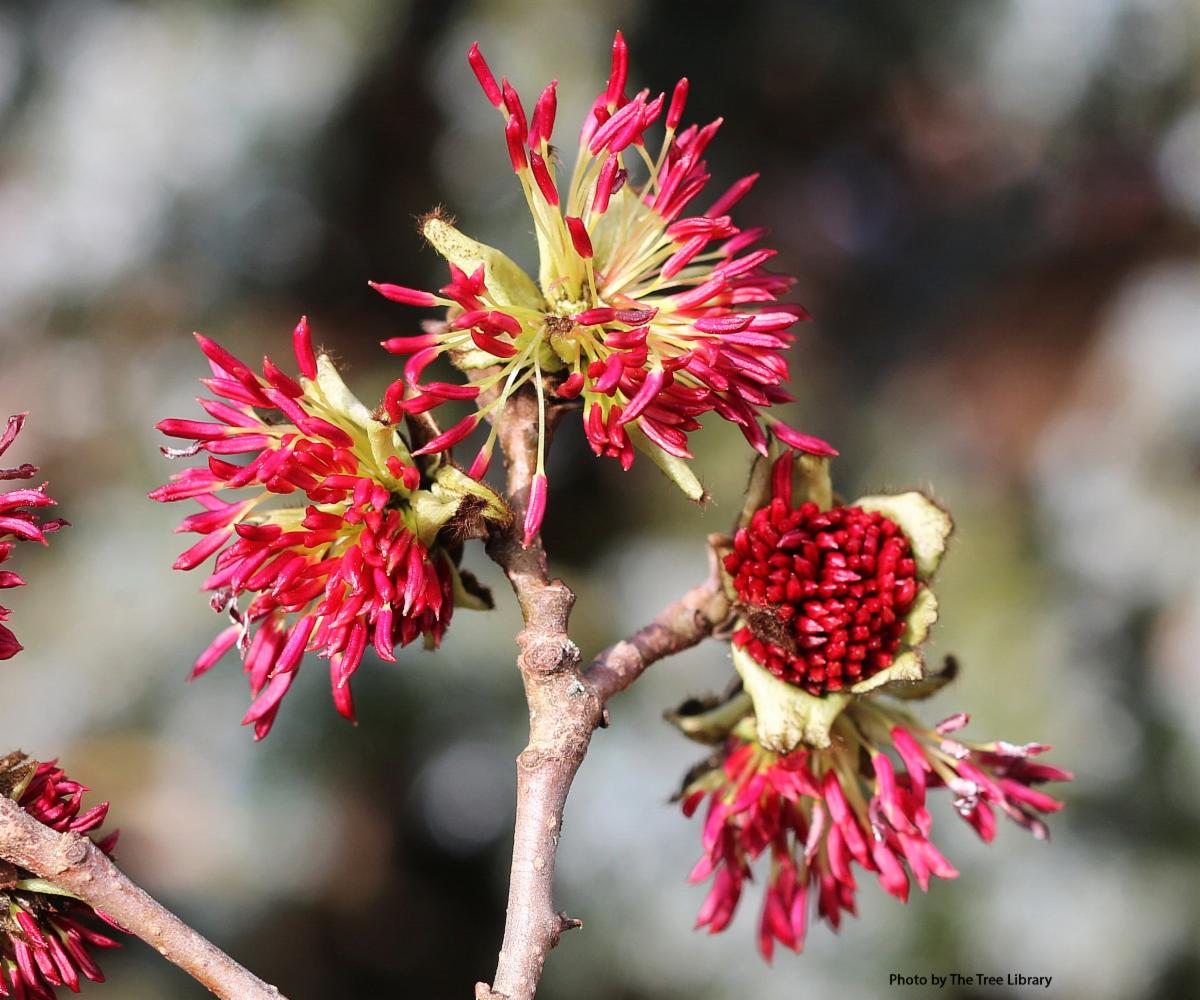
Persian ironwood flower (photo by The Tree Library) | |
|
Persian Ironwood
Parrotia or Persian ironwood, Parrotia persica is another species that boasts not only winter interest with its unique bark but noticeable scaled buds and early flowers. When first studying the buds they can easily be confused with last years seed pods on the tree. They are dark brown and appear dried out, but upon closer inspection you’ll see signs of life. As winter continues the buds begin to break open and reveal unique red stamens that complement the chocolatey brown of the bud scale. According to Brooklyn Botanic Garden, gardener, Laura Powell, “These petite flower buds look like little chocolate chips dotting the ironwood’s branches. Woolly and brown, they are quite simply adorable.” (5)
Parrotia are in the Hamamelidaceae or witch hazel family, but unlike our native witch hazel they are wind pollinated, and do not have petals. Flowers typically use showy petals to attract pollinators, but in this case the lack of petals helps to facilitate wind pollination. Visit the Wakefield to see the chocolate chips scattered among the branches of the parrotias or the beautiful crimson stamens of the flowers, below the dogwood alle in the formal gardens.
| |
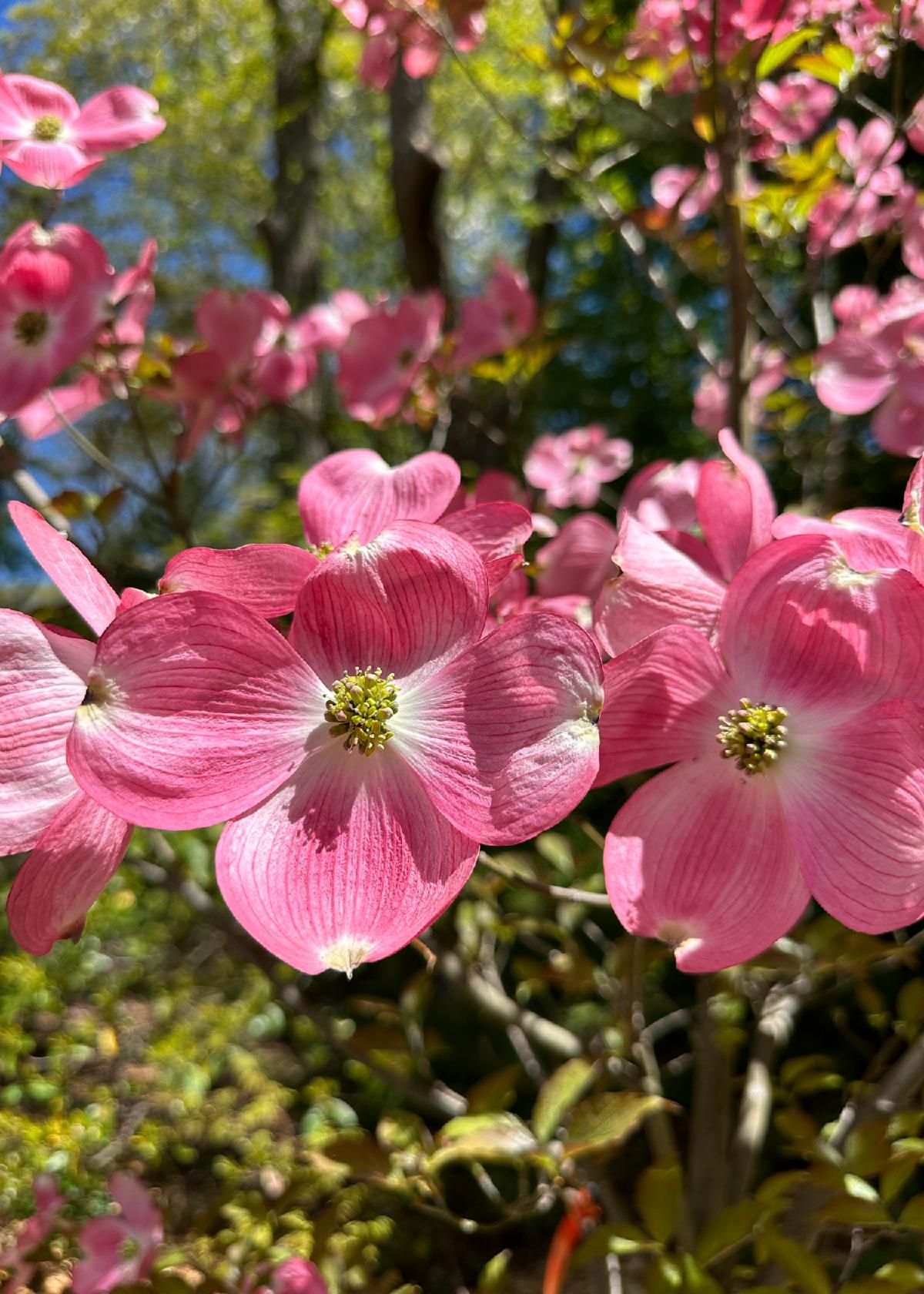
Cornus florida 'Cherokee Brave' flowering in May | |
Dogwoods
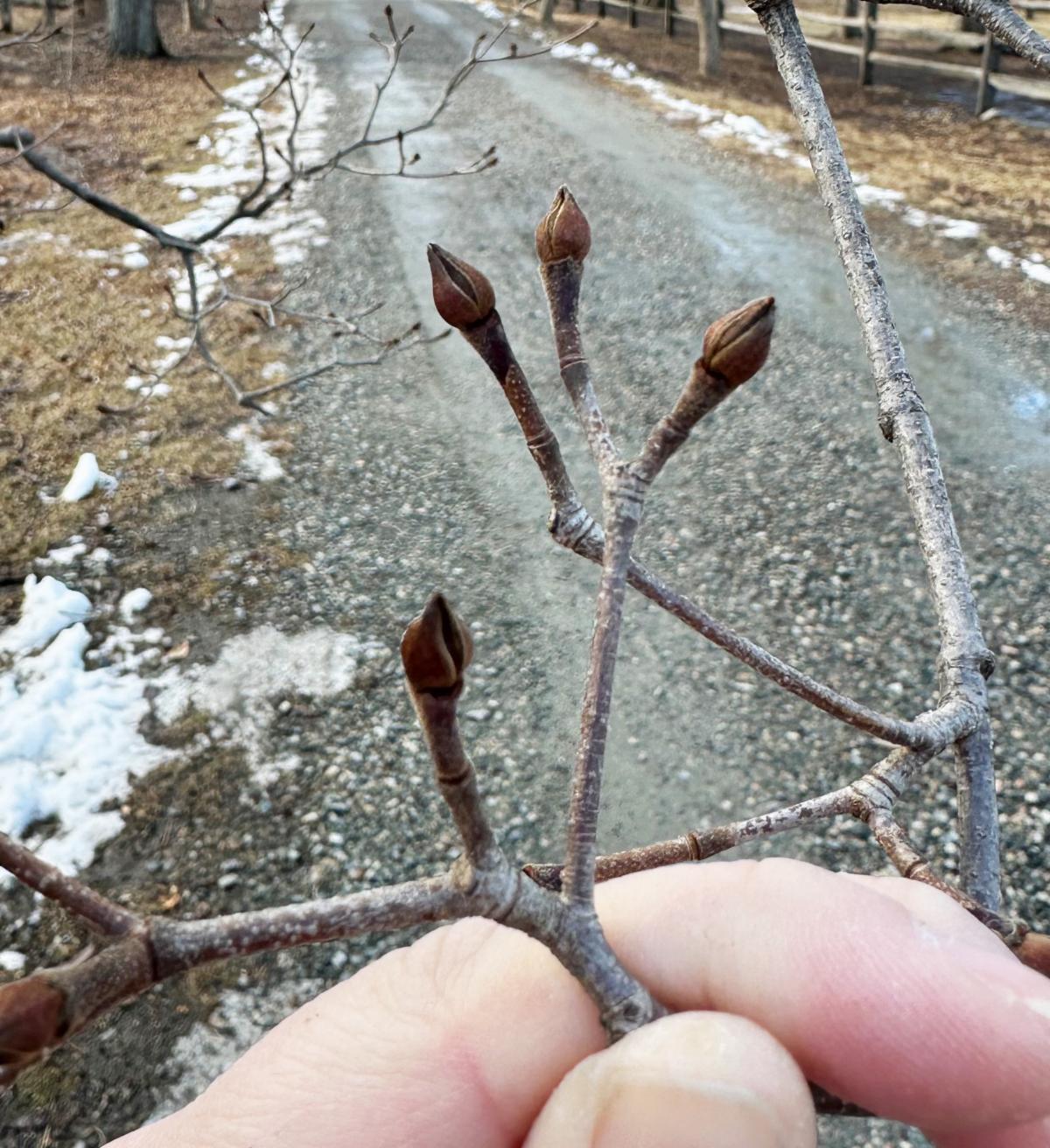
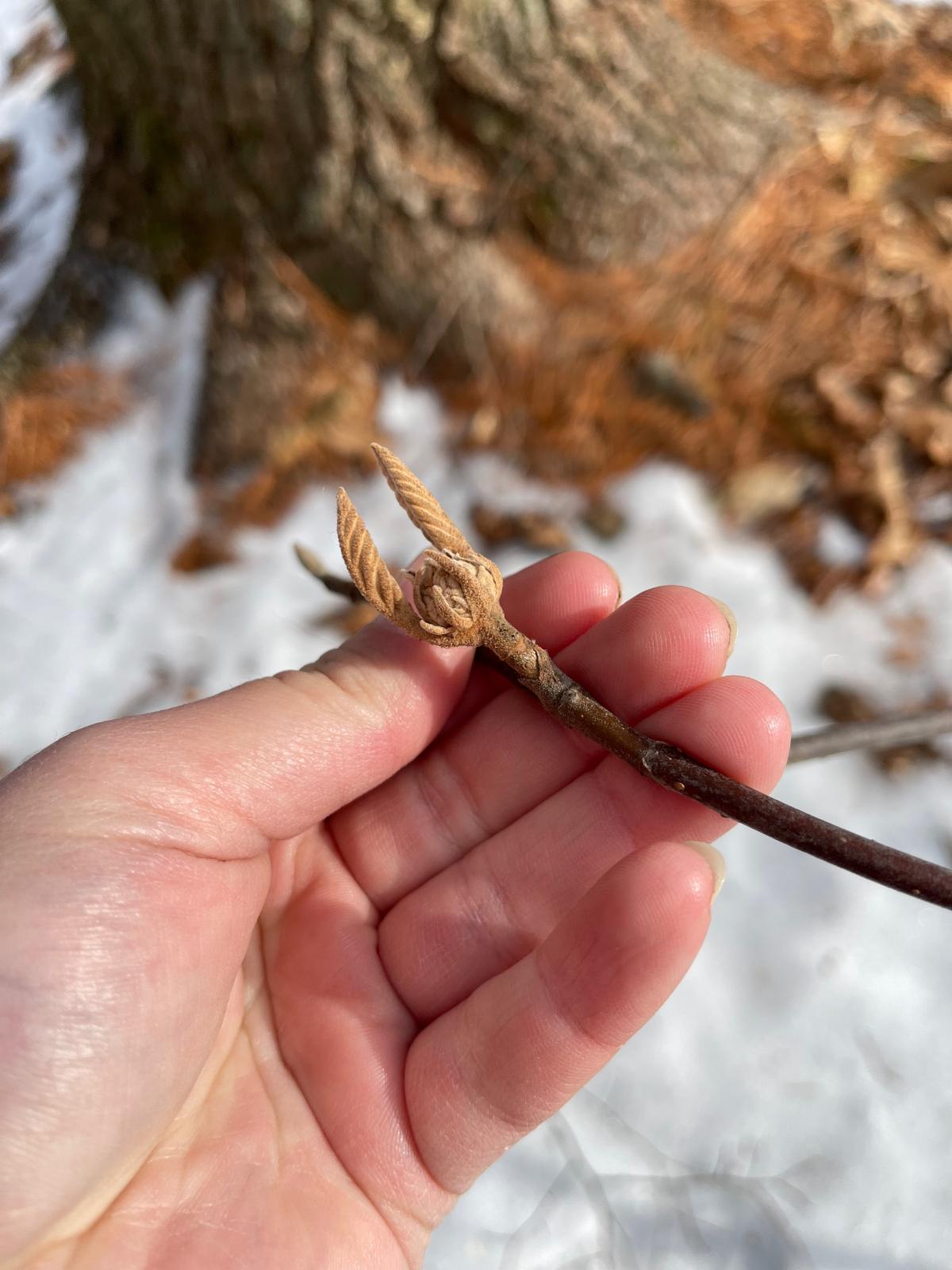
Dogwood Days feels far off as winter persists, but the dogwoods are already giving us hints of what to expect for our annual celebration. If you look closely while walking down the lane, you’ll see all the swollen buds along the twigs of the trees. When one thinks of the growth cycle of a leaf or flower on a tree, it starts in the spring when the leaves and flowers first break out of bud. But many species of trees begin to form the next years buds the summer before; these are called preformed leaves. Preformed leaves are formed in the summer and undergo a period of winter dormancy and complete their life cycle the next year. Morgan Moeglein, an assistant professor at Norwich college, researched preformed leaves at the Arnold Arboretum and found that many species' preformed leaves were already fully developed, within the leaf bud. This includes many oak species and sweet gums. (6) Dogwoods also set preformed leaves and flower buds in the late summer. These buds swell and by winter and the difference between flower buds and leaf buds become more obvious.
| |
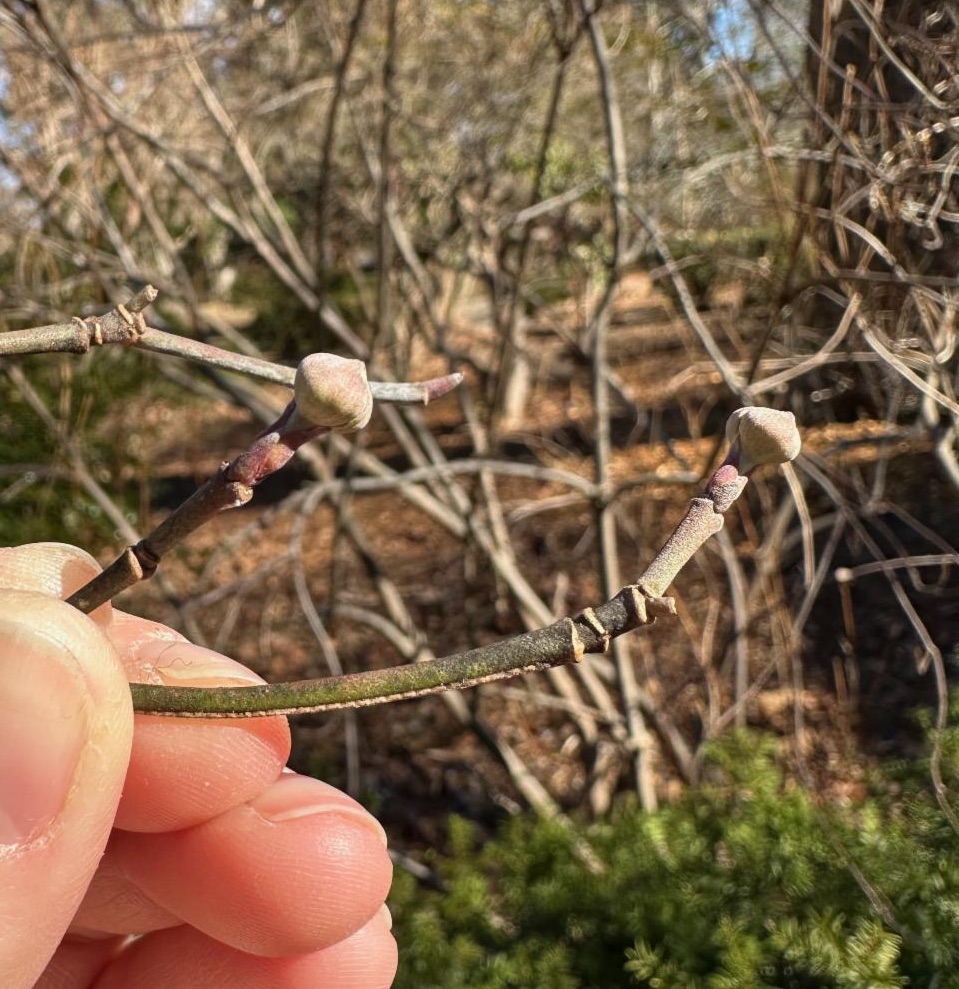
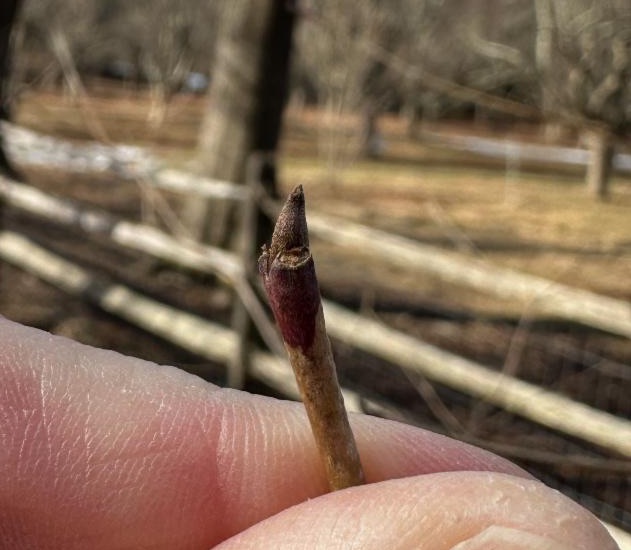
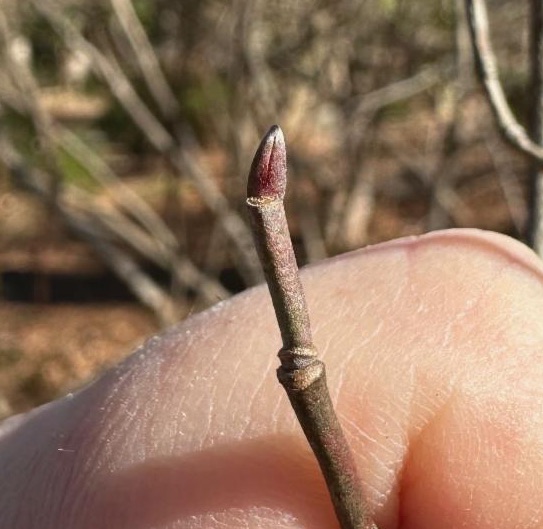
Although there are many different characteristics to tell the Kousa dogwood (Cornus kousa) and the native flowering dogwood (Cornus florida) apart, the buds are just another way to distinguish the two. Both dogwoods have what is called a protected bud, or a bud that has a protective scale or shell around it. More specifically they have valvate buds, which means two scales come together to create a protective layer. It is not clear why some species have naked buds and some have protective buds, but the bud scale does help to protect the delicate preformed leaves and flowers from cold winters, predation, and other environmental stressors. There are plenty of species found in New England that have naked buds that can survive harsh winter climates, including Hobblebush (Viburnum lantanoides), bitternut hickory (Carya cordiformis) and Witch hazel (Hamamelis virginiana). Flowering dogwoods have an onion-shaped flower bud that has a silvery hue to it. Kousa dogwoods have a more slender flower bud that comes to a sharp point. Their leaf buds are distinctly different from the flower buds but don’t vary much between species. Judging from the plethora of flower buds we see this winter we will have an excellent dogwood bloom this year! | |
Flowering dogwood flower bud | |  |
Flowering dogwood leaf bud | | |
Naked bud of Hobblebush (Virburnum lantanoides) in January at New England Botanic Garden. | |
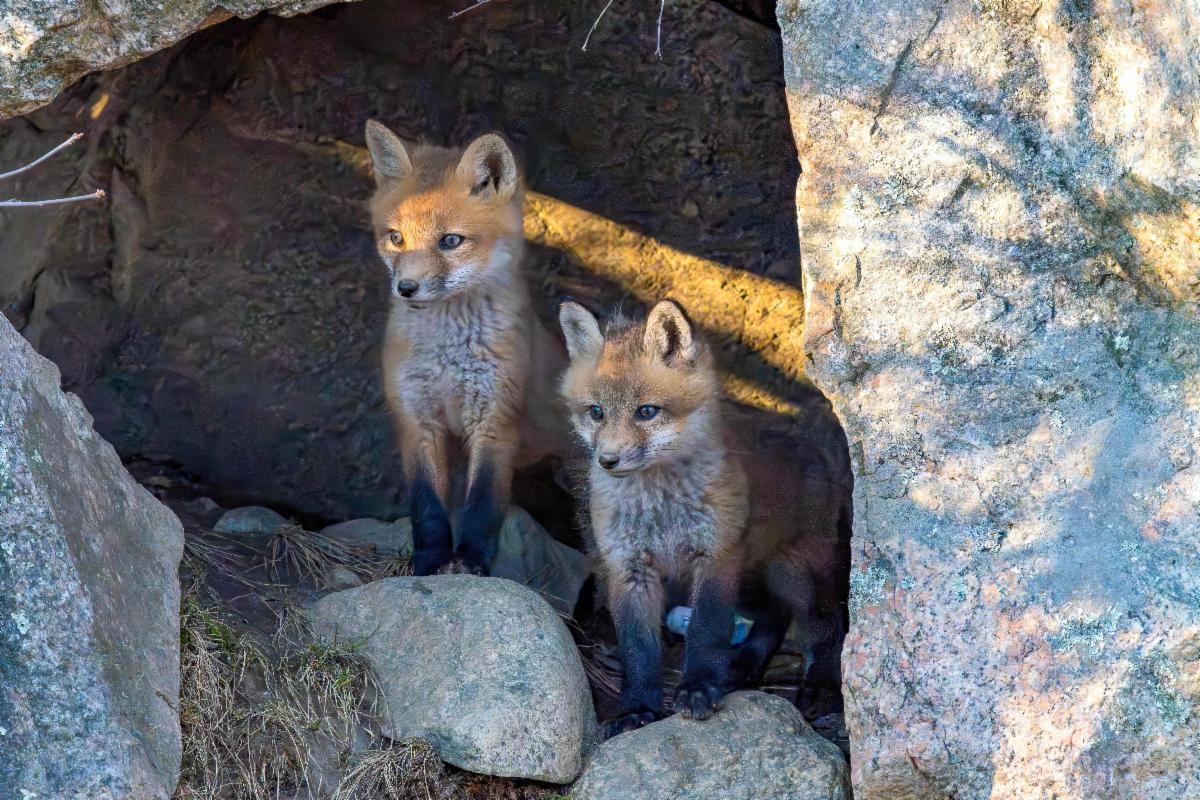
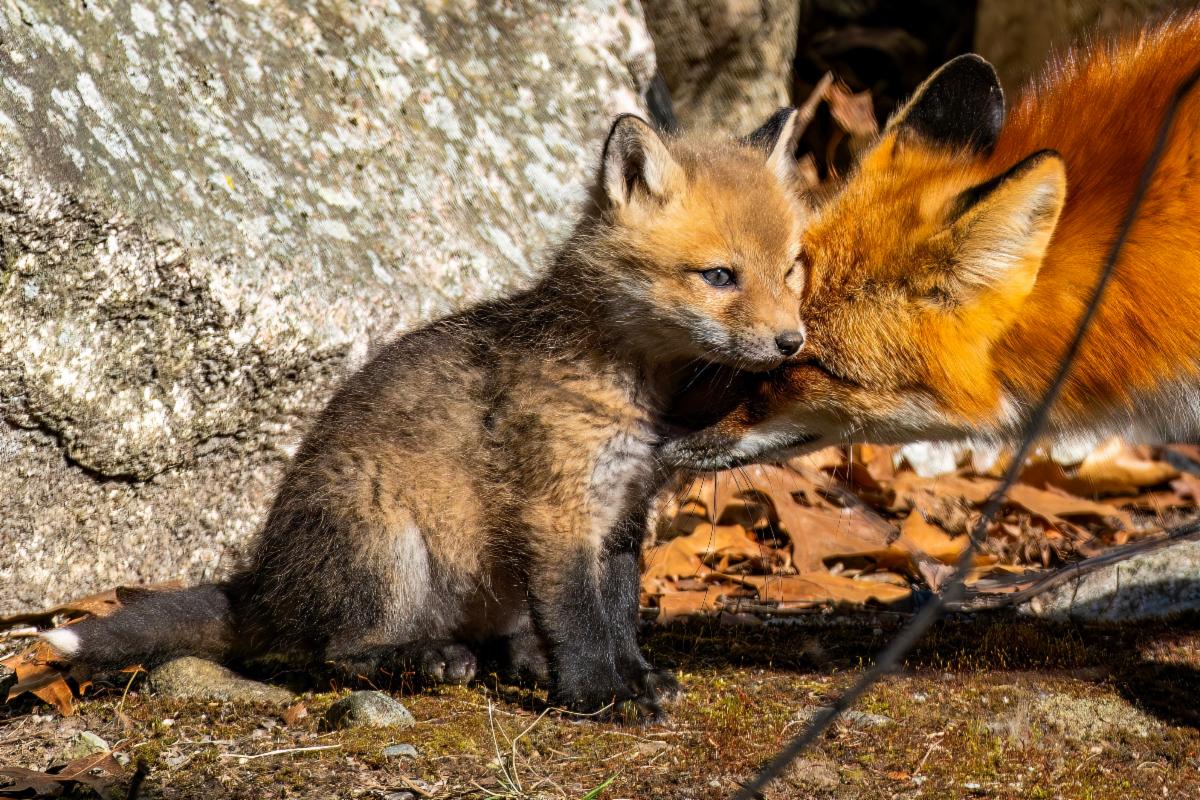
Fox kits in den (Photo By Melinda Petit) | |
Foxes
Foxes have been spotted recently at Wakefield and tracks in the snow prove they are moving through the garden. The red fox is the most widespread carnivore species in the world, ranging across the entire Northern Hemisphere. Like cats, red foxes have vertical pupils, which help to enhance night vision for hunting. They are opportunistic feeders, and their primary foods include small rodents, squirrels, rabbits, birds, eggs, insects, vegetation, fruit, and dead animals. Red foxes are omnivores that can adapt their diet to the food supply at short notice. They make do with what is easy to capture and offers a high energy content. Foxes also often cache excess food when hunting and foraging are good. They will return to these storage sites and have been observed digging up a cache, inspecting it, and reburying it in another spot.
Foxes are vocal animals and have a large repertoire of howls, barks, and whines. Foxes are usually shy and wary, but they are also curious. Foxes can actively maintain territories that may vary in size from 2 to 7 square miles. Territories are shared by mated pairs and their immature pups, but are actively defended from non-related foxes.(7)
Most red foxes favor living in the open, in densely vegetated areas, though they may enter burrows to escape bad weather or to have kits. Their burrows are often dug on hill or mountain slopes, ravines, bluffs, steep banks of water bodies, ditches, depressions, gutters, in rock clefts or human environments including under porches or abandoned buildings.(8)
| |
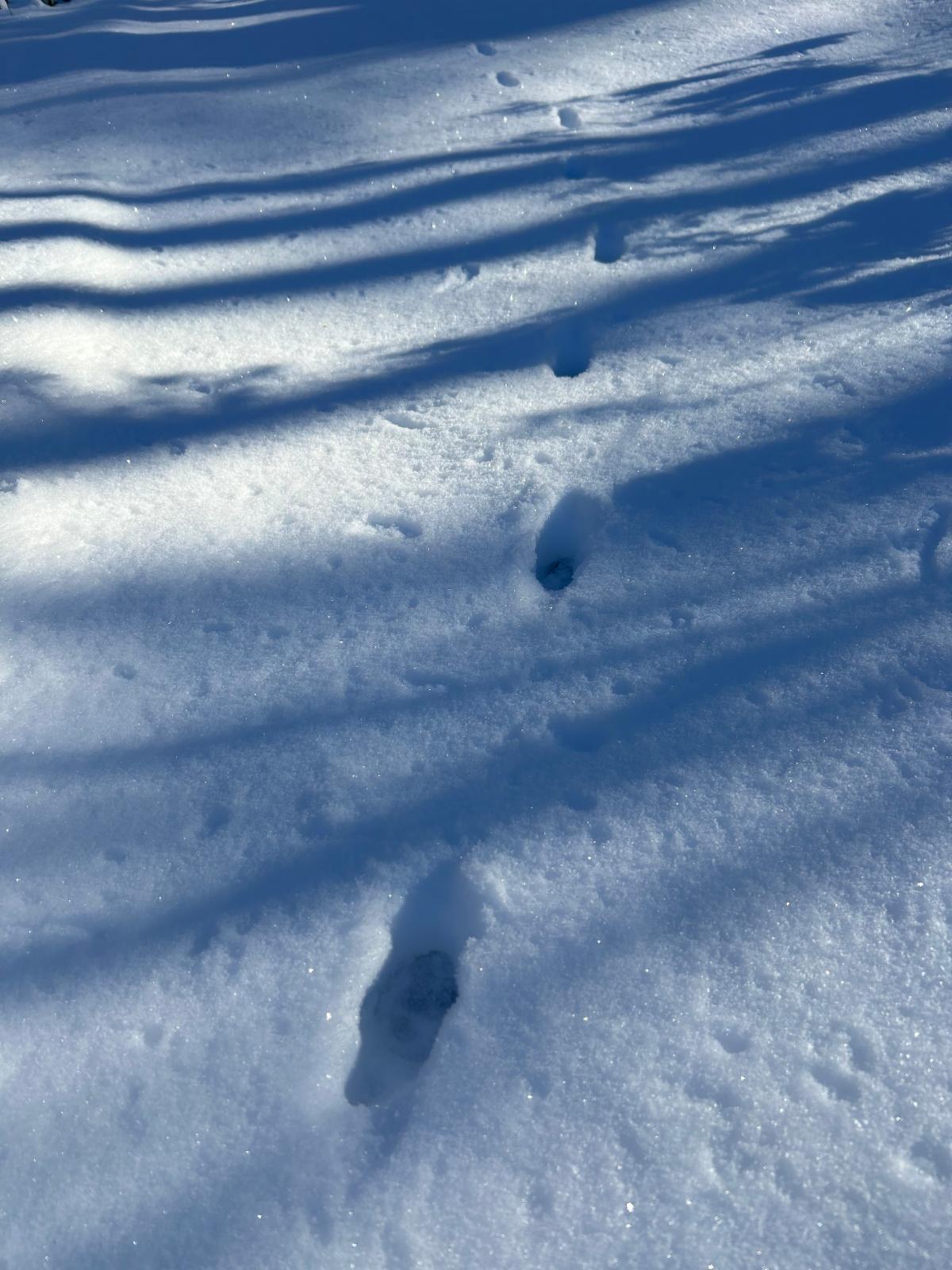
Fox prints at the Mary May Binnney Wakefield Arboretum | |
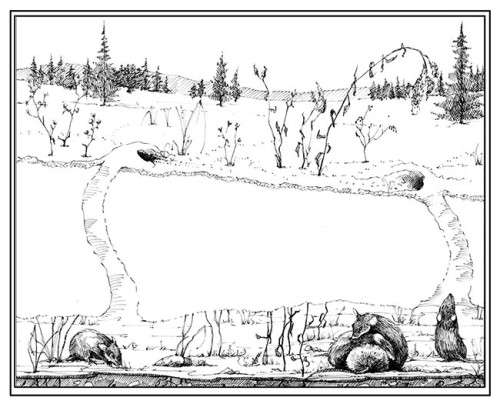
Red foxes have excellent hearing and can hear low-frequency sounds and rodents digging underground. This gives them the ability to hear animals moving beneath the snow in winter. Many animals survive the winter in what is known as the subnivean zone. According to Naturalist, Barbara Mackay, The subnivean zone is the area between the snowpack and the surface of the ground. The word subnivean comes from the Latin “sub” (under) and “nives” (snow). Mice, voles, and shrews retreat here for protection from cold temperatures, bitter winds, and hungry predators. Their food source is right at hand: grass, leaves, bark, seeds, and insects are free and unfrozen. Under the snow, these tiny mammals create long tunnel systems complete with air shafts to the surface above.(9)
The subnivean zone begins to form with the first snowfall. Some of the snow falls on hearty vegetation pushing it to the ground but leaving space underneath. Meanwhile snow that lands on the ground “sublimates”, meaning changes from a solid into a gas without going through the melting stage. As more snow accumulates over time a whole new underground world is used by all kinds of animals to survive the winter.
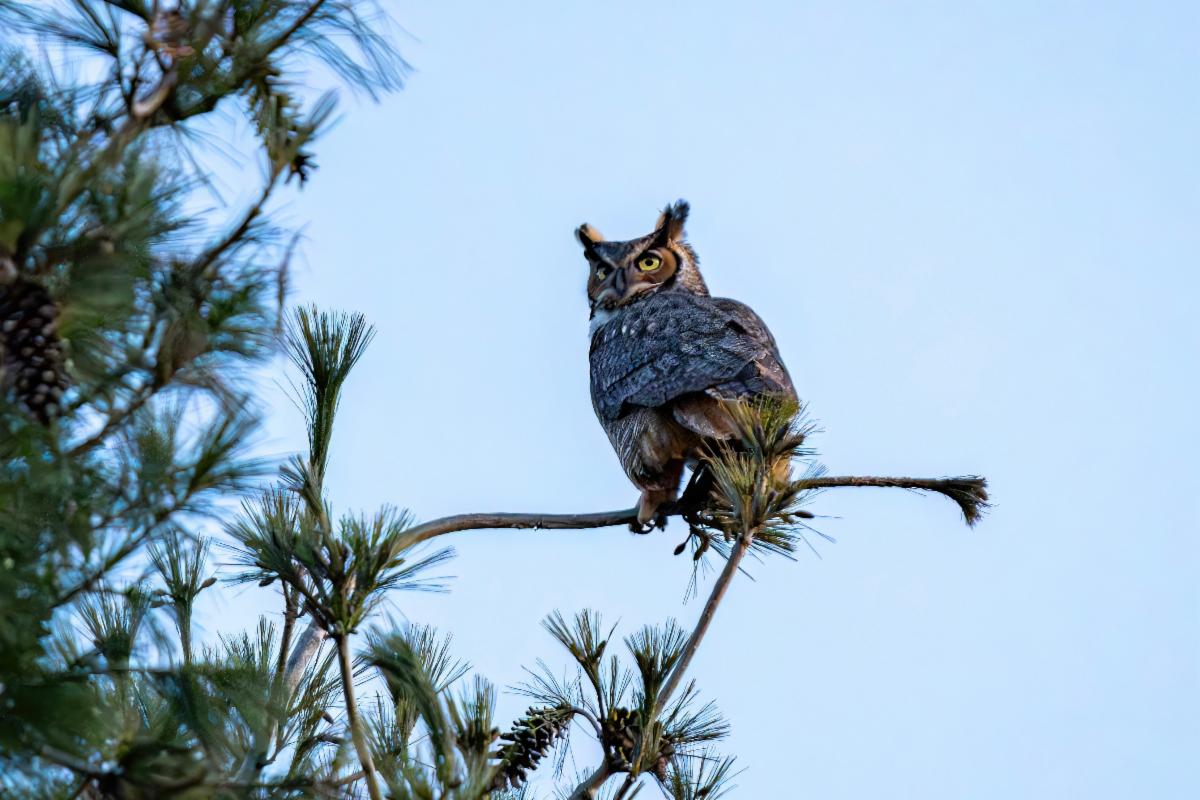
| The Subnivean Zone (Illustration by Adelaide Tyrol) | Fox kit and mother (Image by Melinda Petit) | Great Horned Owl (Image by Melinda Petit) | |
Owls
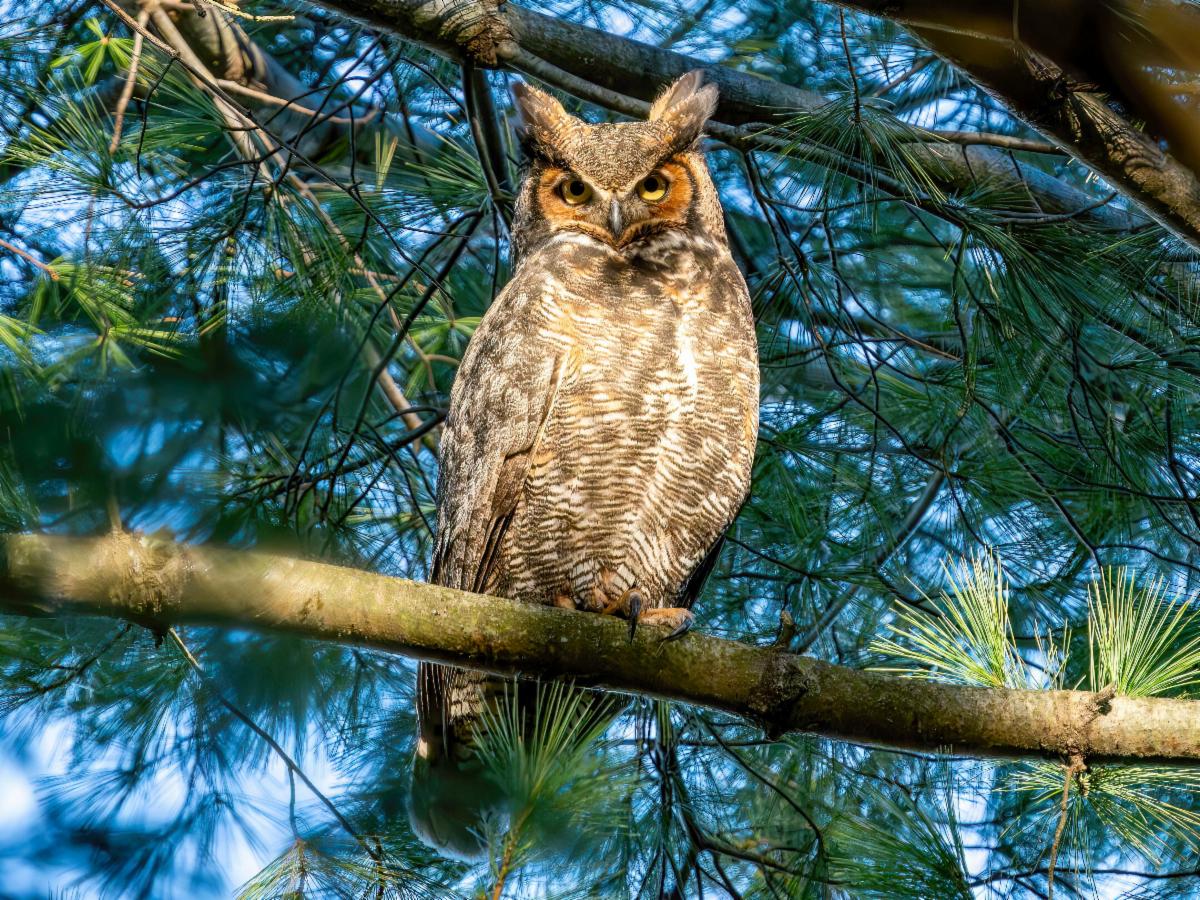
Many birds of prey make their home at or near the arboretum incuding red tail hawks, eagles, and great horned owls. Often our caretaker can hear the Great Horned Owls calling to each other in the evening, hear their call here. Great Horned Owls are one of the most common owls in New England. They occupy almost every habitat type, including wetlands, deciduous forests, old-growth forests, grasslands and city parks. They nest in abandoned stick nests, usually old hawk, crow, raven, heron, or squirrel nests. They also use cavities in trees, dead snags, buildings, cliff ledges, and man-made structures, including Osprey platforms and Peregrine hack boxes.(10)
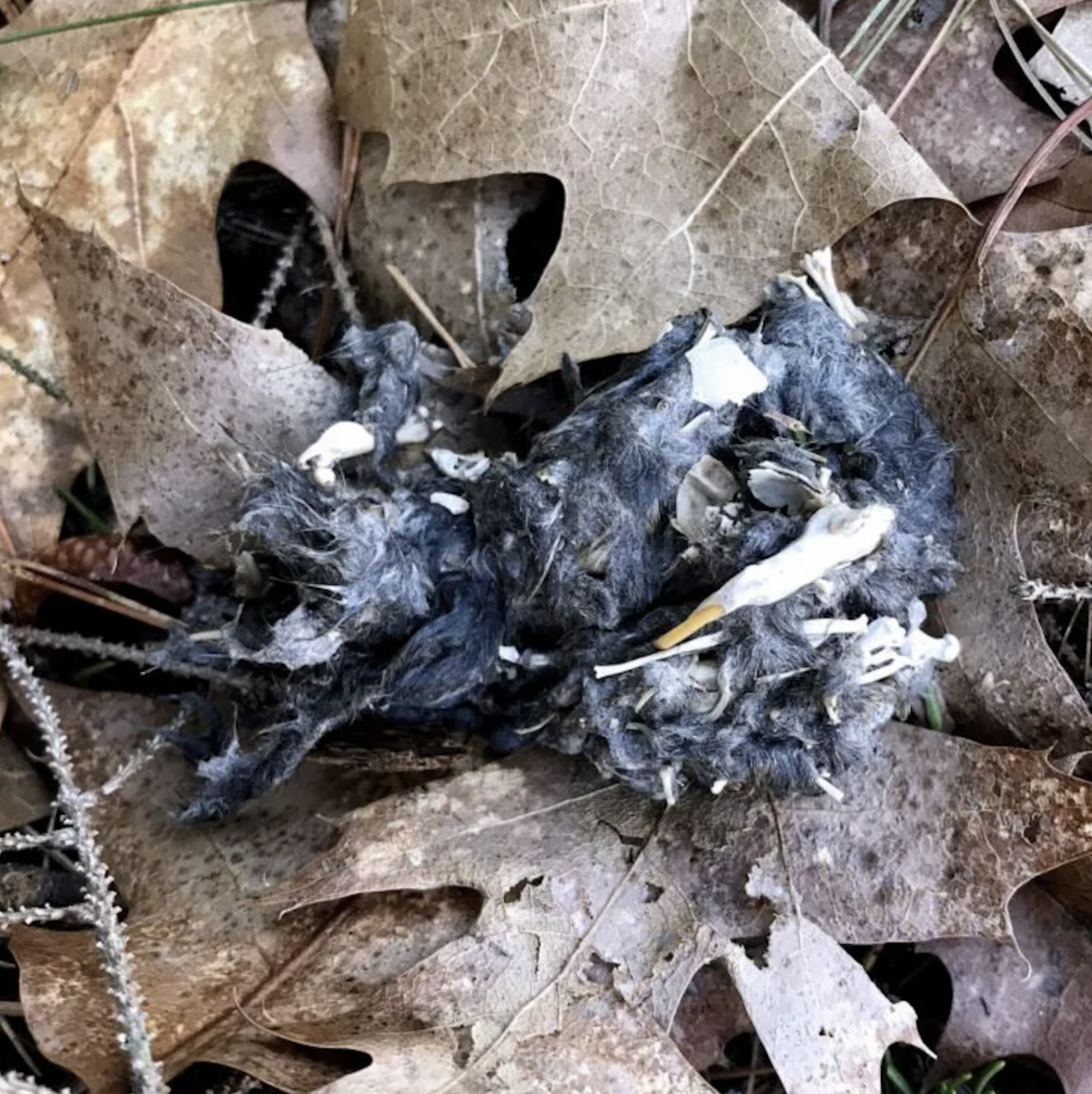
Great Horned Owls sometimes line a nest with bark, foliage, or feathers but often do not conduct any nest maintenance. Under many nests you can often find a pile of pellets (regurgitated fur and bone) that confirms the owls activity. According to the The Audubon Society Encyclopedia of North American Birds "The passing of pellets allows a bird to remove indigestible material from its stomach. In birds of prey, the regurgitation of pellets serves the bird's health in another way, by "scouring" parts of the digestive tract, including the gullet. Pellets are formed within six to ten hours of a meal in the bird's gizzard (muscular stomach)."(11)
Great Horned Owls are fierce predators with eagle-like power and use this deadly grip to kill prey nearly twice their weight. However, they have an incredibly diverse diet ranging from small mice, bats, scorpions, rats, gophers, chipmunks, doves, starlings, grebes, rails, and coots to large hares, skunks, geese, squirrels, woodchucks, marmots, prairie dogs, house cats, porcupines, loons, crows, ravens, and other raptors. They also eat reptiles, insects, fish, and frogs when available or in certain habitats.
We encourage owls and other birds of prey here at the Mary May Binney Wakefield Arboretum.They consume many rodents, especially mice. This helps us protect our visitors from Lyme disease. Mice are one of the main vectors for ticks to pass Lyme disease to humans therefore if we can keep the population of mice in check with the help of predators we can keep the number of infected ticks down. To read more about the connection between Lyme Disease and white footed mice click here.
| |
Great Horned Owl pellet (Image: Maine Coast HeritageTrust) | |
Great Horned Owl (Image by Melinda Petit) | Raccoon (Image by Melinda Petit) | |
Raccoons
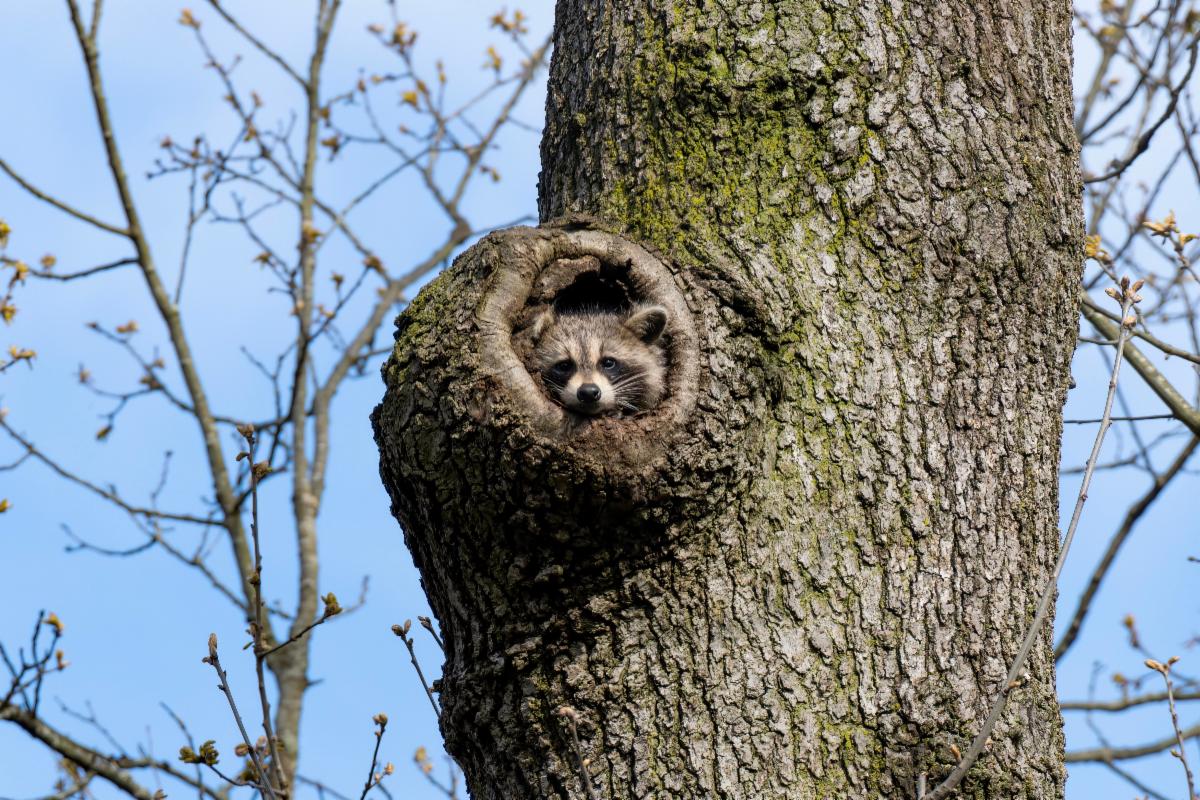
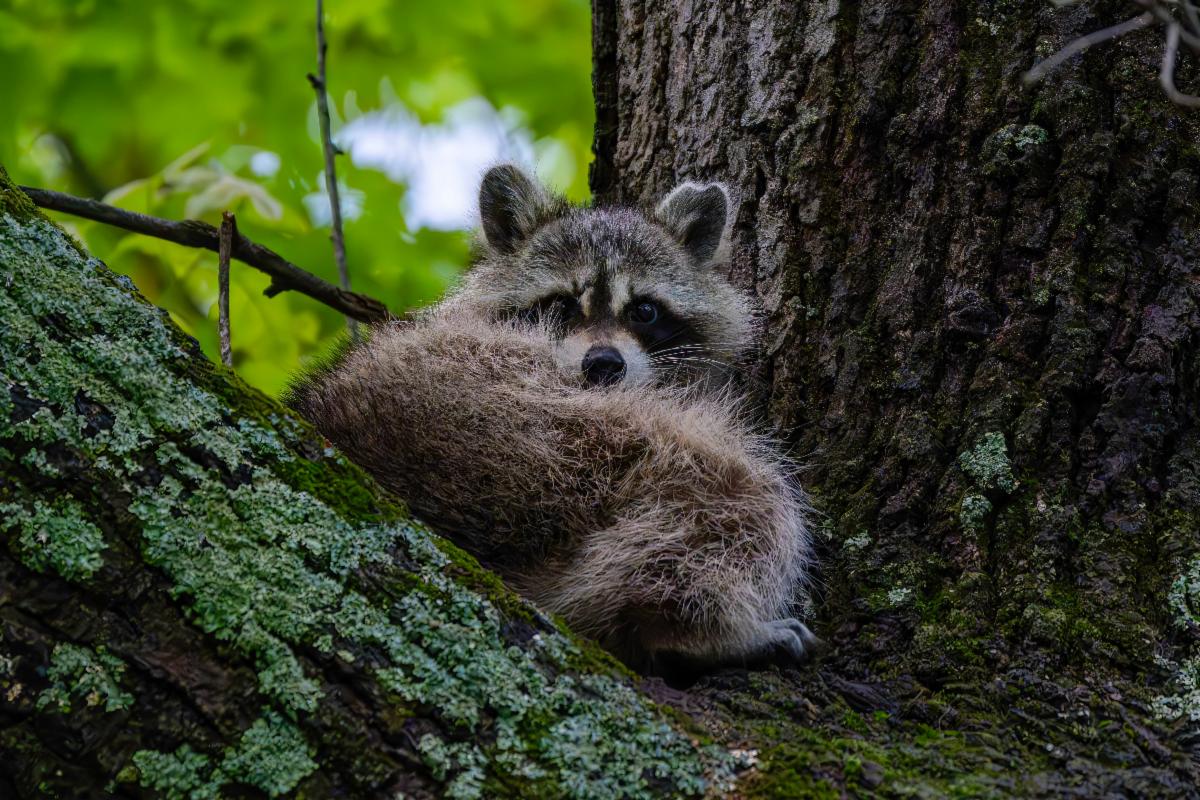
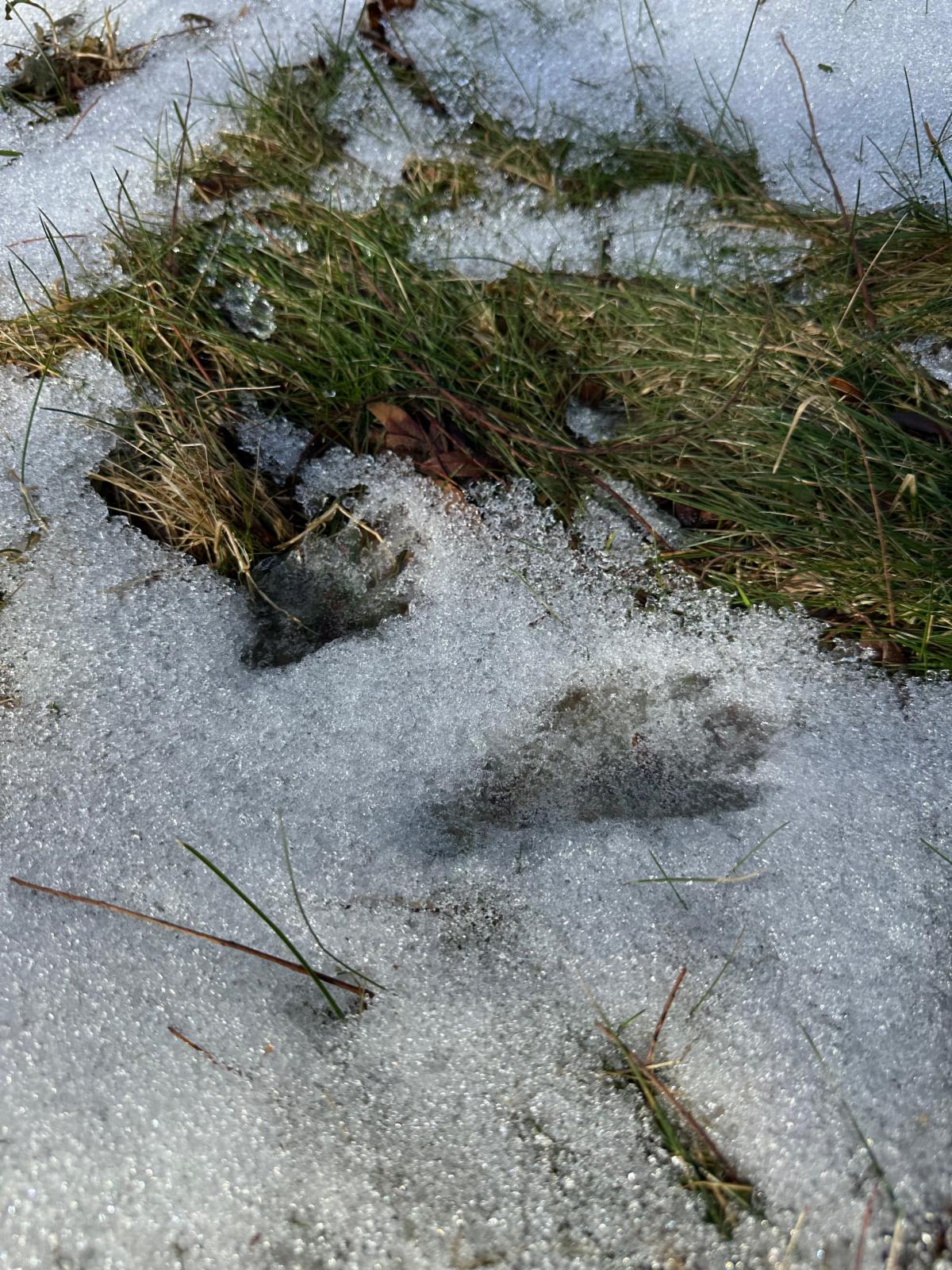
This winter has been perfect for monitoring various creatures moving throughout the garden due to persistent snow cover. Animal tracks in the snow help us understand what animals move through during the winter months. A very active family of raccoons has occupied the sugar maple in front of the mansion for many years. Raccoons are active in the winter but they also enter a state known as torpor. Unlike full hibernation, torpor allows raccoons and other animals to sleep for extended periods, reducing the energy they need to survive. “Torpor is a temporary, energy-conserving state that some animals enter during the winter. During torpor, an animal’s metabolic rate decreases significantly, which leads to a state of dormancy. In this state, the animal’s bodily functions–including heart rate, breathing, and body temperature–are significantly reduced. Animals in torpor conserve energy by essentially “shutting down” to endure conditions like extreme cold and the consequential food scarcity."(12) Torpor helps them cope with the unpredictable availability of resources during the winter months.
| |
Raccoon (Image by Melinda Petit) | |
|
Torpor is a flexible and reversible process, meaning animals in torpor can wake themselves relatively quickly and do so fairly regularly. This allows the animals to remain responsive to environmental changes and adapt as needed. Raccoons enter torpor for longer periods of time in colder climates, grow a thick winter coat and increase the amount of stored fat. These changes allow them to prepare for winter and remain comfortable. The extra layer of fat they add during the fall – about one-third of their total weight – helps provide insulation, along with a heavy coat of coarse fur.
Raccoons are omnivores eating everything from insects, eggs, small mammals, crayfish, fruit carrion and garbage. “Raccoon” is from an Algonquin word “aroughcoune,” meaning “one who scratches with his hands.” The raccoon’s scientific name, Procyon lotor, breaks down to “dog-like” (although raccoons are scientifically more closely related to bears) and “washer.” Raccoons have highly developed nerves in their front paws, which become more sensitive when immersed in water.(13) Raccoons are also adept at both swimming and tree climbing. They have modified ankle joints and sharp claws allowing them to move up and down trees forwards or backwards. These animals cause little to no harm in the landscape at Wakefield; however, they are considered an invasive species in the UK and Europe because they are opportunistic, eating eggs, chicks and adult birds, especially waterfowl. Their impact on biodiversity can be severe. They are also known to damage fruit trees, vineyards, and chicken farms, and they carry diseases and parasites, such as rabies, roundworms, and toxoplasmosis.(14)
| |
Raccoon tracks in the garden | |
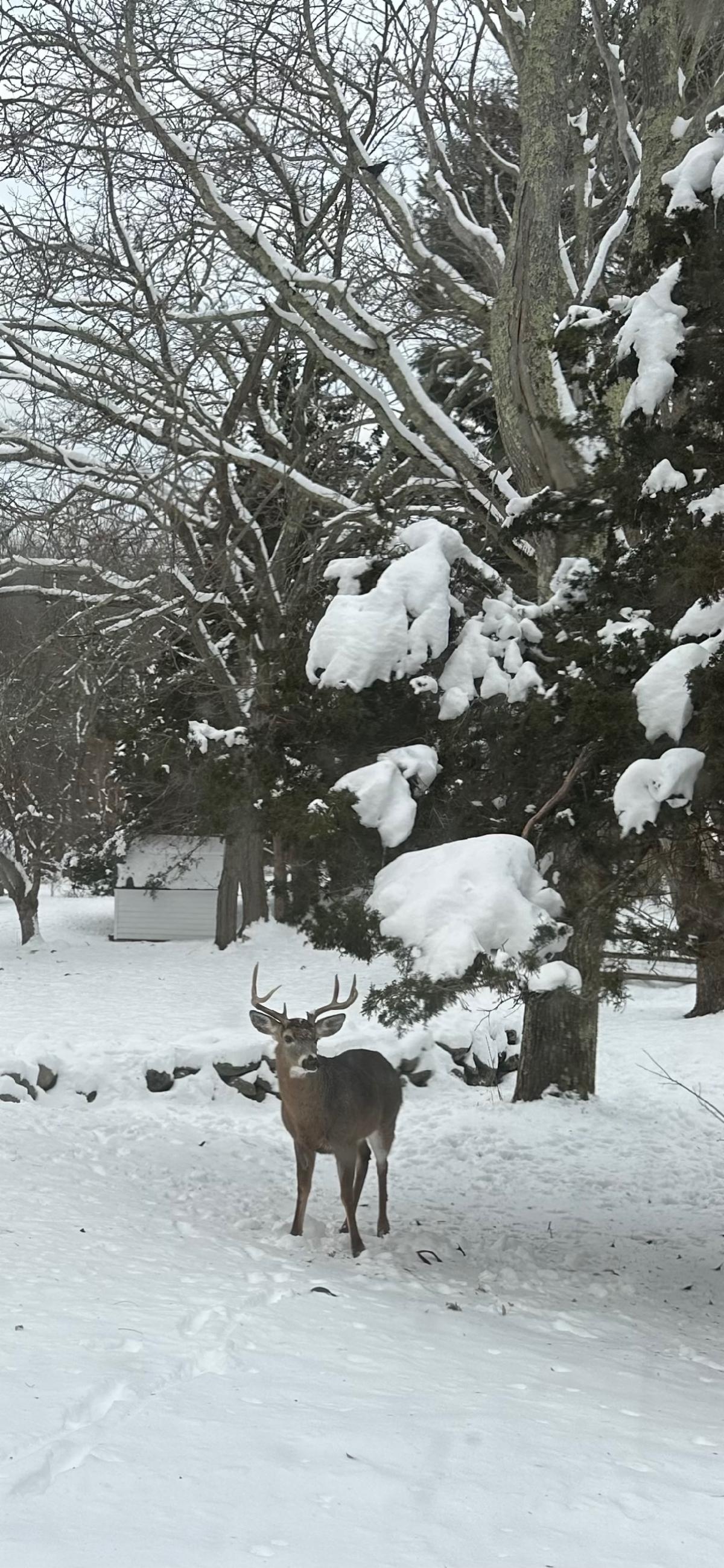
Buck eating locust pods in the garden | |
|
1.Arnoldia “Spring comes to the maples” Grossman, Jake J. https://arboretum.harvard.edu/stories/spring-comes-to-the-maples/
2.https://www.theatlantic.com/health/archive/2012/11/the-mysterious-past-and-present-of-witch-hazel/264553/
3.https://www.adkinsarboretum.org/programs_events/ipp/witch-hazel.html
4.Arnoldia “Hamamelidaceae, Part 1: Exploring the Witch-hazels of the Arnold Arboretum” Volume 72, Issue 2. Gapinkski, Andrew. https://arboretum.harvard.edu/stories/hamamelidaceae-part-1-exploring-the-witch-hazels-of-the-arnold-arboretum/
5.https://www.bbg.org/article/get_to_know_these_buds
6.Arnoldia “Bud Morphology”, Volume 79, Issue 4. Moeglein, Morgan. https://arboretum.harvard.edu/stories/bud-morphology/#:~:text=Every fall across the temperate,preformed leaves for future seasons
7.https://www.mass.gov/info-details/learn-about-foxes
8.Heptner, V. G.; Naumov, N. P. (1998). Mammals of the Soviet Union. Leiden: Brill. pp. 115, 341–365, 453–502, 513–562. ISBN 978-1886106819.
9.https://northernwoodlands.org/outside_story/article/subnivean-shelter-snow
10. Hawk Watch International
11.The Audubon Society Encyclopedia of North American Birds
12.Lyman, C. P. (2013). Hibernation and torpor in mammals and birds. Elsevier Science.
13.https://www.welcomewildlife.com/northern-raccoon/
14.https://www.discoverwildlife.com/animal-facts/facts-about-uk-invasive-species
https://northernwoodlands.org/outside_story/article/raccoons-prepare-for-winter Article by Meghan McCarthy McPhaul
| |
Articles written by Debbie Merriam and Ellen Scheid edited by Susan Hein | |
For a printable copy of this or any prior issue of Dogwood Lane, click here or visit the news tab on our website.
| |
|
Mary May Binney Wakefield Arboretum | 617-333-0924
1465 Brush Hill Road, Milton, MA 02186 | www.wakefieldtrust.org
| | | | |