|
Written by Kieran Delamont, Associate Editor, London Inc. | |
HIRING AND RECRUITMENT
Go ahead and reply to that email right now
Worried that responding too quickly to a prospective employer could make you seem desperate? New research suggests you may be worrying about the wrong thing
| | |
IN THE 1996 flick Swingers, Jon Favreau’s character Mike asks Vince Vaughan’s character Trent how long he should wait to call a woman he just met. “I used to wait two days to call anybody, but now it’s like, everyone in town waits two days. So I think three days is kind of money,” Trent advises. “Laugh all you want, but if you call too soon you might scare off a nice baby who’s ready to party.”
You know what Trent would be today? Unemployed. At least he likely would be if he applied this make-‘em-wait mentality to replying to a potential employer. According to new research from Vanderbilt University professor Eric VanEpps, replying quickly is increasingly an asset in today’s job application market.
“Even delays of just five to 10 minutes dramatically reduce providers’ likelihood of being hired,” the researchers concluded, based on a large survey of data from a popular jobs platform. “In our experimental studies, providers who take less (versus more) time to reply are seen as more likely to be responsive in the future, make more positive impressions than slower responders, and in turn, are more likely to be hired.”
The researchers wrote that replying quickly even trumped out the quality of their work or the content of the message sent, which the researchers identified as “a distinct signal that employees can control to increase their hireability: replying to messages quickly. Empirically, every minute counts.”
“Speed is a signal,” said co-author Einav Hart, from George Mason University. “People see a quick response as a sign that you’ll be attentive to their needs in the future, not just right now.” The commonly held idea that a fast reply signals that you’ve got nothing going on, and are thus desperate, appears not to be true; instead, fast replies seem to signal that you’re giving that potential employer priority.
The researchers also found this is not something that is necessarily consciously understood by employers themselves, though. In one study, the researchers asked the participants to rate their expectation of reply speed, and found that very few (one in 10) expected replies within the hour. “While managers often claim that speed is not as important as other factors…our research shows that they do, in fact, appear to give it an oversized weight in their judgment,” the authors wrote in the Harvard Business Review. “Though managers might believe that response speed is not a top factor, it consistently affects their judgments and preferences.”
If you’re rushing off to set up an autoreply, however, don’t do that. While the speed rule seems to apply, the authors warn that automatically replying wipes out any benefit you might accrue. “Participants did not like receiving automated messages,” they wrote, “because the response speed of an algorithm no longer signals anything.”
| |
COMMUNICATIONS
Job postings are getting ridiculous
Job descriptions are a bloated mess right now, and that’s bad for both candidates and employers
| | |
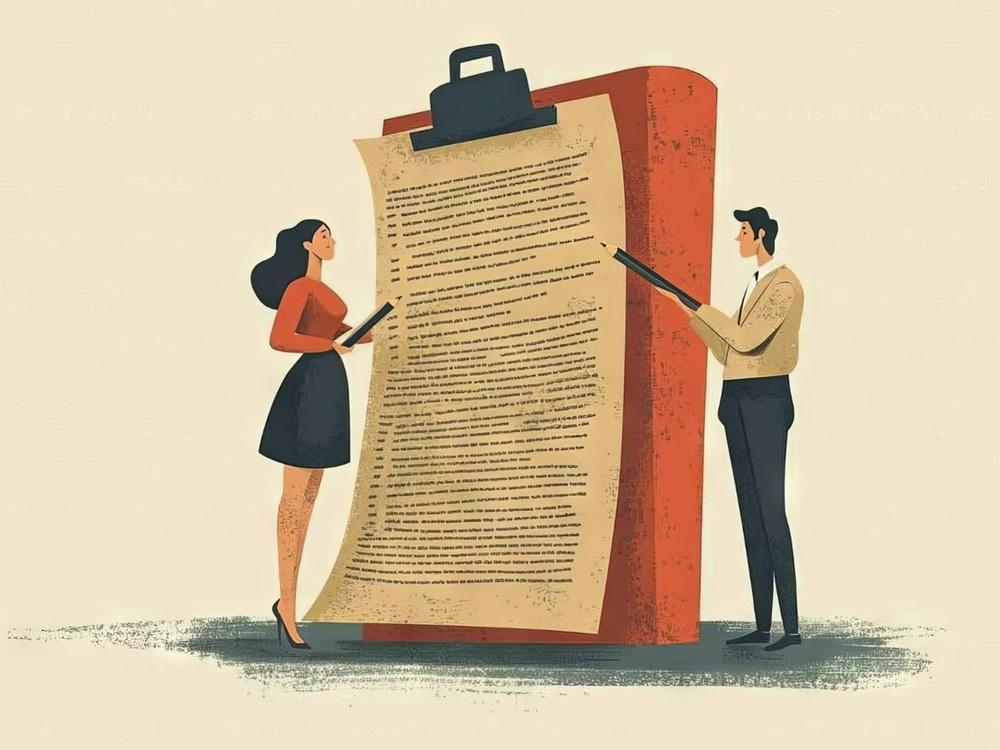
JOBSEEKERS (PERHAPS NOW freshly thinking about speed and promptness as important attributes) have a message for those out there writing job descriptions: “Please don’t bore us; get to the chorus!”
The problem they’re keying in on is long, bloated overstuffed job descriptions — a side effect of a drive for transparency in job postings that has, according to some jobseekers, gone too far, with companies cramming in every single thing they might like to see in a candidate.
“Scrolling through LinkedIn, it’s easy to find job descriptions that rival CVS receipts, with so many responsibilities they’re split under several subheads,” reads a report in Business Insider. One engineer job they found listed a total of 11 essential duties and responsibilities, and 11 skills, including “positive energetic attitude.”
According to hiring platform Greenhouse, the average job description is now 7.4 per cent longer than it was just a few years ago.
And if you’ve got a certain suspect in mind, you might be right. “What’s puffing up the ever-expanding job description? What else: AI,” wrote Amanda Hoover. “Hiring managers have layered new AI proficiency and pedagogy expectations on top of standard job tasks. Other listings, recruiters tell me, have inflated because hiring managers generated them with long-winded LLMs.”
"They’re dumping in nice-to-haves, could-haves and passing thoughts they had in the shower this morning,” added Marc Cenedella, CEO of career platform Ladders. “Managers don’t have to edit themselves, so they’re just dumping the kitchen sink in there.”
Others are warning that job description inflation is as much a problem for employers looking for talent as for the jobseekers wading through them. “We get it. It can be tempting to include every detail. But the truth is, that long job posts can be a major obstacle to attracting top and inclusive talent,” wrote Datapeople’s Brett Van Buskirk. “Studies have shown that when job posts exceed 600 words, the number of one-click-apply candidates rises. These applicants tend to be less qualified, having applied without thoroughly reading the job description.”
How long is too long? Shorter than you think. A 2013 study by Ladders used eye-tracking tools to measure how candidates scanned job ads, finding that most candidates looked at them for about 49 seconds before deciding whether to apply — enough time to read about 150 words, far fewer than the 600-plus that make up the average job description these days.
Many would like to see this era of job posting bloat come to an end, and for employers to get back to the basics of selling the job to the candidate.
“We've gotten so far away from what the actual intent of a job description is and what it should be,” said Trent Cotton of recruiting company ICIMS. “Hiring managers and recruiters are trying to make it so verbose to try and create some type of way to siphon out candidates, but they’re going about it the wrong way. They’re just adding a lot of paragraphs but not a lot of substance.”
| |
| |
Terry Talk: Why great leaders choose empathy
| In this Terry Talk, Ahria Consulting president & CEO Terry Gillis pushes back on the growing belief that empathy makes leaders weak. Empathy isn’t avoiding tough conversations or saying yes to everyone. It’s taking the time to understand the experiences, perspectives and concerns behind people’s behaviours before making decisions. The best leaders balance accountability with empathy because empathy isn’t weakness. It’s leadership. | | | |
REMUNERATION
Canada’s gender wage gap is even bigger for freelancers
Freelancers have the power to set their own rates. So why are female freelancers earning less?
| | |
FREELANCING WOMEN IN Canada are making less money than their male compatriots, according to a new survey. Remitly, an international payments provider, recently put out a report on the freelancer pay gap — the difference in pay between women and men who are freelancing — and found that even in scenarios like freelancing where women have just as much power to set their rates as men (at least in theory), a substantial gap exists.
“We found that women charge an average of $31.33 USD per hour, which is 19 per cent less than men ($38.66 USD per hour),” the report found.
They note that in freelance markets, there’s some momentum towards closing the gap, and the overall difference in gendered pay (19 per cent) is smaller than the overall gender pay gap, which the United Nations estimates at around 23 per cent. But here in Canada, their data flips it: where our overall gender pay gap tracked by Statistics Canada comes in at around 12 per cent, the freelance pay gap sits at 16.2 per cent.
Most worrying is the gap in high-paid, technical freelance roles — jobs like AI engineers, data engineers and compliance professionals — where the gap is nearly 57 per cent.
Experts find this to be a somewhat puzzling data point, even if finding there is a gender pay gap isn’t all that surprising. We know that a gender pay gap exists at least in part due to subconscious or conscious discrimination from employers, but a freelance market should theoretically be one where women have equal pricing power. But the experts at Remitly and Revelio Labs, which has also done studies on this disparity, suspect that the employment market writ large is having something of a hangover effect.
“Freelancers may be carrying over salary expectations from when they were employed,” said Ankur Tiwari of Remitly, speaking to The Globe and Mail. Loujaina Abdelwahed of Revelio said its data found male freelancers charging a 19 per cent premium over female freelancers, while also finding that on measures of client satisfaction, both genders came out equally likely to earn good reviews. “If I were to guess why women charge less, I would go to that societal reason,” Abdelwahed said. “Women know that their work is valued less, and they internalize it.”
Both, though, had a simple message for women in the freelance market: use the findings and the data, talk to other freelancers, and above all else, be willing to charge what the work is worth.
“It really helps to just look at the market first and see what other people charge,” said Abdelwahed. “This is completely based on people deciding what they want to [charge], so if there is an opportunity to escape this discrimination in pay, that would have been the place for it.”
| |
PRODUCTIVITY
The enthusiasm penalty
Managers routinely choose the more motivated employee for extra work — even when it negatively impacts employee performance and well-being
| | |
|
BROADLY SPEAKING, BETWEEN the push to get more productivity out of employees, constantly shifting job descriptions and the desire at many firms to do more while holding a flat (or declining) headcount, you could say we’re in an era where work is being redistributed more than ever before.
It is likely the source of much workplace tension: work being put on someone’s plate who either can’t, or doesn’t want to, take on more work. And what might be the common factor among those who get more work than they want or need might be, paradoxically, their enthusiasm, a recent research report says.
Researchers from Northeastern University looked at how managers doled out additional duties, and found that there was a strong correlation between a worker appearing to be intrinsically motivated at work with those who ended up overburdened when they ended up receiving more work.
“Managers’ preference to allocate additional tasks to intrinsically motivated employees is serially mediated by the naive belief that these employees will enjoy the additional task, which, in turn, reduces perceived risk of burnout form the additional work,” the study found. “When intrinsically motivated employees bear a disproportionate share of work, this can hard employee engagement and long-term retention.”
Dubbed an ‘enthusiasm penalty,’ the researchers view it as an error in judgment on the part of a manager.
“Our research points to a psychological mechanism we define as ‘motive oversimplification,’” said Kaitlin Woolley, a marketing professor who co-wrote the paper. “Managers assume that if an employee enjoys their main work, they will also enjoy extra tasks, even if those tasks are tedious, undesirable or unrelated to the employee’s strengths.”
One of the other co-authors, Sangah Bae, said that part of her inspiration came from her own experience as a junior analyst, and finding she was receiving a ton of extra work. She suspected it was because she was happy and dedicated to her existing workload, and that made her an “easy target” for additional work.
“The employee that is your shortcut, that is your go-to person who seems to be engaged and loving their work, might actually be quietly being burned out,” Bae told Newsweek.
In other words, it might pay to grumble a bit — just a little bit — at each new task you’re given. A little eye roll here and there, a few muttered complaints under your breath. We can’t guarantee it will get you out of the new work, but hey, at least you tried.
|
| | | | |