A Warm Welcome from the Department of Epidemiology | | |
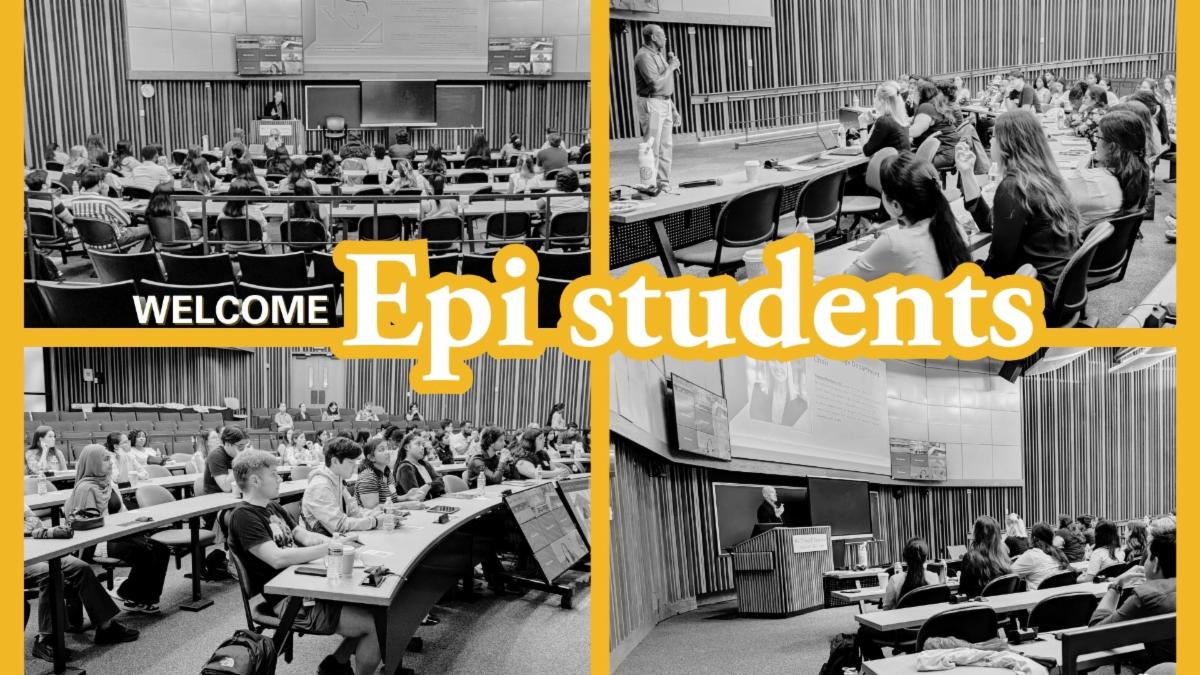
The Department of Epidemiology welcomes new and returning students as the academic year officially began on August 25. The department hosted its annual orientation program to support incoming students, designed to address frequently asked questions and provide an overview of departmental resources and expectations. You can check out the Epidemiology Orientation photos on our Flickr page.
For those unable to attend, the Epidemiology Orientation presentation is available online and can be accessed at go.uth.edu/EpiNewStudents.
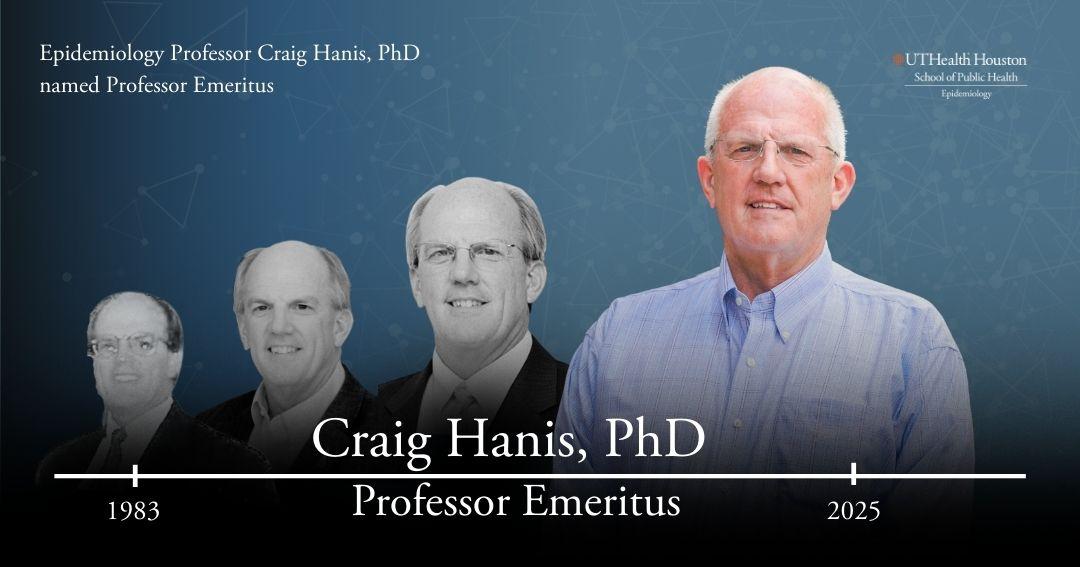
| | EPIDEMIOLOGY FACULTY HIGHLIGHTS | | Craig Hanis, PhD, Named Professor Emeritus After More Than Four Decades of Service | | |
Professor Craig Hanis, PhD, is retiring from the Department of Epidemiology at UTHealth Houston School of Public Health after more than 40 years of transformative research, teaching, and mentorship. In recognition of his lasting contributions to public health, he has been named Professor Emeritus effective September 1, 2025.
Hanis is widely recognized for his pioneering work in genetic epidemiology, particularly his leadership in medical research focused on Starr County in south Texas. His research helped define the genetic and environmental factors contributing to chronic diseases such as type 2 diabetes in Mexican American populations. His work not only advanced scientific understanding but also elevated Starr County as a nationally recognized site for Hispanic health research.
Throughout his career, Hanis has been a mentor and collaborator to many. Jan Bressler, PhD, Associate Professor of Epidemiology, noted his role in conducting the first genome-wide studies of type 2 diabetes in Mexican Americans and praised his field office in Starr County as a vital community resource. David Aguilar, MD, Professor of Medicine at UT Southwestern, described Hanis as “a pioneer in diabetes genetics and a generous mentor,” adding, “I am deeply in his debt for the support he showed me.” Bing Yu, PhD, Professor of Epidemiology, emphasized Hanis’s long-term leadership, saying, “Craig’s stewardship of the Starr County cohort for over 30 years is a rare and exceptional accomplishment.”
Sharon A. Brown, PhD, RN, Professor Emeritus in Nursing at The University of Texas at Austin, reflected on her 35-year collaboration with Hanis, which became the cornerstone of her career. She shared, “I have been, and continue to be, so honored to have worked on such important diabetes projects with Craig Hanis and the people of Starr County, some of the finest people I have ever met.”
Eric Boerwinkle, PhD, Dean of UTHealth Houston School of Public Health, noted, “Craig is not the type of person who seeks publicity, but his work has made seminal and lasting contributions to the epidemiology of chronic disease in the Hispanic community.”
Hanis’s influence extended beyond research. Eric Brown, PhD, Assistant Professor of Epidemiology, described him as “tireless,” adding, “His commitment to mentoring students and faculty, both new and seasoned, has been nothing short of legendary.”
Craig Hanis’s legacy is one of scientific rigor, deep compassion, and unwavering dedication to improving health in underserved communities—a legacy that will continue to guide and inspire generations to come. Alanna Morrison, PhD, Chair of the Department of Epidemiology, offered a heartfelt tribute, “I can’t thank Craig enough for his excellence in science, mentorship, humor, and heart. He has left a legacy that will continue to shape this institution and all of us who’ve had the privilege to learn from him.”
| | |
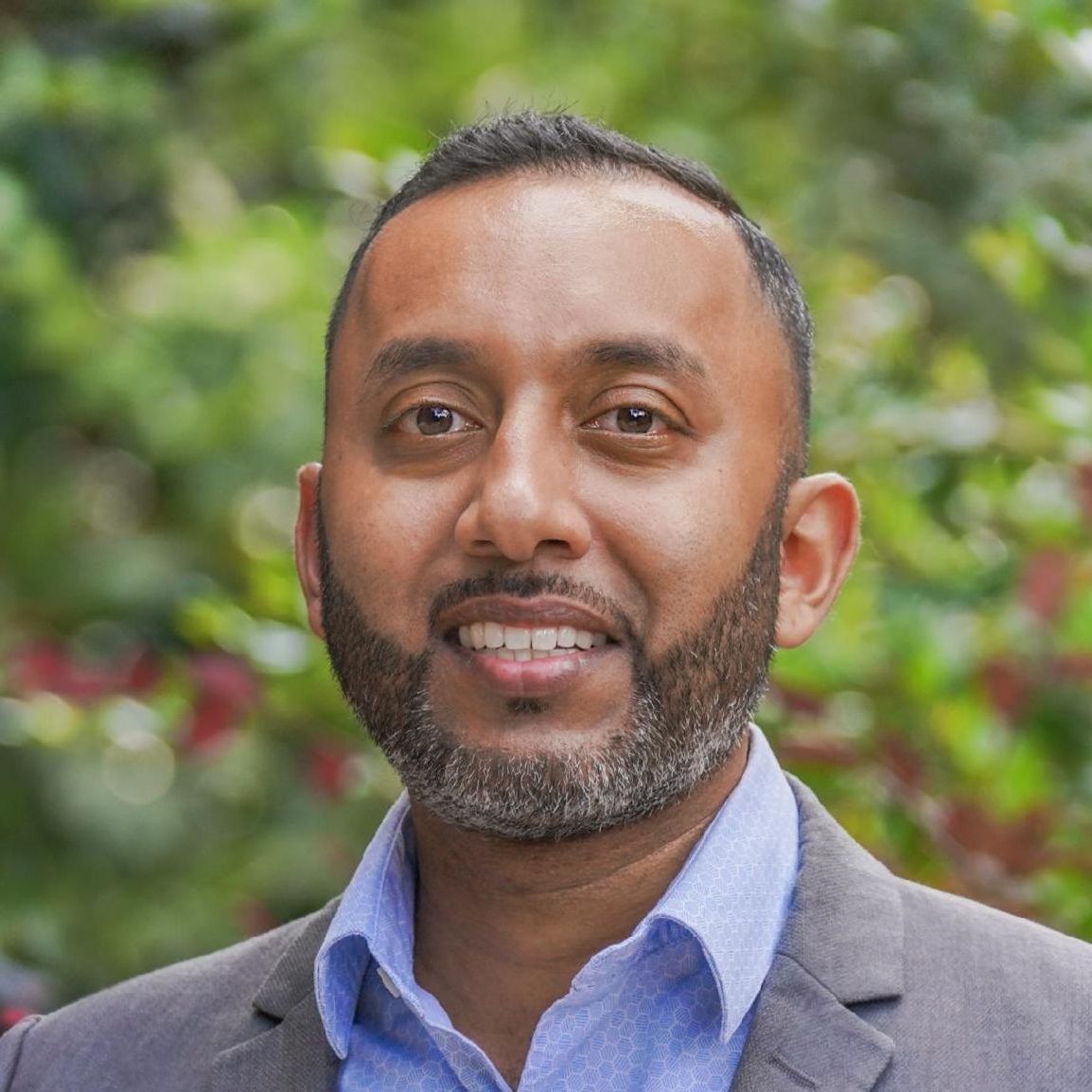
Associate Professor Kristin Young, PhD
We are pleased to welcome Kristin Young, PhD, as Associate Professor in the Department of Epidemiology at the School of Public Health. Young holds a BA in Anthropology and a BS in Zoology from the University of Oklahoma, both of which were awarded with distinction. She earned her MA and PhD in Anthropological Genetics from the University of Kansas and an MS in Clinical Research from the University of Kansas Medical Center.
Young will focus on research within the newly established Border Health Research Center. Her scholarly work investigates chronic disease's genetic and environmental determinants in high-risk populations. With a strong foundation in anthropology, she brings a unique perspective to understanding how evolutionary, cultural, and environmental factors influence health outcomes. She is particularly enthusiastic about launching multiomic research initiatives to improve public health in underserved communities.
Outside of her academic pursuits, Young enjoys playing outdoors, listening to audiobooks, knitting and crocheting, and baking—especially sourdough bread.
| |
Researchers Address Colorectal Cancer Screening Gaps | |
With national guidelines now recommending colorectal cancer screening begin at age 45, UTHealth Houston researchers are examining how to ensure equitable access and awareness. In a recent JAMA editorial, co-authors Epidemiology Assistant Professor Ami Sedani, PhD, and Professor Bijal Balasubramanian, PhD, highlight key challenges and solutions.
Barriers such as lack of awareness, transportation, and time off work continue to limit access. One featured study found that mailing stool-based tests significantly increased screening rates among newly eligible adults.
The authors call for stronger policy support, better data tracking, and tailored programs to reach underserved populations. Without these efforts, new technologies may only benefit those with the most access.
Read more in the August issue of JAMA.
| | Healthy Mujeres/UniMovil Grant Renewed for Two MoreYears | |
Funding for the Healthy Mujeres/UniMovil program has been renewed for an additional two years. This mobile health unit and community clinic initiative continues to provide essential pregnancy-related and preventive health services to underserved women in the Texas Rio Grande Valley.
The program, which was featured in the Texas Tribune, is led by Divya Patel, PhD, Associate Professor in the Department of Epidemiology at UTHealth Houston School of Public Health. Patel has served as Principal Investigator since the program’s launch in 2017.
Healthy Mujeres is supported through a clinical-research-community partnership with the University of Texas Rio Grande Valley School of Medicine. The collaboration reflects a shared commitment to advancing women’s health through accessible, community-based care models.
| | Advancing Health Equity Through Spatial Epidemiology | |
Ryan Ramphul, PhD, Assistant Professor in the Department of Epidemiology and faculty member at the Center for Health Equity, has recently published two impactful studies in the American Heart Association Journal and the Journal of the Endocrine Society. His research applies geospatial analysis to uncover and address health disparities across Texas.
The first study, "Geospatial Analysis to Determine Optimal Distribution of Mobile Stroke Units," examines how Mobile Stroke Units (MSUs) can be strategically deployed to improve access to stroke care, particularly in rural areas. Findings suggest that optimized placement could significantly expand life-saving treatment across the state.
The second study, "Identifying Geographic Cold Spots of PCOS Diagnosis in Texas", highlights regions with low rates of polycystic ovarian syndrome (PCOS) diagnosis, pointing to potential underdiagnosis in rural communities. The research emphasizes the need for targeted outreach and provider education to improve care access.
These studies reflect ongoing efforts to use spatial data and mapping to inform public health strategies and improve health equity across Texas.
| | Pilot Grant Awarded to Evaluate Brighter Bites Program | |
In collaboration with MD Anderson Cancer Center and the National Cancer Institute (NCI), a pilot grant of $74,970 has been awarded to support a study evaluating the Brighter Bites program among parents and caregivers of elementary school-aged children.
This mixed-methods research will examine how food-based interventions can help families improve health outcomes, while also identifying practical challenges and opportunities for broader impact.
Assistant Professor Ru-Jye Chuang, DrPH, will serve as Principal Investigator. Director of the Center for Health Equity Shreela Sharma, PhD, will serve as Co-Investigator.
| | Otto and Tark Study Garners International Attention | |
A recent publication from the Department of Epidemiology is making waves globally. The paper, “Dietary Intake of Protein by Food Source and Incident Hypertension Among Diverse US Adults: The MESA Study”, led by postdoctoral researcher Ji Yun Tark, PhD, and senior author Associate Professor Marcia Otto, PhD, was published in the Journal of the American Heart Association and explored how protein intake and diversity influence the risk of developing hypertension.
The study, published in April 2025, stems from mentored dissertation work and has received widespread international attention. It has been featured in 62 media outlets—53 online (85.5%) and 9 in print (14.5%)—across seven languages and more than 10 countries, including the United States, Turkey, Croatia, Vietnam, Hungary, Greece, Spain, Portugal, and China.
This paper exemplifies the reach, relevance, and impact of student-led research conducted under expert mentorship—highlighting how work from the department contributes to global conversations in public health science.
You can read more about the results of the study here.
| | EPIDEMIOLOGY STUDENT NEWS | |
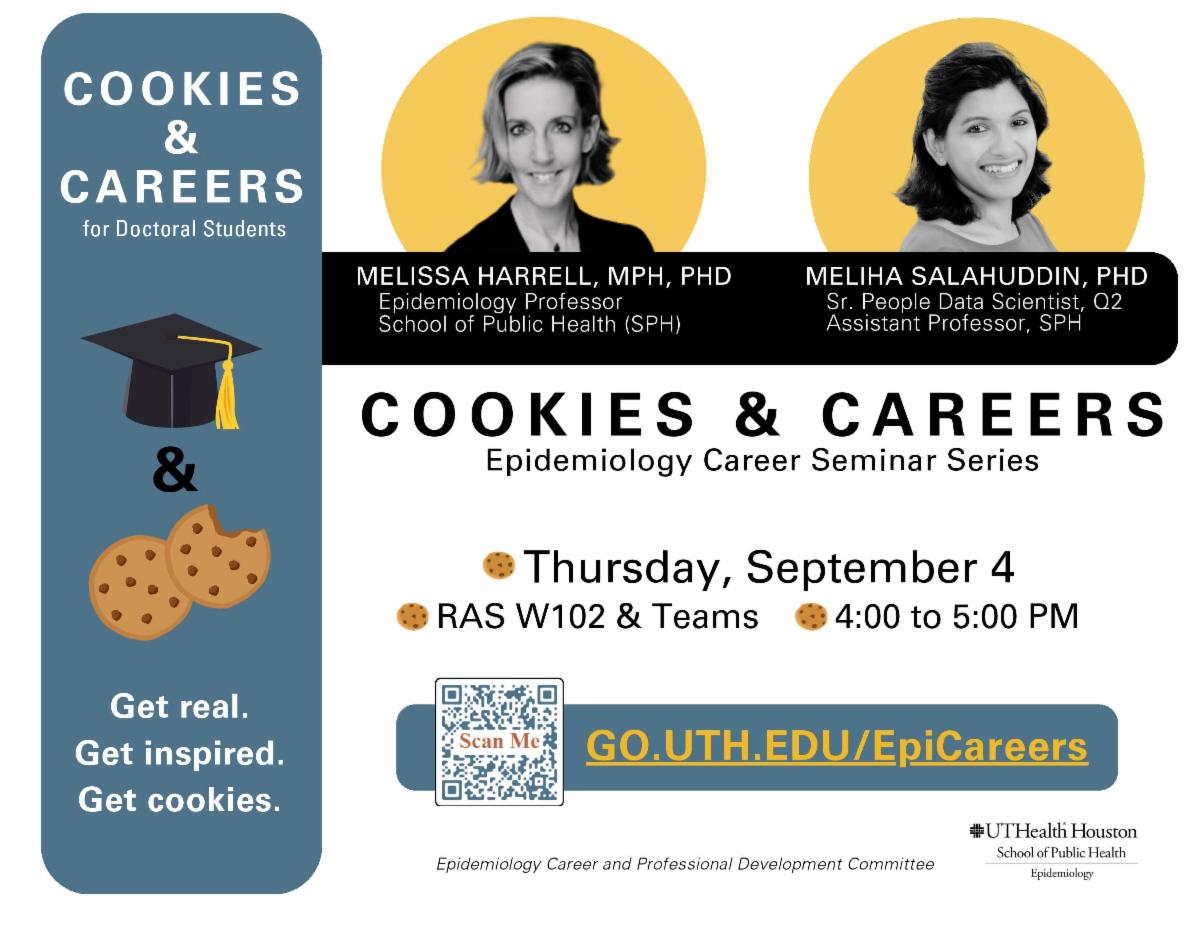
Cookies & Careers
Epidemiology Career Seminar Series
Join us for an engaging conversation with Epidemiology professionals from academia and industry to discuss career and professional development opportunities. In-person and virtual options available. Visit go.uth.edu/EpiCareers for registration and virtual link options.
| |
| |
Epidemiology Career Seminar Series
Are you a PhD or DrPH graduate from the UTHealth Houston School of Public Health Epidemiology program? We’d love for you to be a part of a new Quarterly Career Seminar Series for doctoral students starting Fall 2025!
We are seeking alumni from all sectors—academia, industry, government, nonprofits, and beyond—to:
-
Share candid insights into life after graduation
-
Share career journeys
-
Discuss challenges and lessons learned
-
Offer practical advice on navigating transitions and exploring opportunities in the field
Your experiences can provide invaluable guidance and inspiration as students shape their professional paths, while you continue building your network and gaining visibility as a leader in your field.
Interested in participating or learning more?
Please fill out the form at go.uth.edu/AlumniSpeakerForm or email Elena.V.Feofanova@uth.tmc.edu for more information.
| | | | | |
Explore the Wonders of
Brain Health
Thursday, September 18
1:30 PM via Zoom
The Stroke Institute Brain Health Research Group is an exciting new initiative dedicated to advancing brain health research. This month's presentation, "Speech and brain health: AI and machine learning advancements in speech disorders related to strokes and cognitive impairment," was presented by Phillip Hwang, PhD.
Registration Information:
go.uth.edu/brain-health-monthly-meeting
| |
|
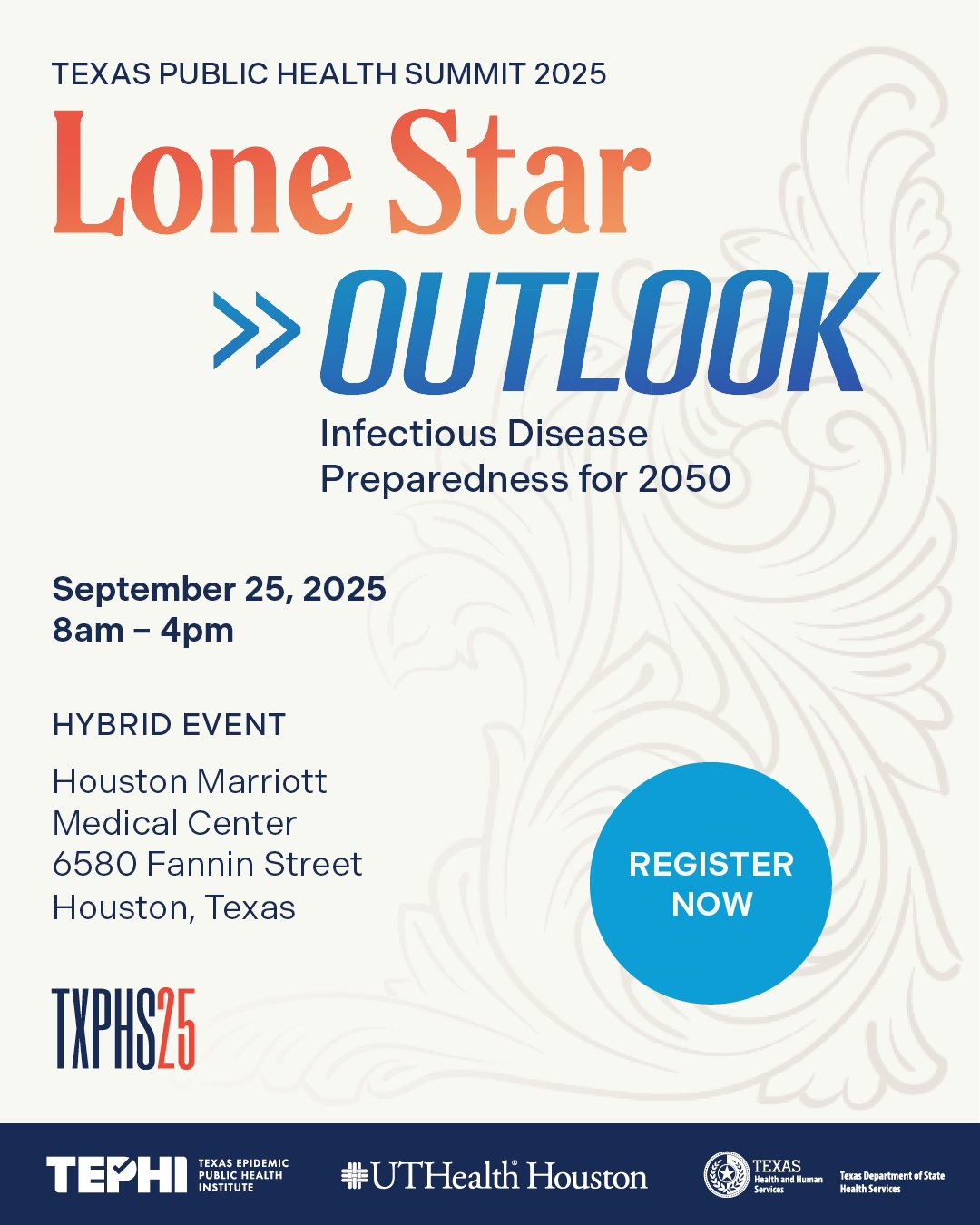
Texas Public Health Summit 2025
Lone Star Outlook: Infectious Disease Preparedness for 2050
September 25, 2025
8:00 am - 4:00 pm
Join us for the 2025 Texas Public Health Summit (TXPHS25), where public health professionals, industry leaders, and subject-matter experts will come together to explore the future of infectious disease preparedness in Texas. This year’s theme, Lone Star Outlook: Infectious Disease Preparedness for 2050, invites attendees to reflect on key milestones, examine today’s challenges, and look ahead to the innovations shaping our future.
Visit TEPHI Events for registration details.
| | |
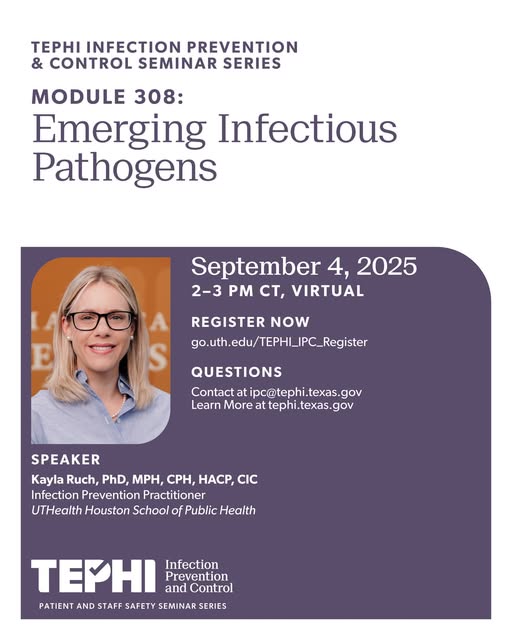
TEPHI INFECTION PREVENTION
& CONTROL SEMINAR SERIES
Module 308: Emerging Infectious Pathogens
Thursday, September 4
2:00 pm - 3:00 pm, virtual
Module 308 will provide an overview of current and recent emerging infectious pathogens: Mar-burg, Dengue, and H5N1. This session is approved for CME, CNE, a-IPC, CIC, and CPH continuing education credits.
Register to attend here: Link
| | |
The Cupboard
Student Food Bank
Noon - 3:00 pm
RAS Building, B-04
Thursday, September 4
Wednesday, September 10
Thursday, September 11
Monday, September 15
Thursday, September 18
Monday, September 22
Thursday, September 25
Monday, September 29
The Cupboard is a no-cost food resource for students who may need assistance.
Location: SPH Building, Basement
Email: TheCupboard@uth.tmc.edu
| | Assistant Professor Augusto Cesar Ferreira De Moraes, PhD, was recently featured on The Research Collective podcast, where he discussed how everyday habits like sleep, physical activity, and screen time influence children’s long-term cardiovascular and brain health. Listen to Episode 11 on Spotify | | Calling all Epidemiology alums! Epi in the News would like to include alum updates and news to feature in our monthly spotlight! Please email Jana Satterwhite, Communications Specialist, to be considered for our upcoming newsletters. | Reminder: For more information on how to handle media requests, see the UTHealth Houston HOOP policy here. If you are contacted by the media, please call the UTHealth Houston Media Relations team on the hotline, 713-500-3030 - someone is available 24/7. Deb Lake is the designated School of Public Health contact. Always choose to call the hotline for immediate assistance. | | SUBMISSIONS AND NEWSLETTER DEADLINE | | All campuses are encouraged to submit items for consideration for the monthly Epi newsletter. Please feel free to submit your items to sphepi@uth.tmc.edu. | | | | |