|
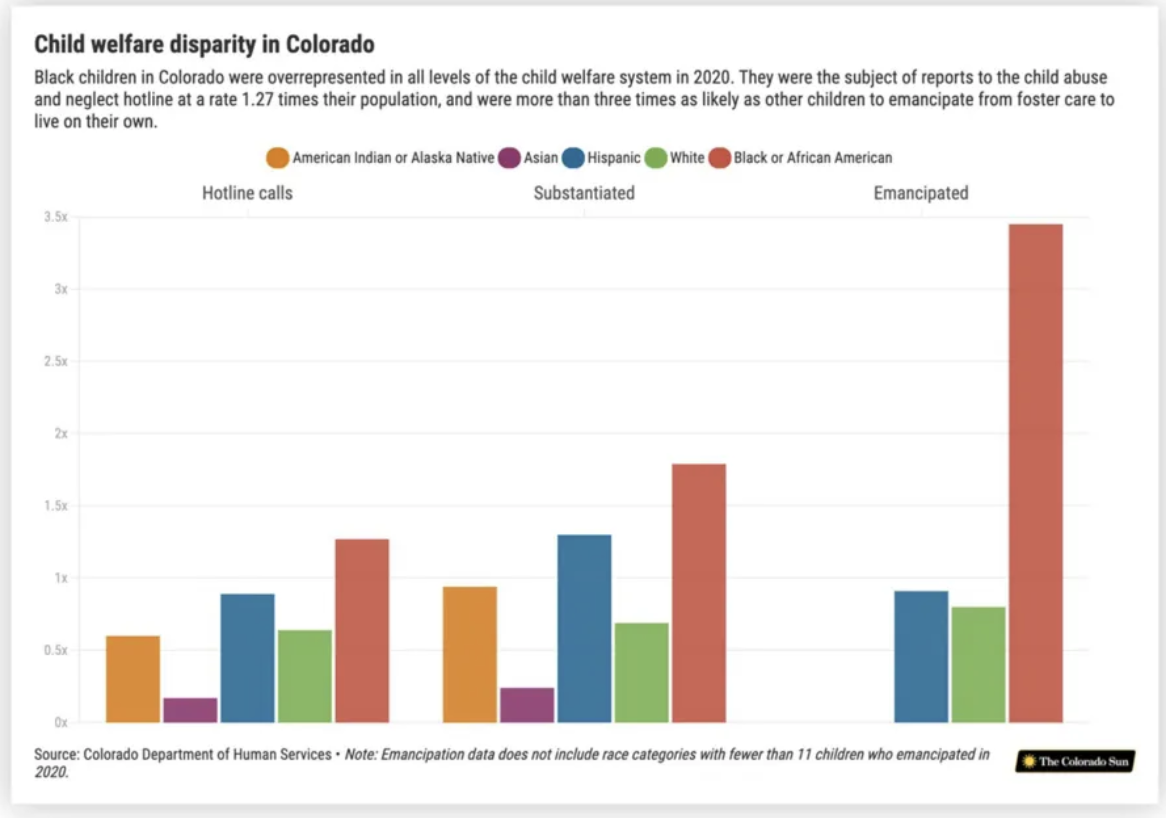
Data talks. Preliminary data in the child welfare system shows that Black children and Disabled children are disproportionately represented and receive poorer outcomes than other demographic cohorts, Hispanic and Latino/a children are slightly over-represented, and American Indian and Alaska Native children are over-represented in particular elements of the system.
SB24-200 seeks to know more about these results in order to do more to protect children from inequitable and unequal outcomes. The bill requires more extensive data collection to inform policy-makers and child welfare staffers at state, county, and other levels to perform their work and make decisions that will most effectively support children in contact with the system. The bill also requires more training on equity, diversity, and inclusion of child welfare staff.
The bill strives to end the long history of disproportionate inequities that are the result of individual and systemic decision-making accumulating in poor results for children in welfare programs. Extensive data collection on every stage of child welfare contact will, one hopes, provide the information that can enable policy makers to have a deeper understanding of the implications of their decisions and improve results.
|