Volume 12 - August 2025

Join Us at the 21st ISDE World Congress for Esophageal Diseases!


The 21st ISDE World Congress for Esophageal Diseases is a unique opportunity to connect with peers, colleagues, and leading global experts—all in the vibrant city of Brisbane, Australia.


  • Register today Here to secure your spot and visit the ISDE 2025 website for full details.
  • For visa information, please refer to our Visa Requirements page.


Make the Most of Your Experience with the ISDE Social Program

Don't miss out on our exciting social events!

Join us for the Congress Dinner on September 19 at the Sky Room & Terrace, BCEC. It’s your perfect chance to relax and network with fellow attendees.


Other social highlights include:

  • Lone Pine Koala Sanctuary Twilight Visit
  • Riverlife Twilight Kayak Adventure
  • Hop-On Brewery Tours


Learn more on our Social Program page.


Travel Discounts Available

As a delegate, you can enjoy special travel discounts—visit the Qantas webpage for more details.


We can’t wait to welcome you to Brisbane this September!

Unveiling Innovation: ISDE 2025 Abstracts Now Available

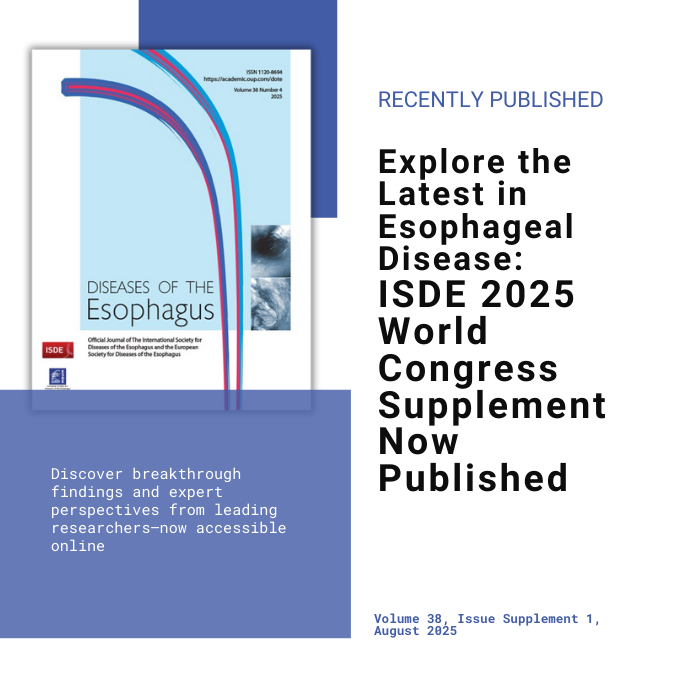
ISDE is proud to announce the official publication of the ISDE 2025 Congress abstracts in the Diseases of the Esophagus (DOTE) Journal. Discover breakthrough findings and expert perspectives from leading researchers—now accessible online.


Whether you’re a clinician, scientist, or industry professional, the World Congress Supplement features critical advancements shaping the future of esophageal disease research. Dive into these insights and join global peers at ISDE 2025.

We are pleased to welcome our newest ISDE Members to the global esophageal community!


Your commitment to advancing education, research, and collaboration in esophageal diseases strengthens our shared mission. We’re excited to have you on board and look forward to the impact you’ll make. Welcome to ISDE!


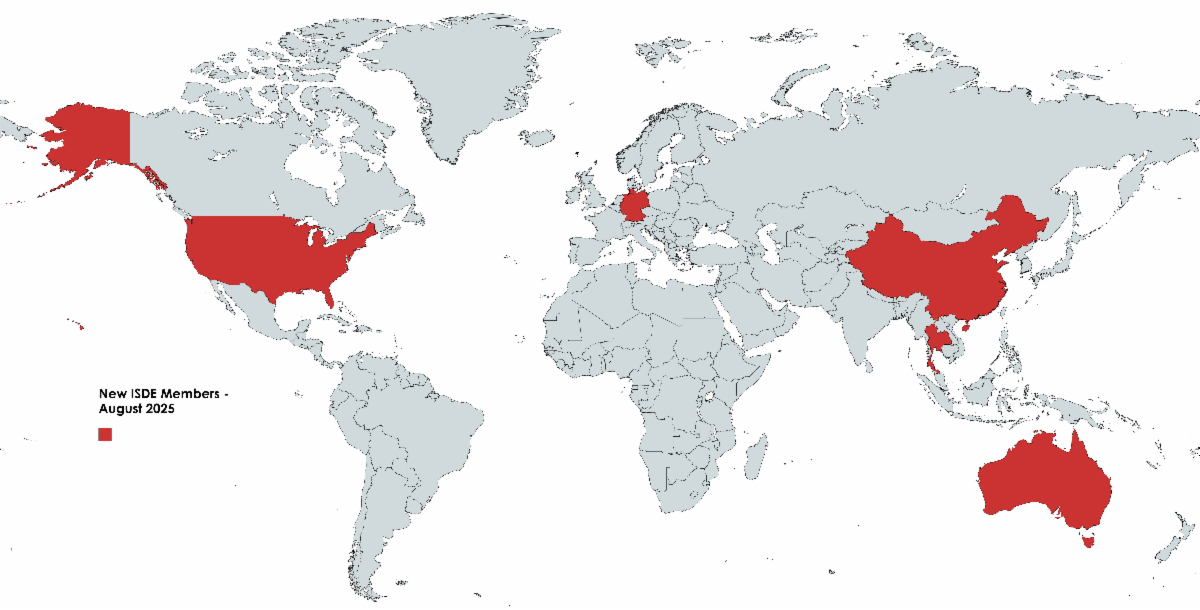
This month, 12 new members from 5 different countries have joined our community, bringing expertise in gastroenterology and surgery. Their names and a world map highlighting their countries are featured below, reflecting our growing international reach.


  • George Balalis, Surgeon (Australia)
  • Felix Berlth, Surgeon (Germany)
  • Daniel Leonard Chan, Surgeon (Australia)
  • Ruichen Cui, Surgeon (China)
  • Theresa Jackson, Surgeon (USA)
  • Lee Shyang Kyang, Surgeon (Australia)
  • Yuni Ongso, Surgeon (Australia)
  • Nasim Parsa, Gastroenterologist (USA)
  • Natthaphong Phongphanthana, Surgeon (Thailand)
  • Anik Sarkar, Surgeon (Australia)
  • Wilson Jing Peng, Gastroenterologist (Australia)
  • Natalie Wilson, Gastroenterologist (USA)

Introducing the Women of ISDE Committee Otherwise Known as WISE 

The International Society for Diseases of the Esophagus (ISDE) is proud to announce the establishment of a new committee, WISE: Women of ISDE. This move represents a small step toward fostering equity, collaboration, and advancement within the field of esophageal disease. 


Leadership and Vision 

The WISE Committee will be co-chaired by Dr. Alia Qureshi (Oregon Health & Science University) and Dr. Daniela Molena (Memorial Sloan Kettering), two esteemed leaders dedicated to driving inclusion and innovation in the field. 

Dr. Alia Qureshi (Oregon Health & Science University)

Dr. Daniela Molena (Memorial Sloan Kettering)

The WISE Committee aims to be a global leader in esophageal knowledge, empowering and advancing women as key contributors and leaders. 


More information about the WISE Committee and its initiatives is available here.


View the full list of WISE Committee members here.

DOTE - Volume 38, Issue 4, August 2025 The latest issue of Diseases of the Esophagus Journal is now available online.

Table of Contents:


Systematic Review and Meta-Analysis


Original Articles


Lessons Learned


Subscribe to Email Alerts


The prevalence, nature and severity of oropharyngeal dysphagia in the acute post-operative phase following curative resection for esophageal cancer

Open Access


Hayes et al. present a timely and clinically important study evaluating oropharyngeal dysphagia and aspiration in the early post-esophagectomy period. Despite the central role of dedicated esophagectomy enhanced recovery after surgery (ERAS) protocols, which often promote early oral intake based on patient clinical status, physiologic swallowing safety has not been rigorously nor objectively studied.


Their prospective videofluoroscopic analysis of 30 patients during the early postoperative period revealed dysphagia in 83% of patients and aspiration in 60% of cases, regardless of surgical approach (2 field, 3 field or Transhiatal esophagectomy). These findings highlight that significant swallowing dysfunction and aspiration are nearly universal in the immediate postoperative phase.


Allowing foregut surgeons to better stratify patients at risk and anticipate complications, the authors identified age over 65, abnormal preoperative oral intake status, and neoadjuvant therapy as independent predictors of risk for early oropharyngeal dysphagia and aspiration. Objective findings such as Universal impairments in tongue base retraction, pharyngeal clearance, and neo-esophageal emptying reinforce the physiological vulnerability of these patients.


The authors should be commended for this potential practice changing study suggesting that Progression to oral feeding should not be assumed safe based solely on achieving surgical recovery milestones. Instead, early collaboration with speech and language therapists, incorporation of swallow screening protocols, and targeted rehabilitation strategies for patients at risk are warranted. Such an approach may reduce aspiration pneumonia, shorten hospital stays, and might improve both functional and oncological outcomes in the long run.


This study underscores the importance of expanding perioperative care to a multidisciplinary model that prioritizes both oncological outcomes and functional recovery. Surgeons are encouraged to adopt structured swallow assessment protocols, exercise caution with early oral intake, and champion multidisciplinary collaboration to optimize safety and recovery after esophagectomy

See full article here

Webinar Hosted by ESDE & EACSGE:

Cancer of the Esophageal Junction:

Anatomy, Pathology, Molecular Biology

The European Society for Diseases of the Esophagus (ESDE) and Esophageal Adenocarcinoma Study Group Europe (EACSGE) are pleased to provide access to the webinar recording on CANCER OF THE ESOPHAGEAL JUNCTION: Anatomy, Pathology, Molecular Biology held on May 15, 2024. This limited time access will be available until June 30, 2026. 


Why is this Webinar Important?


In the last 50 years the incidence of esophageal adenocarcinoma (EAC) has increased severalfold, with some estimates of a risk in men by 2030 of approximately 1 per cent. The strategy for identifying high-risk individuals has remained largely unchanged, with a clinical focus on GERD, central obesity, and age, and a pathologic focus on BE, all of which lack specificity. Many patients with EAC have no relevant known risk factors and few patients have a prior diagnosis of BE. Accordingly, current screening approaches of high-risk cohorts miss approximately 40% of at-risk patients, suggesting that screening practices are largely ineffective, and that a focus on BE and its progression has significant limitations.


During the Webinar, new ideas and modern concepts that challenge the simple paradigm of carcinogenesis at the EGJ were presented, new evidences and novel constructs were discussed. The key take-home points based on elements of reasonable certainty have been provided in the webinar summary provided below.


Cancer Of The Esophageal Junction Webinar FREE ACCESS


Webinar PDF SUMMARY 

Literature Updates

Complex Esophageal Reconstruction: Challenges and Techniques


Exosomal Liquid Biopsy for the Early Detection of Gastric Cancer The DESTINEX Multicenter Study


Lessons learned from the BOSS trial: new directions in Barrett's oesophagus


Barrett’s Oesophagus Surveillance Versus Endoscopy at Need Study (BOSS): A Randomized Controlled Trial


Targeted Screening for Barrett’s Esophagus and Esophageal Cancer: Post Hoc Analysis From the Randomized BEST3 Trial


Evolution of Esophageal Adenocarcinoma From Precursor Lesion Stem Cells


Lenvatinib Plus Pembrolizumab and Chemotherapy Versus Chemotherapy in Advanced Metastatic Gastroesophageal Adenocarcinoma: The Phase III, Randomized LEAP-015 Study


Artificial Intelligence Applications in Image-Based Diagnosis of Early Esophageal and Gastric Neoplasms


Effect of Esophageal Dilation History on Efficacy Outcomes in Patients With Eosinophilic Esophagitis Receiving Budesonide Oral Suspension


Use of a Two-Gene Methylated DNA Biomarker Assay and Nonendoscopic Balloon for Detection of Barrett Esophagus Among High-Risk Individuals in a Screening Population


Visit the ISDE Literature Updates Online for more.


AANZGOSA Annual Scientific Meeting 2025 - September 17, 2025 in Brisbane, Australia


21st ISDE World Congress - September 18-20 in Brisbane, Australia


4th Nordic Early Esophageal Neoplasia Association Meeting - October 2-3 in Gothenburg, Germany


UEG Week 2025 - October 4-7 in Berlin, Germany


MIGES 2025 - October 6-7 in Singapore


Additional events of interest to the ISDE members and community can be found on the ISDE Events Calendar.

 
Follow ISDE on Social Media
Facebook  Twitter  Youtube  Instagram  
CONTACT US: membership@isde.net | 604.638.3862
All communications will generally come from membership@isde.net, please be aware of spam/malicious emails using ISDE information.