|
Friends: A glorious Vermont morning with one hundred shades of green has just dawned as the sun rises over the northern slope of Mt. Ascutney, and while I'm itching to get into the garden, it's time to share my May reading with you.
After months of literary fiction, poetry, mysteries, and biographies, I decided to focus this month's reading on the personal essay, my favorite literary genre. Generally thought to have been 'invented' by Michel Montaigne in the 16th C, the word is derived from the French "to try" because that describes what the essayist is doing--- trying to better understand her feelings, thoughts, and opinions about a topic through writing about it. Freed from the need to be encyclopedic, definitive, or balanced, the essay form allows the writer to sort out her thinking about a topic on the page. As E.M Forster wrote in one of my favorite aphorisms, "I don't know what I think until I've read what I've written." Whether starting with a person or event in her personal life (e.g. Anne Fadiman's pet frog) or with a book she has been asked to review (e.g. Jill Lepore's exhaustive essay about the availabiity of public education to undocumented immigrants' children which began with a review of Justin Driver's book, "The Schoolhouse Gate: Public Education, the Supreme Court, and the Battle for the American Mind), the essay writer can be selective in marshalling facts to support her personal opinions.
I used a simple screening test to choose who to read among the hundreds of essay writers working today. They are those with whom I'd like to sit in a coffee shop and exchange thoughts and observations over an Americano and a cheese Danish (?danish) . They're witty, funny, insightful, well-read, full of literary allusions, and often just a touch off center. The shelves in my library here in Vermont are filled with books by those favorites---Geoff Dyer, Joan Didion, Janet Malcolm, James Wood, Michael Dirda, Christopher Hitchens, Daniel Mendelsohn, John Updike, Pico Iyer, Rebecca Solnit, Alain de Botton, and Robert Gottlieb among contemporary writers and Charles Lamb, William Hazlitt, Ralph Waldp Emerson, Henry David Thoreau and Montaigne himself among the oldies. My choice of who to read this month was also influenced by the reading list for the Harvard College course that I've been auditing. Taught by James Wood, English 185e, "The Essay: History and Practice" focuses initially on 'classic essayists' including Virginia Woolf ("The Common Reader"), George Orwell ("Why I Write") , James Baldwin ("Notes of a Native Son"), and Primo Levi ("The Periodic Table"). The reading list goes on to include many contemporary writers. From that list, I've chosen to read the following books in May, mostly essays with three books of poems and a memoir added for variety.
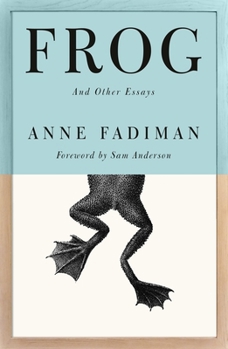
- Frog and Other Essays, Anne Fadiman
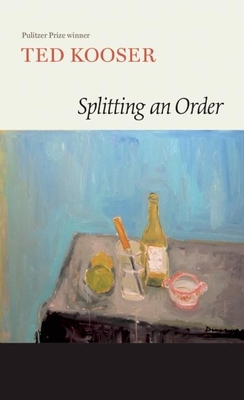
- Splitting an Order, Ted Kooser
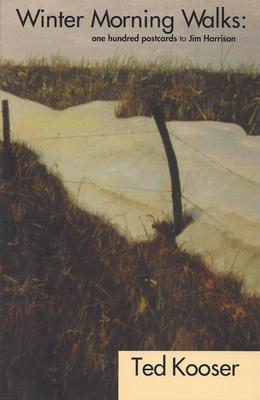
- Winter Morning Walks, Ted Kooser
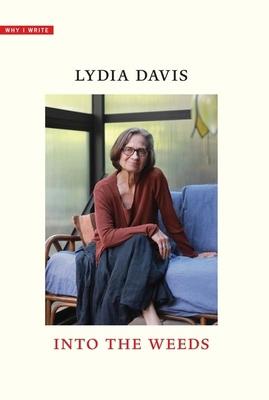
- Into the Weeds, Lydia Davis
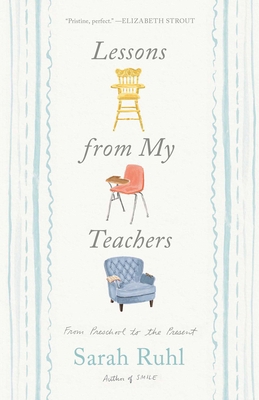
- Lessons From My Teachers: From PreSchool to the Present, Sarah Ruhl
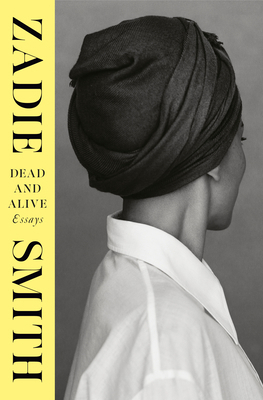
- Dead and Alive: Essays, Zadie Smith
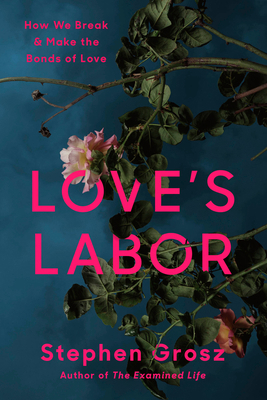
- Love's Labor: How we Break and Make the Bonds of Love, Stephen Grosz
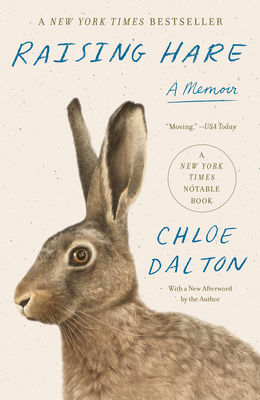
- Raising Hare: A Memoir, Chloe Dalton
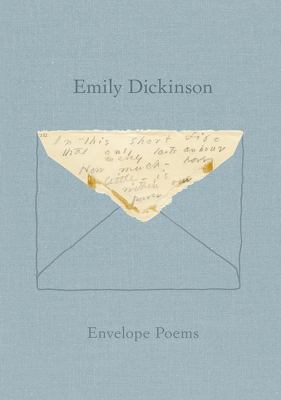
- Envelope Poems, Emily Dickinson
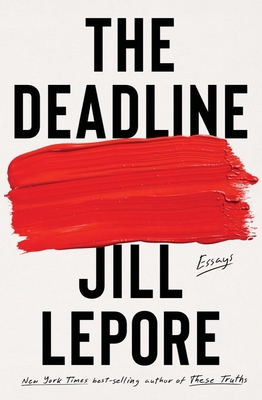
- The Deadline: Essays, Jill Lepore
One notable absence in this month's essay reading is the latest annual installment of the "Best American Essays". This series began in 1986 with Elizabeth Hardwick as the guest editor and has continued annually through this, its 40th year. Much of the credit for the renewed interest in the essay form must be given to this series whose series editor, Robert Antwan retired after 40 years in 2024. The new series editor, Kim Dana Kupperman chose Jia Tolentino as this year's guest editor. Tolentino, a staff writer at "The New Yorker" wrote her own book of essays."Trick Mirror: Reflections on Self-Delusion" which was described by a reviewer as "classical essays along the lines of Montaigne, threading her way on the page toward an understanding of what she thinks and feels about life, the world, and herself."
I've read the annual "Best American Essays" volume every year since I discovered the series in the early 2000's and have read earlier issues back to 1996, but I found myself hesitant to read this current issue after reading Tolentino's introductory essay. In it, she describes the works she chose and the reasons for choosing them. While some of the essays in recent volumes have made me uncomfortable in their focus on society's ills----violence, drugs, racism, gender conflicts----the focus of several of this issue's essays on anti-Israeli commentary gave me greater pause. I may return to this volume later this year adding the 2025 volume to the 29 collections I've already read, but at least for now I chose to avoid this painful topic.
The essayists I did read this month included some long time favorites---Anne Fadiman, Lydia Davis, Sarah Ruhle, Zadie Smith, and Jill Lepore. I would be pleased to buy a coffee and danish for any of them.
| |
| |  | Fadiman, a Professor and Writer in Residence at Yale, is perhaps best known for her 1997 National Book Critics Circle Award winning "The Spirit Catches You and You Fall Down", but she has also written three earlier collections of essays that are terrific. In "The Frog" the topics ranged widely including her musings on her pet frog, Bunky, who managed to live 17 years in her household, her reaction to the tragic death of one of her students, her struggles as she adapted to teaching creative writing on Zoom during COVID, the ill-fated South Pole trek of Robert Falcon Scott, and the life of Samuel Taylor Coleridge's son, Harley. In writing about Fadiman in the book's introduction, “An Extremely Partial List of Things I Love About the Essays of Anne Fadiman", Sam Anderson lists these six elements in her writing: her lists, her titles, her flagrant literariness her calculations, her quotations, and her similes. It’s a great intro, and I totally agree with his opinion. Fadiman is definitely on the list for the shared coffee shop conversation.
| |
| | | Lydia Davis is one of the most eclectic, prolific, and thought-provoking writers working in America today, and she has written a wonderfully strange book. Based on the 2024 Keynote address she gave for the Windham prize ceremony at Yale, "Into the Weeds" addresses the question posed by the Prize's sponsor: Why do you write? Davis approaches that question by embracing the example of John Ashbery's Norton Lectures at Harvard in 1989 who when asked to address the same question, instead talked about other writers. Davis does the same exploring the work of writers as diverse as Gertrude Stein, Melville, Nabokov, and an obscure writer, George Sturt whose 1923 book on the work of a wheelwright was of major interest to Davis. She writes, "When asked to write about why I wrote, I thought I might write only about how others writers write, I thought only about writers who were willing to risk being tedious but also about writers who were in other ways difficult for some readers but similarly willing to be strange, to write about a certain subject, and in a certain way no matter what---which to me is a sign of a certain dedication." Difficult, perhaps but tedious, never, Davis is a marvel, and her writing is a treat. If you enjoy this book, you can dive into her two volume set entitled simply "Essays", nearly 1000 pages of exploration on the page by this brilliant writer.
| | |
Sarah Ruhl is best known for her plays including "Eurydice" and "The Vibrator Play". The winner of a MacArthur Award, Tony and Pulitzer Prize nominations, and a Whiting Award, she has set aside her dramaturge hat and has written "Lessons From My Teachers", essays as thank you notes to her teachers for their contributions to her adult self. From her mother to her mentor, Paula Vogel who she met at Brown when a student, Ruhl writes love letters to those who guided her along the way. I found some of them a bit sentimental and cloying, but the book was valuable because it led me to contemplate some of my own teachers from Miss Lucille Kerwin who straightened me out in the 6th grade to the recently departed Barney Frank who was my Government tutor at Harvard imparting knowledge, wit, and humor in his cigar-smoke befogged suite or in the dining hall in Winthrop House. Great teachers make a great difference, and Rule's book is a good reminder of that.
| | |
Zadie Smith is one of England's great literary lights of today. In her six novels, two short story collections, a play, and her three collections of essays, Smith's creative take on the contemporary world is insightful, provocative and never boring. The 30 essays in "Dead and Alive" first appeared in "The New Yorker" or the "The New York Review of Books" between 2016 and 2025. They explore topics from reviews of books, films, and concerts to obituaries for friends and fellow writers Joan Didion, Hilary Mantel, Martin Amis, Philip Roth, and Toni Morrison. Smith writes with precision and elegance, and my guess is that she, of all these writers, will be the one still read in a college course on essays in the year 2126.( If people are still reading books!).
| | |
The ten essays in the Anglo-American psychoanalyst Stephen Grosz's in "Love's Labors: How We Break and Make the Bonds of Love" are case studies of individual patients. Grosz intended them to show how difficult love can be and how essential it is for one to achieve full personhood. I found the essays to be frustratingly short on detail and long on "analytic speak". At one point, Grosz offers 21 different definitions or theories about what psychoanalysis is and what it tries to do, and that slippery element in the very definition of the treatment may be the reason why I found the book unsatisfying. A skilled writer and no doubt a caring and skillful therapist, Grosz's book only deepened my skepticism about the value of spending untold hours and dollars lying on a couch while someone, often silent, helps one to probe the unconcious sources of our ability or more often, inability to love and function in today's world.
| |
| | | And finally, my very favorite book of the month, "The Deadline", a 600 page doorstop-sized tome containing 41 essays by Jill Lepore. If you don't know her work, you must have been living under a rock or spending too much time on the analyst's couch. She's the David Kemper Woods '41 Professor of History at Harvard, the author of 15 books, and a nearly constant presence in the pages of "The New Yorker" where these essays originally appeared between 2008 and 2022. The list of topics she addresses is impressive in their range, from Ruth Bader Ginsburg to the Magna Carta, from Robert Ettinger's hare-brained (?hair) theory that one can re-animate a dead body that is kept in liquid nitrogen to the incredible story of the Ripley of Believe it or Not, and on and on. Her inquisitive mind's apparently infinite scope is well matched by the wit, humor, and erudition in her essays. She is often skeptical of accepted wisdom as in her takedowns of the theory of 'disruption' as a creative force in business and the value of the endless government panels and reports on racial violence. Along the way she provides fascinating factoids, e.g. the London police are called 'bobbies' because the Metropolitan Police were established by Parliament in 1829 at the urging of Robert Peel. This is a big book which is best relished in bite sized pieces. Trying to swallow the whole, could lead to a literary blockage, but whether all or in pieces, read Lepore, the recent winner of a Pulitzer Prize for her book on amending the Constitution.
I added some variety to this month of essays with a memoir and the work of two poets, one long gone and one still, happily with us.
| |
| | | The memoir, "Raising Hare" is the tale (?tail) of how Chloe Dalton, a political consultant working with high pressure deadlines and travel all over the world, finds a leveret, a newly born European hare, near her rural English cottage where she has taken refuge during COVID. With little guidance or information other than her own instincts, Dalton manages to feed the leveret and provide it with shelter until it has grown to be independent and can live in the wild. Despite its daily return to the woods and meadows, the hare remains attached to Dalton, living in her cottage and even giving birth to two litters behind the drapes in her study. The writer and the hare develop a unique and beautiful relationship built on trust and restraint. Eventually, the hare returns to the wild world of danger and beauty, and Dalton returns to her world of work, though changed forever by her commitment to preserving the natural world. This was probably the book that was most recommended to me during the last few months. I liked it very much, but its slow pace and occasional sentimentality got in the way of me loving it.
Finally, two poets brightened my days with their 'best words in the best order'. Though separated by one hundred years, Emily Dickinson (1830-1886) and Ted Kooser (1939-) share the poet's drive to translate feelings and observations into a form that enables them to convey those to others.
| | |
"Envelope Poems" is a beautifully packaged slim volume which contains a sampling of Emily Dickinson's poetic fragments. Late in her life, she had ceased to write the poems for which she is best known, nearly 1800 of them gathered into self-constructed informal volumes called fascicles. Instead, she began writing brief snippets of poetry on random pieces of paper, often envelopes which she had received in the mail (a stamp in those days was 3 cents!). This book presents photographs of both sides of the original envelopes as well as Dickinson's words in her own handwriting, and a 'translation' of the words in printed form. It's a lovely book which I received as a gift from my lovely wife and worth looking at even if you don't read the poetry.
| | |
Kooser was the U.S. Poet Laureate in 2004 and is to Nebraska and the plains what Robert Frost is to New England. Among his 30 books of poetry, "Splittng an Order" and "Winter Morning Walks: One Hundred Postcards to Jim Harrison" are my favorites. The former comprises poems focused on everyday encounters including one about two guys sitting on an old couch in an auto repair garage and another about an elderly couple who share a sandwich in a diner---plain stuff of everyday life written with beauty and feeling.
| | |
"Winter Morning Walks: One Hundred Postcards to Jim Harrison" is a favorite book I've returned to several times. Kooser wrote these poems during a winter when he was struggling with depression. He was recovering from cancer treatment and had been urged to stay out of the sun because of his medications. To raise his spirits he walked during the winter months in the icy, Nebraska dawn observing the sounds, sights, and feelings of a world he thought he might be losing. The beauty of his practice is that he took those experiences and wrote these poems on postcards which he then sent every day to his dear friend, and wonderful writer, Jim Harrison. I love the thought of Kooser in Nebraska and Harrison in the Upper Peninsula of Michigan sharing these gems, and this book allowed me to share them as well.
The Poetry Tree on the Charles this month features the Belle of Amherst, Miss Emily Dickinson, who wrote more than 1800 poems but published fewer than a dozen during her lifetime. Considered along with Whitman as America's greatest poets, Dickinson's works adorn greeting cards, coffee mugs, and stationary, but despite that commercialism, they remain vibrant and timely nearly 150 years later. Here are four of my favorites.
- Forever is Composed of Nows
- If I Can Stop One Heart From Breaking
- Hope is the Thing With Feathers
- Because I Could Not Stop for Death
Finally, some of the great quotes from the past reflect a writer's thoughts about time, mortality, and impermanance. Here's a quote from Walter Pater, the 19th C British essayist and art critic who wrote: “Every moment some form grows perfect in hand or face; some tone on the hills or the sea is choicer than the rest; some mood of passion or insight or intellectual excitement is irresistibly real and attractive to us—for that moment only. Not the fruit of experience, but experience itself, is the end. Not to discriminate every moment some passionate attitude in those about us….is to sleep before evening.” In other words, wake up and be present every moment of your life. Pater also wrote, "We are granted an interval, and then our place knows us no more."
| | | | |