|
Summer is in full swing, and Japanese beetles are causing havoc on our plants. As we head into fall, the battle against these pests intensifies. This month, learn about effective treatments to protect your greenery all year round.
Why Should You Care About Japanese Beetles?
Japanese beetles are harmful insects that feed on over 300
plant species, weakening them and making them vulnerable to diseases. For residential
and business owners, an infestation can impact the appearance of your property.
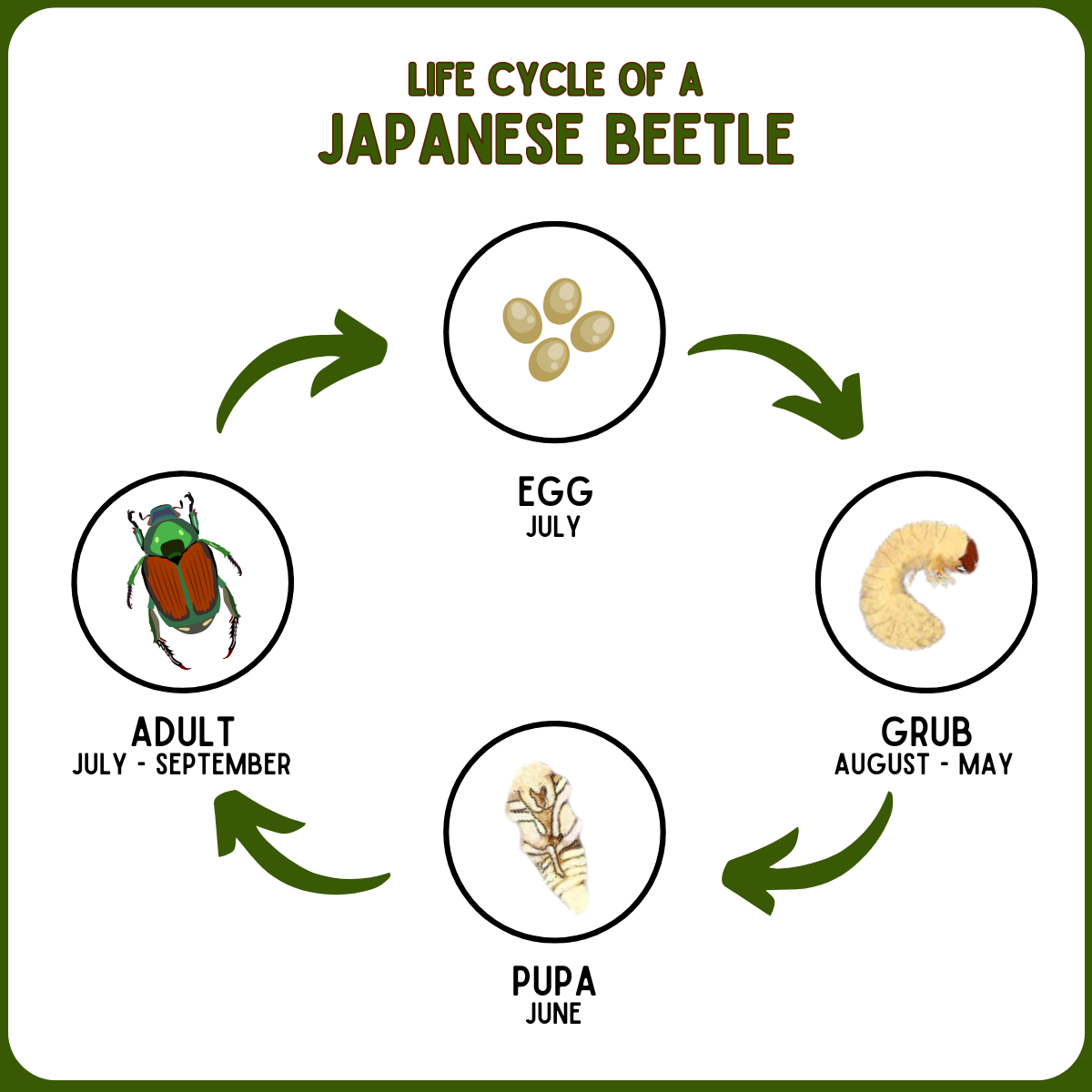
Adult Beetles:
- Active during the day, feeding and mating
- Fly up to three miles in the evening
- Lay eggs in moist soil
- Live until the first frost
Larva/Grubs:
- Eggs hatch within 8-9 days
- Larvae feed on roots and organic material in soil
- Transform into grubs living underground until spring
- Transition to Pupae as temperatures rise
- Pupae become adult beetles after two weeks
Strategies to Control Adult Japanese Beetles:
While complete eradication is unlikely, we can manage
populations. We treat adults with applications monthly while they are active.
If summer heat extends till the end of August due to warmer weather, an
additional treatment may be needed.
Controlling Grubs:
Don't wait until they become beetles! Schedule the lawn
blanket applications to prevent grubs. Aerating soil is another effective
method, as it exposes grubs to air and loosens compacted soil.
Let's Protect Our Green Spaces:
By working together to implement these strategies, we can
minimize the impact of Japanese beetles and preserve our gardens and community
greenery.
|