|
Europe 2023
October 5
Maastricht Underground
| |
The expanse of tunnels under Maastricht goes on for miles. Millions of years ago, this was a shallow sea with plenty of shellfish producing a thick layer of Limestone. The Limestone has been quarried as far back as the Roman times as a building material. Maastricht is literally built from these quarried blocks. | |
|
THURSDAY, OCTOBER 5, 2023
MAASTRICHT
Diane had read about the Maastricht Underground. A labyrinth of cave shafts was dug into an expansive limestone area starting in the Roman times. For centuries, limestone building blocks were quarried out of the ever-expanding shafts. Quite literally, Maastricht Underground is the foundation of Maastricht. Once the best limestone had been removed, the caves became a hangout for clandestine affairs and then into a tourist destination. As early as the 1800s, artists were commissioned to paint pictures on the walls to lure tourists to the caves.
Being tourists, we were destined to comply. Google Maps found the entrance point on the other side of town, and the three of us left. Biking through the city was a breeze. There was virtually no car traffic. We had to get into the fast flow of bike traffic or risk collisions.
The guided 1 1/4 hour tour was fun. The guide had grown up in Maastricht and, as a kid, played around in the caves. Like all the cave tour guides we have encountered, he had his humorous spiel down pat. He was funny and informative. The extent of the caves was far more extensive than we expected. They dug well into Belgium. It would be easy to get lost in the maze. Our guide warned us to stay closely together as anyone who strayed would be lost until they smelled them decaying in a month or two. The shafts had no lighting. Only his lamp and two others that he handed out provided the lighting for the tour. Indeed, if someone strayed, they would never find their way out.
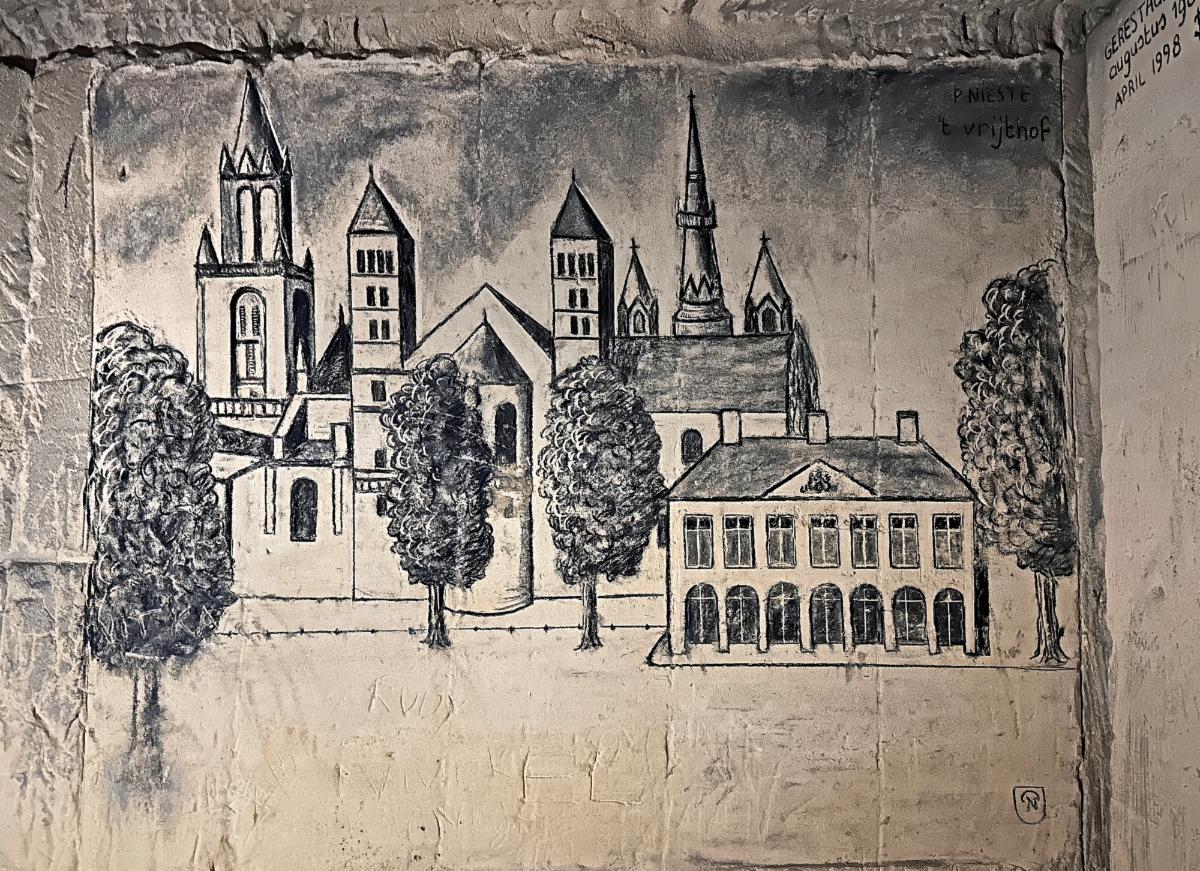
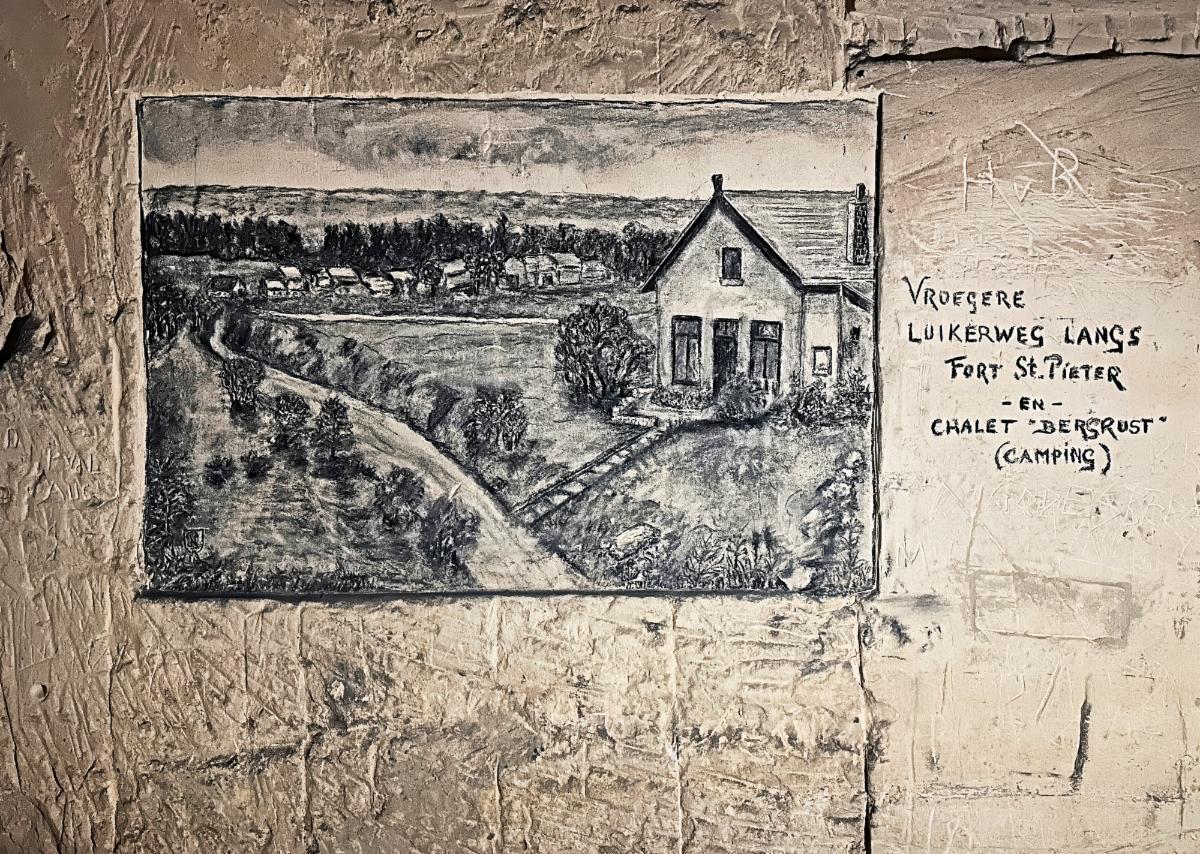
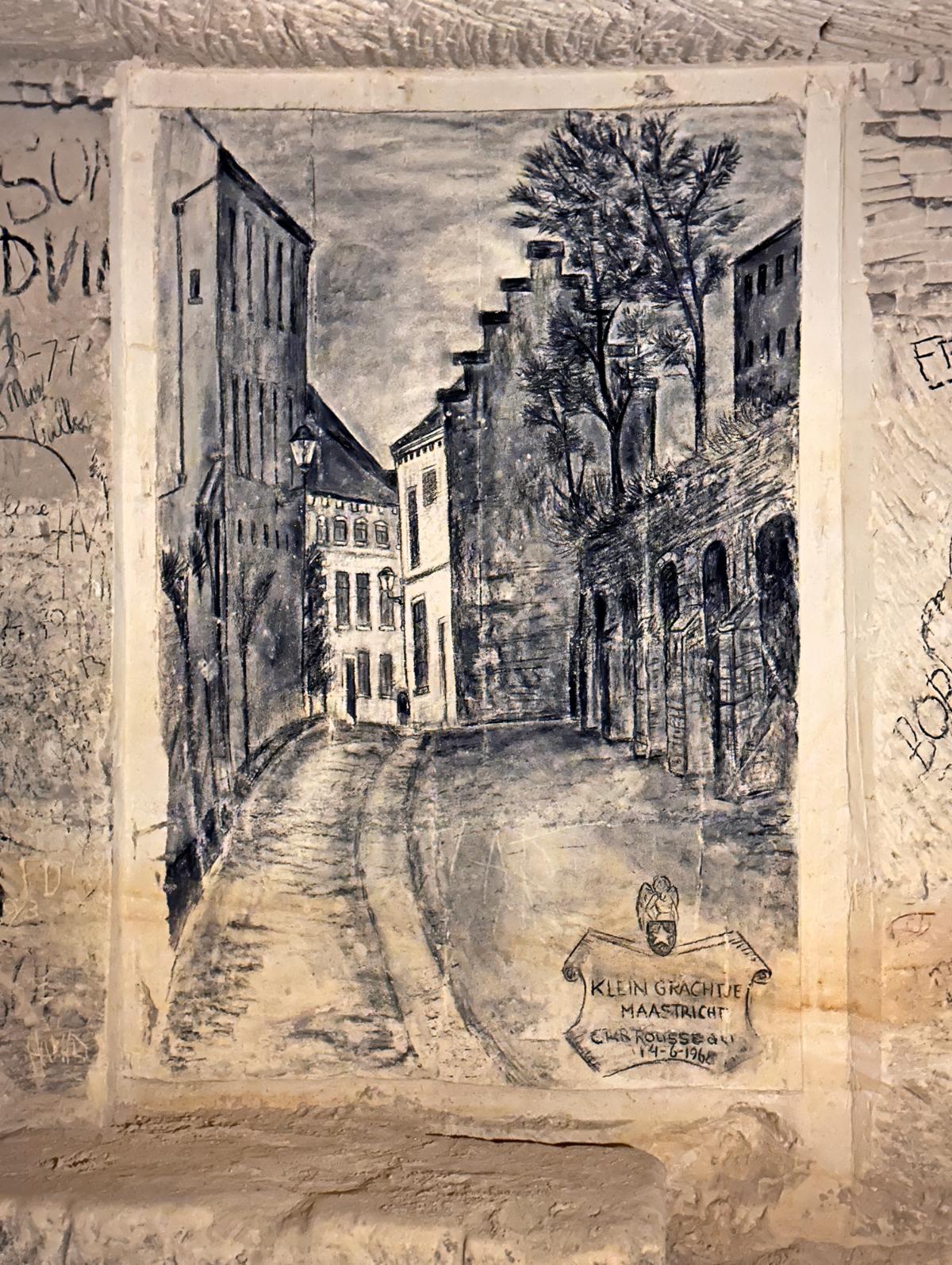
The commissioned drawings were excellent. The artists had to use charcoal as their medium. Any other pigment would quickly mold in the 95% humidity. Some drawings have lasted a century and still look great.
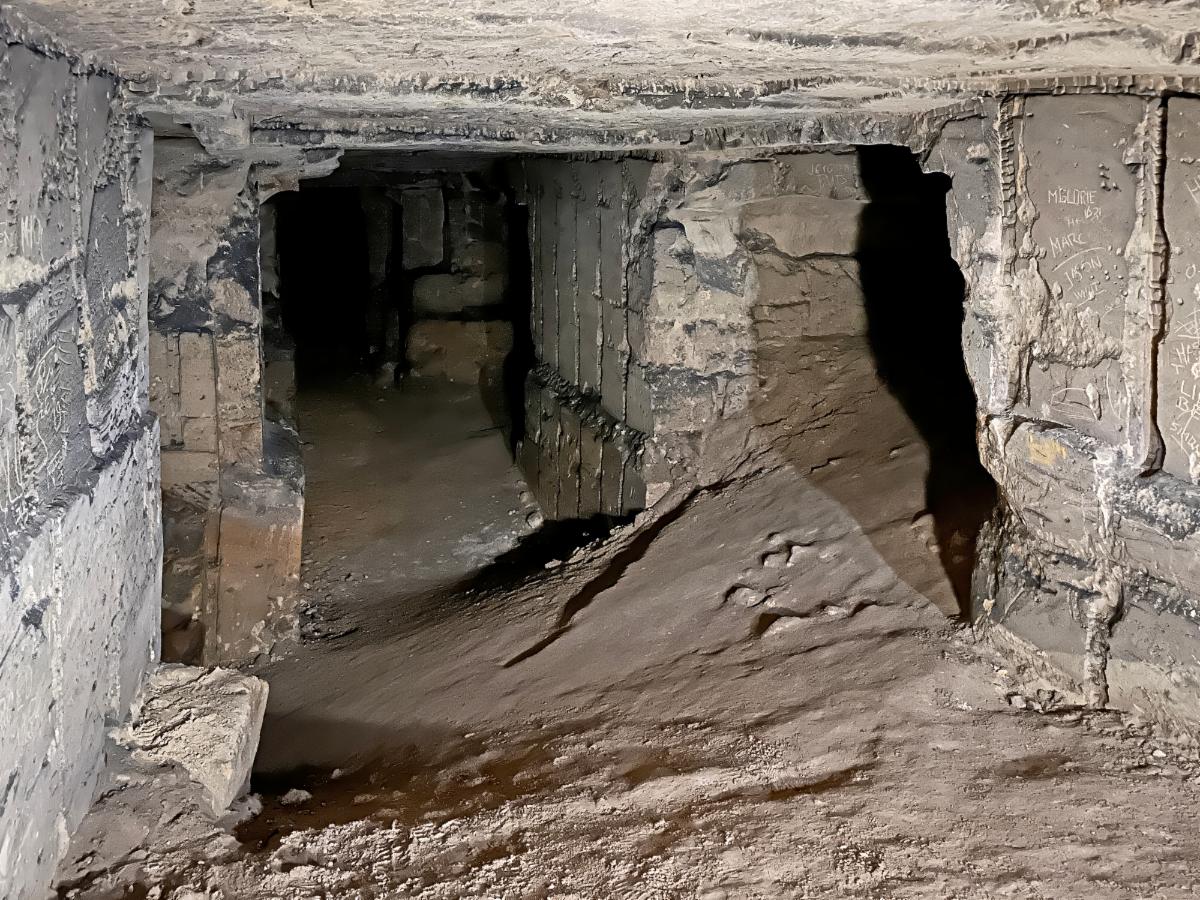
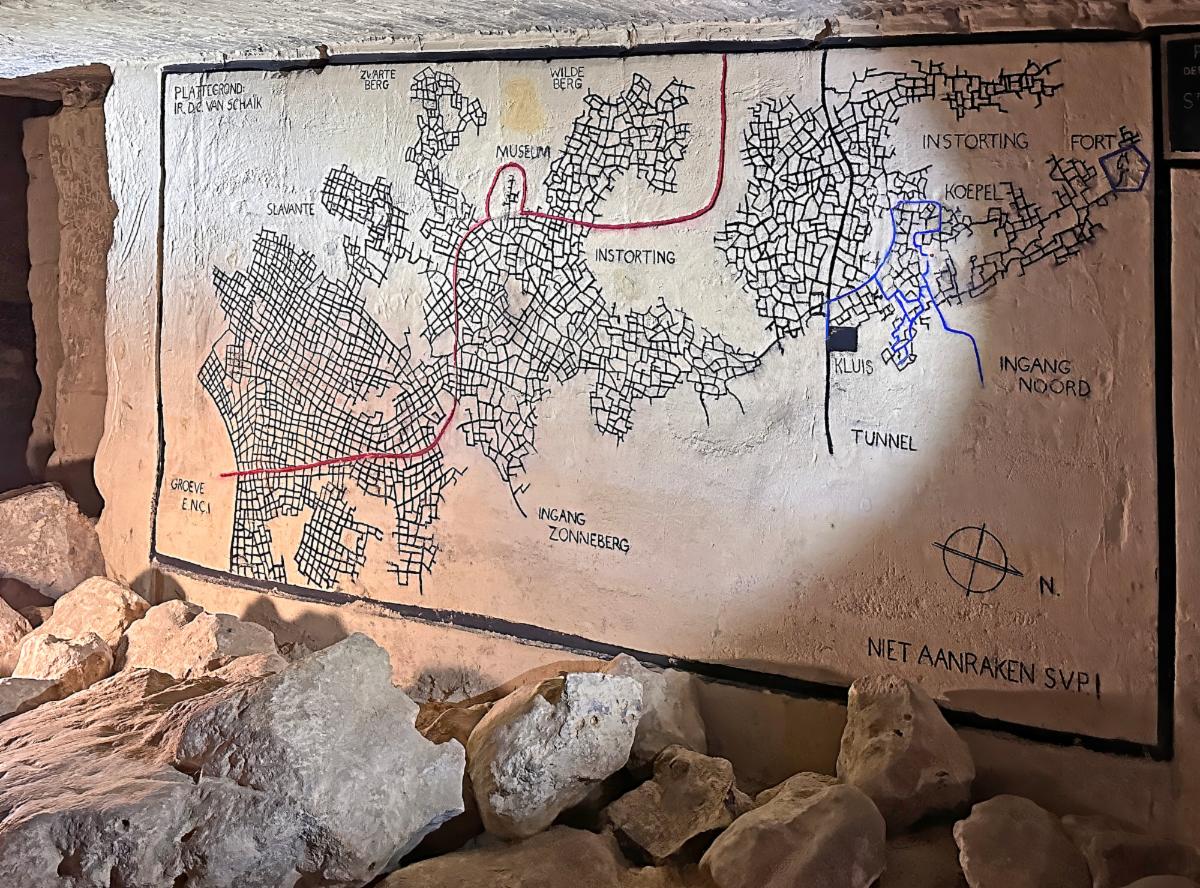
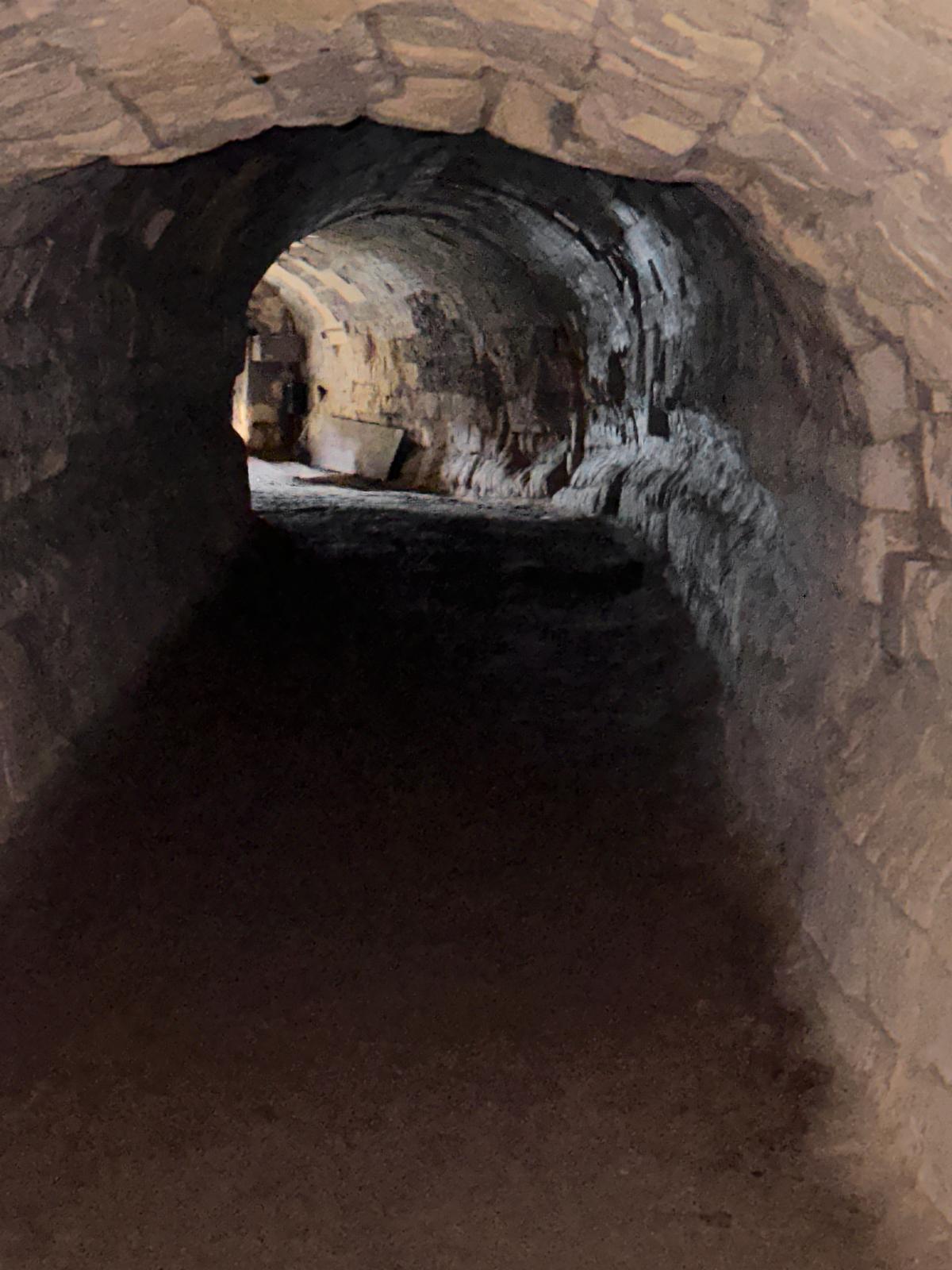
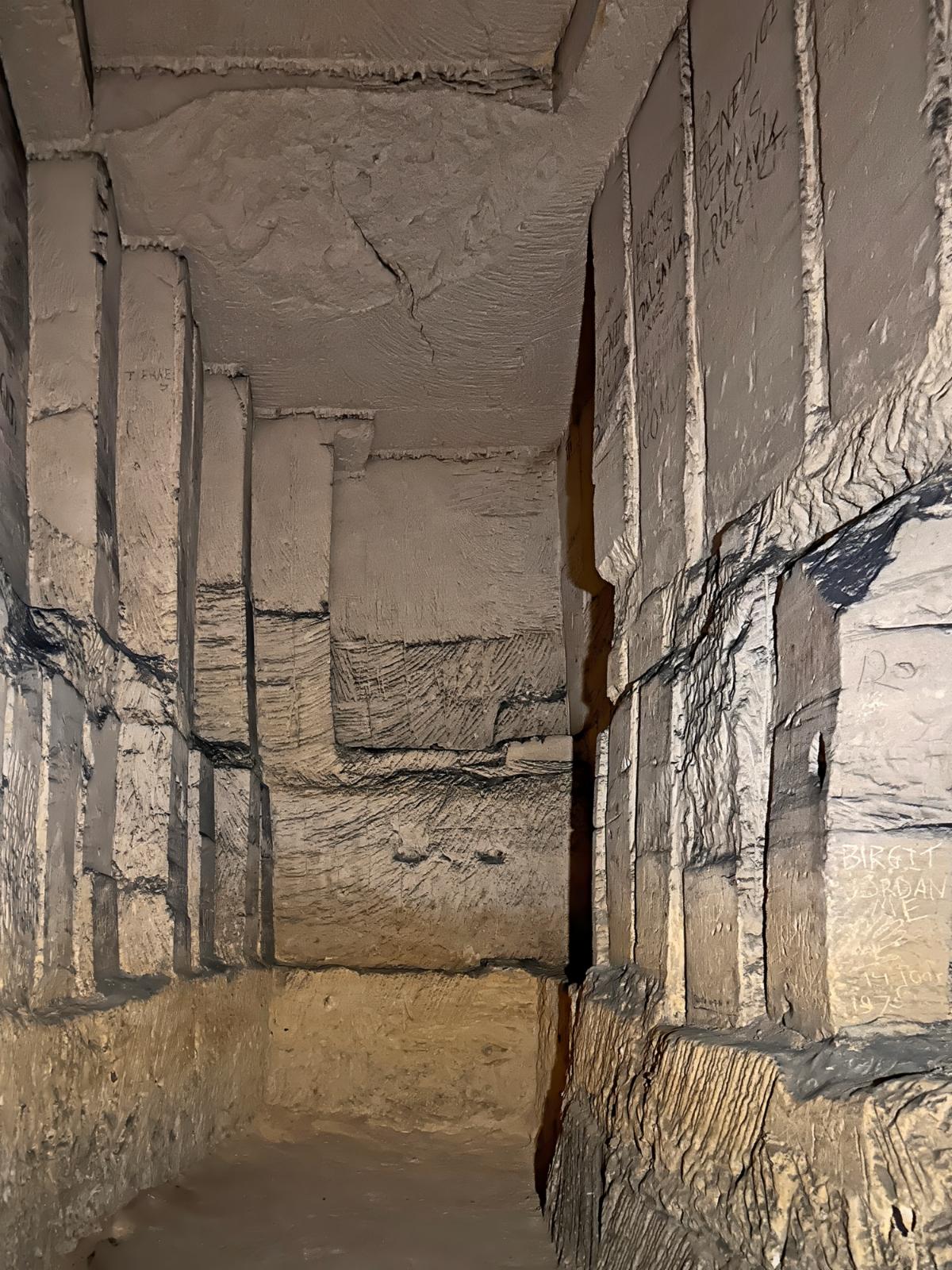
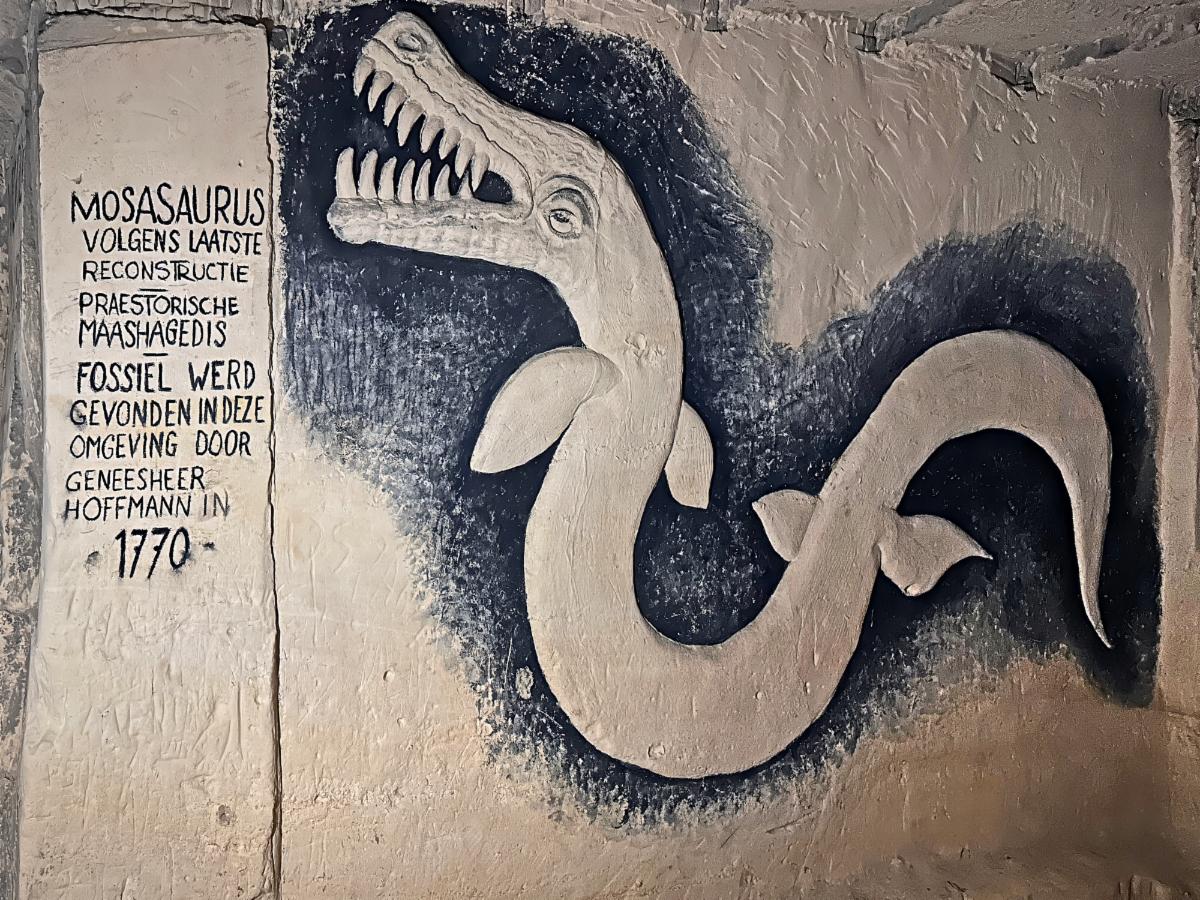
| 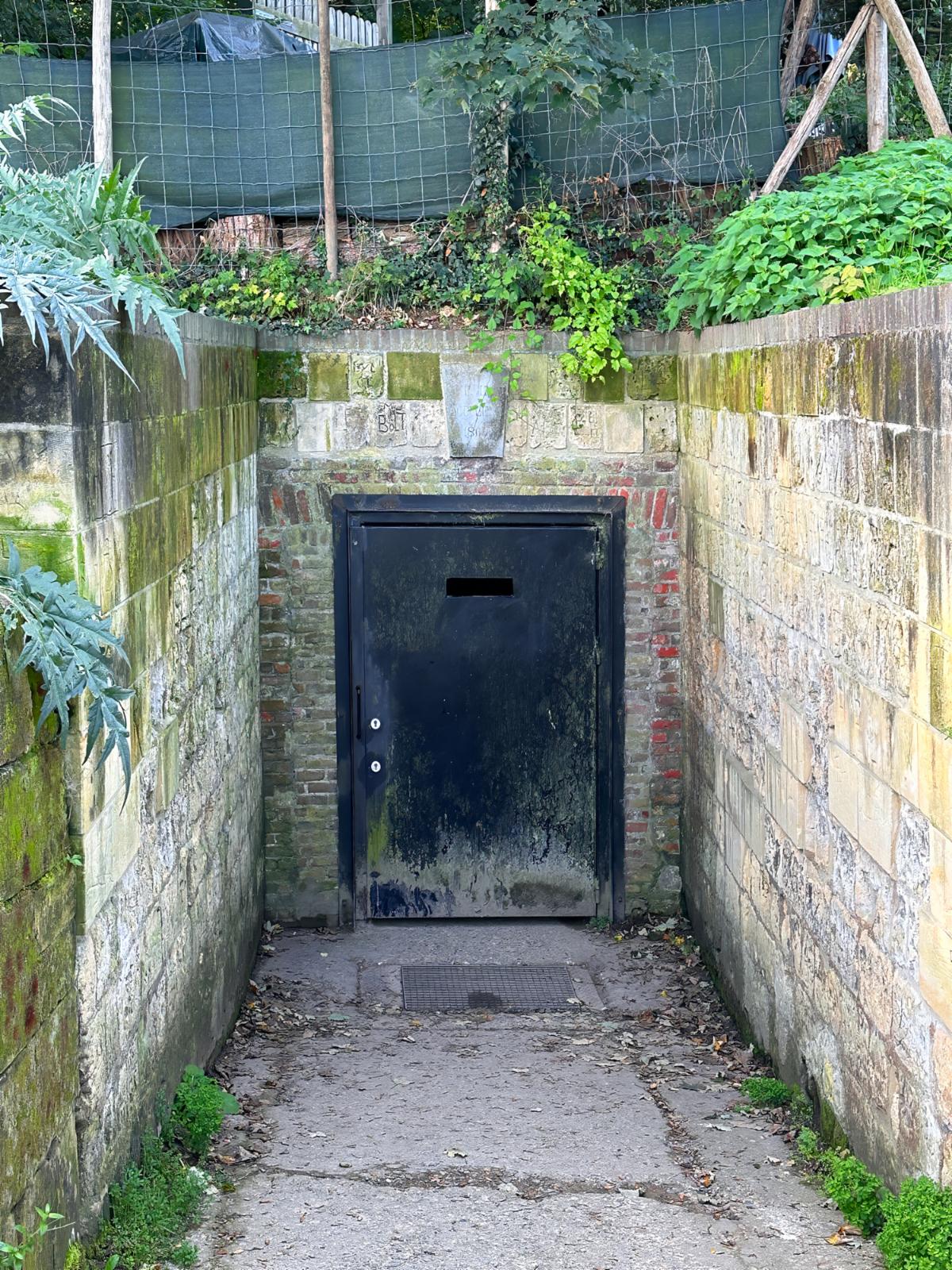 | This unassuming entrance to the tunnels opens to a maze of passageways that stretch into Belgium. The Romans started quarrying the limestone nearly 2,000 years ago. After removing the best limestone, the tunnels were used for clandestine amorous meetings and parties. Eventually, someone got the bright idea to have artists, using charcoal, draw scenes that tourists would be interested in seeing. Some drawings go as far back as the 1700s. Others are as recent as the 1960s. | This is a map of the maze of tunnels. We toured only a tiny section of the labyrinth. | It is easy to see that huge limestone blocks were cut out to form the tunnels. | The following photos are a sampling of the art work in the tunnels. The artists had to use charcoal. Any other pigment would mold in weeks. | Our guide told us an interesting story regarding the Maastricht Mosasaurus fossil embedded in the limestone. Some humongous jawbones and teeth were discovered centuries before anyone understood what kind of creature they came from. Naturally, they were attributed to demons from hell, confirming their concept of hades. | 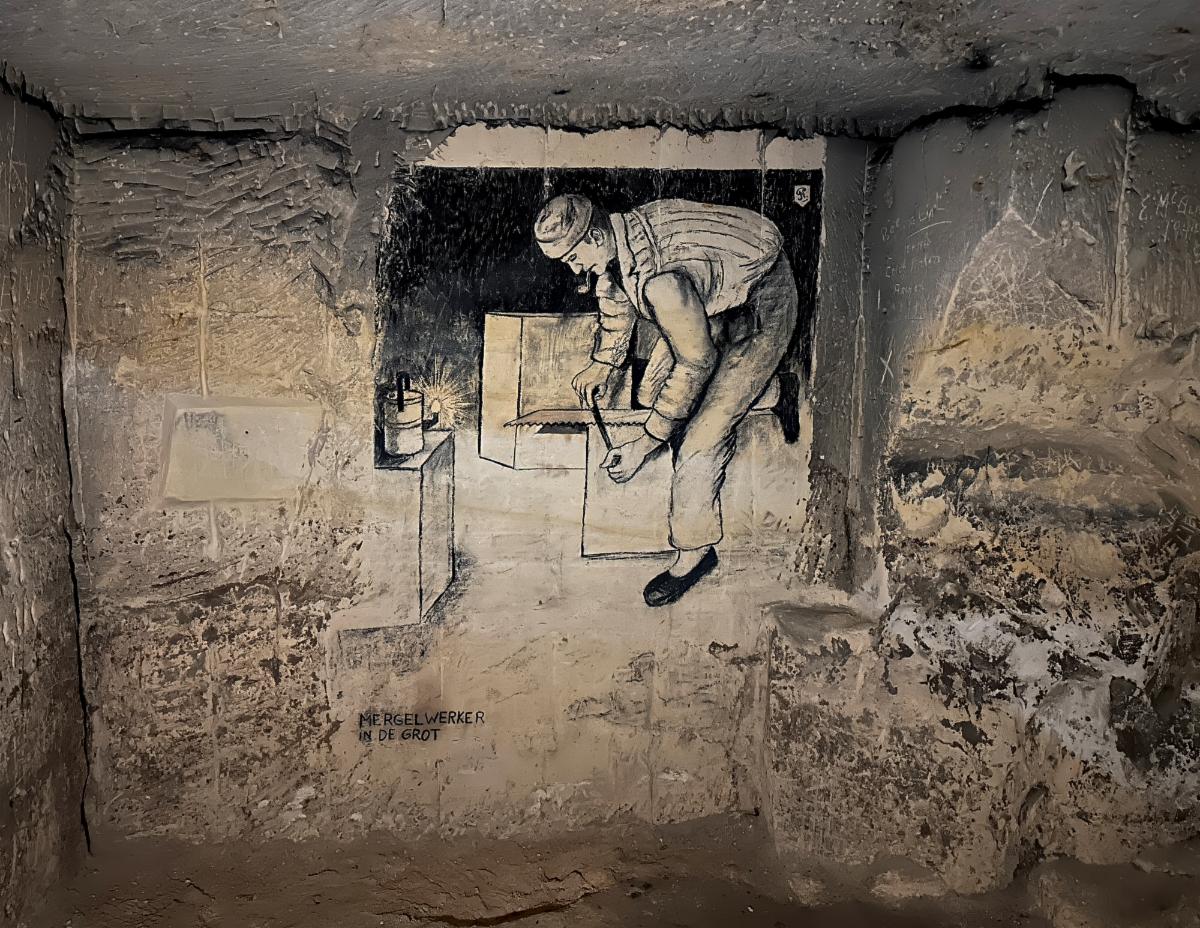 | 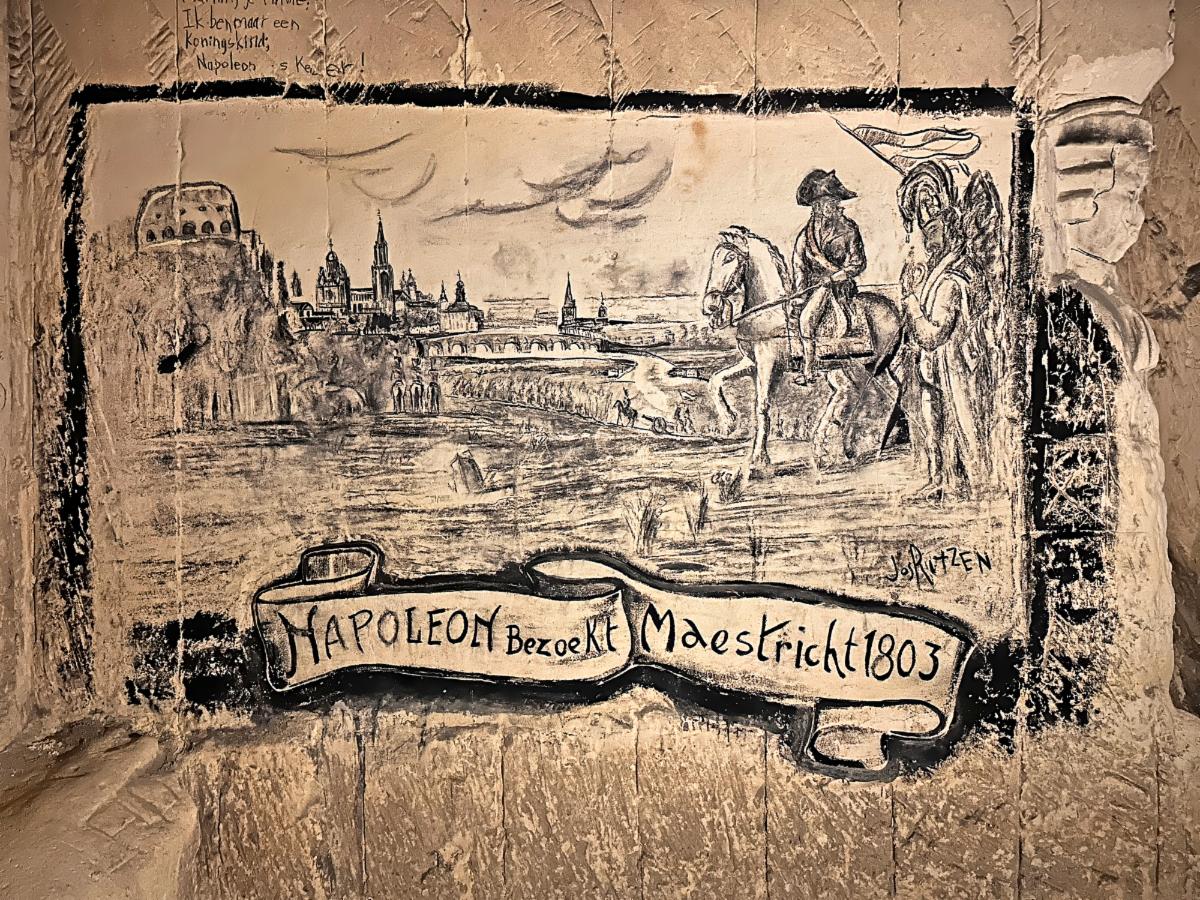 | 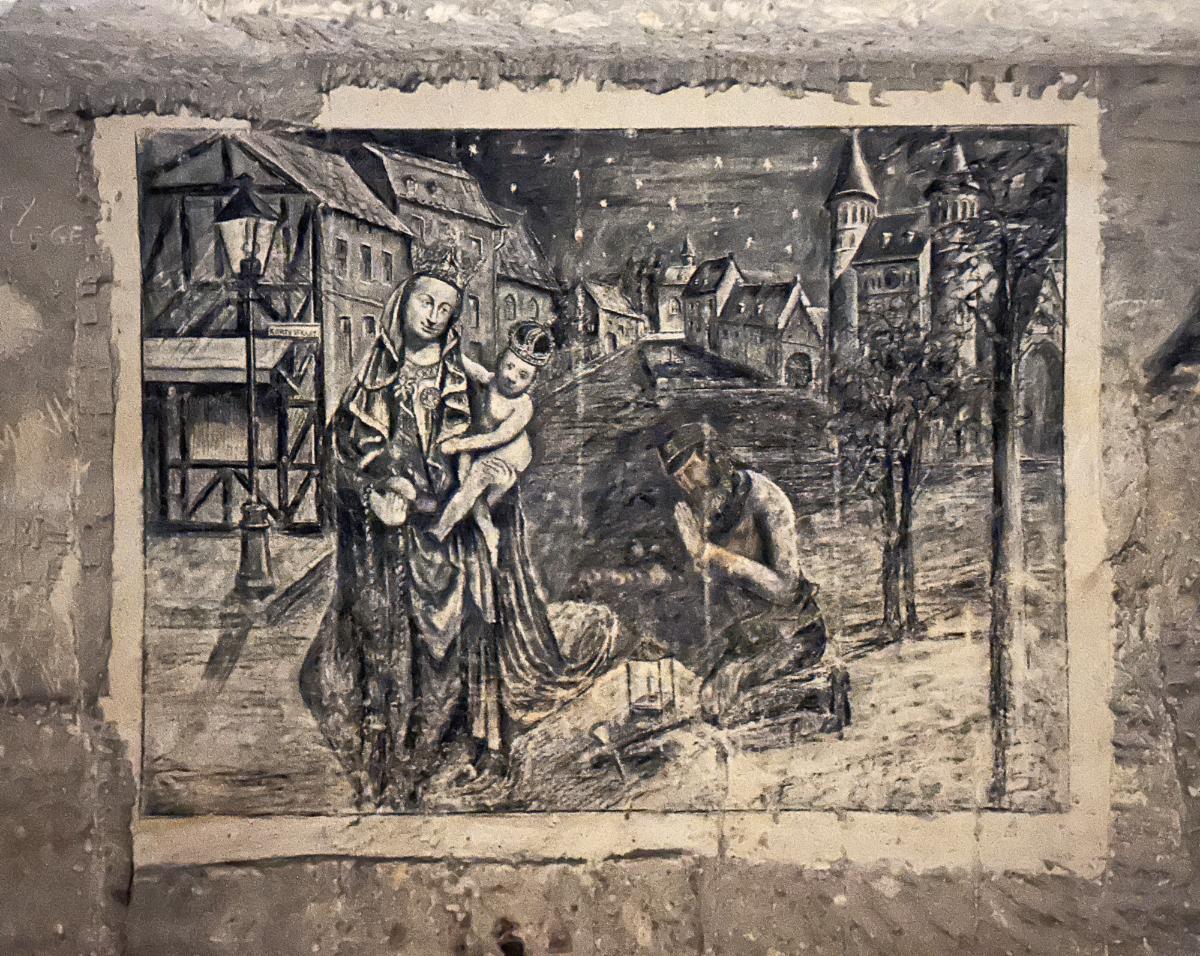 | 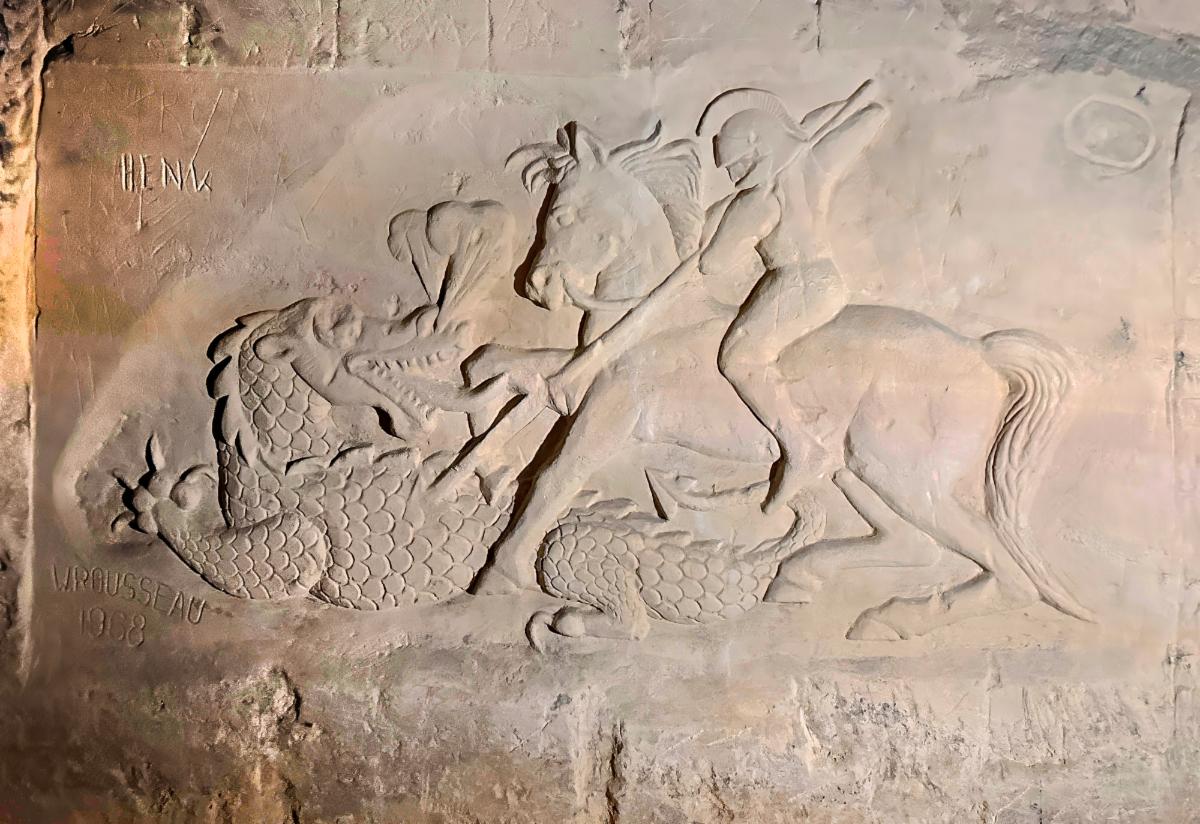 | |
After the caves, we returned to the city center market. As I predicted, Diane bought some cheese. The vendor had at least 20 different samples of different cheeses out for tasting. We hit them all, and all were good. It was impossible to narrow down our choice to one. We did get it down to three - a creamy gouda, a snappy chili sambal, and another buttery variety that I never got the name of.
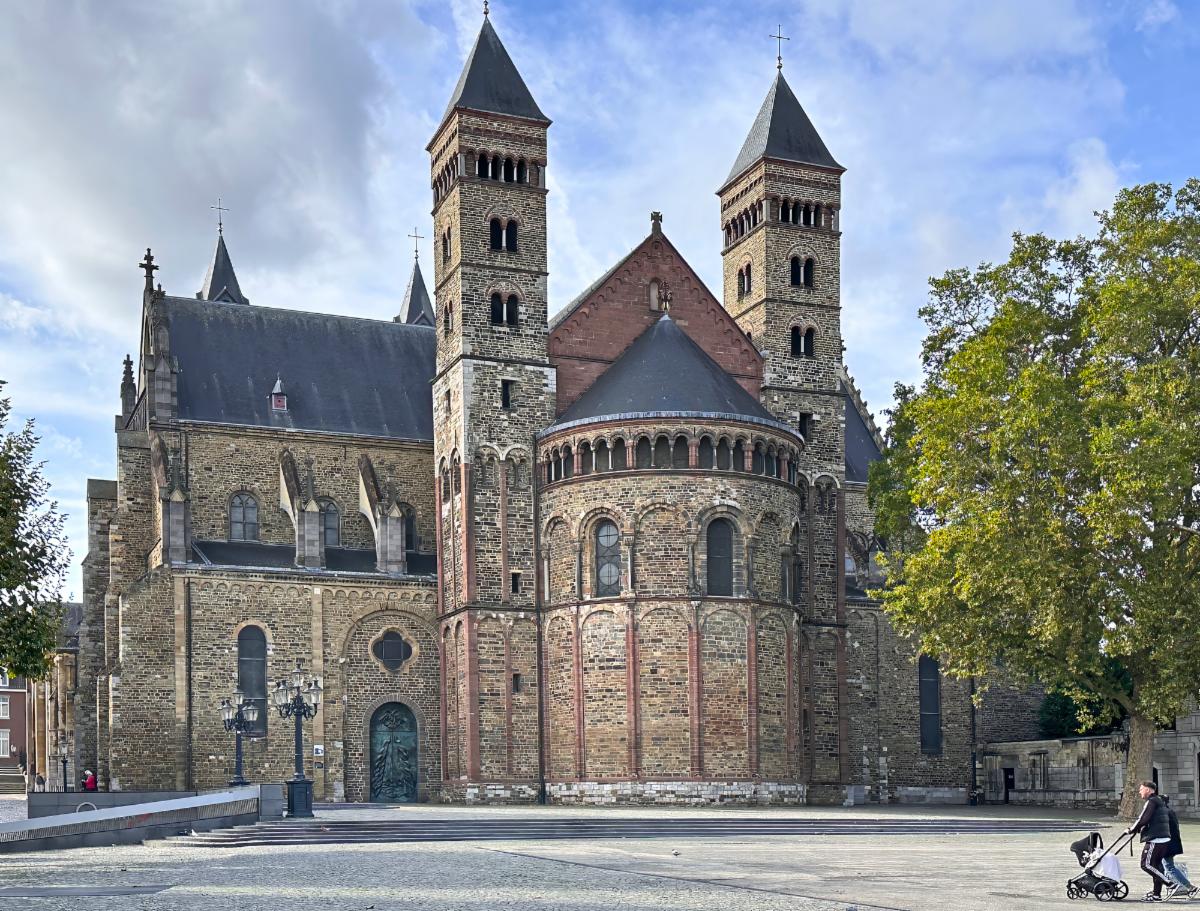
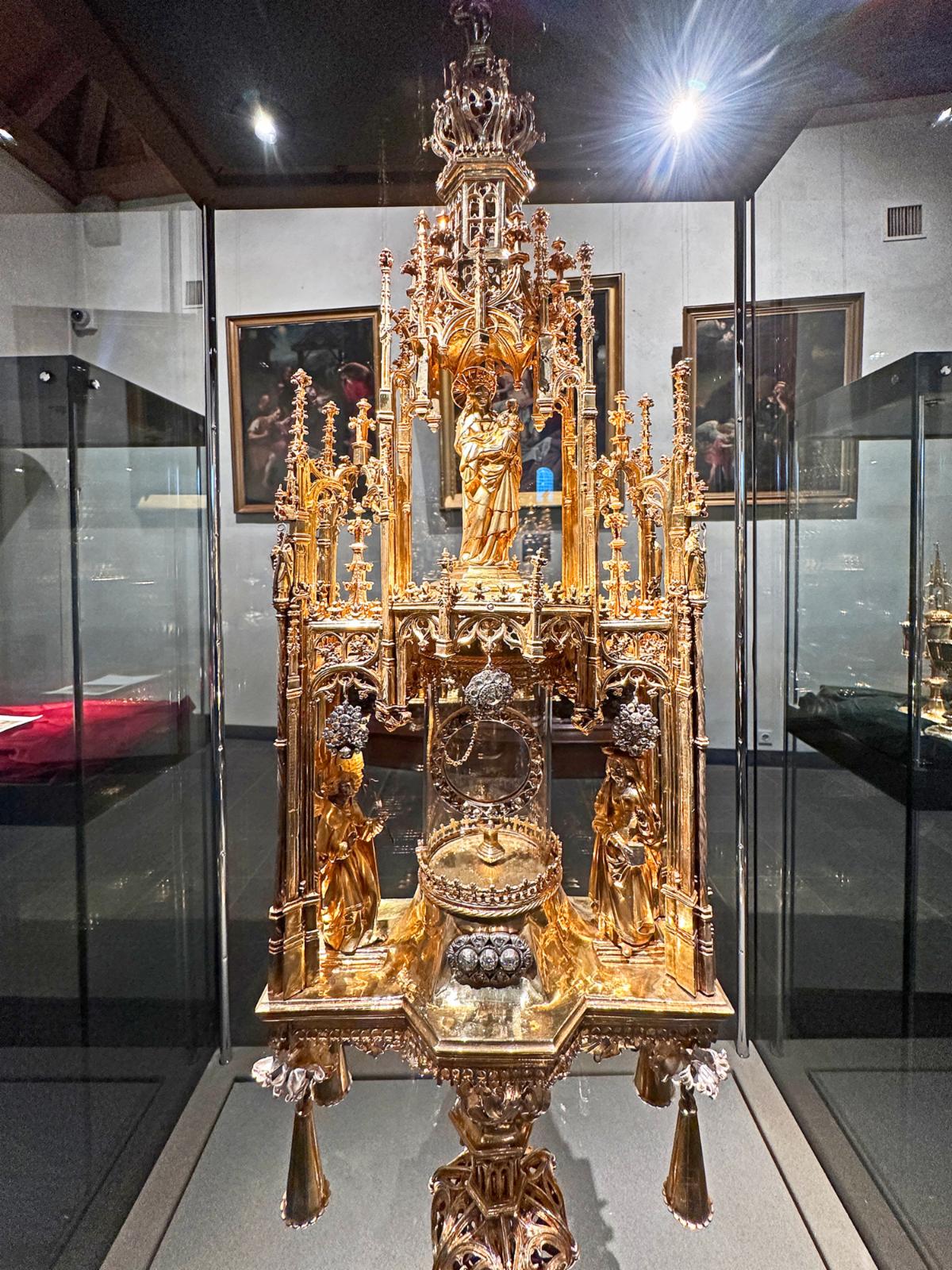
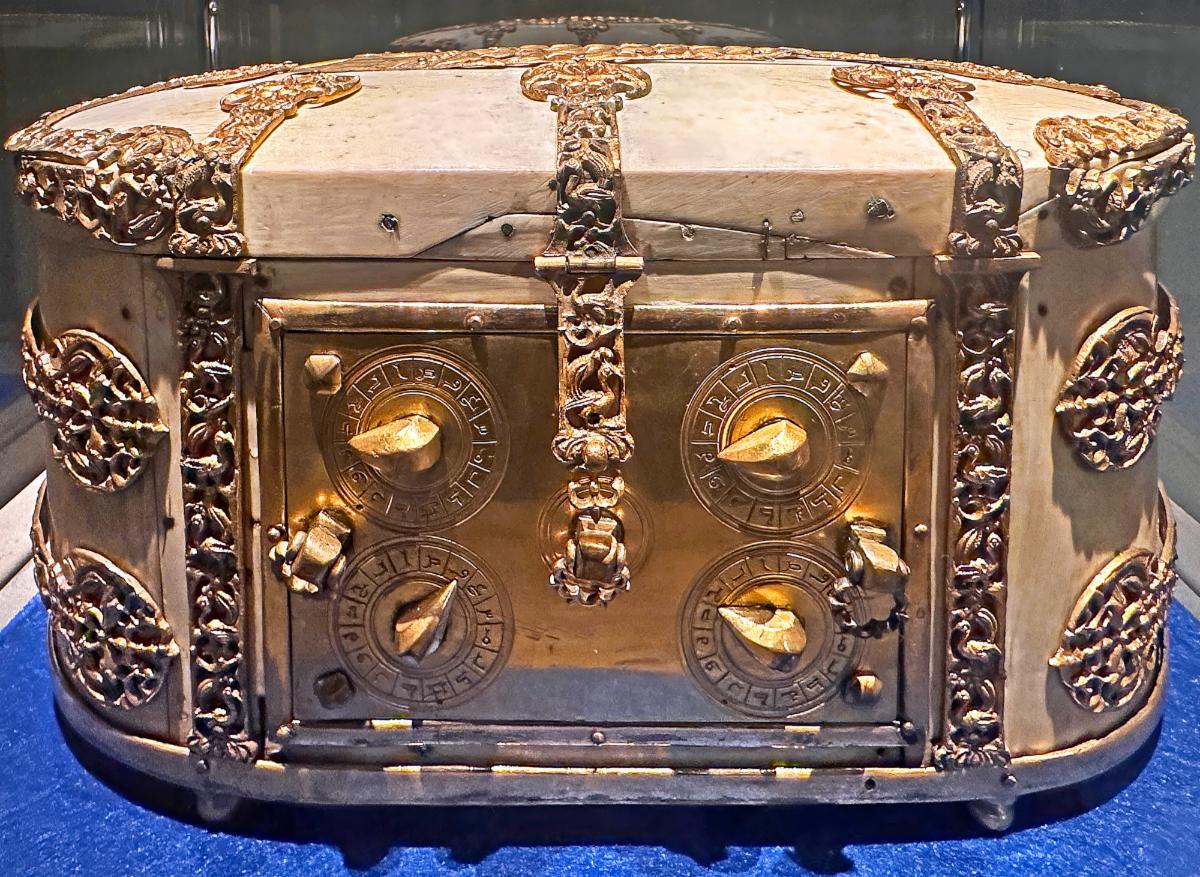
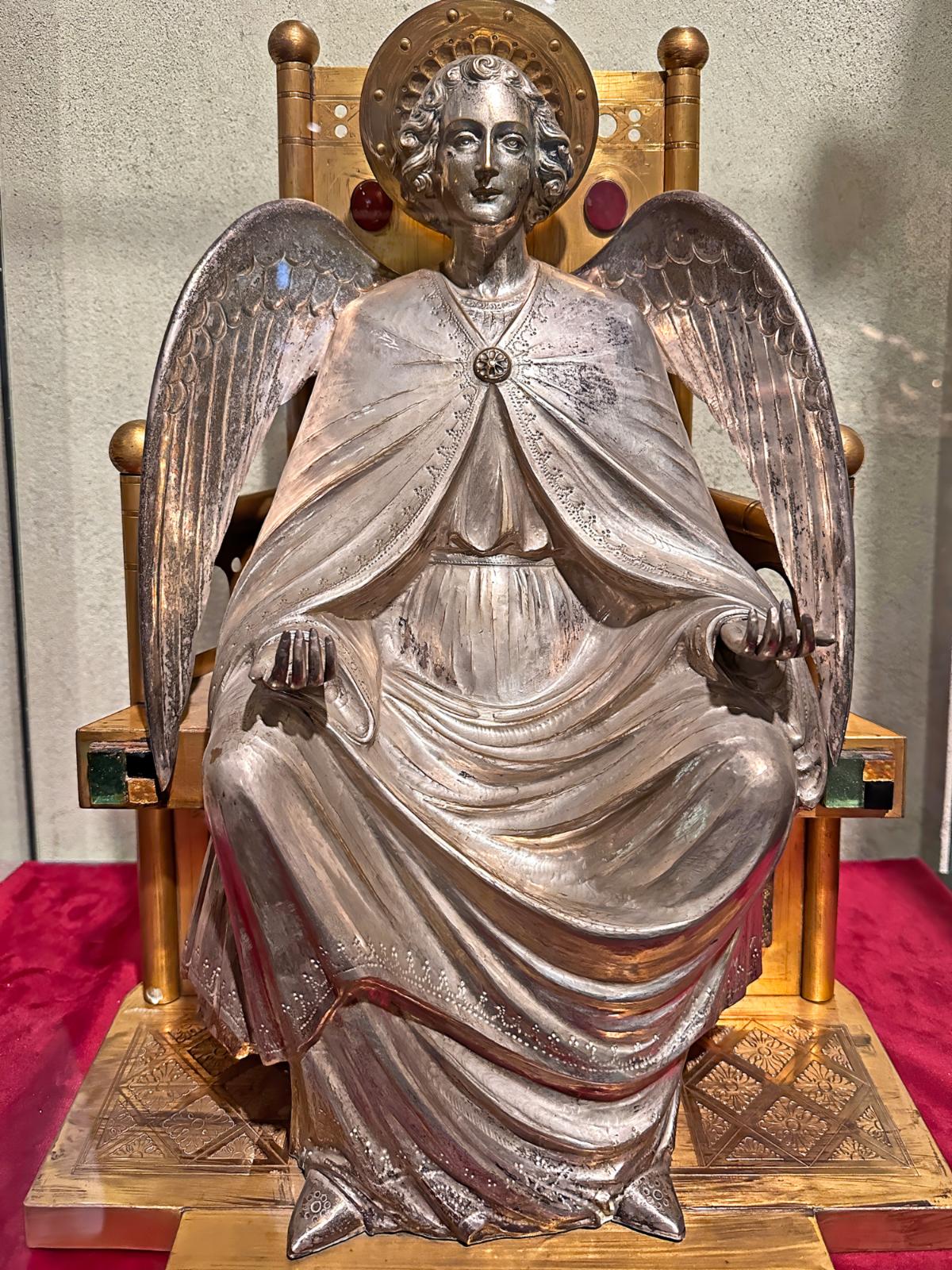
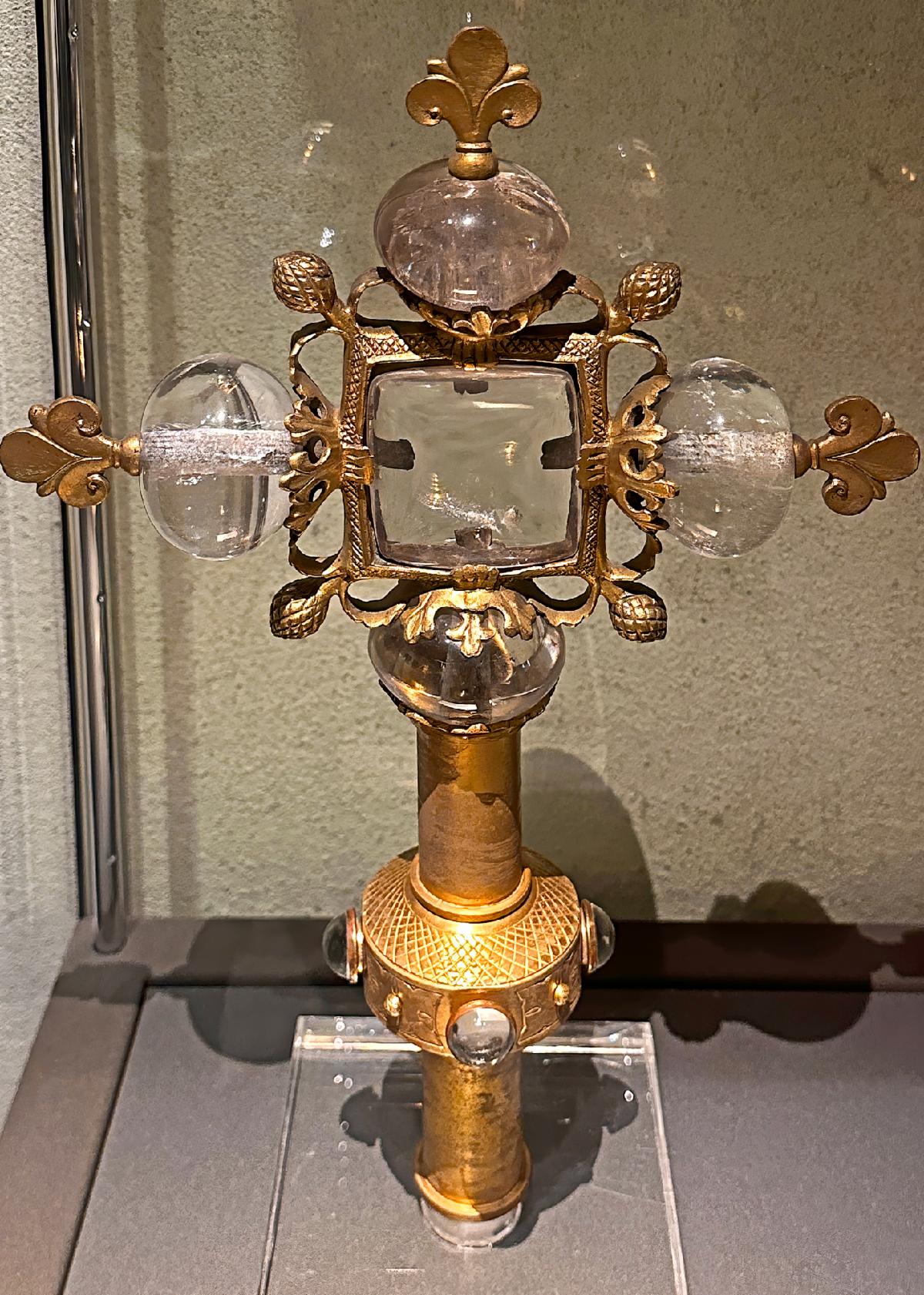
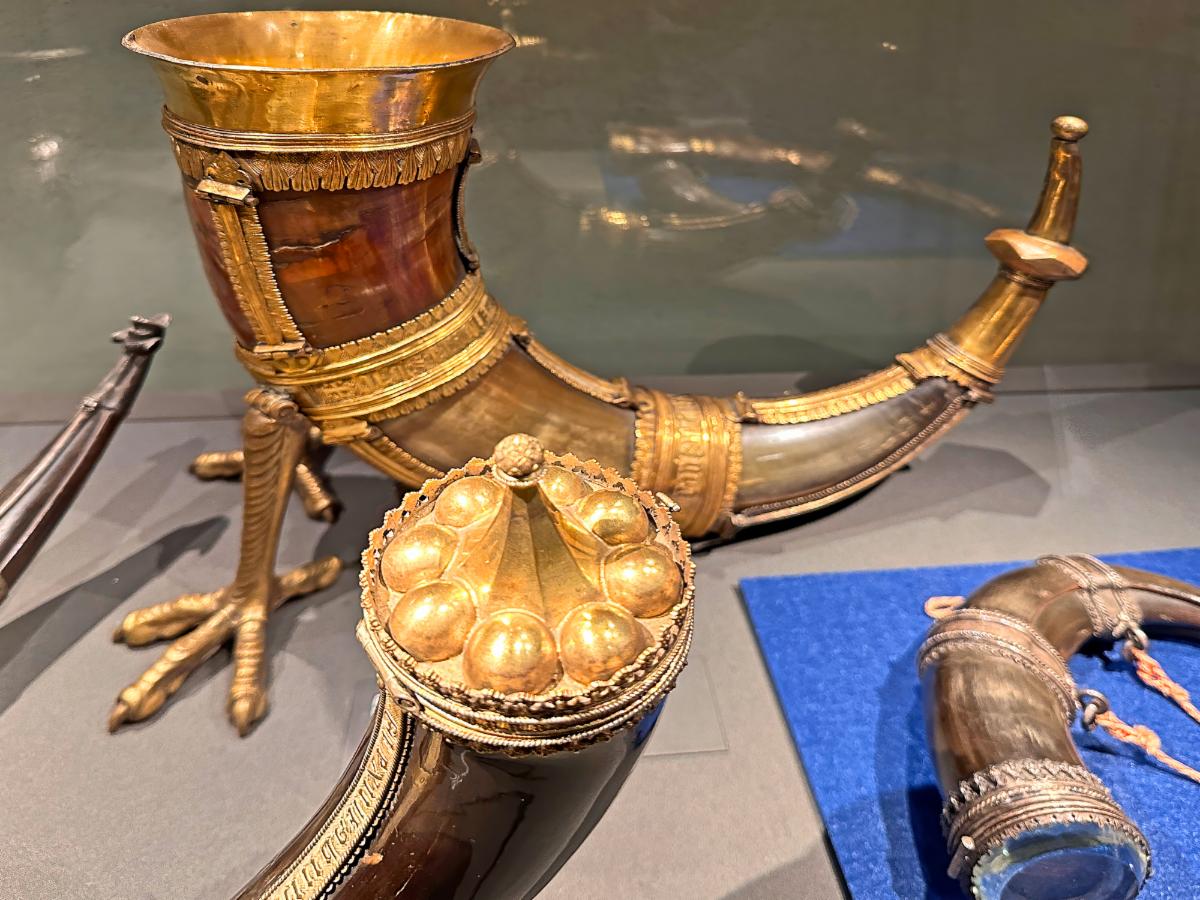
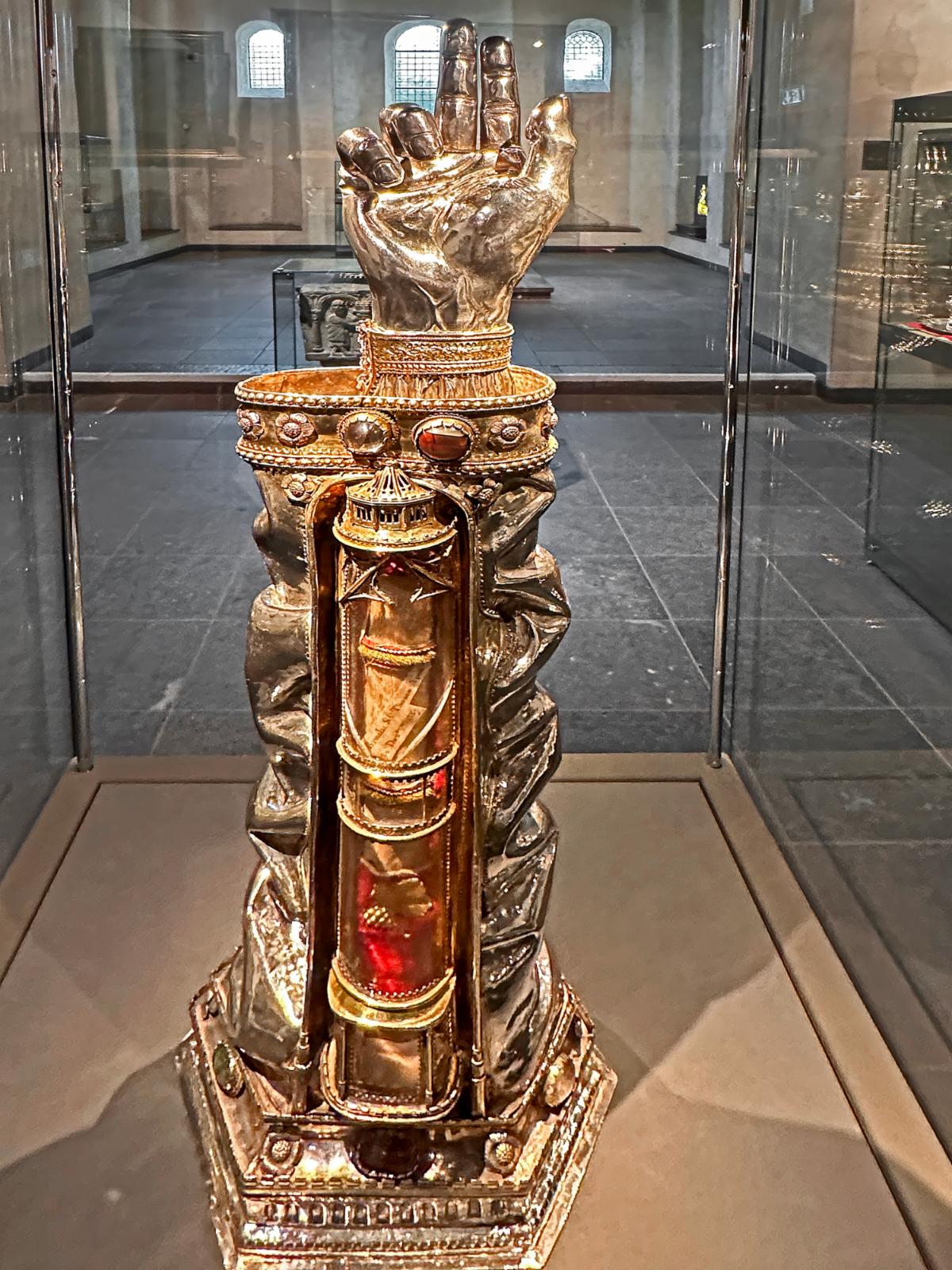
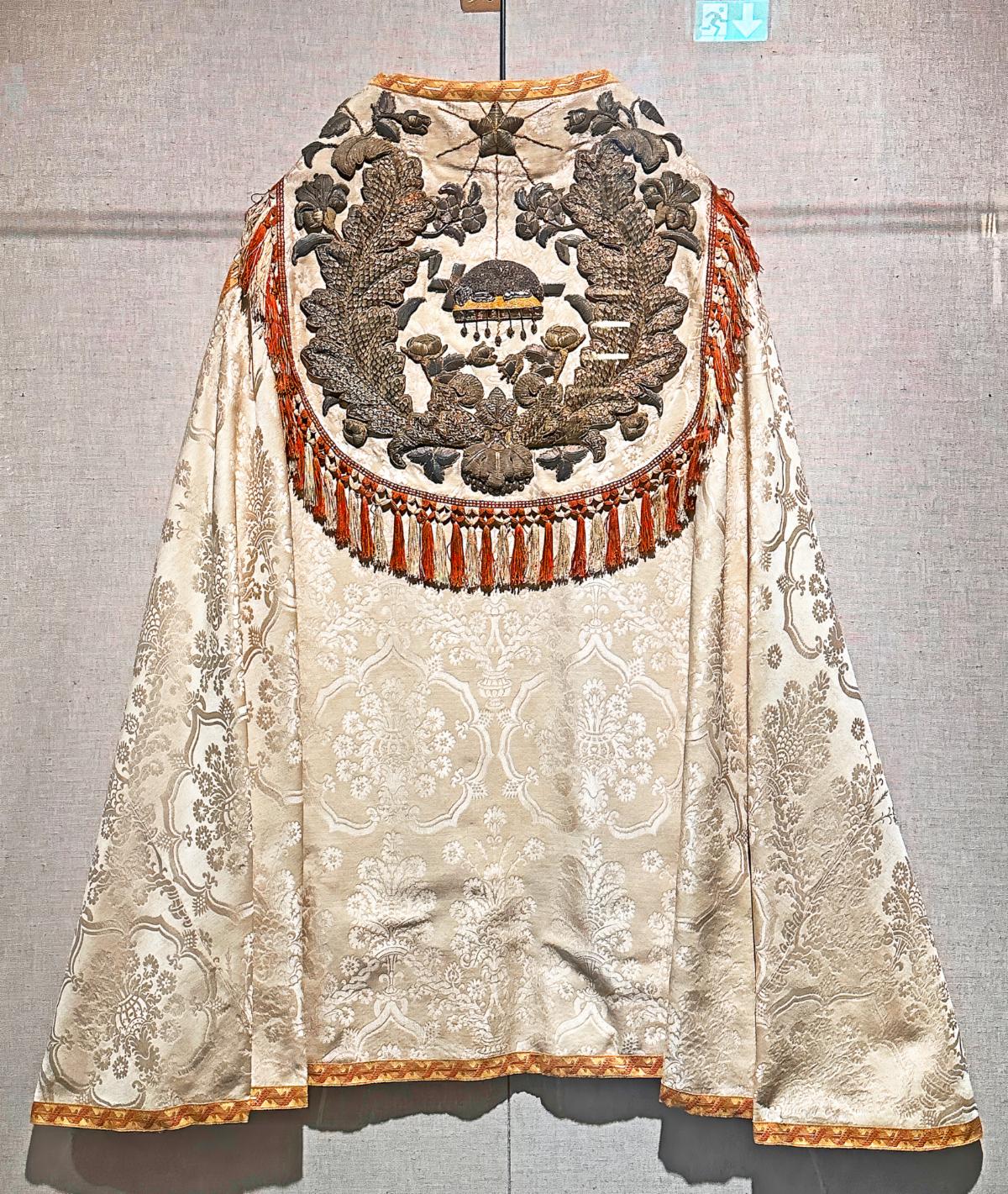
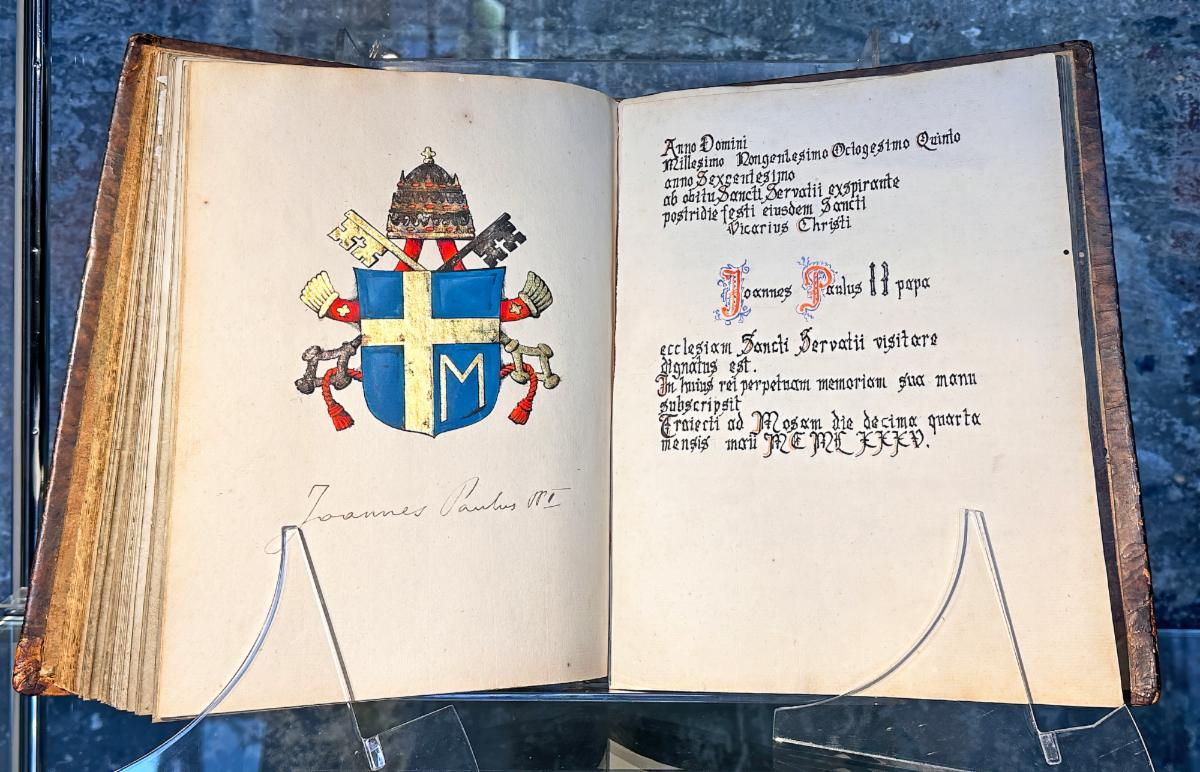
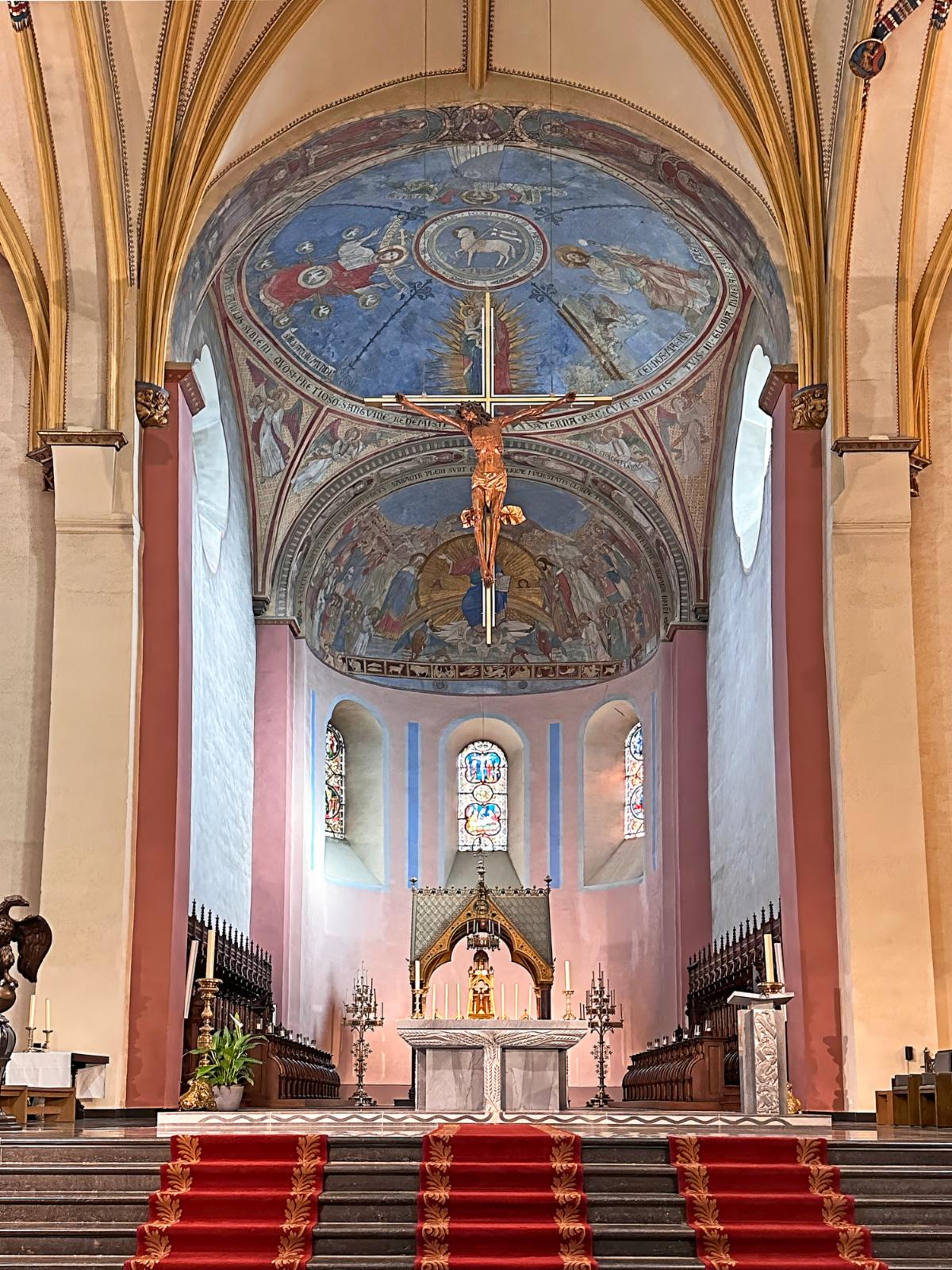
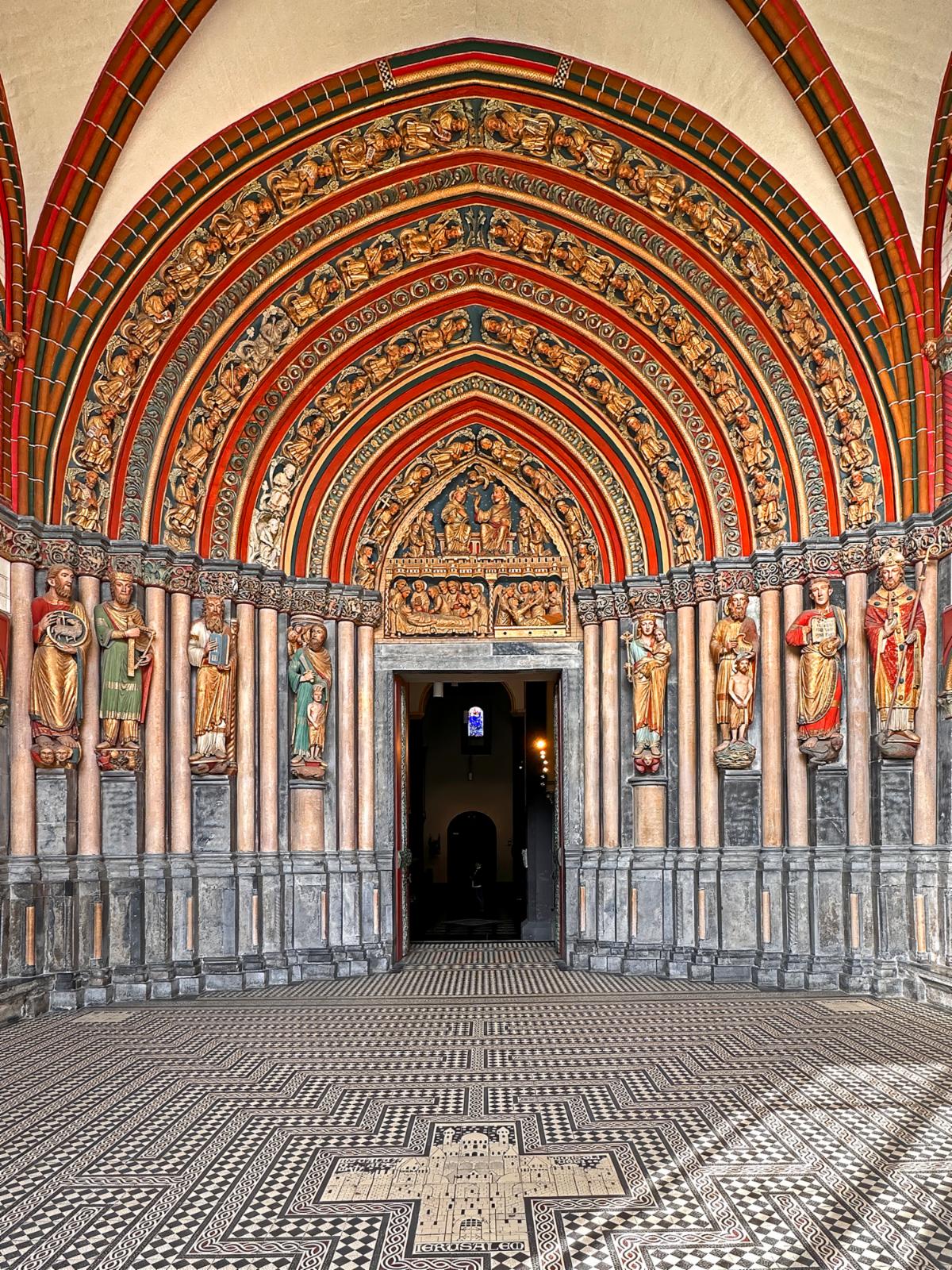
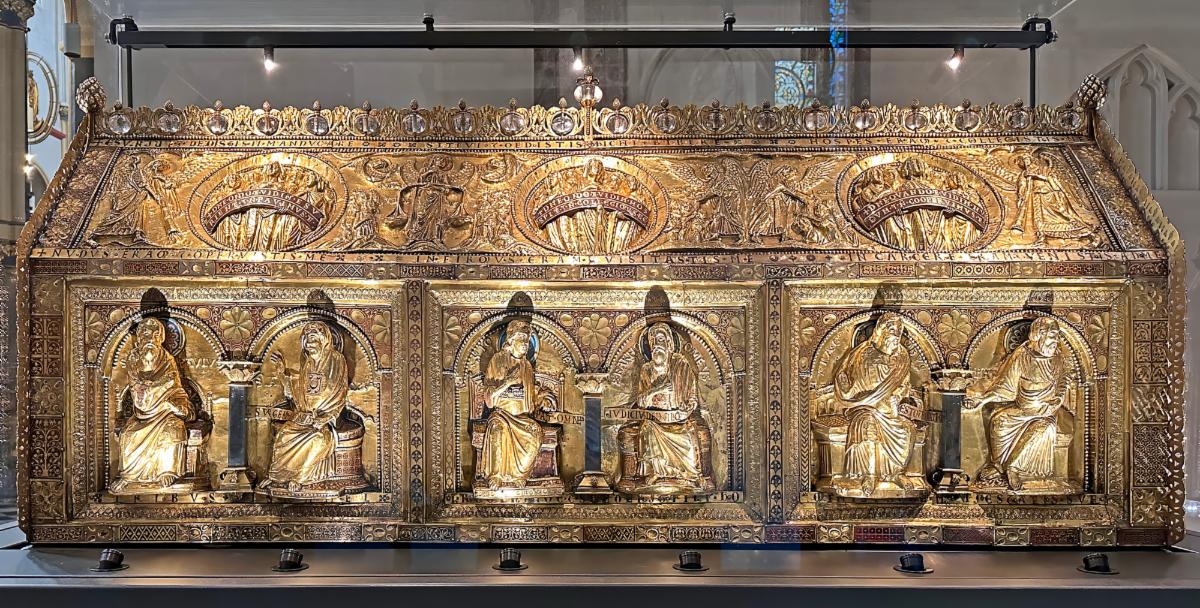
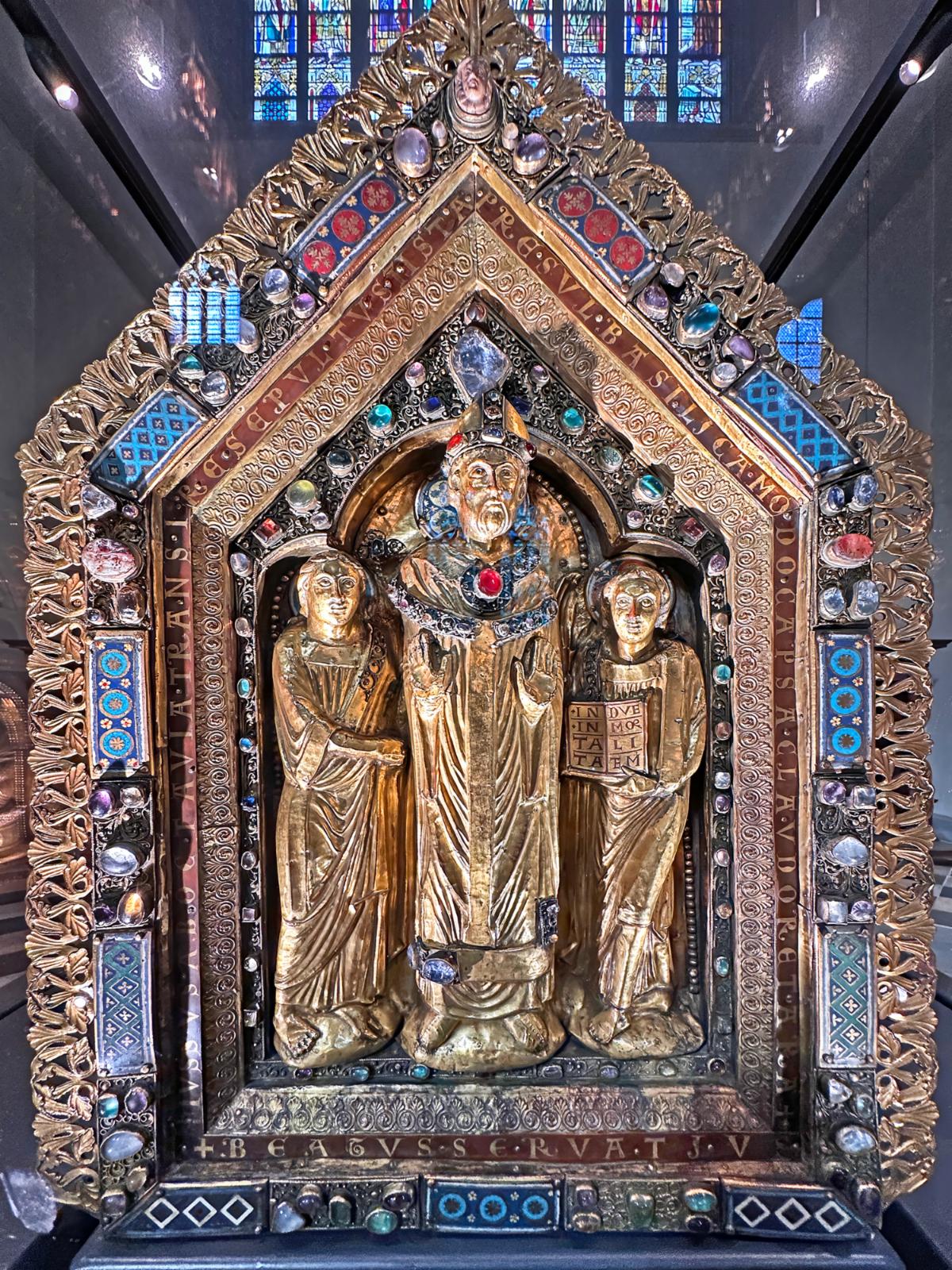
Next, we came across the Romanesque Basilica of St. Servatius. This colossal building held two surprises. The first was the eye-popping religious artifacts and art stored on three floors they aptly called the Treasury. Gold and silver were the primary metals used. A little ivory, finely woven tapestry, and intricately carved wood added to the treasures.
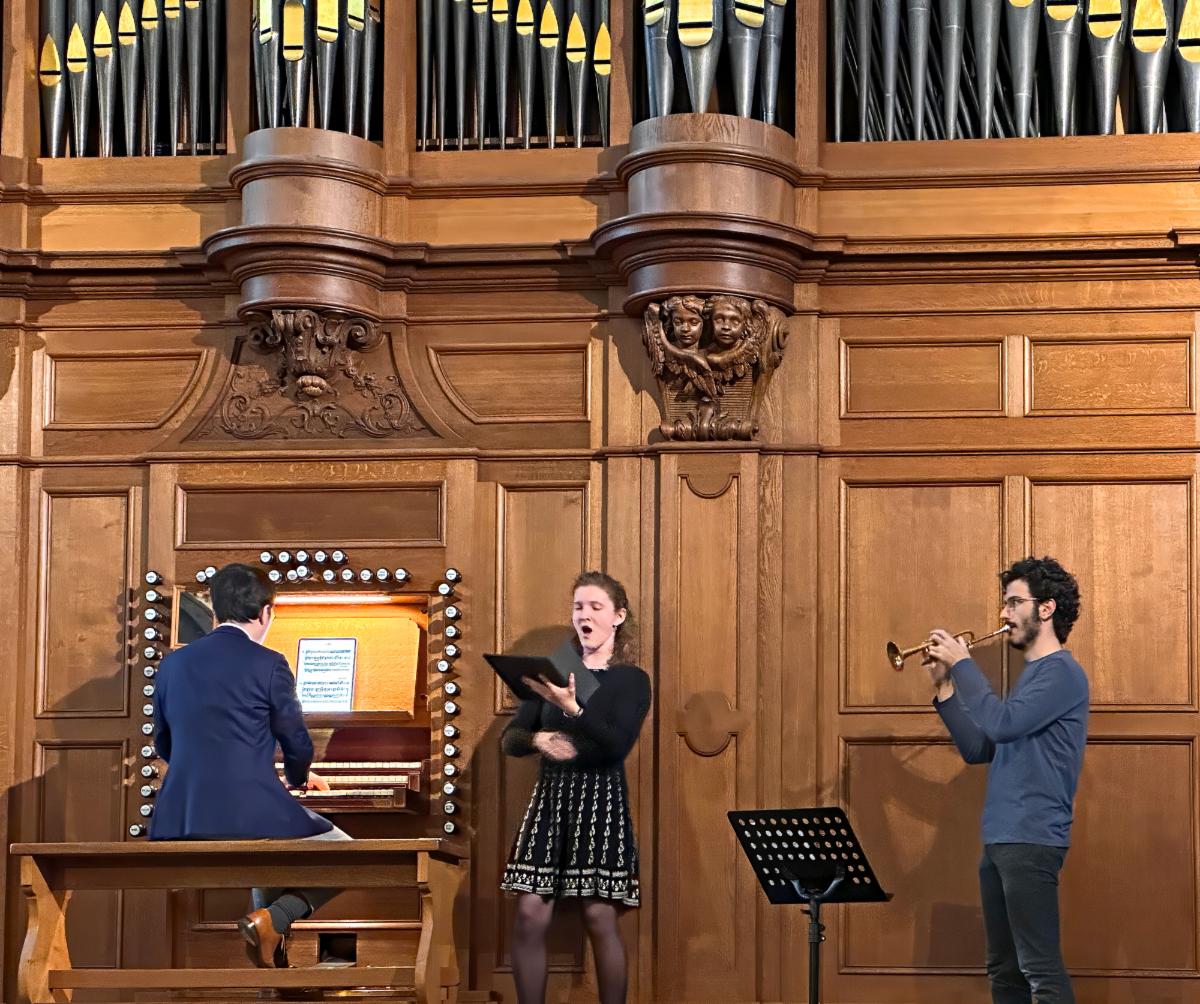
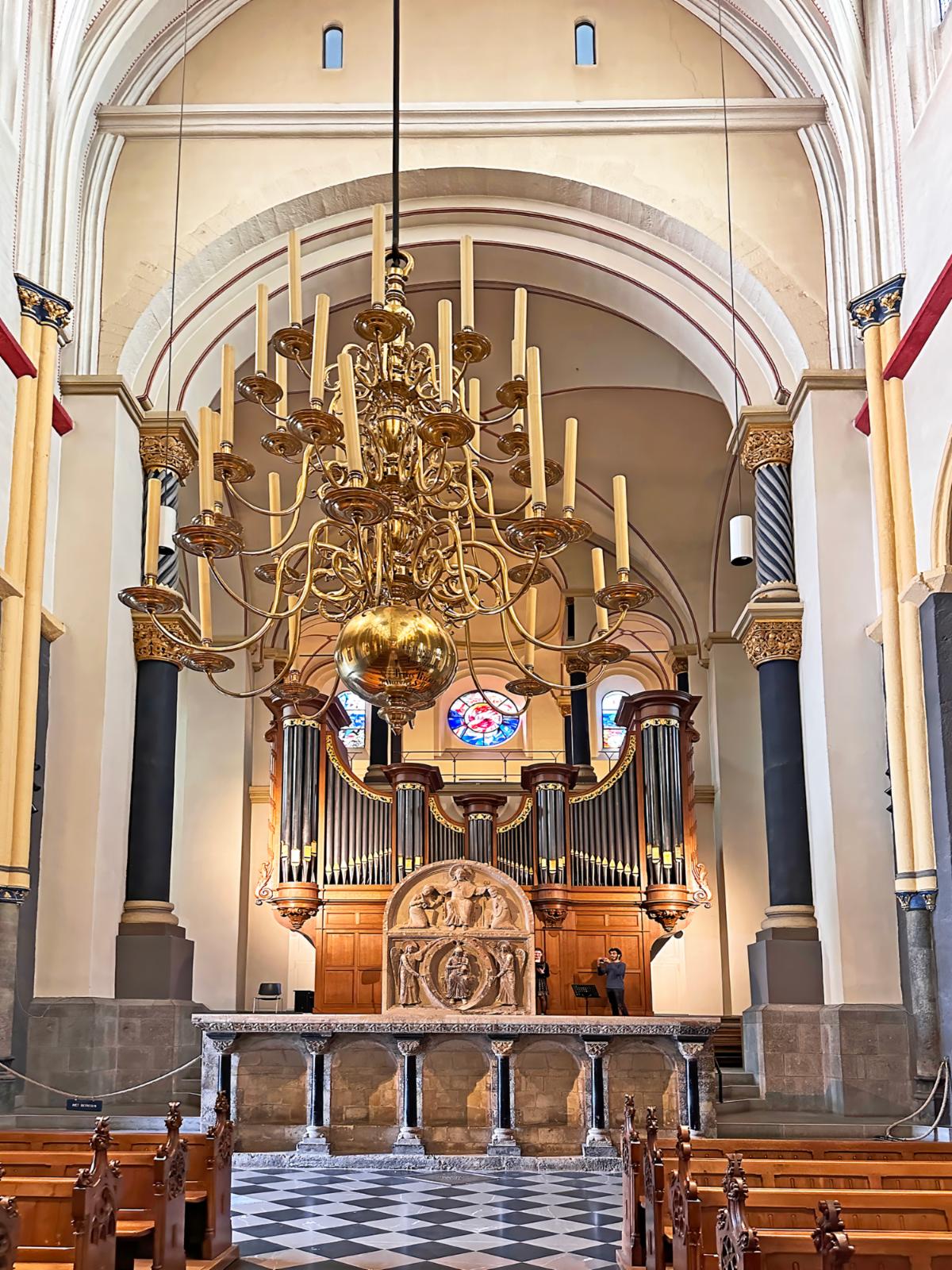
At the building’s entrance, I read that Gregorian Chants were performed every Sunday at the 11 a.m. service. I love the hypnotic Gregorian Chants and would have attended just for that had it been a Sunday. So, we encountered our second surprise when we opened the heavy door to the massive church hall and heard the most angelic music imaginable. It wasn’t Gregorian Chanting but a lovely Baroque trio playing in the delicious natural reverb of the cavernous church. The trio comprised an organist accessing the giant pipe organ, a trumpeter, and a singer. The three intertwined their fugues with precision and intricacy. The girl singer most amazed me. She could hit the pinnacle of high notes with ease and accuracy. I listened for at least 20 minutes until my cohorts dragged me out kicking.
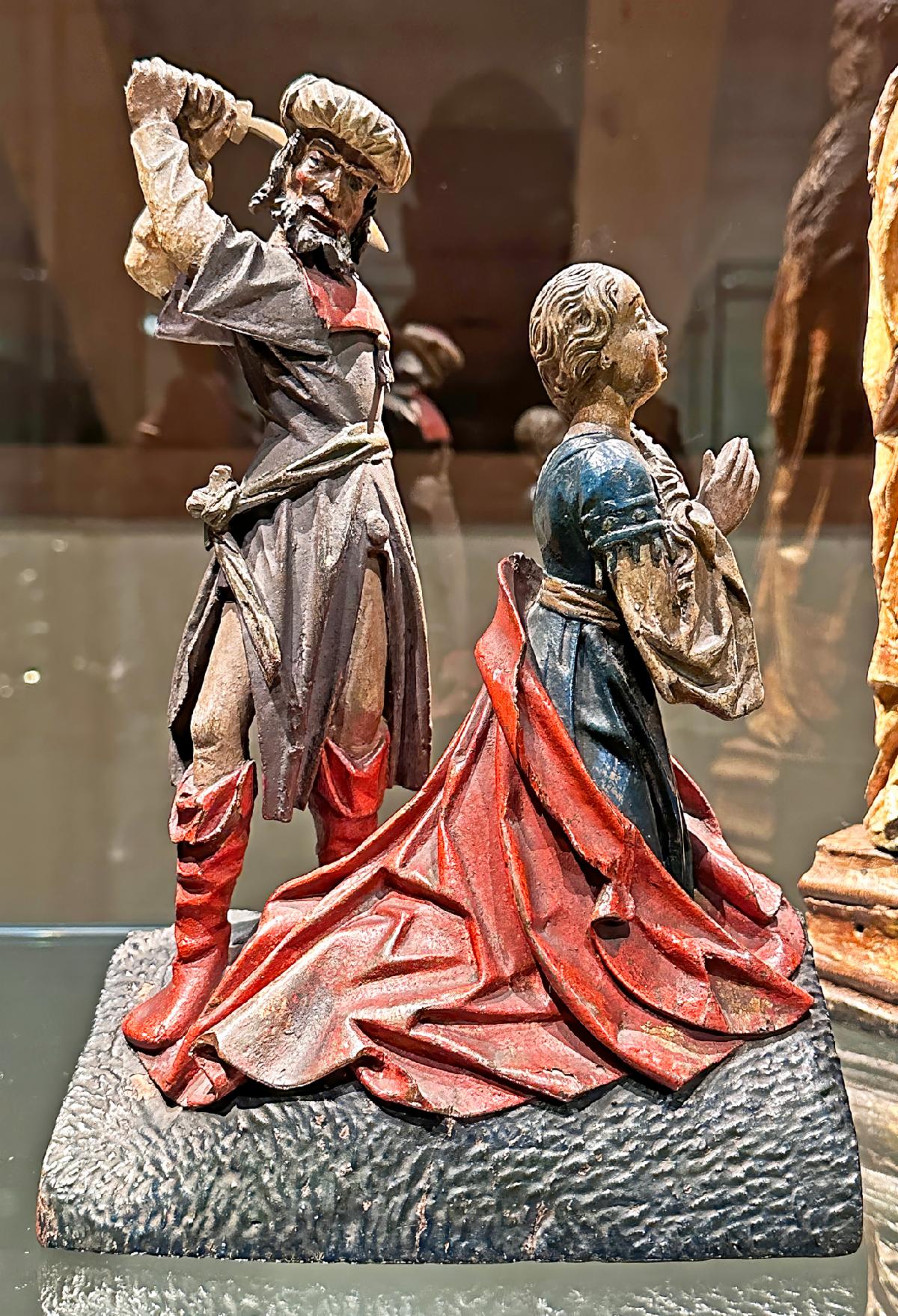
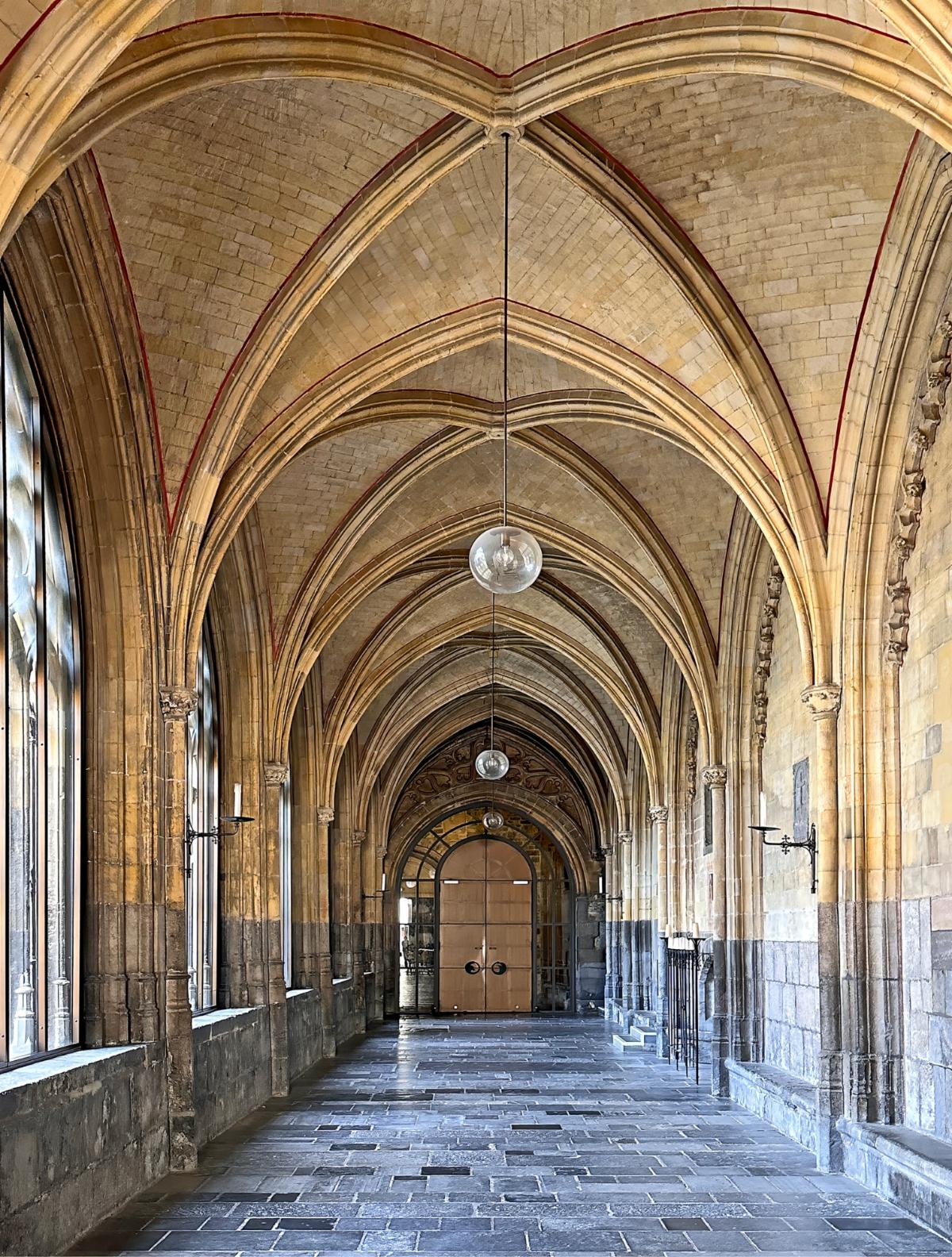
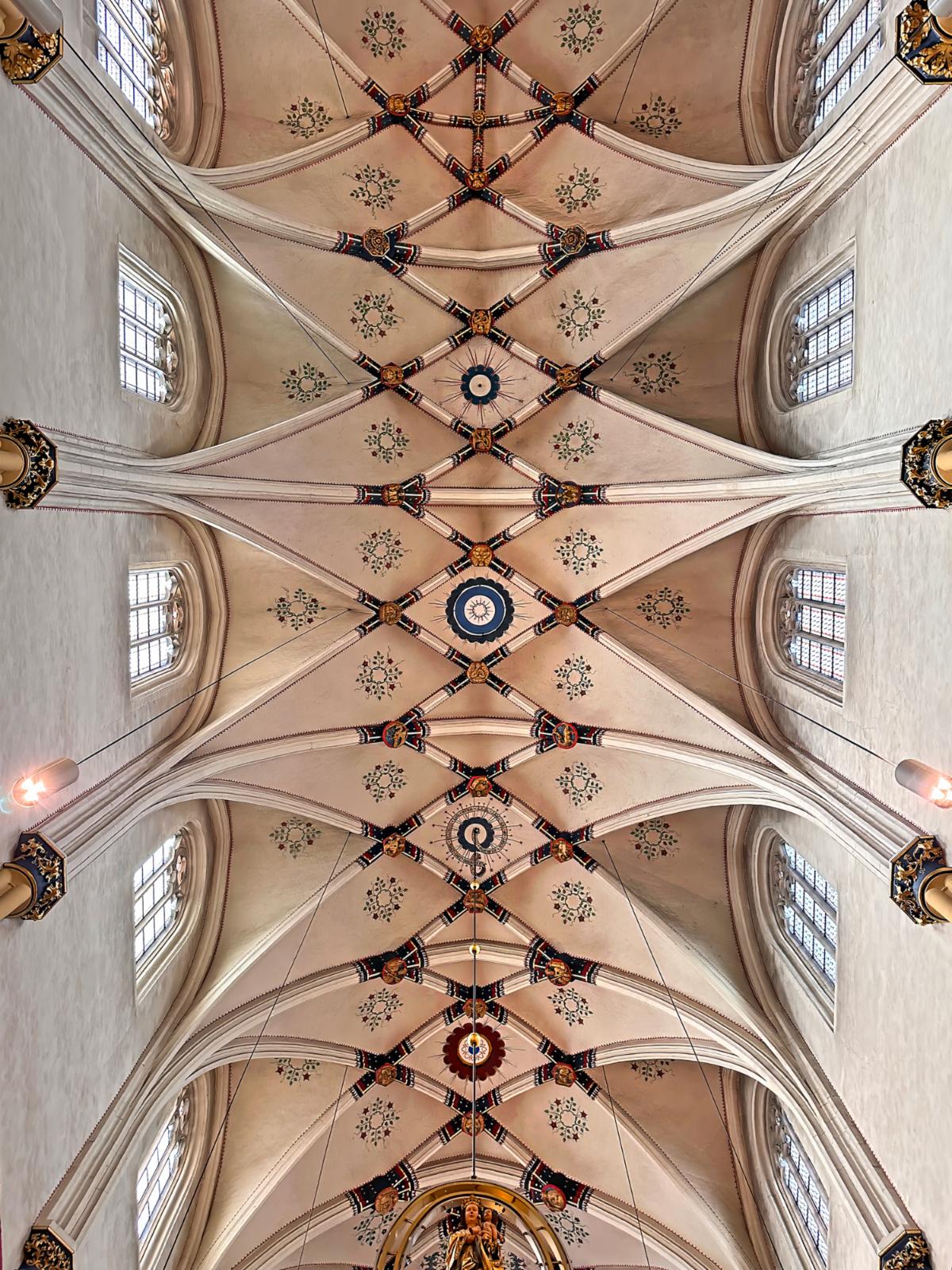
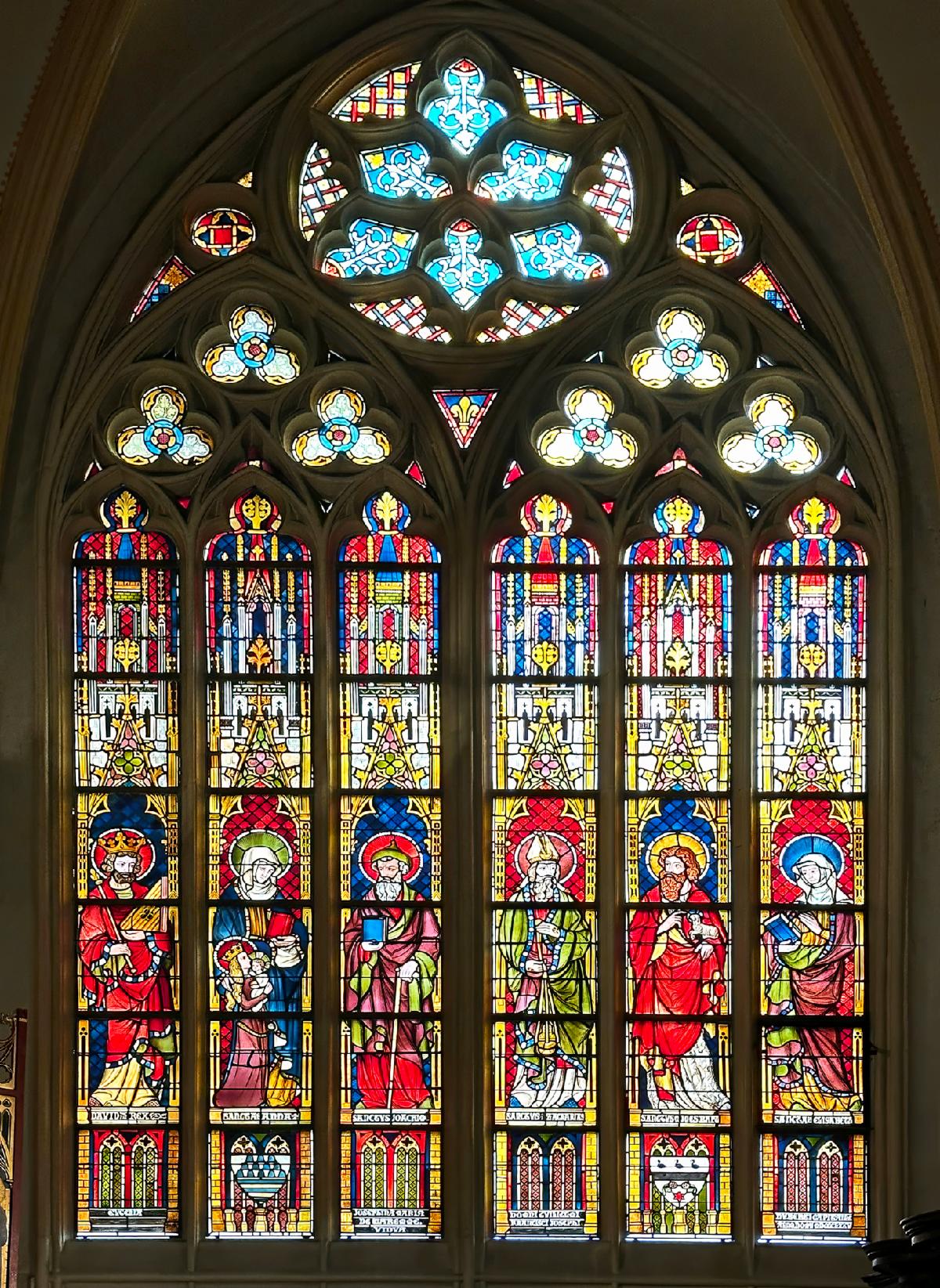
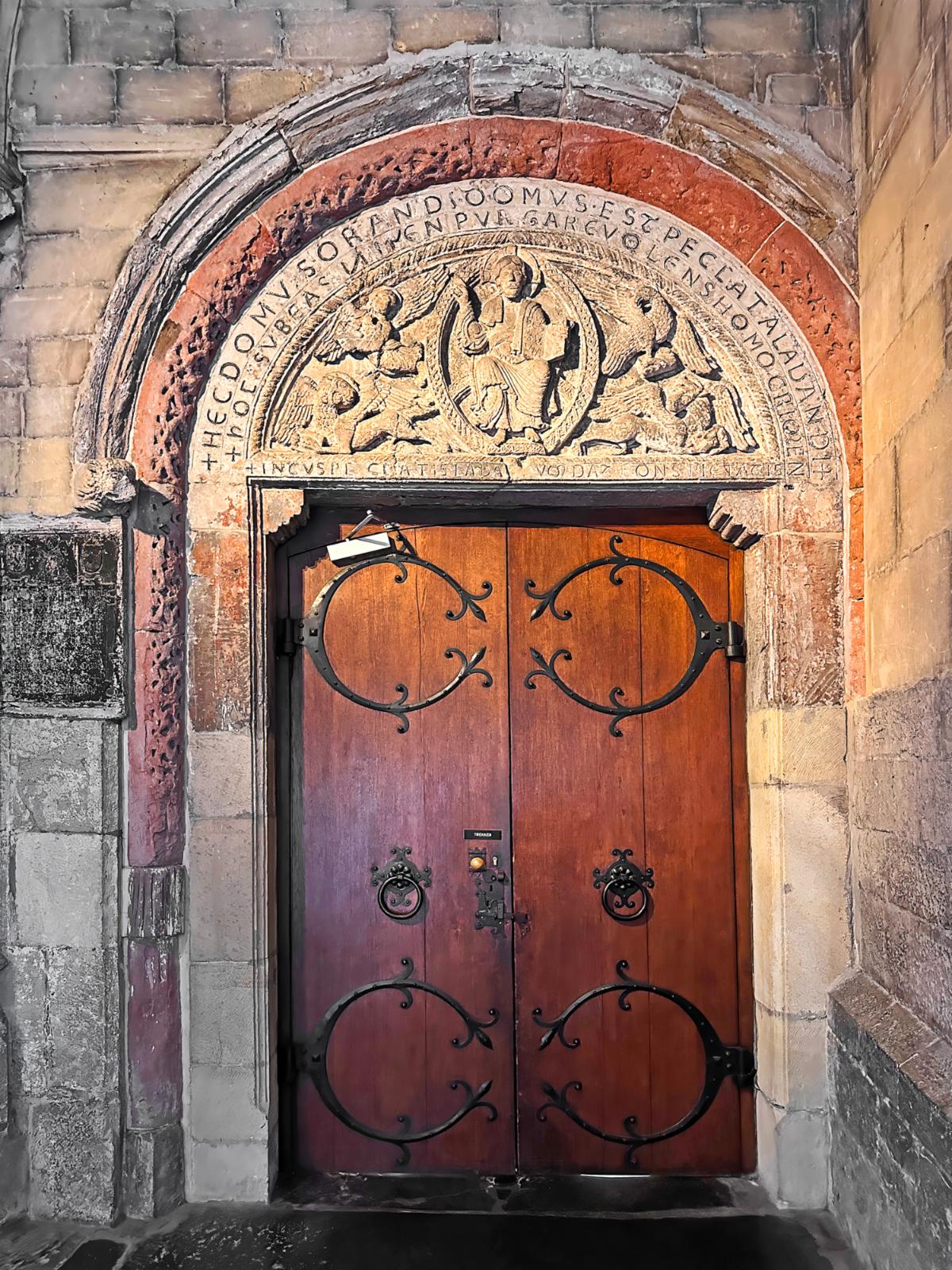
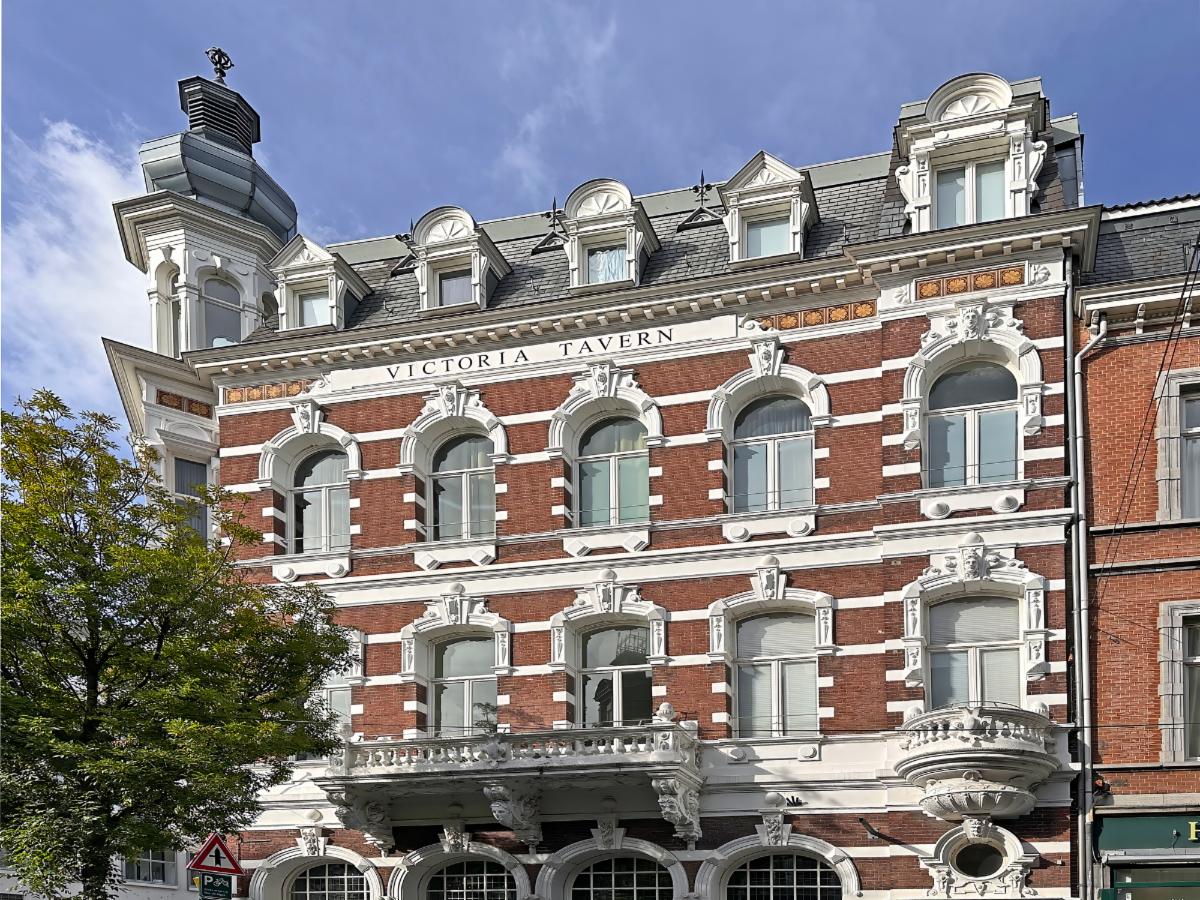
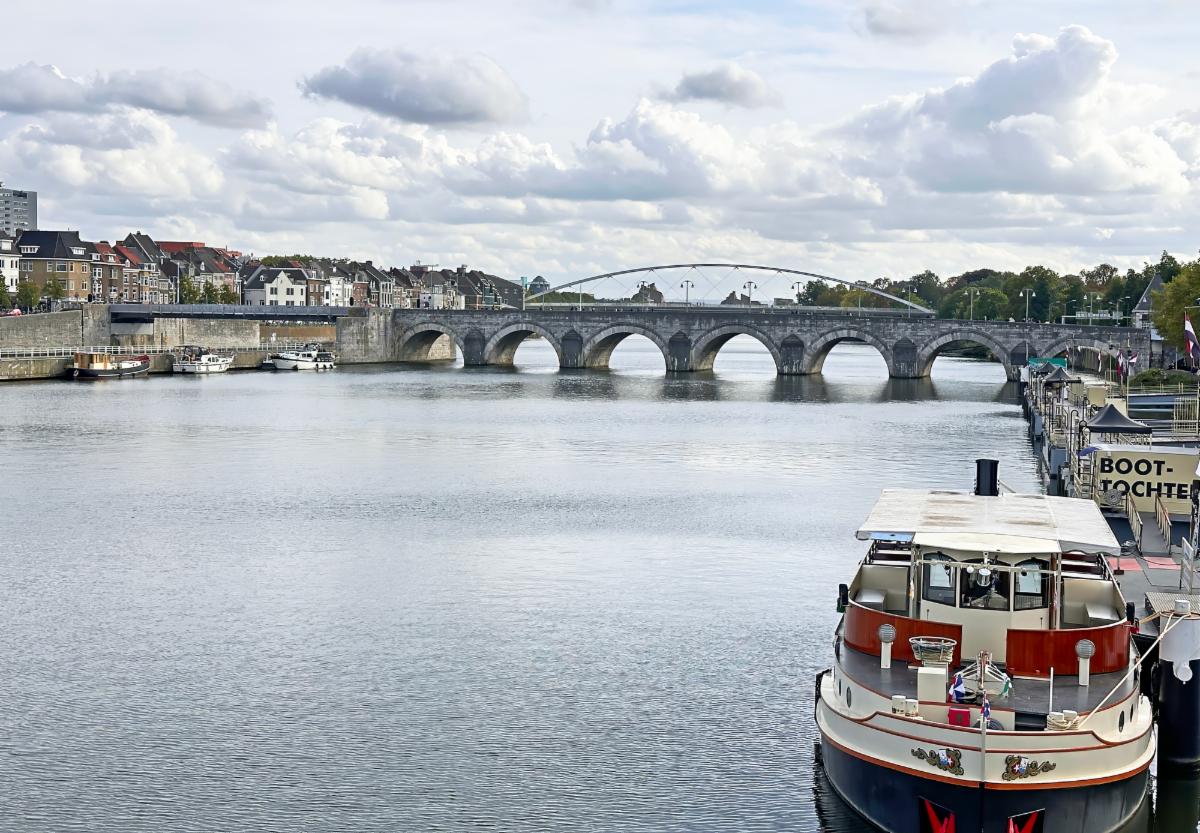
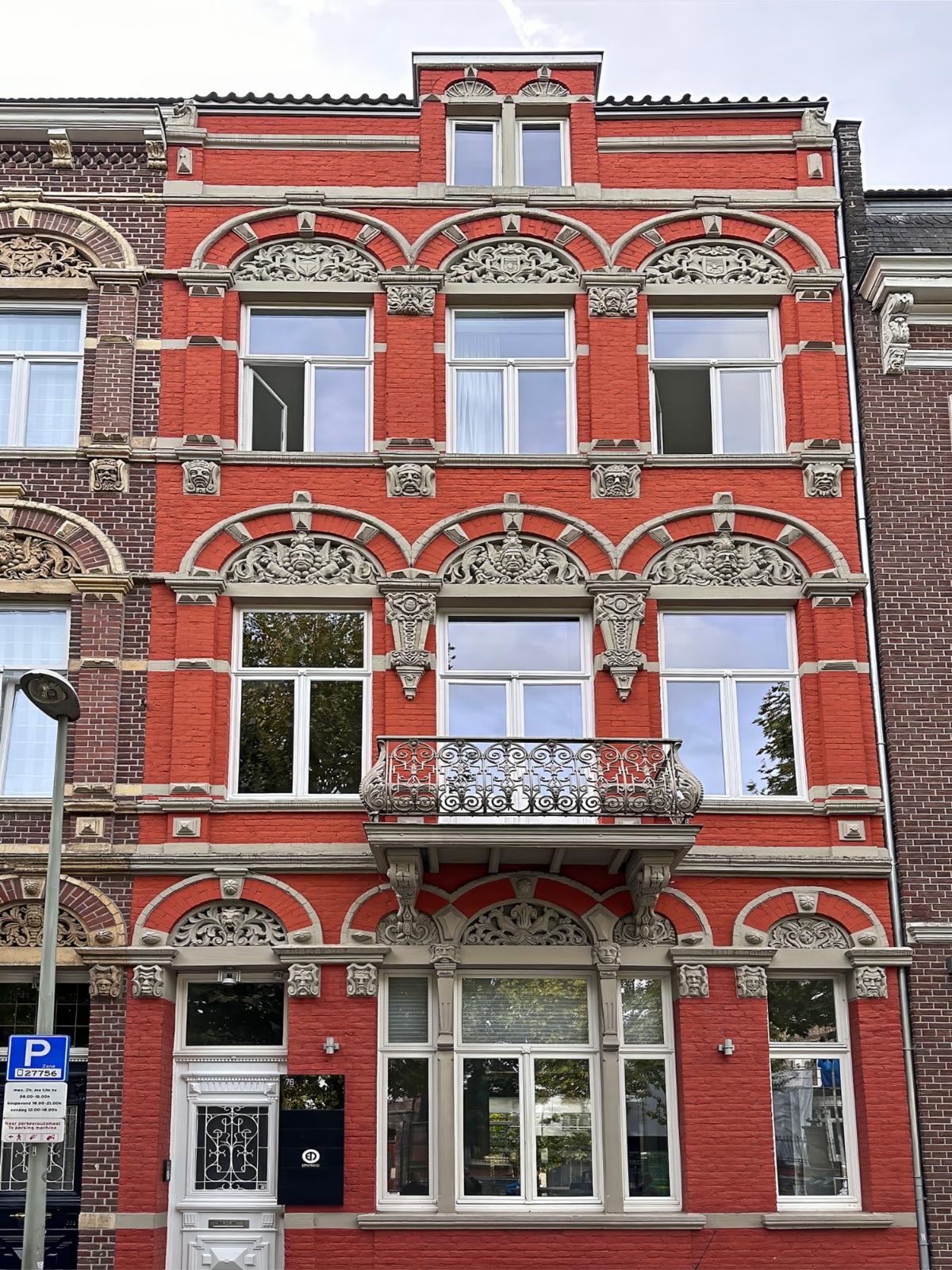
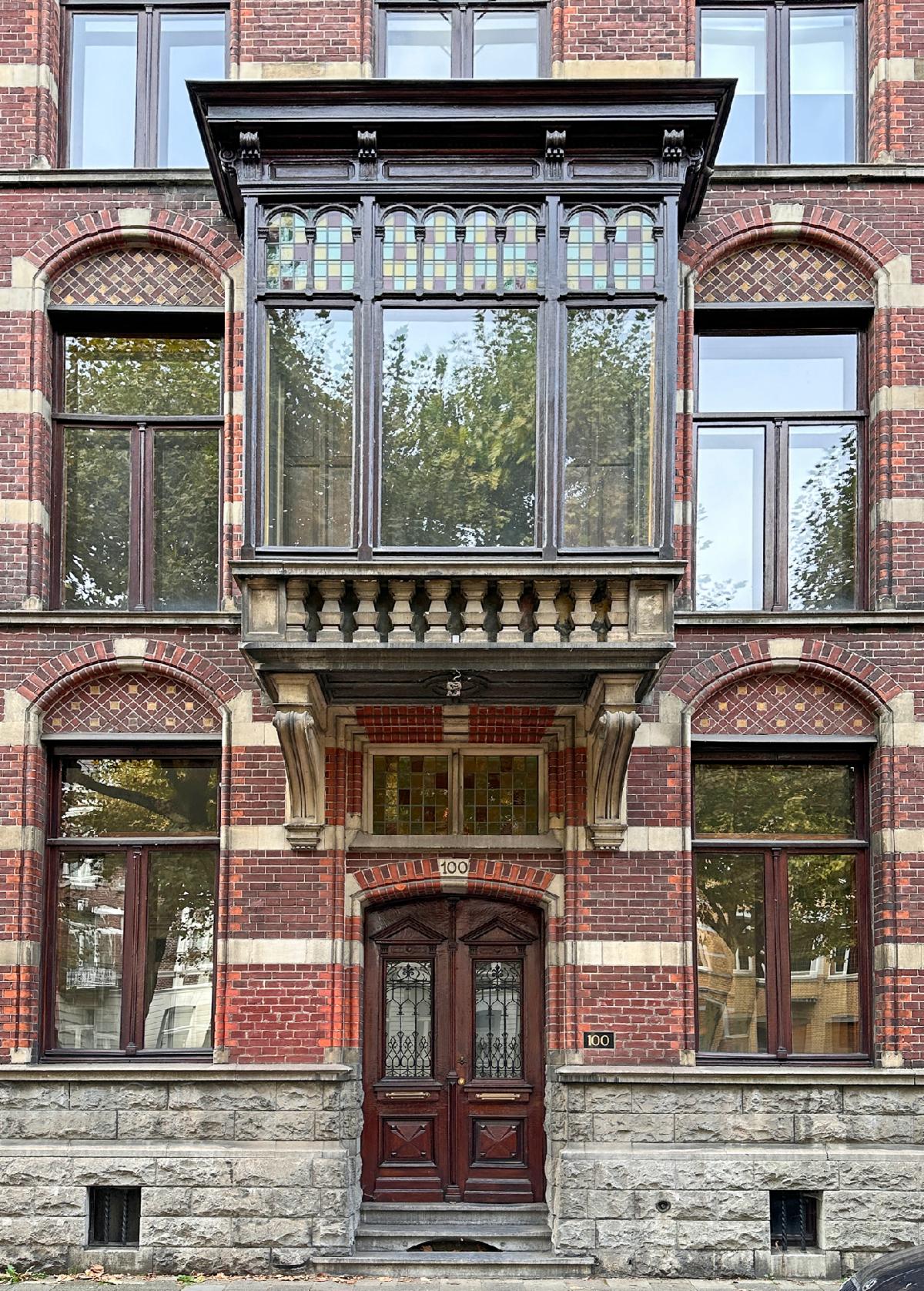
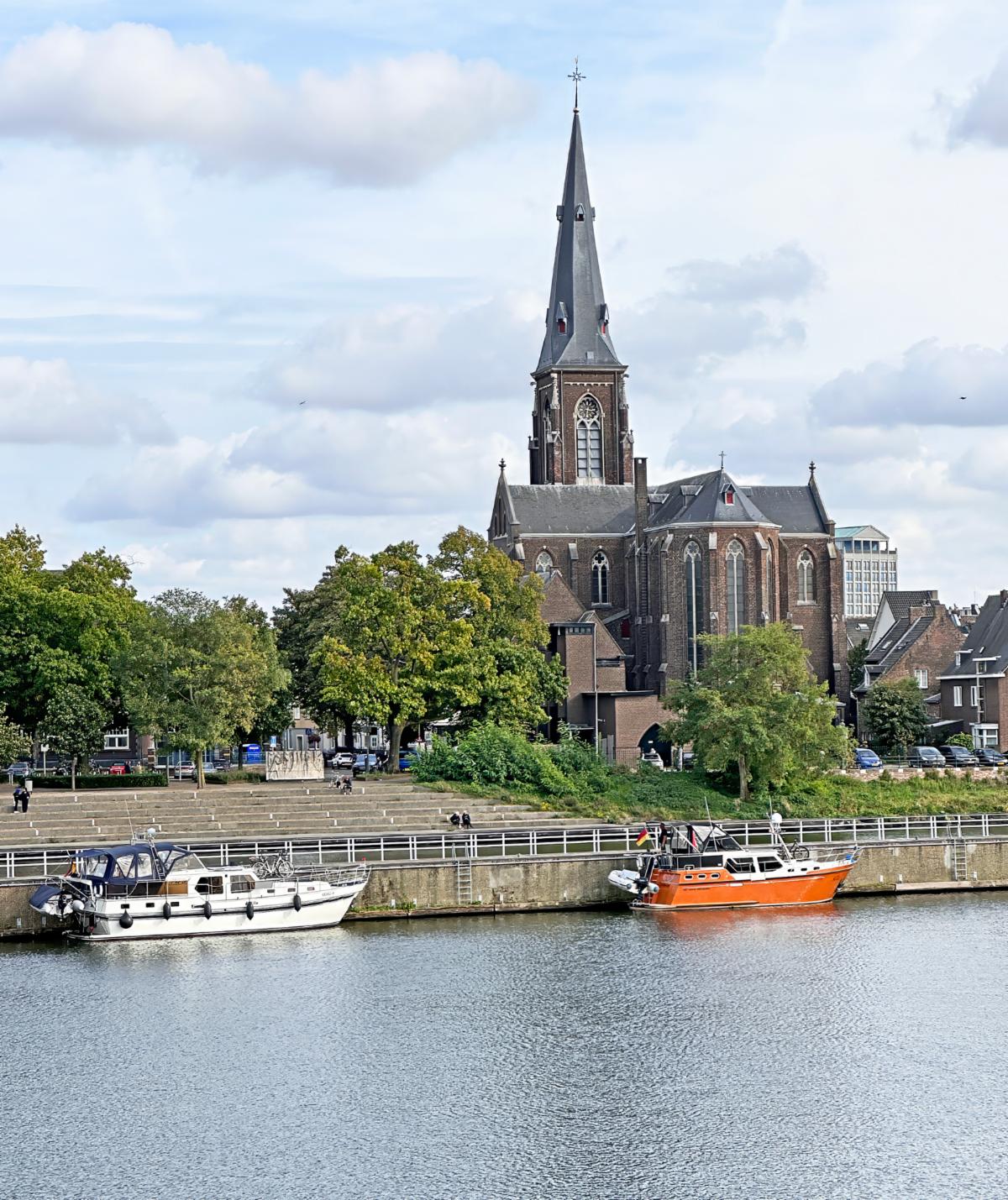
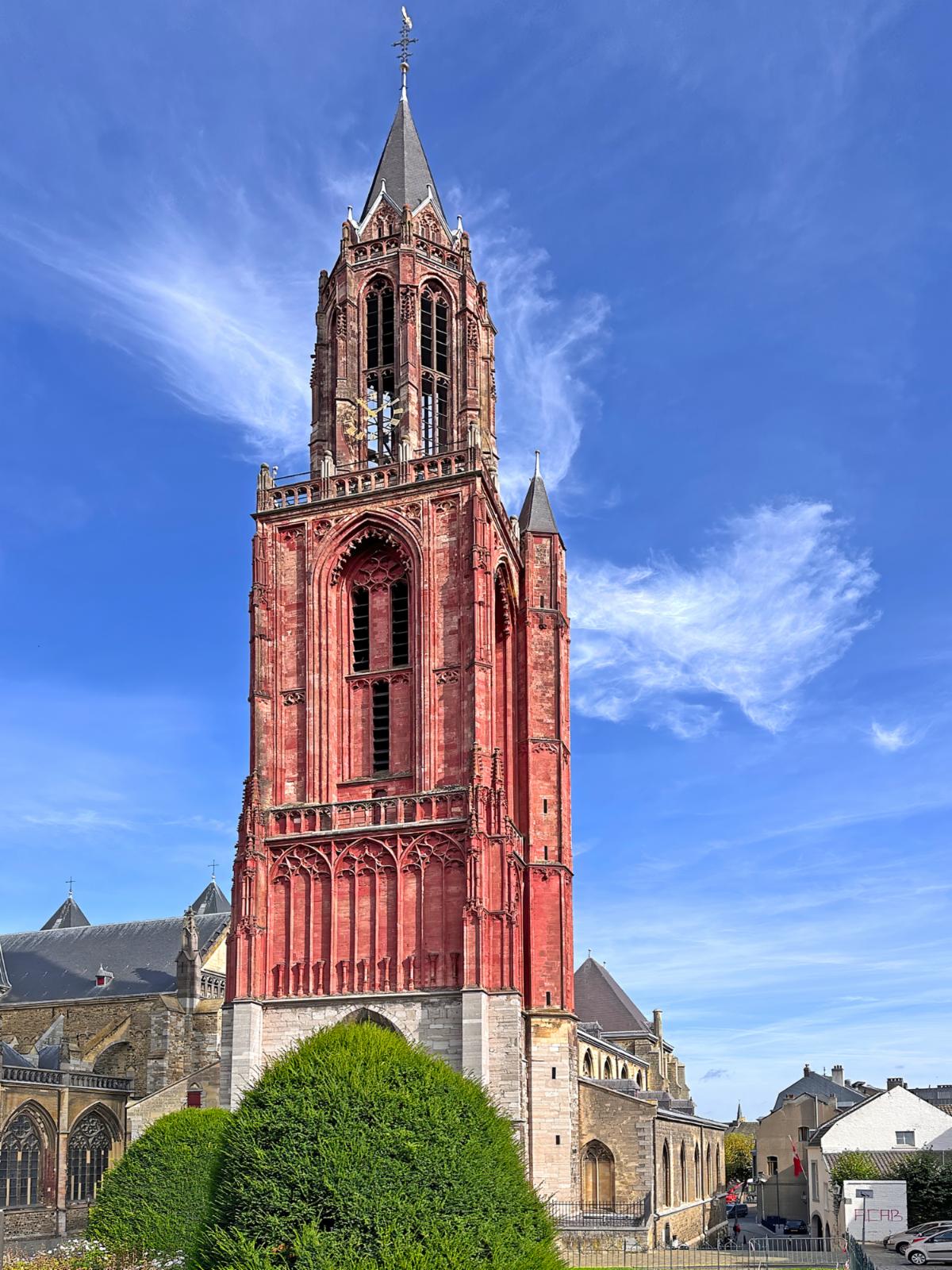
| 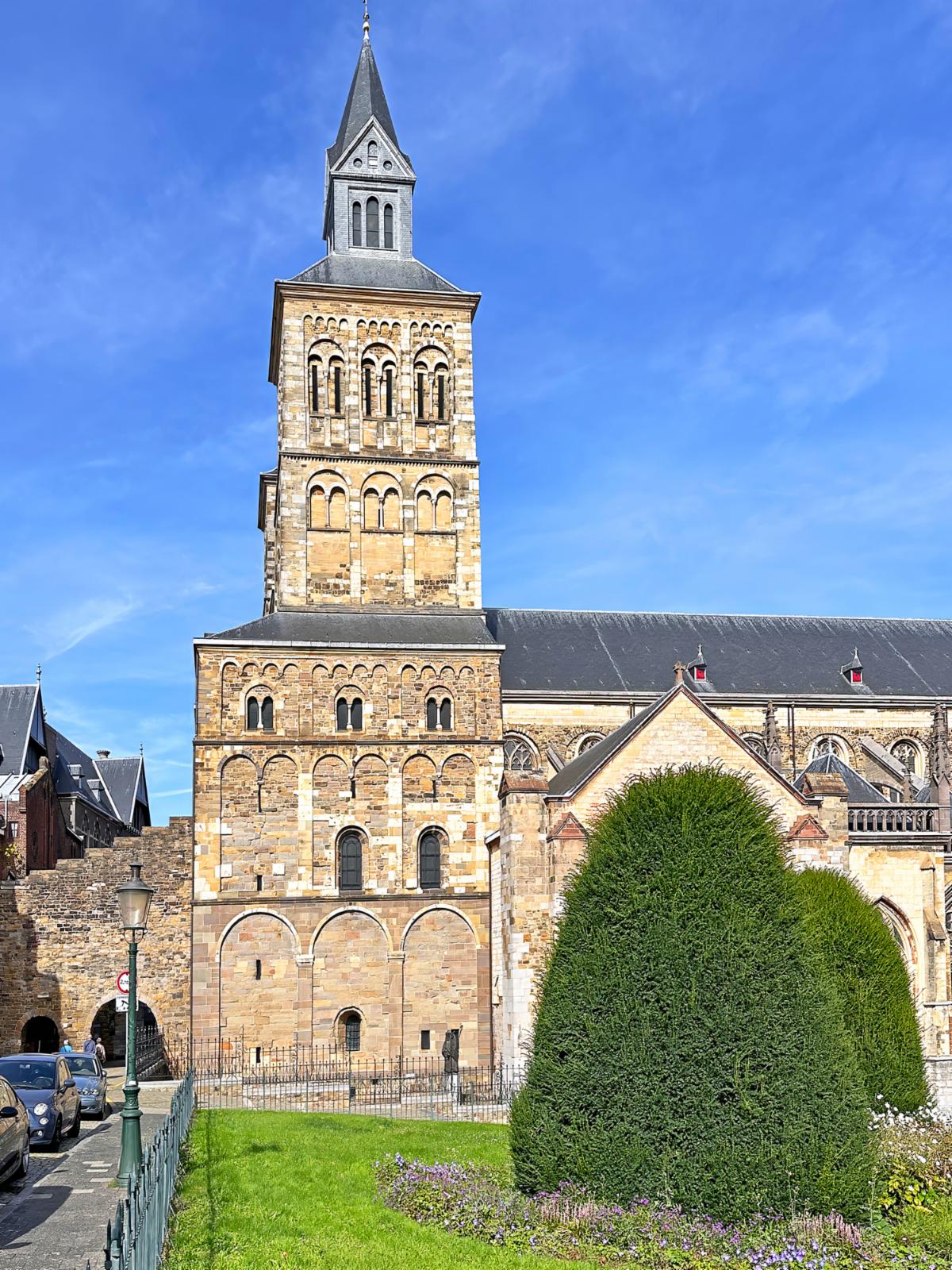 | Basilica of St. Servatius. | A complete three-floor wing of the Cathedral, appropriately called the Treasury, housed many priceless items. For a religion whose founder celebrated the meek and the poor, it sure did amass a lot of wealth. | I have no idea what this gruesome statuette is all about. | The hallway connecting the Treasury to the cathedral hall. | This trio brilliantly performed several Baroque-era fugues. The fugues might have been written by Bach. | Above and below: Different entrances. | Above and below: Not all the riches were located in the Treasury. This golden coffin was on display in the Cathedral hall. I was not able to determine if or who was interred in the coffin. | For the remainder of the afternoon, we biked hither and tither with no particular destination. The medieval architecture is very different from Germany’s version. There are fewer carvings and gargoyles and such. It had its own style of frills - perhaps more angular and plainer. Amazingly, even the plainest exteriors hid the most eloquent shop interiors. These stores were decked out with posh, classy interiors. | The stone arch bridge crossing the River Meuse (Maas River) connects the two halves of Maastricht. | The Gothic-style St. John's (the Baptist) Christian Church is next to the Catholic St. Servatius Basilica. St. John's was completed in 1475. The red color of the bell tower is due to the iron infused in the limestone that was used. | 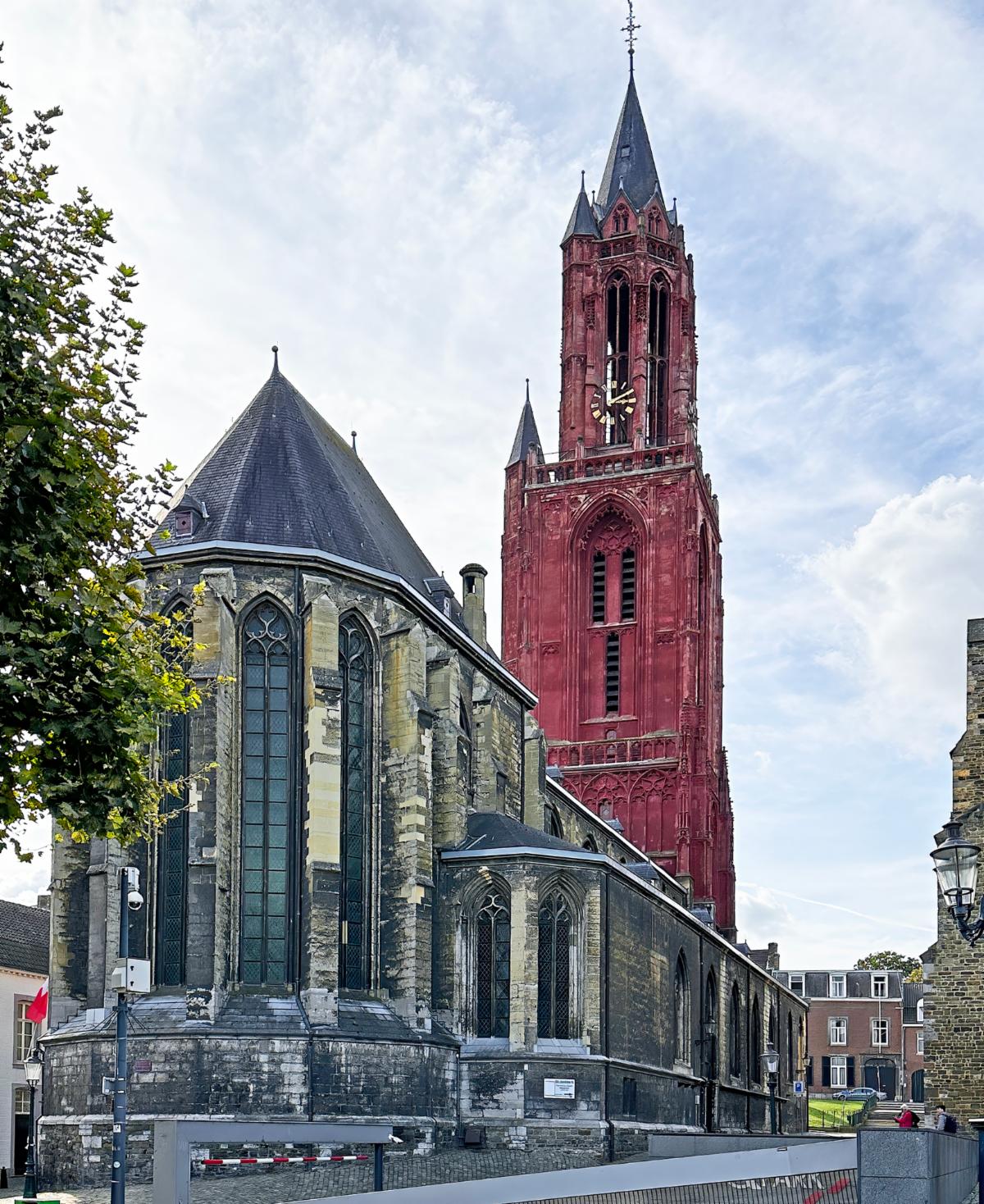 | |
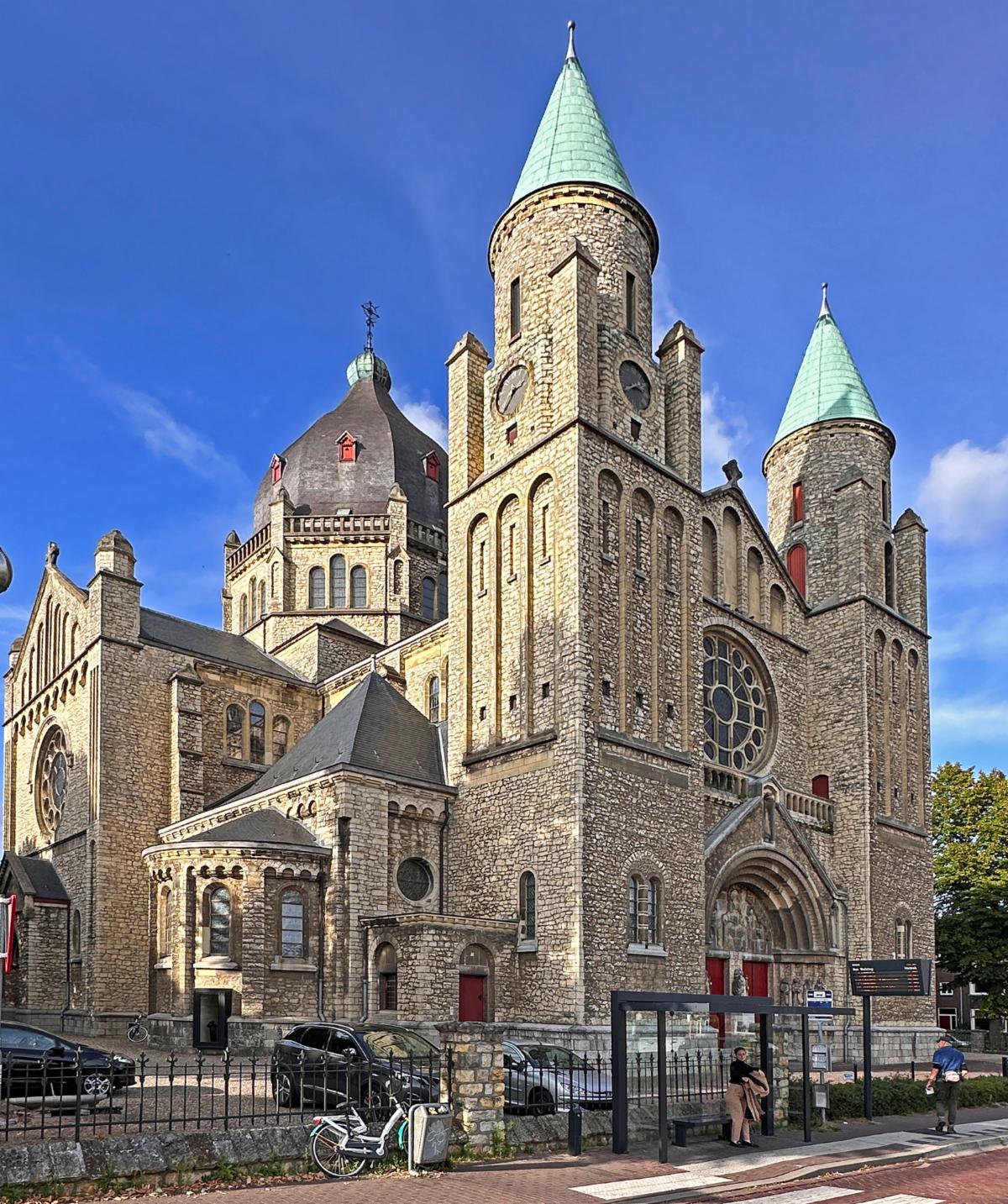
Lastly, we spotted another grand church steeple and headed for it. What we found astounded us. This magnificent building didn't appear to be a church at all. There was no signage, and the building was locked. When I looked into the first-floor windows, I saw technicians in lab coats working with modern lab equipment. I walked all around the building and peeked into the windows. It was all the same.
That piqued my interest, so I looked it up. I discovered that the church is relatively new, completed in 1916. It immediately developed severe structural problems. This is ironic since it utilized more modern construction methods than much older medieval Cathedrals.
The problems were fixed but reoccurred in 1970. Although it was restored again, it was retired as a church. It is now a scientific laboratory, a venue for events, and a private home. That is an interesting mix of purposes.
With its natural reverb, the church's interior would make a great music venue for certain types of music, like Gregorian Chants, Classical Music quartets, and Baroque fugues. However, any electrified music would be, I would think, an acoustic mess. I would love to see how the private residence was set up - perhaps in some Gothic wing of the building.
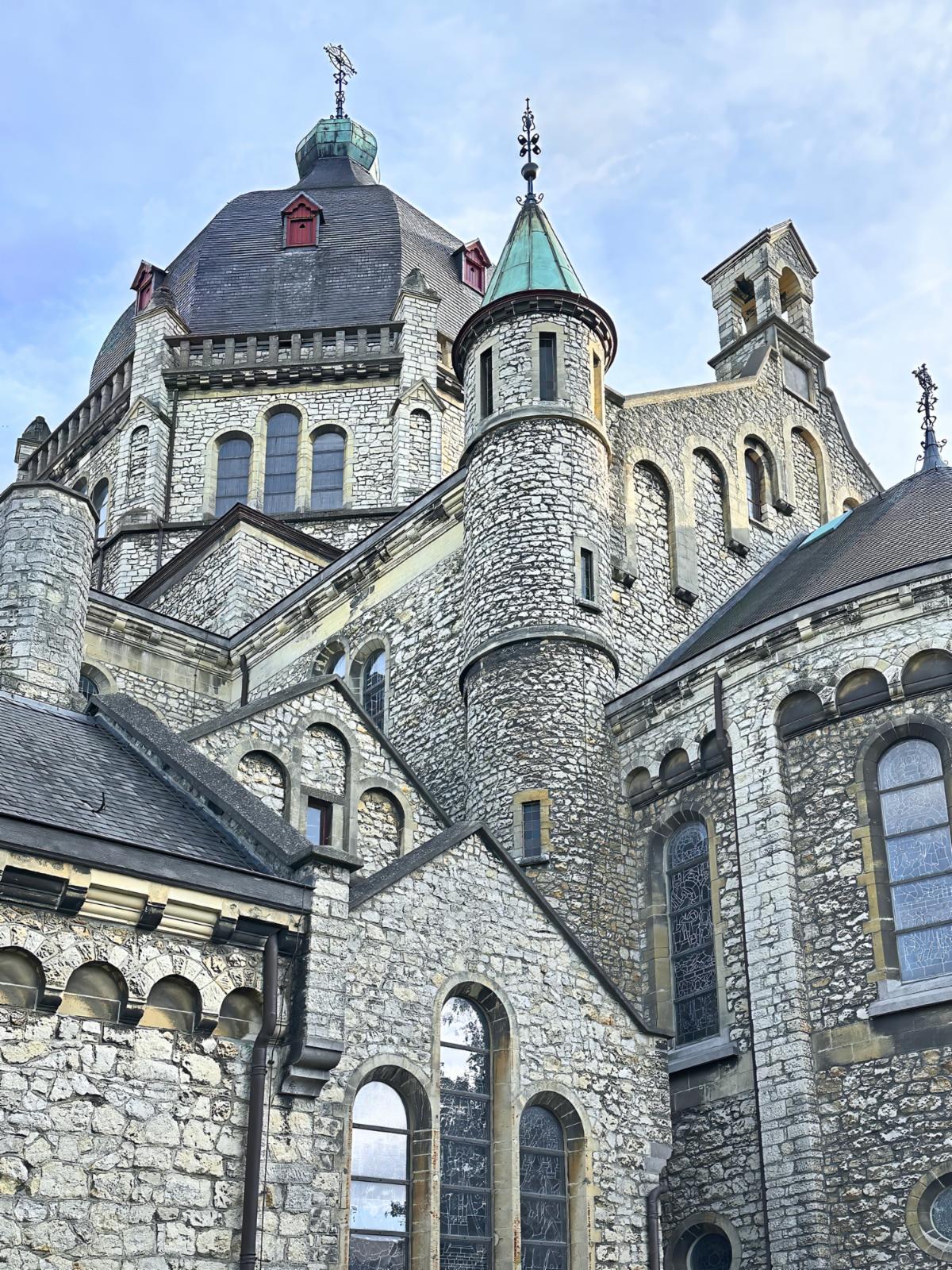
| 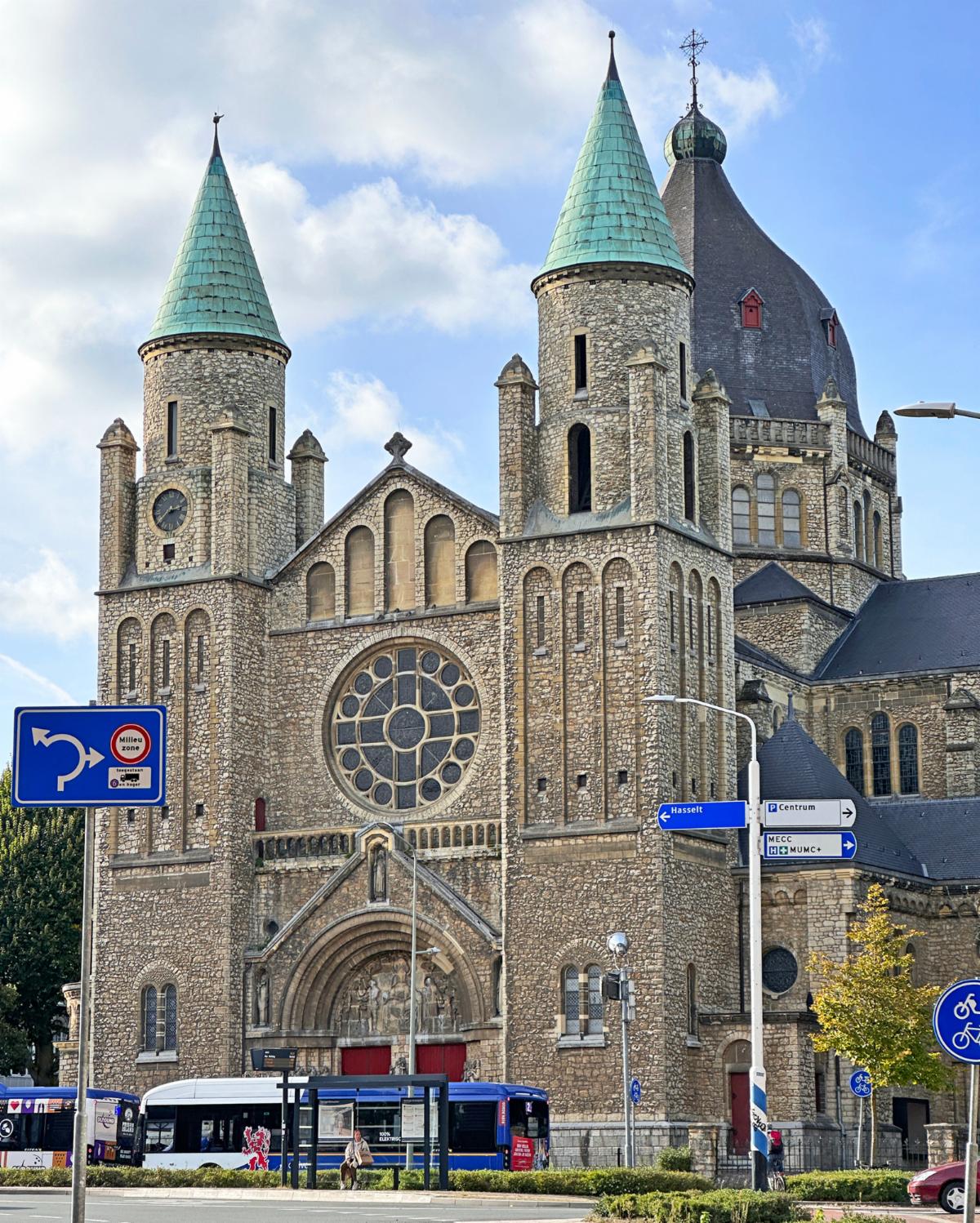 | St. Lambertus has had a problematic history. Completed in 1916, it was a latecomer as far as European mammoth churches go. Sadly, the building immediately developed severe cracks. These were fixed, however, in 1970 they re-immerged. The church was repaired again but repurposed as a research lab, event facility, and a private home. | |
Maastricht is a city with a population of 130,000. We biked in many corners of the city and never saw a traffic jam. With so many people biking, car traffic is kept to a minimum. Many other countries could learn from this example.
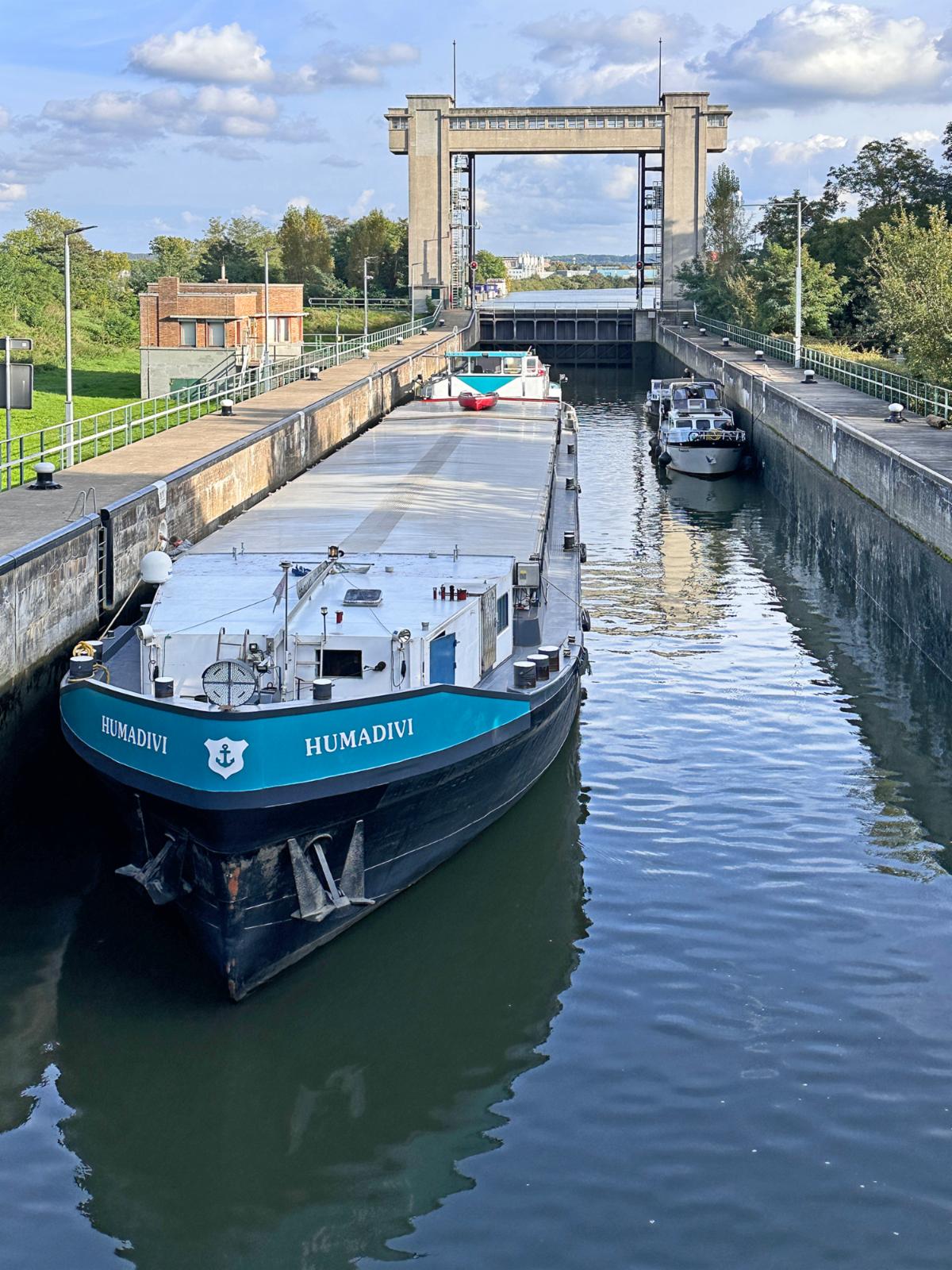
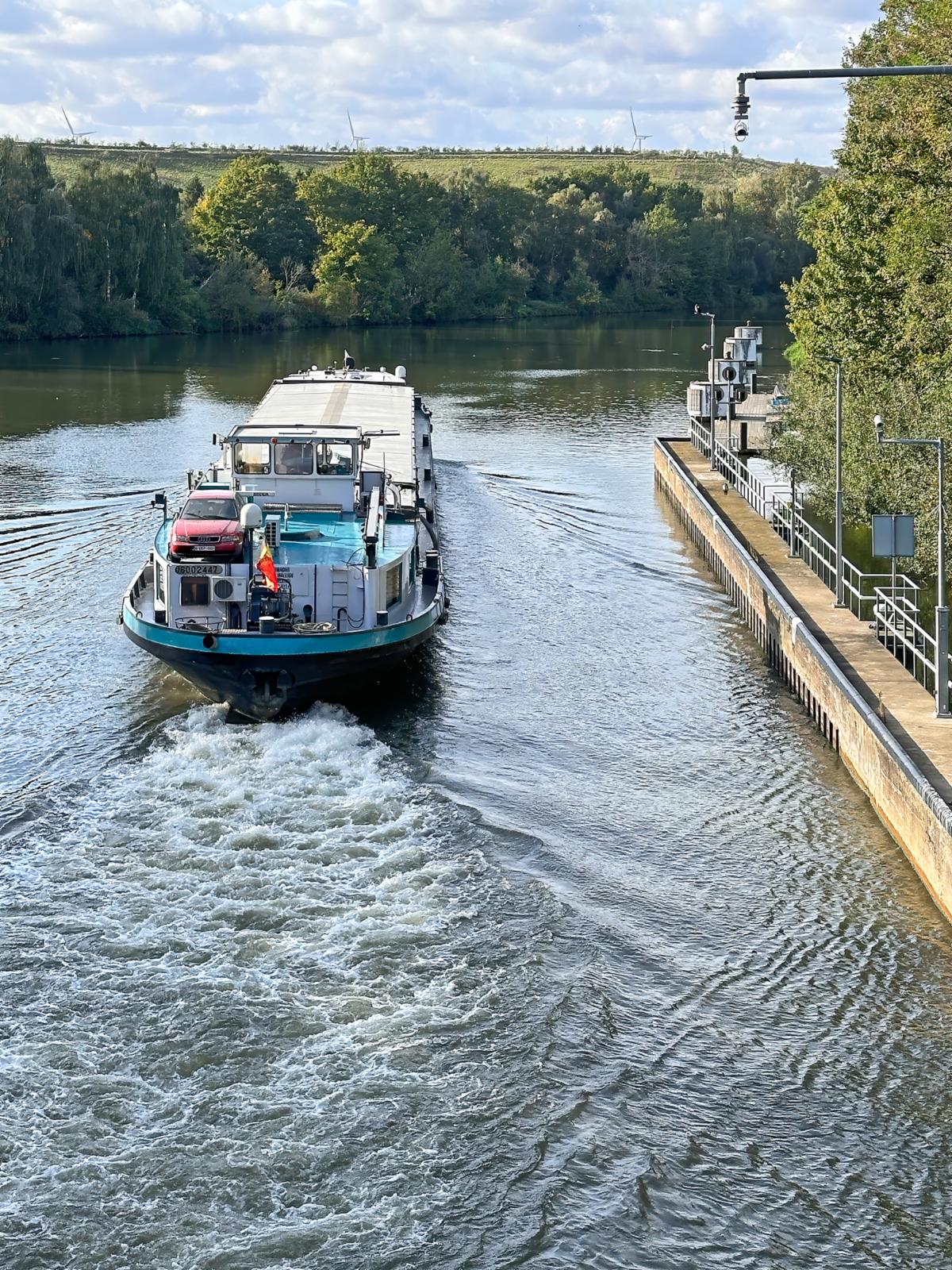
Hundreds of waterways crisscross the Netherlands. On our return bike ride to the RV, we stopped to watch a barge enter a side canal radiating from the main channel of the River Meuse. These are family-owned and operated barges. We watched the wife expertly handle the ropes as the boat traversed the lock.
| |
|
Dave and Wanda
Vaccines: Your ticket to safe world travels.
Virtual Business Card
North America. Europe. Mexico. Asia. Product Reviews. Books & Maps.
We are on an RVing adventure through Europe that could last as long as six months. Traveling with family, we will start in Germany and explore several countries. We are excited to explore all that Europe offers and share our travels with you through this blog.
Share if you know someone who would enjoy tagging along. Please join our email list if you haven't already done so. On the slightest whim, tap 'reply' to this email and drop us a line. We'll get back to you whether you need travel help, have ideas, or just want to say hello.
Please send us your thoughts and any errors we may have missed. We're on the road, and cellular service is intermittent in the remote areas. We are eager to read your messages as soon as we get online.
Message us: 715-252-6664 | 715-252-3326
Email: alloverthemaptravelventures@gmail.com
| | | | |