|
Europe 2023
September 17
Dresden
| |
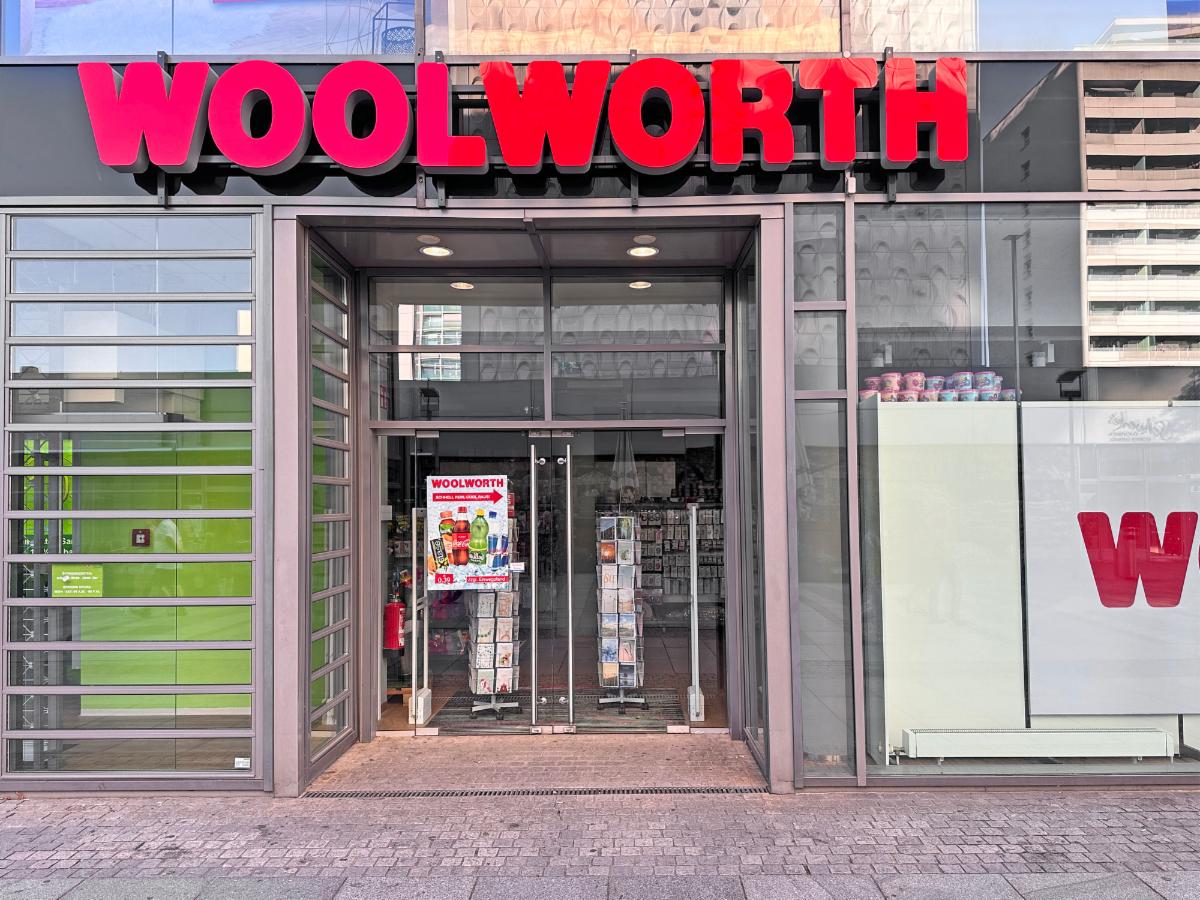
Can you believe that Woolworths is still alive in Germany? | |
|
SUNDAY, SEPTEMBER 17, 2023
DRESDEN
Kurt Vonnegut was one of my favorite authors in my late teens. During WWII, he was captured by the Germans and held in a prisoner-of-war camp in Dresden. He survived the terrible bombing and resulting firestorm of Dresden in February 1945. His iconic book, Slaughterhouse 5, is a Syfy account of the bombing that is bitingly critical of the decision to firebomb Dresden.
Before the war, Dresden was considered one of Europe's most beautiful cities, known as 'Florence on the Elbe.' It was a cultural center for the arts. Because it wasn't a military target, it escaped the Allied bombing campaign. Tragically, with Germany collapsing and only a few weeks left before it surrendered on May 8, 1945, the Allies looked for one more target destined for total destruction. They chose Dresden. The thinking was that destroying such an important center of German culture would break the last bit of will to fight. It usually doesn't work that way. Britain's will didn't break when the Germans bombed London to smithereens in the Battle Over Britain during the Fall of 1940.
Near the war's end, the Allies had perfected the cruel art of firebombing. With a mix of explosive bombs to break things up and incendiary bombs to light fires so terrible that it produced tornados of oxygen rushing in to feed a firestorm so hot that nothing could survive, little did survive. The official death toll of Dresden has been pegged at 25,000 (only people from Dresden were counted, not the travelers passing through. We heard this on the hop on/hop off bus), but many dispute that figure, arguing for a higher number.
When the war ended, Dresden was under Soviet control, who inherited a pile of rubble. Rebuilding under Soviet rule had its own flavor. Soviets weren't always keen on the concept of ornate, but it wasn't nearly as bad as I had feared. Of course, reconstruction sped up in the 1990s after reunification. Today, 73 years later, Dresden is again a beautiful city.
Our tour started with a 20-minute train ride from Pirna to the Dresden Hbf, or downtown train station. We bought a 24-hour group pass, good for up to 5 people, for €27.50. Single 24-hour tickets would have been €11, or €33 for all three of us, so we saved a smidgeon. Again, the trains are a wonder - smooth, quiet, and modern.
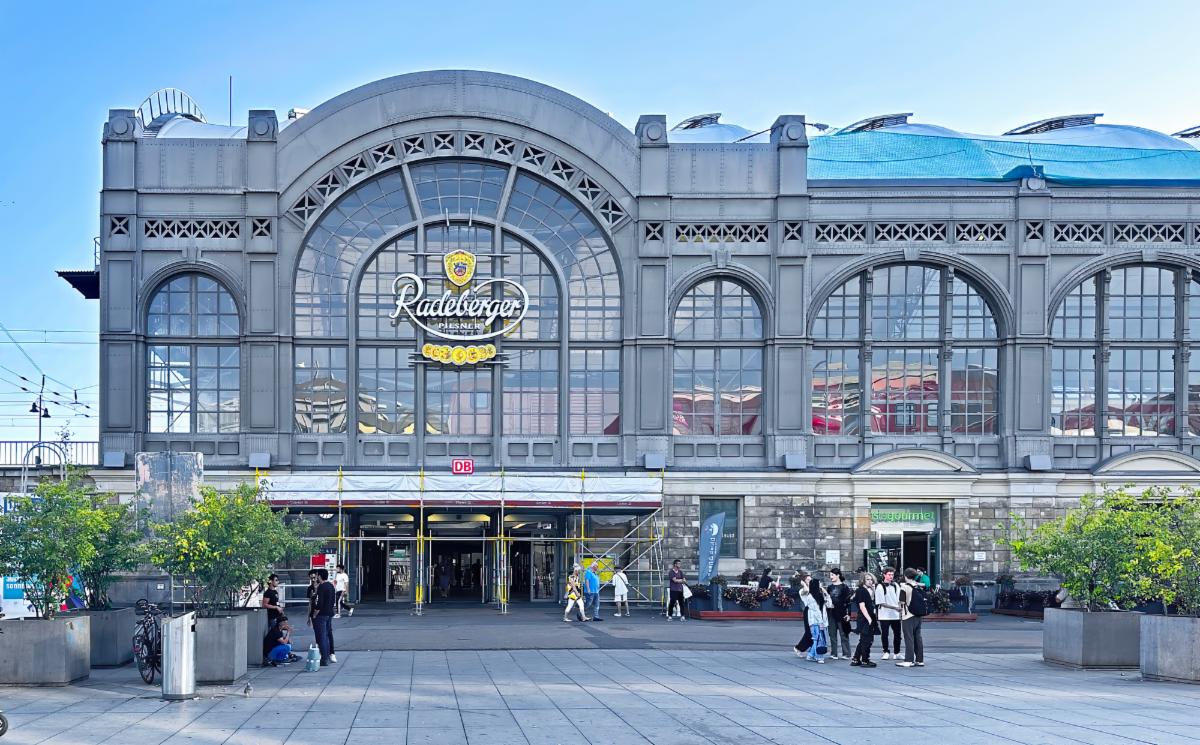
Dresden is a central train hub. The station is cavernous. Besides over 20 tracks and platforms, a small city of shops is under the giant roof.
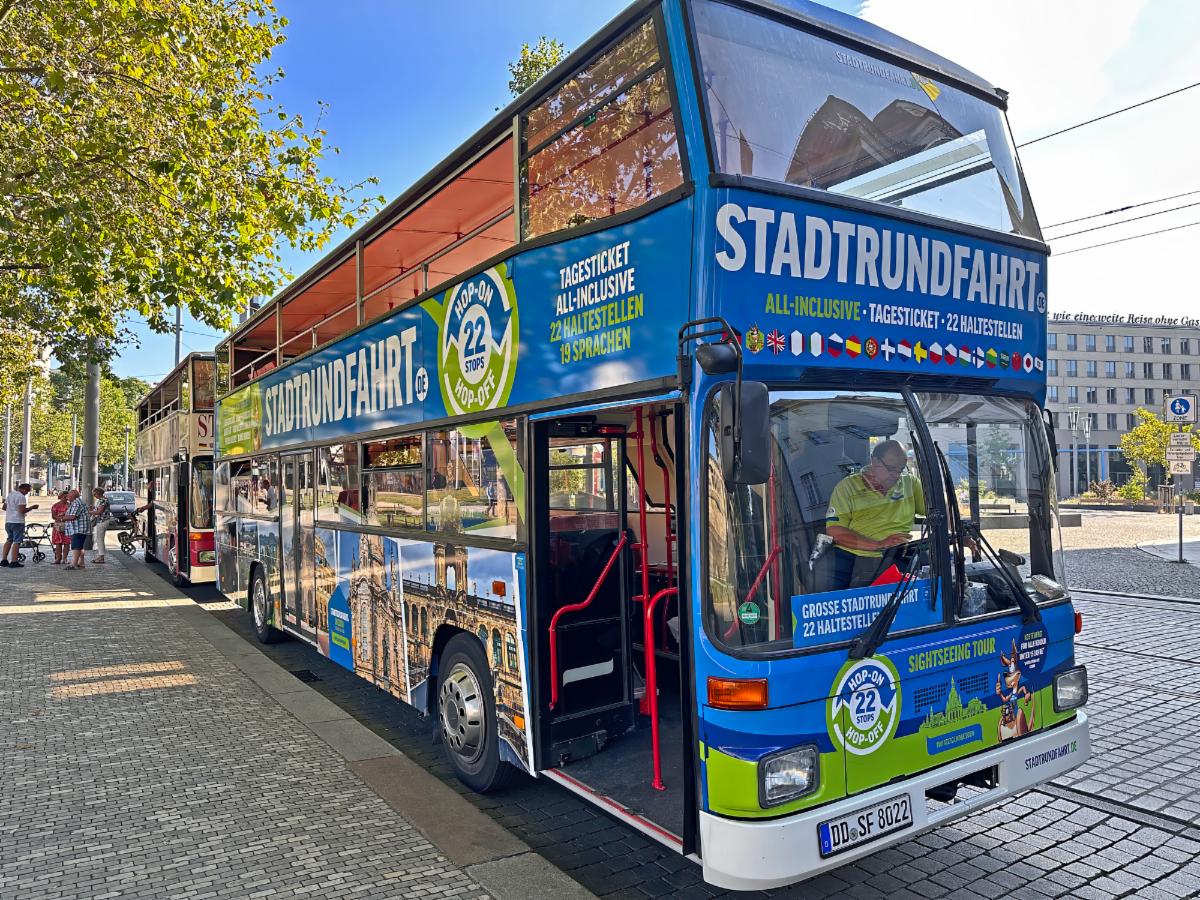
A strategically placed tourist info shop beckoned us in. We learned about a hop-on hop-off bus just a few blocks away. We found the double-decker bus, and a friendly lady sold us all-day tickets for €20 each. We planned to ride once around the circuit and make note of which stops we wanted to hop off when we made a second circuit. We didn't know that the bus route was 1 3/4 hours long. Our first time around chewed up a lot of our precious time. When the bus reached the old downtown area, we took our first hop-off even before we made our first complete loop.
| 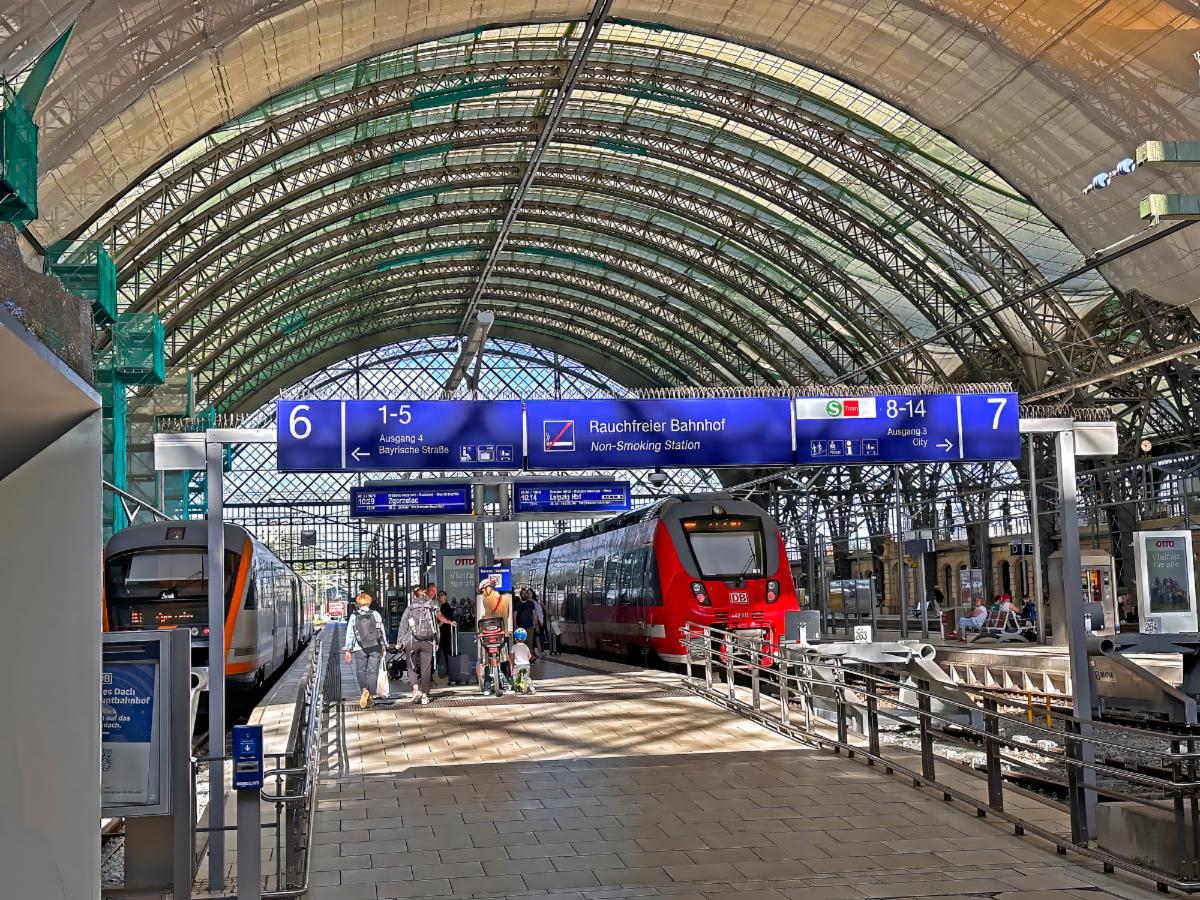 | Above and below: One small portion of the train station in Dresden. | Above and below: Our double-decker hop-on hop-off tour bus. | 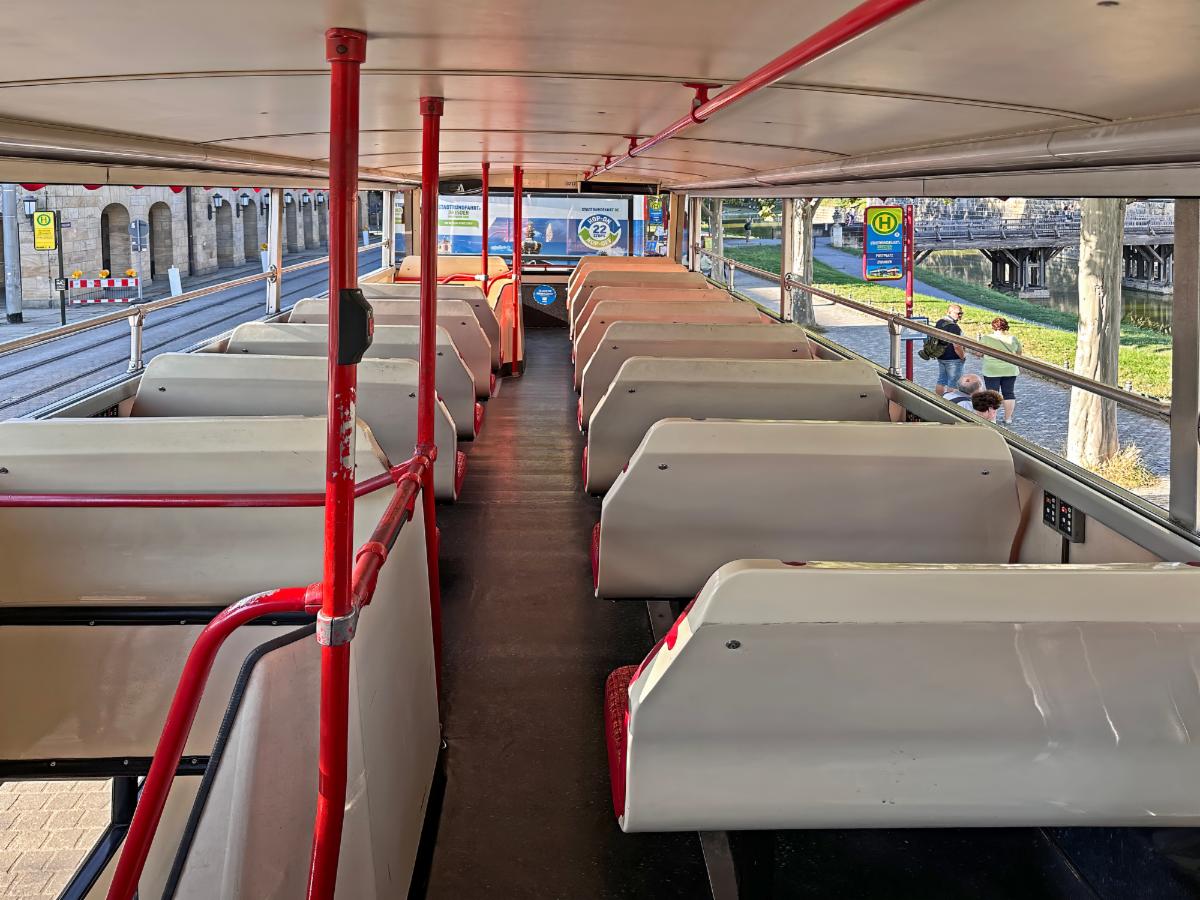 | |
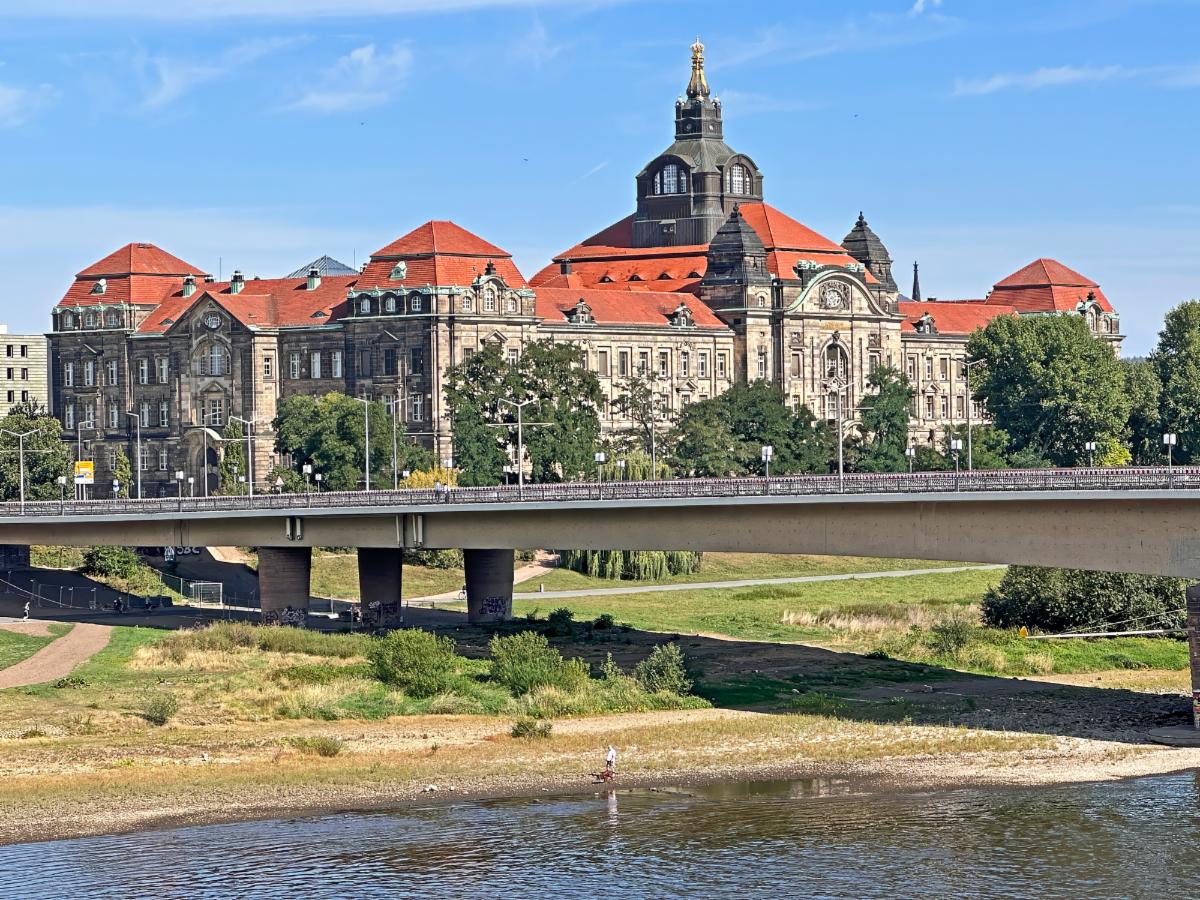
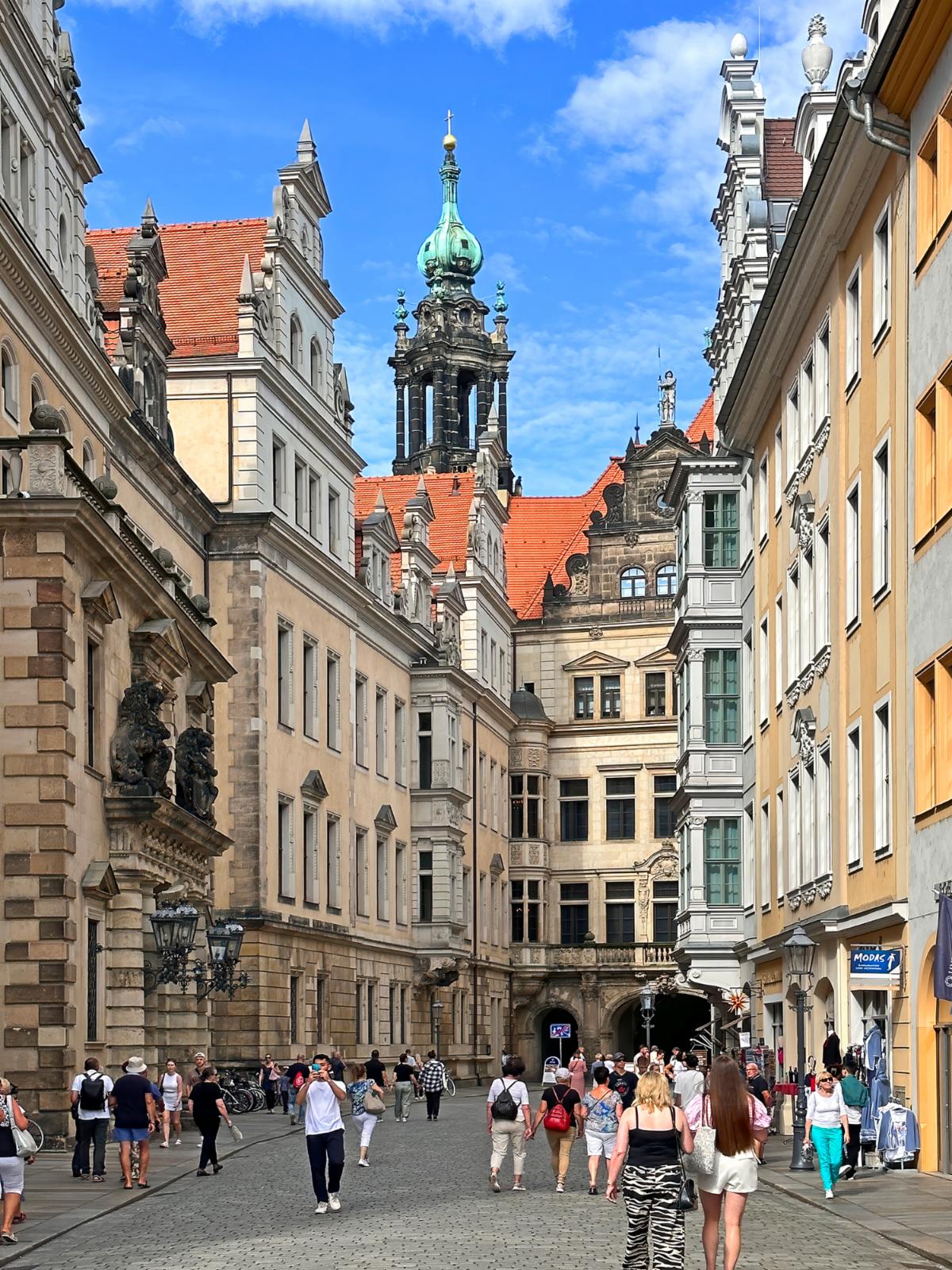
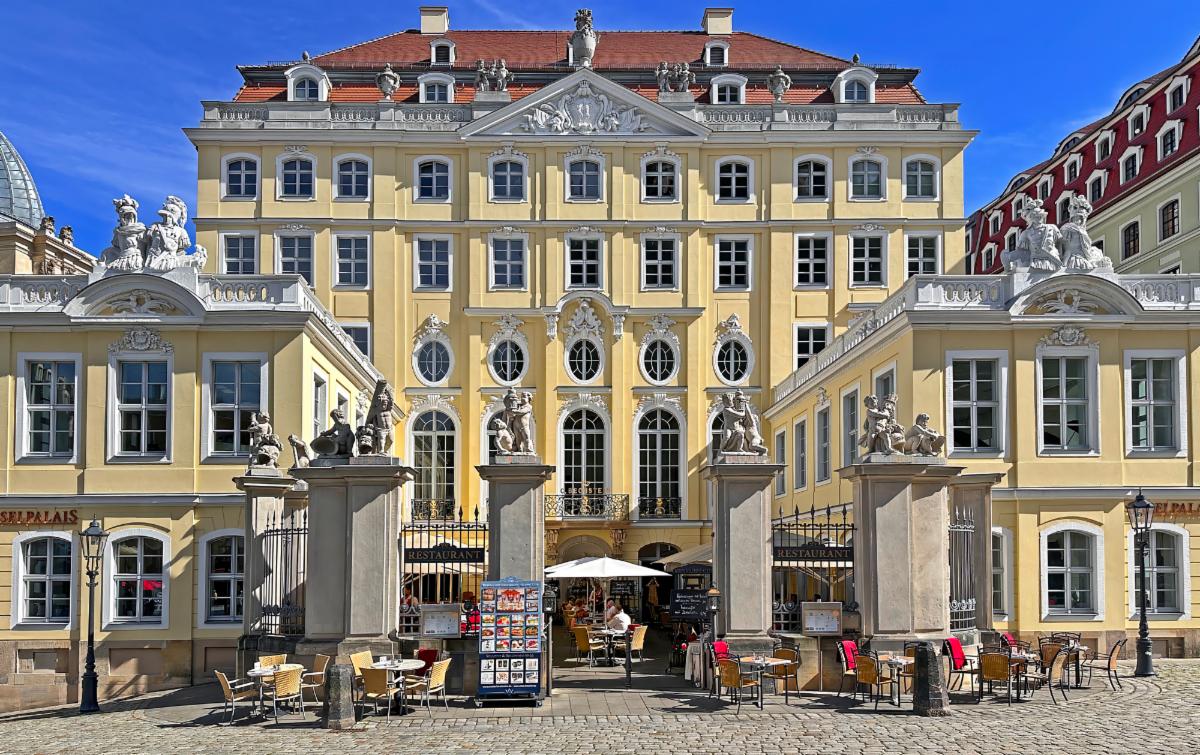
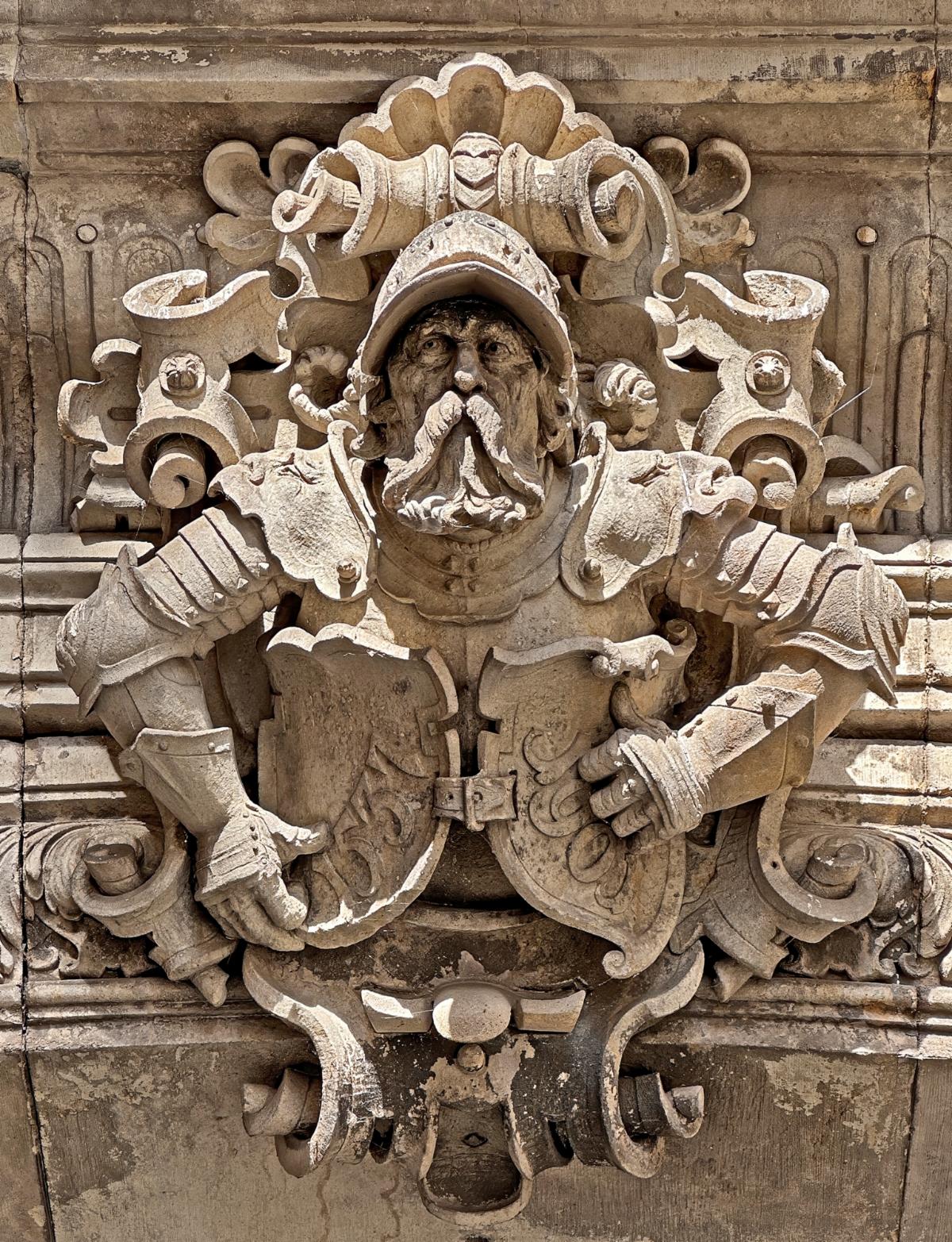
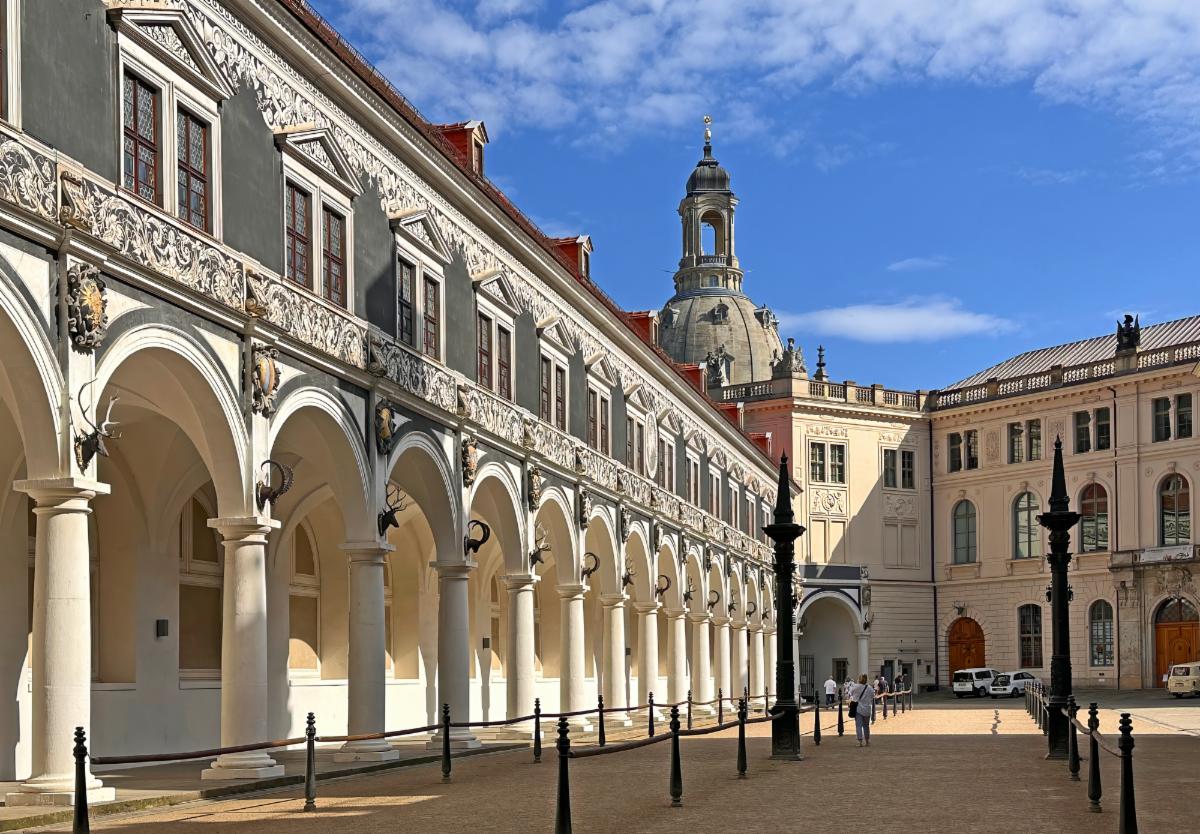
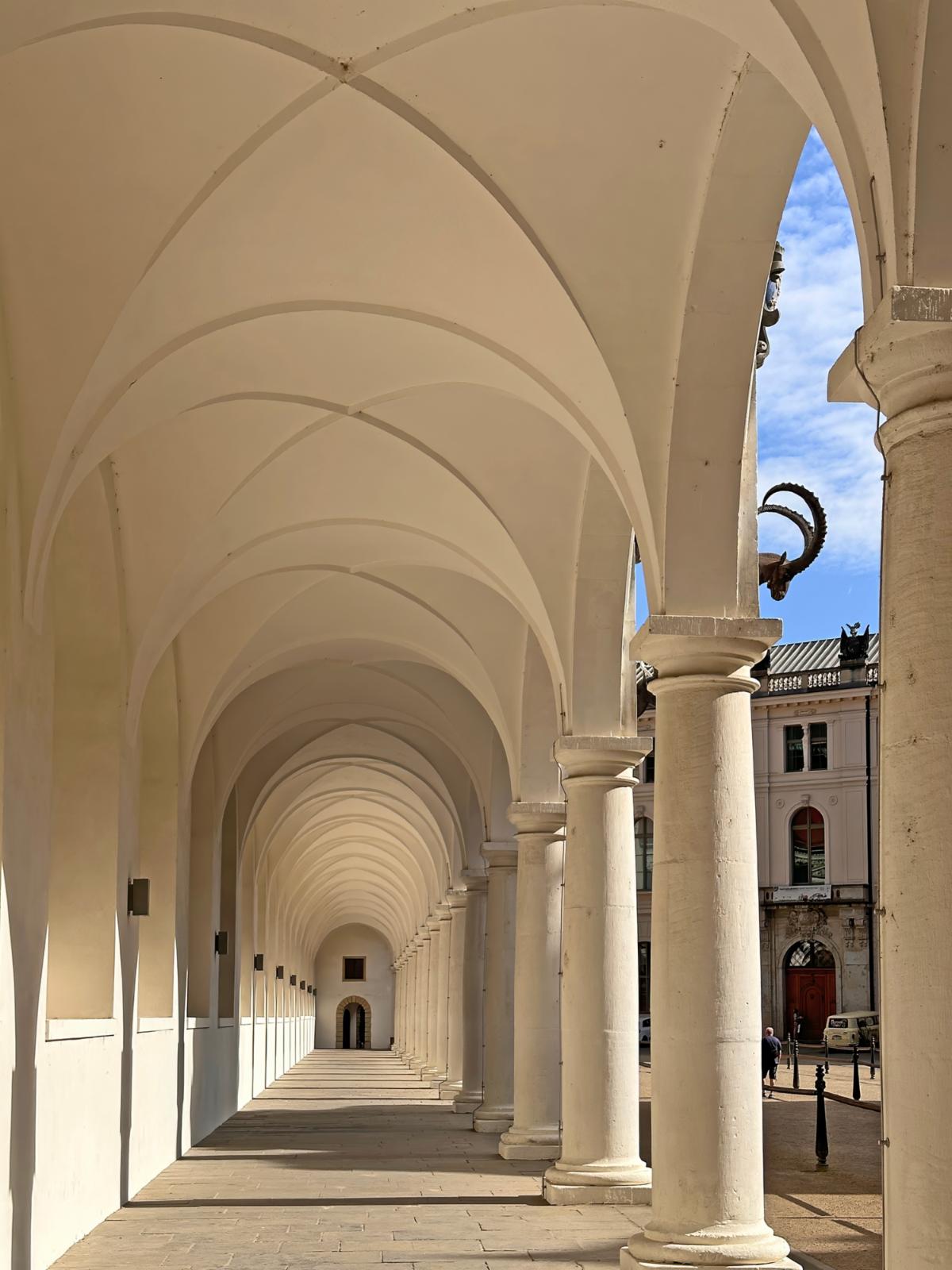
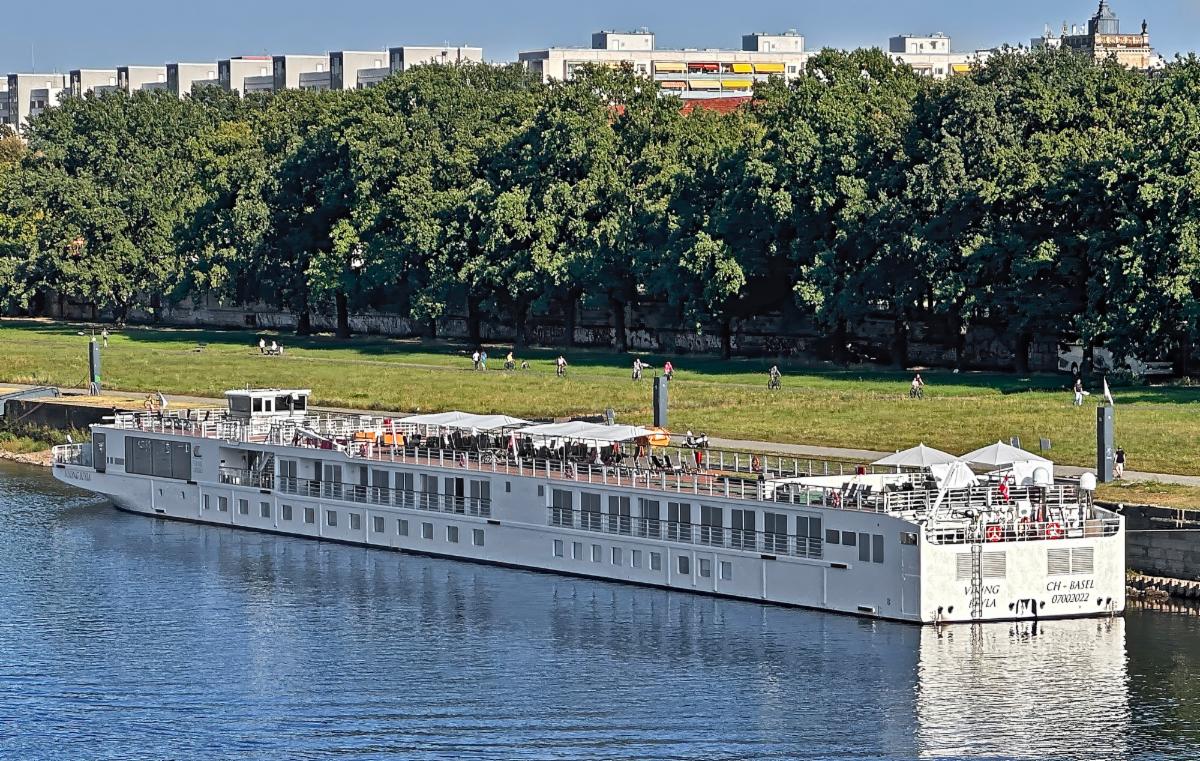
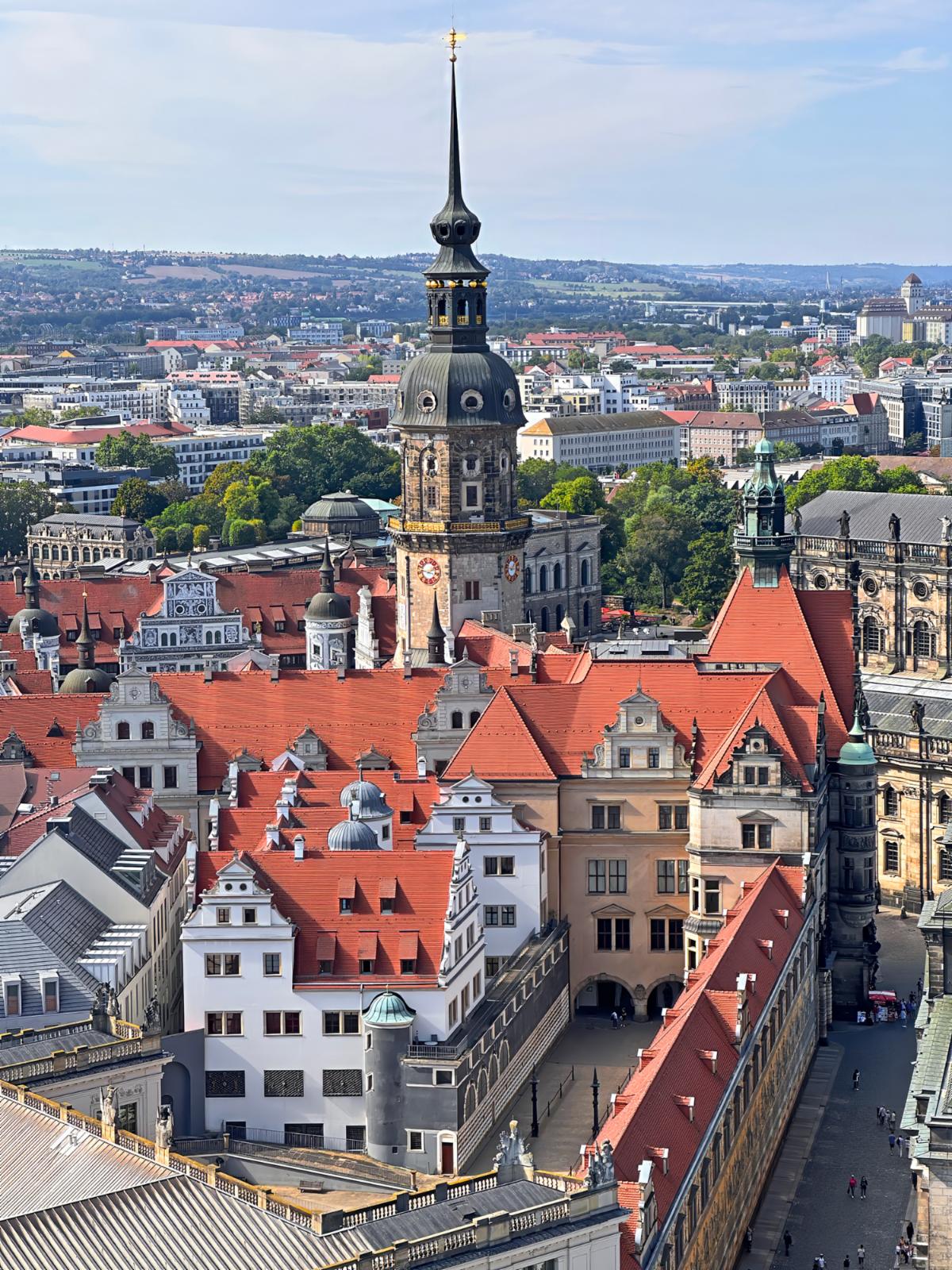
The buildings in the old town were unbelievably gorgeous, imposing, and dominating. Several were topped off with shiny gold accents. Gargoyles and mythical figurines and statues were everywhere. The Elbe River dissects the city, lined with multiple side-paddle steamboats and one incredibly long Viking river tour boat.
We stumbled across a tourist attraction called the Dresden Experience that sounded enticing. It was a hefty €12 each, so we expected quite an experience. We took an elevator down to dark basement quarters. We were provided with earphones to hear the program in English. The basement had several corridors with numbers painted on the floor. We were to stop at each number and wait for the program to give us our experience.
OK, so far, so good. At our first stop, a slide projector projected a picture of a figure. In our headsets, we heard that this guy had been murdered and was going on a quest to figure out who killed him. So, who was this guy? I was never sure. In fact, I was never sure when we were supposed to move to the next numbered spot.
Each spot was similar. A picture was projected on the wall, and a vague story unfolded and rambled. There was a guy in a dungeon begging for release. A guy writing complex formulas on a blackboard and babbling about porcelain. Another guy rambling on about motes and short, thick walls. There was a fancy ball with ladies eyeing up the men. Through all this, we were never told who killed the guy. Instead, we were told to go on some website to see who it was.
The best part of the entire Dresden Experience was our final stop - the toilets. Like all German public bathrooms, the bathrooms were a work of art: gleaming porcelain and shiny tiles. We laughed at how the most impressive part of the program was the pit stop.
I suspect that the central figure in the program was Augustus II the Strong (1670 - 1733), who was the Elector of Saxony. At the time, Saxony was an electorate, or territory, of the Holy Roman Empire (1356 to 1806). Dresden was the center of Saxony, and Augustus II led Saxony from 1694 to 1733. He was also the King of Poland from 1697 to 1733 (with a three-year interruption from 1706 to 1709).
He was a man of luxurious tastes and greatly embellished Dresden with art and architecture. One of his most famous accomplishments was rescuing the alchemist Johann Friedrich Böttger. Böttger bragged to the king of Prussia that he could conjure up gold. Of course, he couldn't and had to flee Prussia. Böttger did figure out how to make an especially fine grade of porcelain. Due to Böttger's efforts, Dresden became famous for its porcelain. I didn't learn any of this from the Dresden Experience. I looked it up later.
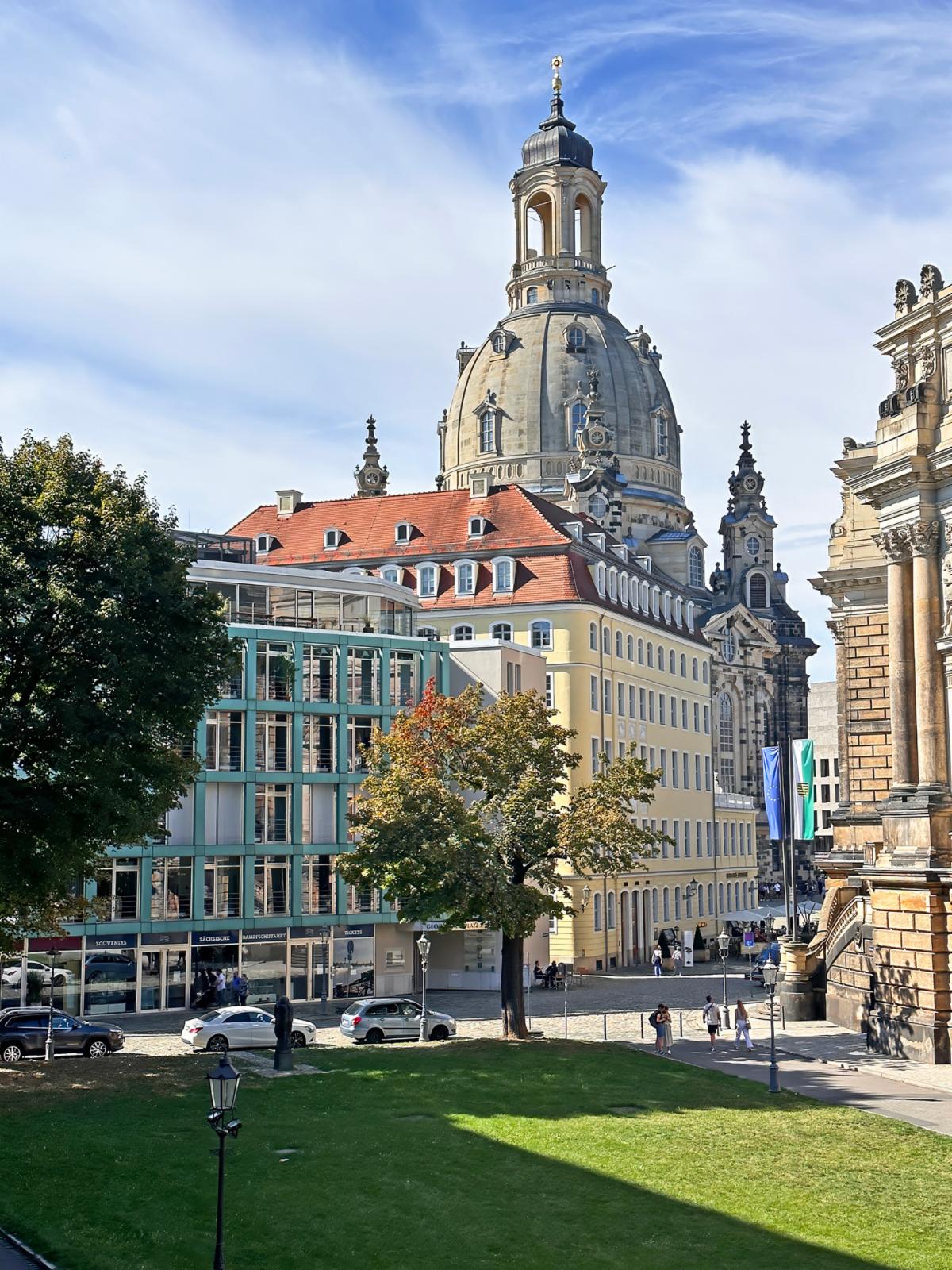
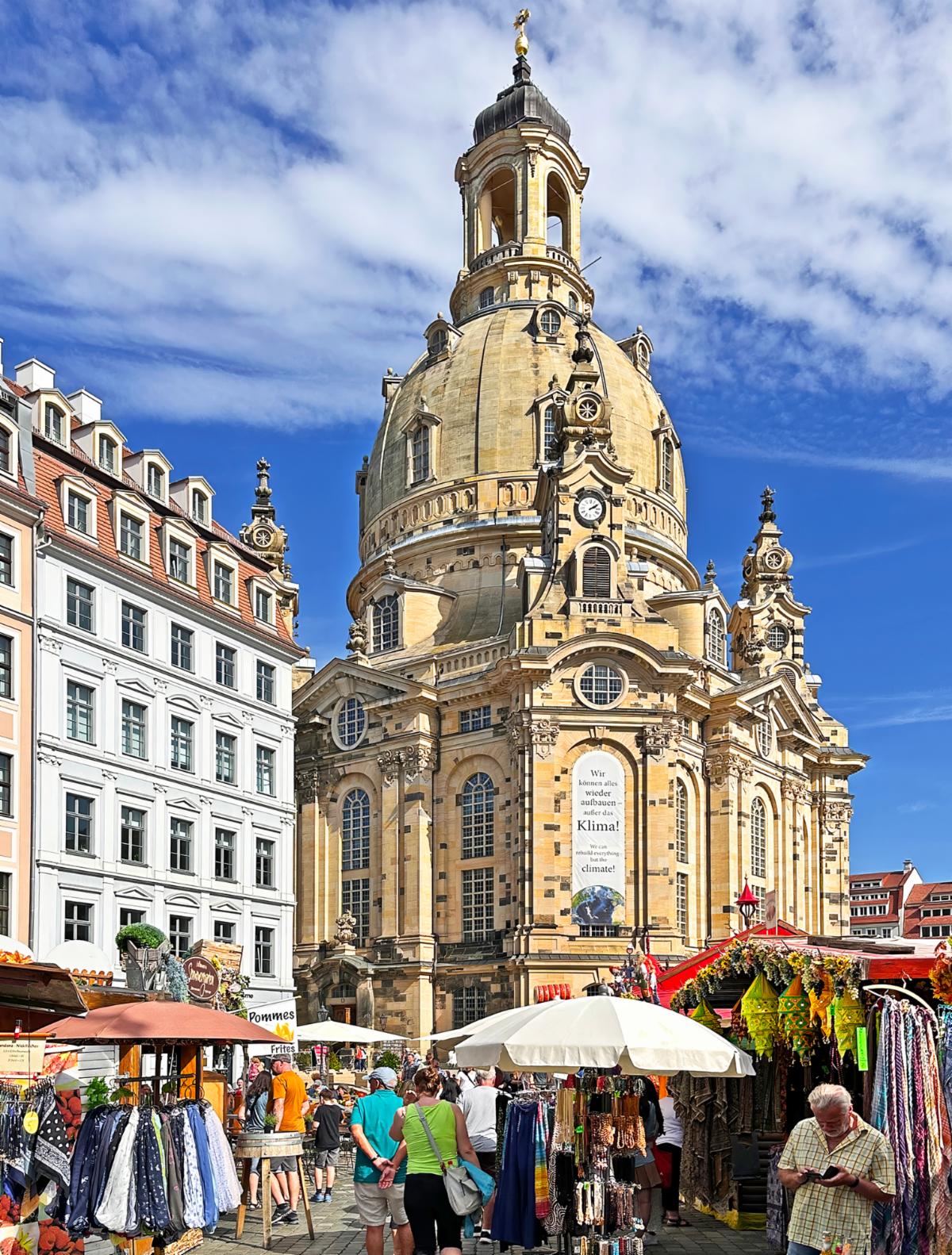
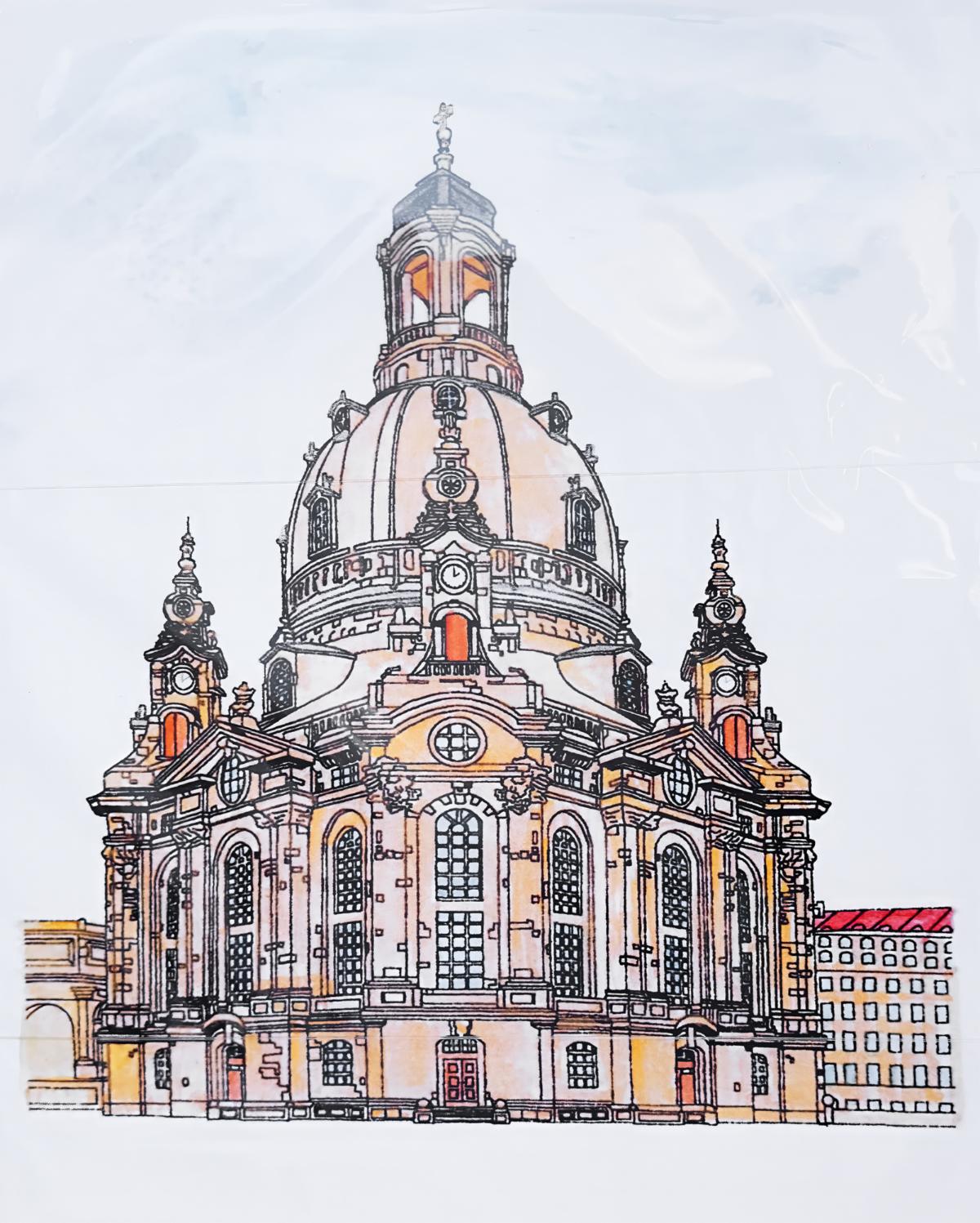
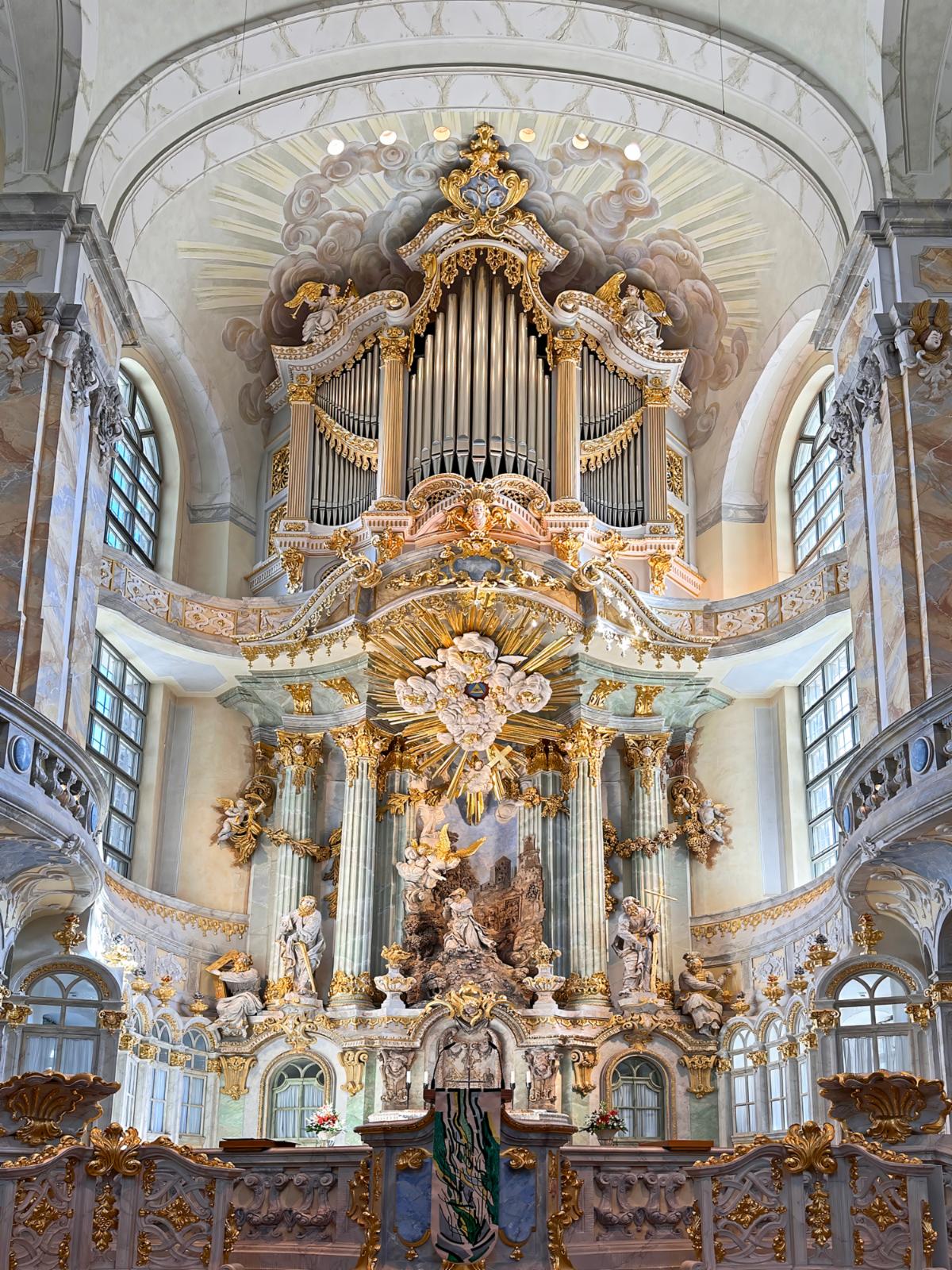
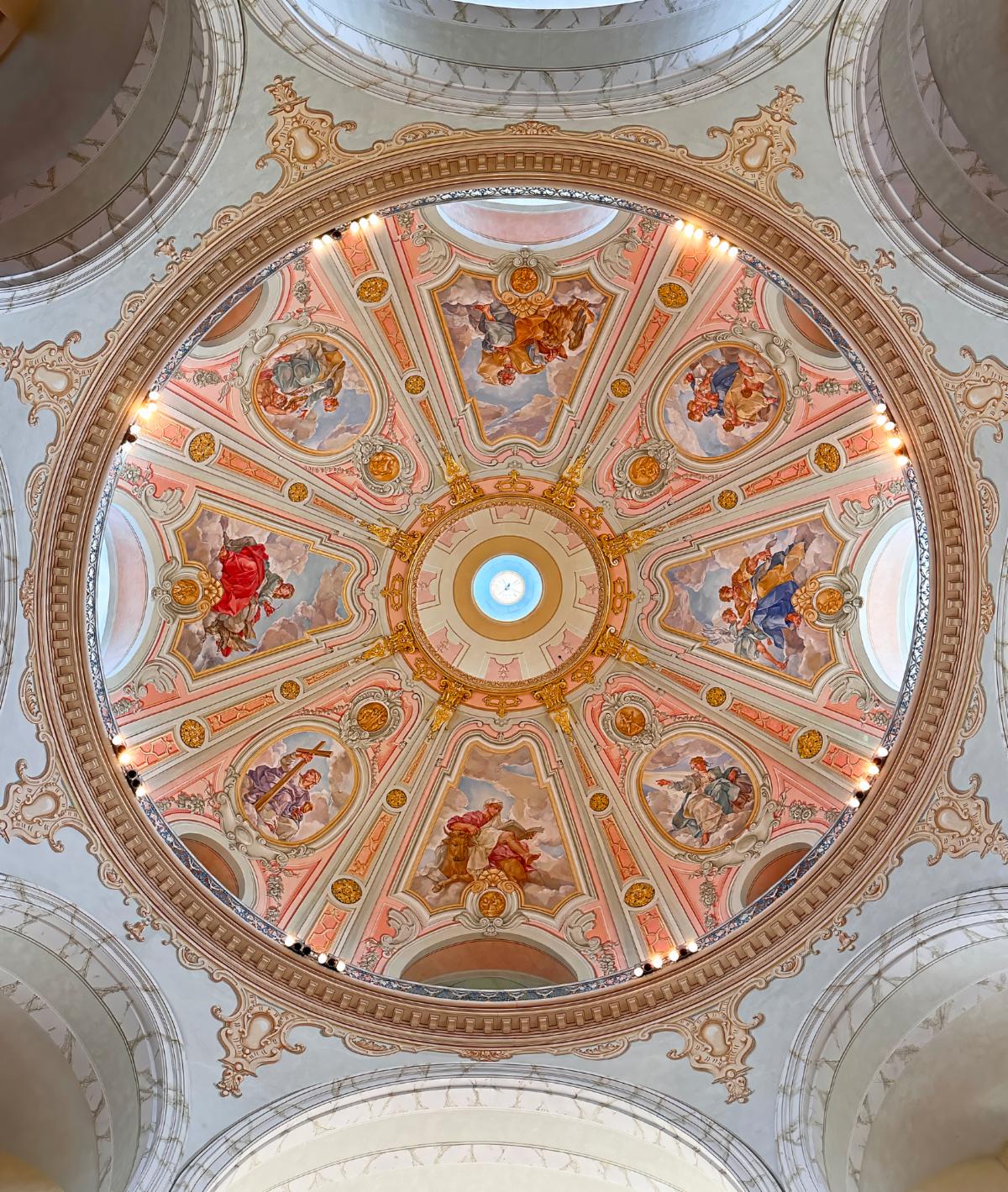
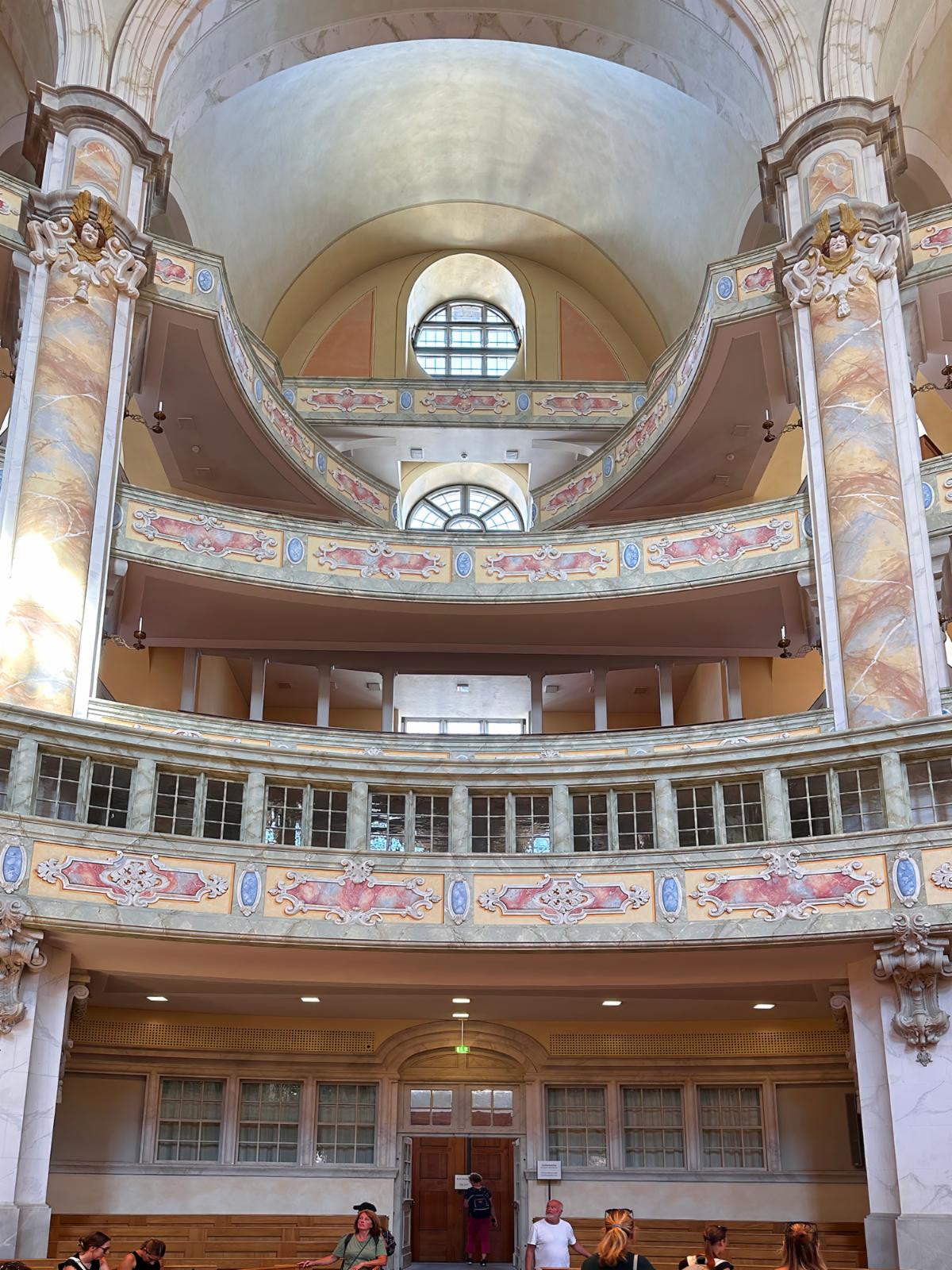
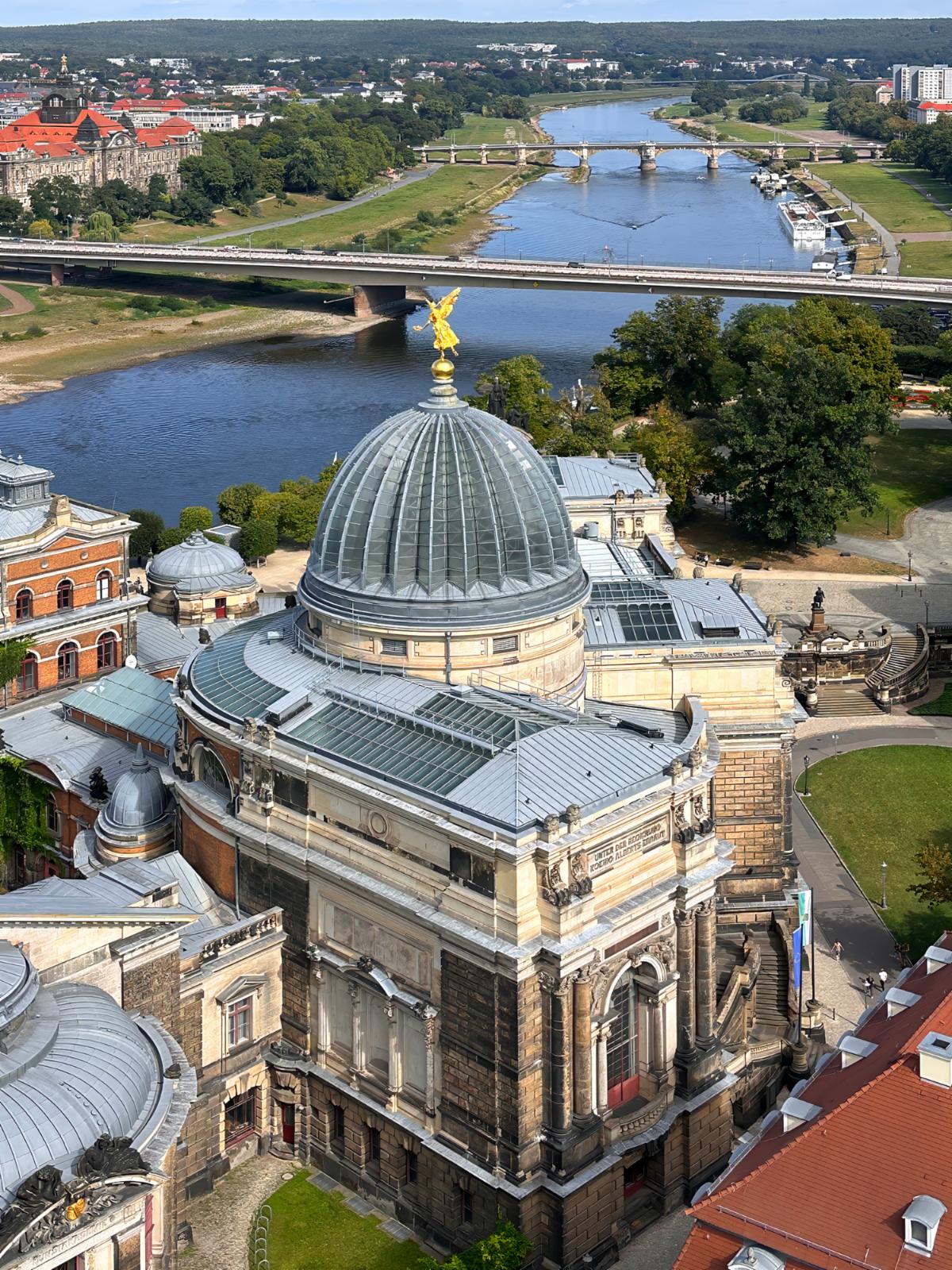
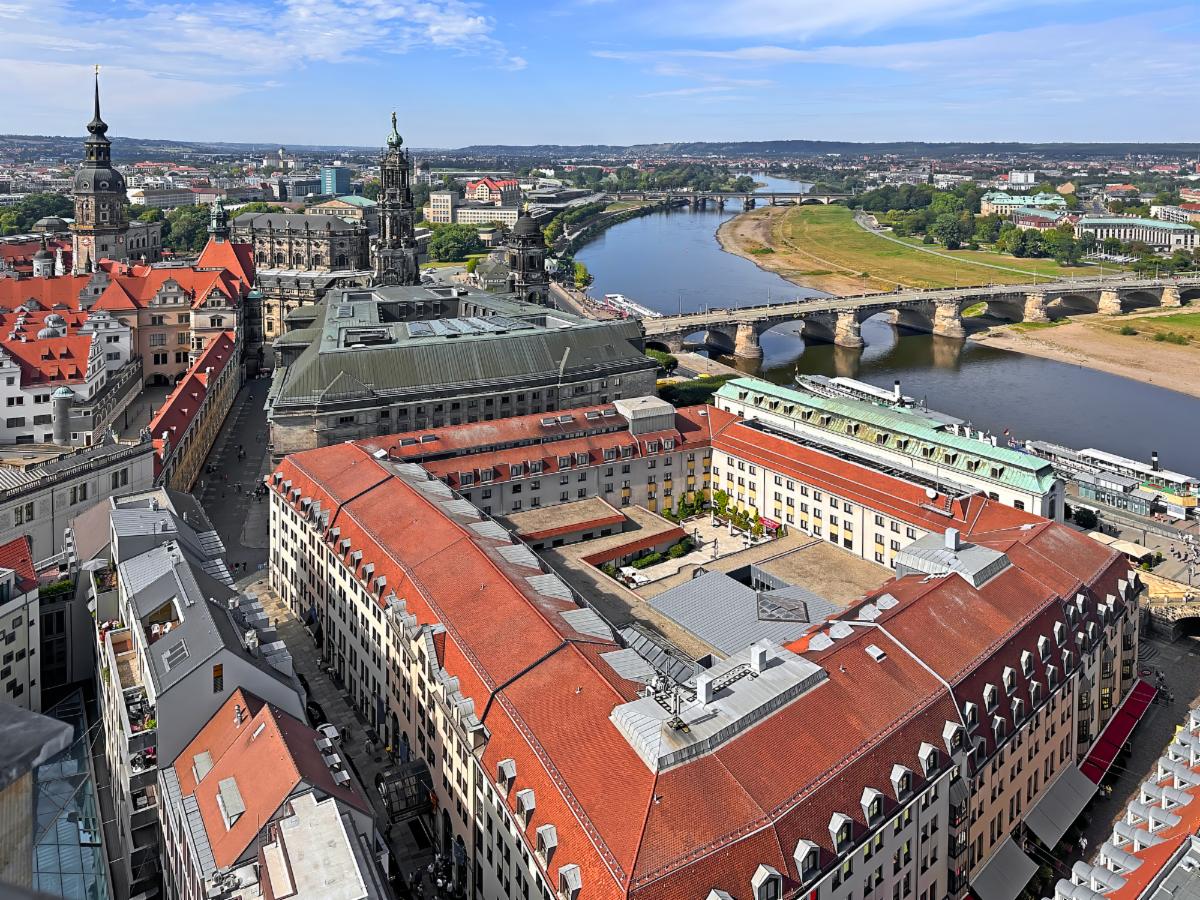
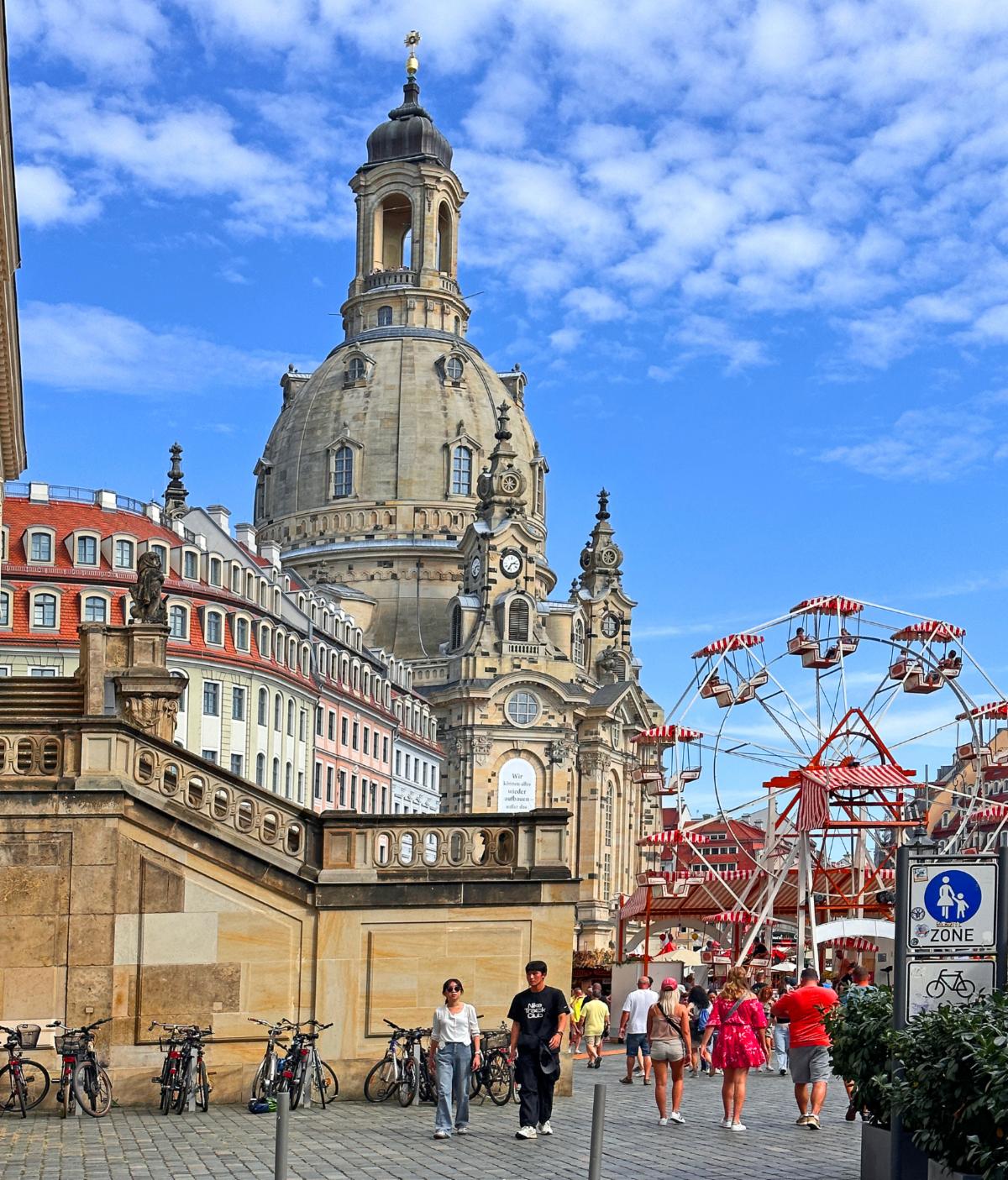
Any, things picked up from there. We toured the Frauenkirche, a Lutheran Church bombed to rubble and only rebuilt after Germany reunified. It is a beautifully ornate building with creamy pink decorations inside. It looked a lot like an opera house. I spent €10 for the privilege of huffing and puffing my way up the bell tower; only there weren’t any bells. But there was a million-dollar view to take in.
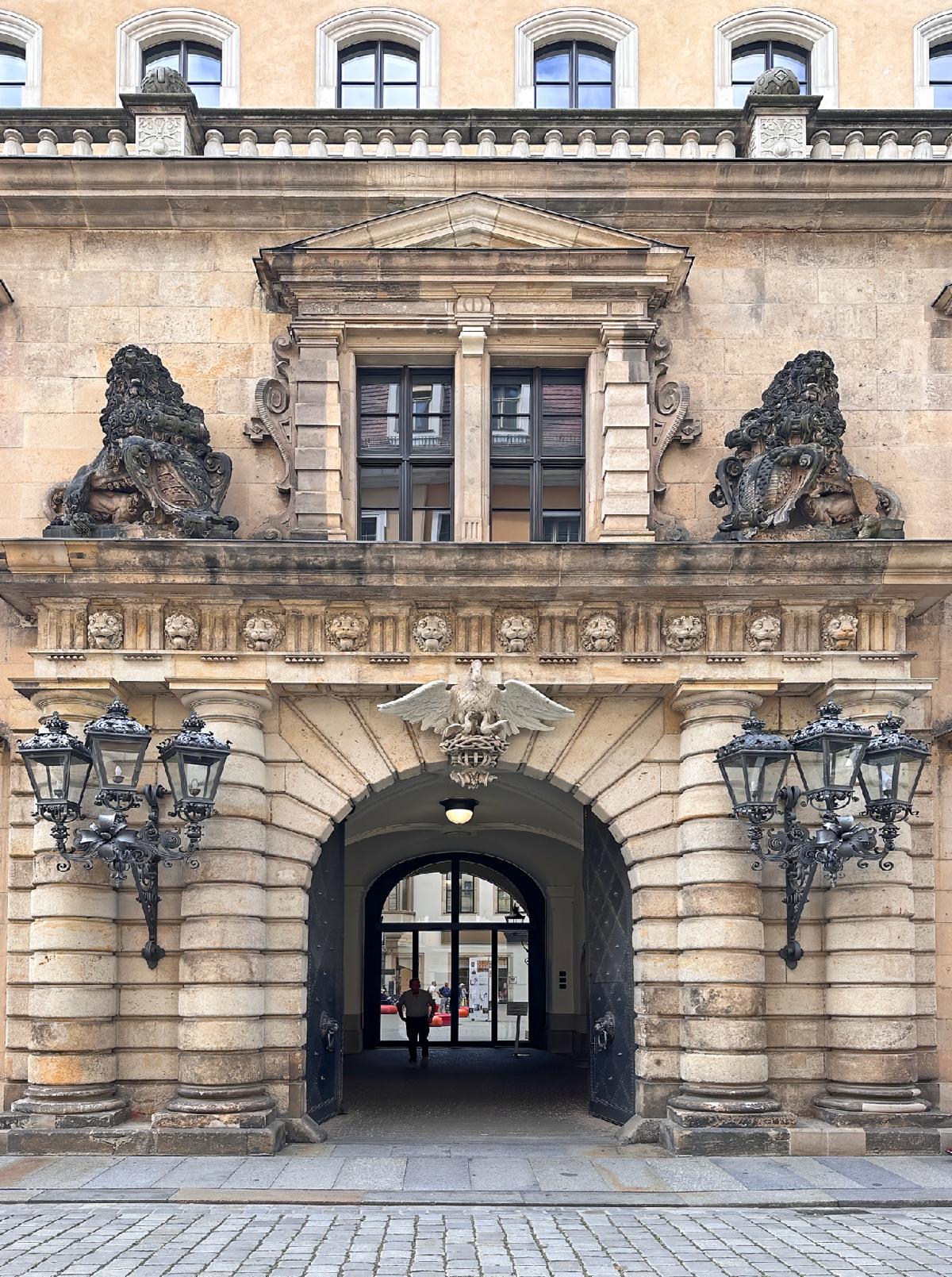
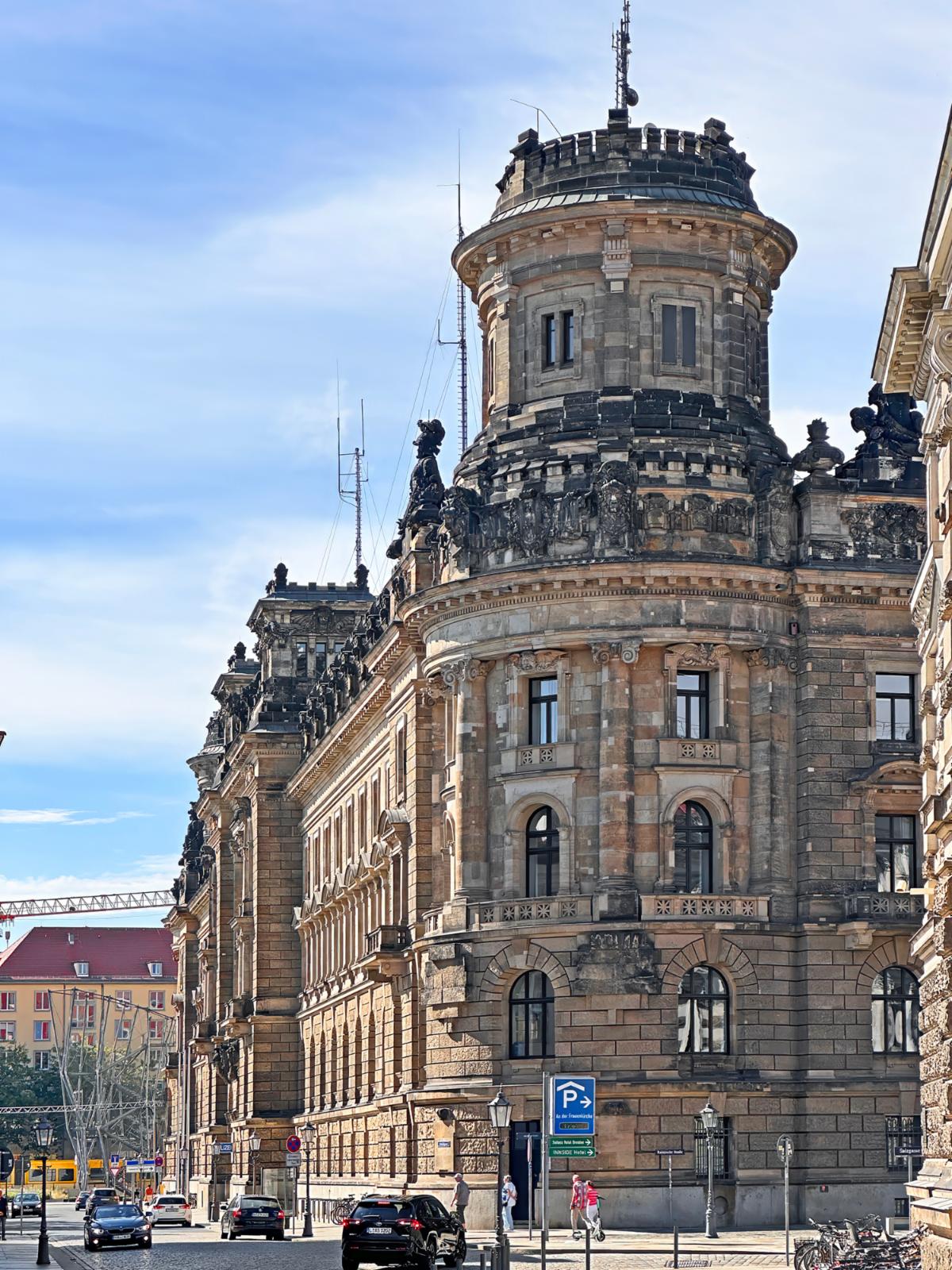
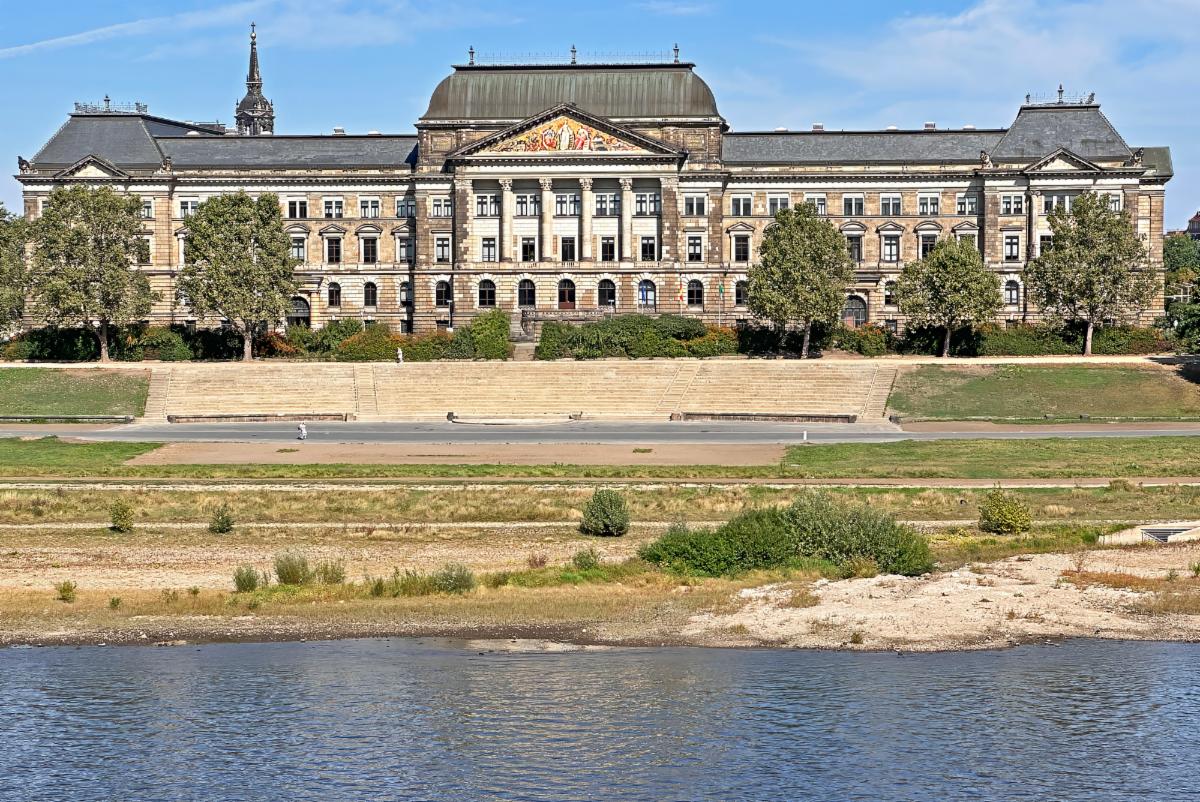
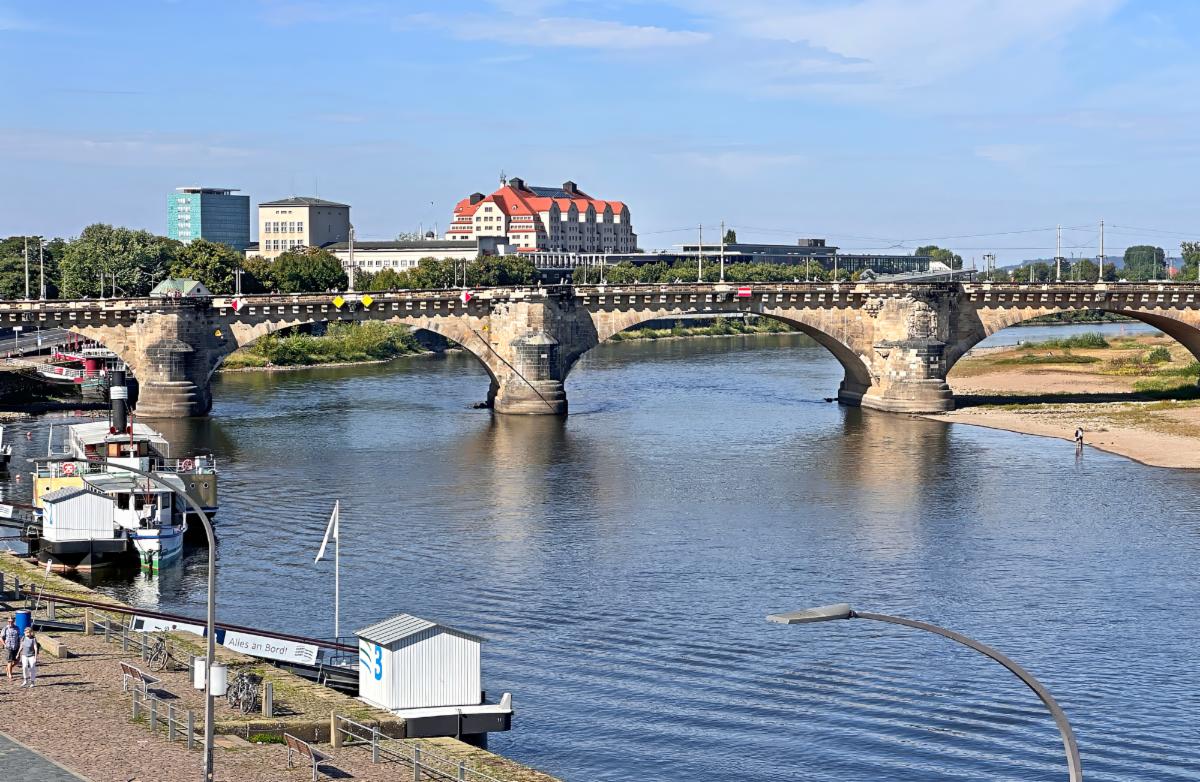
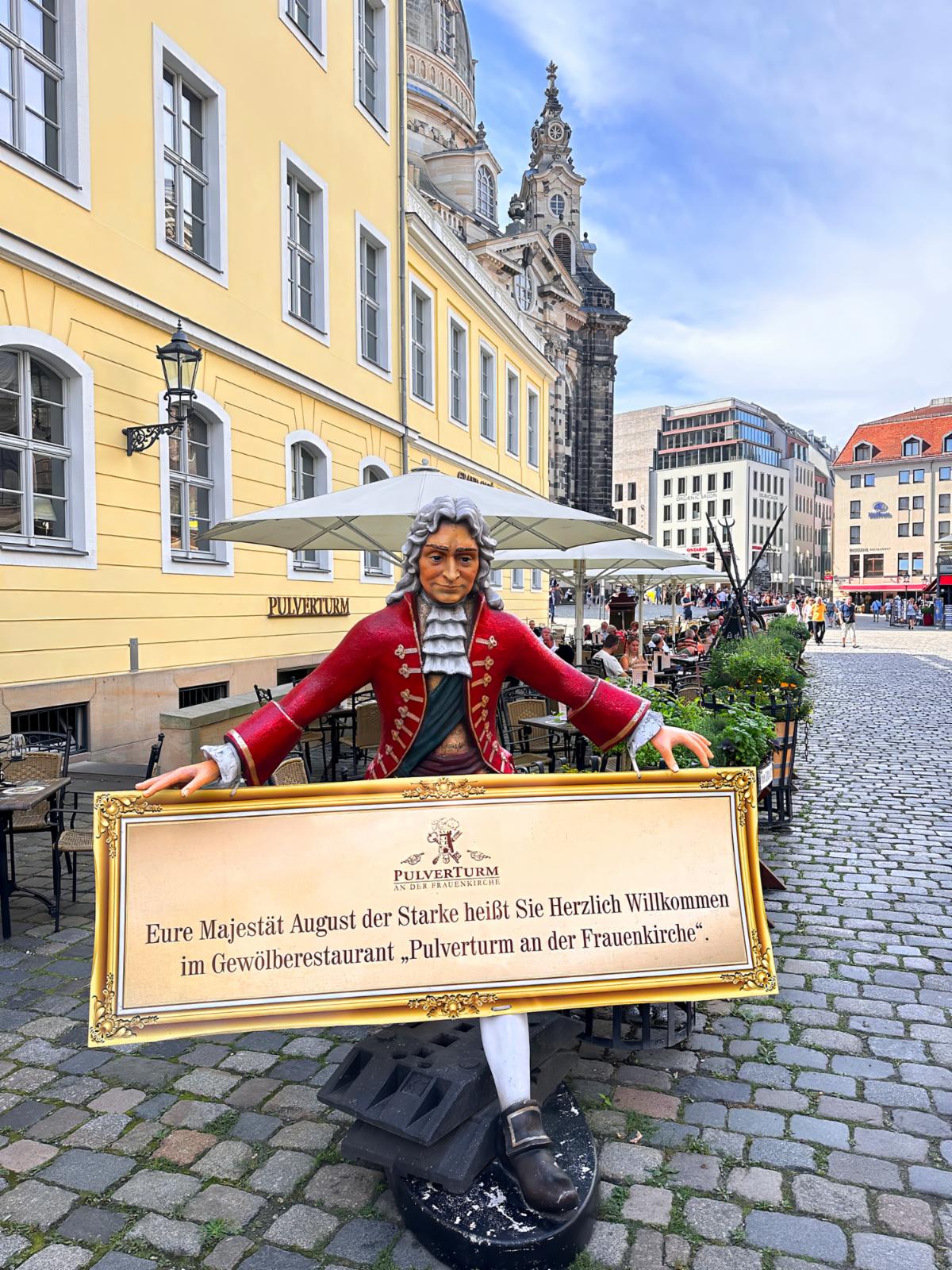
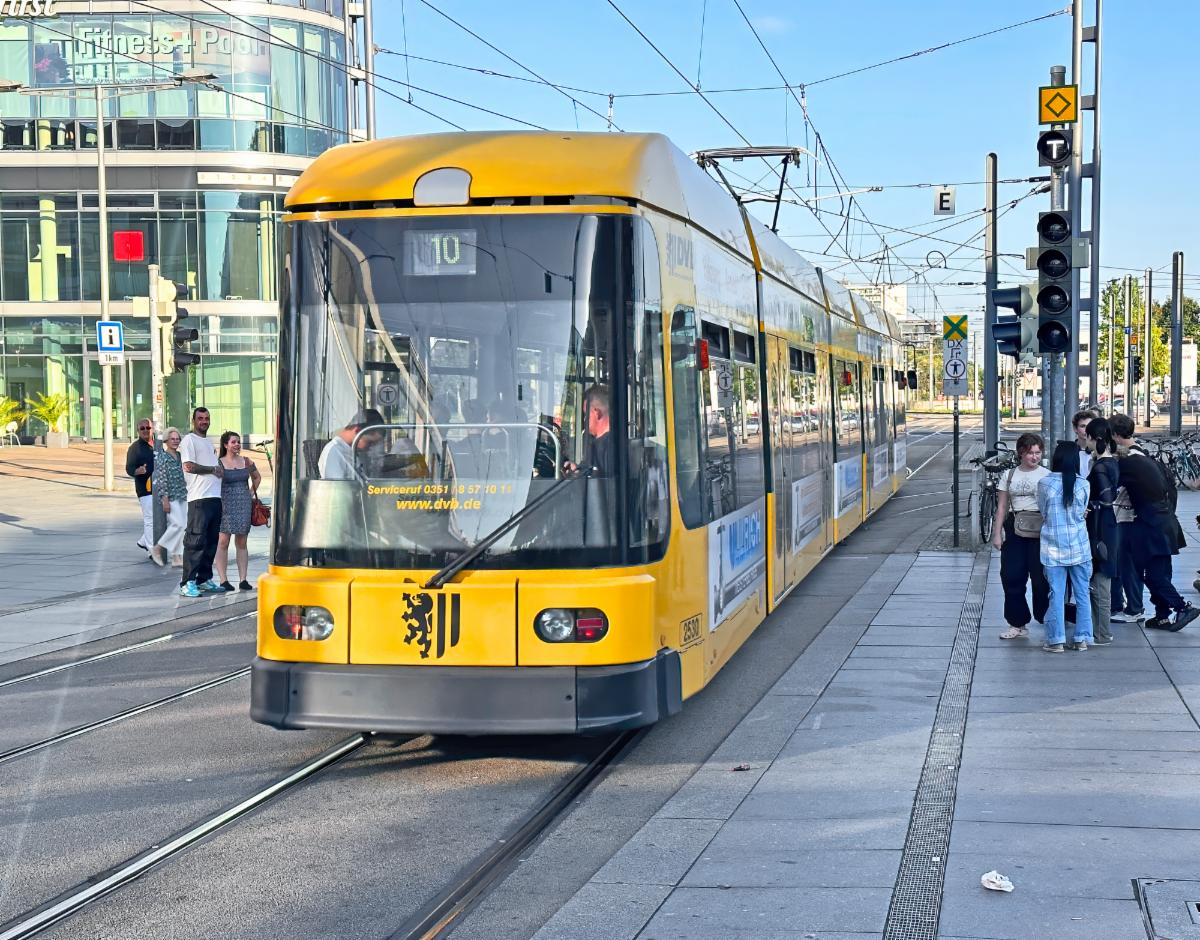
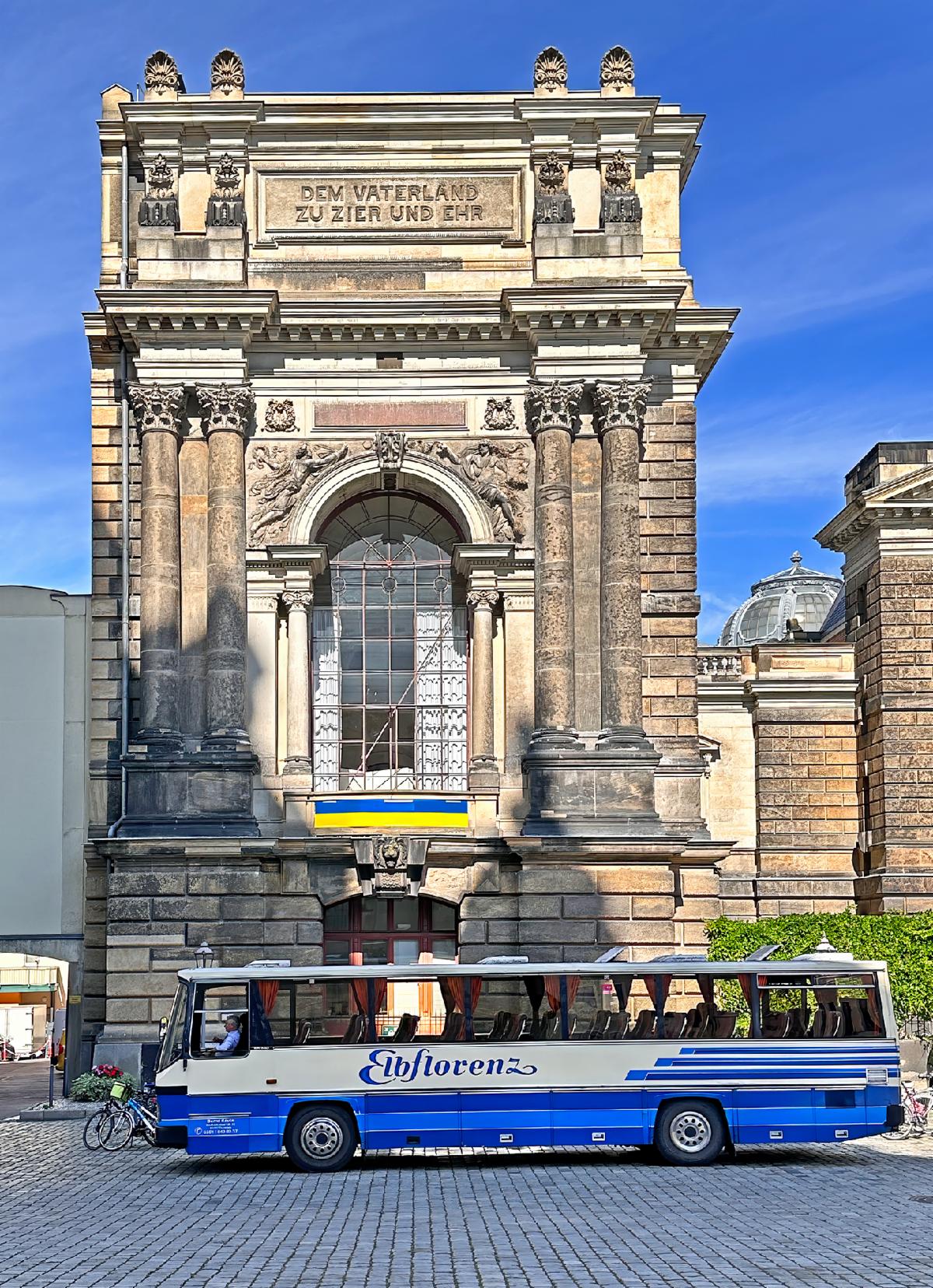
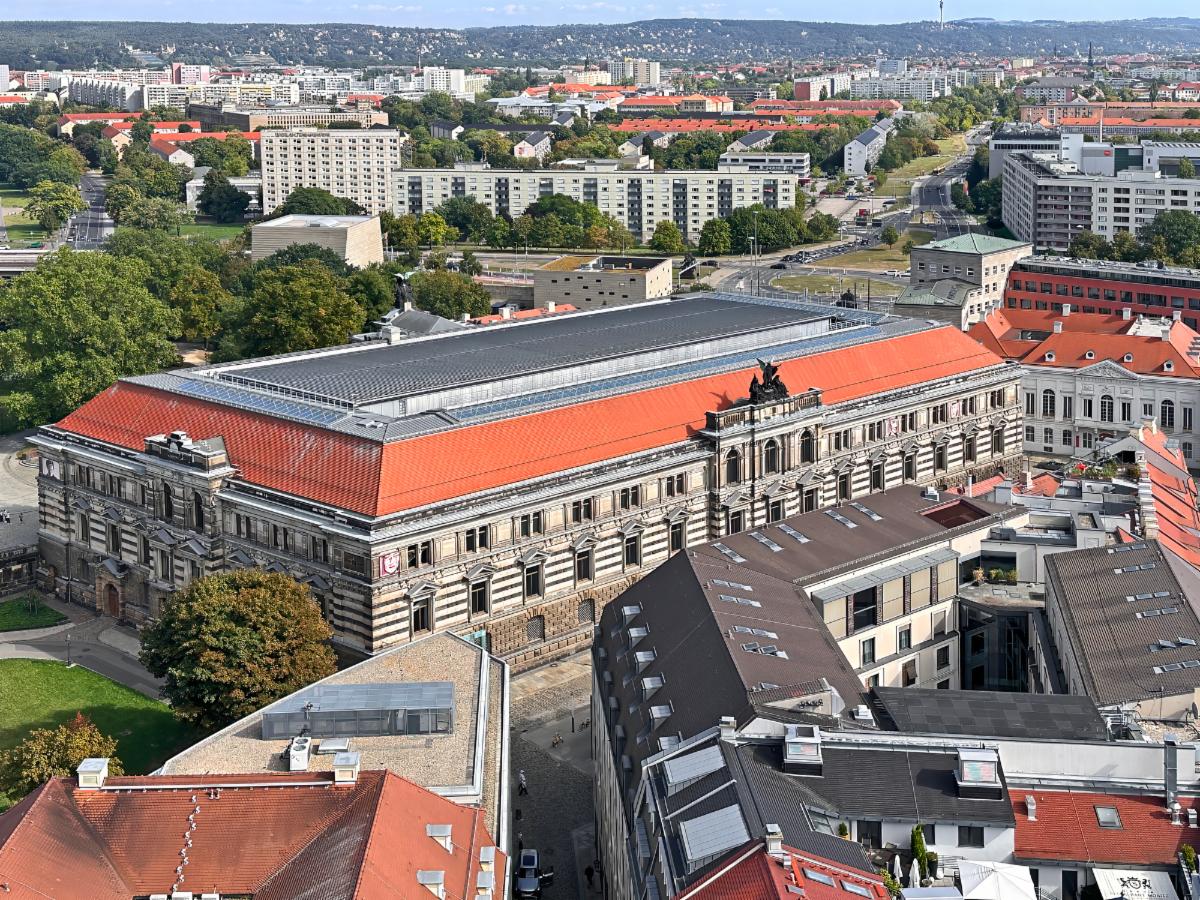
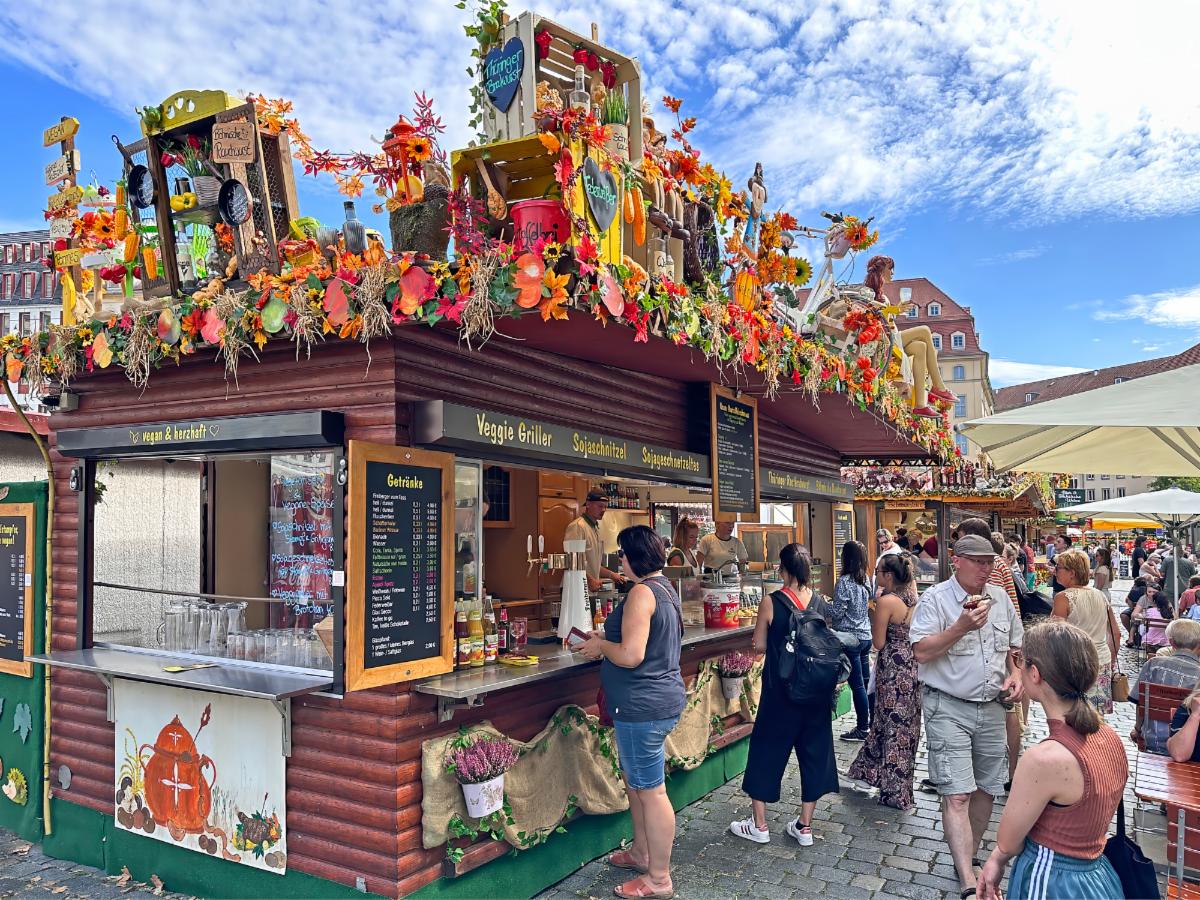
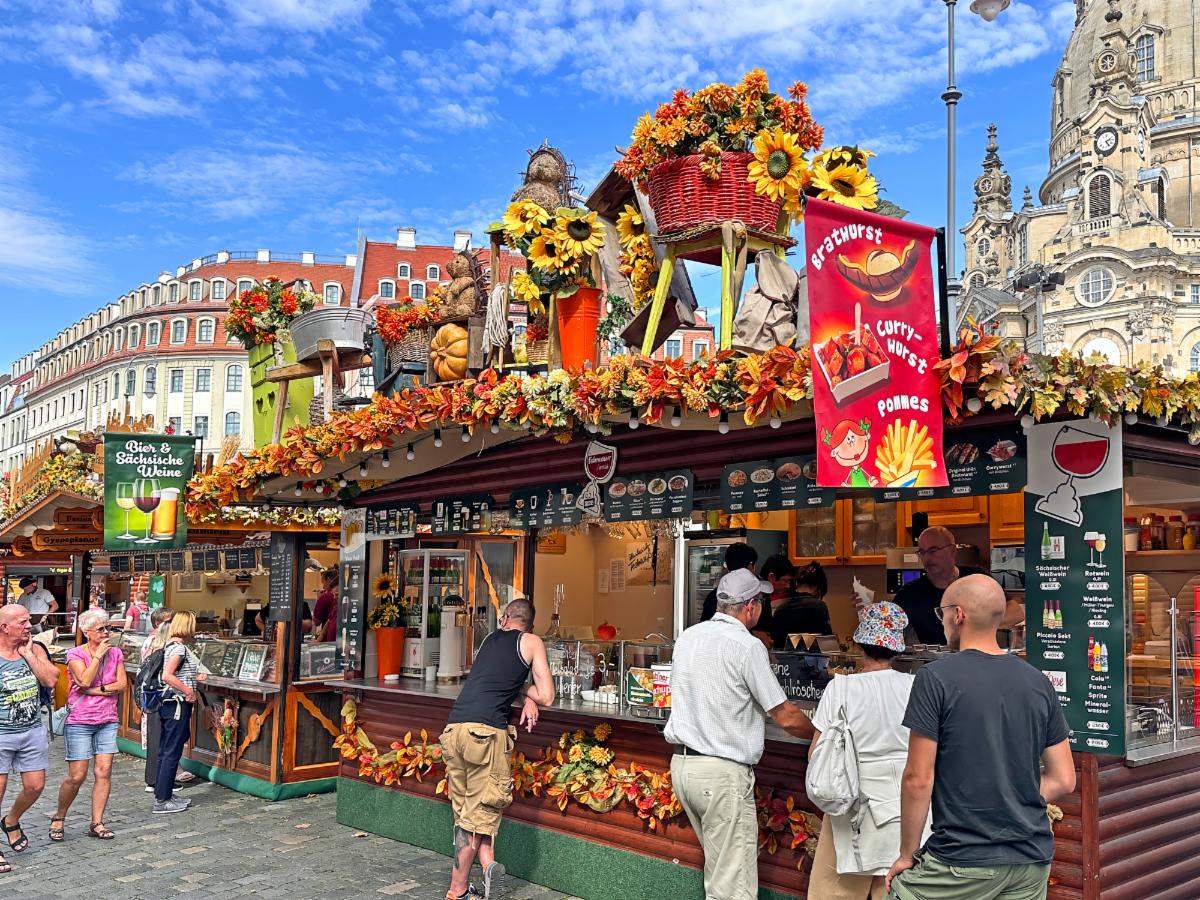
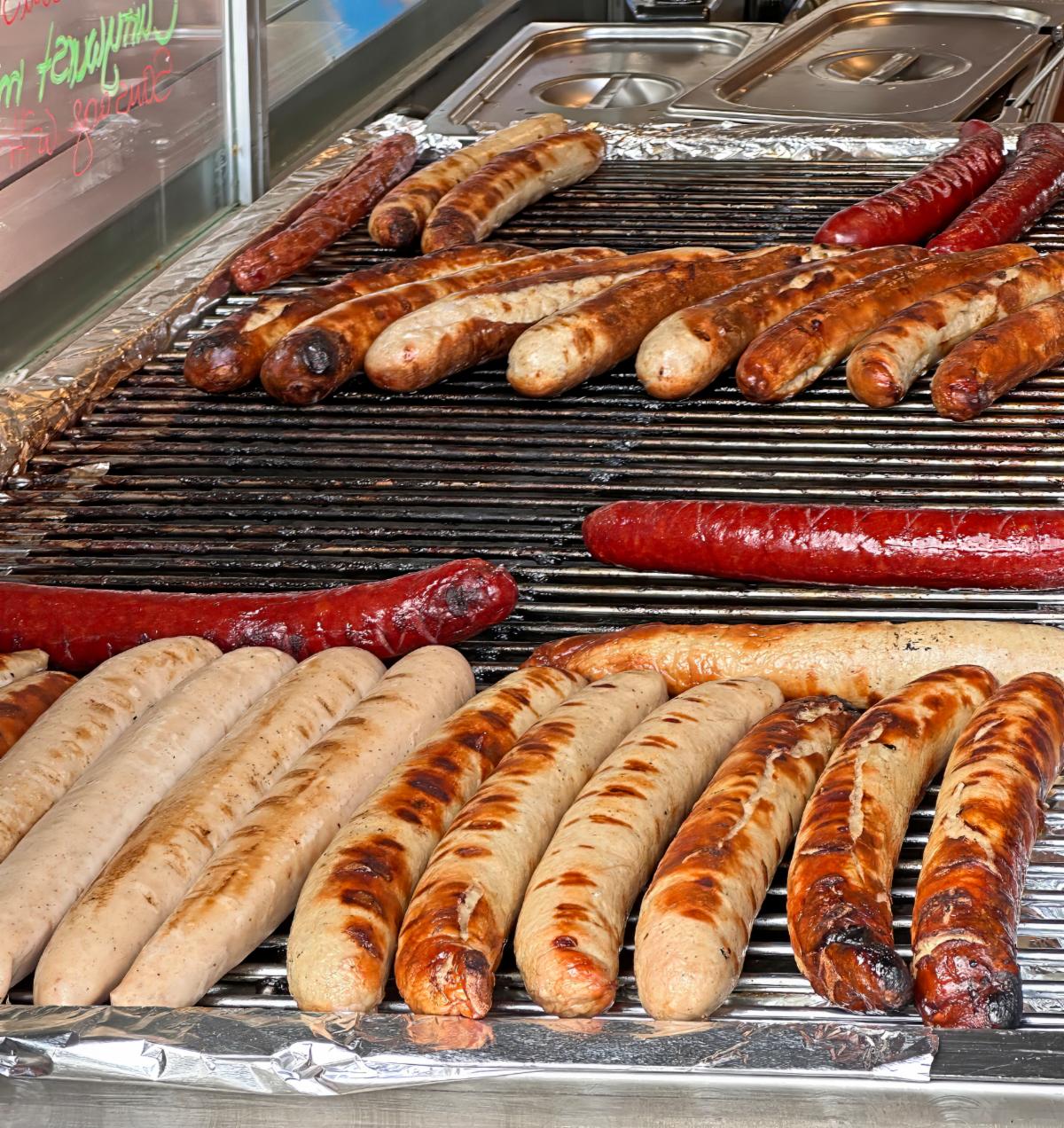
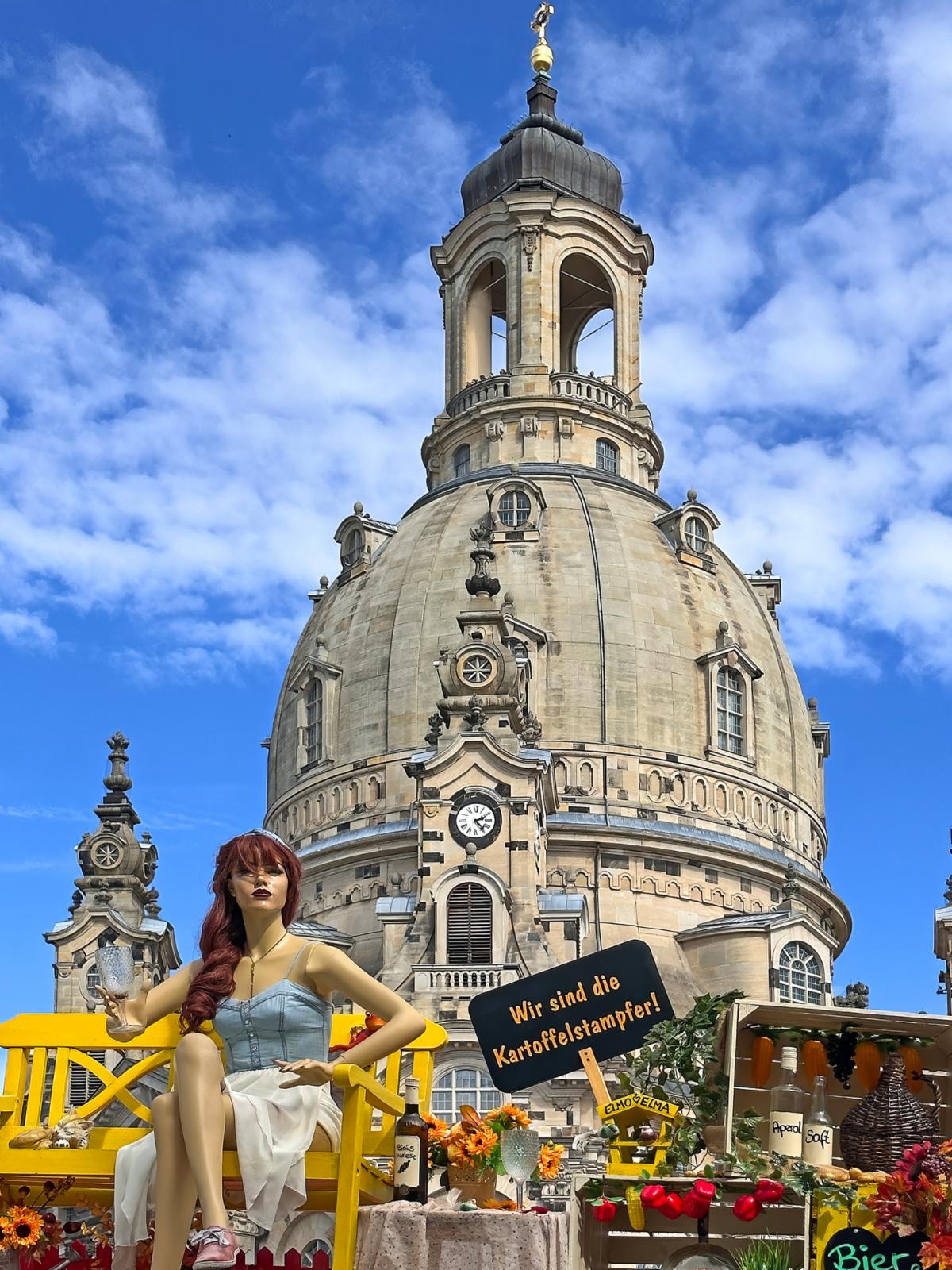
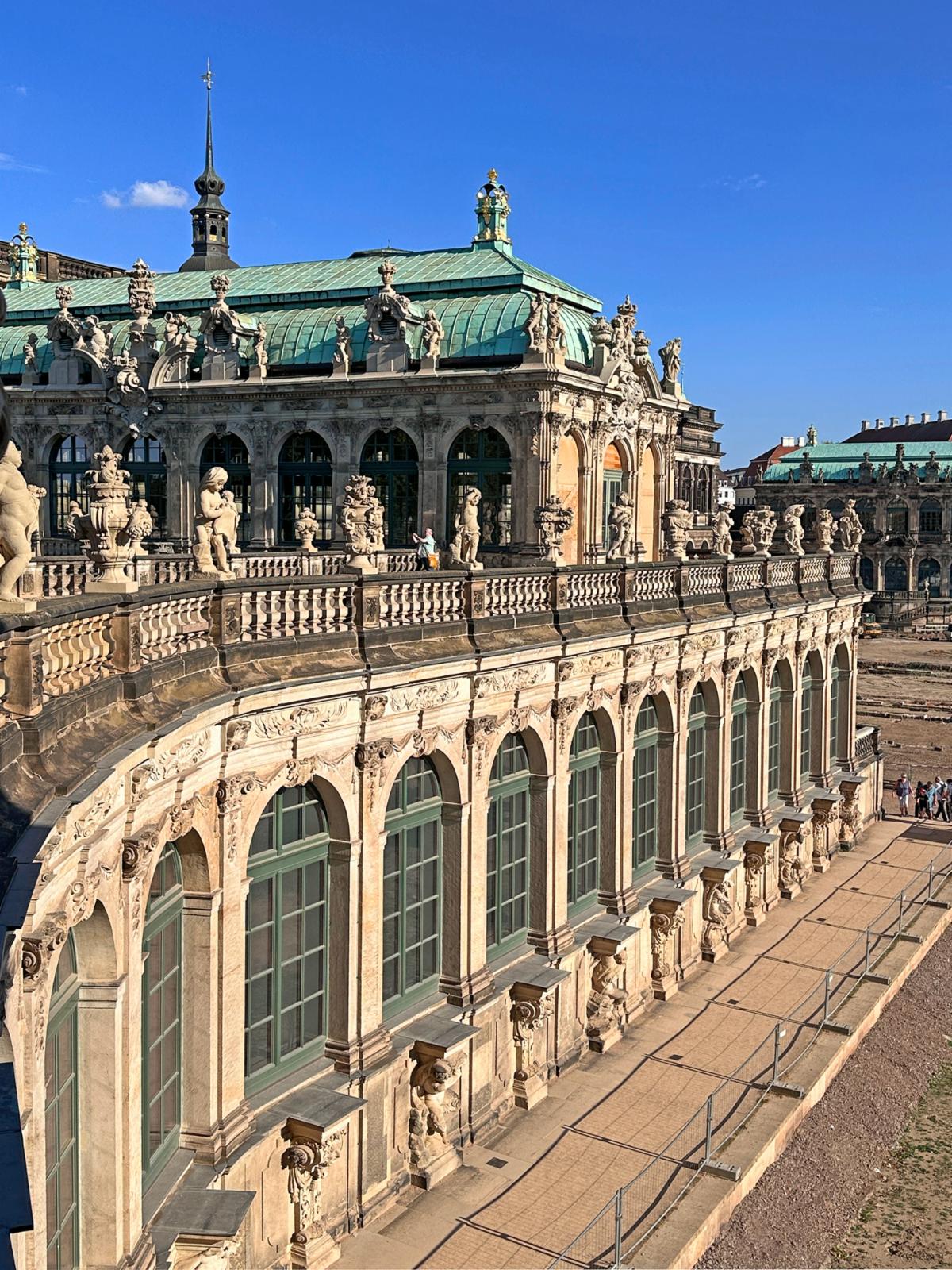
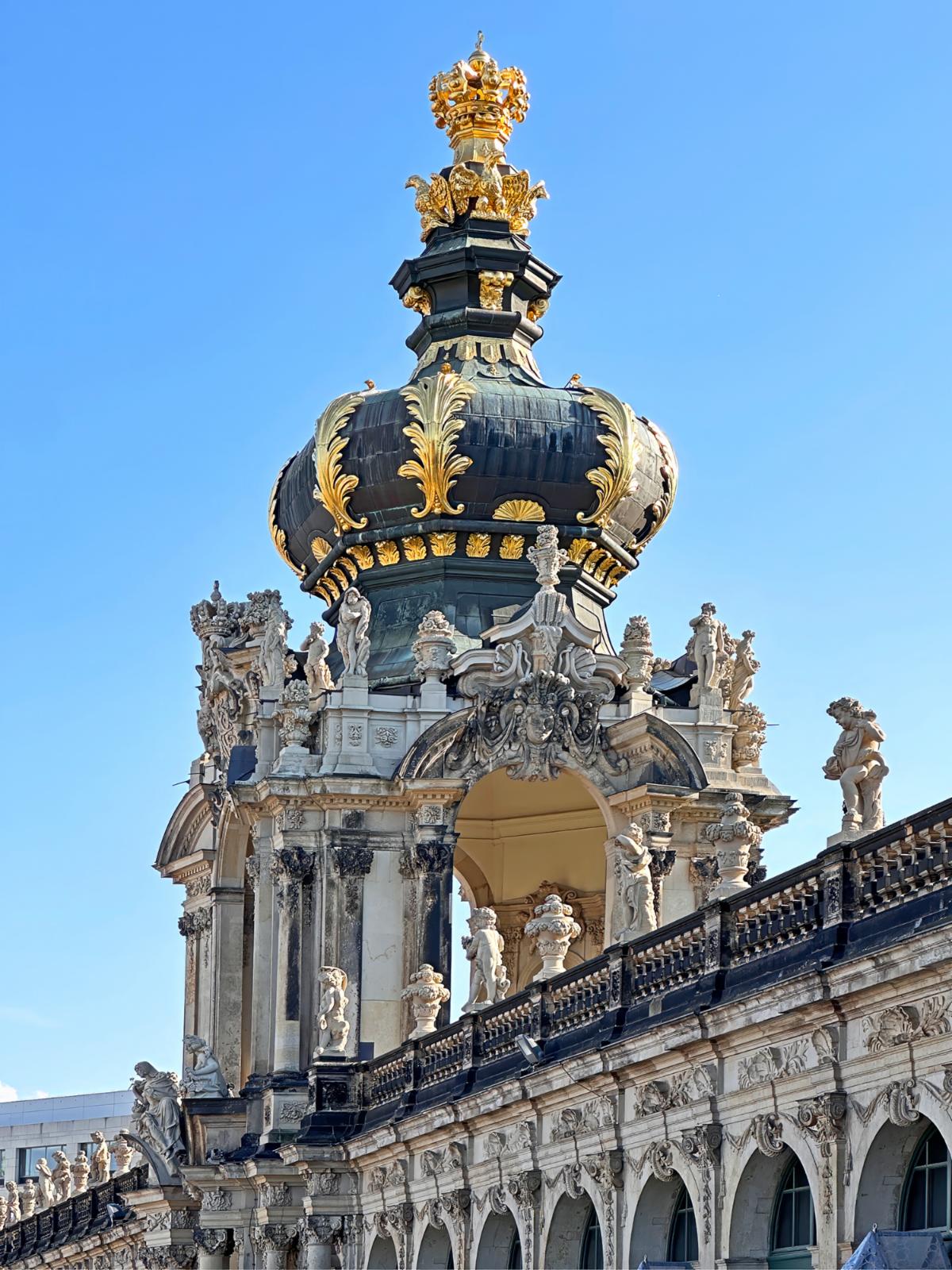
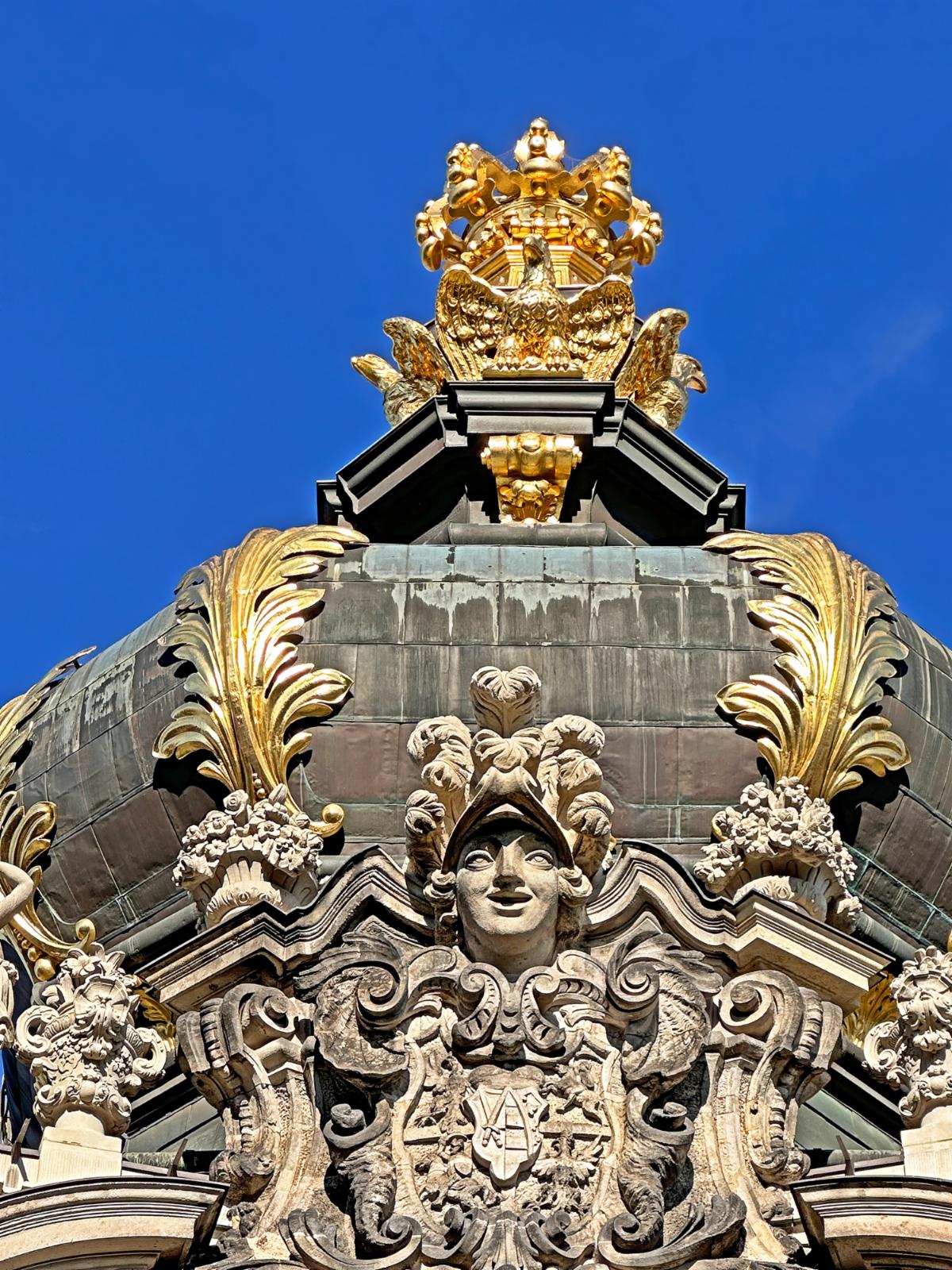
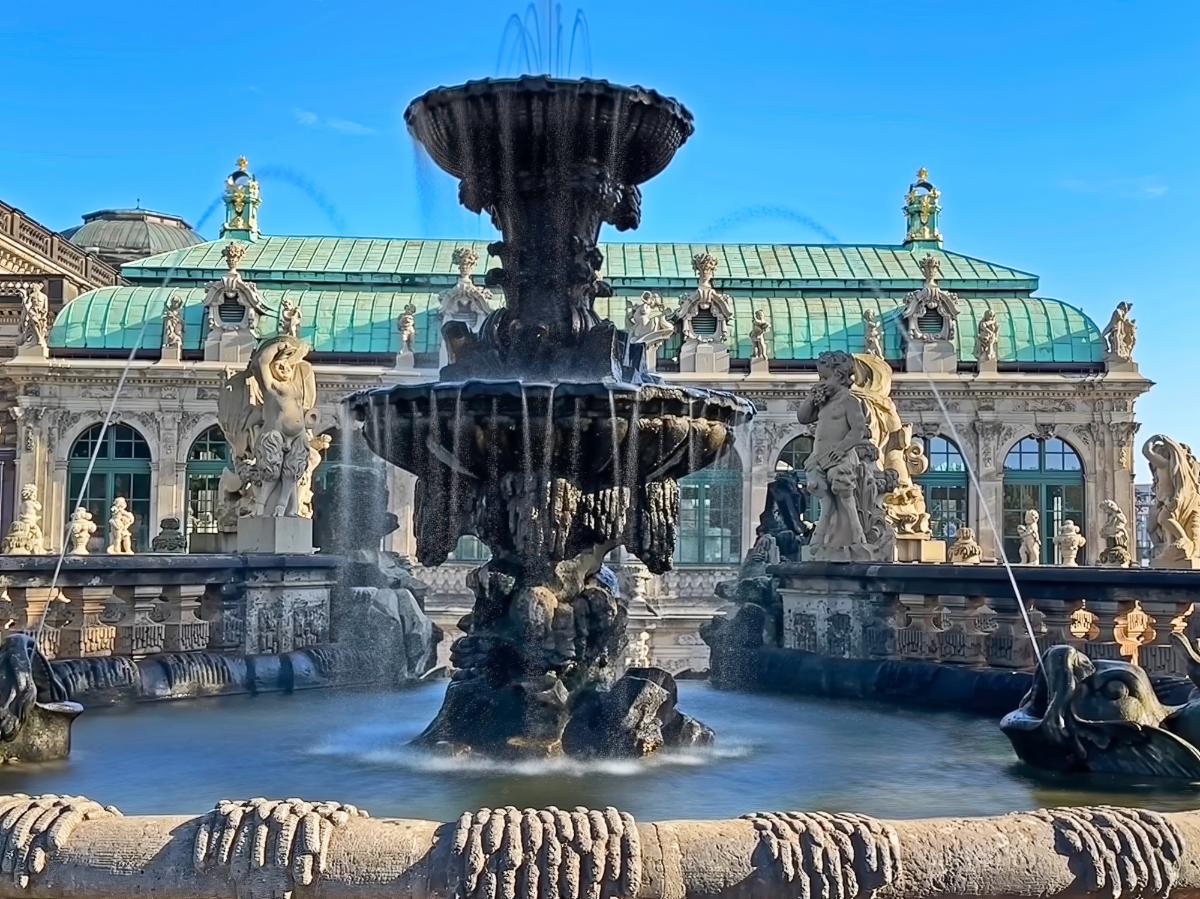
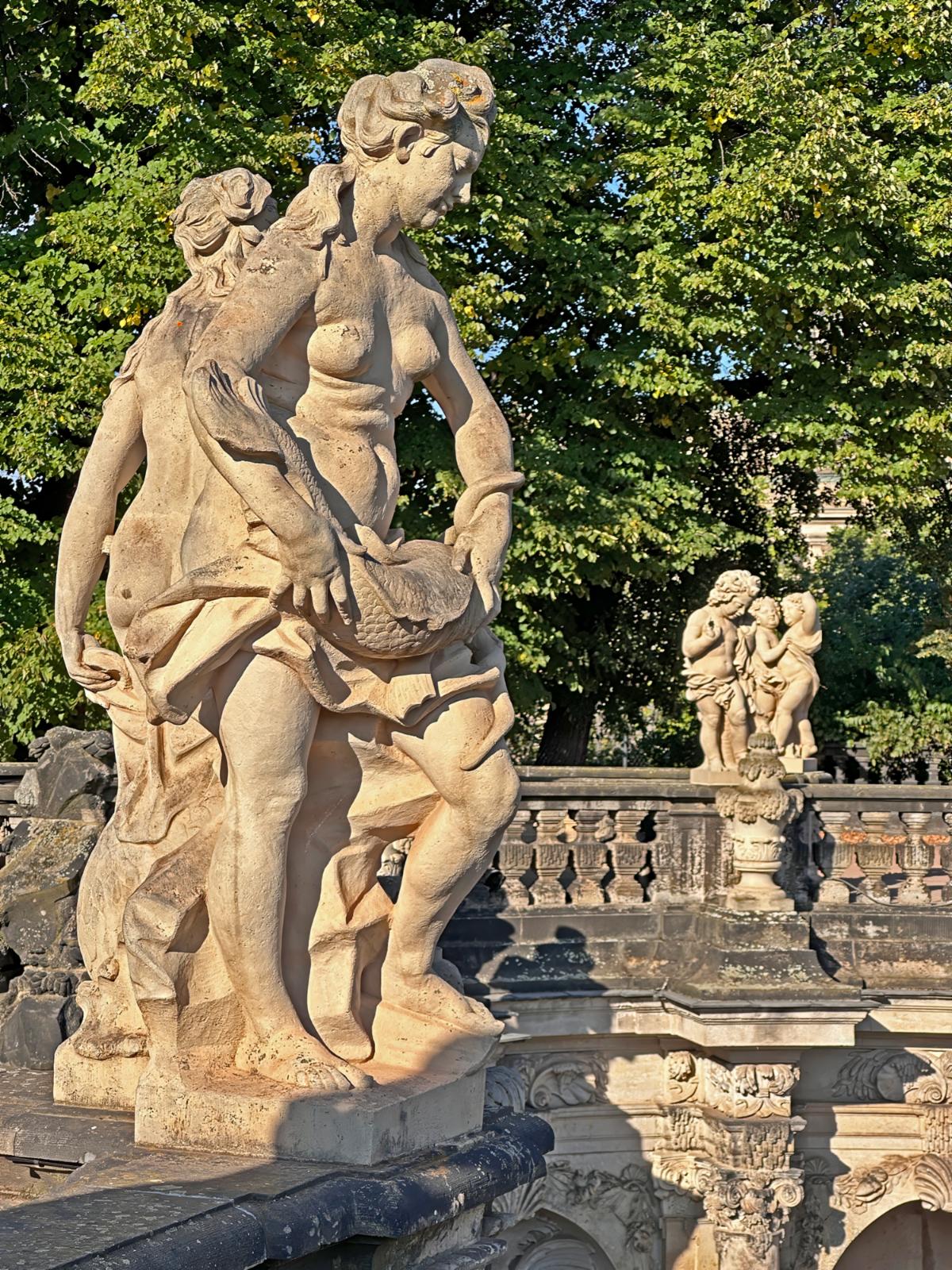
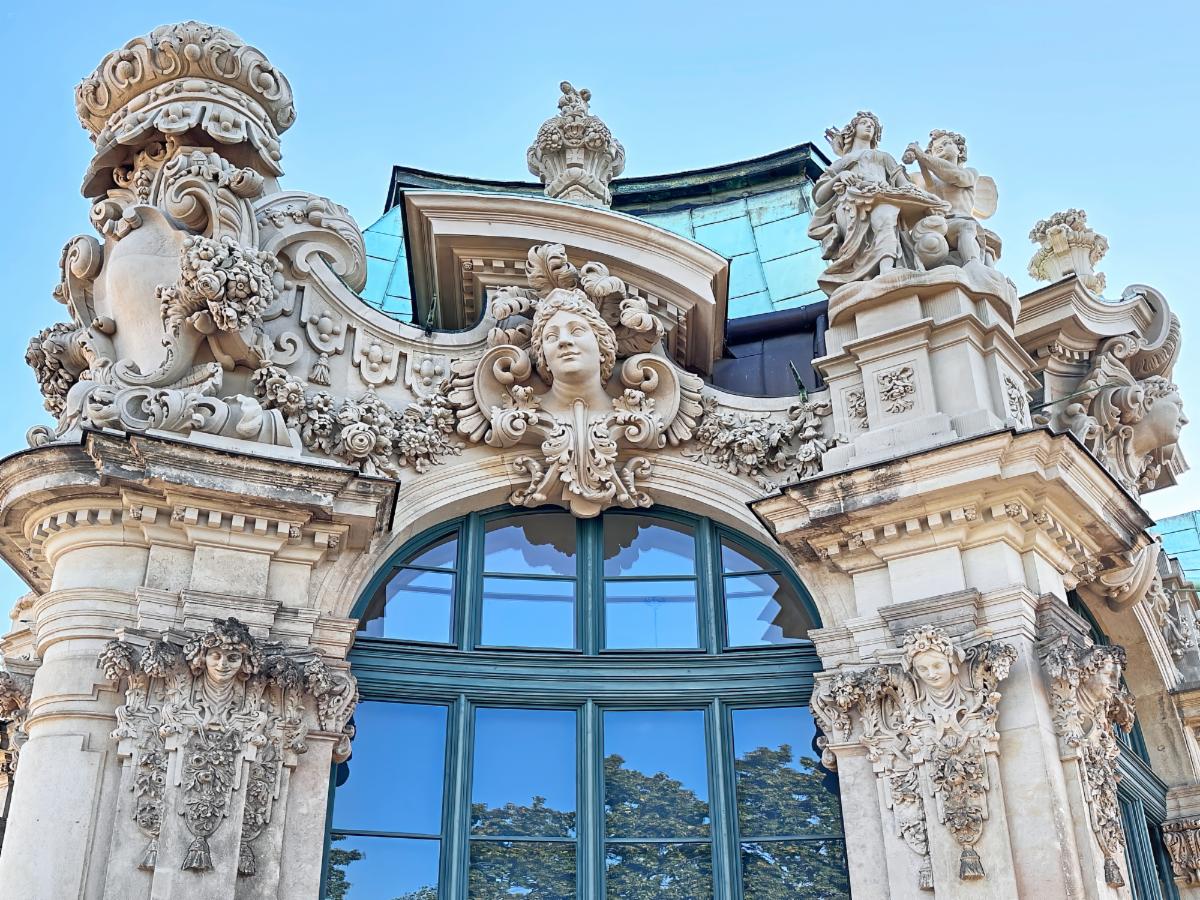
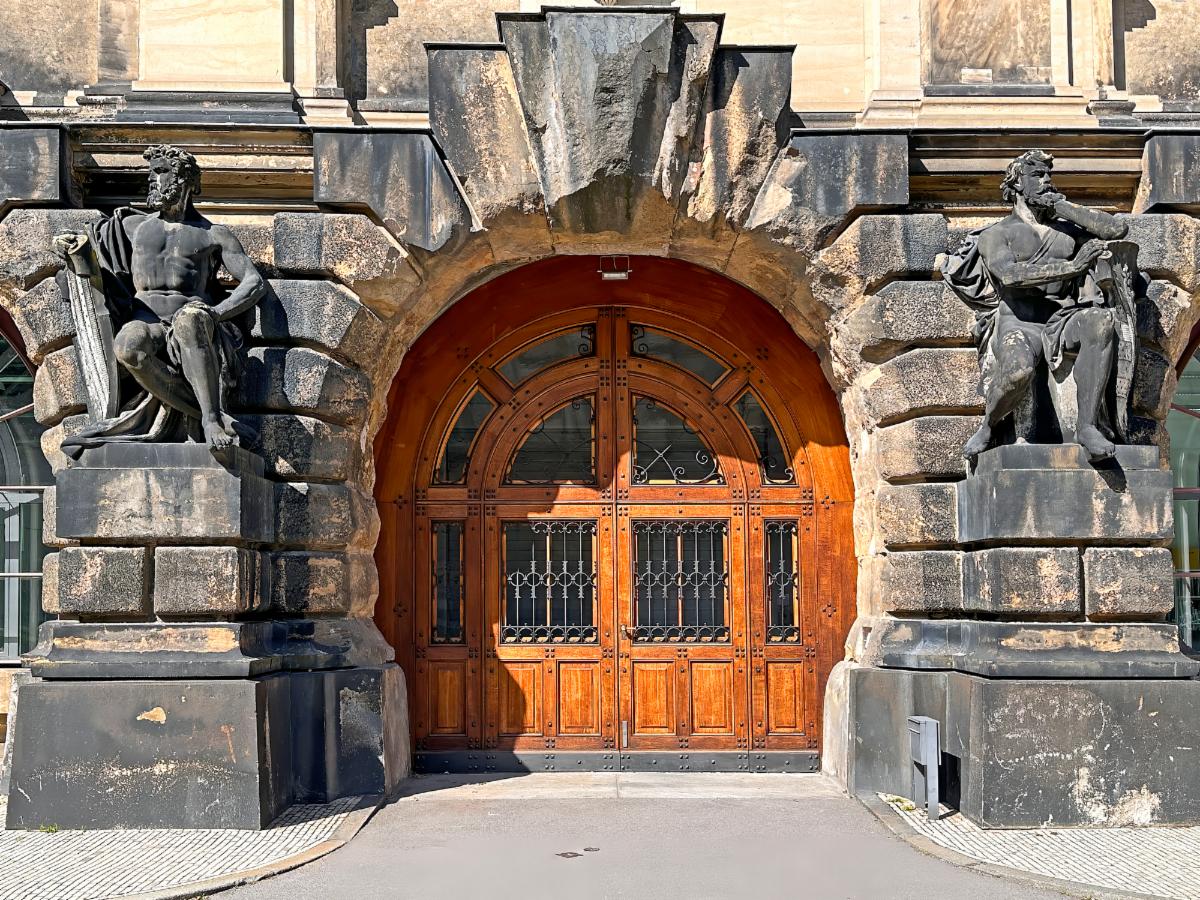
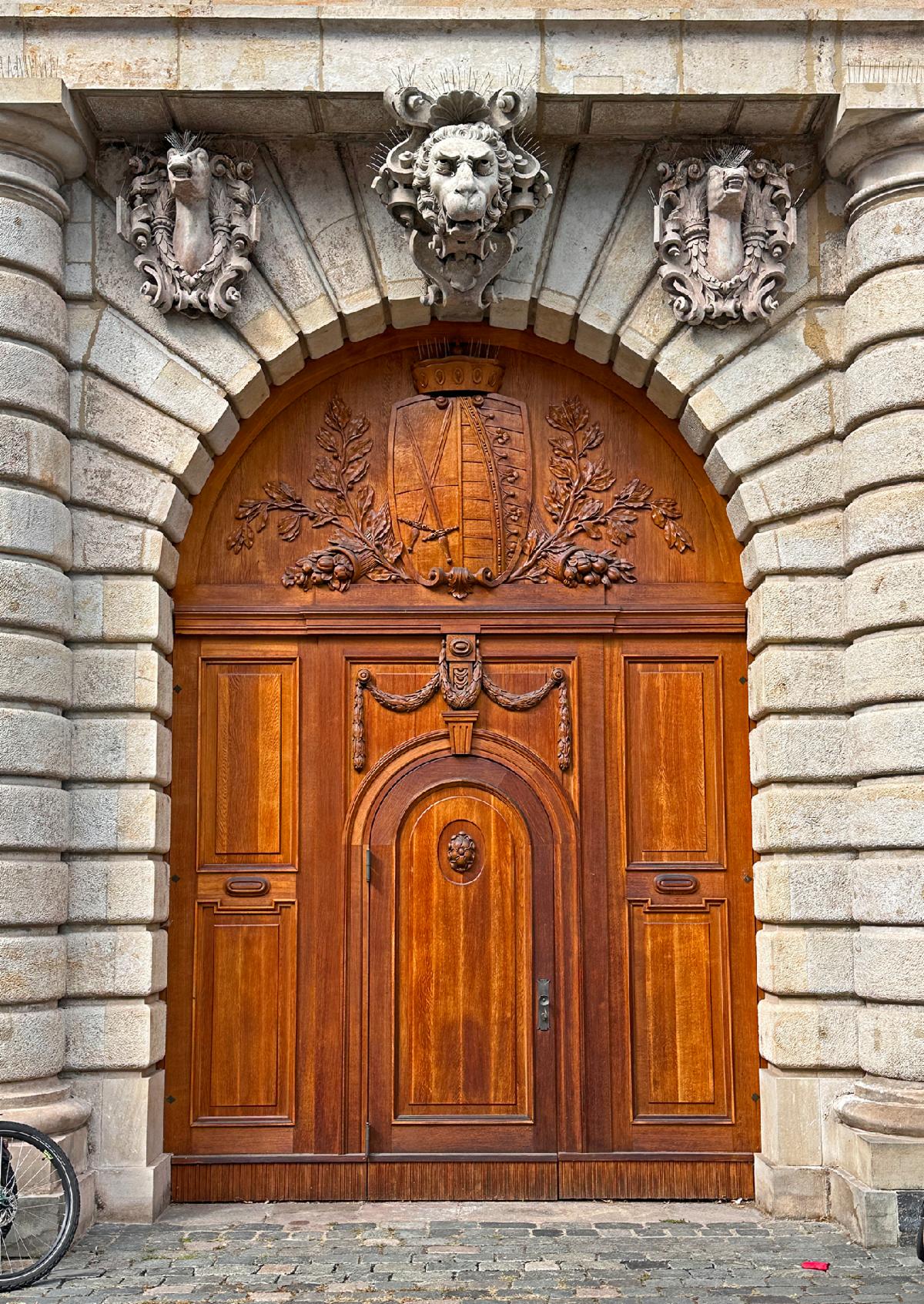
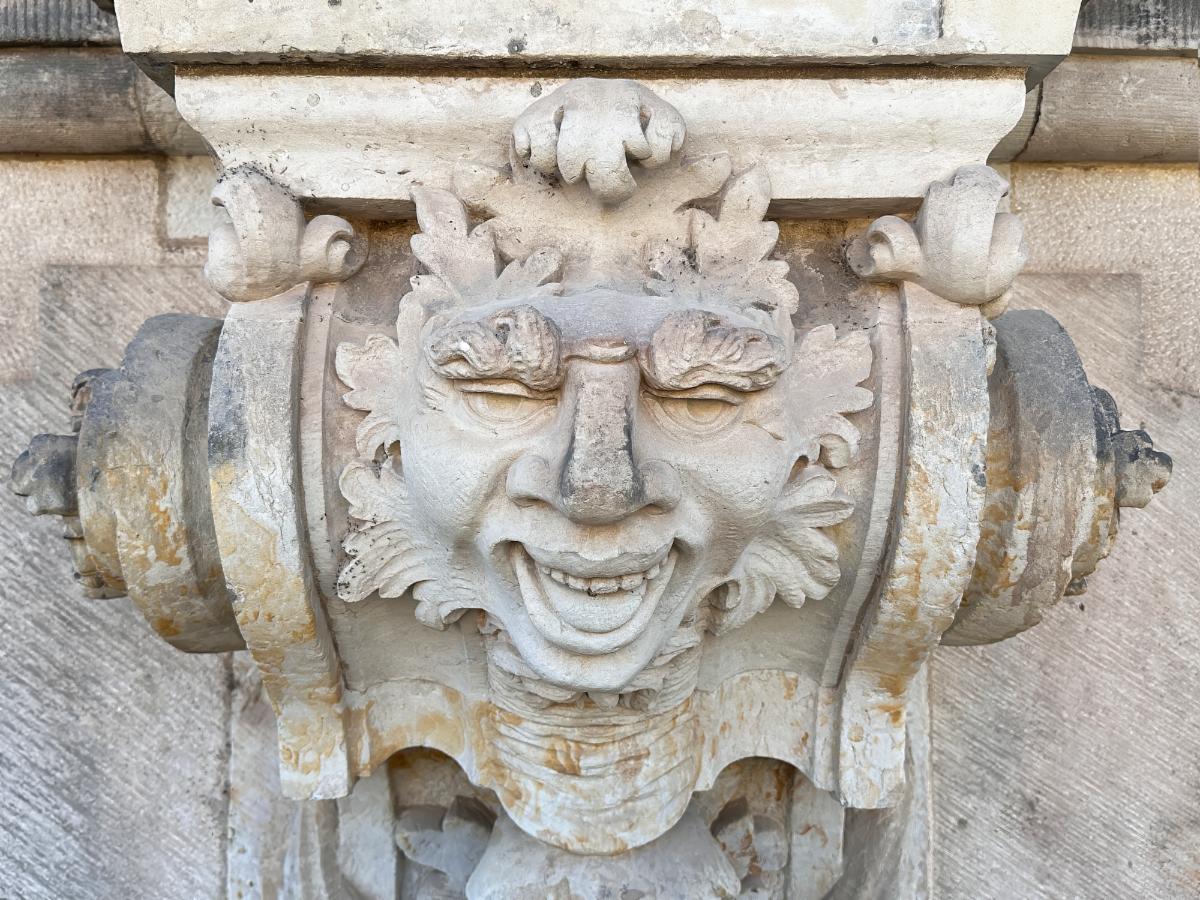
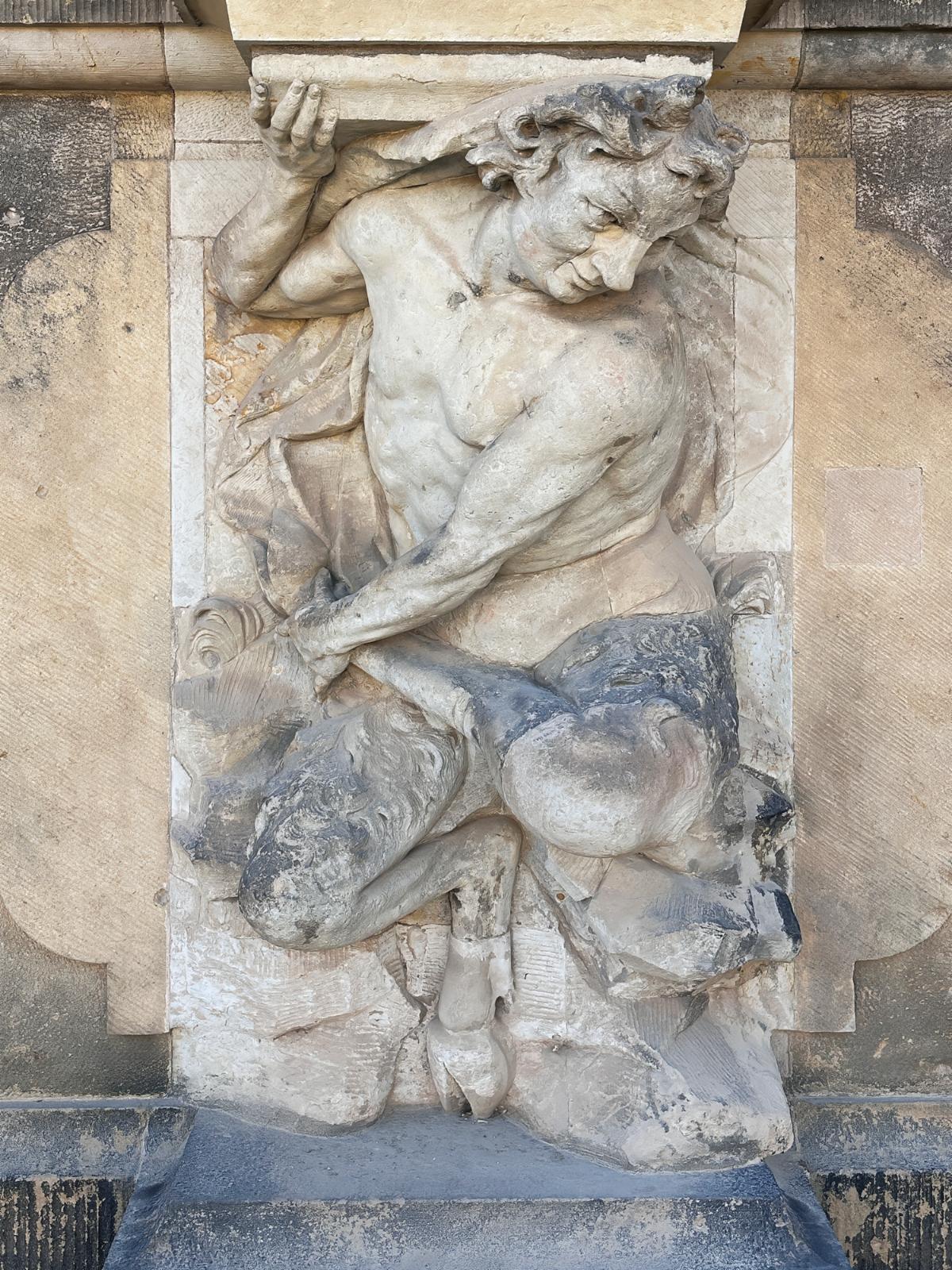
| 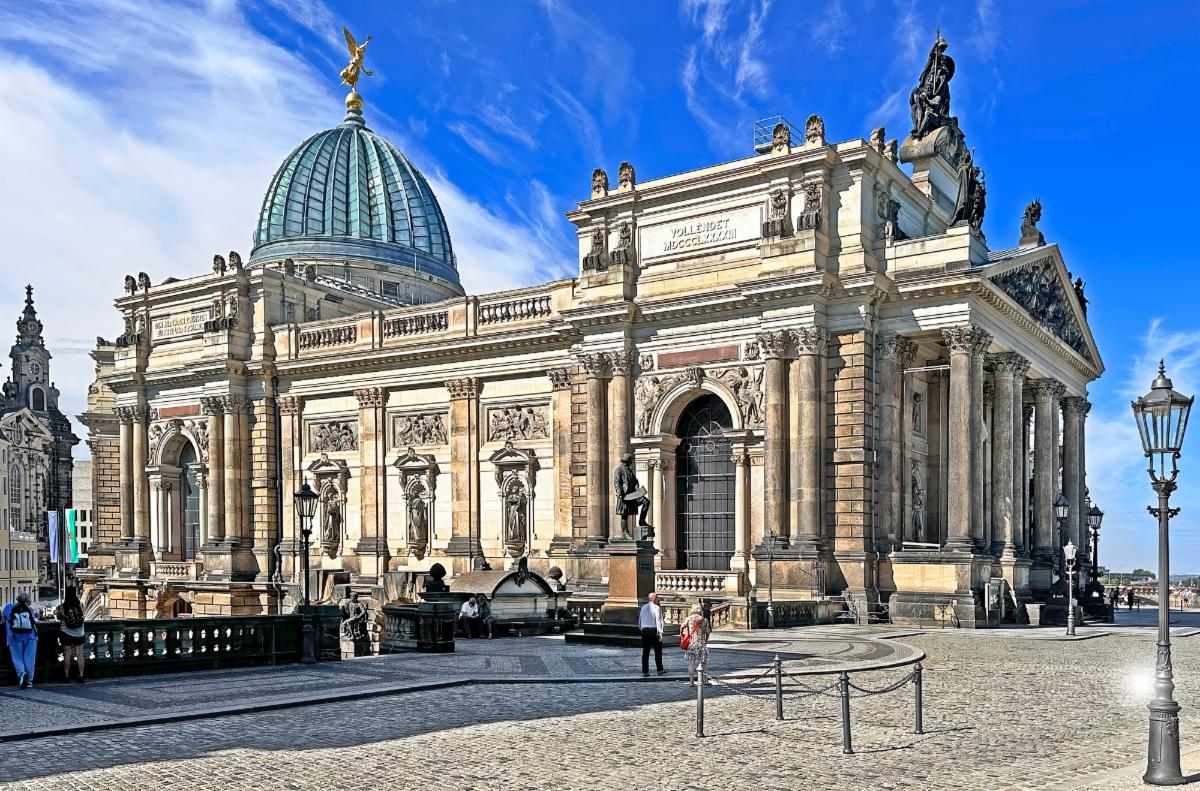 | The buildings in Dresden were impressive and imposing. This is the Dresden Academy of the Arts. | The Dresden Parliament Building. | This is the Police Station. Dresden must have a significant crime problem to warrant such a huge building?!?! | I love these touches on the buildings. | Dreden was a major port-of-call for river tour ships. | The Saxony Ministry of Finance. | The Augustus Stone Bridge. The first bridge built on this site was in 1275. This version was built in 1845. It was badly damaged in the WWII bombing of Dresden but meticulously restored to its original glory. | Augustus II the Strong, 1670 - 1733, welcoming people to the Gunpowder Tower Restaurant | Like all major European cities, Dresden is blessed with a dense network of trams. | The Frauenkirche, a Lutheran Church that had been rebuilt after the bombing. | These stacked rows gave the appearance of an opera house. | Views from the Frauenkirche steeple. | Frauenkirche was in the middle of a vast open plaza. Filling the plaza was a festival. We believe it was Germany’s version of Thanksgiving. Scores of shops, eateries, and a Ferris Wheel jammed the open area. We stopped for another Thüringer Brat. It was awesome, but a tad bit lower on the awesome scale from the Thüringer Brat we ate yesterday at the ‘water-trickle’. That brat was grilled on a wood-fired grill. | It was a festival day in the plaza. The plaza was filled with eating booths and shops. | Brats of all kinds, colors, and flavors. | This is advertising for a wine shop set up for the festival. (The sign in the back says, "We are the potato mashers." I have no idea what that is referring to.) | At the hop-on hop-off stop #1 was the Zwinger Palace, commissioned by Augustus II the Strong. It was completed in 1719 and is a Baroque masterpiece. In 1728, it became a college and began housing scientific collections. The buildings surrounded a vast courtyard with a garden and orange grove (oranges this far north?). The buildings and grounds are jam-packed with fountains, statues, figures, and gargoyles. The bombing badly damaged the Zwinger; however, it was meticulously reconstructed to its original glory. The entire gardens are torn up and being rebuilt. I am sure it will be amazing when completed. Currently, the Zwinger is being used as a museum. | This is the entrance gate to the Zwinger, known as the Crown Gate, fashioned after the King of Poland's crown. The King of Poland at the time was Augustus II the Strong, also the Elector of Saxony, the territory where Dresden is located. | What amazing figures and statures at the Zwinger. | 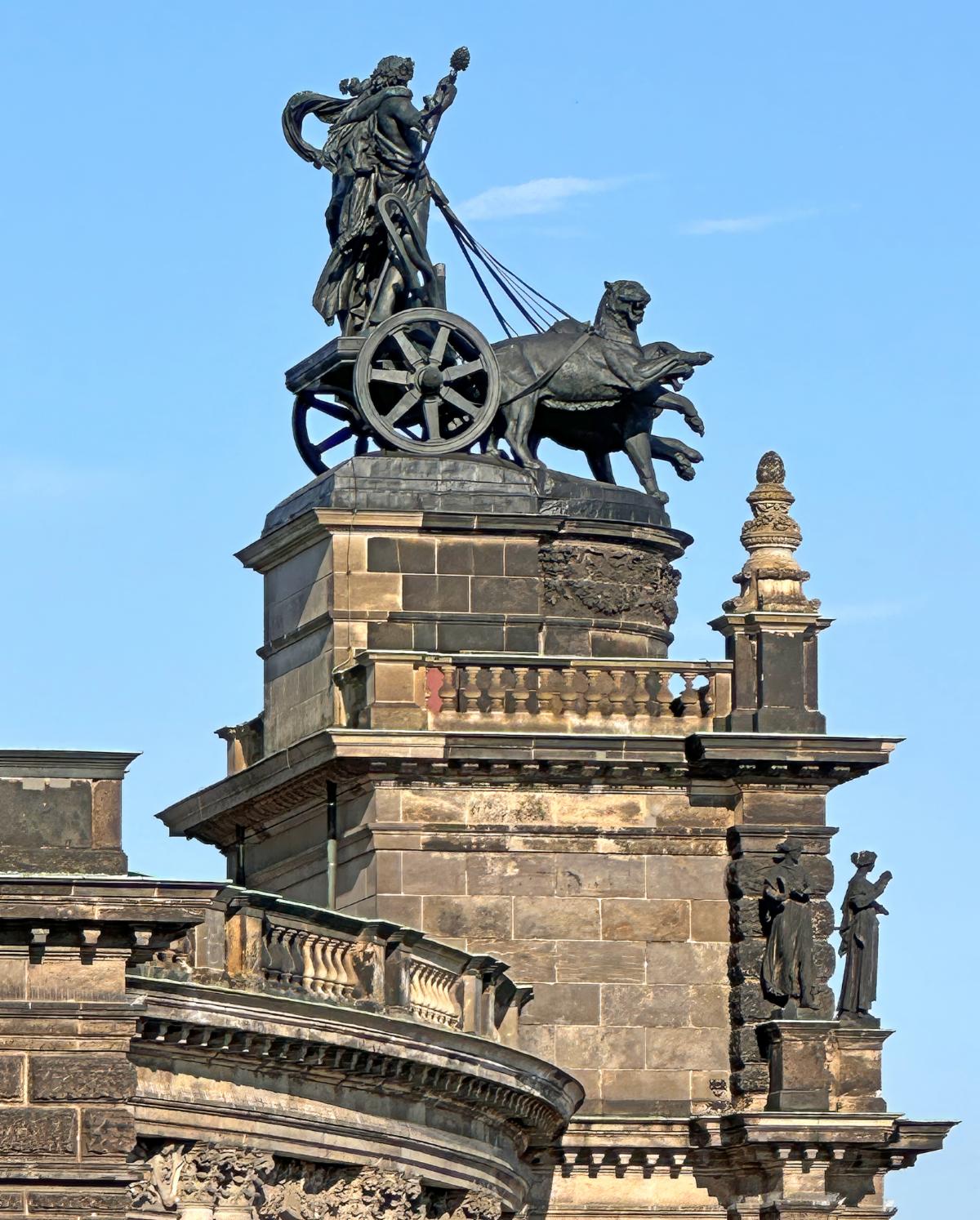 | |
After oohing and aahing a dozen magnificent buildings, stone gates, and archways, we hopped back on the bus. We intended to get off at a couple of fine-looking castles on a tall hill overlooking the Elbe River. Unfortunately, we discovered that the last bus ran at 5 pm. If we got off at any listed spots, we would get stranded as the afternoon melted away. We decided to ride the entire circuit again. Riding on the top floor of the open-air double-decker bus was a great vantage point to see everything. This hampered picture-taking, but we saw a big swath of the city and suburbs.
The hop-on hop-off bus concept is new for us. With Diane and Heinrich's limited mobility, it is a valuable way for them to get an overview of a city. To be effective, you must take the first scheduled bus to get your overview soon enough to then hop off at the various spots.
Finally, at 6 p.m., we took the smooth train back to Pirna. It was another terrific day on the road. We realize we need a week to see and do everything in the greater Dresden area. Diane is racking her brain to see how we can fit this into her itinerary.
| |
|
Dave and Wanda
Vaccines: Your ticket to safe world travel.
Virtual Business Card
North America . Europe . Mexico . Asia . Product Reviews . Books & Maps
We are on an RVing adventure through Europe that could last as long as six months. Traveling with family, we will start in Germany and explore several countries. We are excited to explore all that Europe offers and share our travels with you through this blog.
Share if you know someone who would enjoy tagging along. Please join our email list if you haven't already done so. On the slightest whim, tap 'reply' to this email and drop us a line. We'll get back to you whether you need travel help, have ideas, or just want to say hello.
Please send us your thoughts and any errors we may have missed. We're on the road, and cellular service is intermittent in the remote areas. As soon as we get online, we are eager to read all of your messages.
Message us: 715-252-6664 | 715-252-3326
Email: alloverthemaptravelventures@gmail.com
| | | | |