|
As Waterborne approaches its 33rd anniversary, we thought it would be interesting to recall our “early days” and the extensive fieldwork we conducted to address concerns about the potential for groundwater leaching associated with labeled uses of pesticides.
Waterborne, as a company, managed and completed over 30 separate studies potential leaching to groundwater from normal uses of crop protection chemicals. Until the mid 2000's, two types of studies were required by the USEPA: “prospective” and “retrospective” groundwater studies.
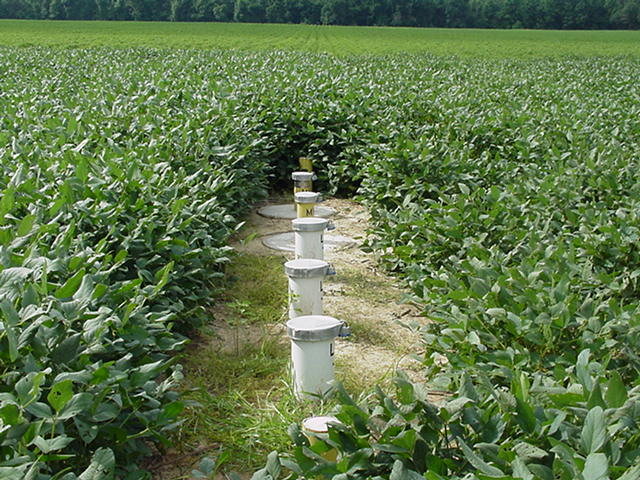
Prospective groundwater (PGW) studies were multi-year studies that included site selection, site characterization, instrumentation, application of a tracer (KBr) and the pesticide product of interest, sampling of soil and water for two or more years, followed by reporting. These studies were labor-intensive during the site selection, characterization, and instrumentation phases prior to application. Following the application, the first month of soil and water sampling was also intensive before settling into monthly sampling afterward.
Sites were selected in typically worst-case environments where the potential for leaching through the soil column to the saturated zone was highest. The sites often had sandy, sandy loam, or loamy sand soils with depth to groundwater (saturated zone) of 10-30 feet. The tracer (KBr) was applied, and its progress leaching through the unsaturated zone was tracked until it achieved “breakthrough” into the saturated zone.
These expensive studies were required by the USEPA to address specific concerns about select active ingredients whose environmental fate profiles indicated a potential for leaching. These studies provided a strong...
>> Read the full article
|