|
Dear Friends,
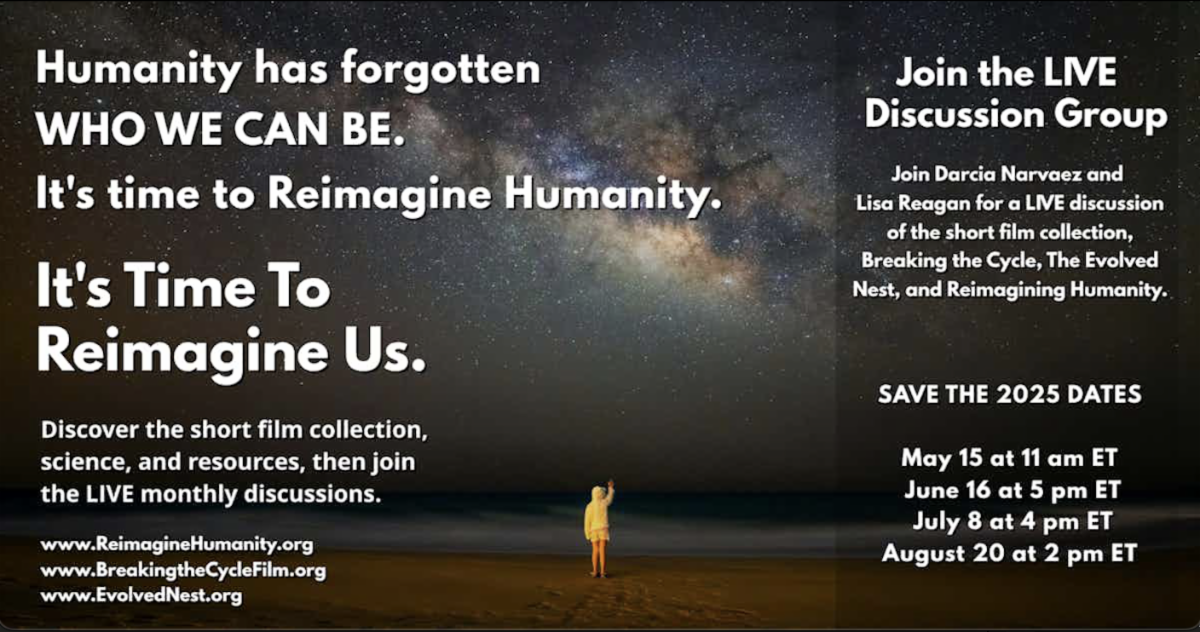
When is the last time you saw the Milky Way above your head? Only about 200 years ago did night lights become a thing, little by little, more and more blotting out the stars. Before then, one could reliably see the Milky Way when looking up on a clear night, rendering one awestruck and humbled.
Colonization and industrialization have not only shaped our attention to the clock around the clock, undermining our freedom, they have also shifted our attention away from the cyclical,
relational rhythms of the cosmos—the rhythms of the seasons, harvest, weather, day/night, and much more. Remember, your values are reflected in where you place your attention.
To rewild ourselves, we step away from chronos, or clock time, and into kairos time, sacred eternal time. Kairos is about the right timing of action.
Wikipedia notes: “In The Interpretation of History, neo-orthodox Lutheran theologian Paul Tillich made prominent use of the term [kairos]. For him, the kairoi are those crises in history (see Christian existentialism) which create an opportunity for, and indeed demand, an existential decision by the human subject.”
Indeed, we are at that point in the USA, facing a choice between dictatorship and democracy. If the people don’t rise up (peacefully), they will suffer the former for years to come. Kairos is now.
There is another Kairos this month, the summer solstice. To re-wild ourselves as Earthlings, we follow the cycles of Earth and cosmos, acting at the right time for solstice. There is no one right way to act, but a common practice around the world is to dance. Some Native Peoples advocate dancing regularly on Earth as a means of loving and encouraging her.
In honor of magnificent musician, Brian Wilson, here is a link to his song Love and Mercy. The lyrics are below.
Love and Mercy (Brian Wilson, 1988)
I was sittin' in a crummy movie with my hands on my chin
Oh, the violence that occurs, seems like we never win
Chorus
Love and mercy, that's what you need tonight
So love and mercy to you and your friends tonight
I was lyin' in my room and the news came on TV
A lotta people out there hurtin' and it really scares me
Love and mercy, that's what you need tonight
So love and mercy to you and your friends tonight
I was standin' in a bar and watchin' all the people there
Oh, the loneliness in this world, well, it's just not fair
Hey, love and mercy, that's what you need tonight
So love and mercy to you and your friends tonight
Love and mercy, that's what you need tonight
Love and mercy tonight
Love and mercy
We all need love and mercy. Let us move forward together with love and mercy toward all.
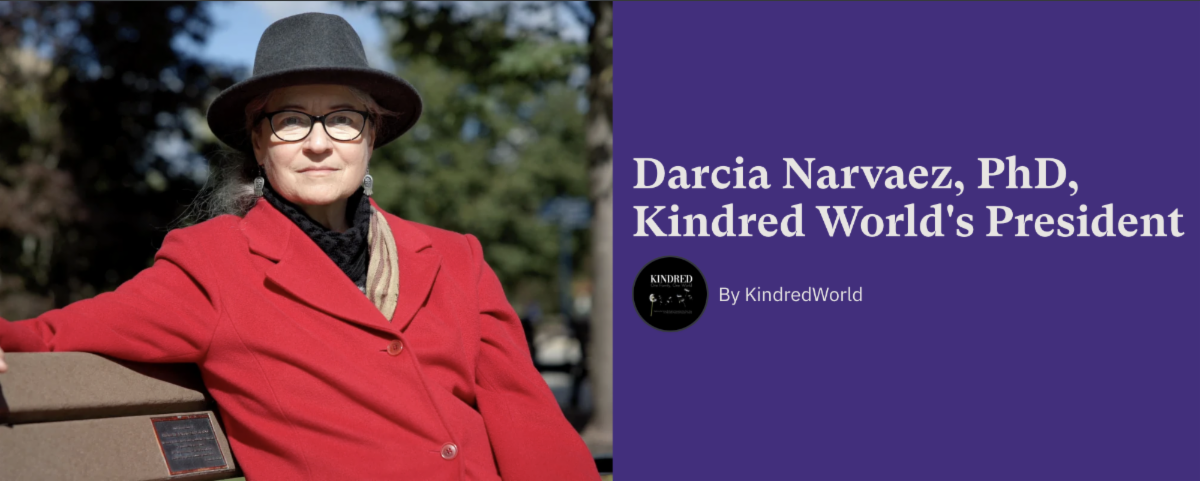
Darcia
Evolved Nest, Co-Founder
Kindred World, President
| | | | |
“The main take-home lesson from a careful study of nomadic forager partnership societies, re-enforced by the recent Nordic experience, is that humans are capable of living in egalitarian social systems where neither dominates the other, where violence is minimized, and where prosocial cooperation and caring typify social life. This image is not a utopian fantasy but rather a set of potentials, if not inclinations, stemming from our evolutionary heritage.”
― Riane Eisler, Nurturing Our Humanity: How Domination and Partnership Shape Our Brains, Lives, and Future
| | |
Love in Action: How Evolved Nested Care Supports Optimal Sociomorality
Narvaez, D., & Tarsha, M. (2023, published in 2025). Love in action: How evolved nested care supports optimal sociomorality. Special issue of New Centennial Review, 23(3), 1-25.
Biologist Humberto Maturana (Maturana and Verden-Zoller 2008) suggested that love shaped the course of human evolution: Humans became Homo sapiens amans because their biology was constructed by loving relations in early life and supported by loving relations throughout life. He noted that individuals become unwell when they exist outside of love. Humans societies that have ignored the need for love have created different types of human nature, the domineering, aggressive characters of Homo sapiens arrogans or Homo sapiens agressans. We take up Maturana's insight, focusing on the type of early life care needed for species-normal development (Narvaez 2017a), that of Homo sapiens amans. When children's neurobiology is well constructed from supportive experience, they develop regulated systems, skillful sociality, and compassionate morality (Narvaez 2014; 2017b). When their neurobiology is under- or misdeveloped from lack of loving care and basic needs fulfillment, they become dysregulated physiologically and...
Read the full article.
| |
Grounding Moral Psychology in Evolution, Neurobiology and Culture
Narvaez, D. (2025). Grounding moral psychology in evolution, neurobiology and culture. In P. Robbins & B. Malle (Eds.), Cambridge handbook of moral psychology (pp. 409-432). Cambridge University Press.
A moral psychology grounded in evolution, neurobiology, and cultural influ- ence is vastly different from a moral psychology that is not so grounded. Each of these three topics is discussed in this chapter. To attend to evolution means to take into account humanity’s deep history, not just recent civilizations and theories (Henley et al., 2019). It means drawing on humanity’s social mamma- lian heritage, including the social mammalian system for raising the young (Narvaez et al., 2013). Taking into account neurobiology means to understand the human individual’s profound immaturity at birth, the influence of social experiences on neurobiological structures in early life, and the individual’s long maturational schedule (till nearly age 30) (Bethlehem et al., 2022; Montagu, 1968). It means understanding human beings as biosocial creatures, whose sociality is highly influenced by their biology, a biology shaped by caregivers and community (Ingold, 2013).
Read the full publication.
| |
Healthy Nest Conference, Istanbul, Turkey | |
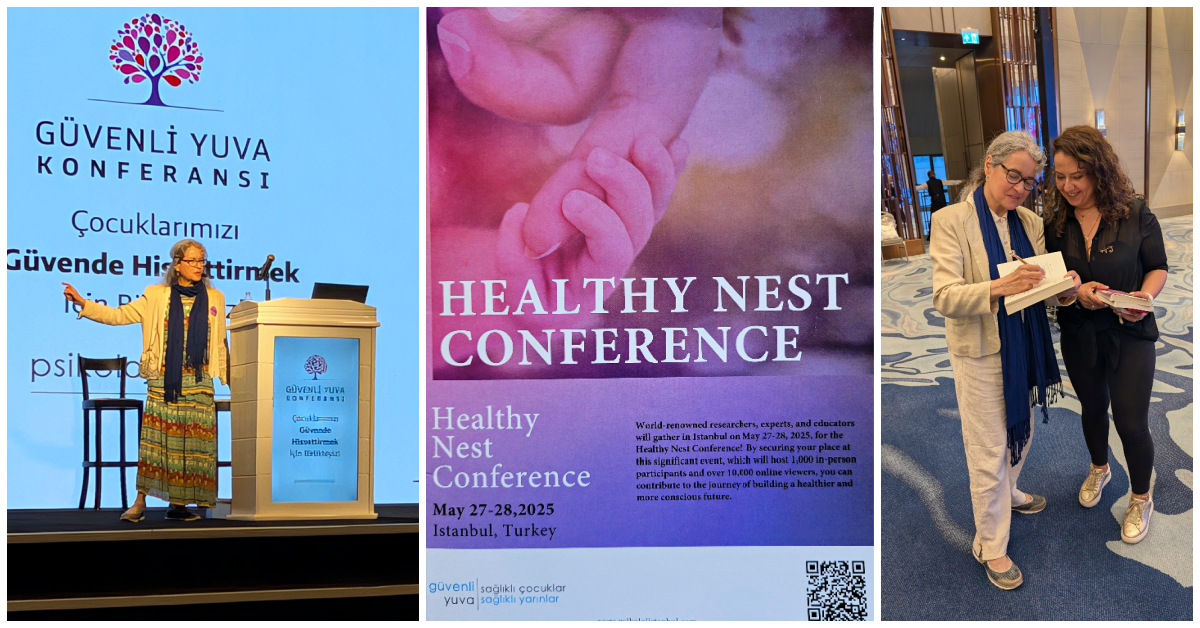
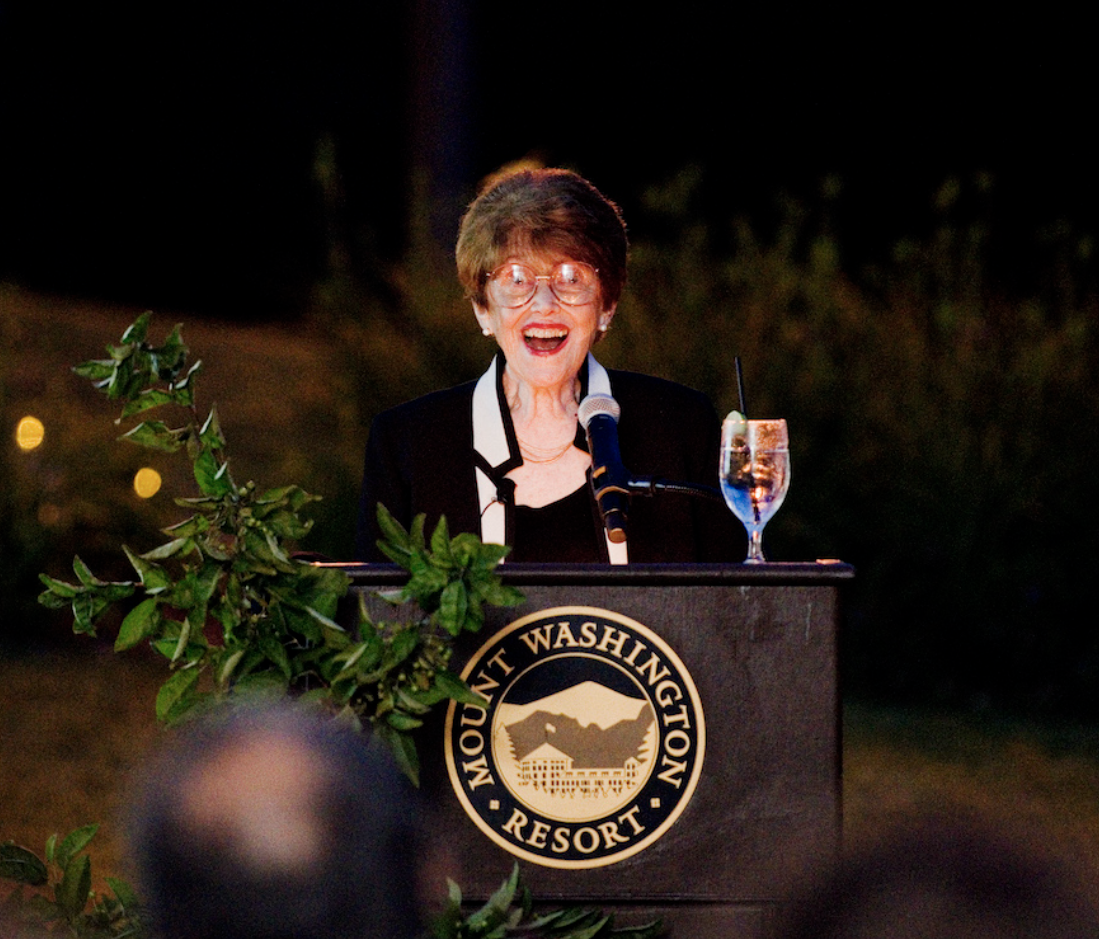
Darcia Narvaez presented the opening lecture at the Healthy Nest Conference in Istanbul, Turkey, on May 27, 2025. Healthy Nest was an international conference that brought together the world's leading experts in child development, parenting and psychology with parents and professionals. It was an in-person and online at the Istanbul Hilton Bosphorus from May 27-28, 2025.
The Evolved Nest's Breaking the Cycle film was shown at the conference. A Turkish translation of Breaking the Cycle was later created by the conference organizers. The Evolved Nest book was newly translated into Turkish in time for the conference. (And so Darcia did a lot of book signing. See photo above).
Learn more about the conference at https://lnkd.in/eqRQEn6h
Darcia discussed several topics, including: What are the natural needs of babies for optimal growth and development? How are the changes in modern life affecting child raising? What does the evidence from evolutionary psychology, anthropology, and neuroscience tell us about ensuring the healthy development of babies?
Visit the website.
Download the conference PDF.
| | | |
|
Riane Eisler
Riane Eisler is a brave pioneer who has long advocated for appropriate childraising for parnership instead of domination, most recently in her book with Douglas Fry, Nurturing our Humanity. She is a systems scientist, attorney, and author internationally known for her bestseller The Chalice and The Blade, now in 26 foreign editions and 57 US printing, as well as for other award-winning books. She keynotes conferences worldwide, with venues including the United Nations General Assembly and the US Department of State. She is President of the Center for Partnership Systems and has received many honors, including honorary Ph.D. degrees, the Alice Paul ERA Education Award, and the Nuclear Age Peace Foundation’s Distinguished Peace Leadership Award, and is featured in the award-winning book Great Peacemakers as one of 20 leaders for world peace, along with Mahatma Gandhi, Mother Teresa, and Martin Luther King.
Riane Eisler’s Center for Partnership Systems is a nonprofit partner with Kindred World. Find out more about Riane’s work on Partnerism.
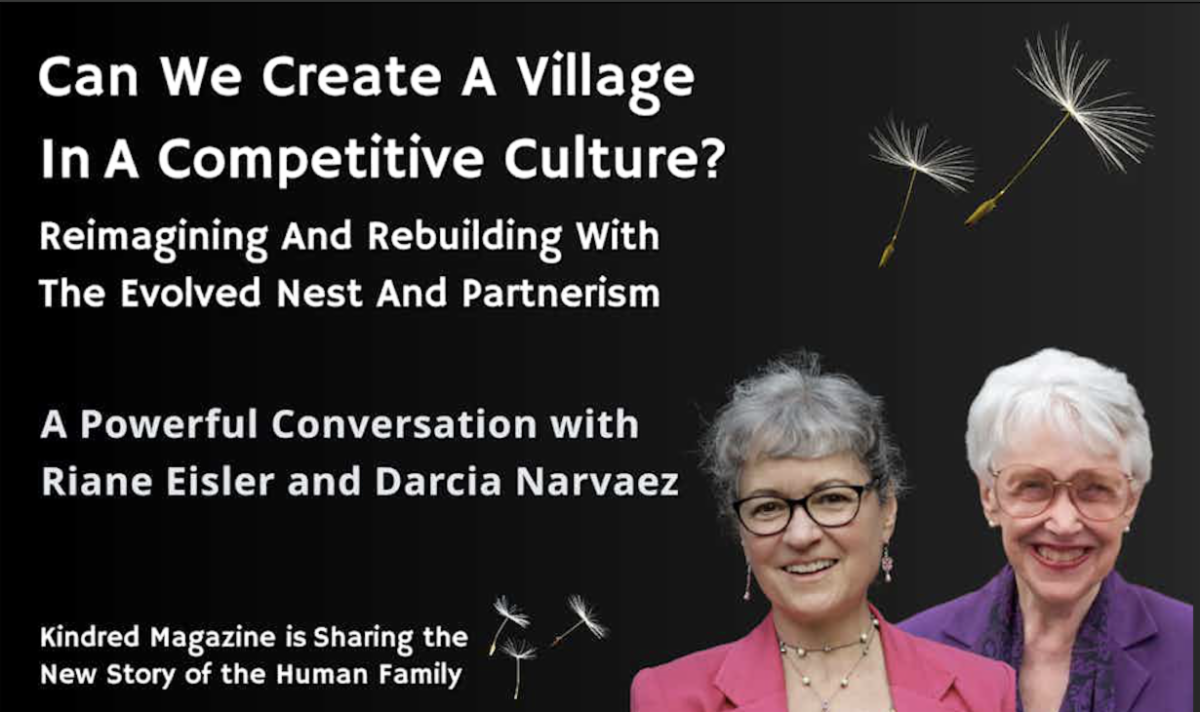
About the Discussion with Eisler and Narvaez
In this powerful conversation, Riane Eisler and Darcia Narvaez explore the synergy between Eisler’s Partnerismframework and Narvaez’s Evolved Nest model. Narvaez’s and Eisler’s lifelong scholarly works intersect in their call for a shift towards nurturing, relational, and balanced models of existence that revalue the feminine and kinship bonds, seeing these as essential for creating a sustainable, compassionate future. Their work advocates for a profound cultural transformation, grounded in the rediscovery of ancient values and practices that honor interconnectedness and the sacredness of all life.
Together, Eisler and Narvaez show that healing our world begins with changing how we raise children, support families, and reimagine human society.
Watch the discussion.
| | | |
|
Wilding: Eco or Ego?
In today’s society, “wilding” has evolved from a term for youth violence to a broader pattern of antisocial behavior—seen increasingly in business and political leaders. Sociologist Charles Derber describes this as a socially accepted erosion of empathy and responsibility, driven by deregulation, wealth hoarding, and free-market values. As community ties weaken, ego-driven wilding threatens the very fabric of society.
Read the post.
| | | |
From Ego-Wilding to Eco-Wilding and Re-Wilding
While modern society promotes ego-driven behavior disconnected from nature, our true heritage is eco-wildness—living in harmony with the Earth and all its beings. This article explores how rewilding offers a path back to our innate, relational way of being, rooted in Indigenous wisdom and ecological belonging. To secure a livable future, we must unlearn domestication and rekindle our wild aliveness.
Read the post.
| | | |
Who/What is "Indigenous"?
Those who live in preconquest nested communities do not languish. Remarkable to western visitors, they are happy and delighted with life, not languishing in neurotic despair.
To assume that everyone languishes, that it is part of being a human, is erroneous and a mistaken baseline assumption common in the USA these days. Unfortunately everyone adjusts to languishing and loneliness as a normal part of the human condition. Instead of realizing its abnormality and seeking its cause and solution, its symptoms are treated.
Read the post.
| | | |
|
Purchase from the Collection of Darcia's Books
and Support Our Nonprofit Work
| |
Shop our Bookshop collections, arranged in categories of the Evolved Nest, worldview, nature connection, prenatal life, and more. Your purchases support independent booksellers and our nonprofit work!
Check Out Darcia's Collection
| | | | Join the Evolved Nest COMMUNITY | |
Join Our Mighty Networks' Evolved Nest Community | |
We are in the process of creating a safe, kind, and stimulating space to engage and connect with our Evolved Nest community through Mighty Networks!
This platform is ad-free, algorithm-free, and owned by us. You can download the app to the network and post and stay up-to-date with group discussions, research, and upcoming events.
Many organizations are charging a membership fee for these Mighty Networks' platforms, but we are opening up our group to you for free.
Join Our Evolved Nest Group!
| | | | DONATE and Support the Evolved Nest! | | Read 126 Five-Star Reviews - Statements of Impact - of Kindred World's Nonprofit Work! | |
Donate and support the Evolved Nest Initiative's website and resources for cultural transformation.
The Evolved Nest is an educational initiative of Kindred World, an American 501C3 nonprofit "Serving the Re-Generation Since 1996." Darcia Narvaez, PhD, is the co-founder of the Evolved Nest Initiative and the current president of Kindred World.
Learn more about what we've learned in a quarter century of exploring the creation of a Wisdom-based, Wellness-informed World, here. Read over 125 five-star reviews here.
| | The Evolved Nest - www.EvolvedNest.org | | | | | |